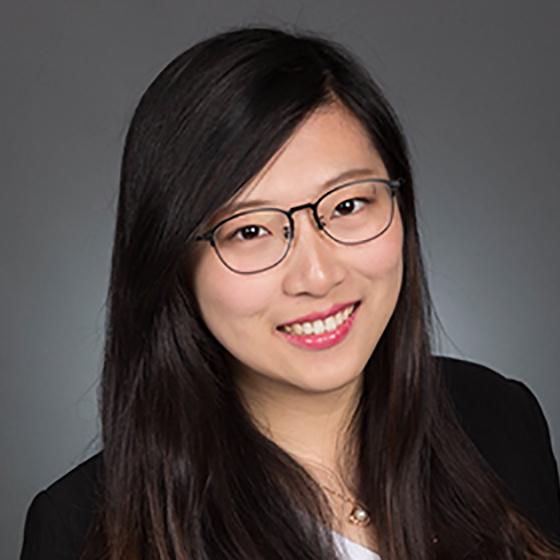
Soufiene Djahel is a Professor at the Centre for Future Transport and Cities (CFTC) at Coventry University, UK. His research focuses on connected and autonomous vehicles (CAVs), unmanned aerial vehicles (UAVs), cyber security, and smart cities. He holds a PhD in Secure Routing and Medium Access Protocols from Université des Sciences et Technologies de Lille (2010), and has held academic positions including Senior Lecturer at the University of Huddersfield and Manchester Metropolitan University. His research interests include CAV coordination protocols, cyber-physical security solutions, and intelligent transportation systems. Djahel leads projects such as the £1.2M AeroPharma Logistics initiative and has secured funding from the Newton Fund and JSPS. He is a recipient of the 2021 JSPS Invitational Fellowship and has published extensively in IEEE journals and conferences. Current projects explore UAVs-as-a-service, digital twins for CAVs, and B5G/6G for smart infrastructure. He advises PhD students on topics like AI-based threat mitigation and transport electrification. Djahel also serves as an external examiner and editorial board member for journals like IEEE Transactions on Intelligent Transportation Systems.
Janki Bhimani is a Professor and Director of the Data Management Research Lab (DaMRL) at the School of Computing and Information Science, Florida International University (FIU). Her research focuses on Memory and Storage Systems, Cloud Computing, Performance Modeling, and Applied Machine Learning. She holds a Ph.D. in Computer Engineering from Northeastern University (2019), an M.S. in Electrical and Computer Engineering (2016), and a B.S. in Electrical and Electronics Engineering from GITAM University (2013). Prior to FIU, she taught at Northeastern University and collaborated with Samsung Semiconductor Research Labs on flash-based SSDs. Her research interests include emerging memory technologies, high-performance computing, and datacenter reliability management. She leads innovative projects like Heimdall (machine learning for storage I/O optimization) and MoKE (modular key-value storage emulation). Awards include FIU Top Scholar and KFSCIS Excellence in Applied Research. Teaching highlights include CIS 3530 (Data Structures), CIS 5346 (Storage Systems), and EECE 2560 (Engineering Algorithms). Her work emphasizes bridging theory and practice, with patents on storage system optimization and machine learning integration.
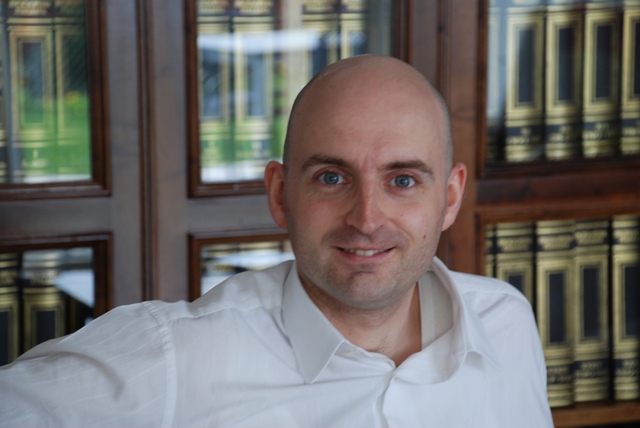
Ori Lahav is a faculty member in the School of Computer Science at Tel Aviv University. His research is generously supported by an ERC Starting Grant and an ISF Grant. He actively supervises PhD and MSc students, and seeks highly motivated candidates for postdoc, PhD, and MSc positions in programming language theory, concurrency, and formal methods. Dr. Lahav completed his PhD at Tel Aviv University under the supervision of Arnon Avron. In 2014, he was a postdoctoral researcher at Tel Aviv University hosted by Mooly Sagiv. From 2014 to September 2017, he was a postdoctoral researcher at MPI-SWS in Germany hosted by Viktor Vafeiadis and Derek Dreyer. His primary research areas focus on programming languages and verification, with specialization in concurrency and relaxed memory models. He also has significant interests in proof-theory, semantics of non-classical logics, and automated reasoning. His work bridges theoretical foundations with practical applications in programming language design and implementation. Dr. Lahav's publication record shows a consistent trajectory of high-impact research in top-tier conferences including PLDI, POPL, OOPSLA, and ESOP. His recent work (2023-2025) demonstrates continued leadership in memory models, concurrency semantics, and verification techniques. His research spans both theoretical contributions in denotational semantics and practical tools for verification. Best Paper Award DISC 2024 Best Student Paper Award DISC 2024 Distinguished Artifact Award ESOP 2022 Distinguished Paper Award OOPSLA 2021 Kleene Award for Best Student Paper LICS 2013 Dr. Lahav actively advises students including Yoav Ben Shimon, Yotam Dvir, Amir Karniel, and Roy Margalit (PhD students), Yuval Katsman Ezra (MSc student), and has alumni including Ori Saporta (MSc) and Abhishek Kr Singh (postdoc, now Assistant Professor at IIIT Hyderabad). He has organized significant events including VMCAI 2024 and Dagstuhl Seminars on persistent programming. His teaching portfolio includes courses on Shared Memory Concurrency Semantics, Programming Language Foundations, and Software Foundations in Coq.
Manxi Wu is an Assistant Professor in Cornell University's School of Operations Research and Information Engineering, specializing in societal networks and game-theoretic approaches to system design. Her research develops computational models for strategic learning and incentive mechanisms in socio-technical systems, with applications to transportation networks and digital platforms. Education: B.S. Applied Mathematics, Peking University (2015) M.S. Transportation, Massachusetts Institute of Technology (2017) Ph.D. Social and Engineering Systems, Massachusetts Institute of Technology (2021) Her research integrates game theory, optimization, and machine learning to address challenges in autonomous services, traffic management, and decentralized decision-making. Current investigations focus on adaptive incentive structures, spatial resource allocation, and equilibrium analysis in complex networked environments. Publication analysis reveals consistent emphasis on game-theoretic frameworks applied to urban mobility systems, with recent work exploring multi-agent reinforcement learning, congestion pricing equity, and electric fleet management. Methodological innovations include novel convergence proofs for decentralized algorithms and computational approaches to fairness constraints. Awards and Honors: Hammer Fellowship UTC Milton Pikarsky Memorial Award Siebel Scholarship EECS Rising Star recognition No information is currently available regarding student advising, research grants, or laboratory affiliations.
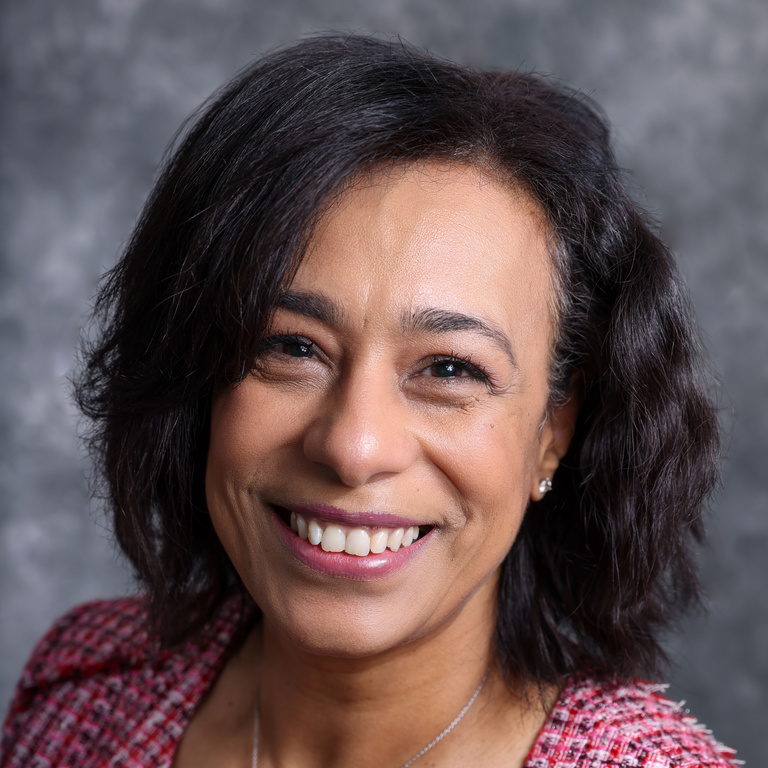
Amany Farag is a tenured Associate Professor at the University of Iowa College of Nursing and Co-Director of the VA Quality Scholars Program (Iowa City site). Her work bridges nursing science, human factors engineering, and data science to address critical patient safety challenges, with a specific focus on medication administration practices across healthcare settings. Education: Postdoctoral Scholar, Case Western Reserve University, Frances Payne Bolton School of Nursing PhD, Case Western Reserve University, Frances Payne Bolton School of Nursing MSN, University of Alexandria, Alexandria Egypt BSN, University of Alexandria, Alexandria Egypt Dr. Farag's research centers on reactive and proactive approaches to patient safety , with dual emphasis on medication error reporting systems and nurse fatigue prevention. Her work integrates human factors engineering and machine learning to develop novel interventions. Key themes include understanding how social and system factors influence nurses' error reporting behaviors, examining fatigue as a precursor to errors, and developing self-management strategies for nurse wellness. Recent projects explore intershift recovery, sleep hygiene using consumer technology, and the impact of shift work on cognitive performance. Publication trends reveal a strong focus on interdisciplinary safety science , with consistent output in nursing, human factors, and healthcare quality journals. Her work increasingly incorporates AI methodologies while maintaining clinical relevance to frontline nursing practice. Scientific Recognition: Mary Hanna Memorial Journalism Award (Journal of Peri-Anesthesia Nursing, 2016) Author of the Year (Journal of Emergency Medicine, 2018) Junior Investigator Award (Midwest Nursing Research Society, 2018) Rogers Endowed Lectureship Award (Mississippi Medical Center, 2018) Dr. Farag secures significant funding from national agencies including the National Council of State Boards of Nursing (NCSBN), NIOSH-funded Healthier Workforce Center of the Midwest, CDC-funded Injury Prevention Research Center, and University of Iowa Institute for Clinical and Translational Science. Her collaborative approach spans nursing, data science, ergonomics, and public health teams. As Co-Director of the VA Quality Scholars Program, she mentors future healthcare quality leaders while advancing her research on medication safety systems and nurse fatigue mitigation strategies through interdisciplinary partnerships.
Yulong Wei is a Researcher in the Department of Microbial Pathogenesis at Yale School of Medicine. His work focuses on understanding viral persistence mechanisms, particularly in HIV-1 and SARS-CoV-2, using cutting-edge genomic and immunological approaches. He explores how host cellular environments influence viral integration, reservoir formation, and immune evasion. Research interests include: HIV reservoir dynamics and latency mechanisms Host-pathogen interactions in viral persistence Single-cell multiomics analysis of viral infections Antiviral drug discovery and repurposing Ribosomal adaptation and translation mechanisms in bacteria Recent work highlights his contributions to understanding how interferon signaling and chromatin structure affect HIV integration sites, as well as computational studies of griseofulvin's potential in combating SARS-CoV-2. He has also investigated evolutionary genomic signatures in microbes related to translation efficiency and environmental adaptation. His lab is part of the Yale School of Medicine's broader efforts in microbial pathogenesis and infectious disease research, with a focus on translational applications for persistent viral infections.
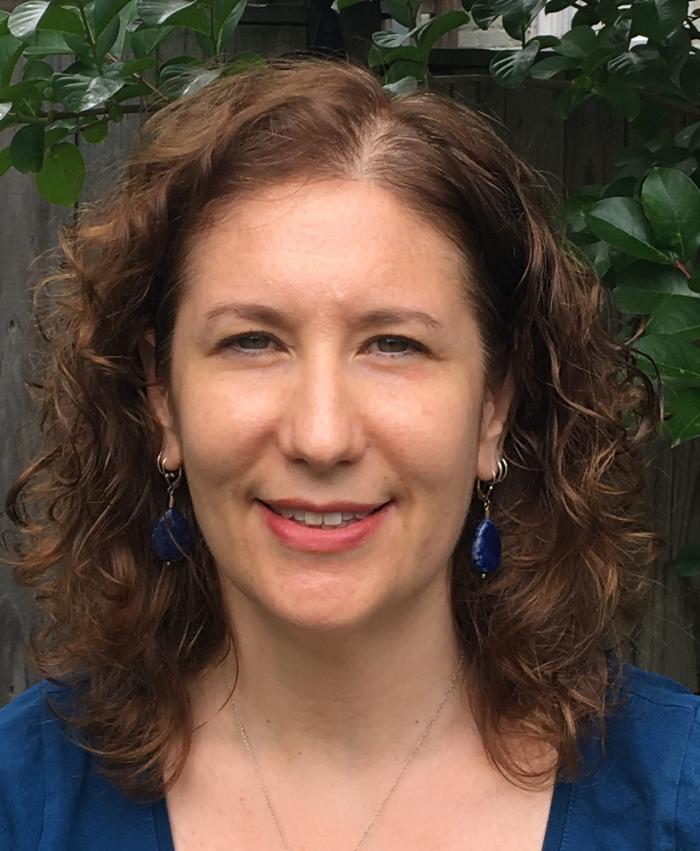
Ilana Feldman is a Professor of Anthropology, History, and International Affairs at George Washington University, and former Vice Dean of the Elliott School of International Affairs. Her research focuses on Palestinian experiences of displacement, citizenship, and humanitarianism, with a regional specialization in the Middle East. She holds a Ph.D. from the University of Michigan. Key works include Governing Gaza (2008), Police Encounters (2015), and Life Lived in Relief (2018), which examine bureaucracy, security, and refugee politics. She has been recognized with the 2017 GW Distinguished Scholar Award for her contributions to anthropological scholarship. Her teaching spans courses on human rights, Middle Eastern anthropology, and security studies. She co-edited In the Name of Humanity (2010), exploring the intersections of threat and care in governance. Her research bridges historical and contemporary analyses of colonial legacies, state formation, and the lived realities of Palestinian refugees in camps and diasporas. Recent publications address humanitarian law, decolonial feminist praxis, and global academic freedom struggles. Her work critiques international humanitarian frameworks while advocating for nuanced understandings of Palestinian agency and resistance. She actively engages public anthropology, linking academic research to contemporary political debates about occupation, displacement, and solidarity movements.
Camillo De Lellis is a Professor at the Institute for Advanced Study since July 2018, with a distinguished career spanning multiple institutions including the University of Zürich, where he served as Full Professor from 2005 and Assistant Professor in 2004. Prior to that, he held postdoctoral positions at the Max Planck Institute for Mathematics in the Sciences (Leipzig) and ETH Zürich. Research Interests encompass calculus of variations , geometric measure theory , partial differential equations , and incompressible fluid dynamics . His work bridges deep analytical techniques with geometric insights, particularly in understanding regularity theory for area-minimizing surfaces and anomalous dissipation in fluid flows. Publications highlight groundbreaking contributions to geometric analysis and fluid dynamics, including regularity theory for currents, Onsager's conjecture, and convex integration methods for Euler equations. These works span subfields like center manifold theory , blow-up analysis , Hölder continuous flows , and Q-valued functions . Scientific Awards Maryam Mirzakhani Prize (2022) Feltrinelli Prize (2021) Bôcher Memorial Prize (2020) Caccioppoli Prize (2014) Stampacchia Medal (2009)
Prof. Julijana Gjorgjieva is a tenured W3 Professor of Computational Neuroscience at the School of Life Sciences Weihenstephan, Technical University of Munich (TUM). She leads an independent research group at the Max Planck Institute for Brain Research and is affiliated with the Bernstein Center for Computational Neuroscience. Her research focuses on the principles governing neural circuit development, balancing learning plasticity with functional stability through computational and theoretical approaches. Key interests include synaptic organization, energy-efficient neural computation, and evolutionary optimality principles. Education & Career: B.Sc. Mathematics, Harvey Mudd College (2006) M.A.St. in Applied Mathematics, University of Cambridge (2007) Ph.D. Applied Mathematics, University of Cambridge (2011) Postdoctoral Fellowships: Harvard University (2011-2014), Brandeis University (2014-2016) Max Planck Research Group Leader (2016-2022) W2/W3 Professor at TUM since 2016 Research Interests: Computational neuroscience, theoretical modeling of neural circuits, synaptic plasticity mechanisms, homeostatic regulation, and the interplay of development and evolution in shaping brain architecture. She employs mathematical frameworks to study how circuits achieve robustness while enabling adaptive learning. Awards: Heinz Maier-Leibnitz Prize (2022) Eric Kandel Young Neuroscientist Prize (2021) ERC Starting Grant (2018) Multiple postdoctoral and early-career fellowships Grants & Funding: Includes DFG Collaborative Research Center on Neural Homeostasis, HFSP grants, and EU Horizon 2020 initiatives. Active in mentoring and promoting computational neuroscience through programs like Neuromatch Academy. Labs & Collaborations: Leads a multidisciplinary lab integrating experimental and theoretical approaches. Collaborates with institutions such as the Max Planck Society and international computational neuroscience networks.
Mohsen Heidari is an Assistant Professor in the Department of Computer Science at Indiana University, Bloomington. He is affiliated with the IU Quantum Science and Engineering Center (QSEc) and the NSF Center for Science of Information (CSoI). He previously held positions as a Visiting Assistant Professor at Purdue University and as a Postdoctoral Research Associate at CSoI. Ph.D. in Electrical Engineering (2019) and M.Sc. in Applied Mathematics (2017) from the University of Michigan His research focuses span quantum computing, theoretical machine learning, and information theory. Key themes include: Quantum algorithm design and sample complexity Fourier-based learning frameworks Quantum-classical duality in learning problems Information-theoretic approaches to biological systems Article trends show a strong emphasis on quantum-classical learning intersections (6/15 papers), Fourier analysis applications (5/15), and information-theoretic foundations (12/15). Notable venues include NeurIPS, IEEE Transactions, and ISIT. He directs research involving: Quantum Neural Network development Quantum measurement simulation Quantum data compression techniques Quantum algorithm implementation constraints
Xiaoning Ding is an Associate Professor in the Department of Computer Science at New Jersey Institute of Technology (NJIT). His research focuses on virtualization, multicore computing, cloud infrastructure optimization, and mobile systems. He leads projects addressing challenges in nested virtualization, memory management, and cache conflicts in distributed and cloud environments. Key research interests include optimizing task scheduling in cloud VMs, reducing TLB misses through huge page strategies, and mitigating interference in multi-tenant GPU clouds. His work on page placement mechanisms and dynamic page coalescing aims to enhance virtualized cloud performance. Ding has received federal funding, including an NSF grant for virtualization research in heterogeneous memory hierarchies (2016–2019). His research outputs span over 74 publications, with notable contributions in EuroSys, IEEE Transactions, and conferences like PACT. Media coverage highlights his studies on cloud computing and collaborative mobile systems, such as parking assignment algorithms. Beyond technical contributions, Ding advises students in interdisciplinary projects, exemplified by collaborations with Applied Math majors on cloud computing challenges.
Dr. Theophilus A. Benson is a Professor of Electrical and Computer Engineering at Carnegie Mellon University (CMU) and CMU-Africa. His research focuses on improving network performance and availability in data centers, clouds, and edge networks. He leads projects addressing the digital divide in Africa through initiatives like the African Internet Observatory (AIO), which analyzes connectivity challenges and infrastructure resilience. His work spans programmable networks (eBPF/P4), CDN optimizations, and network management frameworks. Education: B.S. from Tufts University, Ph.D. from University of Wisconsin-Madison, Postdoc at Princeton University. Research Interests: Network state management, programmable substrates, digital equity, measurement systems, and network security. His group develops tools like NetEdit (eBPF management), JSBench (mobile web performance), and the African Internet Observatory's probe network. Recent Trends: Publications emphasize eBPF management frameworks, African network analysis, and data-driven CDN improvements. Key projects include subsea cable impact studies, QUIC protocol analysis, and deploying measurement probes across Africa. Awards: NSF CAREER Award, Google/FA Faculty Awards, SIGCOMM Test of Time Award, and DARPA ISAT membership. Advising & Grants: Active in mentoring MS/PhD students and postdocs. Current grants include NSF funding for data-driven web performance and IoT security. Collaborations with Meta and industry partners enhance real-world system deployments. Labs & Teams: Leads the AIO initiative with local African stakeholders. Research group includes collaborators from National Taiwan University and partnerships with institutions like TU Delft (keynote on eBPF).
Fabrizio Lombardi is the ITC Endowed Professor at Northeastern University's Department of Electrical and Computer Engineering, part of the College of Engineering. He previously held faculty positions at Texas Tech University, University of Colorado-Boulder, and Texas A&M University. He earned his B.Sc. from the University of Essex (1977), M.Sc. and Ph.D. from the University of London (1982). His research focuses on fault-tolerant computing, VLSI CAD, quantum computing, and configurable computing systems. He has led major projects like the NSF-funded Neural-Network-based Stochastic Computing Architectures for Machine Learning . He holds leadership roles including President of the IEEE Nanotechnology Council (2022-2023), IEEE Computer Society Vice President (2021), and IEEE PSPB member. His 200+ publications span IEEE Transactions on Computers, Nanotechnology, and Design & Test. Awards include IEEE Fellow, Søren Buus Outstanding Research Award, and multiple research fellowships. His work bridges theory and application, emphasizing defect-tolerant nanosystems and energy-efficient computing hardware. Recent innovations include approximate computing methodologies and secure PUF-based hardware designs.
Assoc Prof Yaozhong Wu is an Associate Professor in the Department of Analytics and Operations at the NUS Business School, National University of Singapore. His research focuses on Behavioral Operations Management, Supply Chain Management, Innovation, and Project Management. He has contributed extensively to understanding decision-making biases in operations, strategic customer behavior, and supply chain coordination mechanisms. Key research interests include behavioral aspects of inventory management, project abandonment decisions, and cross-project collaboration. His work integrates experimental methods with theoretical models to uncover how cognitive biases and social preferences impact operational performance. Prof. Wu has published in top journals such as Management Science , Production and Operations Management , and Operations Research . His recent studies explore endogenous biases in competitive newsvendor games, co-opetition strategies in supply chains, and the role of reference points in project management. Teaching interests include managerial problem-solving and business analytics at both undergraduate and executive levels.
Ulisse Gomarasca is a doctoral researcher at the Max Planck Institute for Biogeochemistry's Department Biogeochemical Integration, affiliated with the International Max Planck Research School for Global Biogeochemical Cycles (IMPRS-gBGC). He works within the Global Diagnostic Modelling group and Ecosystem Function from Earth Observation project team, focusing on understanding ecosystem functioning through eddy covariance fluxes and biodiversity links. Education: Master's in Ecology and Biodiversity from University of Innsbruck Research: Spatiotemporal dynamics of ecosystem functioning, Sun-Induced Chlorophyll Fluorescence, drought legacy effects on productivity Methodologies: Remote sensing integration with eddy covariance networks, biodiversity-ecosystem function analysis His publications address terrestrial ecosystem responses to climate extremes, scaling of plant traits to ecosystem level, and development of remote sensing tools like the Biodiversity Observing System Simulation Experiment (BOSSE). This work combines satellite observations with ground-based flux measurements to understand global biogeochemical patterns. Contact: ugomar@bgc-jena.mpg.de