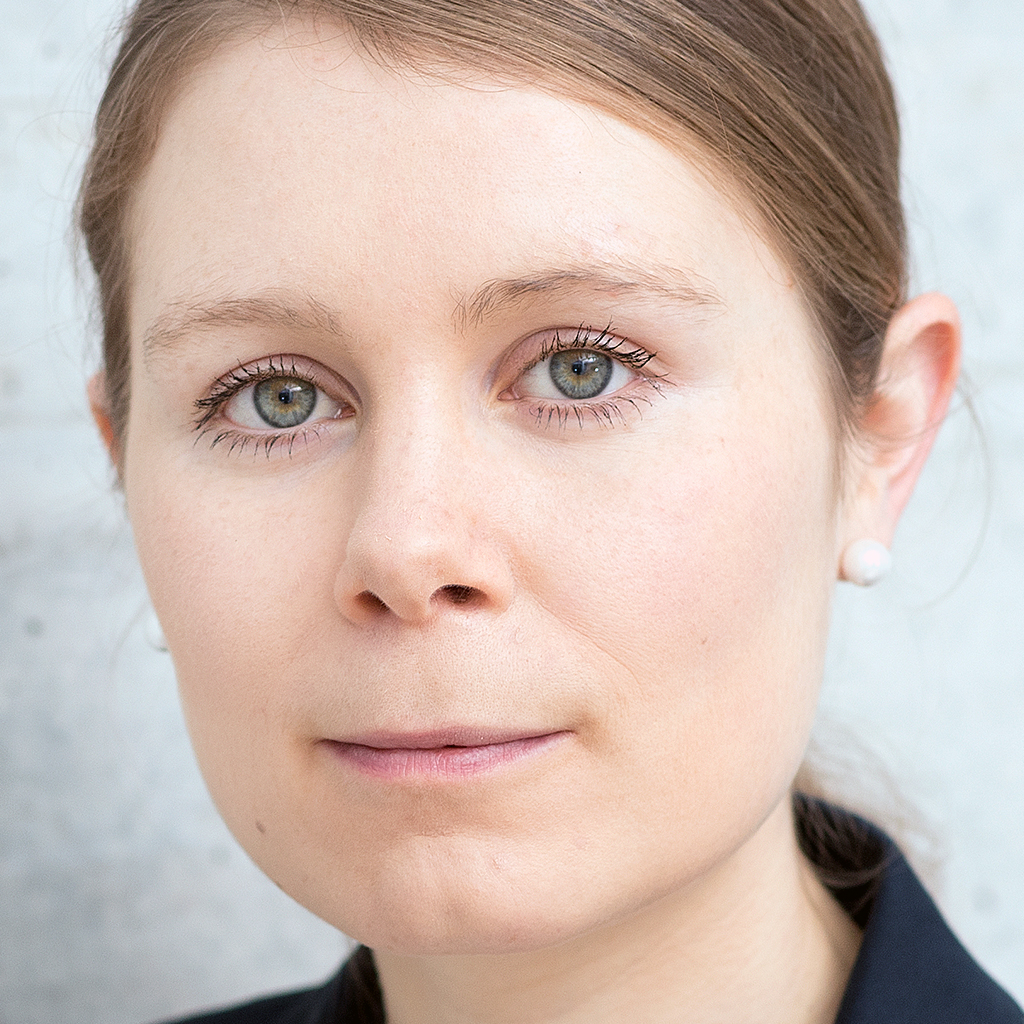
Johan Sidén is a Lecturer and Associate Professor at Mid Sweden University , employed in the Department of Computer and Electrical Engineering (DET) . His work focuses on RFID technology , antenna design , and printed/flexible electronics , with a particular emphasis on industrial IoT and welfare technology applications. Research Keywords : Radio Frequency Identification, Antenna Design, Flexible Electronics, Wireless Sensor Networks, Microwave Engineering, Electronic Design Key Projects : DRIVEN (data-driven industrial transformation), SmartArea (functional surfaces), Pressure (ulcer monitoring), MakeSense! (welfare technology) Publications : 15+ recent works on wearable antennas, smart packaging, UWB antenna design, and RFID sensor integration Collaborations include partnerships with industrial and academic institutions, focusing on sustainable electronics, sensor systems, and smart infrastructure. His technical expertise spans antenna optimization , printed circuits , and edge computing for harsh environments.
Anna Jon-And is a Researcher and Director of the Center for Cultural Evolution at Stockholm University , affiliated with the Department of Psychology . Her interdisciplinary work bridges linguistics , cognitive science , and cultural evolution , focusing on how sequence representation , language contact , and computational models explain the emergence of human language and its unique properties. Research Interests include: Language evolution through sequence learning and cognitive constraints Contact-induced language change in Portuguese varieties (Angola, Mozambique, Afro-Brazilian communities) Computational modeling of grammatical structure emergence Comparative analysis of pidgins, creoles, and non-contact languages Neurocognitive prerequisites for language and cultural complexity Publications highlight trends in language evolution models , compositional systems , and cross-linguistic complexity cycles . Her work demonstrates how demographic factors and learnability pressures drive linguistic innovation in multilingual settings. The Center for Cultural Evolution at Stockholm University serves as the primary platform for her interdisciplinary research initiatives.
Pamela K. Smith is a Professor of Economics and Management at the Rady School of Management, University of California San Diego. Her research examines power, status, influence, and hierarchical dynamics in social and organizational contexts, with significant contributions to understanding gender representation in workplaces. Education: Ph.D. in Social Psychology, New York University (2004) Dr. Smith's work investigates how power affects cognitive processing, motivation, and interpersonal behavior. She explores how individuals signal and perceive power through language, nonverbal cues, and decision-making patterns. Her research demonstrates that power increases abstract thinking, alters temporal discounting, and influences social judgments like blame attribution. She also examines gender disparities in professional settings, including women's representation at academic conferences. Her 15 most recent publications (2016-2025) reveal consistent focus on power dynamics across multiple domains. Key trends include the relationship between power and prosocial behavior, the role of communication medium in signaling power, and gender-based inequities in academic and organizational hierarchies. Publications appear in top journals including Journal of Personality and Social Psychology and Personality and Social Psychology Bulletin. Scientific Awards: No major awards listed in source material Dr. Smith serves on editorial boards for Journal of Personality and Social Psychology and Social Psychological and Personality Science, having previously held associate editor roles at Personality and Social Psychology Bulletin. While specific grant details aren't provided, her sustained publication record in high-impact journals indicates successful research funding. She mentors graduate students through UCSD's Ph.D. program. Dr. Smith leads an active research laboratory investigating power dynamics in everyday contexts, with recent work examining how power manifests through vocal pitch, visual communication, and decision-making processes. Her lab's findings have practical implications for leadership development and creating equitable organizational structures.
Edward F. Chang, MD is a distinguished Professor and Chair of the Department of Neurological Surgery at the University of California, San Francisco (UCSF) School of Medicine. He co-directs the Center for Neural Engineering and Prostheses, a collaborative enterprise between UCSF and UC Berkeley, and leads the Chang Lab focused on speech neuroscience and neural engineering. As a practicing neurosurgeon, he specializes in treating adults with difficult-to-control epilepsy, brain tumors, trigeminal neuralgia, hemifacial spasm, and movement disorders. Dr. Chang's educational background includes a B.A. in Chemistry from Amherst College (1997), an M.D. from UCSF (2004), a Neurological Surgery residency at UCSF (2010), and a postdoctoral fellowship in Cognitive Neuroscience at UC Berkeley (2009). His research focuses on the brain mechanisms for speech, movement, and learning, with particular emphasis on advanced brain mapping methods to preserve crucial areas for speech and motor functions. He has pioneered work in speech neuroprostheses, developing technology that allows patients with paralysis to communicate through brain signals. His work integrates engineering, neurology, and neurosurgery to develop state-of-the-art biomedical technology to restore function for patients with neurological disabilities such as paralysis and speech disorders. Analysis of his recent publications reveals a strong trend toward developing advanced neuroprosthetic technologies, particularly speech decoding systems, and exploring the neural basis of speech production across multiple languages. His research also spans epilepsy surgery optimization, deep brain stimulation for psychiatric conditions, and molecular profiling of brain tumors. Blavatnik National Laureate for Life Sciences (2015) Elected to the National Academy of Medicine (2020) Inaugural Bowes Biomedical Investigator at UCSF HHMI Faculty Scholar Dr. Chang leads multiple NIH-funded research projects totaling millions of dollars, including a pilot clinical trial for speech neuroprosthesis and studies on the neural coding of speech across human languages. He has mentored numerous researchers in the field of neural engineering and speech neuroscience, though specific student names aren't listed in the provided materials. His work has resulted in groundbreaking technologies that have helped restore communication abilities to individuals with paralysis. As co-director of the Center for Neural Engineering and Prostheses, Dr. Chang leads a multidisciplinary team of engineers, neurologists, and neurosurgeons working at the intersection of neuroscience and technology. His lab has been instrumental in developing brain-computer interfaces that translate neural activity into speech, with recent publications demonstrating streaming brain-to-voice neuroprostheses that restore naturalistic communication.
Adrian Unc is a Professor at Memorial University of Newfoundland's School of Science and the Environment, with affiliations at McGill University and University of Leeds. His research focuses on northern agriculture under climate change, boreal soil health, waste re-valorization, and microbiological drivers of soil fertility. B.Sc. in Agronomy (Timisoara, Romania) M.Sc. & PhD in Soil Science (University of Guelph) Postdoc in Environmental Microbiology (University of Ottawa, Medicine) Research spans climate change impacts on boreal soils, biochar applications for soil fertility, microbial transport dynamics, and permafrost-affected soil systems. He established Canada's first graduate program for northern agriculture (Boreal Ecosystems and Agricultural Sciences - BEAS) and co-founded the Canadian Soil Biodiversity Observatory. His 15 most recent articles address soil carbon cycling, microbial ecology in reclaimed mines, fertilizer source effects on nutrient dynamics, biochar's role in boreal agriculture, and geophysical methods for soil moisture mapping. These works emphasize interdisciplinary approaches to food security, environmental quality, and climate adaptation strategies. Senior Cheney Fellow (2014) Top 3% Cited in Soil Use and Management (2024) Scientific Reports Top 100 Earth Science Article (2018) Top 1% Cited in Applied Soil Ecology (2000 paper) As Deputy Editor of Soil Use and Management and former Associate Editor of Algal Research , he has shaped scientific discourse in soil and algal sciences. His work integrates field studies (e.g., Pye Farm, Labrador) with global collaborations on boreal climate impacts.
Robert Hamilton is a Professor in the Department of Communication Studies & Media Arts at McMaster University's Faculty of Humanities in Hamilton, Canada. With an extensive career as both an academic and practicing artist, he has established himself as a significant figure in contemporary media arts education and creation since joining McMaster University. Hamilton holds dual MFA degrees from the Art Institute of Chicago and the Jan van Eyck Academie in Maastricht, Netherlands, complemented by a Diploma from the Alberta College of Art + Design. His academic journey spans from 1981-1985 at the Alberta College, followed by advanced studies from 1991-1993 at the Jan van Eyck Academie. His research and creative practice centers on visual media with particular focus on video art, photography, and animation. Hamilton's work consistently explores themes of identity, community, and the evolving urban environment, often reflecting on societal events and contemporary issues. His artistic approach combines technical mastery with conceptual depth, resulting in works that challenge viewers' perceptions of everyday spaces and social structures. He has developed a distinctive methodology that blends documentary techniques with artistic interpretation, creating works that are simultaneously observational and transformative. Hamilton's recent body of work demonstrates a clear trajectory toward examining human relationships with urban spaces, particularly during times of societal transformation like the pandemic. His projects increasingly incorporate digital technologies and AI elements while maintaining a strong foundation in traditional media arts. The thematic continuity across his work reveals a persistent concern with how individuals navigate and make meaning within constructed environments. German Video Art Prize Silver Hugo Award at the Chicago Film Festival Work featured in National Gallery of Canada collection As an educator, Hamilton has mentored numerous students through senior thesis projects and specialized courses in media production. His teaching portfolio spans animation, video art, digital cinema, photographic techniques, and emerging media. While specific grant information isn't detailed in the available materials, his sustained creative output suggests successful acquisition of research funding to support his artistic practice. His work has been exhibited internationally at venues including Maison des Arts de Laval, Museum of Contemporary Art in Castello, Spain, and Transmediale in Berlin. Hamilton maintains an active studio practice that directly informs his teaching approach. His creative process involves both digital and traditional techniques, often experimenting with the intersection of physical and virtual spaces. He has developed specialized approaches to documenting urban environments that reveal hidden patterns and structures within everyday landscapes, creating what might be described as visual commentaries on contemporary life.
Dr. Avner Ofrath is a Researcher in Modern and Contemporary History at the University of Bremen , specializing in citizenship and public spheres in the Middle East and North Africa. His work bridges colonial history, Mediterranean studies, and urban dynamics. Academic Rank: Researcher Department: Department of Social Sciences Research Focus: He explores the colonial origins of French citizenship in Algeria, resistance to political terminology by local populations, and the dissolution of Mediterranean urban spaces as political arenas in Jerusalem under late Ottoman and British colonial rule. His work integrates multilingual sources (French, Arabic, Judeo-Arabic) and transnational perspectives. Articles & Trends: His publications analyze legal exclusion in colonial contexts, postcolonial Mediterranean identities, and ethical challenges in archival research. Notably, he connects historical migration patterns to modern urban conflicts and critiques Eurocentrism in global history. Grants: Funded by the Mellon Foundation Gerda Henkel Stiftung Society for the Study of French History His work emphasizes interdisciplinary methodologies and decolonial historical frameworks.
Bridget Whearty serves as an Associate Professor in the English, General Literature and Rhetoric department at Binghamton University, where she also holds affiliation with the Center for Medieval and Renaissance Studies. Her academic work spans multiple disciplinary boundaries, connecting literary studies, medieval scholarship, and digital humanities with critical perspectives on information and archival practices. Whearty earned her PhD from Stanford University and completed her BA at the University of Montana. Her educational background informs her interdisciplinary approach that bridges traditional literary scholarship with contemporary digital methodologies and critical theory. Her research interests focus on queer and trans perspectives in medieval literature and material culture, with particular attention to how digital technologies reshape our understanding of medieval manuscripts. She explores how digital humanities projects engage with issues of labor, representation, and erasure in both historical and contemporary contexts. Her work critically examines the intersections between medieval book production, modern digital scholarship, and the politics of archival representation. Whearty's publications reveal a consistent thread connecting medieval manuscript studies with contemporary digital practices, particularly examining how digital projects handle issues of labor, representation, and accessibility. Her work demonstrates how medieval studies can inform contemporary digital humanities practices while simultaneously using digital methodologies to uncover new perspectives on medieval texts and material culture. Her notable awards include the 2023 John Grace Memorial Book Historian in Residence at the University of British Columbia, the 2022 Harpur College Faculty Research Grant, and the 2020 New Chaucer Society Early Career Essay Prize. Additional recognition includes the University of Glasgow Library Visiting Research Fellowship and multiple internal Binghamton University research awards. Whearty has been actively involved in grant-funded research initiatives, particularly through her role as co-Principal Investigator of 'Always Here: a Queer+Trans Global Medieval Sourcebook,' an emerging digital project and open educational resource. Her community engagement includes participation in the Center for Civic Engagement's Community Engaged Teaching Fellows Program. She is the creator of the influential Caswell Test (#CaswellTest), which challenges humanities scholars to engage more rigorously with the work of archivists and librarians when writing about 'the archive.' This framework has gained recognition for addressing critical gaps in how scholars conceptualize archival labor and representation.
Dr Joanne Yoo is a Senior Lecturer in the School of Education within the Faculty of Arts and Social Sciences at the University of Technology Sydney (UTS). She specializes in teacher education with expertise in writing pedagogy, academic literacy, and qualitative research methodologies. Her academic profile demonstrates extensive engagement with pre-service teacher education across primary and secondary programs at UTS, where she has worked intensively in quality teacher education development. Joanne began her career teaching English and ESL to secondary students in South Korea, where she first explored autoethnography and narrative inquiry methodologies. Her educational background in teaching English and ESL formed the foundation for her current research trajectory focused on writing as inquiry and embodied practices in academic contexts. Her research centers on writing as inquiry and embodied practices in academic work, investigating how creative, poetic, and sensory-rich writing approaches can transform research and teaching. She challenges conventional academic writing norms by advocating for methodologies that bridge personal and professional knowledge through lived experience. Her book Evocative Qualitative Inquiry Writing and Research Through Embodiment and the Poetic (2022) provides a comprehensive framework for understanding writing as an aesthetic and embodied practice in academic research. Analysis of her publication record reveals consistent exploration of feminist research methodologies , time and temporality in academia , and the relationship between embodiment and knowledge production . Her work often examines the tensions between institutional demands and authentic academic practice, particularly how writing can serve as a transformative tool for both teachers and researchers navigating contemporary academic pressures. Joanne actively supervises Masters Research and PhD students and has secured significant research funding including 'A day in a life' of a child in Australia and Korea (2019-2026), the Claremont PBL project (2016-2017), and research on the Implementation of the New English K-10 Syllabus (2015-2017). Her collaborative work extends through the UTS Hub School partnership with Sydney primary schools, demonstrating her commitment to bridging theory and practice in teacher education with attention to how creative writing approaches enhance both teacher development and student learning outcomes.
Dr. Christina Haag is a postdoctoral researcher at the Institute for Implementation Science in Health Care , affiliated with the Faculty of Medicine at the University of Zurich . She leads interdisciplinary projects at the intersection of mental health, digital health, and computational linguistics, focusing on chronic illnesses like multiple sclerosis (MS). Her work leverages free text, sensor data, and advanced analysis techniques such as hierarchical modeling and natural language processing (NLP). Doctorate from the Institute of Psychology, University of Zurich Research experience at the MRC Cognition & Brain Sciences Unit, University of Cambridge Her research explores: Daily-life mental and physical health indicators in MS Development of NLP methods for text classification and topic modeling Digital biomarker creation using wearable sensor data Mindfulness interventions for affective executive control Implementation of remote monitoring tools in healthcare Her recent publications highlight trends in applying NLP and machine learning to unstructured health data, analyzing MS activity patterns, and refining interdisciplinary research methodologies. She contributes to DSI communities including AI & Law , Health , and Ethics , and collaborates on projects like BarKA-MS and DSI-Approach . She is a core member of the UZH Digital & Mobile Health Group , working under Prof. Viktor von Wyl.
Sana Bilgrami serves as a Lecturer in the School of Arts and Creative Industries at Edinburgh Napier University, where she teaches introductory and advanced documentary film practice to undergraduate students. An award-winning Pakistani-born filmmaker, her creative and research work interrogates cross-cultural identity through innovative techniques including 8mm film, archival materials, and intimate voice-over narration. She actively bridges academic research with creative practice through international collaborations spanning Scotland and Pakistan. Bilgrami's research centers on the cinematic representation of South Asian women in Scottish cinema, the use of personal voice in documentary filmmaking, and the interplay between historical archives and geographical spaces. Her practice-based approach explores portrait films, essay films, and fiction-documentary crossovers to examine diasporic identity formation. This work consistently addresses themes of cultural heritage, migration, and memory through both scholarly analysis and creative outputs. Recent publications (2020-2024) reveal a cohesive trajectory examining representation politics through interdisciplinary lenses combining film studies, gender theory, and postcolonial critique. Her outputs demonstrate methodological innovation through autoethnographic film practice, collaborative curation, and archival experimentation, with particular emphasis on South Asian diasporic experiences in Scotland. This body of work consistently bridges theoretical frameworks with tangible creative outcomes across film and visual arts. Scientific Awards: Shortlisted for BAFTA Scotland Award (Tree Fellers, 2004) Shortlisted for Satyajit Ray Award (Across the Waters, 2004) Award at Scottish Students on Screen (Under My Skin, 2001) Shortlisted for Saltire Grierson award (Under My Skin, 2001) Best Documentary at Chichester Film Festival (Under My Skin, 2001) Bilgrami has secured significant research funding including a £7010 grant from the Royal Society of Edinburgh (2021-2024) for her project on South Asian women in Scottish cinema, a Creative Scotland development grant for her feature documentary 'The Album', and a 'Connect and Collaborate' grant from the British Council and Creative Scotland for the 'Ecologies of Displacement' international artist residency. While she teaches undergraduate film students, no formal graduate advisees are documented in her current profile. She collaborates extensively through Edinburgh Napier University's Centre for Creative Practice Research and Centre for Child & Family Law and Policy, while maintaining active partnerships with Koel Gallery (Pakistan), Summerhall (Edinburgh), and Art in Healthcare. Her international projects like 'Landscape of Memory' and 'Ecologies of Displacement' demonstrate sustained commitment to building transnational artistic networks focused on displacement, memory, and cultural exchange between South Asian and Scottish communities.
Rainer Winter is a Professor at the Institute for Media and Communication Studies at Alpen-Adria-Universität Klagenfurt. He specializes in Cultural Studies, Media Research, Media Education, and Qualitative Research Sociology. His work bridges critical theory with contemporary media analysis, focusing on mediatization processes, resistance studies, and the societal implications of media narratives.
Gary Fireman, PhD is a Professor in the Department of Psychology at Suffolk University and serves as the Associate Provost for Academic Affairs. He holds a PhD and MA from Long Island University, as well as a BA from the University of Michigan. As a licensed clinical psychologist in Massachusetts, Texas, and New York, he specializes in child, adolescent, and adult therapy, and psychological assessment. PhD, Long Island University MA, Long Island University BA, University of Michigan Dr. Fireman’s research explores the interplay between emotional complexity, social reasoning, and sleep quality, particularly in populations with aggression, peer victimization, or emotional regulation challenges. His work investigates how nightmares, rumination, and prosocial behavior shape cognitive processes and psychological wellbeing. His recent publications focus on sleep disturbances, social exclusion, and emotional regulation in developmental contexts. Key trends include analyzing the bidirectional relationship between social anxiety and sleep, cross-cultural bullying narratives, and the impact of stress on sleep quality during the COVID-19 pandemic. Scientific Awards : Departmental-Level Teaching Award (2014) Dr. Fireman teaches courses such as PSYCH-510-C: Independent Study . He maintains an active clinical and research practice, with ongoing collaborations across interdisciplinary psychology fields. Contact: gfireman@suffolk.edu , 617-305-6368.
Gwynn Morris is a Professor of Psychology and Department Chair for Psychology & Social Work at Meredith College. She joined the faculty in 2008 and specializes in lifespan development and memory studies, particularly focusing on autobiographical memory retention and childhood amnesia. Her research explores emotional influences on memory narratives in older adults and predictors of early memory persistence. Education: Ph.D. in Psychology, North Carolina State University M.S. in Psychology, North Carolina State University B.S. in Biology, University of North Carolina at Chapel Hill Her research interests center on developmental psychology, cognitive processes in memory, and intergenerational connections. Notable projects include examining language acquisition’s role in childhood memory retention and fall-risk reduction in older adults through community-engaged learning. Grants & Collaborations: Co-PI on $13,000 CIC Intergenerational Connections Grant for home safety modifications and in-home exercise programs targeting socially isolated older adults. She actively presents at conferences such as the American Psychological Association and Eastern Psychological Association, focusing on teaching methodologies, academic self-efficacy, and intergenerational resilience strategies.
Dr. Terrah Foster Akard is a Professor of Nursing and Medicine at Vanderbilt University, where she holds appointments in the School of Nursing and serves as Associate Dean for Academic Affairs in the Graduate School. Her academic credentials include a Bachelor of Science from Jacksonville State University, a Master of Science in Nursing from Vanderbilt University, and a PhD in Nursing Science from Vanderbilt University. Her research program focuses on developing innovative psychosocial interventions for pediatric palliative care populations, with emphasis on: Legacy-making activities to improve quality of life Grief processing and continuing bonds in bereaved families Web-based recruitment and intervention delivery methods Novel approaches like animal-assisted interactions and digital storytelling She leads significant federally-funded projects including: NIH/NINR R01 on legacy interventions in pediatric palliative care (2014-2019) Rita & Alex Hillman Foundation grant for nurse-led storytelling interventions (2021) American Cancer Society funding for web-based pediatric oncology research Publication analysis reveals consistent focus on improving psychosocial outcomes through: Qualitative and mixed-methods exploration of family experiences with serious illness; Development and validation of digital health interventions; Investigation of pandemic impacts on vulnerable pediatric populations; Innovative methodologies for palliative care research involving children. Honors include: Fellowship in the American Academy of Nursing (FAAN) Robert Wood Johnson Foundation Nurse Faculty Scholar Award Professional service includes leadership roles in: Palliative Care Research Cooperative Hospice and Palliative Nurses Association Scientific Committee American Cancer Society Peer Review Committees