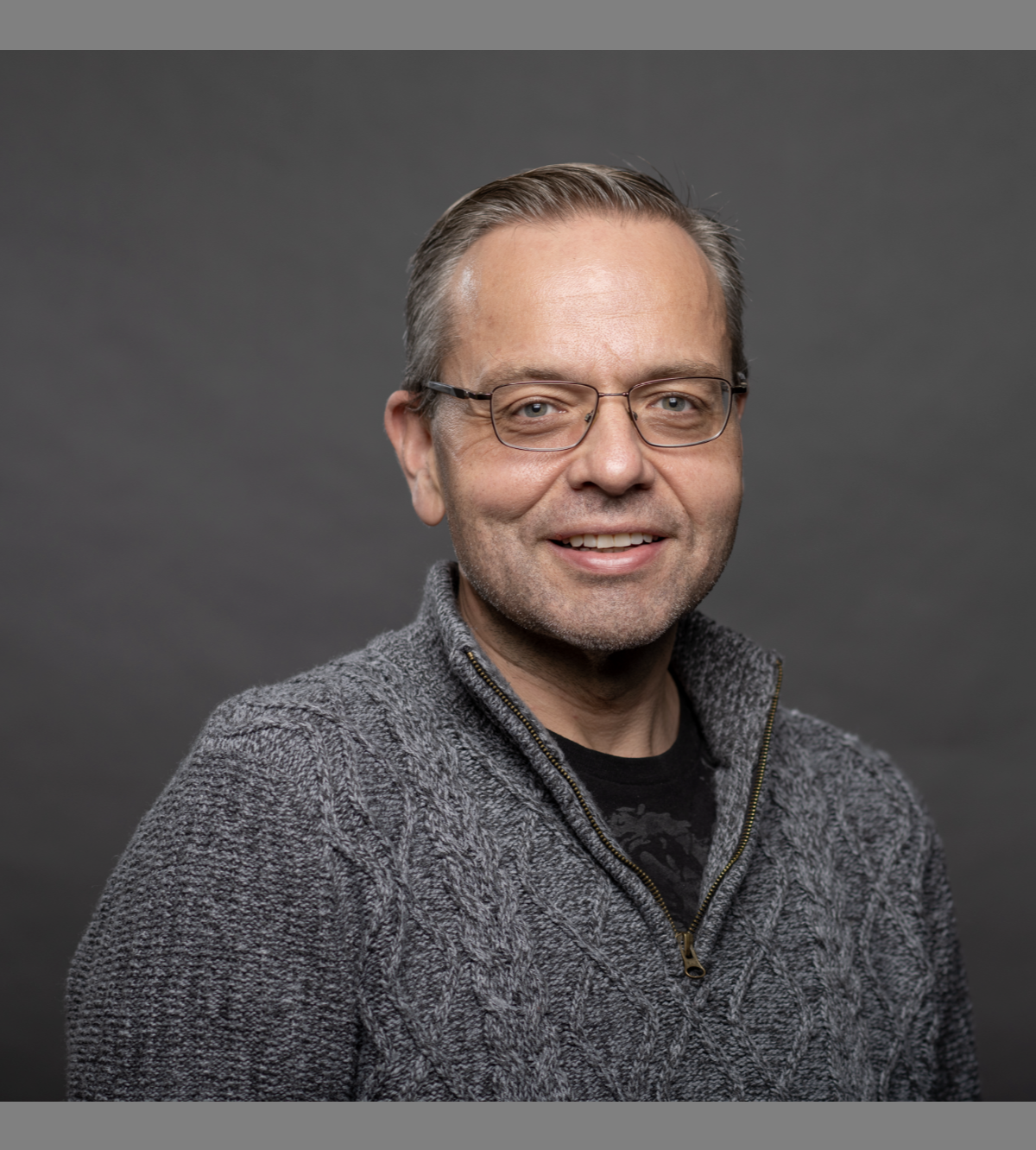
Stavros Sintos is an Assistant Professor in the Department of Computer Science at the University of Illinois at Chicago (UIC). He joined UIC after a postdoctoral fellowship at the University of Chicago, where he was part of the ChiData group under Sanjay Krishnan. He earned his Ph.D. in Computer Science from Duke University in 2020, advised by Pankaj K. Agarwal. His research focuses on designing efficient algorithms for databases, data mining, and computational geometry . Key themes include: Theoretical guarantees for practical problems Compact indexing structures for query efficiency Geometric optimization combined with database systems Fairness in algorithmic design (e.g., Fair Set Cover, FairHash) Temporal data analysis and dynamic query processing Notable scientific contributions include a Best Paper Award at ICDT 2024 for work on range entropy queries. His publications span top venues like SIGMOD, PODS, VLDB, and SODA, covering areas such as clustering algorithms, synthetic query witnesses, and temporal join optimizations.
Yihan Sun is an Assistant Professor at the University of California, Riverside (UCR) since January 2020. He earned his Ph.D. in Computer Science from Carnegie Mellon University (CMU) , advised by Guy Blelloch , and holds a Bachelor's degree in Computer Science from Tsinghua University . Research Interests: Yihan Sun focuses on the theory and practice of parallel computing , including Parallel algorithms and data structures Write-efficient algorithms for Non-Volatile Memory (NVM) Computational geometry (range trees, Delaunay triangulations) Graph algorithms (SSSP, SCC, cluster-based BFS) Concurrent and persistent data structures Multi-version concurrency control (MVCC) with garbage collection Applications in databases, transactional systems, and computational biology Recent Research Trends: His work on join-based parallel balanced trees has been foundational, supporting four balancing schemes (AVL, red-black, weight-balanced, treaps) and enabling efficient implementations in graph analytics, spatial queries, and dynamic programming. Recent publications focus on output-sensitive algorithms , scalable graph libraries (PASGAL) , and pedagogical approaches to teaching parallel algorithms. Teaching: He teaches CS260 (Parallel Algorithms) at UCR and has served as a guest lecturer for MIT 6.886 (Algorithm Engineering) and CMU 15-859 (Algorithms in the real world) . He also contributed to algorithm education through a tutorial at the ACM Symposium on Principles and Practice of Parallel Programming (PPoPP 2019) . Labs & Collaborations: Yihan is a core contributor to the PAM (Parallel Augmented Maps) library, which has been integrated into systems like Aspen (graph-streaming) and C-trees . He collaborates with teams at CMU-Parlay , PBBS , and Ligra , with his code available on Github for community feedback.
Anson Kahng is an Assistant Professor in the Department of Computer Science and the Goergen Institute of Data Science at the University of Rochester. He previously held postdoctoral positions at the University of Toronto and completed his PhD at Carnegie Mellon University under the supervision of Ariel Procaccia, focusing on computational social choice. PhD, Computer Science, Carnegie Mellon University Undergraduate degree, Computer Science, Harvard College His research explores the intersection of computer science and democracy, developing frameworks like virtual democracy and liquid democracy while analyzing fairness in participatory budgeting and voting systems. He combines theoretical analysis with empirical methods, emphasizing interdisciplinary collaboration. Recent work includes advancements in ranked choice voting optimization, fairness metrics for elections, and structural analysis in cryo-electron tomography. He has published in top venues such as IJCAI, AAAI, NeurIPS, and ACM Transactions on Economics and Computation. NeurIPS 2019 Spotlight Presentation (top 2.5% of submissions) Kahng advises PhD students Alina Chadwick and Joe Saber, and has mentored multiple undergraduate researchers. He teaches courses on algorithmic game theory and computational statistics at the University of Rochester.
Anuj Pathania serves as an Assistant Professor in the Parallel Computing Systems (PCS) group within the Informatics Institute at the University of Amsterdam's Faculty of Science. His research pioneers sustainable computing systems operating under severe power, thermal, and reliability constraints, with significant contributions to energy-efficient hardware design and embedded systems. Education: PhD in Computer Science (2018), Karlsruhe Institute of Technology MSc in Computer Science (2012), National University of Singapore B.Tech in Computer Science (2009), Maharaja Agrasen Institute of Technology Pathania's research centers on low-power design and sustainable systems for constrained environments, with particular expertise in thermal management of 3D-stacked architectures and energy-efficient machine learning inference . His work bridges electronic design automation with real-world reliability challenges, developing novel power budgeting techniques like T-TSP that incorporate transient temperature effects ignored by conventional methods. Current projects include EU-funded initiatives on energy labeling for digital services, addressing ecological impacts through technological, behavioral, and legal frameworks. His publication trajectory reveals a strategic evolution toward zero-waste computing , with recent work (2023-2025) focusing on hardware-software co-design for edge AI, energy modeling across computing continua, and parameter-efficient neural adaptation. Key themes include thermal-aware scheduling for S-NUCA many-cores, cooperative processor utilization in heterogeneous systems, and sustainability metrics for digital services. Scientific Recognition: Best Paper Award Nomination at IEEE Computer Society Annual Symposium on VLSI 2023 for 3D-TTP power budgeting technique Pathania actively mentors 4 PhD students (Ehsan Aghapour, Saeedeh Baneshi, Sudam Wasala, Yixian Shen) and has successfully supervised 5 Master's theses (including Cum Laude defenses by Joris op ten Berg and Jurre Wolff). His research is supported by major grants including Energy Labels for Ecologically Sustainable Digital Services (2023-2024) and Towards Zero-Waste Computing (2021-2025), developing simulation frameworks like HotSniper and CoMeT for thermal analysis. The PCS group maintains strong industry collaborations with ARM and NVIDIA, particularly through tools like ARM-CO-UP for heterogeneous processor utilization.
Craig Knoblock serves as Keston Executive Director of the Information Sciences Institute (ISI) at the University of Southern California (USC), Vice Dean of the USC Viterbi School of Engineering, and Research Professor of Computer Science and Spatial Sciences. He also directs the Data Science Program and the Center on Knowledge Graphs at USC. His educational background includes a Ph.D. and M.S. in Computer Science from Carnegie Mellon University (1991, 1988) and a B.S. with honors in Computer Science from Syracuse University (1984). Knoblock's research focuses on data semantics , specializing in source modeling, schema and ontology alignment, entity and record linkage, data cleaning, Web data extraction, and knowledge graph construction. His work bridges computer science, geospatial analysis, and artificial intelligence to solve complex data integration challenges. Recent projects emphasize historical map digitization, geospatial knowledge graphs, and smart city applications. His 300+ publications demonstrate consistent contributions to knowledge graphs and geospatial data integration, with a growing emphasis on historical map analysis and urban applications. The research trajectory shows increasing interdisciplinary collaboration across computer vision, geoinformatics, and domain-specific applications. IEEE Fellow (2020) ACM Fellow (2017) AAAI Fellow (2004) Robert S. Engelmore Memorial Lecture Award (2014) Donald E. Walker Distinguished Service Award (IJCAI, 2018) Use-Inspired Research Award (USC Viterbi, 2018) As Executive Director of ISI, Knoblock oversees one of USC's premier research centers with significant federal funding. His leadership extends to directing the Center on Knowledge Graphs and the Data Science Program. While specific grant details aren't provided, his extensive publication record and leadership roles indicate substantial research funding across data integration, knowledge representation, and geospatial applications. His work bridges theoretical computer science with practical applications in historical preservation, urban planning, and resource management through collaborative projects with government agencies and industry partners. Knoblock leads the Center on Knowledge Graphs at USC, focusing on developing techniques for building and utilizing knowledge graphs across diverse domains. His team combines expertise in artificial intelligence, geospatial analysis, and data integration to tackle challenges in historical map digitization, urban applications, and resource discovery. The research group maintains strong connections with both academic and government partners through the Information Sciences Institute's extensive network.
Sonia A. Fahmy is a Professor of Computer Science and Associate Department Head at Purdue University's Department of Computer Science (College of Science). She holds a PhD from The Ohio State University (1999). Her research focuses on network architectures, protocols, and security, with over 100 refereed publications. Key areas include virtual reality networking, cellular network optimization, and network experimentation tools like NFV-VITAL and ENVI. Her work is supported by NSF, DHS, industry partners, and she leads Purdue's CERIAS cybersecurity initiatives. Education: PhD in Computer and Information Science from The Ohio State University (1999). Research Interests: Network security, distributed systems, wireless sensor networks, and network function virtualization. Notable contributions include the HEED clustering algorithm and Contain-ed latency management system. Awards: NSF CAREER Award (2003), IEEE Fellow. Grants: NSF, DHS, AT&T, Cisco, Juniper, and Meta-funded projects. Professional service includes leadership roles in IEEE ICNP, INFOCOM, and editorial roles in top journals. Advising: Mentored over 20 PhD students and postdocs. Current advisees include Umakant Kulkarni and Yufeng Chen. Research teams collaborate with industry partners like Hewlett-Packard and Sandia National Labs. Labs/Teams: Active in Purdue's CERIAS, leading projects on secure network protocols and experimentation frameworks. Tools developed include EMIST, Testbed Mapping, and iHEED for sensor networks.
Mahdi Hosseini is an Associate Professor of Electrical and Computer Engineering at Northwestern University, affiliated with the McCormick School of Engineering. His research focuses on quantum optics, nanophotonics, and quantum communication, emphasizing light-matter interactions in materials like rare-earth crystals and nano-photonic structures. He leads the Hosseini Lab @ NU, which explores quantum sensing, imaging, and communication applications. Education: B.Sc. in Physics from the University of Science and Technology (Tehran, Iran), M.Sc. from the University of Louisville (USA), and Ph.D. from the Australian National University (Canberra, Australia). Research Interests: Quantum Optics, Nanophotonics, Quantum Materials, Quantum Communication, and Quantum Sensing. Current projects include cooperative light-ion interactions in photonic structures, quantum light storage, and enhanced sensing using optomechanical systems. Recent work highlights advancements in quantum optical storage, acoustofluidic bio-nanoparticle analysis, and educational initiatives like the Quantum Game Club. The lab actively seeks postdoctoral researchers and Ph.D. students with expertise in quantum optics and sensing. Labs/Teams: Hosseini Lab @ NU specializes in quantum atom optics and collaborates with IQPARC for quantum education and technology development.
Dr. Sie Teng Soh is an Associate Professor at Curtin University's School of Electrical Engineering, Computing and Mathematical Sciences. With qualifications including a PhD from Louisiana State University, he specializes in computer networks, wireless systems, and algorithm design. Research focuses on: Network topology optimization for UAV systems Energy-efficient IoT task scheduling Reliable wireless communication protocols Game-theoretic network management Green computing in software-defined networks Publication trends show advancing work in UAV network optimization, with recent articles addressing max-min rate optimization, energy harvesting in IIoT, and machine learning approaches for coverage prediction. His research consistently addresses practical challenges in wireless network deployment under real-world constraints. Teaching areas include advanced courses in network reliability and traffic engineering. Professional service includes editorial roles for IEEE Transactions on Parallel and Distributed Systems and program committee memberships for major conferences including FAST and EuroSys.
Semin Park is an Assistant Professor in the Management and Organization department at the Smeal College of Business, Pennsylvania State University. Her research focuses on relational dynamics within and between teams, employing a social network perspective to analyze longitudinal changes in work collectives across diverse contexts such as emergency response systems and organizational teams. Education: PhD in Management, University of Connecticut (2019) MSc in Management, Seoul National University (2013) BBA in Business Administration, Seoul National University (2011) Research Interests: Dr. Park investigates team dynamics using network analysis to explore conflict resolution, leadership transitions, and collective behavior. She emphasizes structural elements of multi-team systems, emergency response configurations, and the application of big data methods for organizational insights. Her work bridges theoretical frameworks with practical solutions for improving team performance and workplace safety. Publications Trends: Her most recent articles (2020–2024) emphasize network-based approaches to team conflict, leadership transitions in crises, and dynamic constructs in organizational settings. Earlier work (2012–2018) includes foundational studies on team creativity, peer evaluations, and historical evolution of work teams. Affiliations & Resources: She is affiliated with Penn State’s Smeal College and maintains an active Google Scholar profile. No grants or awards are explicitly listed in the provided texts.
Heiko Falk is a Professor and Head of the Institute of Embedded Systems at Technische Universität Hamburg (TUHH). His roles include serving as Workshop Chair for the 2024 Embedded Systems Week (ESWEEK), Scientific Coordinator for the B.Sc. and M.Sc. Computer Science programs, and Deputy Head of the Board of Examiners for Computer Science and Engineering. His research focuses on real-time systems, compiler optimizations, and worst-case execution time (WCET) analysis. Key areas include multi-core architectures, cache management, energy efficiency, and hardware/software co-design. Falk's work emphasizes practical compiler techniques for improving real-time performance, such as WCET-aware memory allocation, dynamic SPM optimization, and event-driven scheduling. His publications analyze shared cache interference, preemptive/non-preemptive scheduling, and DMA-aware optimizations. Recent work explores multi-objective trade-offs between WCET, energy consumption, and code size in embedded systems. No scientific awards are explicitly listed, but his contributions to WCET benchmarking (e.g., haRTStone project) and compiler frameworks demonstrate significant impact in the field. Advising and grants: No formal advisees are listed in the provided texts. Falk's work is supported through projects like teamplay, focusing on cyber-physical systems optimization. Labs/Teams: His group operates within TUHH's Institute of Embedded Systems, collaborating on projects addressing real-time system challenges in multi-core environments.
Dr. Alexander Mantzaris is an Associate Professor in the Department of Statistics & Data Science at the University of Central Florida, College of Sciences. His research bridges physics and sociology through Social Physics frameworks, focusing on statistical mechanics and thermodynamic analogies to model social phenomena. Current research explores criticality points in social systems Developing computational tools for NLP and big data Former work on Graph Convolutional Networks in social analysis Specializes in entropy-based modeling of polarization and segregation His publications emphasize interdisciplinary approaches combining network science, computational modeling, and sociological dynamics. Recent articles address thermodynamic formulations of political cycles, energy states in Schelling models, and memory-efficient data processing algorithms. Dr. Mantzaris teaches graduate courses in big data analytics and statistical learning theory. He maintains active research in computational social science with applications to political dynamics, media influence, and complex systems analysis.
Matthew Libera is a Professor of Material Science and Engineering at Stevens Institute of Technology, affiliated with the Charles V. Schaefer, Jr. School of Engineering and Science. He leads the Laboratory for Multiscale Imaging (LMSI), a shared facility for advanced imaging and analysis. His work focuses on biomaterials, hydrogels, infection-resistant surfaces, and electron microscopy techniques. Libera has held roles including Associate Dean of Engineering and Science (2013–2018) and has been a visiting professor at institutions like the University of Rhode Island (2021–2022). He chairs the Stevens Conference on Bacteria-Material Interactions and has authored numerous publications on antimicrobial surfaces and material characterization. His research interests span biomaterials-associated infections, directed self-assembly of polymers, and cryo-electron microscopy applications. He pioneered microgel-based antimicrobial coatings and developed molecular beacon technologies for diagnostics. Libera’s awards include the Morton Professorship for Teaching Excellence (2010–2011) and the Jess N. Davis Award for Research (1998). His work integrates nanotechnology, material science, and biomedicine to address challenges in infection prevention and biomaterial design. Libera’s publications highlight advancements in microgel functionality, surface patterning via electron-beam lithography, and antimicrobial delivery systems. His lab’s capabilities in multiscale imaging enable detailed studies of biomaterial-bacteria interactions. Ongoing efforts aim to optimize self-defensive materials for medical implants and diagnostic tools.
Reza Curtmola is a Professor in the Department of Computer Science at NJIT. His research focuses on cybersecurity, distributed systems, and network security with an emphasis on secure routing, cloud computing, and privacy-preserving technologies. He holds a Ph.D. in Computer Science from Johns Hopkins University (2007), an M.S. from the same institution (2003), and a B.S. from the Politehnica University of Bucharest (2001). Dr. Curtmola’s work addresses challenges in wireless mesh networks, vehicular communication systems, and mobile-cloud integration. His contributions include innovative solutions for secure network coding, distributed resource management (e.g., parking assignment systems), and auditable data storage mechanisms. He has developed middleware frameworks like Moitree for mobile-cloud applications and has explored defenses against side-channel attacks, cache leaks, and entropy-based network vulnerabilities. His research also extends to privacy in vehicular DSRC protocols, dynamic traffic optimization, and verifiable code review systems. He has published extensively on topics ranging from cryptographic defenses in distributed systems to practical implementations of remote data checking in untrusted clouds. Current research activities include advancing secure cloud infrastructure, improving mobile crowdsensing reliability, and mitigating threats in IoT-enabled urban environments. His work often bridges theoretical foundations with practical system implementations, emphasizing real-world applicability in smart cities and critical infrastructure systems.
Assem Hassan is a Professor in Civil Engineering at Memorial University's Faculty of Engineering and Applied Science. His research pioneers eco-friendly construction materials, particularly waste-tyre rubber applications in concrete for seismic and impact resistance. Key investigations include structural behavior of large-scale elements under static/seismic loads, ductility enhancement, and service-life prediction. He develops self-consolidating/high-performance concrete using industrial byproducts and fibers. Publications extensively cover rubberized concrete performance, fiber reinforcement synergies, and cold-temperature material behavior. His work advances sustainable infrastructure through waste valorization and durability optimization.
Ronald D. Haynes is a Full Professor and Chair of Scientific Computing Graduate Programs in the Department of Mathematics and Statistics at Memorial University of Newfoundland. He leads research in numerical methods for PDEs and industrial-scale optimization problems. His work develops advanced domain decomposition techniques, adaptive mesh methods, and parallel computing approaches for solving complex physical systems. Applications include modeling pitting corrosion of materials, predicting rock strength for drilling optimization, and simulating multiphase fluid flows in porous media. Recent publications demonstrate innovations in mesh adaptation, parallel algorithms, and machine learning applications for industrial problems. Collaborative projects have addressed reservoir simulation, drill bit analysis, and corrosion prediction through integrated computational approaches. Professor Haynes has received the President's Award for Outstanding Research (2018) and Dean of Science Distinguished Teaching Award (2017). He serves as Co-editor-in-chief of the CAIMS Mathematics in Science and Industry Journal and was President-Elect of the Canadian Applied and Industrial Mathematics Society (2023-2025). He maintains active doctoral supervision with current research groups focusing on domain decomposition methods, closest point algorithms, and optimization techniques. Industry partnerships include projects with ExxonMobil and Global Maritime addressing drilling optimization and mooring design challenges.