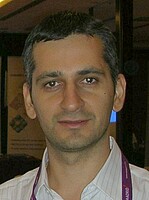
Prof. Dimitris Gizopoulos is a Professor at the Department of Informatics & Telecommunications, University of Athens, leading the Computer Architecture Laboratory. His research focuses on fault tolerance, design validation, performance, and energy efficiency in microprocessors, GPUs, and AI accelerators. He is an IEEE Fellow (2013) and ACM Distinguished Member (2022). His work is supported by Horizon Europe projects like DARE, Neuropuls, and Vitamin-V, alongside industry grants from AMD, Cisco, and Meta. He participates in networks like HiPEAC and Eurolab4HPC and serves on editorial boards of journals including ACM Computing Surveys and IEEE Transactions on Computers . Prof. Gizopoulos teaches Computer Architecture courses at both undergraduate and graduate levels. His research spans cross-layer reliability analysis, voltage scaling effects, and secure hardware design. Notable contributions include frameworks for GPU reliability assessment (GUFI, GPUI-4) and tools like MerLIN for microarchitecture-level analysis. His lab’s work has been funded by the EuroHPC Joint Undertaking and the Greek-China Research Collaboration program. Key Projects: DARE (RISC-V Europe), Neuropuls (neuromorphic accelerators), Vitamin-V (RISC-V cloud environments). Awards: IEEE Fellow (2013), ACM Distinguished Member (2022), IEEE Golden Core (since 2002). Industry Partnerships: AMD, Cisco, Bosch, NVIDIA, Intel, IBM Research. Labs: Leads the Computer Architecture Lab, focusing on fault tolerance and energy-efficient computing. His work emphasizes bridging hardware-software co-design challenges, with publications in top venues like IEEE Transactions on Computers and ACM Computing Surveys . Recent efforts include analyzing silent data corruptions (SDCs) in CPUs and GPUs, and developing validation frameworks for cloud-native architectures.
Prof. Nikos Mamoulis is a Professor at the Department of Computer Science & Engineering, University of Ioannina, and a Lead Researcher at Archimedes Research Unit, ATHENA RC. He holds a PhD from Hong Kong University of Science and Technology (HKUST) and a Diploma from the University of Patras. His research focuses on spatial data management, big data analytics, data privacy, and uncertain data systems. Education : Ph.D., Computer Science, Hong Kong University of Science and Technology (2000) 5-year Diploma, Computer Engineering and Informatics, University of Patras (1995) Research Interests : Complex data management (spatial, spatio-temporal, time-series, text, graphs), big data analysis, privacy preservation, and uncertain data systems. He develops scalable algorithms and systems for modern data management challenges, with applications in transportation, social networks, and geospatial analytics. Projects & Grants : MESA: In-memory Spatial Analytics Made Scalable (HFRI-funded, PI) MORE: Real-time Energy Data Management (H2020, Senior Researcher) Smart City Bus Platform (ERDF-funded, PI/Coordinator) Awards : Outstanding Young Researcher Award (2008-2009, HKU) Best Paper Award at SSTD 2015 Test of Time Award at MDM 2022 Labs & Collaborations : Leads the Archimedes Research Unit at ATHENA RC, collaborating with institutions like HKUST and Uppsala University on spatial and big data systems. Active in organizing top-tier conferences like SIGMOD, EDBT, and ICDE.
Timothy M. Jones is a Professor of Computer Architecture and Compilation at the University of Cambridge Computer Laboratory, where he leads research in systems-level computing. He is also a Fellow at Gonville and Caius College, contributing to academic leadership and student mentorship within the collegiate system. His primary affiliation with the Computer Laboratory positions him at the forefront of systems research within the university. Dr. Jones's research focuses on extracting various forms of parallelism (thread-level, data-level, memory-level) to enhance computational performance while addressing energy efficiency and reliability challenges. His work spans compiler design, binary translation, and microarchitecture optimization, with specific interest areas including: Compiler technologies for functional and parallel programming Hardware reliability and fault tolerance mechanisms Binary analysis and instrumentation frameworks Memory system optimization and virtual memory management Security enhancements through binary modification Runtime systems for heterogeneous architectures Analysis of his recent publications reveals strong emphasis on systems-level innovation, particularly in fault tolerance techniques, binary analysis tools, memory optimization, and parallel execution frameworks. His work consistently bridges theoretical computer science with practical hardware implementation challenges. Dr. Jones maintains active participation in the academic community through conference leadership roles, including serving as Program Co-Chair for CGO 2026 and committee positions at premier venues including ISMM, CGO, and ECOOP. He contributes to open-source academic resources through GitHub and maintains professional engagement via Twitter.
Kyprianos Papadimitriou is a Researcher at the Microprocessor and Hardware Laboratory within the School of Electrical and Computer Engineering at the Technical University of Crete . He holds a PhD in Electronic and Computer Engineering (2012) and has been involved in teaching laboratory courses such as Logic Design , Computer Architecture , and VLSI/ASIC Circuit Design . Research Areas : His work spans Reconfigurable Systems , Hardware Design , Computer Architecture , RFID Systems , and Real-Time Systems . He has developed innovative approaches in FPGA-based dynamic reconfiguration, MPSoC security, and 3D stereo vision for surveillance. Key Trends : Runtime reconfiguration for FPGAs Security frameworks for NoC-based MPSoCs Low-cost embedded vision systems Optimization of reconfiguration overhead Hardware task scheduling methodologies Genetic algorithm implementations on FPGAs Scientific Contributions : 1 USA patent (2005) Co-author of VLSI-SoC 2013 paper nominated for 1st Prize Active member of scientific committees (FPL, ReConFig) Peer reviewer for IEEE, Elsevier, and Springer journals Session chair at IEEE CNS and HPCC conferences Grants & Projects : Participated in competitive European and national programs, serving as scientific manager, coordinator, and technical coordinator. Developed spin-off company (2003-2005) to commercialize master's thesis research. Laboratory & Teaching : Affiliated with the Microprocessor and Hardware Laboratory , focusing on practical training in digital systems, processor-based systems, and VLSI design.
Pavel Panchekha is an Assistant Professor in the School of Computing at the University of Utah, where he holds the Warnock Chair for Junior Faculty. His research spans programming languages, web browsers, and numerical analysis, with a focus on developing programming language techniques to address challenges across computer science. Dr. Panchekha received his educational training at prestigious institutions: PhD in Computer Science from the Paul G. Allen School for Computer Science and Engineering at the University of Washington, advised by Michael D. Ernst and Zachary Tatlock BS in Mathematics from MIT Panchekha's research program has two major thrusts. First, he works on web browser internals , with projects including fuzzing layout invalidation, multi-tenant garbage collection, and optimizing 2D graphics. He is also authoring a textbook on web browsers that informs much of this research. Second, he focuses on automatic numerical analysis , with projects such as automatic accuracy improvement, synthesis via term rewriting, scalable static accuracy analysis, and math library implementation. He leads the FPBench and Herbie projects, which are major deployments of his research. His scholarly output demonstrates consistent contributions across programming languages, verification, and numerical methods. Recent work shows a growing emphasis on bidirectional typing systems, layout invalidation in browsers, and robust floating-point error analysis. His publications reveal a trajectory from foundational work on floating-point accuracy (notably the Herbie tool that won a Distinguished Paper Award at PLDI 2015) toward more comprehensive systems for program synthesis, verification, and browser optimization. Panchekha has received significant recognition for his research contributions: NSF Fellowship ARCS Foundation Fellowship Adobe Research Fellowship Wissner-Slivka Foundation Fellowship 2015 PLDI Distinguished Paper Award for work on the Herbie numerical analysis and repair tool As an advisor, Panchekha mentors a substantial group of students across multiple levels. He currently advises six students: Marisa Kirisame (PhD), Bhargav Kulkarni (PhD), Yumeng He (PhD), Artem Yadrov (MS), Jesus Ponce (BS), and Jonas Regehr (BS). Previously, he has advised over twenty students including PhD candidates like Ian Briggs and numerous MS and BS students. His advising spans theoretical topics in programming languages and practical applications in web browsers and numerical computing. Panchekha leads research groups focused on programming languages applications to web browsers and numerical analysis. His work on the Herbie tool for floating-point accuracy improvement has become influential in the programming languages community, and his more recent work on browser internals is shaping how researchers understand and optimize modern web rendering engines. He is currently developing a textbook on web browsers that aims to synthesize knowledge about browser architecture and implementation.
Amalia Miliou is a Professor in the Department of Informatics at Aristotle University of Thessaloniki, where she has served since 1993, progressing through the academic ranks from Lecturer to her current position as Professor since 2022. She holds a PhD in Electrical and Computer Engineering from the University of Florida (1991) with specialization in Optoelectronics, following an MSc in the same field (1988) and a Physics degree from Aristotle University (1985). Her research focuses on optical communications systems, with specific expertise in optoelectronic circuits simulation, optical switching, optical RAM development, converged fiber-wireless technology, 5G networks, and secure optical communications using chaos theory. Over her career, she has supervised numerous graduate students across these research areas, with thesis topics spanning optical memory systems, fiber-wireless integration, chaos-based secure communications, and advanced optical network architectures. Her recent publications (2021-2024) demonstrate a strong focus on next-generation optical networking solutions for 5G/6G applications, including fiber-wireless convergence, optical memory systems for high-speed networks, and innovative approaches to optical signal processing. Her work bridges fundamental photonics research with practical telecommunications applications, particularly in addressing the bandwidth and latency challenges of modern mobile networks. Professor Miliou has served as the Coordinator of the LLP-ERASMUS student exchange program at the Department of Informatics since 1997 and has held various administrative positions including membership in the University Senate and General Assembly. She has led and participated in numerous research projects, most recently focusing on technological improvements for 5G systems through optical-wireless network development (2019-2021), next-generation healthcare applications leveraging 6G networks (2023-2027), and photonic integrated circuits for random access memory (2012-2015).
Xenia Chryssochoou is a Professor of Social and Political Psychology at Panteion University of Social and Political Sciences in Athens, Greece. She holds a PhD from the University of René Descartes-Paris V (1996) and has held academic positions across France, Switzerland, the UK, and Greece. Currently, she directs the Social and Political Psychology Lab and serves as Vice President of the Scientific Council of the Hellenic Foundation for Research and Innovation. Education PhD in Psychology, University René Descartes-Paris V (1996) Masters/Undergraduate degrees in Psychology, University of Athens Research Interests Social and political identity construction in liberal societies Multiculturalism, migration, and integration challenges Political participation and crisis response mechanisms European integration dynamics and national identities Her research emphasizes societal cohesion and conflict in multicultural environments, with a focus on identity processes during crises. Over 36 peer-reviewed articles and 4 authored books reflect her work on inequality, globalization perceptions, and collective action. Editorial Roles Associate Editor, International Review of Social Psychology (2015–2018) Consulting Editor, Journal of Social and Political Psychology Guest Editor for special issues on political engagement and globalized societies Labs/Teams Director of the MSc program in Social Psychology of Conflicts and the university’s Social and Political Psychology Lab.
Sophia Aneziri is an Associate Professor at the National and Kapodistrian University of Athens within the School of Philosophy and Department of History and Archaeology . Her academic career spans teaching and research in Ancient History and Greek Epigraphy, with a focus on the Hellenistic and Roman periods. Education: BA in History and Archaeology (1989), University of Athens; PhD in Ancient History and Greek Epigraphy (1997), Heidelberg University, supported by scholarships from Greece and Baden-Württemberg. Professional Appointments: Faculty member since 2004; previously adjunct faculty at Universities of Corfu, Crete, Thessaly, and Hellenic Open University; contract researcher at the National Research Center. Research Interests: Dr. Aneziri’s work bridges Greek Epigraphy, Ancient Economy, and the socio-religious dynamics of endowments. She explores female euergetism, professional associations (e.g., Dionysiac technitai), and legal-economic frameworks of perpetual foundations in antiquity. Publication Trends: Her recent articles (2025–2020) analyze endowments, ruler cults, and naming conventions in the Roman period. She emphasizes the intersection of economic practices, religious rituals, and institutional development across Greek and Hellenistic societies. Academic Contributions: She has presented at the XVI International Congress of Greek and Latin Epigraphy (2022) and contributed to Cambridge University Press volumes on professionalism and theater history.
Todd Millstein is a Professor in the Computer Science Department at the University of California, Los Angeles (UCLA). He served as the Computer Science Department Chair from 2022-2025 and is also an Amazon Scholar. His research focuses on making software systems more reliable through programming languages techniques, with significant contributions to network verification and probabilistic programming. Millstein received his Ph.D. from the University of Washington Department of Computer Science, where he was a member of the Cecil group led by Craig Chambers. Prior to that, he completed his undergraduate studies at Brown University under the guidance of Paris Kanellakis and Pascal Van Hentenryck. Millstein's research spans several areas of programming languages and systems with a focus on reliability. He has made significant contributions to network verification, developing the Batfish network configuration analyzer which is now managed by Amazon Web Services and forms the basis of Oracle Cloud's Network Path Analyzer. His work has been recognized with the ACM SIGCOMM Networking Systems Award in 2025. He also works on interactive program verification through lemma synthesis and scalable reasoning methods for probabilistic programming languages. His research bridges programming languages theory with practical systems challenges, as highlighted in his SPLASH/OOPSLA 2024 keynote "Everything is a Program (even if it's not)". Millstein's recent publications demonstrate a consistent focus on verification and reliability across multiple domains. His work shows a progression from foundational programming language techniques to practical applications in networking and probabilistic systems. Key themes include data-driven approaches to program analysis, synthesis of verification artifacts, and applying programming languages techniques to non-traditional domains like network configuration. Millstein's scientific achievements have been recognized with numerous prestigious awards including an NSF CAREER Award, an ACM SIGPLAN Most Influential PLDI Paper Award, an ACM SIGCOMM Networking Systems Award, IEEE Micro Top Picks selection, best-paper awards from PLDI, OOPSLA, and SIGCOMM, a Microsoft Research Outstanding Collaborator Award, an Okawa Foundation Research Grant, an IBM Faculty Award, and a Facebook Research Award. He has also received both the Northrop Grumman Excellence in Teaching Award (for junior faculty) and the Eon Instrumentation Inc. Excellence in Teaching Award (for senior faculty) from UCLA Engineering. Millstein advises several Ph.D. students including Ana Brendel, Poorva Garg (co-advised with Guy Van den Broeck), Rajdeep Mondal (co-advised with George Varghese), and Rathin Singha (co-advised with George Varghese). His research has been supported by various grants including an NSF CAREER Award, Okawa Foundation Research Grant, IBM Faculty Award, and Facebook Research Award. He has also been a Co-Founder and Chief Scientist of Intentionet, which was later acquired by Amazon Web Services. Millstein is actively involved in the Batfish project, an open-source network configuration analyzer that has had significant practical impact. Batfish is now managed by AWS, powers Oracle Cloud's Network Path Analyzer, and is used by dozens of companies. His research group continues to work on network reliability, developing techniques for scalable BGP policy verification and behavioral testing of protocol implementations.
Laxman Dhulipala serves as an Assistant Professor in the Department of Computer Science at the University of Maryland, College Park, while also working as a research scientist at Google Research with the Graph Mining team. Dr. Dhulipala earned his Ph.D. from Carnegie Mellon University under Guy Blelloch's supervision and completed a postdoctoral fellowship at MIT with Julian Shun. His research centers on efficient parallel algorithms, particularly for parallel clustering and graph processing, along with developing computational models for emerging hardware technologies. His scholarly output demonstrates significant expertise across parallel computing domains, with particular emphasis on scalable graph algorithms, dynamic data structures, and computational geometry. Dr. Dhulipala's work bridges theoretical computer science with practical systems implementation, producing algorithms that achieve both theoretical optimality and real-world performance. His research group has made substantial contributions to benchmarking frameworks including the Graph Based Benchmark Suite (GBBS) and ParClusterers Benchmark Suite, establishing standardized evaluation methods for graph processing systems. The collective work shows progression from theoretical foundations to practical implementations that handle massive-scale datasets. Best Paper Award at SPAA 2022 Best Paper Runner Up at VLDB 2022 Distinguished Paper Award at PLDI 2019 Memorable Paper Award Finalist at NVMW'20 CMU's SCS Dissertation Award Honorable Mention As an educator, Dr. Dhulipala mentors numerous graduate students while teaching advanced courses in algorithm design and parallel computing. His research collaborations span multiple institutions including Carnegie Mellon University, MIT, and Google Research, reflecting his position at the intersection of academia and industry research.
Professor Gregoris Mentzas is a faculty member at the National Technical University of Athens, School of Electrical and Computer Engineering, where he directs the Division of Industrial Electric Devices and Decision Systems. His research focuses on AI-enabled decision systems, knowledge management, and semantic technologies applied to digital enterprises and e-government. With over 350 publications, he ranks among the top 2% most cited scientists globally. Research Interests: Artificial intelligence for decision augmentation, big data analytics in personalized health and smart mobility, semantic web technologies, and industrial internet of things. Current projects investigate trustworthy AI frameworks and hybrid intelligence systems for Industry 5.0. Teaching: Leads courses in Digital Enterprise Management, Strategic Information Systems, and Project Management at undergraduate and postgraduate levels, incorporating industry case studies and experiential learning approaches. Awards & Leadership: Top 2% Highly Cited Scientist (PLOS Biology 2021) 5 Best Paper Awards in international conferences Director of Information Management Unit (1997-present) Board Member of Institute of Communication and Computer Systems (2006-2009) Projects & Funding: Secured over €18 million in research grants through 60+ European projects with industry partners including SAP, IBM, and Siemens. Research outcomes led to three technology spin-offs.
Chr. Kavousianos is an Assistant Professor in the Department of Informatics at the University of Ioannina, Greece. He is actively engaged in research and teaching in the fields of VLSI design, testability, and low-power testing. He has been involved in major national and international research programs such as Heracleitus II, Pythagoras, and NSF-SRC (USA). Research Interests: His research focuses on advanced techniques in built-in self-test (BIST), test data compression, scan-based testing, fault tolerance, and embedded control architectures. He explores methods to reduce test data volume, power consumption during testing, and improve defect coverage in integrated circuits. Publication Trends: His recent publications (2004–2011) show a strong trend toward defect-aware testing, power-efficient test compression, and multicore SoC testing. He frequently collaborates with leading researchers, including Prof. Krishnendu Chakrabarty (Duke University). His work on multilevel Huffman coding and reseeding techniques has been highly influential, with one paper among the most accessed in 2004. Special Distinction for Excellent Academic Performance from TEE, 1996 Doctoral Scholarship 'In Memory of Professor Maritsa', 1999 Postdoctoral Scholarship from IKY, 2002 Advising and Grants: He has supervised multiple postdoctoral researchers, PhD candidates (e.g., Vasilis Tenentes, Emmanouil Kalligeros), and master’s students. He has led research projects such as 'Embedded Control Architectures' (Heracleitus II) and 'Design Techniques for Embedded Self-Control Circuits' (Pythagoras II). His international collaboration with Duke University included a postdoctoral research role in 2009. Labs and Teams: He leads a research group at the University of Ioannina with postdocs, PhD students, and visiting professors, including Prof. Krishnendu Chakrabarty. His team works on cutting-edge VLSI testing and design methodologies.
Jovan Stojkovic is an incoming Assistant Professor at the Department of Computer Science at the University of Texas at Austin, set to join in Fall 2026. Prior to his appointment at UT Austin, he will spend a year at Meta working with the AI and Systems Co-design group. His research focuses on cloud computing and datacenters, with particular emphasis on cloud-native workloads and machine learning inference. Education: PhD in Computer Science from the University of Illinois at Urbana-Champaign, advised by Professor Josep Torrellas Undergraduate studies at the School of Electrical Engineering, University of Belgrade, Serbia, where he was recognized as the best student of the Computer Engineering and Information Theory Department every year from 2017-2020 Research Interests: Jovan's research focuses on cloud computing and datacenters , with two primary domains: Cloud-native workloads , such as microservices and serverless computing. He investigates how to co-design novel hardware platforms and software systems that deliver orders-of-magnitude improvements in performance, energy efficiency, and resource utilization for these emerging workloads. Machine Learning (ML) inference , particularly large language models (LLMs). His work addresses the challenges of ML inference through smart scheduling, workload placement, and system-level configuration tuning to reduce energy, power, and thermal overheads while maintaining performance and accuracy guarantees. Publication Trends: Jovan's publications demonstrate a strong focus on optimizing cloud infrastructure for emerging workloads. His research spans across serverless computing, microservices, and large language model inference. A clear trend emerges in his work: addressing the performance, energy efficiency, and resource utilization challenges of modern cloud workloads through innovative hardware-software co-design approaches. His most recent work shows increasing focus on LLM inference optimization, particularly in the areas of thermal management, power efficiency, and scheduling for many-adapter environments. Awards and Honors: HPCA Best Paper Award (2025) IEEE MICRO Top Picks Honorable Mention (2024) 6 patents with IBM and Microsoft on: Serverless systems, Processor overclocking in the cloud, and Energy-efficient LLM inference W. J. Poppelbaum Memorial Award (2025) for hardware and architecture innovation Mavis Future Faculty Fellowship (2024–2025) Invited to present at 11th Heidelberg Laureate Forum (2024) Kenichi Miura Award (2022) for excellence in High Performance Computing Multiple student travel grants to ISCA, MICRO, ASPLOS, and HPCA Advising and Grants: Jovan is actively seeking prospective PhD students for his research group at UT Austin. His research has been supported through collaborations with major tech companies including IBM, Microsoft, and Meta. His six patents with IBM and Microsoft demonstrate the practical impact of his research in serverless systems, processor overclocking, and energy-efficient LLM inference. His work on serverless computing (MXFaaS, EcoFaaS) and LLM inference optimization has received significant recognition in top-tier computer architecture conferences. Research Groups: During his PhD at UIUC, Jovan worked with Professor Josep Torrellas on cloud infrastructure research. He has collaborated extensively with researchers at IBM Research (particularly Hubertus Franke) and Microsoft (particularly Íñigo Goiri and Ricardo Bianchini). His upcoming position at UT Austin will establish his independent research group focused on cloud computing and datacenter systems. His year at Meta working with the AI and Systems Co-design group will further strengthen his expertise in AI infrastructure.
Yannis Stylianou is Professor of Speech Processing at University of Crete and Senior Research Scientist at Apple. Former positions include AT&T Labs Research, Bell-Labs, and Toshiba Cambridge Research Lab. IEEE Fellow with PhD from ENST-Paris and over 200 publications. Research spans: Adaptive speech/audio modeling Neural speech synthesis/enhancement Biomedical signal processing Awards include: IEEE Fellowship French Ministry Research Fellowship ENST Graduate Scholarship Recent work focuses on neural TTS architectures, intelligibility enhancement, and multimodal synthesis. Organizes annual International Summer School on Speech Processing.
Marlen Mouliou is an Assistant Professor of Museology at the Department of History and Archaeology , National and Kapodistrian University of Athens (NKUA), affiliated with the School of Philosophy . She leads the Postgraduate Programme in Museum Studies and coordinates CIVIS Open Labs and Service-Learning initiatives. Her roles include overseeing public archaeology projects at the Marathon excavation and serving on committees like the European Academic Heritage Network (UNIVERSEUM) and the Peloponnesian Folklore Foundation . Education: Bachelor's in Archaeology and History of Art, NKUA MA and PhD in Museum Studies, University of Leicester, UK Research Interests: Focus on museums' social value, participatory practices, university museums, and community engagement. Key themes include contested histories, urban museology, and refugee empowerment through cultural projects like The Museum of Our Discoveries . Publications: Over 50 works including Revisiting Museums of Influence (2021) and articles on post-war Greek museum narratives, urban heritage, and refugee inclusion. Recent projects emphasize service-learning and civic engagement methodologies. Awards: Fulbright Foundation Grant (2023-24) as Visiting Scholar. Grants & Projects: KA2 Erasmus+ Service-Learning Project (2022-24) Co-founder of Tetradia Mouseiologias journal Labs & Teams: Leads NKUA's public archaeology initiatives and co-ordinates interdisciplinary teams in museum innovation and urban studies.