Kimberley O'Neill serves as a Lecturer in Design-Communication Design at The Glasgow School of Art. Her practice encompasses visual arts, media arts, and cross-disciplinary methodologies, often exploring intersections between installation art, digital media, and conceptual frameworks. 2023 : Featured in Berwick Film Festival through Screentime exhibition and screening. 2019 : Presented solo exhibition 'Enigma Bodytech' and participated in Artists Moving Image Festival. 2018 : Coordinated 'Rough Music Workshop' and exhibited at Plymouth Arts Centre. 2017 : Showcased 'Circuits of Bad Conscience' and contributed book chapter 'Slippery Women'. 2016 : Participated in 'Conatus TV' and 'Line of Sight' group exhibition. 2015 : Collaborated on 'Nos Algae's' and 'Amygdala N.O.S' projects. Her research focuses on experimental visual practices that synthesize technology, environmental themes, and spatial interventions. Recent works like 'Screentime' (2023) and 'Porpoise Escape' (2017) demonstrate her interest in abstract narrative structures and digital-physical intersections. Collaborative projects such as 'Visualising the Rite' (2013) highlight educational methodologies that bridge traditional and contemporary art approaches. Exhibition activity spans diverse contexts including Edinburgh Art Festival (2016), South London Gallery (2015), and Glasgow's Tramway (2019). While specific awards and student mentorship data aren't provided, her extensive exhibition record indicates significant contributions to contemporary art practices through installations, video works, and participatory formats.
Miriam Ashford is an Assistant Professor in the Department of Psychiatry at the University of California, San Francisco (UCSF) School of Medicine. Her research focuses on Alzheimer's disease, cognitive decline, and brain health equity, with an emphasis on community-engaged approaches to research. Education: BSc in Psychology from the Faculty of Language and Literature, Humanities, Arts and Education, University of Luxembourg (2011) MSc in Foundations of Clinical Psychology and Mental Health from the School of Psychology, University of Sussex, Brighton, UK (2012) Postgraduate Certificate in Academic Teaching from the Department of Learning Enhancement and Development, City, University of London, UK (2015) PhD in Health Psychology from the Centre for Maternal and Child Health Research, City, University of London, UK (2018) Postdoctoral fellowship in Neuroscience at NCIRE & University of California, San Francisco, CA (2025) Dr. Ashford's research interests center on Alzheimer's disease and cognitive aging , with particular emphasis on developing and validating online assessment tools for cognitive decline. She has pioneered work in community-engaged research to improve representation of minority populations in Alzheimer's research, focusing on culturally informed approaches to recruitment and retention. Her work bridges health psychology, neuropsychology, and digital health , with significant contributions to understanding subjective cognitive decline and developing accessible assessment methods. Her publication record demonstrates a clear trajectory from early work on perinatal mental health to her current focus on cognitive aging and Alzheimer's disease. She has developed expertise in online research methodologies , contributing significantly to the Brain Health Registry and Alzheimer's Disease Neuroimaging Initiative (ADNI). Her recent work emphasizes health equity , with multiple publications addressing barriers to research participation among underrepresented racial and ethnic groups. Scientific Awards and Honors: Research Sustainability Fund from School of Health Sciences, City, University of London (2016) Workshop Bursary from PsyPAG Postgraduate Student Organisation (2015) Best Poster Award 1st Prize at 3rd School of Health Sciences Annual Doctoral Research Conference (2015) Best Poster Award 1st Prize at 5th Annual Postgraduate Research Symposium, City, University of London (2015) Oral Presentation Runner-Up Prize at 4th Annual Postgraduate Research Symposium, City, University of London (2014) Best Presentation Award 3rd Prize at 26th Annual Convention of the Association for Psychological Sciences (2014) Travel Assistance Award from 29th Annual PsyPAG Postgraduate Student Conference (2014) Conference Bursary from City University of London (2014) PhD Studentship (fully funded PhD scholarship) from City University of London (2013) Academic Exchange Scholarship (ERASMUS) (2010) Dr. Ashford has been actively involved in major research initiatives including the Alzheimer's Disease Neuroimaging Initiative (ADNI), where she serves on the Engagement Core for ADNI-4, focusing on culturally informed, community-engaged research to advance brain health equity. She has secured funding to support her work on digital interventions for increasing research participation among Black American participants through the Community Engaged Digital Alzheimer's Research (CEDAR) Study. Her research has been supported by multiple grants focused on improving representation in Alzheimer's research and developing accessible cognitive assessment tools. As a key contributor to the Brain Health Registry, Dr. Ashford has helped develop infrastructure for digital, dyadic data collection and has led efforts in remote blood collection for biomarker analysis. Her work bridges clinical research with digital health innovation, creating novel approaches to participant recruitment, screening, and assessment for Alzheimer's clinical research.
Dr. Jacqueline Wong is an Assistant Professor in the Department of Education and Pedagogy at the Faculty of Social and Behavioural Sciences, Utrecht University. Her academic work focuses on enhancing educational practices through evidence-based research in self-regulated learning and learning analytics, with particular applications in higher education contexts. Dr. Wong earned her Ph.D. (cum laude) from Erasmus University Rotterdam with a thesis entitled "Enhancing Self-Regulated Learning Through Instructional Supports and Learning Analytics in Online Higher Education," which received the Best Thesis Award 2021 from the Erasmus Graduate School of Social Sciences and the Humanities. She completed her Master's degree (cum laude) in Educational Psychology, where she examined the use of movements to support text comprehension. Prior to joining Utrecht University, she was a postdoctoral researcher at Delft University of Technology (2020-2022) working with the Program of Innovation in Mathematics Education (PRIME). Dr. Wong's research program spans several interconnected areas: the application of learning analytics to support self-regulated learning, the design of instructional interventions that promote metacognitive awareness, and the investigation of how emerging technologies like generative AI can enhance educational experiences. Her work frequently examines how technology can be leveraged to support students' metacognitive processes and goal-setting behaviors in both traditional and online educational settings. She has made significant contributions to understanding how conversational agents and learning analytics can provide personalized support for students' self-regulated learning processes. Analysis of her recent publications reveals a clear trajectory toward integrating emerging technologies with established educational theories. Her 2024-2025 work increasingly focuses on the intersection of artificial intelligence and educational psychology, particularly examining how generative AI tools can enhance academic text accessibility and provide adaptive support for learning. She also continues to investigate cognitive aspects of learning in educational games and augmented reality environments, with implications for both educational practice and learning theory development. Among her notable achievements, Dr. Wong received the Best Thesis Award 2021 from the Erasmus Graduate School of Social Sciences and the Humanities. This recognition highlights the significant contribution her doctoral work has made to the field of educational psychology and learning sciences. Her systematic reviews, including examinations of student engagement in mathematics education and gamification in MOOCs, have provided valuable syntheses of research in growing areas of educational technology. Dr. Wong has been an active research member of the Leiden-Delft-Erasmus Centre for Learning and Education (LDE-CEL) and the network for Self-Regulated Learning in Digitalised Schools (SeReLeDiS). Her collaborative approach to research is evident in her extensive co-authorship network across multiple institutions. Before joining Utrecht University, she worked with lecturers to promote student motivation and self-regulated learning in blended service mathematics courses and examined the effectiveness of technology tools for learning mathematics. Dr. Wong's work bridges theoretical frameworks with practical implementations, often involving close partnerships with educators to ensure research relevance to real-world classroom challenges. Her current research appears to be moving toward deeper integration of AI technologies with educational theory, particularly examining how generative AI can support metacognitive processes and self-regulated learning across diverse educational contexts.
Jose Villalba is a Professor and Chief Diversity Officer at Wake Forest University, where he has served since 2011. He holds a Ph.D. in Counselor Education and an Ed.S. in Counseling from the University of Florida. Research focuses on health disparities in Latino adolescents , multicultural counseling , and college access for underserved populations . His work spans school counseling , caregiver stress , and mental health interventions in diverse communities. Recent publications highlight trends in multicultural competence , DEI initiatives , and Latino educational empowerment . Awards include the Presidential Award from the Association for Specialists in Group Work (2019) and the UNCG Alumni Teaching Excellence Award (2007). As a licensed professional counselor , he has worked in memory counseling programs and family therapy settings. Professional service includes editorial roles at the Journal for Specialist in Group Work and leadership in the American Counseling Association Foundation . Grant initiatives emphasize Latino college access and health disparities in rural communities , funded by institutions like the Kate B. Reynolds Charitable Trust and NIH.
Dr. Mohammed Estaiteyeh serves as an Assistant Professor of Digital Pedagogies and Technology Literacies in the Department of Educational Studies, Faculty of Education, at Brock University. He holds the Brock Chancellor’s Chair for Teaching Excellence and leads digital technology courses in the Teacher Education program while presiding over Technology and Teacher Education (TATE), a special interest group within the Canadian Society for the Study of Education. His academic credentials include a PhD in Curriculum Studies with STEM focus from Western University (2022), complemented by over 15 years of multifaceted experience spanning K-12 teaching, academic leadership, educational consulting, and higher education program development. His scholarly trajectory demonstrates continuous engagement from teacher training through advanced research leadership. Dr. Estaiteyeh’s research program rigorously explores educational technology integration across multiple dimensions: AI-driven pedagogical innovations, immersive VR/AR applications, digital transformation frameworks, and equity-centered technology implementation. His work consistently bridges STEM education with differentiated instruction methodologies, examining how technological tools can address diverse learner needs while advancing curriculum innovation in both K-12 and post-secondary contexts. Particular emphasis is placed on teacher professional development and the ethical implications of emerging technologies. Analysis of his 15 most recent publications (2022-2024) reveals three dominant thematic clusters: (1) AI and immersive technologies in teacher preparation, (2) pandemic-accelerated digital transformation in STEM education, and (3) interdisciplinary program development for medical sciences education. His scholarship demonstrates methodological diversity spanning systematic reviews, case studies, and empirical evaluations of technology-enhanced teaching interventions. Prestigious Recognition: Brock Chancellor’s Chair for Teaching Excellence (2023-2026) Fellowships: Ontario Graduate Scholarship (2021-2022) Inclusive Education Awards: Jessica Jean Campbell Coulson Award and Inclusive Education Research Award (2020) Teaching Excellence: Art Geddis Learning About Teaching Memorial Award (2021) His active research portfolio includes $60,000 in Mitacs Globalink funding for 2025 internships and multiple institutional grants supporting digital transformation initiatives. As an available graduate advisor, he focuses on developing interdisciplinary research partnerships through Brock’s Social Justice Research Institute and Transforming Futures Lab, with current projects examining technology access in marginalized communities and AI ethics in teacher education.
Auli Vähäkangas serves as Professor of Practical Theology at the University of Helsinki's Faculty of Theology, where she also supervises in the Doctoral Program in Theology and Religious Studies and contributes to the Helsinki Inequality Initiative (INEQ). Her international academic presence includes visiting researcher positions at both University of Johannesburg (2023-2026) and Stellenbosch University in South Africa (2023-2026). Her research centers on death studies, bereavement practices, and pastoral care in contemporary contexts. Vähäkangas examines how religious communities navigate grief, particularly through her leadership in the MeDea project on worldview minority cemeteries in Finland. Her work bridges theological inquiry with practical social challenges, including refugee support through diaconal work, African-Catholic identity formation in Finland, and chaplaincy with dementia patients in nursing homes. She investigates how secularization pressures affect spiritual care while maintaining narrative approaches to existential questions. Analysis of her recent publications reveals consistent focus on death rituals across Nordic contexts, innovative pastoral approaches in healthcare settings, and religious responses to migration crises. Her work combines empirical theology with practical application, often addressing how traditional religious practices adapt to contemporary societal challenges. Vähäkangas actively mentors the next generation of scholars as evidenced by her supervision of 8 doctoral dissertations and 2 Master's theses. Her research is supported by significant grants including Academy of Finland funding for the MeDea project (2024-2028) and the 'Funerals during Covid-19' initiative. She also contributes to institutional change through projects like establishing Black History Month at the University of Helsinki. Her public engagement includes 23 public talks and 8 media appearances where she discusses death positivity, grief processing, and religious responses to social crises. Notable presentations include 'Waves of grief after the loss of a loved one' and 'Life is about dying – how should we talk about the inevitable?'
Danyal Farsani is an Associate Professor at the Department of Teacher Education , Norwegian University of Science and Technology (NTNU), specializing in mathematics education through the lens of embodied cognition and cultural responsiveness . His work bridges teacher training , gesture-based learning , and cross-linguistic analysis in educational contexts. Key Research Themes: Embodied mathematical concepts, cognitive load in arithmetic, cultural/ethnomathematical practices, and multimodal communication in classrooms. Recent Collaborations: Focus on global North-South educational dynamics, robotics integration in teacher training, and metaphorical processing in language learning. Methodological Focus: Empirical studies using mental arithmetic tasks, gesture analysis, and cross-cultural curriculum evaluations. Publication Trends (2022–2025): Analysis of 15 recent articles reveals recurring emphasis on embodied cognition , mathematical metaphors , visual attention mechanisms , and culturally adaptive teaching tools like the Ethiopian Gebeta game. Subfields span gesture studies , cross-linguistic pedagogy , and innovative teacher education frameworks . No scientific awards or student advisories are explicitly mentioned in the provided data.
Alan W. Stacy is a Professor at Claremont Graduate University's School of Community and Global Health. He received his PhD in Social and Personality Psychology (Health Psychology focus) from the University of California, Riverside, with postdoctoral training at the University of Washington and University of Southern California. Stacy has held tenured professorships at UCLA and USC's Keck School of Medicine, and served as Associate Dean/Interim Dean at CGU. Key affiliations: NIH, CDC, FDA-funded research Leadership roles: Interim Dean (2018), Associate Dean (2008-2018) His research applies cognitive neuroscience and implicit cognition to understand health behaviors and addiction in high-risk populations. He pioneered the use of automatic memory processes in addiction studies and co-edited the foundational text on Implicit Cognition and Addiction . Recent work includes digital interventions for hepatitis/HIV risk reduction and epidemiological studies on e-cigarette/opioid use among youth. Dr. Stacy's publications span Behavioral Medicine , Psychological Assessment , and Addiction Biology , with a focus on translational research from lab to field. His NIH-funded career includes 8 R01 grants and a P50 center grant. Current projects investigate mobile health interventions for physical activity and dietary changes.
Dr. Frank B. Hu is Chair of the Department of Nutrition, Fredrick J. Stare Professor of Nutrition and Epidemiology at Harvard T.H. Chan School of Public Health, and Professor of Medicine at Harvard Medical School and Brigham and Women’s Hospital. His research focuses on diet/lifestyle, metabolic, and genetic determinants of obesity, type 2 diabetes, and cardiovascular disease (CVD). Education: MD in Preventive Medicine, Tongji Medical College, China (1988) MPH in Epidemiology, University of Illinois at Chicago (1993) PhD in Epidemiology, University of Illinois at Chicago (1996) Postdoctoral Fellowship in Nutritional Epidemiology, Harvard T.H. Chan School of Public Health (1999) Research Interests: Dr. Hu’s work spans epidemiology and prevention of cardiometabolic diseases through diet and lifestyle, gene-environment interactions, nutritional omics, precision nutrition, and nutrition transitions in low- and middle-income countries. His group has conducted detailed analyses of dietary and lifestyle factors (e.g., sugar-sweetened beverages, coffee, red meat, fatty acids, dietary patterns) in relation to diabetes and CVD risk, using large cohort studies like the Nurses’ Health Study and Health Professionals Follow-up Study. They integrate omics technologies to identify novel biomarkers and gene-environment interactions, advancing precision nutrition. Collaborations include the PREDIMED investigators examining Mediterranean diet interventions. Scientific Awards: Elected member, National Academy of Medicine (2015) Kelly West Award in Diabetes Epidemiology (2010) American Diabetes Association Established Investigator Award, American Heart Association (2002) AHA Top Ten Research Advances (2001, 1997) Ancel Keys Memorial Lecturer (2018) Boyd Orr Trust Fund Lecturer (2020) Scientific Award Keynote Speaker (2022) Charles A. King Trust Research Fellowship (1998) Elizabeth Barrett-Connor Award Finalist (1998) Grants and Funding: Dr. Hu serves as Principal Investigator for NIH grants including Dietary Biomarkers Development Center at Harvard University (U2CDK129670) and Lifestyle Interventions, metabolites, microbiome, and diabetes risk (R01DK127601). He is a Co-Investigator in studies on sugar-sweetened beverages and obesity (R01DK125803) and infant epigenetics (R01AI148338).
Dr. Adriana Laura Massidda is a Lecturer in Architectural Humanities at the School of Architecture and Landscape , University of Sheffield. Her research bridges architectural history, urban studies, and environmental humanities, focusing on informal settlements and their socio-political implications. Research Interests: Shantytown history and urban informality Critical environmental analyses of waste, flooding, and infrastructure Social housing and co-design methodologies Urban rivers and landscape design Phytoremediation in marginalized contexts Scientific Awards: Declared asset of cultural significance (Bien de Interés para la Comunicación Social) by the Buenos Aires Legislature (2023) for collaborative work on shantytown histories Publications & Impact: Massidda's research focuses on urban transformations in Argentina and the UK, particularly examining sewage farm repurposing in London/Leicester housing projects. Her work combines historical analysis with design-led interventions, emphasizing marginalized communities' agency. Teaching & Supervision: She teaches architectural humanities and supervises research on urban design, landscape, and socio-environmental challenges in informal settlements.
Dr. Jackie Clarke serves as Senior Lecturer in French within the Department of Modern Languages and Cultures at the University of Glasgow, where she has been faculty since 2013. Her cross-disciplinary research bridges History and French Studies with particular focus on twentieth and twenty-first century France, examining intersections of labor, gender, and consumption. Her research interests center on deindustrialization's sociocultural legacies, gendered workforce experiences, and French socioeconomic history since the 1950s. Key thematic areas include: Memory and nostalgia in post-industrial communities Gender dynamics in economic restructuring Consumer culture and domestic appliance history Technocratic governance in modern France Working-class identity transmission Clarke's recent publications demonstrate an evolving trajectory from case studies of French industrial decline (particularly through the Moulinex brand lens) toward transnational gendered deindustrialization research. Her collaborative work now dominates, reflecting the field's shift toward comparative methodologies and interdisciplinary frameworks, with major contributions to the Routledge International Handbook of Deindustrialization Studies. As an active research supervisor, Clarke leads projects on global deindustrialization through significant grants including SSHRC Partnership Grants and Royal Society of Edinburgh funding. Her current major projects include the transnational DéPOT initiative and advisory role on the CONDE project, emphasizing collaborative international scholarship. Clarke contributes to institutional service as Editorial Collective member for Gender and History and AHRC Peer Review College participant, while maintaining active membership in the Association for the Study of Modern and Contemporary France and Society for the Study of French History.
Professor Dr. Jessica Gienow-Hecht is a leading academic in the field of international and global history, with a specific focus on North America and its transatlantic relations. She holds the Chair of History Department at the John F. Kennedy Institute for North American Studies at Freie Universität Berlin. Additionally, she is a principal investigator for the Cluster of Excellence "Contestations of the Liberal Script" (SCRIPTS) , leading the research unit BORDERS and the project "Gender, Borders, Memory" .
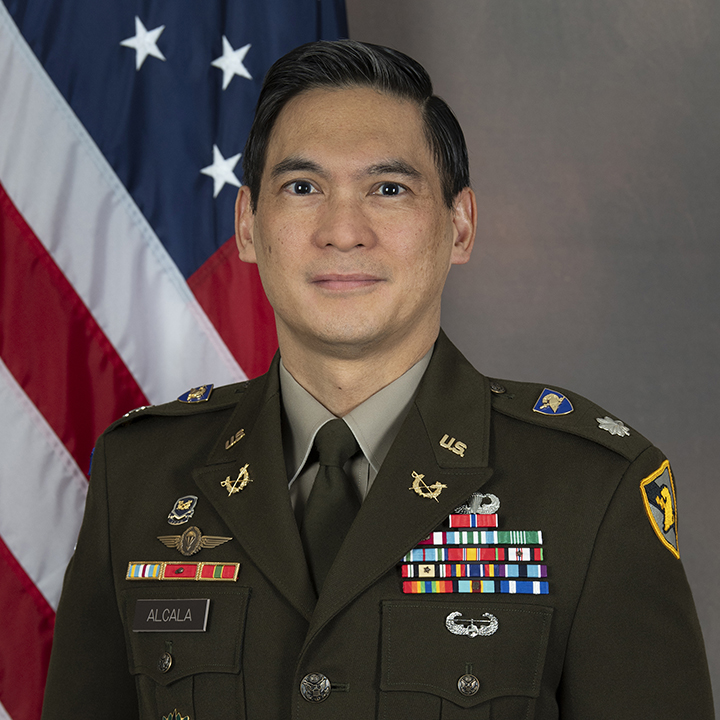
LTC Ronald Alcala is an Academy Professor and Associate Dean for Strategy & Initiatives at the United States Military Academy at West Point. He also serves as Executive Editor of the West Point Press and Articles of War. A former Judge Advocate, he has held diverse legal roles in criminal law, international law, and administrative law, including assignments in Iraq and Afghanistan. Education: B.A. in History and Classics from Williams College J.D. from George Washington University Law School MALD from Fletcher School of Law and Diplomacy, Tufts University LL.M. in Military Law from The Judge Advocate General’s School Research Interests focus on Law of Armed Conflict , International Law , and Cultural Heritage , particularly examining legal frameworks in conflict zones, digital cultural preservation, and the intersection of technology with warfare ethics. Recent Publications address topics such as Ukraine's legal challenges in war, lethal autonomous weapons regulation, digital cultural property, and human remains in conflict contexts. These works span interdisciplinary themes including military law, technological ethics, and cultural preservation. Scientific Awards: NATO’s Serge Lazareff Prize for excellence in legal services ASIL’s 2023 Richard R. Baxter Military Prize Leadership & Grants: Co-editor of a major Oxford University Press book on emerging technologies and law of war; elected member of ASIL’s Law of Armed Conflict Interest Group. His work has influenced policy on non-combatant evacuations and cultural property protection.
Lisa H. Nishii is a Professor at the ILR School, Cornell University, and serves as Vice Provost for Undergraduate Education. She holds a Ph.D. and M.A. in Organizational Psychology from the University of Maryland and a B.A. in Economics from Wellesley College. Education: Ph.D. & M.A., Organizational Psychology (University of Maryland); B.A., Economics (Wellesley College) Nishii specializes in organizational inclusion, examining how leadership behaviors, HR practices, and diversity climates impact workplace outcomes. Her research spans multi-level analyses across federally funded projects, focusing on: Leadership strategies for inclusive climates Impact of diversity on creativity and performance HR practices for reducing discrimination Workplace dynamics for employees with disabilities Cultural influences on organizational behavior Her recent publications (2025) address diversity climate synthesis, leader training interventions, and inclusion metrics. Earlier work (2006–2016) explores personality traits in workplace performance, cultural tightness-looseness, and disability accommodation frameworks. Key Awards: Gordon Allport Intergroup Relations Prize (2012) Kendall S. Carpenter Memorial Advising Award (2025) Wallace Reins Best Dissertation Award (2025) MacIntyre Award for Exemplary Teaching (2025) She chairs the Academy of Management’s Gender and Diversity in Organizations Division and leads Cornell’s International Programs. Her consulting work focuses on diversity, inclusion, and organizational assessment for multinational companies.
Teresa Treat is a Professor in the Department of Psychological and Brain Sciences at the University of Iowa. Her research integrates clinical psychology with cognitive science, focusing on sexual aggression prevention, social perception, disordered eating, and psychometrics. Education: PhD from Indiana University (2000) Her work examines cognitive mechanisms underlying sexual aggression risk, including attentional biases, memory deficits, and social norm misperceptions. She has developed computerized prevention programs combining cognitive training with motivational interviewing to address sexual aggression, risky sex, and heavy drinking among college men. Recent publications analyze sexual perception accuracy, cognitive processing of affective cues, and health behavior misjudgments. Her lab employs signal detection theory, eye-tracking, and computational modeling to study these processes. Projects include NIAAA-funded studies on alcohol’s impact on visual attention and NIH-funded development of protective behavioral strategies. Collaborators include Drs. Corbin (ASU), Viken (IU), and McFall (IU).