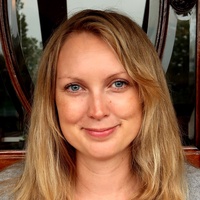
Dr Daniel Conway is a Reader in Politics and International Relations at the University of Westminster, specializing at the intersection of Feminist International Relations, political sociology, and queer theory. He leads research on LGBTQ+ activism, migration, and critical whiteness studies. His Leverhulme Trust-funded project examines global LGBTQ+ Pride events, challenging Western-centric narratives through comparative studies in Africa, Asia, and North America. His forthcoming book The Queer Politics of Pride critiques homocapitalism and activist dynamics. Previously, he explored anti-apartheid activism in South Africa, focusing on white conscientious objectors and the End Conscription Campaign. His British Academy project analyzed British migrants' transnational identities in South Africa, published in Migration, Space and Transnational Identities: The British in South Africa . He holds a PhD from Rhodes University, with prior roles at Open University, Loughborough University, and visiting fellowships at institutions like UCL and UCT. His teaching emphasizes real-world connections, leading modules on Gender, Sexuality and International Relations. Awards include the 2018-19 Leverhulme Fellowship and ESRC Post-Doctoral Fellowship. He supervises PhD students in queer theory, South African history, migration studies, and critical whiteness.
Nari Shelekpayev is an Assistant Professor of Slavic Languages and Literatures at Yale University, currently on leave for 2024-2025. His research focuses on transnational and comparative history, with specializations in urban history, Soviet and post-Soviet biopolitics, and the cultural history of Central Asia. He holds a Ph.D. in History from Université de Montréal, an M.A. in Social Sciences from EHESS Paris, and an M.L. in International Law from Université Paris 2, Panthéon-Assas, alongside a B.A. in Political Science from Nankai University. His research interests include the intersection of cities and political power, cultural memory in the Soviet and post-Soviet eras, and the role of opera in capital city formation. He has published extensively on topics such as Astana’s urban transformation, Soviet protests in Kazakhstan, and the symbolism of capital cities in imperial contexts. Recent publications include manuscripts on post-Soviet biopolitics and comparative Eurasian urban history. His work has appeared in Kritika , Urban History Review , and Slavic Review , among others. He has held prestigious fellowships including the Macmillan Center Research Grant (2024) and the Nizami Ganjavi Fellowship (2022). Shelekpayev teaches courses such as The Master and Margarita: Money, Sex, and Power in Stalin’s USSR and Second Sex After Second World War at the undergraduate level, and a graduate seminar on Central Asian studies. He is fluent in English, French, Italian, Russian, and Kazakh, with reading competency in Chinese and Portuguese.
Benjamin D. Hopkins serves as Professor of History and International Affairs and Senior Associate Dean of Academic Affairs at the Elliott School of International Affairs, George Washington University. His research centers on modern South Asia with specialized focus on Afghanistan and British imperial history on the Indian subcontinent. He earned his Ph.D. from the University of Cambridge in 2006. Professor Hopkins' research explores the historical construction of political borders, frontier governance systems, and the enduring legacies of imperialism in South and Central Asia. His work critically examines how colonial administrative practices shaped contemporary state sovereignty, particularly through frontier management techniques that continue to influence geopolitical realities. He investigates intersections of violence, memory, and economic systems within imperial and post-imperial contexts. His publications consistently analyze the relationship between local social structures and external imperial forces, with particular emphasis on Afghanistan-Pakistan borderlands. Recent scholarship demonstrates interdisciplinary methodology blending historical analysis with anthropological insights to dissect state formation processes and counterinsurgency practices across centuries. His scientific awards include: Ananda Kentish Coomaraswamy Prize (2022) Council on Foreign Relations Fellowship Woodrow Wilson Center for International Scholars Fellowship National University of Singapore Fellowship School for Advanced Research in Santa Fe Fellowship Professor Hopkins directed the Sigur Center for Asian Studies from 2016-2021 and served in the State Department's Bureau of Conflict Stabilization Operations during 2021-22. His research has received substantial funding from the Leverhulme Trust, British Academy, American Institute of Iranian Studies, Nuffield Foundation, and Trinity College Cambridge. He regularly teaches graduate and undergraduate courses on South Asian history, Central Asian geopolitics, and historical memory while maintaining active public engagement through media contributions to The New York Times, The National Interest, and BBC.
Tolga U. Esmer is an Associate Professor in the Department of Historical Studies at Central European University (CEU), where he has been teaching since 2009. He is affiliated with the Doctoral School of History and the Center for Eastern Mediterranean Studies. Prior to joining CEU, he taught Islamic and Ottoman history at Northwestern University and Pennsylvania State University in the United States. MA, University of Washington, Department of Near Eastern Languages and Civilizations (2000) Ph.D., University of Chicago, Department of History (2009) His research and teaching focus on Ottoman, Middle Eastern, Balkan, and Mediterranean history, with thematic interests in comparative empire, the history of everyday life, gender and masculinity, crime, corruption, governance, violence, state-building, social rebellion, Muslim-Christian relations, and the history of emotions. He approaches these themes through an anthropological and interdisciplinary lens, emphasizing socio-cultural dynamics in imperial contexts. The 15 most recent articles in his body of work reflect a consistent engagement with the intersections of violence, sovereignty, and social order in the late Ottoman Empire. His publications span journals such as Past & Present and Comparative Studies in Society and History , covering subfields like banditry, emotional communities, borderlands, property practices, and trans-imperial knowledge networks. A central theme across these works is the re-examination of informal power structures and their role in shaping state-society relations during periods of transformation. He is currently completing a major monograph titled Economies of Violence: Tales of Banditry, Corruption, and Sovereignty in the Late Ottoman Empire (1790s–1820s) , which re-conceptualizes banditry as a politicized phenomenon reflecting broader societal tensions and negotiations of power. Flora Ghazaryan – Confessional Relations in 19th-century Ottoman Constantinople Ahmet Bilaloglu – Trans-Imperial Knowledge Networks (co-supervised) Eda Guclu – Social Practices of Property in Istanbul Scott Michael Rank – Christian-Muslim Polemics in the Ottoman Print Sphere Dr. Esmer has participated in academic events such as 'Emotions and Religious Sentiments across Central and Eastern Europe and the Eastern Mediterranean' (2018) and 'Dangerous Gifts & Pernicious Transactions' (2017), reflecting his interdisciplinary reach. While no scientific awards are listed in the provided text, his publication record and supervisory roles indicate an active and influential scholarly profile.
Professor Xiaodong Liu is a faculty member at Edinburgh Napier University, affiliated with the School of Computing, Engineering and the Built Environment . His research spans Internet of Things , Edge Computing , Artificial Intelligence , and Cybersecurity , with a focus on decentralized systems and data-driven decision-making. Research Themes : IoT orchestration, federated learning, smart city infrastructure, building maintenance optimization, and automotive cybersecurity. Current Projects : Leading Swarmchestrate (EU-funded), Long-range Perceptive Autonomous Vehicles (Royal Society), and Met-Bot for Disaster Surveillance (Royal Society). His recent publications emphasize privacy-preserving edge learning , semantic IoT data validation , and deep learning for weather prediction . As a supervisor, he has guided PhD students in areas like federated learning, smart building systems, and IoT security. Collaborations include partnerships with institutions in Scotland, China, and Italy, alongside funding from European Commission , Royal Society , and Scottish Funding Council . He contributes to international conferences and journals, with notable work in IEEE Transactions , ACM TAAS , and MDPI publications.
Dr. Arndt-Walter Emmerich is a Lecturer in Sociology at the University of Hertfordshire and an active researcher in the fields of religious diversity, Muslim-Jewish relations, and urban ethnography. He is currently involved in the international research project ENCOUNTERS, which investigates Jewish-Muslim encounters in urban Europe. His academic journey includes postdoctoral fellowships at Heidelberg University’s Max-Weber-Institute of Sociology and the Max Planck Institute for the Study of Religious and Ethnic Diversity (MPI-MMG). He holds a DPhil and MPhil from the University of Oxford and a BA in Sociology from the University of Essex. Education: DPhil and MPhil (Oxford), BA (Essex) Current Affiliation: University of Hertfordshire (Lecturer in Sociology) Research Projects: ENCOUNTERS, Changing Structures of Islamic Authority, Dis/trusted Partners Former Positions: Postdoctoral Research Fellow (Heidelberg), Research Fellow (MPI-MMG), Postdoctoral Research Officer (Oxford) Emmerich's research focuses on the sociology of religion, particularly how Muslim and Jewish communities interact in urban Europe. He employs ethnographic methods to study symbolic boundary work, interfaith dialogue, and grassroots integration in neighborhoods like Frankfurt’s Bahnhofsviertel. His work challenges essentialist views of religious identity by showing how shared minority experiences, local solidarity, and business networks foster coexistence beyond formal interfaith structures. His publication record includes a monograph, Islamic Movements in India: Moderation and its Discontents (Routledge, 2020), and numerous peer-reviewed articles in journals such as Comparative Studies in Society and History , Politics and Religion , Social Compass , and Journal of Ethnic and Migration Studies . His research has been featured in international media including BBC, Al Jazeera, Frankfurter Allgemeine Zeitung, and Deutsche Welle. His recent articles explore topics such as Jewish-Muslim friendship networks, language use in mosques, Salafism in Germany, and the symbolic politics of urban renewal. Key Themes: Symbolic boundaries, intergenerational solidarity, minority alliances, urban conviviality, religious governance Methodology: Ethnography, discourse analysis, comparative case studies Geographic Focus: Germany, UK, India, urban Europe Emmerich also contributes to public discourse through blogs and podcasts, writing for platforms such as LSE Religion and Global Society, SozBlog, and Qantara.de. He is a guest researcher at the Max Planck Institute and affiliated with the Jewish-Muslim educational organization Maimonides in Mainz. His work bridges academic research and societal engagement, emphasizing the importance of long-term, grassroots relationships in fostering social cohesion in diverse urban environments. Scientific and Public Engagement: Regular contributor to public debates on religious diversity and integration Podcast appearances on Bayerischer Rundfunk and hr2 Kultur Media commentary in major outlets including Süddeutsche Zeitung and Times of India Active participant in interdisciplinary research networks across Europe Dr. Emmerich advises no formal students yet but is deeply involved in mentoring through collaborative research and public scholarship. His work continues to shape understanding of how religious communities negotiate identity, difference, and belonging in contemporary multicultural societies.
Chisu Teresa Ko is Associate Professor and Department Chair of Modern Languages at Ursinus College. She holds a Ph.D. from Columbia University and teaches Spanish language courses at all levels alongside Latin American Studies courses in English, including SPAN 201 (Conversation and Composition), SPAN 340 (Racial Discourses in Argentina), LAS 200 (Introduction to Latin American Studies), and interdisciplinary offerings like CIE 200 (Common Intellectual Experience). Her research specializes in 19th- and 20th-century Latin American literary and cultural studies, with emphases on: Race, ethnicity, and multicultural identity formation Historical and contemporary racial discourses in Argentina Asian diaspora communities in Latin America Afro-Argentine cultural production Criollo Popular Theater traditions Her scholarship—including the forthcoming book Argentina: Race in a Raceless Nation —consistently examines intersections of national identity, racial representation, and transnational connections, with recent work expanding into Afro-Argentine historical documentation and Korean-Argentine cinematic narratives. Awards and fellowships include: 2020 ACLS Fellowship (American Council of Learned Societies) 2021 UMBC Inclusion Imperative Visiting Faculty Fellowship
Dr Andrea Jean Baker is a Senior Lecturer in Journalism at Monash University's Faculty of Arts, where she has held significant leadership roles including Acting Head of Journalism and Undergraduate, Honours, and Research Coordinator. She is currently serving as Unit Coordinator for Journalism and Global Change and Lifestyle Journalism courses, and is an active member of Monash's Artificial Intelligence in Education Working Group. As an award-winning journalism scholar and journalist, her work integrates Artificial Intelligence and constructive journalism into her teaching of large enrollment units. PhD in Digital Communications from Monash University (2012) Certificate in Human-Centred Artificial Intelligence from Stanford University (2025) Graduate Diploma in Health Management from La Trobe University (1996) Bachelor of Arts in Media and Politics from Swinburne University of Technology (1994) Dr Baker's interdisciplinary research spans feminist journalism studies, criminology, ethnomusicology, and urban studies, with a focused emphasis on violence against women, urban communication, and the safety of journalists in the AI era. Her scholarly work includes over 80 academic publications across 4 books, 38 book chapters, 20 peer-reviewed journal articles, and 2 industry reports. She has pioneered Australia's first student-led net-only radio station at Monash and the nation's first international journalism study tours to major global cities. Her recent publications demonstrate a clear trajectory toward examining the intersection of AI with journalism ethics, safety of journalists, and media representation of violence against women. Baker's work increasingly focuses on applying intersectional frameworks to media coverage of gender-based violence, while exploring how AI is transforming journalism practices globally, particularly in the Global South context. Finalist, International Book Awards, Best Education/Academic Book (2019) International Association for Media and Communications Research Publication Award Nominated for the 2024 Hazel Gaudet-Erskine Best Book Award Hampton Press prestigious publishing award for Virtual Radio Ga Ga (2012) Entry into Jane Jacobs Book Award (2019) Entry into Robert E. Park Book Award (2020) Dr Baker has supervised or examined 12 PhDs and Masters theses and 16 Honours research projects to successful completion. She has secured competitive research grants from governments, NGOs, and university sources for projects including 'Media coverage of violence against women from an intersectional lens' (2024-2026) and 'Examining Sexual Violence in the Music City of Melbourne' (2021). As Editor-in-Chief of Journalism Practice journal since 2022, she plays a significant role in shaping scholarly discourse in the field. Her research extends beyond the university through external positions including City of Melbourne's Music Cities advisor (2013-2017) and City of Port Phillip's Music Taskforce member (2012). Dr Baker's work is cited by international bodies including UNESCO, UN Women, and UNICEF, demonstrating significant policy impact in the areas of gender equality and media ethics.
Tom Khaled Würdemann is a researcher and freelance lecturer affiliated with the Heidelberg University of Jewish Studies and the University of Heidelberg , specializing in Middle East studies, political science, and transcultural analysis. His work focuses on Jewish-Arab relations, conflict resolution, and the historical and ideological dimensions of the Israeli-Palestinian conflict. Education: Pursuing a PhD in Palestinian Studies at the Institut für Palästina-Studien since 2023. Research Interests: Würdemann's research bridges political science, historical analysis, and social theory, examining themes such as settler colonialism, ideological alliances, and the role of media in conflict narratives. He critically analyzes state formation, antisemitism, and the complexities of Jewish identity in the Islamic world. Publications: His recent work includes analyses of the Assad regime, comparative perspectives on Maoism and Israeli military figures, and critiques of deradicalization strategies. He explores intersections between Islamist and right-wing movements and contributes to debates on democracy and peacebuilding in the Middle East. Contact: Email: tom.wuerdemann@hcts.uni-heidelberg.de
Rico Trinidad is Associate Professor and Director of Cultural Heritage and Preservation Studies (CHAPS) at Rutgers University, affiliated with the Department of Art History in the School of Arts and Sciences. She also holds Associate Graduate Faculty status across multiple departments including Anthropology, Landscape Architecture, History, Geography, and the E.J. Bloustein School of Planning and Public Policy. Her work bridges art history and critical heritage studies, with a focus on the sociopolitical dimensions of preservation in postcolonial contexts. Education: Ph.D., Anthropology, Stanford University, 2011 M.A., Cultural and Social Anthropology, Stanford University, 2010 M.A., Principles of Conservation, University College London, 2004 B.A., Archaeology and Anthropology, University of Cambridge, 2002 Her research centers on critical heritage studies, postcolonial theory, and the role of religion and secularism in heritage formation. She investigates heritage industries in regions such as Indonesia, Qatar, and Argentina, analyzing how risk, vulnerability, and transparency shape heritage value. Her work challenges dominant narratives around Islamic heritage and explores the tension between state-led preservation and local practices. She has also examined the concept of 'anti-heritage' in the context of the Atomic Age in Argentina. The 15 most recent publications reflect a strong interdisciplinary engagement across anthropology, art history, religious studies, and conservation. They reveal a consistent focus on the politics of heritage, the role of religion, and methodological innovation in heritage studies. Key themes include UNESCO’s role in Muslim heritage, the vernacular dimensions of Islamic preservation, and the reuse of modernist architecture in Gulf cities. Her scholarship often interrogates power, representation, and decolonial epistemologies in heritage discourse. Scientific Awards and Distinctions: International Diversity Guest Professorship, Otto-Friedrich-Universität Bamberg (2023) MillerComm Lecture, University of Illinois at Urbana-Champaign (2023) Burkhardt Residential Fellowship, American Council of Learned Societies (2020) Fellow, Center for Advanced Study in the Behavioral Sciences, Stanford (2020) Senior Visiting Fellowship, University College London Qatar (2019) Rico Trinidad has been actively involved in advising and interdisciplinary collaboration, serving as Associate Graduate Faculty across several departments. She has co-edited special journal issues and volumes, demonstrating leadership in shaping the field. Her professional roles include Honorary Associate Professor at University College London and Consulting Scholar at the Penn Cultural Heritage Center. While specific grant details are not listed, her fellowships from ACLS and CASBS indicate significant external research support. She has also contributed to advancing critical heritage methodologies through editorial and collaborative projects. Labs, Teams, and Professional Affiliations: Rico Trinidad leads the Cultural Heritage and Preservation Studies (CHAPS) program at Rutgers. She is a key figure in the interdisciplinary network connecting heritage, anthropology, and planning. She collaborates with institutions such as University College London, the Penn Cultural Heritage Center, and international research centers in Germany. Her editorial work on special issues and volumes indicates leadership in global scholarly communities focused on critical heritage studies.
Vally Lytra is a Lecturer in Languages in Education at Goldsmiths, University of London, and a Visiting Research Fellow at King's College London's Centre for Hellenic Studies. She specializes in multilingualism, language education in migration contexts, and sociolinguistic research methodologies. University: Goldsmiths, University of London School: Educational Studies Academic Rank: Lecturer Her research focuses on community language education, inclusive pedagogies, and the intersection of language, ethnicity, and diaspora. She leads the MPhil/PhD program in Education and has conducted fieldwork in Greece, the UK, and Switzerland. Recent publications analyze the impact of the pandemic on heritage language teaching, digital literacy practices among migrant youth, and interdisciplinary approaches to Greek-Turkish relations. She actively supervises doctoral students in multilingual education and language policy. Scientific Awards: Fulbright Award (1996), AHRC & Saripolos Bequest funding (2003) Research Grants: Research England funding for post-Brexit/Covid-19 migrant studies (2022) Lytra co-founded the 40+ Years Greek School of Lausanne and serves on the governing board of a Russian-English bilingual school in London. Her methodological approach combines ethnographic, biographical, and collaborative research frameworks.
T.L. Cowan is an Associate Professor in the Department of Arts, Culture and Media at the University of Toronto Scarborough (UTSC) and holds a cross-appointment in the Faculty of Information at the University of Toronto. Their scholarly work bridges media studies, performance, and critical theory, with a focus on minoritized digital and performance cultures. Research Interests: Cowan's research explores queer, feminist, transgender, and decolonizing networked cultural practices across digital media and historical performance forms. They investigate how grassroots collectives, experimental media, and shared-stage formats like cabaret function as technologies of collaboration, knowledge transfer, and political resistance. Their work spans transnational contexts—from early 20th-century European cabaret to Carpa Theater in Mexico, Harlem Renaissance performance, Montreal transsexual cabaret, and contemporary 'mass cabaret' protests. Cowan theorizes cabaret as a mode of inquiry, pedagogy, and economic model that sustains counter-cultural aesthetics and politics. This includes engagement with projects like FemTechNet, which they interpret as a DIY techno-cabaret. Their research practice dynamically moves across the page, stage, and screen. Supervision: Cowan is actively supervising graduate students, including Nelanthi Hewa. Previous Positions: Presidential Visiting Professor, Women’s, Gender & Sexuality Studies, Yale University Chair of Experimental Pedagogies, School of Media Studies, The New School Scientific Awards: No awards listed in the provided text.
Dr. Elisabeth Niklasson is a Lecturer in Archaeology at the University of Aberdeen's School of Geosciences, Department of Archaeology. She holds a double Master's in Cultural Heritage Management and Archaeological Computing from the University of Gothenburg (2009) and a Ph.D. in Archaeology from Stockholm University (2016). Her research explores the intersection of archaeology, heritage politics, and EU cultural policies, with a focus on political polarization, far-right rhetoric, and funding mechanisms. Teaching responsibilities include courses such as 'Current Issues in Archaeology,' 'Indigenous Archaeology,' and 'Heritage Politics and Practice.' She advises UG/PG students and provides pastoral care for up to 10 students annually. Her postdoctoral work at Stanford University (2017-2019) focused on EU heritage schemes and far-right movements' use of heritage. Key research areas include EU grant systems' impact on archaeological networking, the European Heritage Label, and heritage's role in far-right identity politics. Recent publications analyze political polarization, heritage governance, and Scandinavian far-right rhetoric. She has contributed to the International Journal of Cultural Policy , Democracy and Autocracy , and edited volumes on polarized heritage. Professional experience includes grant administration for EU cultural programs at the European Commission and fieldwork in Sweden, Argentina, Bosnia, and Ireland. She co-authored Polarized Pasts: Heritage and Belonging in Times of Political Polarization (2023) and regularly publishes on heritage's sociopolitical dimensions.
Vivian Chenxue Lu is an Assistant Professor of Anthropology at Rice University, affiliated with the Center for African & African American Studies. Her research focuses on the cultural politics of profit, ethnonationalism, and transnational migration, particularly examining Nigerian businessmen's global networks and their socio-economic impacts in Nigeria. She previously held positions at Fordham University and Yale University, and conducted fieldwork at the University of Lagos. Her work is supported by the National Science Foundation, Wenner-Gren Foundation, and ACLS. She currently serves as program co-chair for the Association for Africanist Anthropology. Education: Ph.D. (visiting at University of Lagos) | Professional History: Assistant Professor (Fordham University), Postdoctoral Associate (Yale University), Visiting Scholar (University of Lagos). Research Interests: Cultural politics of transnational migration and capitalism Market formation and postcolonial economic sovereignty Race, gender, and kinship dynamics in commercial networks Nigeria’s geopolitical engagements with BRICS and the Global South "Local business" narratives in the American West Selected Publications Trends: Her work bridges African Studies with global economic systems, focusing on diasporic communities, digital media activism, and the intersections of law, violence, and identity. Recent articles explore Afro-Asian cultural exchanges, megacity commercial practices, and diasporic citizenship. Awards & Grants: Research supported by NSF, Wenner-Gren, and ACLS fellowships. No explicit awards listed but significant institutional backing. Advising & Labs: Active in mentoring through Rice’s anthropology program; collaborates with Lagos Studies Association and Association for Africanist Anthropology.
Mateo Valero Cortés is a renowned Professor of Computer Architecture at the Polytechnic University of Catalonia and Director of the Barcelona Supercomputing Center (BSC). He has held academic and leadership roles since 1974, advancing high-performance computing (HPC) and computer architecture research. His work includes pioneering contributions to vector architectures, multithreading, and instruction-level parallelism. Education includes a Telecommunications Engineering degree from the Polytechnic University of Madrid (1974) and a PhD in Telecommunications Engineering from the Polytechnic University of Catalonia (1980). His research spans over 700 publications, focusing on HPC systems, parallel computing, and supercomputing infrastructure. Key research interests include vector processing, super-scalar processors, and task-based programming models. Recent work emphasizes scalable architectures for exascale computing and energy-efficient hardware-software co-design. Notable achievements include the Eckert-Mauchly Prize (highest in computer architecture), Seymour Cray Award, and Charles Babbage Prize. He has led initiatives like the Spanish Supercomputing Network (RES) and PRACE (European HPC partnership). Academic affiliations include the Royal Academy of Engineering of Spain, ACM Fellow, and IEEE Fellow. He has received 13 honorary doctorates and awards such as Mexico’s Order of the Aztec Eagle. Current projects include the Mont-Blanc HPC prototype and ERC-funded research on multi-core chip design. His BSC oversees over 300 researchers and manages MareNostrum supercomputers.