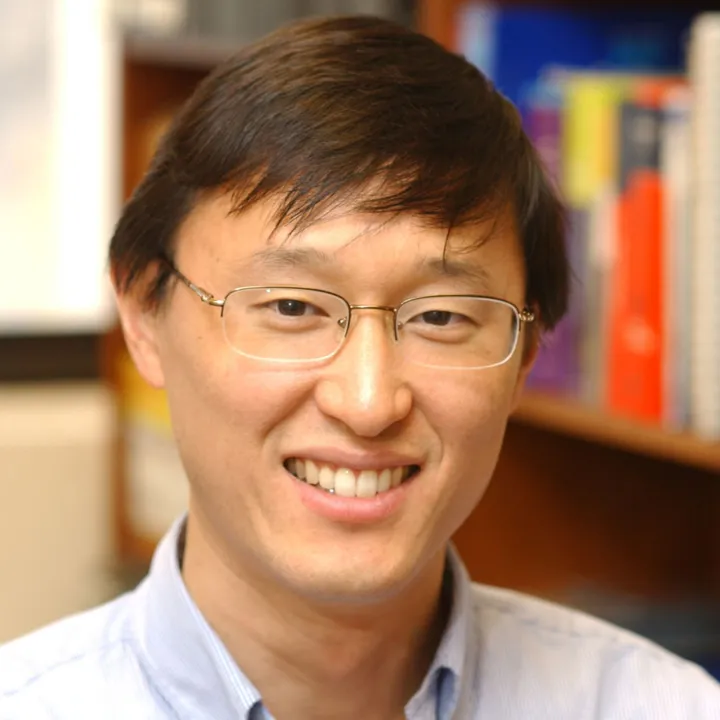
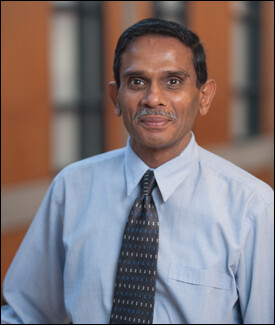
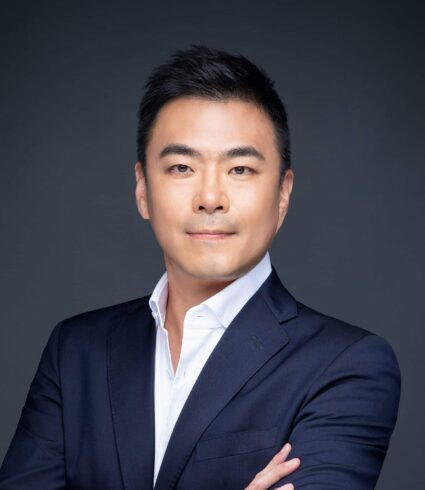
Assoc Prof Ng Teng Yong is an Associate Professor at the School of Mechanical & Aerospace Engineering (NTU), specializing in numerical modeling and simulation. With a background as Research Manager at A*STAR Institute of High Performance Computing, his work spans materials science, nanotechnology, and aerospace engineering. Current focus on graphene-based desalination membranes Expertise in molecular dynamics simulations Investigates nanoscale fluid mechanics and structural dynamics Recent publications highlight advancements in energy-efficient electrodialysis, smart robotics, and nonlinear vibration analysis. His interdisciplinary approach integrates computational methods with experimental validation in additive manufacturing and soft material mechanics.
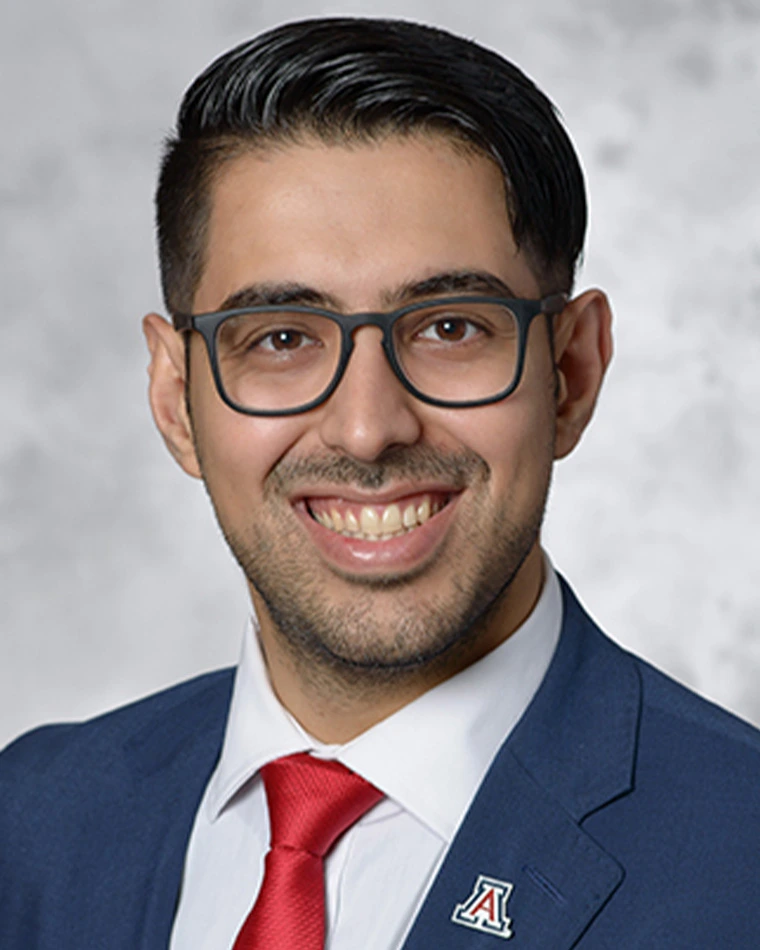
Soheil Salehi is a tenure-track Assistant Professor in the Department of Electrical and Computer Engineering at the University of Arizona, with a joint appointment in Systems and Industrial Engineering. He is the Director of the Privacy-preserving, Intelligent, and Secure Computing (PRISM) Lab, established in August 2022. Prior to this, he was an NSF-Sponsored Computing Innovation Fellow and Postdoctoral Research Fellow at the University of California, Davis. Ph.D., Electrical and Computer Engineering, University of Central Florida, 2020 M.S., Electrical and Computer Engineering, University of Central Florida, 2016 B.S., Isfahan University of Technology, Iran, 2014 Dr. Salehi's research focuses on the intersection of hardware, AI, and security. His work spans hardware and AI-enabled security in IoT , Generative AI for hardware design and security , neuromorphic and biologically-inspired AI hardware , emerging spin-based devices , reconfigurable architectures , low-power VLSI circuits , and digital twins and mixed reality for semiconductor workforce development . He also explores the application of Generative AI in personalized education . His recent publications, spanning 2023–2025, reveal a strong trend toward integrating AI and machine learning into hardware security and design. Key themes include automated secure IC design flows , AI-driven hardware obfuscation , firmware and side-channel attack analysis , security in neuromorphic and spiking neural networks , and educational frameworks using digital twins and generative models . His work appears in top venues like DAC, ICCAD, USENIX Security, IEEE TCAS-I, and ISCAS. Outstanding Reviewer Award, IEEE/ACM Design Automation Conference (DAC), 2023 Best Presentation of the Symposium Award, UC Davis Postdoctoral Research Symposium, 2021 UCF Excellence by a Graduate Teaching Assistant (University-Level), 2016 Nominated for 30-under-30 Award, UCF, 2020 Nominated for Postdoctoral Research Excellence Award, UC Davis, 2022 Dr. Salehi has secured significant research funding as PI and Co-PI, including a $300K NSF SaTC EAGER grant on Generative AI-based Personalized Cybersecurity Tutor, a $174,000 University of Arizona PIF Award, and multiple RII grants totaling over $198K. He has also received industry funding from CHEST. He actively mentors students and leads the PRISM Lab, which focuses on privacy-preserving and intelligent secure computing. His service includes roles as Technical Program Committee (TPC) Member and Session Chair at premier conferences such as DAC, ICCAD, CCS, NDSS, and GLSVLSI. The PRISM Lab, under his direction, conducts cutting-edge research in secure and intelligent hardware systems, with applications in IoT, edge computing, and workforce development. The lab emphasizes interdisciplinary collaboration and innovation in both research and education.
Charles Ahn is the John C. Malone Professor of Applied Physics & Materials Science at Yale University. His research focuses on fabricating and studying novel complex oxide materials using advanced techniques like molecular beam epitaxy and synchrotron x-ray scattering. His work addresses multifunctional oxides, nanofabrication, and nonvolatile logic switches for post-CMOS computing. Key research areas include electronic control of complex order parameters in correlated oxides and scanning probe microscopy-based nanofabrication. Education: Ph.D. in Applied Physics from Stanford University. Research interests span the physics and technology of complex oxides, with emphasis on electronic and structural control at the nanoscale. His group develops next-generation materials for computing and electronics, leveraging interdisciplinary approaches in materials science and condensed matter physics. Notable awards include Fellow of the American Physical Society, AVS Peter Mark Memorial Award, David and Lucile Packard Fellowship, and Alfred P. Sloan Fellowship. His lab (Ahn Lab) actively explores cutting-edge applications in oxide electronics and quantum phenomena. Grants and patents include innovations in magnetoelectronic devices and ferroelectric-based technologies. He collaborates widely, bridging experimental materials science with theoretical modeling to advance functional oxide systems.
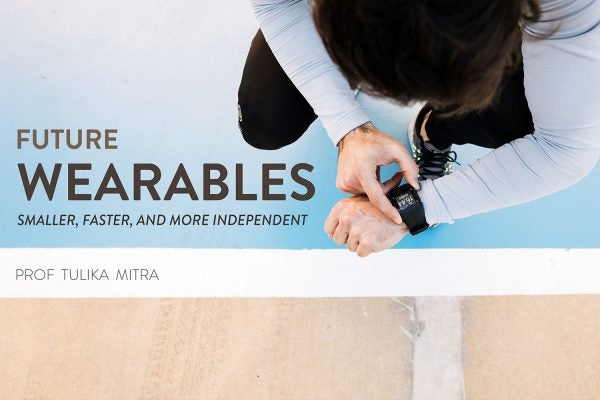
Professor Tulika Mitra is the Dean of the School of Computing and Vice Provost (Special Projects) at the National University of Singapore (NUS). She holds the Provost’s Chair Professor in the Department of Computer Science and has been instrumental in shaping academic policies and strategic initiatives at NUS since joining in 2001. PhD in Computer Science, Stony Brook University (2000) M.E. in Computer Science, Indian Institute of Science (1997) B.E. in Computer Science, Jadavpur University (1995) Her research focuses on hardware-software co-design for energy-efficient computing systems, particularly in real-time embedded systems, heterogeneous architectures, and AI accelerators. She leads major research programs such as the NRF Competitive Research Programme on Low-Power Edge Accelerators and the MOE Tier-3 Programme on Green AI , collaborating with industry leaders like ARM, AMD, and Meta. Her recent publications highlight innovations in CGRA optimization , sparse attention mechanisms , photonic-digital hybrid architectures , and low-power ML inference . These works often integrate compiler techniques, architectural design, and real-time constraints for edge computing applications. Scientific Awards : ESWEEK Test-of-Time Award (2022), ACM SIGDA Distinguished Service Award, IEEE CEDA Outstanding Service Recognition Award, Teaching Excellence Award (2006), and multiple best paper recognitions. Education Leadership : Spearheaded the Computer Engineering (CEG) Programme at NUS, a joint initiative between Engineering and Computing. As a mentor , she has supervised over 25 PhD students , many now in prominent academic or industrial roles. Her research group eCO Lab focuses on embedded computing challenges, while her grant collaborations include projects on 5G base stations, reconfigurable architectures, and IoT-optimized SoCs.
Masaki Nishida is a Professor at the Faculty of Sport Sciences , Waseda University, and Vice President of the Health Support Center at the same institution. He also serves as Chief of the Sleep Research Institute . His research bridges Sleep Science , Sports Medicine , and Clinical Psychiatry , with a focus on the interplay between sleep, cognitive function, and athletic performance. Education: Tokyo Medical and Dental University, Faculty of Medicine (1996) His work has significantly advanced understanding of napping interventions for athletes, sleep quality in competitive divers, and neurophysiological mechanisms linking sleep spindles to memory consolidation. Current research projects include a 2024-2027 study on functional bedding effects funded by Japan Society for the Promotion of Science. Scientific awards include the 15th Japanese Society of Sleep Research Encouragement Award (2010) and the 88th Japanese Society for Occupational Health Award (2015). His publications span topics like REM sleep's role in emotional memory , sleep inertia , and motor adaptation , with recent emphasis on international sports psychiatry standards . He actively contributes to professional societies including the Japanese Association of Sports Psychiatry (Chairman) and Society for Neuroscience .
Prof. Dr. Andreas Butz is a Full Professor and Chair for Human-Computer Interaction at the Department for Informatics, Ludwig-Maximilians-Universität München (LMU Munich). He leads the Media Informatics Group, focusing on innovative interaction techniques and interfaces in immersive environments like VR/AR, automotive systems, and smart spaces. His research emphasizes perceptual user interfaces, social robotics, and designing systems that balance invisibility with transparency. Key research areas include: Virtual/Augmented Reality interfaces for productivity and social interaction AI-driven decision support in safety-critical domains (aviation, healthcare) Haptic and wearable interaction technologies Automotive UI design for driver assistance systems Principles of explainable AI and human-AI collaboration His work bridges theory and practice through projects like: VR-based movement training systems AI trust calibration mechanisms Multi-modal interaction frameworks for automotive environments Systems for analyzing long-term music listening behavior Recent articles explore topics ranging from AI support in pilot decision-making to haptic wearables and creative writing interfaces. His team collaborates with industry partners on electric vehicle information systems and in-car interaction challenges.
Hadi Esmaeilzadeh is an Associate Professor at the University of California, San Diego in the Department of Computer Science and Engineering . He leads the Alternative Computing Technologies (ACT) Laboratory and serves as Associate Director of the Center for Machine Integrated Computing and Security (MICS) . Previously, he was an Assistant Professor at Georgia Institute of Technology. Ph.D., Computer Science and Engineering, University of Washington (2013) Research focuses on computer architecture , machine learning acceleration , and approximate computing His work has produced 15+ publications spanning IEEE Micro Top Picks , CACM Research Highlights , and ISCA . Key projects include: Tabla : Cross-stack ML acceleration framework DnnWeaver : Open-source DNN acceleration platform Major honors include: IEEE TCCA Young Computer Architect Award ISCA Hall of Fame Qualcomm Innovation Fellowship Georgia Tech PURA Award Teaching roles: CSE 141: Introduction to Computer Architecture CSE 240D: Accelerator Design for Deep Learning CSE 240A: Principles of Computer Architecture
Andras Kis is a Full Professor at the École Polytechnique Fédérale de Lausanne (EPFL), affiliated with the School of Engineering (STI) across multiple institutes including the Institute of Electrical Engineering (IEL), Institute of Materials Science (IMX), and teaching programs in Electrical Engineering (SEL-ENS). He leads the Laboratory of Nanoscale Electronics and Structures (LANES) and serves on the PhD program committee for Microsystems and Microelectronics. PhD, EPFL (2003) MS, Physics, University of Zagreb (1999) Baccalaureate, MIOC High School Research Focus: Pioneering work on 2D materials for electronic and optoelectronic devices, particularly transition metal dichalcogenides like MoS2 and PtSe2. His research spans: Transistor design with atomically thin semiconductors Excitonic devices and valleytronics Nanofluidics and ionic logic Optical properties of 2D heterostructures Scalable fabrication of 2D materials Defect engineering and doping techniques Scientific Impact: Based on analysis of 15 most recent publications, his work focuses on advancing 2D materials for next-generation electronics through innovations in: Van der Waals heterostructures Thermoelectric and optoelectronic applications Nanofabrication techniques Spintronic and quantum transport phenomena Memristive and neuromorphic devices Characterization of electronic and optical properties Awards & Recognition: Fellow of the Institute of Electrical and Electronics Engineers (IEEE) Lotfi A. Zadeh Award for Emerging Technologies (2024) Highly Cited Researcher (Clarivate Analytics) Teaching & Academic Leadership: Currently teaching courses including Lab in Nanoelectronics , Physical Models for Micro and Nanosystems , and Semiconductor Devices II . He has supervised over 20 PhD students in his research group at EPFL. Laboratory & Collaborations: Directs the Laboratory of Nanoscale Electronics and Structures (LANES) which focuses on fundamental and applied research in 2D materials and nanoelectronic devices. His work bridges materials science, condensed matter physics, and microelectronics engineering.
Emily Butterworth is a Professor in the Department of Languages, Literatures and Cultures at King’s College London, within the Faculty of Arts & Humanities. She holds a prestigious position in Early Modern French literature studies, focusing on speech practices, women’s writing, and cultural analysis. Her career includes roles at the University of Sheffield (2002–2006) before joining King’s, where she has been a core faculty member since 2006. Education: Emily studied French at University College London (UCL) and the University of Cambridge, establishing her foundation in French literary and cultural studies. Research Interests : Her work centers on early modern literature and thought, particularly deviant speech, gossip, and the role of scandal in French Renaissance texts. Key focuses include: Analysis of Marguerite de Navarre’s Heptameron and its cultural context Montaigne’s exploration of ethics and skepticism Gendered discourse in early modern women’s writing The intersection of print culture, censorship, and obscenity Projects & Engagement : Co-Investigator on the AHRC-funded Gossip and Nonsense in the French Renaissance (2012–2015), she collaborated on artistic projects such as Spinning Stories and Chinese Whispers . She has contributed to BBC programs like Radio 4’s Something Understood and Radio 3’s Free Thinking , discussing gossip’s cultural significance and early modern news. Publications : Her scholarship includes monographs like The Unbridled Tongue (2016) and Marguerite de Navarre: A Critical Companion (2022). Her articles span topics from Renaissance book history to the ethics of speech in Montaigne’s essays. Affiliations : She is part of King’s Centre for Early Modern Studies and contributes to research groups on textual representation and visual culture.
Timo Kaartinen serves as Professor of Social and Cultural Anthropology and Vice Dean for Research and Doctoral Education at the University of Helsinki 's Faculty of Political Science . Since 1992, he has conducted extensive research in Southeast Asia with a focus on Indonesia, exploring communicative practices, narratives, and cultural responses to uncertainty. His teaching spans social change in bachelor's, master's, and doctoral programs, covering environmental anthropology, political anthropology, cosmologies, religions, and linguistic anthropology. PhD in Anthropology, University of Chicago (2001) Docent (Adjunct Professor), University of Helsinki (2011) Research interests center on ethical discourse in Indonesian Islamic universities, resource politics in oil palm estates, and linguistic anthropology with emphasis on storytelling, folk poetry, and minority language revitalization. His work combines ethnographic focus on Southeast Asia with theoretical contributions to frontier studies and postcolonial anthropology. Recent publications examine frontier temporalities (2020-2025), Islamic transformations (2019), and oral narrative structures (2017-2013). Key projects include ARCTIC Research Centre (2025-2029), Diversity in Society and Life (DIVSOL) (2025-2030), and Religious Movements in Ethical Life (2019-2023). Grants from the Academy of Finland and University Profiling Funding support these initiatives. Academic activities include keynote speeches at international conferences (e.g., Empowering Local Wisdom 2014, Labor Migration in Asia-Pacific 2013) and editorial roles. He has conducted fieldwork in Indonesia since 1992, focusing on Bandanese cultural heritage and Maluku religious dynamics . His methodological approach combines ethnographic fieldwork with historical document analysis .
Prof. Dr. Asghar Seyed-Gohrab is a leading scholar in Persian and Iranian Studies at Utrecht University’s Department of Philosophy and Religious Studies. His academic career spans over two decades, including roles as Chairman of Persian Studies at Leiden University and Principal Investigator of the ERC-funded 'Beyond Sharia' project examining Sufism’s role in Islamic intellectual history. He holds a PhD from Leiden University and has authored over 50 monographs and edited volumes on Persian poetry, Sufism, and Iranian cultural history. Education: B.A. in English (Vrije Universiteit), M.A. in Persian Studies (Leiden University), PhD (Leiden University) Research Focus: Medieval Persian poetry’s modern political and cultural relevance, Sufi movements, and the interplay between mysticism and state power in Iran. Grants: ERC Advanced Grant (2021), NWO VIDI/VENI (2009-2014), KNAW Fellow (2023). His research highlights how classical Persian poetry shapes modern Iranian identity, including its use in the 1979 Revolution and Iran-Iraq War. He has supervised 43+ students and edited journals like Iranian Studies and Persica .
Seb Falk is a College Fellow and Research Fellow at Girton College, University of Cambridge, and a Senior Admissions Tutor. He holds academic roles including Praelector and Director of Studies for the Cambridge Foundation Year. His research focuses on medieval mathematical sciences, particularly astronomy, navigation, and the history of scientific instruments and texts. Falk earned a BA in History and Spanish from Oxford University, followed by an MPhil and PhD in History and Philosophy of Science from Cambridge. His research explores the interplay between religion, literature, and science in the Middle Ages, challenging the 'Dark Ages' narrative. Key projects include studies on late medieval astronomical tables and instruments, and a global comparative analysis of natural sciences around the year 1000. Falk has published widely, including the acclaimed book The Light Ages (2020), which was shortlisted for the Hughes Prize and awarded the Osterbrock Prize in 2025. His articles span topics like medieval astronomical practices, manuscript studies, and the cultural history of science. Falk is also a sought-after media contributor, appearing on BBC programs and podcasts, and has engaged in public outreach through lectures and museum collaborations.
Nam Sung Kim is the W. J. "Jerry" Sanders III-Advanced Micro Devices Inc. Endowed Chair and holds a Professorship in Electrical and Computer Engineering at the University of Illinois. He is also affiliated with the Siebel School of Computing and Data Science, Coordinated Science Lab, and National Center for Supercomputing Applications (NCSA). His research focuses on computer architecture, memory systems, chiplet integration, and hardware security. Key areas include energy-efficient computing, processing-in-memory (PIM), and mitigating hardware vulnerabilities like rowhammer attacks. Kim has received prestigious awards including IEEE Fellow (2016), MICRO Hall of Fame (2018), NAI Fellow (2023), and NSF CAREER Award (2015). His work spans publications in top venues like ASPLOS and IEEE journals, addressing topics such as CXL-based memory systems, DRAM module optimization, and GPU architecture improvements. Collaborations emphasize interdisciplinary research in hardware-software co-design and emerging technologies. His labs and teams at Coordinated Science Lab and NCSA drive innovations in scalable computing, near-memory processing, and cloud infrastructure for AI workloads. Ongoing projects include developing resilient memory hierarchies and accelerating large-scale machine learning models through novel architecture designs.
Professor Bharat Bhuva is a faculty member in the School of Engineering at Vanderbilt University, holding the position of Professor of Electrical Engineering and Computer Engineering . His research focuses on radiation effects on integrated circuits, semiconductor device modeling, and VLSI design, with an emphasis on advancing the resilience of nanoscale electronics against single-event effects and total-ionizing-dose damage. He also investigates emerging technologies like FinFET and FDSOI for improved radiation hardness and performance. Education: Ph.D. in Electrical Engineering, North Carolina State University M.S. in Electrical Engineering, North Carolina State University B.S. in Electrical Engineering, Maharaja Sayajirao University Research Interests: Professor Bhuva’s work spans computer-aided design tools, semiconductor process modeling, and the mitigation of radiation-induced failures in advanced integrated circuits. His studies address challenges posed by scaling to smaller technology nodes (e.g., 3-nm FinFET) and the impact of environmental factors like temperature, bias conditions, and neutron exposure on circuit reliability. Key areas include multicell upsets, single-event upset (SEU) cross-section analysis, and the efficacy of radiation-hardened-by-design (RHBD) techniques. Awards & Recognition: None explicitly listed in the provided text. However, his extensive publications in top-tier journals like IEEE Transactions on Nuclear Science highlight his contributions to the field. Grants & Advising: Advises on projects related to advanced semiconductor technologies and radiation effects. His research has been supported by grants from institutions focusing on space electronics and nanotechnology. No specific grant details or student advisees are listed. Labs & Teams: Likely affiliated with Vanderbilt’s Cyber-physical Systems and Nano Science and Technology research neighborhoods, though specific lab names are not mentioned in the text.
Jeehwan Kim is an Associate Professor in Mechanical Engineering and Materials Science and Engineering at MIT. He joined the Mechanical Engineering faculty in 2015 and became a joint faculty member in DMSE in 2016. His research focuses on nanotechnology for computing/electronics, electronic/photonic devices, neuromorphic computing, and heterogeneous integration. He holds over 100 patents from IBM and has received awards like the Samsung Fellow (2022) and DARPA Director’s Award (2021). Education : BS (Hongik University), MS (Seoul National University), PhD (UCLA), all in Materials Science and Engineering. Research Interests : Kim’s group innovates in 2D materials, remote epitaxy, neuromorphic systems, and next-gen electronics. Key areas include monolithic 3D integration, bioelectronic devices, and energy-efficient semiconductors. His work bridges material physics with practical device applications. Awards : Samsung Fellow (2022) DARPA Director’s Award (2021) Young Faculty Award (2019) IBM Faculty Award (2016) IBM Master Inventor (2012) Labs/Teams : Jeehwan Kim Research Group at MIT, focusing on advanced material synthesis and device engineering. Active in cross-disciplinary projects involving AI and semiconductor innovation.