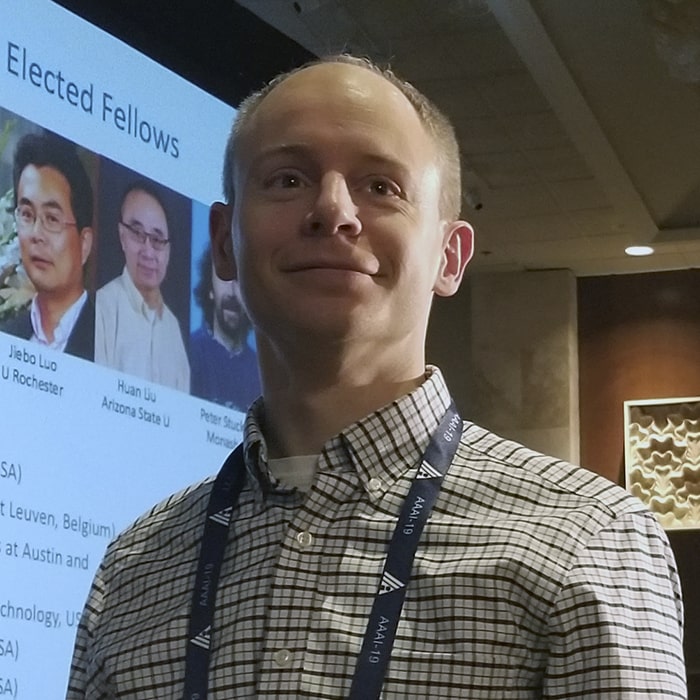
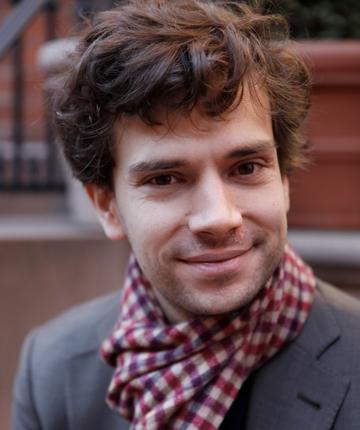
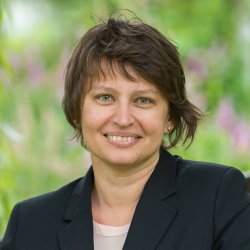
Timothy J. Madigan is Professor and Chair of the Department of Philosophy and Classical Studies at St. John Fisher College. He holds a Ph.D., M.A., and B.A. from the State University of New York at Buffalo. His research spans multiple ethical domains including medical, business, and computer ethics, with special focus on philosophy of religion and popular culture. Madigan's publications demonstrate broad philosophical engagement: Explorations of friendship theory across historical contexts Ethical analyses of sports culture and leadership Reappraisals of Bertrand Russell's philosophical legacy Critical examinations of literary-cultural phenomena His scholarly honors include the St. John Fisher College Trustees' Distinguished Scholars Award (2013). With extensive publications in peer-reviewed journals and edited volumes, Madigan maintains active research collaborations while mentoring emerging scholars in philosophical ethics and cultural criticism.
Dr. Jamie White-Farnham is a Professor of Writing at the University of Wisconsin-Superior, serving as Director of the Jim Dan Hill Library and Markwood Center for Learning, Innovation and Collaboration. She has held these roles since 2011, contributing to academic administration and library outreach. Her research focuses on feminist rhetoric, women’s health communication, grammar evolution, and higher education governance. Education: PhD in English/Writing & Rhetoric (University of Rhode Island, 2011), MA & BA in English/Writing (Bridgewater State University, 2002/2000). Research interests include analyzing rhetorical strategies in healthcare advocacy, mid-20th century feminist humor, and visual rhetoric in administrative contexts. Her recent book Patients Making Meaning explores patient support frameworks in women’s health. She frequently presents at conferences like CCCC and Feminisms & Rhetorics. Publications span books and 18 articles, with work on library outreach history, Catholic women’s rhetoric, and writing program architecture. She received UW-Superior’s 2018 Scholarship Award. As an administrator, she oversees academic support initiatives and collaborates on grants, including a CCCC Research Initiative grant for writing program studies. Her work bridges pedagogical innovation with institutional change, emphasizing equity and accessibility in academic spaces.
Vincent Conitzer is a Professor in the Computer Science Department at Carnegie Mellon University, with a courtesy appointment in the Department of Philosophy. His research intersects artificial intelligence, game theory, and ethics, focusing on computational social choice, moral decision-making in AI, and mechanism design. Primary Affiliation: Computer Science Department, Carnegie Mellon University Courtesy Appointment: Department of Philosophy, Dietrich College of Humanities and Social Sciences Labs: Affiliated with the Laboratory for Symbolic and Educational Computing His work addresses game theory , ethical AI , and computational epistemology , with publications exploring moral preference elicitation, strategic behavior in automated systems, and the intersection of economics and artificial intelligence. Recent trends in his publications include game theory , AI ethics , mechanism design , and computational social choice , reflecting his focus on aligning AI systems with human values and strategic reasoning. Vincent's research spans both theoretical and applied domains, including bioethics (e.g., kidney allocation decisions), cooperative AI, and the stability of moral preferences in algorithmic systems. He is associated with the Laboratory for Symbolic and Educational Computing and the Center for Formal Epistemology , contributing to interdisciplinary projects at the interface of computer science and philosophy.
Dale Griffin holds the Advisory Council Chair in Consumer Behaviour at UBC Sauder School of Business. His research examines psychological aspects of judgment and decision-making, with applications in consumer behavior, managerial forecasting, and behavioral finance. Dr. Griffin teaches courses in behavioral research methods and decision analysis. Key research areas: Cognitive processes in prediction and forecasting Cross-cultural determinants of corporate risk-taking Psychological mechanisms in financial decision-making Temporal aspects of planning and task completion Recent publications explore social safety systems, cultural influences on governance, and behavioral responses to uncertainty. Research consistently addresses practical applications of decision science in business contexts.
Signy Sheldon is an Associate Professor in the Department of Psychology at McGill University, specializing in cognitive and behavioral neuroscience. Her research focuses on understanding the neural mechanisms of episodic memory, including how the hippocampus and related structures support memory retrieval, imagination, and problem-solving. She also explores how aging and individual differences influence memory processes. Sheldon uses behavioral experiments, neuroimaging (fMRI), and patient studies to investigate memory's role in non-mnemonic functions like creativity and decision-making. Her work highlights the interplay between memory and broader cognitive abilities, such as schema formation and context processing. She leads the Sheldon Memory Lab , which employs multidisciplinary approaches to study memory's neural underpinnings. Though no specific awards are listed, her extensive publications reflect her contributions to memory science. No advising or grant details are provided in the text. Research interests span episodic memory, cognitive aging, neuroimaging, and the application of NLP to memory narratives. Her lab's work often addresses translational questions, such as using memory reconstruction to address clinical issues like social anxiety.
Dr. Ileana Stigliani is a Professor of Strategic Design at Imperial College London's Business School, Department of Management and Entrepreneurship. She holds a Ph.D. in Management from Bocconi University, Milan. Her research explores collective cognition in organizations, focusing on materiality’s impact on team processes and the role of sensemaking in shaping professional and organizational identities. She teaches Design Thinking and Business Transformation to MSc and MBA students, recognized for her innovative teaching methods with awards like the Imperial College Teaching Excellence Award (2016). Her work bridges design, management, and psychology, addressing innovation, aesthetics, and workplace environments. Research interests include: 1) The interplay between materiality and organizational sensemaking, 2) Aesthetic dimensions in work environments and creativity, 3) Design thinking’s role in innovation performance, and 4) Identity formation in emerging industries. Her work has been featured in top journals like Academy of Management Journal and Administrative Science Quarterly , and media outlets including The Economist and Forbes . Editorial roles include the Journal of Business Venturing Design and Innovation: Organization and Management . Her research has explored digital technologies' impact on design thinking, workplace creativity, and the cultural symbolism of products. She actively contributes to debates on implicit bias and technology in academia.
Professor Rita Shackel is a distinguished academic at the University of Sydney Law School, holding the position of Professor of Law and Ethics. With a multidisciplinary background spanning law, science, psychology, and education, she brings a unique perspective to her work focusing on women and children's rights, particularly in the context of sexual and gender-based violence. Her educational background includes: BSc from the University of Sydney LLB from the University of Sydney Graduate Diploma in Education from the University of Sydney MA from the University of Sydney PhD from the University of Sydney Graduate Diploma in Legal Practice from the College of Law Rita Shackel's research program is strongly interdisciplinary, focusing on improving legal, health, and social justice processes with particular attention to access to justice for children and women. Her work on sexual and gender-based violence, child sexual abuse investigation and prosecution, and trauma-informed care has significantly contributed to policy and practice both nationally and internationally. She has developed innovative approaches to understanding victims' experiences and improving legal responses to interpersonal crimes. Her recent publications reveal a consistent focus on sexual violence, child protection, and legal processes, with increasing attention to trauma-informed practices across multiple disciplines. Her work spans criminal justice, healthcare, education, and policy development, reflecting her commitment to interdisciplinary solutions for complex social problems. Among her notable honors: Appointed Senior Innocenti Research Fellow, Innocenti Research Centre, UNICEF (2013) Member of the TEQSA Register of Experts in multiple disciplines (2013) 2012 Professor C.C. de Silva Memorial Orator (Sri Lanka College of Paediatricians) Visiting Professor at the Brandeis School of Law, University of Louisville American Association of University Women, International Fellow Professor Shackel actively supervises research students across a broad range of topics related to criminal justice, sexual crimes, and women's and children's rights. Her current research projects include evaluations of the ACT Witness Intermediary Program and the Victim Impact and Risk Management Support Seminars for Corrective Services New South Wales. She has secured substantial research funding and collaborates extensively with government agencies, legal professionals, and healthcare providers to translate research into practice. As a member of the Sydney Environment Institute and the Sydney Institute of Criminology, Professor Shackel contributes to interdisciplinary research teams addressing complex social justice issues. Her work bridges academic research with practical application in legal settings, policy development, and professional education for judicial officers, police, and healthcare professionals.
Jean Baccelli is an Associate Professor of Philosophy of Economics at the University of Oxford and a Tutorial Fellow in Philosophy at Jesus College, Oxford. His research focuses on decision theory, social choice theory, and the philosophy of economics, with particular emphasis on axiomatic frameworks, utility theory, and formal methods in philosophical analysis. He holds a PhD from École normale supérieure - Ulm (2016) and has held postdoctoral positions at the Munich Center for Mathematical Philosophy (2016–2021), the Center for the Philosophy of Science at the University of Pittsburgh (2019–2020), and again in Munich (2020–2021). His career includes roles at prestigious institutions, reflecting his expertise in formal philosophy and economic theory. Research interests span foundational issues in decision theory, including the axiomatic foundations of rational choice, risk aversion, interpersonal comparisons, and the application of geometric and mathematical methods to philosophical problems. His work critically examines core assumptions in expected utility theory, social choice mechanisms, and the philosophical underpinnings of economic models. Notable contributions include analyses of the Sure-Thing Principle, geometric pooling in collective belief formation, and state-dependent utility frameworks. His publications engage with both technical formalism and broader philosophical debates, bridging analytic philosophy, economics, and mathematics. Baccelli’s advising and teaching focus on advanced topics in the philosophy of economics and decision theory, mentoring students through Oxford’s tutorial system. His interdisciplinary approach integrates formal methods with conceptual analysis, addressing challenges in welfare economics, epistemic democracy, and the philosophy of social science.
Sage Boettcher is a Career Development Research Fellow in the Department of Experimental Psychology at the University of Oxford and a Stipendiary Lecturer at St Anne's College. She holds affiliations with multiple colleges: St Anne's, Kellogg, and Somerville. Her research focuses on the interplay between memory, attention, and behavior in dynamic environments, leveraging psychophysical methods and non-invasive brain imaging. She investigates how short- and long-term memories guide spatial, temporal, and identity-based behavior through proactive memory use. Boettcher earned her PhD in 2020 from the University of Oxford (supervised by Kia Nobre, Mark Stokes, and Freek van Ede), following a Master’s in Interdisciplinary Neuroscience from Goethe University Frankfurt and a BSc from the University of Delaware. She has held postdoctoral roles, including an EPS Fellowship in Kia Nobre’s Brain and Cognition Lab and a Junior Research Fellowship at Kellogg College. Her research interests span cognitive neuroscience, memory dynamics, and attentional processes. Key themes include how spatiotemporal predictions bias perception and action, and how working memory interacts with sensory input. Recent work emphasizes neural mechanisms underlying attentional template formation and interference shielding. Key Awards: EPS Postdoctoral Fellowship, Junior Research Fellowship at Kellogg College, Career Development Fellowship Labs: Dynamic Cognition Lab (lead), Brain and Cognition Lab (former affiliation) Advocacy: Chair of ECR Committee, member of WIN Ethnic Diversity Working Group Her publications emphasize neural dynamics of memory maintenance, attentional shifting, and prediction-driven behavior. Work bridges theory and application, with implications for understanding robust human behavior in complex environments.
Professor Stephan Lewandowsky is a cognitive scientist at the University of Bristol, holding an adjunct position at the University of Western Australia's School of Psychological Science. He specializes in memory, decision-making, and the intersection of human cognition with climate science. His work addresses misinformation, vaccine hesitancy, and climate change skepticism. He has been recognized with multiple awards, including the Discovery Outstanding Researcher Award (2011) and Wolfson Research Merit Fellowship (2013). Education: BA from Washington State University; PhD from Torino University (Italy). Research interests span cognitive psychology, climate science communication, and the psychological underpinnings of belief systems. He actively engages in public education through blogs (e.g., shapingtomorrowsworld.org ) and media contributions. Awards : Australian Professorial Fellow (2007–2012), Fellow of the Association for Psychological Science (2017), and more. Grants : Led projects on climate adaptation, memory models, and vaccine communication funded by ARC and others. Labs/Teams : Visiting Scientist at CSIRO Oceans & Atmosphere (2017–present); collaborates globally on climate science and misinformation.
Mark Wheeler is a Professor of Psychology at the Georgia Institute of Technology, affiliated with the School of Psychology. His research focuses on neural and cognitive mechanisms underlying perception, memory, decision-making, and aging. He investigates how sensory information is integrated into decisions and how these processes change with age, employing fMRI, computational modeling, and behavioral experiments. His work is supported by grants from the Alzheimer’s Association, National Institute of Mental Health, and National Science Foundation. Education: Ph.D. in Psychology (Brain, Behavior, and Cognition) from Washington University (2002). Research Interests: Memory formation and retrieval, perceptual decision-making, sleep’s role in cognition, and age-related cognitive decline. His lab explores neural signatures of decision-making stages and how sleep quality influences executive function and task preparation across adulthood. Recent studies highlight interactions between sleep continuity and cognitive performance in aging populations. Publications reflect a focus on neural correlates of decision-making, memory precision, and sleep’s impact on cognitive functions. Notable work includes studies on inferior temporal cortex activity during perceptual decisions and the mediating role of sleep in physical activity and cognition. Funding: Active grants from Alzheimer’s Association, NIMH, and NSF. Collaborates with institutions like the National Science Foundation on projects examining aging and decision-making. Labs/Teams: Leads the Wheeler Lab (http://wheelerlab.gatech.edu), dedicated to understanding neural and cognitive mechanisms of memory and decision-making. Office located in JS Coon Building, Room 234.
Sabine Krabbe is a researcher affiliated with the German Center for Neurodegenerative Diseases (DZNE) and a member of the Transdisciplinary Research Area (TRA) Life and Health at the University of Bonn. Her work focuses on neural circuit mechanisms underlying adaptive learning and state-dependent decision-making in health and disease. She employs advanced techniques such as in vivo calcium imaging, optogenetics, and electrophysiology to study how neuronal networks integrate internal states and environmental cues. Her research group investigates the functional diversity of defined cell types, from molecular profiles to population-level activity during behavioral tasks. Dr. Krabbe’s methodologies include anatomical tracing, histology, and pharmacogenetics, emphasizing a systems neuroscience approach. She collaborates with institutions like the University of Bonn and has contributed to studies on amygdala circuitry, VIP interneurons, and dopamine receptor dynamics. Her findings advance understanding of neurodegenerative diseases and adaptive neural processes.
Dr Irina Cojuharenco is a Senior Lecturer at the Centre for Leadership and Decision Making within Surrey Business School. Holding a PhD and MSc in Economics and Management from Universitat Pompeu Fabra, she has taught across Europe and the US at institutions including Universidade Catolica Portuguesa, Northeastern University, and Johns Hopkins University. Expertise in organizational justice Specializes in leadership decision-making Founding Director of USBEE Lab Recipient of EPSRC grant Her research explores how individuals judge workplace fairness, the role of time in justice perception, and the paradoxical effects of questioning in leadership contexts. Recent work examines technology-mediated developmental conversations and their impact on trust in AI systems. Key journal publications appear in Organizational Behavior and Human Decision Processes , MIS Quarterly , and Journal of Business Ethics . She has received research grants including the EPSRC grant in 2022.
Sebastian Michelmann is an Assistant Professor of Psychology at New York University's College of Arts and Science. His research focuses on understanding how temporal dynamic content is neurally represented and processed in episodic memory, with particular emphasis on fast-timescale memory retrieval mechanisms and their interaction with event knowledge. He employs electrophysiological methods (EEG/MEG), computational modeling, and behavioral experiments to study memory formation under naturalistic conditions. Education: PhD in Psychology from the University of Birmingham (2018), thesis awarded the Glushko Dissertation Prize (2020) Master's (Diploma) in Psychology from Julius-Maximilians-Universitaet Wuerzburg (2014) Postdoctoral research at Princeton University (2018–2023) under Professors Ken Norman and Uri Hasson Research interests include neural oscillations, event segmentation, and the role of generalized event knowledge in memory retrieval. His work bridges cognitive neuroscience with computational approaches, exploring how the brain encodes, stores, and retrieves temporally precise information. Key research directions involve studying how memory processes are embedded in continuous experience and developing tools to analyze neural data (e.g., intracranial EEG re-referencing). Recent studies explore event boundary detection using large language models and investigate the neural correlates of natural language comprehension through ECoG datasets. Scientific Awards: Glushko Dissertation Prize (2020) Laboratory activities focus on future projects combining electrophysiology with computational modeling to understand interactive dynamics of episodic memory. Collaborative efforts include developing semi-automatic alignment tools and cloud-based neuroimaging frameworks.
Yaacov Trope is a Professor of Psychology at New York University's Department of Psychology, College of Arts & Science. His research examines cognitive and motivational processes underlying how people transcend immediate concerns to consider broader temporal, social, and hypothetical perspectives. Key areas include psychological distance, self-control mechanisms, and abstract vs. associative thinking in social judgment. Education : B.A. summa cum laude, Tel Aviv University (1970) Ph.D. in Psychology, University of Michigan (1974) Research Interests : Trope's work explores three core themes: 1. **Psychological Distance**: How people mentally broaden horizons to envision distant futures, cultures, and perspectives. 2. **Self-Control**: Mechanisms resolving conflicts between short-term desires and long-term goals. 3. **Cognitive Processes**: Analytical vs. associative thinking, wishful thinking, and stereotyping. Labs/Teams : Directs the Trope Lab, studying expansive/contractive mental processes in social contexts. Research focuses on construal level theory and its implications for imitation, decision-making, and social perception. Advising/Grants : While specific grants are not listed here, his extensive publications (216+ works) indicate sustained academic leadership. Advises graduate students in NYU's Psychology Department, though specific names are not provided in source texts.