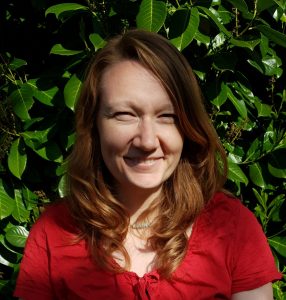
Frank Schwartze is a Professor at the Department of Civil Engineering, TH Lübeck, serving as Vice President for Innovation and Regional Cooperation since 2023 and Vice President for Research and International Affairs (2017-2023). His research focuses on urban development, sustainable planning, and climate adaptation in global contexts, with extensive work in Vietnam, Kosovo, and cross-border regions. Previously, he held leadership roles at BTU Cottbus and contributed to international development projects with GIZ and UN Habitat. Education: Dipl.-Ing. in Urban and Regional Planning (TU Berlin, 1993); postgraduate studies at Institut Européen Architecture et (1994-1995). Research Interests span climate-resilient urban design, cross-border cooperation, and post-mining landscapes. His work addresses challenges in mega-cities, shrinking cities, and post-conflict regions, integrating theory with actionable solutions. Scientific Contributions include 15+ publications analyzing climate adaptation in Ho Chi Minh City, cross-border planning in Germany-Poland, and sustainable regeneration of post-industrial areas. Key themes involve flood-resilient infrastructure, stakeholder engagement, and policy frameworks. Professional Activities include advisory roles in international development (1997-2013), project leadership at BTU Cottbus (1996-2004), and co-founding consultancies like insar consult in Berlin.
Naohiro Okada is an Associate Professor at the Graduate School of Medicine, Department of Psychiatry, The University of Tokyo, and concurrently serves as an Associate Professor at the International Research Center for Neurointelligence (IRCN). He is also the Core Manager of the Human fMRI Core facility. Dr. Okada has extensive experience in neuroimaging research, particularly focusing on psychiatric disorders and adolescent brain development. Dr. Okada obtained his M.D. from the University of Tokyo Faculty of Medicine in 2004. After completing his residency, he began psychiatry training at the University of Tokyo Hospital in 2006 and worked as a psychiatrist at Tokyo Metropolitan Matsuzawa Hospital from 2007 to 2012. He earned his Ph.D. from the Graduate School of Medicine, University of Tokyo in 2017, and joined IRCN in 2019 where he manages the human fMRI scanner facility. His research primarily focuses on using functional magnetic resonance imaging (fMRI) to understand brain structure and function in healthy adolescents and patients with psychiatric disorders. Dr. Okada's work aims to elucidate the neurobiological substrates of psychiatric disorders and develop biomarkers for clinical applications. He has published extensively on topics including schizophrenia, autism spectrum disorder, depression, and adolescent brain development, with a particular emphasis on multi-site collaborative studies and data-driven approaches to psychiatric classification. Dr. Okada's recent publications demonstrate a strong focus on developing novel diagnostic classifications based on neuroimaging data, investigating resting-state neural signatures across psychiatric disorders, and establishing robust infrastructure for multi-center MRI research. His work bridges human and animal research while incorporating machine learning and AI techniques to advance the field of psychiatric neuroimaging. Dr. Okada is actively involved in several research projects funded by the Japan Society for the Promotion of Science, including the Advanced Bioimaging Support Platform (2022-2028), MRS analysis of basal ganglia GABA dysfunction in schizophrenia (2021-2025), and studies on dose reduction and brain function changes in schizophrenia patients (2018-2022). He is a member of the Society for Neuroscience and the Japanese Society of Biological Psychiatry, reflecting his commitment to advancing neuroscience research and its applications in understanding and treating psychiatric disorders.
Pushpa Arabindoo is an Associate Professor in the Department of Geography at University College London (UCL), where she leads the Geographies of Infrastructure module and co-directs the UCL Urban Laboratory. She previously served as EURIAS Junior Fellow at the Paris Institute of Advanced Studies and holds a PhD from the London School of Economics. Her research examines urban transformations through critical lenses of political ecology, infrastructure, and middle-class politics, with Chennai, India as her primary empirical focus. Arabindoo's work bridges human geography , urban studies , and political ecology , investigating themes including: Infrastructural ecologies and metabolic urbanism Middle-class spatial politics and public space Resettlement geographies and urban marginalization Water governance and environmental justice Southern urban theory and postcolonial urbanism Her publications consistently engage with Chennai's urban dynamics while contributing to global theoretical debates. Her scholarly recognition includes: EURIAS Junior Fellowship (2017-2018) Senior Women in Leadership Development Network participation (2022) Expert Assessor for European Urban Initiative (2023-2025) At UCL, she coordinates multiple graduate programs including Cities and Climate Change (with Prof. Chris Brierley), supervises dissertations across disciplines, and contributes to the Bartlett School of Planning. She maintains active international collaborations through her editorial work and urban policy engagements.
Dr. Jin Xue is a Lecturer in the School of Project Management at the University of Sydney, part of the Faculty of Engineering. His research focuses on stakeholder management in megaprojects using data-driven methodologies like natural language processing, network analysis, and organizational simulation. He has published extensively in leading journals such as the International Journal of Project Management and has won prestigious awards including the RICS Best Research Team of the Year (2022) and the Best Paper Award at Construction Research Congress 2020. His research interests include stakeholder dynamics, big data analytics in construction, and computer-aided project management systems. He is actively involved in advising HDR students on topics like stakeholder engagement in environmental sustainability and interorganizational project governance. Current projects include Sydney-based grants exploring big data-driven stakeholder engagement and AI applications in project management. Affiliations: Sydney Environment Institute, Sydney Institute of Agriculture Teaching: Coordinator for ENGG2851 Project Analytics and ENGG1865 Project Time, Cost and Resources Key research methods include data science techniques, network analysis, and complex systems modeling. Recent work emphasizes transitioning project management into the big data era through innovative methodologies.
Dr. Julia Ziółkowska is a Lecturer at the University of Gdansk's Faculty of Social Sciences, in the Department of Spatial Economy. She specializes in tourism development, social capital, and territorial marketing. Her research examines: Sustainable tourism and community stewardship Social capital in local development Cultural event impacts Tourism entrepreneurship and business adaptation Spatial economic aspects of tourism Recent publications focus on resilience in tourism destinations, climate-adapted traveler behavior, and the transformation of tourism during crises like the COVID-19 pandemic. Her work employs qualitative methods and interdisciplinary approaches.
Professor Sir Peter Hall (1932–2014) was a distinguished academic and urban planner, serving as Chair of Planning at The Bartlett School of Architecture and Planning, University College London (UCL). He previously held professorial roles at the University of California, Berkeley, and the University of Reading, where he was Head of Department. His research focused on urban and regional planning, transport systems, and the application of research to policy, particularly in urban regeneration and strategic planning. He advised UK governments on regional planning, including roles as Special Adviser on Strategic Planning (1991–94) and member of the Deputy Prime Minister's Urban Task Force (1998–99). His work extended to international projects like the SINTROPHER EU program (2009), promoting transport innovation in peripheral regions. He was a prolific author, editor of over 30 books, and co-founder of the Regional Studies Association. His honors include the Balzan Prize (2005), Knight Bachelor (1998), and numerous honorary doctorates. Awards : Gold Medal, Royal Town Planning Institute Founder's Medal, Royal Geographical Society "Pioneer in the Life of the Nation" by Queen Elizabeth II Key Roles : Chair of ReBlackpool Urban Regeneration Company (2005–08) Editor, Built Environment journal President, Town and Country Planning Association His research emphasized the interplay between transport, urban development, and policy, with a focus on creating sociable, sustainable cities. He collaborated with organizations like the Young Foundation and advised on major infrastructure projects such as the Channel Tunnel Rail Link and Thames Gateway.
Steven Seth Harrod is an Associate Professor at the Department of Engineering Technology and Didactics Production, Transportation and Planning at the Technical University of Denmark (DTU). His work focuses on railway engineering, operations management, and sustainable transportation systems contributing to UN SDGs related to infrastructure and education. He holds a PhD in Operations Management from the University of Cincinnati (2007), MSc degrees in Quantitative Analysis (University of Cincinnati) and Transportation (MIT), and a BSc in Mechanical Engineering from Trinity College Hartford. Research interests include railway scheduling, delay propagation modeling, predictive maintenance of rail infrastructure, and Industry 4.0 applications in transportation. His recent work explores covariate-dependent Markov processes for rail defect prediction and digitalization challenges in European rail systems. He supervises PhD projects on data-driven maintenance strategies and leads initiatives like the Green Mobility Shift (GMS) project. Recipient of the 2016 INFORMS Railway Application Section Student Paper Award for contributions to operations research in rail systems. Active in professional networks including INFORMS and collaborates on projects funded by Danish industry partners. Advises on railway dispatch systems (ODIN project) and mega-project accountability frameworks (CAMP initiative).
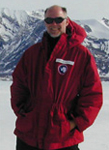
Dr. Robert Smalley, Jr. is a Research Professor at the University of Memphis, affiliated with the Center for Earthquake Research and Information (CERI). He holds a Ph.D. in Geophysics and Seismology from Cornell University (1988), an M.S. in Physics from Cornell (1978), and a B.S. in Physics from Rensselaer Polytechnic Institute (1975). His research focuses on seismotectonics, active tectonics, and physical earthquake modeling, utilizing GPS geodesy and seismology to study crustal deformation processes. Key projects include investigations of deformation in the central Andes, Scotia Arc, and Antarctic regions, as well as postseismic effects of major earthquakes like the 2010 Maule Chile event. Teaching includes courses such as Data Analysis in Geophysics and Global Seismology, emphasizing practical applications of geodetic and seismic data. Smalley has advised multiple graduate students, including Demián Gomez (Ph.D. 2016) and Adewale Amosu (Ph.D. 2014). His work integrates high-rate GPS data with traditional seismology to explore earthquake mechanics, crustal strain, and tectonic processes. Collaborations span international initiatives like POLENET, focusing on Antarctic geodynamics and ice sheet interactions. Research highlights include studies on coseismic deformation, glacial rebound in Patagonia, and the role of GPS in hazard assessment. His publications address topics ranging from Andean orogenic wedge dynamics to ionospheric disturbances triggered by megathrust earthquakes. Smalley’s contributions bridge observational geodesy and theoretical models, advancing understanding of Earth’s dynamic systems.
David Swindell is an Associate Professor at Arizona State University’s School of Public Affairs, Watts College of Public Service & Community Solutions, where he also serves as Director of the Center for Urban Innovation. He is additionally affiliated with the Center on Technology, Data and Society and the Global Sport Institute. His academic work bridges urban policy, public administration, and economic development, with a strong focus on collaborative governance and performance measurement in local government. Ph.D. in Public Policy, Indiana University Former Director, Interdisciplinary Ph.D. in Public Policy, University of North Carolina Former MPA Director, UNC-Charlotte and Clemson University Swindell’s research centers on community and economic development, particularly the public financing of sports facilities and their urban economic impacts, collaborative service delivery among public, private, and nonprofit sectors, and citizen satisfaction in public management. His work emphasizes practical, evidence-based solutions to urban challenges and has been published in leading journals such as Public Administration Review , Urban Affairs Review , and Economic Development Quarterly . His recent publications and research projects show a consistent focus on urban benchmarking, public school enrollment forecasting, veteran hiring in local government, and alternative policing models. These works reflect a broader trend toward data-driven governance, municipal innovation, and inclusive public service delivery across diverse urban contexts. Swindell has received significant research funding from agencies including the National Science Foundation, the Corporation for National and Community Service, and the U.S. Department of Transportation. Major grants include the $13.2 million Legacy Corps for Veterans and Military Families and the $5 million Center for Understanding Future Travel Behavior and Demand. He has advised numerous graduate students, many of whom are co-authors on his publications. He leads collaborative research teams and has been involved in shaping public policy through testimony and advisory roles. His service includes leadership in professional organizations such as the Alliance for Innovation and organizing major academic conferences. Swindell is actively engaged in urban innovation through the Center for Urban Innovation, where he leads initiatives that connect academic research with real-world municipal challenges. His work supports a metropolitan mission focused on leveraging university resources to solve pressing urban problems.
Associate Professor Scott Hawken is a faculty member at the University of Adelaide, affiliated with the School of Architecture and Civil Engineering within the Faculty of Sciences, Engineering and Technology. He serves as the Program Director for the Master of Landscape Architecture and Urban Design and is actively involved in teaching, research, and supervision at the postgraduate level. Position: Associate Professor, Landscape Architecture Role: Program Director, Master of Landscape Architecture and Urban Design Faculty: Sciences, Engineering and Technology School: School of Architecture and Civil Engineering Email: scott.hawken@adelaide.edu.au Dr. Hawken holds a PhD awarded in 2012 for his work mapping archaeological landscapes of Angkor using remote sensing. His research bridges landscape architecture, urban design, and landscape archaeology, emphasizing biodiversity-positive design, green infrastructure, and the use of advanced geospatial technologies. He is a national leader in promoting biodiversity in urban landscapes and chairs AILA's National Biodiversity Positive Working Group. His research interests span critical urban scholarship, radical political ecology, and the application of GIS, remote sensing, and geodesign in urban contexts. He has led international workshops across Asia, Europe, and North America and has consulted for the United Nations on urban development and human rights. His recent work includes editing a special issue for Urban Studies that integrates archaeology with contemporary urban planning and exploring biocultural digital twins and patch urbanism. The 15 most recent publications reflect a strong interdisciplinary trend, combining archaeology, urban studies, smart cities, and sustainability. His work consistently applies geospatial methods to historical and contemporary urban challenges, focusing on resilience, equity, and ecological integration in cities. Dr. Hawken has received recognition through editorial board appointments for Environment and Urbanisation ASIA and the Journal for Knowledge Based Development , and he regularly reviews for top journals. He was invited to deliver a keynote address to the Japanese Society of Landscape Architects in 2023. He is passionate about mentoring and is currently supervising or seeking PhD students in areas such as cultural landscapes, landscape archaeology, smart cities, green and blue infrastructure, and urban megaprojects. He has secured research grants related to urban resilience and digital transformation and has led the Smart Cities Research Cluster at UNSW in the past. Dr. Hawken leads research initiatives that integrate archaeological insights with modern urban design, particularly through his work on Angkor and rapid urban greening. He collaborates with government agencies, professional bodies, and international institutions to advance sustainable and equitable urban futures.
Dr. Natalie Theeuwes is a Visiting Research Fellow in the Department of Meteorology at the University of Reading's Faculty of Science. Her research focuses on urban meteorology, particularly examining the complex interactions between urban environments and atmospheric processes. She actively contributes to advancing our understanding of urban climate systems through high-resolution modeling and observational studies. Her primary research interests include urban heat island effects, boundary layer meteorology in urban environments, urban climate modeling, and the interactions between urban structures and atmospheric processes. Dr. Theeuwes has made significant contributions to understanding how urban morphology influences local climate patterns, particularly regarding temperature distribution, cloud formation, and boundary layer dynamics in cities. Dr. Theeuwes' publication record demonstrates a consistent focus on urban meteorological phenomena, with recent work examining hectometric-scale weather modeling, nocturnal boundary layer interactions in London, and persistent cloud cover over mega-cities. Her research often involves collaborative international projects and contributes to practical applications in urban planning and climate adaptation strategies. She is actively involved in major urban climate initiatives including WUDAPT (World Urban Database and Access Portal Tools) and UMEP (Urban Multi-scale Environmental Predictor), which provide critical tools for urban climate research and applications.
Joseph K Bump is a Professor in the Department of Fisheries, Wildlife, and Conservation Biology at the University of Minnesota. His research focuses on predator-prey dynamics, wetland ecology, and carnivore conservation, particularly examining interactions between wolves, beavers, and ungulates in Minnesota and other regions. His work includes evaluating wildlife monitoring technologies such as GPS collars for neonates and non-invasive hair snares for beavers, as well as modeling territorial behavior in wolf populations. Current projects address floodplain forest resilience, fawn dispersal, and the ecological impacts of megaherbivores in East Africa. Recent publications highlight wolf predation on beavers, GPS tracking methodologies, and social cohesion in Canis groups. His research outputs have been featured in media discussions about Minnesota environmental policy and wetland management challenges.
Marcus Foth is a Professor of Urban Informatics in the School of Design at Queensland University of Technology (QUT), Brisbane, Australia, within the Faculty of Creative Industries, Education, and Social Justice. He serves as a Chief Investigator in the QUT Digital Media Research Centre (DMRC) and is a founding member of the More-than-Human Futures research group. Foth is also a Course Coordinator for the Master of Design (Strategic Design) program and a Senior Associate with Outside Opinion. His academic journey includes a PhD and MA from Queensland University of Technology, along with a BCompSc(Hons) and BMultimedia from Griffith University. Marcus Foth's research brings together people, place, and technology, with current foci including urban media and geoprivacy, data care in smart cities, digital inclusion and participation, blockchain and food supply chains, and sustainability and more-than-human futures. For over two decades, he has led research in ubiquitous computing and interaction design, particularly in smart city applications. Since founding the Urban Informatics Research Lab at QUT in 2006, the field has been adopted worldwide by industry (e.g., McKinsey, Intel, CISCO) and universities (e.g., NYU, University College London). His work has significantly influenced how academic research responds to societal challenges, particularly in the realm of urban development and digital technologies. Foth's research demonstrates a strong commitment to creating ethical and inclusive digital futures that balance technological innovation with human and environmental wellbeing. His extensive publication record shows a clear trajectory toward more integrated approaches to urban technology, with recent work exploring blockchain applications for social good, the ethics of data in smart cities, and the relationship between digital technologies and environmental sustainability. There's a noticeable shift toward more critical examinations of technology's role in society, particularly regarding privacy, governance, and the inclusion of non-human perspectives in urban design. His most recent publications demonstrate increasing attention to blockchain applications for supply chain transparency, the governance challenges of virtual urban spaces like the metaverse, and the ethical implications of surveillance technologies in public health contexts. Fellow of the Queensland Academy of Arts and Sciences (2023) Distinguished Member of the Association for Computing Machinery (ACM) (2021) National Award for Cutting Edge Research of the Planning Institute of Australia (2021) for the RAISE Toolkit Good Design Australia Award Winner for BeefLedger project (2020) Publons Peer Review Award (2018) ICT Researcher of the Year (Gold Disruptor) by Australian Computer Society (2017) Fellow of the Australian Computer Society (2017) Marcus Foth has supervised numerous PhD and Master's students, with current research topics including designing infrastructure for autonomous vehicles in rural Australia, community support systems for autonomous vehicles, hostile interaction design, community advocacy regarding aircraft noise pollution, data ethics for smart cities, and immersive audio data visualization. His supervisory approach emphasizes participatory design and community engagement, reflecting his broader research philosophy. Foth has secured significant competitive research grants, including Australian Competitive Grants for projects on digital inclusion in low-income families, location awareness and geodata politics, digital participation through Living Labs, and sustainable food culture in cities. His research has attracted substantial funding that supports interdisciplinary teams working at the intersection of technology, urban design, and social justice. Foth leads the More-than-Human Futures research group and has been instrumental in establishing the Urban Informatics field globally. He founded the Urban Informatics Research Lab at QUT in 2006, which has since inspired similar initiatives worldwide. His work with the Smart City Network and Florianópolis Forum demonstrates his commitment to international collaboration on urban technology challenges. Foth's research teams typically bring together experts from computer science, design, social sciences, and urban planning to address complex urban challenges through interdisciplinary approaches, with a particular emphasis on participatory methods and community engagement.
Dr Paul Michael Brannagan is a Reader in Sport Management and Policy at Manchester Metropolitan University (MMU), part of the Faculty of Business and Law and the Department of People & Performance. His research focuses on how national governments leverage global sport and mega-events to achieve socio-economic and political objectives, with a particular emphasis on Qatar’s 2022 FIFA World Cup and other Middle Eastern nations. He has authored/co-authored multiple books, including Qatar and the 2022 FIFA World Cup and co-edited the Routledge Handbook of Sport in the Middle East . Brannagan holds a PhD from Loughborough University and has taught courses on Sport Business, Management, and Policy. He designed and led MMU’s MSc in Sport Business, Management & Policy (2018–2022) and currently serves as International Lead for the Department of People & Performance, expanding international student recruitment. He is a Board Member of the Political Studies Association’s Sport Politics Working Group. Research interests: Sport mega-events, soft power strategies, Qatar’s socio-political development, and international relations through sport. Media engagements: Regular contributor to BBC, The Guardian, Financial Times, and Sky News. Awards: Chatham House Podcast of the Year (2018), Future Economies Research Centre Best Paper (2018). His teaching spans global sport management, policy, and events, with leadership roles including Programme Lead for MSc International Business Management (2020–2021). He has supervised numerous PhD students on topics like sport mega-events’ soft power impact and football player transitions.
Professor Tracy Taylor is the Associate Deputy Vice Chancellor (Research and Innovation) at RMIT University within the College of Business and Law . As an internationally recognized sport management scholar with over 200 peer-reviewed publications, she leads research initiatives focused on women's professional team sport and diversity, equity, and inclusion in sport . Role: Faculty in College of Business and Law Grants: Over $3.5M in research funding Industry: Collaborative projects across North America, Asia, and Europe Research Interests span volunteer management, gender equity in sports, and inclusion. Her work includes an ARC Discovery project on women in professional sport and federally funded research on women and disability in sport. She currently leads an EU-funded initiative on newly arrived migrants and sport. Academic Recognition highlights her leadership in sport management, though specific awards are not detailed in the text. She supervises projects related to women's leadership, diversity policies, athlete well-being, and volunteer dynamics in sports. Teaching interests include sport careers, human resource management, and CEO succession frameworks. She actively mentors through RMIT's research programs and industry partnerships.