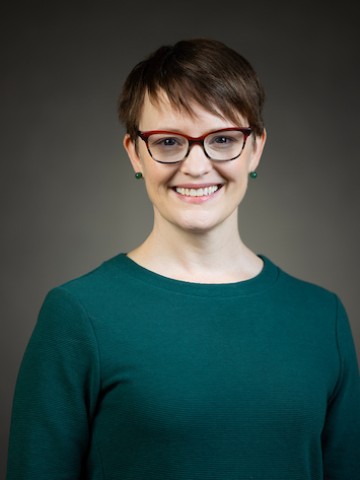
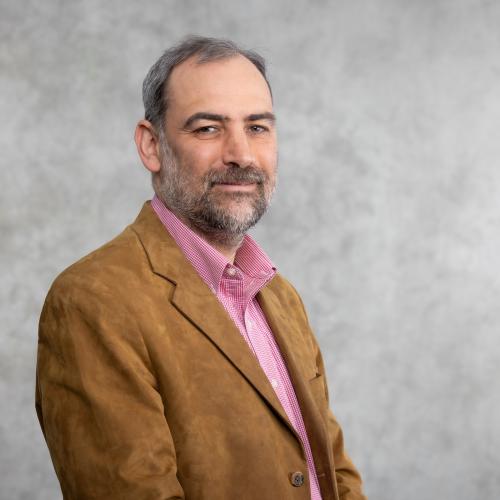
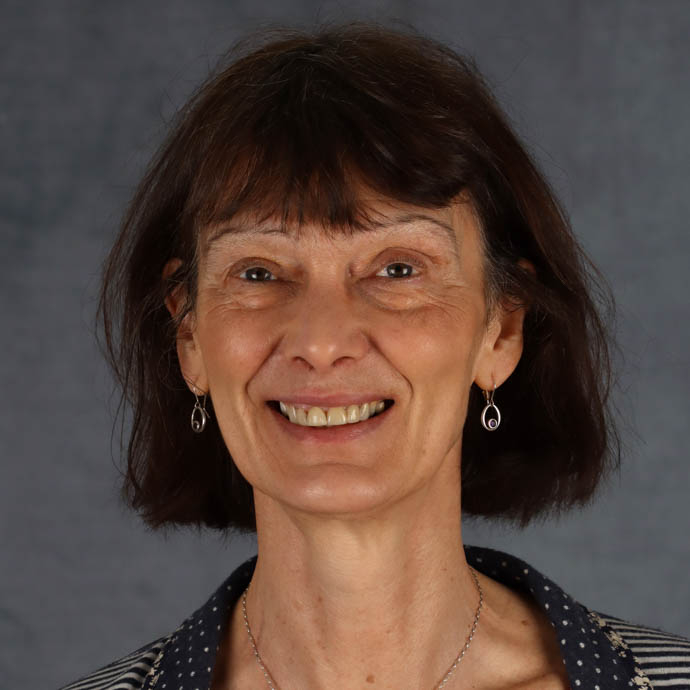
Ellen Ketels is an Associate Professor of Literature at Claremont Graduate University and Associate Dean of the Faculty for Curriculum. Her scholarship bridges medieval literary studies with interdisciplinary approaches to material culture and pedagogy. Education: BA from Washington University, MA from University of York, MA and PhD from Columbia University Her research focuses on Medieval Literature , particularly Middle English texts, Chaucer, Dante, and gender studies. She explores intersections of medieval religious culture , travel narratives , urban studies , and history of the book . Her recent publications examine ritual drama, manuscript materiality, and devotional economies. Selected Awards: Roy P. Crocker Award for Merit (2018) Claremont Faculty Leadership Fellow (2018-19) NEH Summer Scholar (2015) Mayers Fellow at Huntington Library (2014) Gould Center Summer Research Grant (2011)
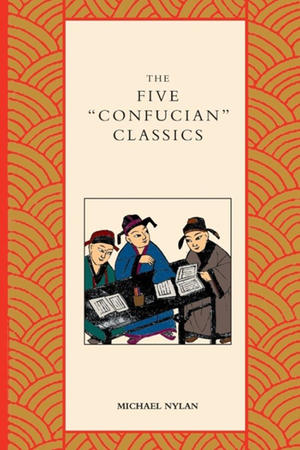
Michael Nylan is the Jane K. Sather Chair in History at the University of California, Berkeley, where he holds the rank of Professor in the Department of History. His research focuses on Early China (475 BCE–220 CE), with emphasis on sociopolitical contexts, aesthetic theories, material culture, cosmological beliefs, and gender history. He is renowned for interdisciplinary work bridging history, philosophy, and archaeology, particularly through comparative studies of classical civilizations like Rome and Han China. Education includes a PhD from Princeton University (1976–81), MA from SUNY Buffalo (1970–73), and BA from UC Berkeley (1968–70). He has conducted additional training at Cambridge University (Oriental Studies) and Beijing's Institute of Archaeology. Current research projects include studies on the 'Four Fathers of History' (Herodotus, Thucydides, Sima Qian, Ban Gu), sociopolitical conditions of classical learning in the Han dynasties, and the 'politics of the common good' in early China. His recent publications include Chang'an 26 BCE: An Augustan Age in China? (2015) and The Chinese Pleasure Book (2018), alongside translations of classical texts like Yang Xiong's Fayan and Sun Tzu's Art of War . His scholarly contributions span over 100 articles and books, addressing topics such as Han legal systems, aesthetic values in calligraphy, and the interplay between religion and governance. He has edited volumes on topics ranging from the Wu Family Shrines to the legacy of Nathan Sivin, showcasing his role as a leading figure in Sinological research.
Dr Charlotte Lewandowski is the Associate Dean (Student Attainment) at Birmingham Newman University , focusing on initiatives to enhance student success, retention, and progression. Prior to this, she served as Head of Applied Arts and Humanities and Programme Lead for History, where she achieved Top 10 rankings in the Guardian University Guide and 100% student satisfaction in the National Student Survey (2020) . Her research interests include student attainment, academic success, coaching and mentoring in higher education, and interdisciplinary humanities. She is currently working on a forthcoming publication on academic life coaching (SEDA/Routledge, 2025). Professional Memberships : Fellow of Advance HE Affiliated member of the Chartered Management Institute (CMI) Scientific Contributions : Co-lead the creation of Newman University's first accelerated degree program Advancing student engagement through coaching models Presented at national and international conferences on student success and curriculum development
Philippe Genequand is a Professor in the Department of History at the University of Montreal and a member of the Centre for Medieval Studies. He holds a PhD from the University of Geneva and teaches at all academic levels while supervising research projects on medieval history and related topics. His research focuses on medieval governance structures, papal administration (particularly the Avignon Papacy under Clement VII), the evolution of modernity from medieval institutions, and the cultural reception of the Middle Ages in contemporary media. Education: PhD in History, University of Geneva Research Interests: Medieval administrative systems, papal court dynamics, modernity transitions, medieval legal practices, cultural representation of the Middle Ages in modern media, anthropology of animals in historical context. Publications: His work includes studies on papal fiscal systems, curial careers, and the socio-political role of the medieval Church. Recent projects address the intersection of medieval and modern thought, including mathematical education in the Carolingian era and animal symbolism in legal and cultural contexts. Grants & Projects: Leads or collaborates on funded projects such as HumanitéS-AnimalitéS (SSHRC grant) and studies on the Avignon Papacy's fiscal apparatus (Geneva University funding). Labs/Teams: Active in the Centre for Medieval Studies (UdeM) and coordinates multiple interdisciplinary programs at the Faculty of Arts and Sciences, including medieval studies minors and interdisciplinary graduate programs.
Tijana Krstic serves as Professor in the Medieval Studies Department at Central European University (CEU), which relocated from Budapest to Vienna in 2020. She has been continuously affiliated with CEU since 2009, progressing from Assistant Professor (2009-2011) to Associate Professor (2011-2023) before her promotion to full Professor in August 2023. Her academic foundation includes a BA from the American University in Bulgaria (1998) and a PhD in History from the University of Michigan, Ann Arbor (2004). Her doctoral research examined conversion narratives in the Ottoman Balkans, forming the basis of her 2011 monograph. Professor Krstic specializes in trans-imperial cultural exchanges, with research focusing on religious conversion dynamics, Ottoman-Spanish Muslim refugee experiences, and the circulation of texts and religio-political concepts across early modern Eurasian boundaries. Her work bridges Ottoman, Mediterranean, and European historical scholarship through comparative analysis of empire formation and confessional identity. Her ERC-funded OTTOCONFESSION project (2015-2022) fundamentally reshaped scholarly understanding of Sunni orthodoxy development in the Ottoman Empire. She currently represents CEU on the Board of Directors for the Austrian Science Fund's Cluster of Excellence 'Eurasian Transformations' (2023-2028), coordinating cross-institutional research initiatives. 2023-2028: Board Member, Cluster of Excellence 'Eurasian Transformations' (FWF) 2015-2022: Principal Investigator, ERC Consolidator Grant 'OTTOCONFESSION' 2019-2020: Fellow, Wissenschaftskolleg zu Berlin 2017: Distinguished Teaching Award, CEU 2009-2010: National Endowment for Humanities Fellowship 2009-2010: American Council of Learned Societies Fellowship As Principal Investigator for the OTTOCONFESSION project, she directed a multinational research team whose publications transformed discourse on Ottoman religious politics. Her current leadership in the Eurasian Transformations cluster fosters innovative comparative research across European and Asian historical contexts through coordinated teaching programs and joint publications.
Sarah Kelen is a Professor of English and former Chair of the Department of English at Nebraska Wesleyan University (NWU), where she has been a faculty member since 1999. She is affiliated with the College of Liberal Arts and Sciences and has also held significant administrative roles, including Dean of the College of Liberal Arts and Sciences and Vice President for Student Life. Education: Ph.D., English, Columbia University M.A., English, Columbia University B.A., English, University of California, Berkeley Sarah Kelen's research focuses on Medieval and Renaissance literature, early modern cultural studies, and the historiography of the Middle Ages. Her work explores how medieval texts were received and reinterpreted during the Tudor period, particularly through editorial practices and literary anthologies. She has a strong interest in Chaucer, Langland, Shakespeare, and the history of the English language. Her scholarly publications reflect a consistent engagement with themes of identity, authority, and cultural memory in early English literature. Her recent and past articles analyze editorial history, censorship, genealogical representation, and the ideological shaping of literary canons, particularly in the Norton Anthology. Scientific Awards: 2025 Roger A. Cognard Professor of the Liberal Arts 2013 Faculty Scholar Award, NWU 2004 Visiting Fellow, Medieval Institute, Western Michigan University 2003-2004 Exemplary Teaching Award, NWU Sarah Kelen has been actively involved in academic leadership and service, including membership in the Peer Review Corps of the Higher Learning Commission and past presidency of the Nebraska State Conference of the AAUP. She advises students and teaches a broad range of courses from first-year composition to senior capstone seminars, including the Archway Seminar. She has also contributed to curriculum development, particularly in signature work assessment. She maintains an active scholarly presence through her publications and academic profiles on Academia.edu and LinkedIn, and she continues to contribute to the field of medieval and early modern literary studies.
Dr. Heather Allen is an Associate Professor of Spanish in the Department of Modern Languages at the University of Mississippi, affiliated with the College of Liberal Arts. Her research focuses on early modern Spanish American and Peninsular literature, with particular emphasis on Nahuatl studies, conquest historiography, and the cultural history of manuscript and print. Education: B.A. in Literature, University of Iowa (2001) M.A. in Spanish, University of Iowa (2005) Ph.D. in Romance Languages and Literatures, University of Chicago (2011) Her work explores intersections of textual materiality, affect theory, and digital humanities. She has published extensively in journals like Colonial Latin American Review and La corónica , and co-edited Latin American Textualities: History, Materiality, and Digital Media (University of Arizona Press, 2018), nominated for the Society of Textual Scholarship’s Finneran Award. Scientific Awards: Fulbright-Hays Seminar Fellowship (2021) Newberry Library Fellow (2019-20) Outstanding Academic Title, American Library Association (2017) Dr. Allen has received multiple grants, including a Course Development Grant for Open Educational Resources (2015), a Mini-Grant from the Center for Excellence in Teaching and Learning (2018), and Travel Grants from the University of Mississippi (2016-2018). She advises Spanish majors and minors and teaches courses ranging from Spanish composition to Golden Age literature.
Christian Mauder is Professor of Islamic Studies at Freie Universität Berlin’s Institute of Islamic Studies, Department of History and Cultural Studies. His research focuses on premodern Islamic religious, intellectual, and social history, particularly the Mamluk Sultanate (1250–1517), Islamic court cultures, historical semantics, Arabophone Christianity, Christian-Muslim relations, and Quranic discourses. He has published extensively on Mamluk military education, legal riddles, Persian and Circassian ethnic identities, and Ottoman-Mamluk transitions, emphasizing transregional interconnectedness. PhD in Arabic and Islamic Studies, University of Göttingen (2017) Postdoctoral research at Yale, Princeton, NYU Abu Dhabi, and University of Bonn Associate Professor at University of Bergen (2018–2023) Mauder’s scholarly work bridges Islamic history and cultural studies, exploring how concepts like mujaddid (renewer) shaped religious authority. His publications include monographs on Mamluk court culture and edited volumes on Quran reception, legal knowledge transmission, and Islamic eschatology. Recent articles analyze Persian identity construction, Hanafi riddles, and Mamluk-Ottoman entanglements. His awards include the 2018 Malcolm H. Kerr Dissertation Award and Christian Gottlob Heyne Award. He supervises doctoral students and participates in international seminars, including the Balzan Seminar on Muslim state formation. His office hours (Tue 4:15–6:00 PM) are open for academic consultation at Fabeckstr. 23/25, Berlin.
Dr Jessica O'Leary is a Research Fellow at the Gender and Women's History Research Centre within the Institute for Humanities and Social Sciences at Australian Catholic University. She specializes in gender and cultural history of the early modern period, with a focus on global encounters, colonization, and intercultural dialogues in the Portuguese Empire and Japan. In 2024, she will hold the Harold S. Williams Fellow in Japanese Studies at the National Library of Australia. Her research explores women and children in Jesuit missions, cultural transfer through diplomacy, and emotional landscapes of early modern encounters. Current projects include collaborative initiatives on women in the Global Portuguese Empire, child slaveries in the early modern world, and gender dynamics in Japanese Christianity. Scientific Awards: Philippa Maddern ECR Publication Prize (2024) Harold S. Williams Fellow in Japanese Studies (2024) DAAD Bilateral Exchange Award (2023) RSA Kristeller Fellow (2022) Maria Sibylla Merian Junior Fellow (2022) ACIS Publishing Grant (2021) Royal Studies Journal Prize (2018) Monash Masters' Prize (2017) Cassamarca Scholarship (2016) DAAD Award (2016) Dr O'Leary contributes to public engagement through platforms like The Conversation and Medieval Warfare Magazine. Her recent publications in Renaissance Quarterly and Past & Present examine gendered colonization, missionary practices, and emotional histories, with a monograph on Renaissance masculinities and diplomacy published in 2024.
Dr. Sara Keller is a Postdoctoral Fellow at the Max-Weber-Kolleg (University of Erfurt), specializing in Architectural Theory and South Asian Urban History . Her current habilitation thesis "Water Urbanities..." (submission Feb 2025) explores medieval South Asian water architecture. University of Erfurt: Postdoctoral Fellow (2025) Max-Weber-Kolleg: Researcher in Architectural and Cultural Studies Research Focus : • Water Urbanities – analyzing water spaces as socio-political-religious urban nodes • Architectural Resonance – investigating built environments as 'living organisms' • Inter-cultural Connections – tracking Mediterranean-Indian Ocean knowledge transfers Publication Trends : Her 15 recent works (2016–2024) establish a water-centric urban theory for South Asia, combining archaeological analysis with cultural geography , epigraphic studies , and comparative architectural philosophy (Vāstu śāstra, Islamic traditions).
John Flood is an Assistant Professor in the Department of English Language & Culture at the University of Groningen's Faculty of Arts. He specializes in medieval and early modern Anglophone literature and culture, particularly focusing on Christianity's role in English literature. His research explores topics such as Eve's representation in antiquity and the Middle Ages, early modern Irish writing, and the interplay between theology and literature. Education: BA (Hons) English and Philosophy, Maynooth University BSc (Hons) Psychology, Open University MA Modern English and American Literature, University College Dublin MA Philosophy, University of York MPhil Medieval English Literature, University of Oxford PhD English Literature, Trinity College Dublin (Oxford DPhil) Research Interests: Flood's work centers on the intersection of religion and literature, with emphasis on: - Early modern and medieval literary culture - Biblical figures (Eve, Mary) - Irish writing in English pre-1800 - Heresy and orthodoxy discourses - Textual reception and adaptation Awards: Fellow of the Higher Education Academy (UK) Fellow of the Royal Historical Society (UK) Academic Service: Flood has held numerous administrative roles including MA Thesis Coordinator, Chair of Departmental Boards, and membership in interdisciplinary councils. His external engagements include co-convening the Agricola Seminar for medieval studies and serving as Subject Leader in Literature at Dublin City University. Labs/Teams: Active in collaborative projects such as the Robert Grosseteste Society and interdisciplinary medieval studies initiatives.
Dr. Juliet Mullins is an Adjunct Assistant Professor at the School of English, Drama and Film, University College Dublin. Her research focuses on Old English language and literature , with particular expertise in hagiography , homiletics , and cross-cultural translation practices between Latin, Old English, Middle Irish, and Old Norse-Icelandic traditions. BA, Oxford University MPhil, University of Cambridge PhD, University College Dublin Recent projects include the Dumbarton Oaks-funded three-volume edition of Aelfric of Eynsham's Lives of Saints (2019) and the IRCHSS-funded Envisioning Christ on the Cross (2013). She co-developed the UCD Teaching and Learning Grant-funded Wordloca Old English tool. Her current research explores Violence and Affective Devotion in Aelfric's Lives of Saints . Key Publications Three-volume edition of Aelfric's hagiography (2019) Envisioning Christ on the Cross (2013) St Martin translations analysis (2005) Anglo-Saxon asceticism studies (2003) Teaching ENG20410 Reading Medieval Literature ENG32740 King Arthur: History and Romance ENG31960 Apocalypse Then ENG20230 Advanced Old English She has supervised PhD theses on Anglo-Saxon Prayerbooks and Medieval Voice Conceptualization , along with MA work on Medieval Time Perception and Female Monstrosity in Travel Writing . Awards include the IRCHSS Grant (2008-2011) and the National Association for the Integration of Teaching and Learning Award (2008).
Josh Hayes is Assistant Professor of Philosophy at Alvernia University, within the College of Humanities, Education and Social Sciences. He is a dedicated scholar and educator whose work bridges ancient, medieval, and contemporary continental philosophy, with a special emphasis on environmental ethics, political community, and the Arabic reception of Greek thought. Institution: Alvernia University Department: Department of Philosophy Rank: Assistant Professor Contact: josh.hayes@alvernia.edu His educational background includes a B.A. in Classics-History-Politics from Colorado College and a Ph.D. from the New School for Social Research (2005), where he studied under Claudia Baracchi. B.A., Colorado College, Classics-History-Politics (minor in German Studies) Ph.D., The New School for Social Research, Philosophy Hayes's research explores the enduring relevance of ancient and medieval philosophy in addressing contemporary issues such as environmental crisis, political identity, and cosmopolitan citizenship. His work on Al-Farabi and the Arabic cosmopolitan tradition highlights the philosophical continuity between Greek and Islamic thought. He also investigates the role of poetry—particularly West Coast poets like Robinson Jeffers and Gary Snyder—in shaping ecological consciousness during the Anthropocene. His teaching spans social and political philosophy, applied ethics (biomedical, business, environmental), logic, and historical surveys from the Pre-Socratics to 20th-century continental philosophy. He promotes philosophy as a transformative way of life through service-learning and community engagement initiatives. The analysis of his recent publications reveals a strong interdisciplinary thread connecting ancient philosophy, environmental ethics, and cross-cultural intellectual history. His work consistently traces ideas to their historical roots while applying them to modern ethical and existential challenges. Notable recognition includes an invitation from the King Faisal Center for Research and Islamic Studies in Saudi Arabia (2024), following the impact of his co-edited volume Aristotle and the Arabic Tradition . This engagement underscores the global relevance of his scholarship. Invited speaker and workshop organizer, King Faisal Center, Saudi Arabia (2024) Co-editor, Aristotle and the Arabic Tradition (Cambridge University Press) Founding member and editor, Journal of the Pacific Association of the Continental Tradition (JPACT) Hayes is actively involved in academic service, directing the Minor in Community Engagement and mentoring the Reading Collegiate Scholars Program. He serves as chair of the Faculty Development and Research Committee. His grants and funding are not explicitly detailed, but his international workshop organization suggests institutional and possibly external support. He is a member of the Ancient Philosophy Society, Society for Phenomenology and Existential Philosophy, International Association of Environmental Philosophy, and the American Philosophical Association. He leads initiatives that integrate philosophy with civic life, emphasizing community-based learning and environmental stewardship. His lab or research group is not named, but his collaborative workshop on Greek-Arabic philosophy and editorial role in JPACT indicate leadership in scholarly networks focused on continental and cross-cultural philosophy.
Cristina Ciancio is an Associate Professor in the Department of Law, Economics, Management and Quantitative Methods (DEMM) at the University of Sannio, Italy, where she teaches Legal History (IUS/19). She is also a member of the academic board of the national PhD program in Teaching & Learning Sciences and serves on the executive board of the Center for the History of Criminal Justice at the University of Bologna. Her academic appointments reflect a strong engagement with interdisciplinary legal research and international collaboration. Her research interests center on the history of medieval and modern law, with a particular focus on the legal treatment of death, burial, and commercial jurisdiction in 19th- and early 20th-century Italy. She explores the intersections of law, religion, medicine, and culture, especially in the context of secularization and state formation. Her work often adopts a comparative lens, analyzing legal transfers and dialogues between Italy and France. Her recent publications reveal a consistent scholarly trajectory examining taboo subjects such as necrophilia, vampire trials, unbaptized infants, and the desecration of corpses, as well as institutional reforms in commercial law. These works demonstrate a deep engagement with primary legal sources, forensic medicine, and cultural narratives, published in high-impact journals and edited volumes. National Academic Qualification as Full Professor of Legal History (2019) Visiting Professor, Université Toulouse 1 Capitole (2022) Invited Researcher at multiple Max-Planck Institutes and French research centers (2012–2023) Organizer of international conferences on death, criminal law, and Franco-Italian legal exchange She has advised on and participated in numerous scholarly events and research initiatives, though no formal students are listed. Her leadership in organizing international conferences and her active publication record indicate a vibrant research agenda and strong academic network. Cristina Ciancio leads and participates in collaborative research projects across Europe, particularly with French institutions such as EHESS, Université Paris Nanterre, and CNRS. She has been instrumental in organizing international conferences that bring together legal historians, criminologists, and cultural scholars, fostering interdisciplinary dialogue on topics at the margins of law and society.
Professor Ann Parry Owen holds a Personal Chair at the Centre for Advanced Welsh and Celtic Studies (CAWCS) within the University of Wales, where she has worked since 1985. She leads the University of Wales Dictionary as Senior Editor and previously directed major research projects including the Poets of the Nobility series and the Guto’r Glyn AHRC-funded digital edition. Specializes in Medieval Welsh poetry (12th–15th century) Focuses on Welsh lexicography through historical manuscripts Co-investigator in Sacred Landscapes and Medieval Monasteries projects Her research combines Welsh language and grammar with digital edition creation , manuscript transcription, and place-name standardization . Notable contributions include editing the works of Cynddelw Brydydd Mawr and Guto’r Glyn, and leading the Guto’r Glyn website project. Scientific contributions include: AHRC grant recipient ( £900K , 2007) Fellow of the Learned Society of Wales Welsh Language Commissioner’s Place-Names Standardisation Panel member As Chief Editor of Studia Celtica and Modern Humanities Research Association (MHRA) Library board member, she bridges traditional scholarship with digital humanities , ensuring open access to Welsh cultural heritage through initiatives like Geiriadura.cymru .