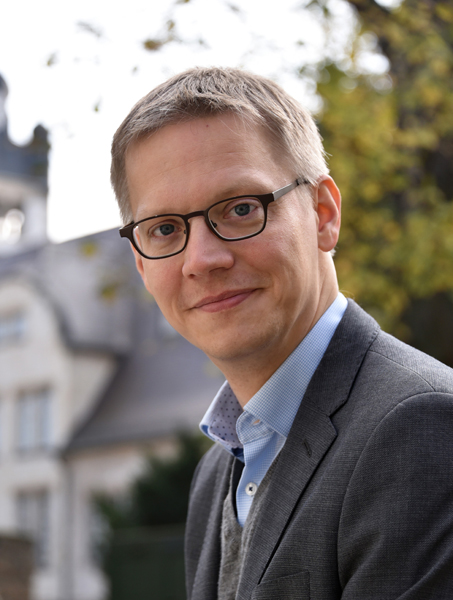
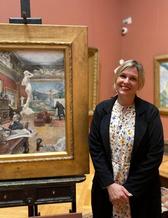
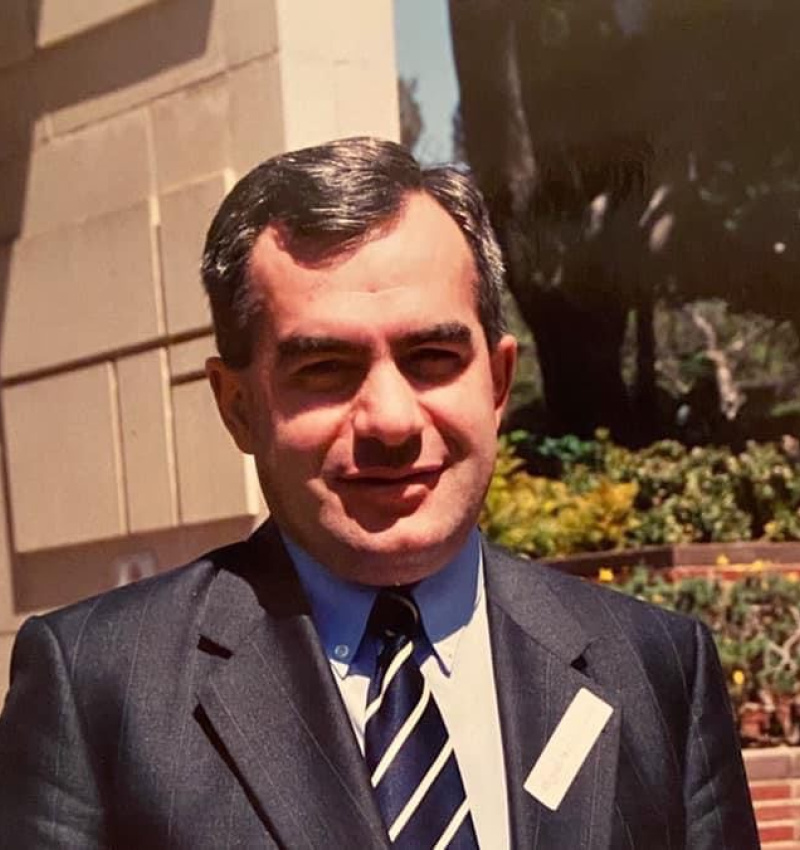
Margaret Graves is the Adrienne Minassian Associate Professor of Islamic Art and Architecture at Brown University’s History of Art and Architecture department, serving as Director of Graduate Study. She holds a PhD, MSc, and MA from the University of Edinburgh. Her research focuses on Islamic art and material culture, particularly medieval and modern acts of making, forgery, and colonial-era craft reform. Notable works include Arts of Allusion (2018), winner of major prizes, and her forthcoming Invisible Hands on 19th/20th-century ceramics forgery. Research interests span medieval Islamic intellectual history, colonial antiquities markets, and collaborations with conservators. Teaching includes courses on cultural heritage, museum studies, and Islamic art historiography. Awards include the 2019 International Center of Medieval Studies Book Prize and the 2021 Karen Gould Prize. Current projects explore postcolonial craft legacies, international banking ties to antiquities markets, and occult sciences in medieval craftsmanship.
Martha Easton is an Associate Professor of Art History and Program Director of Museum Studies at Saint Joseph's University. She specializes in medieval art and architecture, with a focus on illuminated manuscripts, gender and hagiography, feminist theory, and medieval collecting practices. Easton is a founding member of the Material Collective, a collaborative dedicated to innovative approaches to visual culture, and has lectured extensively at institutions like the Met Cloisters. Education : PhD in Fine Arts (Institute of Fine Arts, New York University) with major fields in Early Christian and Medieval Art; minor in Japanese Art Certificate of Curatorial Studies (Institute of Fine Arts/The Metropolitan Museum of Art) MA in Fine Arts (Institute of Fine Arts, New York University) BA in History (Carleton College) Her research explores intersections of gender, medievalism, and the afterlife of medieval art in modern collections. She is currently writing a book on John Hays Hammond Jr., a scientist-collector who built Hammond Castle, and has published widely on feminist art history, medieval eroticism, and the Material Collective’s collaborative scholarship. Scientific Awards : Michael J. Morris Grant for Scholarly Research (2020-21) Teaching Innovation Grant (2020) Senior Research Fellowship, Center for the History of Collecting (The Frick Collection, 2015) Samuel H. Kress Foundation Travel Grant (1998) Andrew W. Mellon Foundation Fellowship (1996-97) Easton has taught at institutions including Seton Hall University, Bryn Mawr College, and New York University, and her work bridges medieval scholarship with modern curatorial practices and feminist reinterpretation of historical narratives.
Finbarr Barry Flood is the William R. Kenan, Jr., Professor of the Humanities and Founder-Director of the Silsila: Center for Material Histories at NYU's Institute of Fine Arts. He holds a Ph.D. in Islamic Art History from the University of Edinburgh (1993) and a B.A. in Archaeology from Trinity College Dublin (1988). His research focuses on Islamic art and architecture, cross-cultural material culture, and art historical methodologies. Notably, he has held prestigious fellowships such as the Slade Professorship at Oxford and ACLS Collaborative Research Fellowship. His work bridges global art histories, examining topics like medieval Hindu-Muslim encounters, iconoclasm, and the materiality of religious artifacts. Flood’s scholarly contributions include seminal books like Objects of Translation and The Great Mosque of Damascus . His awards reflect both academic excellence and teaching prowess, including NYU's Golden Dozen Award. As director of Silsila, he leads interdisciplinary research into material histories, fostering collaborations across disciplines and regions. His publications span 40+ years, addressing themes from medieval art technologies to modern reinterpretations of Islamic aesthetics.
Prof. Dr. Martina Hartmann is an Adjunct Professor of Medieval History at the Ludwig Maximilian University of Munich and the President of the Monumenta Germaniae Historica (MGH) since 2018. Her research bridges medieval text transmission , gender studies , and historical auxiliary sciences , with a focus on early and high medieval periods. Education: History and Classical Philology (University of Bonn, 1980-1986); Doctorate in Medieval History (1989); Habilitation at University of Regensburg (2000). Research: Analyzes gender dynamics in medieval royal courts , source criticism of lost Carolingian documents , and the MGH's role during the Nazi era . She has extensively studied the Magdeburger Centurien and Matthias Flacius Illyricus . Her recent publications (2019-2024) examine deperdita (lost medieval documents), WWII-era academic survival , and digitization challenges for historical sources . She has contributed to debates on medieval women's agency and monastic administrative practices . Awards include an honorary doctorate from Masaryk University (2023). Current projects involve revising the MGH's historical narrative and documenting persecuted scholars in volumes like Zwischen Vaterlandsliebe und Ausgrenzung .
Dina Danish (b. 1981, Paris) is an Egyptian-Danish artist and educator working at the intersection of language, historical reinterpretation, and conceptual practice. She holds a Lecturer position at the Fine Arts department of KABK in The Hague and serves as a teaching mentor at the Rietveld Academy, Amsterdam . Guest teaching roles include the Sandberg Institute and American University in Cairo . Education : BA from American University in Cairo; MFA from California College of the Arts (San Francisco) Residencies : Rijksakademie Amsterdam, Spinola Banna Italy, PiST/// Istanbul, A.i.R. Dubai, Affiliated Fellow at American Academy in Rome Her research explores humor, mistranslation, and overlooked historical moments , often through video art, performance, and text-based installations . Key themes include linguistic structures, cultural memory, and Dadaist methodologies . Recent projects examine ancient motifs in contemporary art (e.g., Jean-Baptiste Maitre) and political commentary through playful abstraction . Notable exhibitions at SFMOMA, Stedelijk Museum Schiedam, and Kunsthall Oslo highlight her focus on translation errors, sound poetry, and archival interventions . Volkskrant Award finalist Abraaj Art Prize nominee Illy Present Future Prize recipient Celeste Award nominee Barclay Simpson Award nominee Dina collaborates with institutions like Hotel Maria Kapel and De Nederlandsche Bank , and co-curated a Rijksakademie anniversary exhibition. Her work is represented by galleries in Amsterdam, Milan, and Zurich.
Johannes Grave is Professor of Early Modern Art History at Friedrich Schiller University Jena (since 2019), having previously held professorships at Bielefeld University (2012-2019) and deputy directorship at the Centre allemand d'histoire de l'art in Paris (2009-2012). He earned his PhD from the University of Jena with a dissertation on Goethe's print collection. His research explores art theory, European Romanticism, and historical image studies, with emphasis on: Temporality in visual perception Comparative practices in art analysis German/French/Italian painting traditions The intersection of aesthetics and social imagination His publications demonstrate consistent focus on Romantic landscapes (especially Caspar David Friedrich), Renaissance aesthetics, and redefinitions of the sublime. Recent works critically engage with art historiography, copyright debates, and exhibition politics. Notable scientific recognition includes: Gottfried Wilhelm Leibniz Prize (2020) Hans Janssen Prize for European Art History (2012) Fellowships at DFG research groups in Berlin, Bielefeld, and Greifswald He leads doctoral projects on Romantic art, image comparison, and museology, supervising 18+ PhD candidates. As speaker for the cluster initiative Imaginamics and CRC 1288 'Practices of Comparing', he coordinates interdisciplinary teams exploring social imagination dynamics.
Dr. Alfred Hiatt is a Professor of Medieval Studies at Queen Mary University of London's School of English and Drama. He holds a BA from the University of Sydney and a PhD from the University of Cambridge. His research focuses on medieval textual cultures, particularly spatial representation and the reception of classical geography in the Middle Ages. He has authored influential works such as Terra Incognita: Mapping the Antipodes before 1600 (2008) and Dislocations: Maps, Classical Tradition, and Spatial Play (2020). His current projects explore comparative medieval Arabic-Islamic and Latin-European geography, informed by a Leverhulme Trust-funded international network. Teaching responsibilities include courses on medieval literatures, Chaucer, Arthurian literature, and research methods at both undergraduate and postgraduate levels. He is a member of the Centre for Renaissance and Early Modern Studies (CREMS) and actively supervises doctoral students in his research areas. His work bridges historical cartography, classical reception, and the analysis of medieval forgeries, contributing to interdisciplinary dialogue across literary, historical, and cultural studies.
Jacqueline M. Burek is an Associate Professor of Medieval Literature at George Mason University's Department of English. She holds affiliations with the College of Humanities and Social Sciences, serving as Director of the Medieval Studies Minor and Coordinator of the English Honors Program. Her work bridges medieval historiography, classical reception, and multilingual literary traditions, with a focus on medieval understandings of historical truth and memory. Dr. Burek earned a Ph.D. in English from the University of Pennsylvania (2017) and a B.A. in Medieval Studies and Latin from Cornell University (2010, summa cum laude). Her research has been supported by prestigious fellowships including the Fulbright Award (2014-15), Penn's Wolf Humanities Center, and GMU's Center for Humanities Research. Her research interests include the intersection of literary form and historical representation in medieval texts, particularly Latin and vernacular historiography from Bede to the Prose Brut. She also explores classical epic's influence on medieval literature and the reception of Chaucer in early modern Welsh translation. Current projects investigate memory/truth dynamics in medieval historical writing and Geoffrey of Monmouth's use of Lucan. Dr. Burek's publications include the monograph *Literary Variety and the Writing of History in Britain's Long Twelfth Century* (2023), essays in *Review of English Studies* and *Journal of Medieval Latin*, and upcoming work on medieval forgeries and Welsh translations. She teaches courses on medieval literature, epic traditions, and the history of memory.
PD Dr. Tobias Delfs is a Visiting Professor at the Chair for Cultures and Societies of South Asia at Humboldt University during the 2024/25 winter semester . Previously, he was a Research Associate (2018-2024) in the DFG-funded Modern India in German Archives (MIDA) project and a Researcher (2015-2018) in the DFG project on Nathaniel Wallich's botanical network . He holds a habilitation (2023/24) on German botanists' role in 19th-century South Asian imperialism . Education: Studied Medieval/Modern History, Political Science, and Sociology at Kiel University; PhD (2017) on Deviance in the Halle Mission at the University of Zurich Research Stays: Serampore College (India), Archive of the Francke Foundations (Halle), and funded by Fritz Thyssen Fellowship Fields of Interest include imperial/global history , modern South Asian history , history of knowledge , environmental history , and colonial natural science . His 2022-2024 publications focus on German botanical imperialism , missionary knowledge transfer , and colonial alcohol debates . Scientific Awards: Fritz Thyssen Fellowship Collaborative Projects include co-editing Benjamin Schultze's Dialogue Book on Madras and South Asia Chronicle 12 . He contributes to postcolonial historiography , missionary deviance studies , and imperial scientific networks .
Gert Partoens is a full professor at the Faculty of Arts, KU Leuven, where he serves as head of the Institute for Classical Studies. He is a member of the Latin Literature Research Group and LECTIO – KU Leuven Institute for the Study of the Transmission of Texts, Ideas and Images in Antiquity, the Middle Ages and the Renaissance. Additionally, he participates in university governance as a member (ZAP) of both the Faculty Council of Arts and the Artesraad. Professor Partoens' research focuses on Latin literature, particularly patristic and medieval texts with a specialization in Augustine studies, textual transmission, and manuscript analysis. His expertise spans: Early Christian theology and literature Manuscript studies and textual criticism Reception history of classical and patristic authors Medieval exegesis, particularly of Pauline epistles Canon formation in late antiquity His recent scholarly output demonstrates consistent engagement with Augustine's reception, particularly examining how medieval scholars interpreted and transmitted his works. Partoens has produced numerous critical editions, including volumes in the prestigious Corpus Christianorum series, and has increasingly focused on sermon corpora and homiliary collections. His methodological approach combines textual criticism with reception history to trace how classical and patristic texts were understood across different historical periods. Professor Partoens is actively involved in multiple research projects extending through 2027, including studies on canon formation mechanisms, early witnesses to semi-Pelagianism, and the transmission of Pomerius' De vita contemplativa. His work often involves international collaboration, particularly with institutions like SISMEL in Bologna, and contributes significantly to our understanding of how texts traveled and were transformed throughout the medieval period. As an educator, Partoens teaches courses on early Christian and medieval Latin language and literature, classical Latin, textual criticism, and edition techniques, training the next generation of scholars in philological methods and classical reception studies.
Frederic Clark serves as Associate Professor of Classics and English at the University of Southern California's Dornsife College of Letters, Arts and Sciences, specializing in the cultural transmission of classical antiquity through medieval and early modern Europe. His research interrogates how ancient texts shaped humanistic scholarship, evidenced by his monograph The First Pagan Historian (Oxford, 2020) and forthcoming work on historical periodization. Clark's academic foundation includes: Ph.D. in History, Princeton University (2014) M.Phil. in Medieval History, University of Cambridge (2009) B.A. in History and Literature, Harvard University (2008) He completed postdoctoral training as Andrew W. Mellon Fellow at Rice University (2017-2018), Visiting Assistant Professor at NYU's Institute for the Study of the Ancient World (2015-2017), and Mellon Fellow at Stanford University (2014-2015). His intellectual inquiry spans classical reception, Latin literature's afterlife, late antiquity, and Renaissance humanism, with particular focus on textual authenticity, historical periodization, and the construction of scholarly canons. Clark examines how forgeries like Dares Phrygius' Trojan War narrative catalyzed debates about history versus fiction across a millennium of scholarship. Analysis of Clark's publications (2010-2022) reveals consistent investigation into the mechanics of historical consciousness: how early modern scholars demarcated antiquity from the Middle Ages, reconstructed lost classical works, and navigated tensions between philological rigor and imaginative reconstruction. His work demonstrates how medieval genealogies and Renaissance antiquarianism actively shaped modern historical methodologies. Clark's scholarly recognition includes: Faculty Fellow, USC-Huntington Early Modern Studies Institute (Spring 2023) External Faculty Fellow, Stanford Humanities Center (2020-2021) While his current advising activities remain unspecified, Clark's collaborative research—exemplified by the multi-author study of Winthrop family reading practices—highlights his engagement with collective scholarly enterprises. His office (PED 132B) and email (fredernc@usc.edu) facilitate ongoing contributions to classical and historical discourse.
Alexandra Herlitz is an Associate Professor in Art History and Visual Studies at the Department of Cultural Sciences, University of Gothenburg. She also serves as a museum educator at Gothenburg Museum of Art since 2006. Doctoral degree in Art History (2013), University of Gothenburg Academic training at University of Stuttgart, Heinrich-Heine University Düsseldorf, and University of Hamburg Her research focuses on 19th-century Scandinavian art historiography , artists' colonies , artistic national identity , and transnational art networks between Scandinavia and Germany. She explores these themes through publications, podcast episodes, and archival research. Recent publications highlight Nordic rural artists' communities , gender dynamics in art history , and critical analysis of art forgery . Her work spans from 17th-century Scandinavian art to contemporary feminist perspectives , with particular attention to under-documented networks and alternative historiographies. Herlitz co-hosts the art history podcast Konsthistoriepodden , covering topics from medieval religious art to modernist movements , demonstrating her commitment to public art education and multimedia scholarship .
Seyran Zaven Grigoryan is Associate Professor and Head of the Department of History and Criticism of Modern Armenian Literature at the Faculty of Armenian Philology , Yerevan State University . A prolific scholar born in 1962, he is equally at home in Armenian, Russian and English and has published extensively on modern and contemporary Armenian poetry, comparative literature and cultural memory. His research trajectory focuses on the intricate interplay between Armenian poetry and world literary traditions, with particular emphasis on the works of Yeghishe Charents, Paruyr Sevak, Vahagn Davtyan and other towering figures of the 20th century. He examines how biblical, folkloric and Indo-European motifs are re-imagined within Armenian modernist and post-modernist aesthetics, and how memory, myth and history coalesce in poetic form. Across more than fifteen major articles and three monographs published between 2015 and 2025, Grigoryan has traced recurring themes such as sacred beverages in world literature, the reception of Rig-vedic thought by Armenian poets, the genre of memoir-poem, and the symbolic afterlives of Komitas. His comparative studies extend from Marina Tsvetaeva’s dialogue with Paruyr Sevak to Charlotte Salzmann’s echoes in Abovyan and Charents, revealing dense networks of trans-national literary exchange. Labs & Teams: As Head of Department, he leads a research group dedicated to textual criticism and digital humanities approaches to Armenian literary corpora, while mentoring graduate projects on modern Armenian poetry.
Thilo Rehren is the A.G. Leventis Professor for Archaeological Sciences at The Cyprus Institute's Science and Technology in Archaeology and Culture Research Center (STARC). He holds a PhD in Earth Sciences and has led major international research groups at institutions like UCL and UCL Qatar. His work focuses on reconstructing ancient technological processes, particularly metallurgy, glassmaking, and ceramic production, integrating archaeological, scientific, and historical data. He has pioneered studies on global metallurgical networks and early technical innovations in regions such as the Mediterranean, China, and sub-Saharan Africa. Education: MSc (mineralization of copper-silver mines) and PhD (volcanology of Nisyros, Greece). Career highlights include establishing UCL Qatar and co-directing the STARC lab. Research emphasizes cross-cultural collaboration and the socio-technical dynamics of material production. Publications span 40+ years, analyzing production techniques from Late Bronze Age Cyprus to Medieval Chinese glass workshops. His work challenges traditional narratives by highlighting the ingenuity of past artisans and the global interconnectedness of technical knowledge. Current projects investigate early metallurgy in the Balkans and glass production in West Africa. Labs/Teams: Leads STARC's interdisciplinary teams focused on archaeological materials science. Collaborates with global institutions on projects like the Meroe Quarries in Sudan and the Dhaskalio-Keros excavation in Greece.
Kevin van Bladel is Professor of Near Eastern Languages and Civilizations at Yale University, where he teaches in the Department of Near Eastern Languages and Civilizations within the Faculty of Arts and Sciences. He has previously held faculty positions at The Ohio State University and the University of Southern California, where he co-founded the Middle East Studies Program. He earned his PhD and MPhil from Yale University and holds a BA and MA from the University of Illinois at Urbana-Champaign. His research centers on the philology and history of the Near East between 200 and 1200 CE, with a focus on the sociolinguistic and cultural transitions during the Arab conquests, the transmission of scholarly traditions across languages (especially Arabic, Persian, Syriac, Greek, and Sanskrit), and the intellectual history of late antiquity. He is particularly known for his work on the Arabic reception of Hermes Trismegistus and the origins of Mandaeism. His recent publications reflect a broad engagement with the classical traditions of the Near East, including studies on Middle Persian literature, the translation movement in Baghdad, Arabicization and Islamization, and the institutional history of Islamic studies. His work often bridges philology, history, and religious studies, advocating for an integrated 'Classical Near East' framework. His scholarly contributions include influential monographs such as The Arabic Hermes and From Sasanian Mandaeans to Ṣābians of the Marshes , and numerous articles in top journals and edited volumes. He has also contributed reference entries to the Encyclopaedia of Islam . Professor of Near Eastern Languages and Civilizations, Yale University (2017–present) Associate Professor and Chair, Near Eastern Languages and Cultures, The Ohio State University (2013–2017) Assistant/Associate Professor of Classics, University of Southern California PhD, Yale University (2004) He has taught a wide range of ancient languages and courses on the empires of ancient Iran, the history of the Near East, and the cultures of late antiquity. His academic service includes participation in major research initiatives and scholarly networks, and he maintains an active presence through publications and digital scholarship.