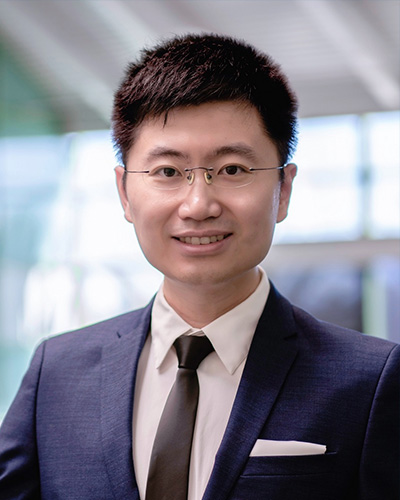
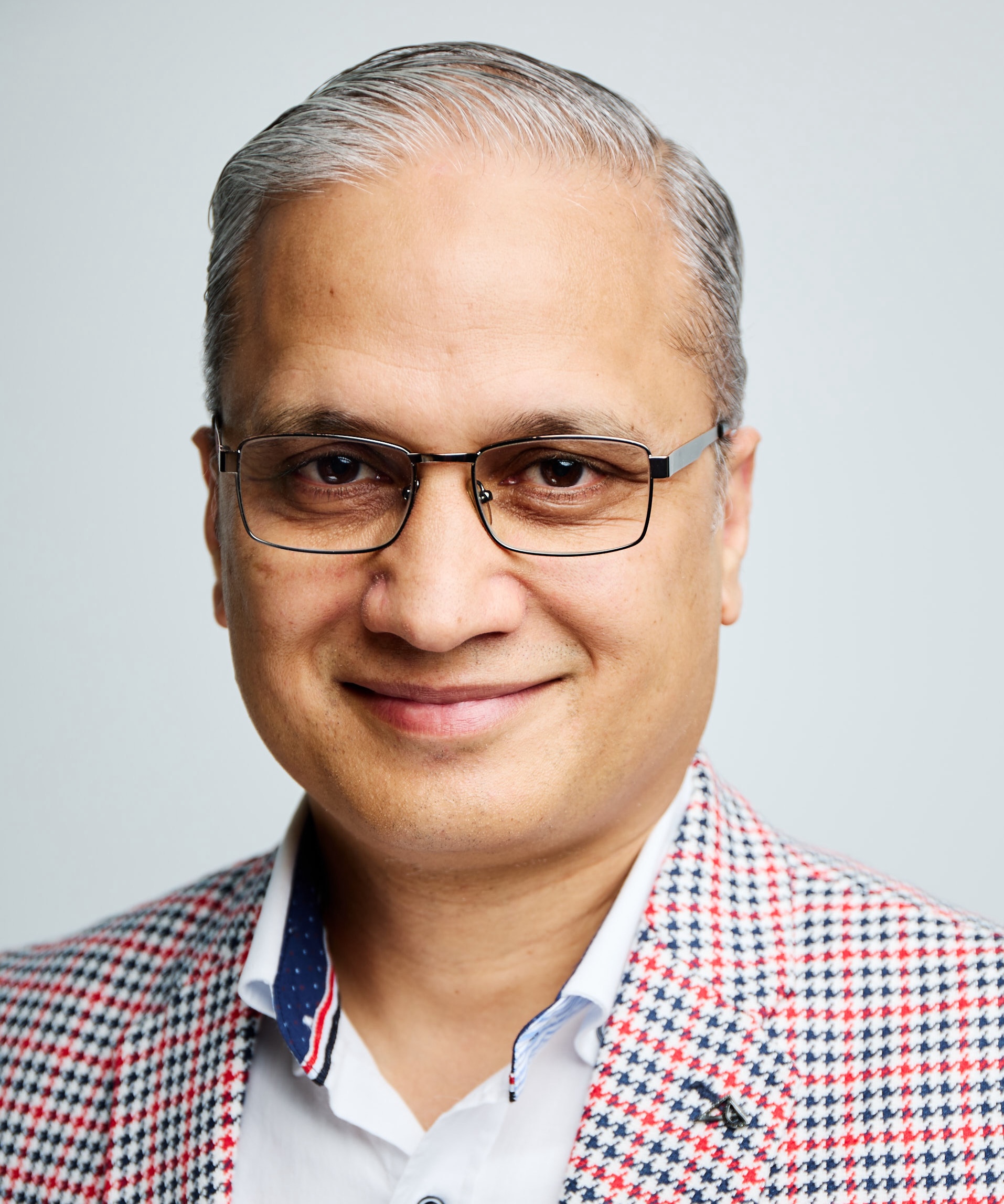
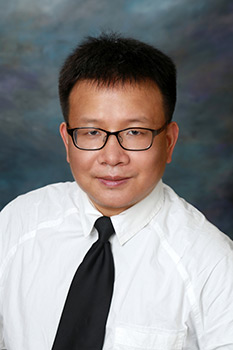
Noman Mohammed is an Associate Professor of Computer Science at the University of Manitoba’s Faculty of Science, leading the Data Security & Privacy (DSP) laboratory. He specializes in privacy-preserving techniques for data sharing, addressing challenges in healthcare, genomic, and financial data. In 2020, he received the Terry G. Falconer Memorial Rh Institute Foundation Emerging Researcher Award for his contributions to bridging privacy and data utility gaps. His research focuses on balancing data accessibility and individual privacy through technical solutions like federated learning, differential privacy, and secure genomic data processing. He emphasizes integrating policy guidelines with advanced technologies to mitigate privacy risks from interconnected data sources. Notable achievements include developing toolkits for data anonymization and federated learning frameworks, as well as advancing methods to secure cloud-based data storage and analysis. His work aligns with societal needs for robust privacy mechanisms in an era of expanding personal data collection. Future objectives involve addressing privacy challenges in emerging technologies, such as heterogeneous data integration and scalable systems for personal data management. Despite his research focus, he notably avoids social media platforms.
Thomas Peyrin is a Full Professor at Nanyang Technological University (NTU) in Singapore, leading the Symmetric Key and Lightweight Cryptography Lab (SyLLab) since 2012. He co-founded TT-logic.ai, focusing on cryptographic innovations. His academic journey includes a Ph.D. in Cryptology from Orange Labs and University of Versailles (2008), a Master in Computer Science from MPRI (2005), and engineering training at CPE Lyon (2004). Education : Ph.D. (2008), MPRI Master (2005), EPFL Exchange (2003-2004), CPE Lyon (1999-2004) Career : Full Professor at NTU (2022-present), Associate Professor (2017-2022), Nanyang Assistant Professor and NRF Fellow (2012-2017), Research Fellow at NTU (2010-2012), Cryptography Expert at Ingenico (2008-2010) Thomas specializes in symmetric cryptography, cryptanalysis of hash functions and block ciphers, and machine learning applications to security. His work includes groundbreaking research on SHA-1 collisions, lightweight cryptographic primitives (e.g., GIFT, PHOTON), and automated cryptanalysis frameworks. Recent projects explore integrating AI with cryptographic verification and fault attack resistance. His publications span top conferences like CRYPTO, EUROCRYPT, and CHES, with awards including the FSE Test of Time Award (2025), FSE Best Paper (2023), and NRF Investigatorship (2022). He has advised numerous students in cryptographic research and co-founded SyLLab, a leading lab for symmetric cryptography innovation. Scientific Awards : Test of Time Award at FSE 2025 Best Paper Award at FSE 2023/ToSC NRF Investigatorship (2022) Lee Kuan Yew Postdoctoral Fellowship Best Paper Awards at FSE 2012 and ASIACRYPT 2007
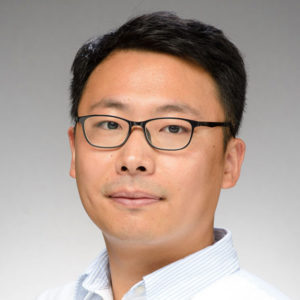
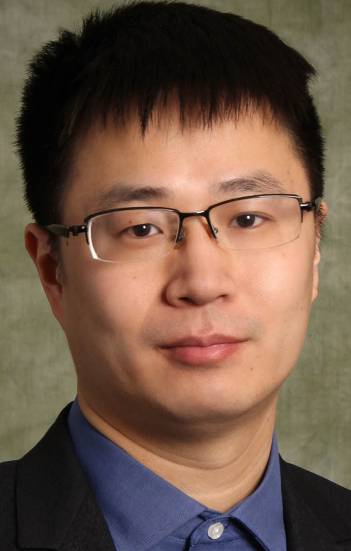
Xilin Liu is an Assistant Professor at the Edward S. Rogers Sr. Department of Electrical & Computer Engineering (University of Toronto) and the Center for Advancing Neurotechnological Innovation to Application (CRANIA) . He obtained his PhD from the University of Pennsylvania and previously worked at Qualcomm Inc. in California. Expertise in integrated circuits and systems for brain-machine interfaces , neuromodulation , and edge AI Published in top venues including Nature Electronics , IEEE JSSC , and ISSCC Recipient of multiple best paper awards and IEEE Senior Member His research spans three main themes: High-speed data converters for wireless/wireline communication IC design for neural interfacing Accelerating machine learning via hardware Recent publications focus on closed-loop neuromodulation , ultra-wideband transceivers , and flexible biomedical sensors . These works integrate analog IC design , edge AI , and real-time neural interfacing across medical rehabilitation , parkinson's monitoring , and memory research . Awards include: IEEE Solid-State Circuits Society Predoctoral Achievement Award (2016) Best Paper Award at BioCAS (2015) ECE Department Teaching Award (2022) Multiple conference best paper finalists His lab collaborates with UHN , EMBS , and global institutions while maintaining strong commitments to equity, diversity, and inclusion (EDI) in research practices.
John Capobianco, PhD, is a Professor in the Department of Chemistry and Biochemistry at Concordia University and holds the Honorary Concordia University Research Chair in Nanoscience. His research focuses on lanthanide-doped nanoparticles, upconversion luminescence, and biomedical applications. PhD, University of Geneva Key research areas include: Nanomaterials synthesis and spectroscopy Upconversion for biomedical imaging Drug delivery systems Photodynamic therapy for cancer treatment Optical thermometry and sensing Recent publications highlight advancements in: X-ray detection via photochromic nanoparticles Lipid-coated nanoparticles for lung permeation Cooperative energy transfer in Yb3+/Eu3+ complexes Biocompatible nanomaterials for secure information storage Pr3+-doped radiosensitizers for glioblastoma therapy Scientific recognitions: Honorary Concordia University Research Chair in Nanoscience Teaching includes undergraduate and graduate courses in inorganic chemistry and spectroscopy. His work bridges fundamental material science with applied biomedical engineering, emphasizing optical properties and therapeutic applications of lanthanide-based nanomaterials.
Dr. Chutima Boonthum-Denecke is a Professor in the Department of Computer Science at Hampton University's School of Science. She joined Hampton University in 2006 as an Assistant Professor and now serves as Director of the Information Assurance and Cyber Security Center (IAC@HU). She leads the NSF CyberCorps Scholarship for Service program and has contributed to NSF initiatives like ARTSI and STARS Alliances. Her educational background includes a Ph.D. in Computer Science from Old Dominion University (2007), an MS in Applied Computer Science from Illinois State University (2000), and a BS in Computer Science from Srinakharinwirot University (1997). Dr. Boonthum-Denecke's research integrates artificial intelligence, natural language processing, and cybersecurity. Key interests include: Developing intelligent tutoring systems and educational games Secure coding practices for software engineering NLP applications in information retrieval and assessment tools Cyber-physical security for IoT and robotics Her recent publications (2016-2021) focus on machine learning applications in cybersecurity, including sentiment analysis for threat detection, blockchain-enhanced IoT security, and vulnerability assessments of emerging technologies. Collaborative work with students frequently addresses privacy ethics in AI assistants, RFID implants, and cloud systems. She mentors students through the IAC@HU lab, resulting in award-winning conference presentations on cybersecurity topics. As Principal Investigator of NSF CyberCorps, she oversees scholarship programs that bridge academic research with national security needs.
Dr. Yar Muhammad is a Principal Lecturer in Computer Science at the University of Hertfordshire's School of Physics, Engineering & Computer Science. His research develops Brain-Computer Interface applications using AI/ML techniques for healthcare. He holds a PhD in ICT (Tallinn University of Technology) and dual master's degrees. Research Leadership: Supervised PhD students: Nimra Memon (fault-tolerance in web services), Dmytro Zabolotnii (agent behavior prediction), Mahir Gulzar (context-aware modeling) Accepts self-funded PhD candidates in BCI/AI applications Awards: Young Investigator Award (Springer/IFMBE, 2014) Best Paper Award Runner-up (26th ISSC 2015) Professional Recognition: Fellow of Higher Education Academy IEEE Senior Member Editorial board member for multiple journals
Bonnie Berger is the Simons Professor of Mathematics at the Massachusetts Institute of Technology and head of the Computation and Biology group at MIT's Computer Science and AI Lab. She holds additional appointments as an Associate Member of the Broad Institute, Faculty member of Harvard/MIT Health Science & Technology, and Affiliated Faculty of Harvard Medical School. Her career has been dedicated to pioneering computational approaches in molecular biology, where she has been instrumental in defining the field. Professor Berger's research focuses on designing algorithms to extract biological insights from large-scale data sets. Her work spans Compressive Genomics, Network Inference, Structural Bioinformatics, Genomic Privacy, and Medical Genomics. She actively collaborates with experimental biologists to maximize the power of computation for biological discovery, developing methods that address the challenges of modern high-throughput biological data. Her recent publications demonstrate a strong trend toward integrating machine learning with structural biology and genomic privacy. The articles show increasing sophistication in using deep learning for protein structure prediction, developing privacy-preserving techniques for genomic data sharing, and creating efficient algorithms for massive biological data sets. Her work bridges theoretical computer science with practical biological applications. Professor Berger's scientific recognition includes: Election to the National Academy of Sciences (2021) ISCB Accomplishments by a Senior Scientist Award SIAM Sonya Kovalevsky Lecture Prize Fellowships in ACM, ISCB, AMS, and other prestigious societies Multiple RECOMB Test of Time Awards NIH Margaret Pittman Director's Award She has mentored numerous students who have gone on to make significant contributions in computational biology, including Ellen Zhong, Yun William Yu, and Hyunghoon Cho. Her lab receives substantial research funding supporting projects in genomic privacy, structural bioinformatics, and compressive algorithms for biological data. Professor Berger serves on the Executive Editorial Board of the Journal of Computational Biology and multiple other editorial boards. The Computation and Biology group at MIT CSAIL, which she leads, is at the forefront of developing computational methods for biological discovery. The group combines expertise in algorithms, machine learning, and biology to tackle fundamental challenges in genomics and structural biology. They are currently organizing the Machine Learning in Structural Biology workshop at NeurIPS 2025, highlighting their leadership in this rapidly evolving interdisciplinary field.
Prof. Maryline Laurent is a Professor at Telecom SudParis, affiliated with the SAMOVAR research laboratory. Her work focuses on cybersecurity, privacy-preserving technologies, blockchain applications, and IoT security. She has contributed to numerous high-impact publications and conferences, addressing challenges in secure healthcare systems, decentralized identity management, and privacy in distributed systems. Her research spans cryptographic protocols, access control mechanisms, and compliance with EU data protection regulations. Key areas of expertise include secure communication protocols for IoT, blockchain-based solutions for healthcare, and privacy-enhancing technologies. She has collaborated on projects such as self-sovereign identity frameworks, anonymized data aggregation, and privacy-preserving smart grid systems. Her work emphasizes practical methodologies for assessing re-identification risks in anonymized datasets and designing secure systems compliant with evolving regulations. Prof. Laurent’s contributions extend to book chapters and edited volumes on digital identity management and wireless network security. She actively participates in international conferences and initiatives, advocating for privacy-by-design principles in intelligent infrastructures.
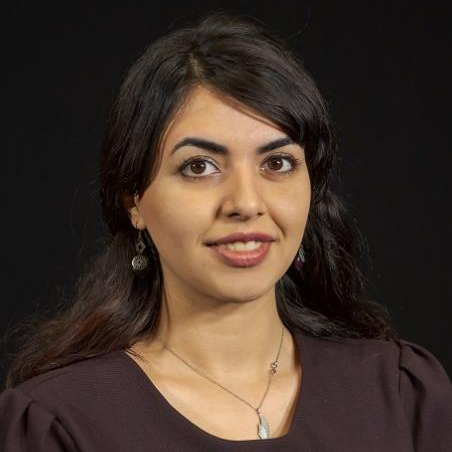
Dr. Ava Hedayatipour is an Assistant Professor of Electrical Engineering at California State University at Long Beach (CSULB), where she joined in Fall 2020. She holds a Ph.D. from the University of Tennessee, Knoxville (2020), and degrees from Iran University of Science and Technology (B.S., 2012) and Shahid Rajaee Teacher Training University (M.S., 2015). Her research focuses on analog/mixed-signal circuit design, bio-implantable devices, low-power systems, and hardware security. Notable contributions include a first-of-its-kind integrated secure multimodal sensor and a flexible paper electrode for remote electrochemical experiments. Education: Ph.D., Electrical Engineering, University of Tennessee, Knoxville, 2020 M.S., Electrical Engineering, Shahid Rajaee Teacher Training University, Iran, 2015 B.S., Electrical Engineering, Iran University of Science and Technology, 2012 Research Interests: Analog and mixed-signal circuit design Biomedical devices and lab-on-chip applications Low-power, low-noise microelectronics Hardware security for IoT and biomedical sensors Flexible electrodes for wearable systems Awards: University of Tennessee Fellowship Award (2019) Outstanding Teaching Assistant Award (2018) BEST PAPER AWARD at IEEE DCAS 2025 2nd Place Winner at IEEE BIOCAS 2023 Innovation Challenge Advising & Grants: Lead CSULB LEAP program project on medical imaging braces Funded NSF project on chaotic analog security (2018–present) Collaborated with industry partners like Applied Medical and Synaptics Labs & Teams: Next Generation Wearable Lab at CSULB Focus on sensor design, hardware security, and biomedical applications
Ningyuan Cao is an Assistant Professor in the Department of Electrical Engineering at the University of Notre Dame, College of Engineering. He leads the Circuit and System Intelligence Research Lab , focusing on the intersection of advanced hardware design and real-time/low-power machine learning applications. Education : Ph.D., Electrical and Electronics Engineering, Georgia Institute of Technology (2020) M.S., Electrical Engineering, Columbia University (2015) B.S., Electrical and Electronics Engineering, Shanghai Jiao Tong University (2013) His research investigates custom analog/mixed-signal circuits , digital architecture , and micro-system design for machine learning acceleration, distributed intelligence, and data-driven IC design automation. Key application domains include Internet-of-Everything, tactile internet, and mixed reality systems. Recent publications highlight work on Bayesian neural networks , privacy-preserving bio-signal encoders , transformer-based surrogate models , and compute-in-memory architectures . Technical themes span neuromorphic computing, uncertainty quantification, and hardware security.
Shahid Raza is a Professor of Cybersecurity at the University of Glasgow's School of Computing Science. He previously led the RISE Cybersecurity Unit in Sweden, establishing it as a leading research group. His expertise spans IoT Security, PKI, AI-driven cybersecurity solutions, and hardware/data security. Raza holds a PhD and Docentship from Uppsala University, alongside a Bachelor's with a Gold Medal for academic excellence. Education: B.Sc. (Computer Science, 3.99/4.0 CGPA, Gold Medal), Licentiate, PhD, and Docentship in Cybersecurity from Sweden. He leads EU-funded projects like H2020 CONCORDIA and Horizon Europe CUSTODES, coordinating initiatives such as the Cyber Node and Cyber Range. Active in cybersecurity policy, he serves on the EU SCCG, ECSO, and EARTO Security & Defence Research working groups. Research Interests Public Key Infrastructure (PKI) for IoT AIAgent-Driven Cybersecurity Solutions IoT Certification Standards Hardware Security for Low-Power Devices Grants & Projects Coordinator: Horizon Europe CUSTODES Technical Leader: H2020 Arcadian-IoT Founder: RISE Cyber Range (Sweden's largest cybersecurity test facility) Awards & Memberships IEEE Senior Member Gold Medal for Academic Excellence (Bachelor's)
Jun.-Prof. Dr. Christian Krupitzer is a Tenure Track Professor in Food Informatics at the University of Hohenheim's Institute of Food Science and Biotechnology, part of the Faculty of Natural Sciences. He leads the Department of Food Informatics and is a member of the Computational Science Hub (CSH). His research focuses on self-adaptive software systems, machine learning (especially edge computing), IoT technologies, and software engineering applied to food processing and agricultural systems. Education: PhD in Business Information Systems (Dr. rer. pol.), University of Mannheim (2018) M.Sc. and B.Sc. in Business Information Systems, University of Mannheim (2010–2012) High School Diploma (Abitur) from Wilhelmi-Gymnasium Sinsheim (2007) Research Interests: Krupitzer’s work integrates computational methods with food science, emphasizing adaptive systems for food quality monitoring, IoT in agriculture, and machine learning for predictive analytics. He explores edge computing’s role in real-time decision-making and secure group communication schemes for IoT networks. Publications: His recent work spans predictive maintenance in Industry 4.0, digital twins in food systems, and blockchain applications in supply chain authentication. The articles highlight trends in interdisciplinary approaches combining AI, IoT, and domain-specific challenges in food production and logistics. Awards: No scientific awards explicitly listed in the provided materials. Grants & Advising: While specific grants are unmentioned, his roles as department head and tenure-track professor suggest involvement in research funding. No formal advisee list provided, though his team includes postgraduate researchers like Dana Jox, Daniel Einsiedel, and others. Labs & Teams: Leads the Food Informatics department and collaborates with the Computational Science Hub. His team focuses on developing innovative solutions for food systems through computational methods.
Wenfeng Zhao is an Assistant Professor in the Department of Electrical and Computer Engineering at Binghamton University. He holds a PhD from the National University of Singapore (2014) and BS/MS degrees from Huazhong University of Science and Technology (2007-2009). Prior to this role, he conducted postdoctoral research at the University of Minnesota's Biomedical Engineering Department. His research focuses on neural engineering, compressed sensing, ultra-low-power VLSI systems, and in-memory computing. Key areas include hardware security, biomedical signal processing, and energy-efficient computing architectures. His work spans applications in neural interfaces, cryptographic hardware, and IoT edge devices. Recent publications highlight advancements in block-cipher-in-memory architectures, emotion recognition via EEG analysis, and energy-efficient FPGA accelerators for neural networks. His research also addresses challenges in cryogenic memory systems and MRI-compatible neural recording devices. Zhao's contributions emphasize interdisciplinary approaches at the intersection of hardware design, signal processing, and cybersecurity. His lab develops novel solutions for low-power embedded systems and trustworthy IoT infrastructure.
Weichao Wang is a Professor and Chair of the Department of Software and Information Systems at the University of North Carolina at Charlotte (UNC Charlotte). He holds a Ph.D. in Computer Science from Purdue University (2005), with earlier degrees from Tsinghua University. His research focuses on securing pervasive systems, wireless networks, cloud computing, and critical infrastructures, integrating multi-disciplinary approaches like information theory and visualization. He leads efforts in cybersecurity education for K-12 and higher education. Key roles include organizing IEEE conferences (e.g., IPCCC) and editorial roles in journals like ITU Intelligent and Converged Networks. His awards include the 2024 AECT Crystal Award and multiple Distinguished TPC recognitions. Students under his advisement have contributed to areas like mobile cloud computing and network security. Professional contributions include service on over 50 conference committees and journal reviewing. Current research emphasizes cybersecurity in education, IoT defense, and AI-driven security systems. His lab explores immersive visualization for cybersecurity training and augmented reality applications.
Rongxing Lu is an Adjunct Professor at the Faculty of Computer Science, University of New Brunswick (UNB), Canada, since August 2016. Previously, he held positions at Nanyang Technological University (NTU), Singapore (2012–2016) and the University of Waterloo, Canada (PhD in 2012). His research focuses on applied cryptography, privacy enhancing technologies, and IoT-big data security. He has over 7,500 citations and received prestigious awards like the Governor General’s Gold Medal (2012) and the IEEE ComSoc Asia Pacific Outstanding Young Researcher Award (2013). He is an IEEE senior member and serves on editorial boards of journals like IEEE Network. **Education**: PhD in Electrical & Computer Engineering, University of Waterloo (2012), awarded Governor General’s Gold Medal Postdoctoral Fellow at University of Waterloo (2012–2013) **Research Interests**: Developing cryptographic protocols for IoT and big data systems Privacy-preserving techniques for distributed systems Secure communication in 5G/6G networks and vehicular systems **Awards and Recognition**: Recipient of multiple best paper awards in IEEE conferences 2016–2017 Excellence in Teaching Award at UNB **Editorial and Leadership Roles**: Symposium co-chair at IEEE Globecom’16 Secretary of IEEE ComSoc CIS-TC Organized special issues on fog computing security (Elsevier) and big data security (IEEE IoT Journal) **Key Contributions**: Pioneered privacy-aware data reporting schemes for vehicular networks Designed lightweight IoT authentication protocols Advanced secure machine learning frameworks with privacy guarantees