

Peter Teertstra is an Associate Professor, Teaching Stream in the Department of Mechanical and Mechatronics Engineering at the University of Waterloo and Director of the Sedra Student Design Centre. He holds a PhD (2003), MASc (1992), and BSE (1990) from the University of Waterloo and Calvin College, respectively. His research focuses on thermal modeling for microelectronics/optoelectronics cooling, experimental heat transfer in micro/nano-scale systems, and predicting air cooling limits in electronics. He oversees the Sedra Student Design Centre, supporting teams in competitions through resource access and sponsorship. Teertstra teaches courses like GENE 199, ME 101, MTE 201, and PD 21, emphasizing engineering practice and thermodynamics. His publications (2006–2011) address thermal conductivity in fuel cells, convection modeling, and heat transfer in electronics enclosures. He is currently accepting graduate applications via an online process.
جستجوی استاد راهنمای دانشگاهی
برای مسیر پژوهشیتان، استاد راهنما، استاد دانشگاه و پژوهشگر مناسب را پیدا کنید و با آنها ارتباط بگیرید.
نمایش ۱-۱۵ از ۳۰۴ استاد راهنما
اطلاعات پروفایلها از صفحات عمومی دانشگاهها گرفته شده و ممکن است بهروز نباشد.
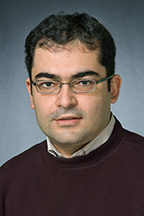
Baris Fidan is a Professor in Mechanical & Mechatronics Engineering at the University of Waterloo, with cross appointments in System Design Engineering and Electrical & Computer Engineering. He is a senior member of IEEE and AIAA. His research focuses on cooperative/adaptive control, autonomous systems, multi-agent networks, and vehicular control applications. He leads the Cooperative & Adaptive Mechatronic Systems (CAMS) Lab, which develops control strategies for autonomous vehicles, robotic systems, and intelligent transportation. Education: PhD in Electrical Engineering, University of Southern California (2003) Masters in Electrical & Electronic Engineering, Bilkent University (1998) Bachelor's in Electrical & Electronic Engineering & Mathematics, Middle East Technical University (1996) Research Interests: His work spans adaptive control theory, sensor networks, multi-agent coordination, autonomous vehicle networks, and biomedical systems control. He emphasizes practical applications in intelligent transportation, robotic navigation, and distributed system optimization. Grants & Projects: He has led major grants including NSERC Discovery Programs on cooperative mechatronic systems and 3D autonomous vehicle coordination. Industrial projects include autonomous driving strategies, vehicle control optimization, and high-precision gear manufacturing technologies. Labs/Teams: Directs the CAMS Lab, which collaborates on projects involving distributed motion planning, sensor localization, and autonomous vehicle networks. Current projects address challenges in urban autonomous driving, cooperative robotic systems, and resilient sensor networks.
- Control Systems
- Autonomous Vehicles
- Robotics
- +۵ مورد دیگر
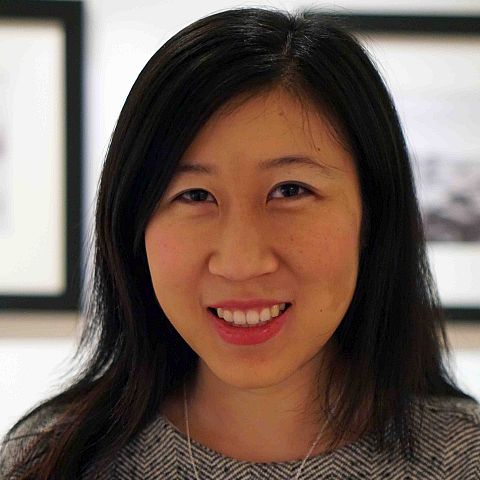
Amy R. Wuمشاهده پروفایل
دانشیار
Amy R. Wu serves as Associate Professor in Mechanical and Materials Engineering at Queen's University and holds the Mitchell Professorship in Bio-inspired Robotics. She leads the Biomechanics x Robotics Laboratory (BxRL) and contributes to the Ingenuity Labs Research Institute. Her academic credentials include: Ph.D. in Mechanical Engineering, University of Michigan Postdoctoral Research, Biorobotics Laboratory, EPFL, Switzerland Dr. Wu's research bridges biomechanics and robotics to enhance legged mobility through innovations in human-robot interaction , exoskeleton design , and gait assistance . Her work focuses on developing robotic systems that adapt to human movement patterns, particularly for spinal cord injury rehabilitation and stability augmentation during walking. Analysis of her 2019-2023 publications reveals consistent advancement in exoskeleton control algorithms, gait stability metrics, and human adaptation studies. Key trends include modular exoskeleton systems (Symbitron), neuromuscular controllers for ankle assistance, and haptic feedback integration for motor learning enhancement. No scientific awards are documented in the provided materials. Dr. Wu mentors graduate students through BxRL, where her team conducts human subject testing and robotic development. Research is supported by institutional resources at Ingenuity Labs, though specific grant details remain unspecified. The Biomechanics x Robotics Laboratory operates within Queen's Ingenuity Labs Research Institute, facilitating interdisciplinary collaboration on projects like outdoor stability assessment, winter walking adaptations, and teleoperation interfaces for drone control.
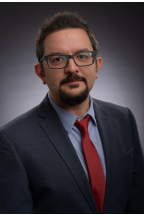
Arash Aramiمشاهده پروفایل
دانشیار
Arash Arami is an Associate Professor in the Department of Mechanical and Mechatronics Engineering at the University of Waterloo, cross-appointed in Systems Design Engineering. He directs the Neuromechanics and Assistive Robotics Laboratory and maintains affiliations with Waterloo Robohub, the Centre for Bioengineering and Biotechnology, Waterloo AI institute, and KITE institute at Toronto Rehab Institute. He earned his Doctorate in Electrical Engineering from EPFL (2014), Master of Science from University of Tehran (2009), and Bachelor of Science from University of Tabriz (2006), all in Control Engineering. His research in Assistive Robotics and Rehabilitation Engineering integrates Machine Learning with Neuromechanics to develop intelligent systems for human movement analysis. Key focus areas include exoskeleton control algorithms, wearable sensor systems, and neural control modeling for rehabilitation applications. Recent publications demonstrate interdisciplinary work spanning robotics, biomedical engineering, and materials science, with emphasis on real-time human locomotion prediction, exoskeleton-human interaction, and data-driven health monitoring solutions. Dr. Arami serves as Chair of the NSERC Scholarship Committee (2021-2023) and mentors graduate students through the Mechatronics Exchange Study program. His teaching includes core courses in control systems, robot manipulators, and biomechanical engineering. The Neuromechanics and Assistive Robotics Laboratory fosters collaborations with clinical partners at Toronto Rehab Institute, focusing on translating robotic innovations into practical rehabilitation tools through interdisciplinary teamwork.

Xianguo Li is a Professor in the Department of Mechanical and Mechatronics Engineering at the University of Waterloo, Canada. He holds prestigious fellowships including Fellow of the Canadian Academy of Engineering (FCAE), Fellow of the Engineering Institute of Canada (FEIC), and Fellow of the Canadian Society for Mechanical Engineering (CSME). His primary research focuses on thermal fluid science, energy systems, and fuel cell technology, with a strong emphasis on green energy solutions. **Education**: 1989: Doctorate in Mechanical Engineering, Northwestern University, USA 1986: Master's in Mechanical Engineering, Northwestern University, USA 1982: Bachelor's in Thermal Energy Engineering, Tianjin University, China **Research Interests**: His work spans fuel cells, spray dynamics, fluid dynamics, heat and mass transfer, power generation, and renewable energy systems. He leads the Fuel Cell and Green Energy Lab, advancing innovations in energy storage, propulsion systems, and sustainable technologies. **Awards**: Outstanding Performance Award (University of Waterloo, 2007) Frank Walk Service Award (2001) Best Paper Award (2003) Recipient of the Simpson Fellowship (1988) **Advising & Grants**: He supervises graduate students and research associates in projects funded by NSERC, Auto 21, CFI, and industry partners. His lab collaborates on fuel cell durability, thermal management, and green energy policy initiatives. **Editorial Roles**: Founding Editor-in-Chief of the International Journal of Green Energy , Field Chief Editor of Frontiers in Thermal Engineering , and serves on dozens of editorial boards. He chairs major conferences like the International Green Energy Conference and the World Fuel Cell Conference series.
- Fuel Cells
- Energy Systems
- Thermal Fluid Science
- +۷ مورد دیگر
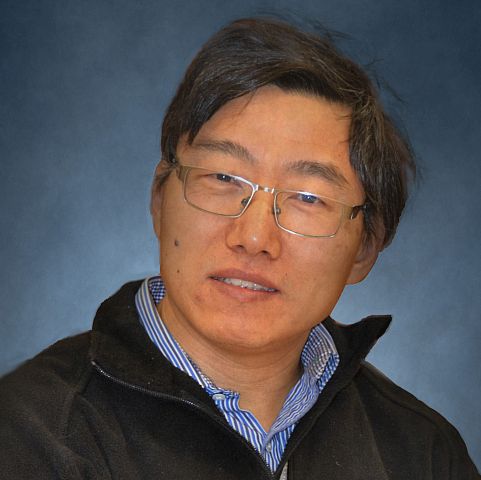
Qingguo Li is a Professor and Associate Head at the Department of Mechanical and Materials Engineering , Queen's University , and a member of the Ingenuity Labs Research Institute . He specializes in biomechanical system design, energy harvesting, wearable sensors, gait analysis, and load carriage systems. His research integrates robotics, biomedical engineering, and sensor technology to develop human-centric devices and mobility aids. Current Roles : Professor, Associate Head, Queen's University Research Institute : Ingenuity Labs Research Institute Lab : Bio-Mechatronics and Robotics Laboratory His work focuses on biomechanical energy harvesting , IMU-based motion analysis , and assistive device development . Key applications include stroke rehabilitation, gait monitoring, and wearable power generation systems. Articles span cable-driven robots , smart walkers , and 3D printing mechanisms , emphasizing human-robot interaction and dynamic modeling . The lab explores sensor calibration , adaptive control algorithms , and human movement optimization . Areas of impact include rehabilitation engineering , load carriage stability , wearable sensor accuracy , and assistive robotics . His team develops solutions for gait asymmetry detection , post-stroke mobility , and low-cost energy systems , leveraging machine learning and kinetic modeling .

Yimin A. Wuمشاهده پروفایل
استادیار
Yimin A. Wu is an Assistant Professor at the University of Waterloo, affiliated with the Faculty of Engineering and the Department of Mechanical and Mechatronics Engineering. His research focuses on water systems and health-related challenges. University: University of Waterloo School: Faculty of Engineering Department: Department of Mechanical and Mechatronics Engineering Email: yimin.wu@uwaterloo.ca Location: E7 3418 Research Interests: Dr. Wu's work spans critical areas in water systems and public health, including Urban Water Systems, Watershed Management, Drinking Water Treatment, and the intersection of Water and Health. His research emphasizes sustainable engineering solutions for water management and health impacts. For more information, visit his personal webpage: https://uwaterloo.ca/mif .

Dr. G.K. Knopf is a Professor in the Department of Mechanical & Materials Engineering at Western University, Canada. He holds a Ph.D. (1991), M.Sc. (1987), and B.E. (1984) from the University of Saskatchewan. His work bridges product design, advanced manufacturing, and bio-inspired technologies. Research Focus: Dr. Knopf’s research spans 3D shape reconstruction , laser microfabrication , micro-optics , and bioelectronic imaging arrays . Recent projects emphasize light-driven actuators , flexible electronics , and graphene-based inks for printing circuits on unconventional substrates like silk and paper. Publications: Over 150 peer-reviewed works, including two edited CRC Press volumes ( Smart Biosensor Technology , Optical Nano and Micro Actuator Technology ). Key contributions involve non-lithographic fabrication , bacteriorhodopsin photodetectors , and self-organizing feature maps for data visualization. Awards/Patents: Co-inventor of two U.S. patents (6,542,249 for 3D surface measurement; 7,573,024 for bioelectronic imaging arrays). Teaching: Leads graduate courses in Medical Device Design and Optomechatronic Systems , as well as undergraduate Mechatronics and Medical Device Development courses.

Mustafa Yavuz is a Professor and Director of the Nano and Micro Systems Lab (NMSL) at the University of Waterloo, Canada, affiliated with Mechanical & Mechatronics Engineering, System Design Engineering, and Electrical & Computer Engineering. He holds cross-appointments in multiple departments and has been a faculty member since 2009. His research focuses on Opto-Nano/MEMS devices, quantum electronic solids, graphene, and superconductors. Yavuz has supervised over 28 graduate students and postdoctoral fellows, leading to impactful contributions in sensors, nanomaterials, and energy harvesting. He has authored/co-authored numerous articles and holds patents in MEMS and nanotechnology. His awards include the University of Waterloo Research Excellence Award (2018) and international fellowships from MINATEC and JSPS. Education: Ph.D. Materials Engineering (University of Wollongong, 1996) Ph.D. Applied Physics (University of Wollongong, 1995) M.Sc. Materials Engineering (Middle East Technical University, 1991) B.Sc. Materials Engineering (Middle East Technical University, 1989) Research Interests: Yavuz specializes in advanced materials and MEMS/NEMS technologies, including opto-nano-MEMS devices, quantum electronic solids (superconductors, graphene), and functional nanomaterials for sensors and energy systems. His work integrates fabrication, packaging, and reliability testing of nanoscale devices for applications in photonics, biomedical sensing, and environmental monitoring. Recent trends in his articles highlight innovations in resonant MEMS mirrors, graphene-based biosensors, and laser-functionalized 2D materials. Scientific Awards: MINATEC Fellowship (2019) Waterloo Engineering Research Excellence Award (2018) International Nanoarchitectonics Fellowship (2017) JSPS Fellowship (2007) Advising & Grants: Yavuz has supervised 26 doctoral students and 28 postdoctoral researchers. His labs, including the NMSL and BioGraph Sense Inc., focus on MEMS packaging, nanojoining, and plasmonic biosensors. He has led projects funded by NSERC, CFI, and industry collaborations with companies like Apple, Samsung, and Smarter Alloys. Labs/Teams: Director of the Nano and Micro Systems Lab (NMSL), co-founder of BioGraph Sense Inc., and collaborator in the Waterloo Institute for Nanotechnology (WIN). His research group develops cutting-edge nanoscale devices with applications in healthcare, energy, and environmental sensing.

James Tungمشاهده پروفایل
دانشیار
James Tung is an Associate Professor at the University of Waterloo’s Faculty of Engineering, Department of Mechanical and Mechatronics Engineering. His research focuses on assistive technology, rehabilitation engineering, and mobility solutions for individuals with disabilities. He leads the Neural and Rehabilitation Engineering (NRE) Lab, which develops wearable sensors, robotics, and machine learning tools to enhance mobility and monitor motor rehabilitation. He teaches courses including BME 355 (Physiological Systems Modelling), BME 540 (Neural and Rehabilitation Engineering), and ME/MTE engineering modules. The lab collaborates with clinical and industry partners to translate research into practical solutions, addressing real-world mobility challenges and aging demographics. His research spans real-world gait analysis, fall risk assessment, and prosthetic design, with a focus on pediatric neurodevelopmental disorders and elderly mobility. The NRE Lab emphasizes interdisciplinary work, combining biomechanics, robotics, and data science to improve healthcare outcomes. Lab Alumni: Includes researchers like Robin Murdock (Myant Inc.), Andrew Hart, and Raj Senthilkumar, contributing to prosthetics and gait analysis. Partnerships: Engages clinical and industry stakeholders for knowledge translation and commercialization. Current projects include developing smart rollators, biofeedback prosthetics, and sensor-based assessment tools to address mobility limitations in aging populations and individuals with disabilities.
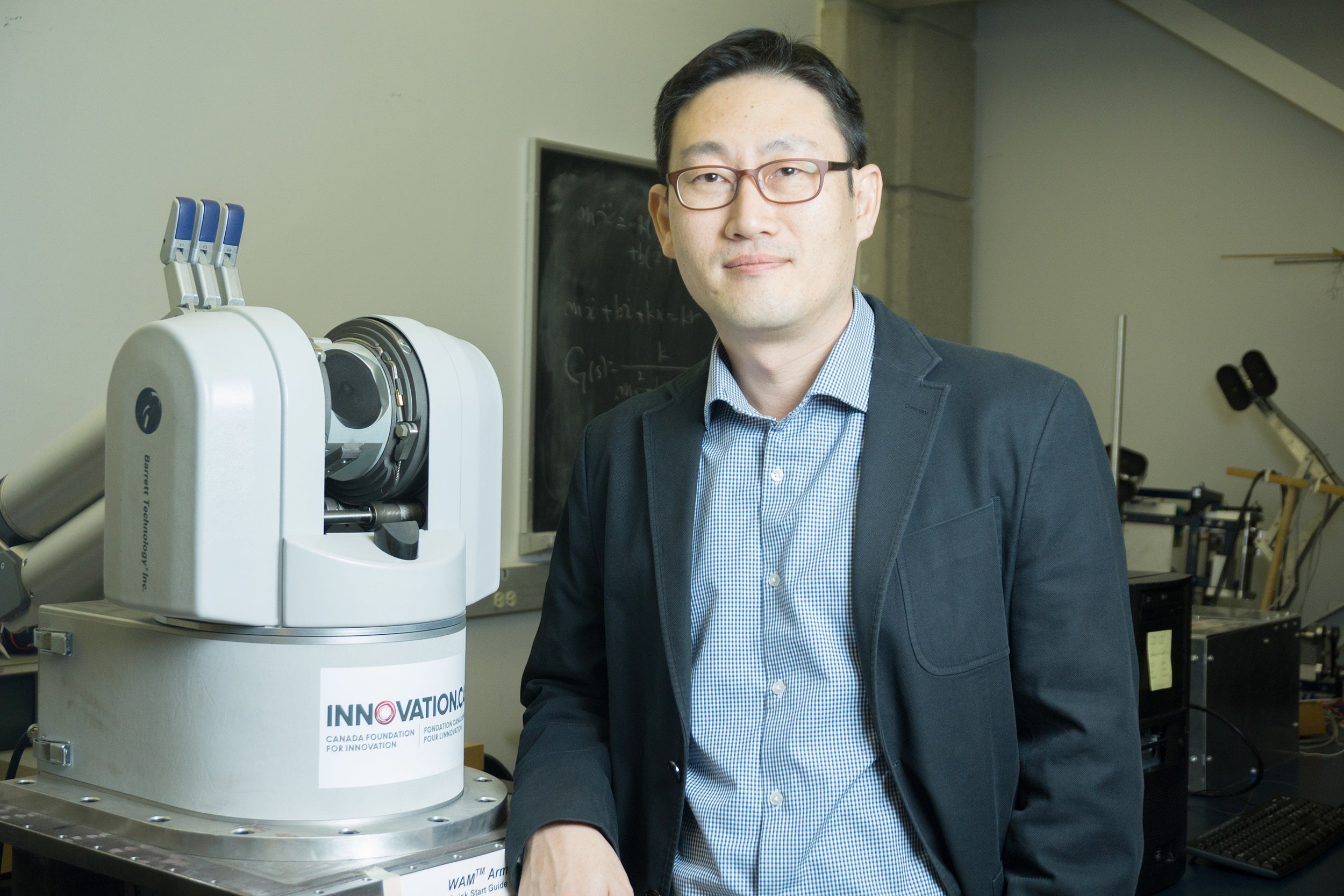
Soo Jeon is a Professor in the Department of Mechanical and Mechatronics Engineering at the University of Waterloo, part of the Faculty of Engineering. He holds a PhD from the University of California at Berkeley (2007) and prior degrees from Seoul National University. His research focuses on mechatronics, dynamic systems, and control, with applications in robotics, autonomous systems, and precision motion control. He has held roles as Assistant Professor (2009–2015), Associate Professor (2015–2024), and Full Professor (2024–present). Professor Jeon’s expertise includes intelligent sensing and control for mechatronic systems, nonlinear dynamics, and autonomous systems. He has received notable awards such as the 2022 Engineer of the Year Award (AKCSE/KOFST), 2015 NSERC Discovery Accelerator Supplement, and 2010 ASME Rudolf Kalman Best Paper Award. He serves as an Associate Editor for several journals, including the ASME Journal of Dynamic Systems and IEEE Transactions on Automation Science and Engineering. His research interests span robotics, control systems, and automation, with recent work on autonomous navigation, tactile exploration, and model predictive control. He supervises graduate students in MASc and PhD programs and teaches courses like ME 649 (Control of Machines and Processes) and ME 360 (Introduction to Control Systems). Jeon holds patents in areas like low-power magnetic locks and remote plasma source seasoning. His lab, the Waterloo Mechanical Systems & Control Laboratory (WMSCL), focuses on advanced mechatronics and robotics projects, including collaborations with international institutions such as the Korea Institute of Machinery & Materials (KIMM).
- Mechatronics
- Robotics
- Control Systems
- +۷ مورد دیگر
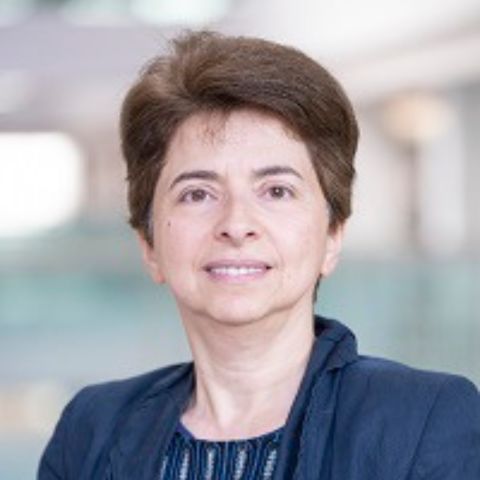
Dr. Leila Notash is a Professor in the Department of Mechanical and Materials Engineering at Queen's University, where she has been a faculty member since 1997. She is a Fellow of Engineers Canada (FEC) and a licensed Professional Engineer with Professional Engineers Ontario (PEO), with significant contributions to engineering education and professional service. Her educational background includes: Bachelor of Science in Mechanical Engineering, Middle East Technical University (Ankara, Turkey) - High Honor Student (2nd out of 166) Master of Applied Science in Mechanical Engineering, University of Toronto PhD in Mechanical Engineering, University of Victoria Dr. Notash's research centers on robotics and mechatronics, with specialized expertise in cable-driven parallel manipulators. Her work integrates kinematics, fault-tolerant design, and neural network applications to address challenges in robot calibration, workspace analysis, and motion control under real-world constraints like cable mass and elasticity. She investigates both theoretical frameworks and practical implementations for industrial and specialized robotic systems. Analysis of her recent publications (2020-2024) reveals a clear trajectory toward intelligent control systems, where machine learning techniques—particularly neural networks and reinforcement learning—are increasingly applied to solve complex problems in cable-driven robotics. This includes motion control optimization, path generation, and kineto-static analysis while accounting for physical limitations such as cable elasticity and mass effects, demonstrating a shift from traditional mechanical analysis to data-driven adaptive control methodologies. Her scientific recognition includes: Fellow of Engineers Canada (FEC) University of Toronto Open Fellowship University of Toronto International Differential Fee Waiver Charles S. Humphrey Graduate Student Award NSERC Doctoral Prize Nominee (1996) Dr. Notash has mentored 161 undergraduate students as Faculty Advisor for the Mechanical '06 cohort and pioneered international educational initiatives like the International Undergraduate Student Design project (IVDS), connecting Queen's University with Middle East Technical University and Union College. Her service extends to editorial leadership for Mechanism and Machine Theory and ASME journals, and governance roles including Faculty Senator at Queen's University (2009-2025) and PEO Council Councillor-at-Large (2019-2025). She has established collaborative research networks through initiatives like the Reading Week shop course 'Design Basics 1.0' and sustained leadership in the Canadian Committee for the Promotion of Mechanism and Machine Science (CCToMM) and the International Federation for the Promotion of Mechanism and Machine Science (IFToMM), where she chaired the Permanent Commission on Communications (2006-2011).
- Robotics
- Mechatronics
- Kinematics
- +۳ مورد دیگر
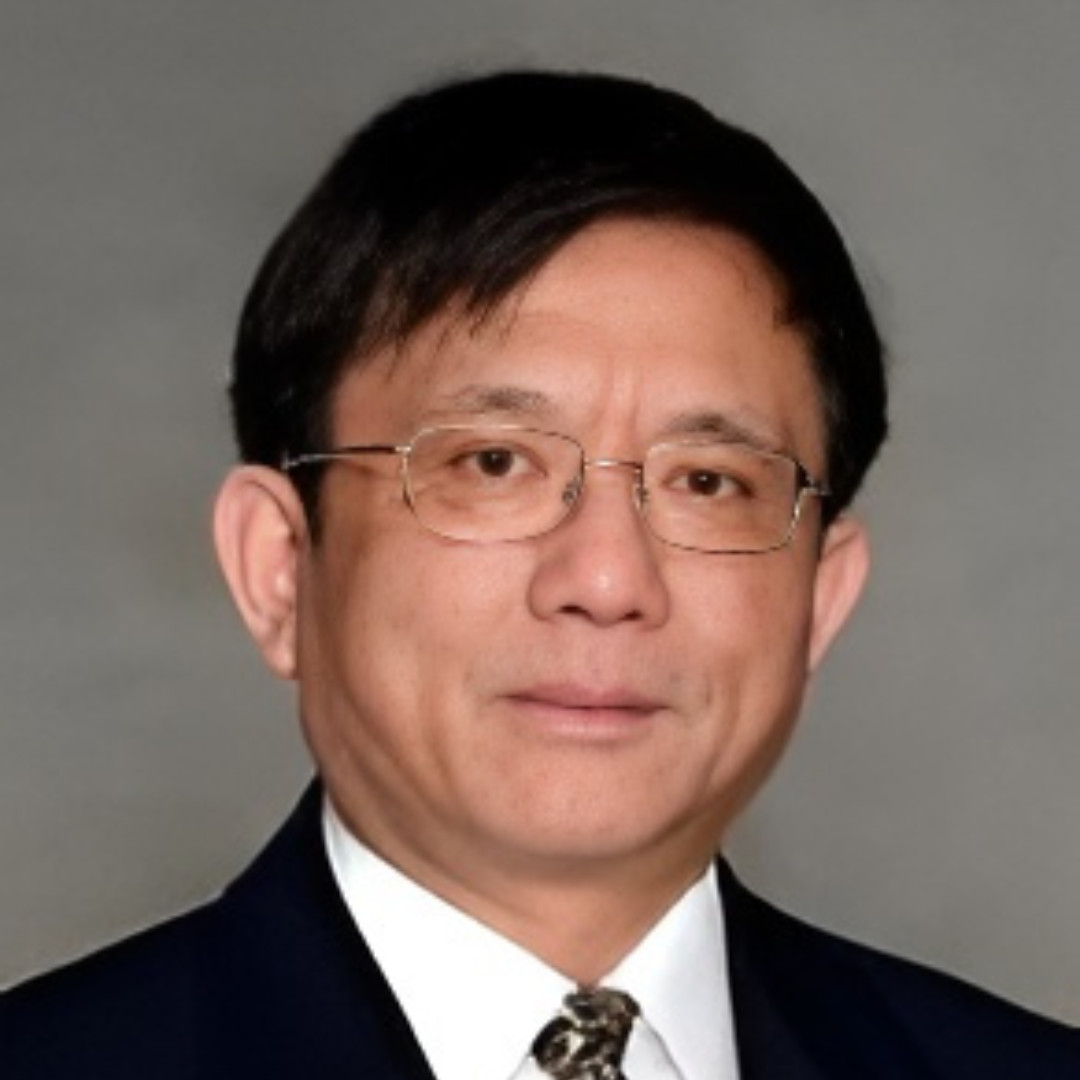
Dr. Yuping He is a Professor in the Department of Automotive and Mechatronics Engineering at the University of Ontario Institute of Technology (UOIT). He holds a PhD in Mechanical Engineering from the University of Waterloo (2002) and has extensive academic and industry experience, including postdoctoral fellowships at the University of Windsor and University of Waterloo. His research focuses on autonomous driving, vehicle dynamics, chassis design, and active safety systems, with expertise in modeling and simulation techniques. Education: PhD (Mechanical Engineering), University of Waterloo, 2002 MASc (Automotive Engineering), Tsinghua University, China, 1991 BASc (Automotive Engineering), Hubei Automotive Industries Institute, China, 1985 Research interests include automated design synthesis, multidisciplinary optimization, and driver-hardware-in-the-loop simulations. He has contributed to advancements in heavy vehicle stability control, trailer steering systems, and energy-saving strategies for steer-by-wire vehicles. His work bridges mechanical systems, control engineering, and real-time simulation technologies. Awards include the 2010 Research Excellence Award from UOIT’s Faculty of Engineering and Applied Science, and a nomination for the Governor-General’s Gold Medal (2003). His publications span journals like Vehicle System Dynamics and ASME Journal of Computational and Nonlinear Dynamics , with a focus on improving vehicle safety and performance through advanced control strategies. Advising and Grants: Dr. He has advised student teams in capstone projects, including the 2010 FEAS Capstone Design Competition-winning team. His research integrates industrial collaboration, as seen in roles like Senior Product Engineer at American Axle & Manufacturing (2005). His work emphasizes practical applications in automotive and mechatronic systems.
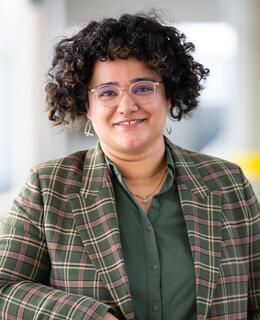
Zahra Abbasiمشاهده پروفایل
استادیار
Dr. Zahra Abbasi is an Assistant Professor at the Department of Electrical and Software Engineering, University of Calgary (since 2021), with expertise in designing passive and active RF/microwave sensors for non-invasive real-time detection and monitoring. She holds a PhD in Nanosystems and Microsystems from the University of Alberta (2020) and a postdoctoral fellowship at the Waterloo Microfluidics Lab (University of Waterloo). Her research focuses on sensor systems for environmental, biomedical, and industrial applications, including microfluidic sensing, chipless tags, and wearable devices. Dr. Abbasi’s educational background includes degrees from Iran University of Science & Technology (BSc 2014, MSc 2016) and advanced training in Canada. She chairs IEEE MTT-S/AP committees in Alberta and has received notable awards such as the ASTech Finalist (2024) and Alberta Immigrant Impact Award (2023). Her work emphasizes collaboration across disciplines to address challenges in precision agriculture, healthcare, and environmental monitoring. Her sensor research spans diverse fields: microplastic detection in water, hydrocarbon contamination monitoring, real-time medical diagnostics (e.g., fibrinogen levels), and nutrient assessment in agriculture. Recent advancements include disposable sensors for medical implants and non-invasive hydration tracking for aging populations. Awards Finalist: ASTech Early Career Academic Change Maker (2024) Early Research Excellence Award (Schulich School of Engineering, 2023/2024) Alberta Immigrant Impact Award (2023) Advising & Labs Dr. Abbasi leads the Calgary Sensor Laboratory, fostering innovation in microwave and microfluidic sensor technologies. Her team collaborates on industrial and biomedical projects, emphasizing practical applications of novel sensor designs. While no named advisees are listed, her research group actively engages in multidisciplinary projects.
Francesco Ambrogiمشاهده پروفایل
استادیار
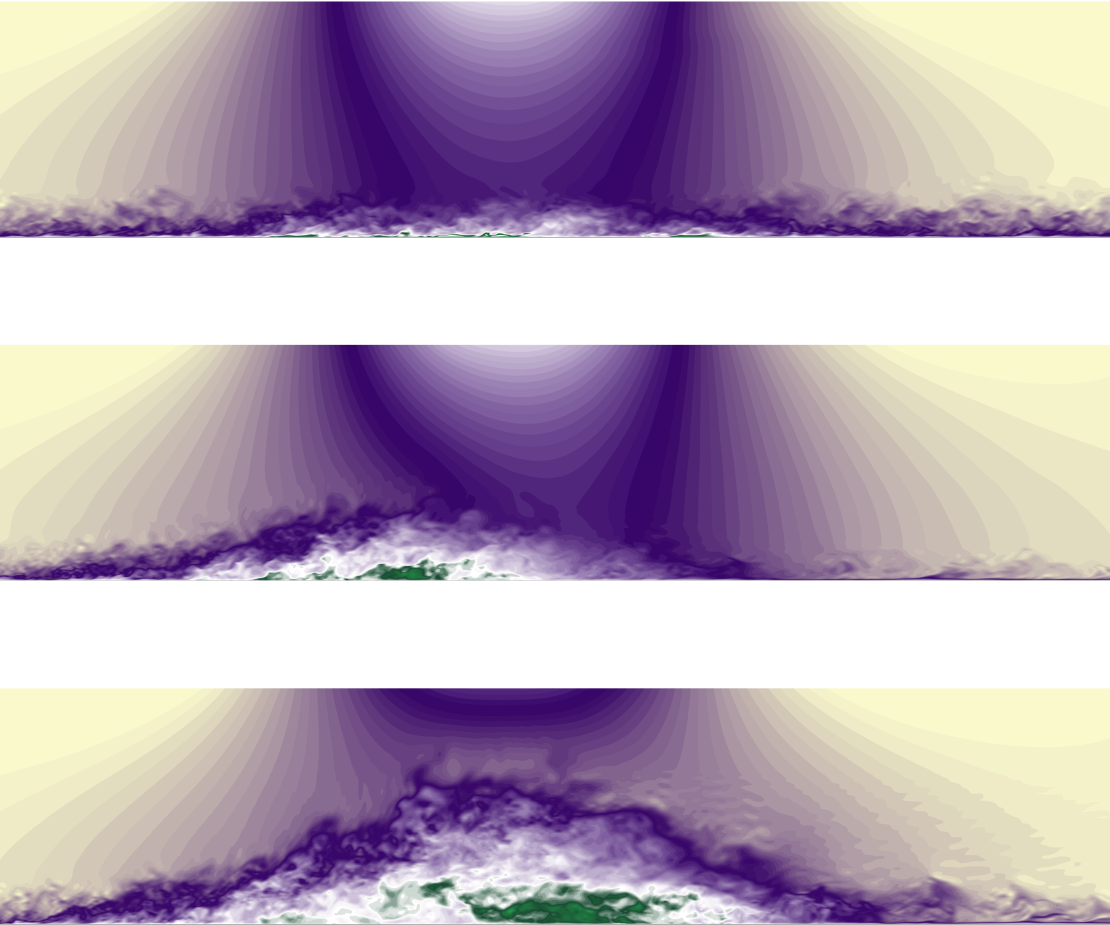
Francesco Ambrogi is an Assistant Professor in the Department of Mechanical and Materials Engineering at Queen's University, where he leads the Fluids, Energy, and Bio-inspired Unsteady Simulations (FEBUS) lab. His research focuses on computational and theoretical studies of turbulent boundary layers under pressure gradients, with applications in unsteady aerodynamics (turbine blades, rotor blades) and biomimicry (swimming/flying animals) for flow control. Dr. Ambrogi received his PhD in Mechanical Engineering from Queen's University in 2024, following a MASc in Energy and Nuclear Engineering from the University of Bologna, Italy (2019), and a BAsc in Mechanical Engineering from the University of Modena and Reggio Emilia, Italy (2015). He previously served as an Adjunct Assistant Professor at Queen's University in 2024 and completed a Postdoctoral Research Fellowship at the University of Waterloo in Mechanical and Mechatronics Engineering. His research program centers on advancing the understanding of turbulent boundary layer physics under unsteady pressure gradients. Dr. Ambrogi's team leverages modern computational tools, particularly large-eddy simulations, to investigate separated turbulent boundary layers and large-scale coherent structures. These structures are pivotal for the transport of mass, momentum, energy, and contaminants in turbulent flows. His work has significant implications for engineering applications such as turbulent mixing, heat diffusion, and contaminant transport in the atmosphere, with direct relevance to turbine blades, rotor blades, and biomimetic systems for flow control. Dr. Ambrogi's recent publications demonstrate a consistent research trajectory focused on unsteady boundary layer separation phenomena, showing increasing sophistication in handling complex unsteady flow physics. His work combines rigorous computational methods with practical applications in aerodynamics and flow control, particularly examining how time-varying freestream conditions affect boundary layer separation and how turbulent kinetic energy is advected in these complex flows. Dr. Ambrogi has secured funding through the Natural Sciences and Engineering Research Council of Canada (NSERC-CRNSG) under the Discovery Grant Program, with computational support provided by the Digital Research Alliance of Canada. His educational initiatives include ARC4CFD, an open-source course designed to bridge the gap between small-scale CFD simulations and large-scale computations on high-performance computing systems. As director of the FEBUS lab at Queen's University, Dr. Ambrogi leads research that combines fundamental fluid dynamics with practical engineering applications. The lab's work spans from theoretical investigations of flow separation mechanisms to the development of computational tools for practical engineering problems in aerospace and bio-inspired systems.