Robert MacCurdy is an Assistant Professor at the Department of Mechanical Engineering, University of Colorado Boulder . He leads the Matter Assembly Computation Lab (MACLab) focused on automating robot design and fabrication. His research bridges computational design and advanced manufacturing to create "robots that walk out of the printer." The lab develops tools like OpenVCAD , an open-source volumetric multi-material geometry compiler.
Robert J. Hamers is a Professor of Chemistry and the Steenbock Professor of Physical Science at the University of Wisconsin-Madison . He serves as the Director of the Center for Sustainable Nanotechnology , a multi-institutional collaboration, and is a Senior Editor for Accounts of Chemical Research . Additionally, he co-founded the startup Silatronix, Inc. and leads the ACS/UW-Madison Bridge to the Chemistry Doctorate Program . B.S. in Chemistry, University of Wisconsin-Madison (1980) Ph.D. in Chemistry, Cornell University (1986) Hamers' research focuses on surface chemistry, nanotechnology, and renewable energy , with specific interests in electrochemical energy storage, photoelectron emission mechanisms, and environmental impacts of nanomaterials . His group develops ultra-stable surface chemistries for energy devices and investigates charge-transfer processes at material interfaces . Recent publications highlight advances in diamond-based materials , organosilicon electrolyte additives , and environmental fate of nanomaterials . Scientific recognitions include the Wisconsin Distinguished Professor title. His work bridges fundamental surface science with applied technologies through collaborations with academic institutions, national laboratories, and industry partners like Dow Chemical . The Hamers Group actively trains graduate students and postdoctoral researchers in multidisciplinary approaches.
Manuel Del Pino is Professor at the University of Bath's Department of Mathematical Sciences and Royal Society Professor specializing in nonlinear partial differential equations. His research focuses on singularity formation, geometric evolution equations, and asymptotic analysis in fluid dynamics and mathematical physics. His investigations encompass blow-up phenomena in heat equations, vortex dynamics in Euler flows, and minimal surface theory. Current projects examine infinite-time singularity formation in parabolic equations and asymptotic properties of vortex configurations. Del Pino has received the Royal Society Professorship and leads multiple grants including 'Asymptotic patterns in nonlinear evolution problems' (EPSRC). He maintains collaborations with researchers globally through projects on singularity formation in PDEs.
Professor Hala Zreiqat AM is a leading biomedical engineer at The University of Sydney , serving as the Director of the ARC Training Centre for Innovative BioEngineering . A Fellow of all major Australian academies (AAS, ATSE, FAHMS, FRSN), she develops 3D printed bioceramics for bone regeneration while championing diversity through initiatives like the IDEAL Society and BIOTech Futures mentorship program. Her work bridges academia, clinical practice, and industry in musculoskeletal research . Research Focus: Her lab creates synthetic bone scaffolds that mimic natural bone architecture, strength, and porosity, enabling non-rejected bone regeneration via patient-matched implants. Key applications include orthopaedic, dental, and maxillofacial repair , with over $18M in competitive funding and multiple patents. Current projects explore AI-driven scaffold performance prediction and anti-senescence strategies for aging-related bone loss. Scientific Trends: Recent publications highlight 3D printed nanovoxelated ceramics , antisenescence biomaterials , and multifunctional theranostic platforms . Her team integrates machine learning for scaffold design, atom probe tomography for interface analysis, and two-photon imaging for cellular monitoring in 3D environments. 2021-2022 Fulbright Senior Scholar 2018 NSW Premier's Woman of the Year 2019 Eureka Prize for Innovative Use of Technology Fellow of Australian Academy of Science (2021) Over $18M in research funding Teaching & Leadership: She designed core courses like Tissue Engineering and Nanomaterials in Medicine , mentoring 158 students in 2020 alone. As Chair of CAAR (2020-2023), she strengthens Australia-Arab collaborations. Her lab trains early-career researchers , with alumni now in academia and industry.
Dr. Yi Shen is a Senior Lecturer at the School of Chemical and Biomolecular Engineering, The University of Sydney, and Chair of RACI Women in Chemistry. She is also affiliated with multiple research institutes including Sydney Institute of Agriculture, Sydney Southeast Asia Centre, The Centre for Drug Discovery Innovation, and The University of Sydney Nano Institute. PhD in Soft Materials from ETH Zurich Postdoctoral research at University of Cambridge and Harvard University Her research focuses on protein phase behavior and functional biomaterials development, utilizing soft matter approaches and microfluidic techniques to address challenges in neurodegenerative diseases, sustainable materials, and biomedical engineering. She has published extensively in top journals like Nature Nanotechnology and PNAS, with a particular emphasis on: Protein liquid-liquid phase separation mechanisms Biomaterials from protein nanofibrils Microfluidic manipulation of biological systems Biodegradable bioplastics development Shear force effects on biomolecular systems Pathological protein aggregation dynamics Key scientific achievements include: 2022 ARC DECRA Fellowship 2022 Sydney Nano Frontier award 2018 ETH Zurich Spark Award (for Fe delivery system invention) 2012 Princeton Grand Challenges Program 2 patents pending 2 Nature Nanotechnology cover articles As an educator, she coordinates CHNG2802 Chemical Engineering Modelling and Analysis, co-teaches CHNG3804 Biochemical Engineering and CHNG5605 Bio-products: Laboratory to Marketplace, and guest lectures across biomedical and nanotechnology programs. Her lab actively collaborates with institutions in Switzerland (ETH Zurich), UK (Cambridge), and US (Harvard, Princeton), focusing on transforming biomolecular understanding into real-world applications in health, industry, and environmental sustainability.
Leibniz Institute for Tropospheric ResearchGermany
Dr. Heike Wex is a prominent atmospheric scientist at the Leibniz Institute for Tropospheric Research in Leipzig, Germany, where she serves as a Researcher in the Atmospheric Microphysics department. With over two decades of continuous research since completing her PhD in 2002, she has established herself as a leading expert in aerosol-cloud interactions and ice nucleation processes. Her work spans multiple international collaborations and major research initiatives including (AC)³, PICNIC, MarParCloud, and PI-ICE projects. Her research focuses on experimental investigations and theoretical descriptions of aerosol-cloud interactions, with specific expertise in hygroscopic growth at high relative humidities (>99% RH), particle activation to cloud droplets, heterogeneous ice nucleation processes, and the role of atmospheric aerosol particles as nuclei for cloud droplets and ice formation. Her work bridges atmospheric physics, climate science, and environmental chemistry, with significant contributions to understanding how microscopic processes affect cloud formation and climate. Analysis of her recent publications reveals a strong focus on polar and marine environments, with particular attention to biological contributions to ice nucleation, seasonal variations in Arctic aerosols, and the development of advanced measurement techniques. Her work consistently addresses fundamental questions about how aerosols influence cloud properties and climate systems, with increasing emphasis on climate-relevant processes in polar regions. Dr. Wex has held significant leadership positions, including serving as Vice President of the International Commission on Clouds and Precipitation (ICCP) from 2021-2024. She is also actively engaged with Scientists for Future in Leipzig, demonstrating her commitment to addressing climate change through scientific expertise and public engagement. Beyond her research, she has organized numerous scientific workshops and field campaigns, including leadership roles in the LExNo experiment, FROST projects, and the 16th International Conference on Clouds and Precipitation. Her work has established important methodological approaches for studying ice nucleation and has contributed significantly to our understanding of aerosol impacts on cloud formation across diverse environments from the Arctic to the tropics.
Meisam Asgari is an Assistant Professor in the Department of Medical Engineering at the University of South Florida. He holds a Ph.D. in Mechanical Engineering from McGill University (2015), with postdoctoral training at Northwestern University (2018–2020) and McGill University (2016–2018). His research focuses on biomechanics, cardiovascular diseases, biomimetic design, and functional gradients in biological materials. He teaches courses such as Transport Phenomena in Biomedical Engineering and Biomechanics. Education: Ph.D. Mechanical Engineering, McGill University, 2015 M.Sc. Solid Mechanics, Isfahan University of Technology, 2011 B.Sc. Mechanical Engineering, Isfahan University of Technology, 2007 Awards: NSERC Postdoctoral Fellowship (2018–2020) McGill Engineering International Tuition Award (2011–2014) Outstanding Teaching Assistant Award, McGill (2015) His research integrates experimental and computational methods to study vascular diseases, biomaterials for tissue engineering, and structural adaptations in biological systems like crustacean exoskeletons. Recent work includes developing decellularized aortic grafts and investigating collagen mechanics in diseased tissues. Publications span Acta Biomaterialia , Scientific Reports , and Journal of the Mechanical Behavior of Biomedical Materials , emphasizing biomechanics and material characterization. His work bridges engineering and biology to address clinical challenges in cardiovascular and musculoskeletal systems.
Ayse Asatekin is an Associate Professor and Steve and Kristen Remondi Fellow in the Department of Chemical and Biological Engineering at Tufts University School of Engineering. She specializes in developing novel membranes and polymers for water treatment, separations, and biomedical applications. Her research focuses on fouling-resistant membranes, self-assembling polymers, and energy-efficient filtration systems. She holds a Ph.D. from MIT and has co-founded Clean Membranes, Inc., and serves as Senior Scientific Advisor for ZwitterCo, Inc. Education: Ph.D., Chemical Engineering, MIT (2009) B.S., Chemical Engineering & Chemistry, Middle East Technical University (2002/2003) Affiliations: Co-founder of Clean Membranes, Inc. Senior Scientific Advisor at ZwitterCo, Inc. Research Interests: Design of anti-fouling membranes, zwitterionic polymers, surface chemistry, water treatment, and energy-efficient separations. Key innovations include fouling-resistant zwitterionic copolymers and scalable membrane fabrication techniques. Grants & Awards: Multiple NSF grants, DOE funding, NIH support, and the National Academy of Inventors Senior Member distinction. Her work addresses global challenges in clean water, wastewater treatment, and sustainable manufacturing. Teaching: Core courses in Thermodynamics, Separations, and polymer science electives. Committed to fostering student engagement through interdisciplinary projects and active learning. Labs/Teams: Leads the Smart Polymers, Membranes, and Separations Lab at Tufts, collaborating on biomaterials, microfluidics, and environmental engineering projects.
João F. Mano is a Full Professor at the Department of Chemistry, University of Aveiro, and Director of the Doctoral Program on Biotechnology. He leads the COMPASS Research Group and serves as Vice-Director at CICECO - Aveiro Institute of Materials. His academic appointments include Invited Professor at University of Lorraine (France), Visiting Professor at KAIST (South Korea), and Adjunct Professor at Ajou University (South Korea). Education: PhD in Chemistry (1996, Technical University of Lisbon); D.Sc. in Tissue Engineering, Regenerative Medicine and Stem Cells (2012, University of Minho) Research Interests focus on Biomaterials for Regenerative Medicine , integrating Nanotechnology , Microtechnology , and Biofabrication . His group develops Bioinspired Materials using polymer chemistry, Decellularized Extracellular Matrix , and 3D Bioprinting to engineer Cell Microenvironments for therapeutic applications. Recent Publications highlight advancements in Human-Derived Hydrogels , Photopolymerizable Scaffolds , Magneto-Responsive Biomaterials , and Programmable Bioinks . Trends show emphasis on Organ-on-a-Chip integration, Smart Living Materials , and Green Bioprinting methodologies. Scientific Awards include: European Research Council Advanced Grants (2015, 2020) Fellow at IUPAC, European Academy of Sciences, and American Institute of Medical and Biological Engineering ERC Proof of Concept Grants Doctor Honoris Causa from University of Lorraine and Utrecht UNESCO Chair on Biomaterials George Winter Award (European Society for Biomaterials) Supervisions & Collaborations encompass 74+ MSc, 26+ PhD students, and 40+ postdocs. He co-founded METATISSUE and CELLULARIS Biomodels , and serves as Editor-in-Chief of Materials Today Bio .
Elina Vuorimaa-Laukkanen is a University Lecturer at Tampere University's Faculty of Engineering and Natural Sciences, Department of Materials Science and Environmental Engineering, and a Docent in Pharmaceutical Nanotechnology at the University of Helsinki's Faculty of Pharmacy. She leads the research team Supramolecular Chemistry of Bio- and Nanomaterials , focusing on light-driven studies of biological processes, solid-phase behavior, and drug release activation. Her work spans multidisciplinary collaboration with chemists, pharmacists, biologists, and physicists. Education : Doctor of Philosophy (Technology), Tampere University, 1994 Licentiate of Philosophy (Chemistry), University of Helsinki, 1993 Research Interests : Her expertise includes Photochemistry and Nanotechnology of self-assembling materials (phospholipids, polymers, proteins, oligo/polynucleotides), Time-resolved Spectroscopy , Fluorescence Lifetime Microscopy , and Langmuir-Blodgett Films . She develops methods to track drug nanocarriers interacting with living cells and investigates Extracellular Vesicles for theranostic platforms. Recent Publications highlight advancements in Chitosan-hyaluronate polyplexes for oligonucleotide delivery, Fluorescence Anisotropy for nanocarrier analysis, and Self-assembly of copoly(2-oxazoline)s for drug encapsulation. Collaborations : She works within Tampere University's Chemistry & Advanced Materials Research Cluster , PREIN Photonics Flagship, GeneCellNano, and the EVE Extracellular Vesicle Ecosystem projects. Teaching : Responsible for Physical Chemistry and Lab Safety courses in the chemistry curriculum.
Christos Tapeinos is a Lecturer in Pharmaceutical Sciences at the University of Manchester, specializing in pharmaceutical nanotechnology for treating brain diseases (e.g., glioblastoma, neuroinflammation) and pancreatic cancer. His research focuses on developing smart nanomedicines, advanced in vitro models (e.g., fluidic systems mimicking brain environments), and stimuli-responsive nanomaterials to overcome biological barriers like the blood-brain barrier. He leads the development of skin-mimicking models for subcutaneous drug delivery as a Co-Investigator in the HALo program. Education: Docent in Pharmaceutical Nanotechnology (2022) PhD in Materials Science (2013) MSc in Materials Science (2010) BSc in Materials Science (2006) Research Interests: Drug delivery systems, nanoparticle engineering, in vitro disease models, biomimetic materials, and translational nanomedicine. He integrates nanotechnology with precision medicine to address complex diseases. Recent Articles Trends: Focus on nanoparticle-cell interactions, phototherapy systems, graphene-cerium oxide hydrogels, and targeted theranostics. Highlights include ROS-scavenging systems and multi-stage nanovectors for CNS pathologies. Awards: Marie Skłodowska-Curie Actions Fellowship. Grants/Projects: Supported by EPSRC, The Royal Society, and Translation Manchester. Active in the Hub for Long-Acting Technologies (2024–2030). Labs/Teams: Leads research groups developing fluidic BBB models, skin-mimicking drug diffusion systems, and nanomaterial-based therapies.
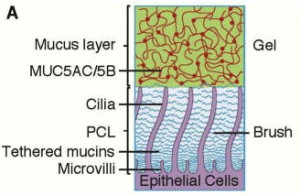
Michael Rubinstein is the Aleksandar S. Vesic Distinguished Professor in the Thomas Lord Department of Mechanical Engineering and Materials Science at Duke University. He also holds professorships in Physics, Biomedical Engineering, and Chemistry. His research spans polymer theory, computer simulations, and the application of these principles to biological systems, particularly mucus biophysics. Dr. Rubinstein earned his Ph.D. from Harvard University in 1983. His educational background in polymer physics has formed the foundation for his extensive research career spanning several decades. Dr. Rubinstein's research focuses on developing simple physical models of soft matter and biological systems ranging from polymeric elastomers and gels to extracellular matrix and mucus in human lungs. His work encompasses several key areas: Mucus Research: Investigating airway surface layer properties and their relationship to respiratory diseases like cystic fibrosis Polymer Entanglements: Studying the dynamics of entangled polymers including ring-linear blends and bottle-brush polymers Reversible Networks: Developing theories for interpenetrating elastomers and gels with both permanent and reversible components Charged Polymers: Extending scaling theory to describe complexes of oppositely charged polymers Analysis of Dr. Rubinstein's recent publications (2023-2025) reveals a strong focus on advanced polymer systems with applications in biomedicine and materials science. His work bridges fundamental polymer physics with practical applications, particularly in understanding mucus biophysics for respiratory diseases and developing novel polymer networks with self-strengthening and adaptive properties. Key themes include chromatin organization, hydrogel mechanics, fracture behavior in polymer networks, and topological constraints in ring polymers. Dr. Rubinstein has received several notable awards including the Nelson W. Taylor Award from Penn State University (2022), a University Distinguished Professorship from Duke University (2020), and recognition from the Royal Society of Chemistry (2019). Dr. Rubinstein leads an active research group (the Rubinstein Lab) that extensively collaborates with experimental, computational, and theoretical groups at Duke and worldwide. His lab combines theoretical modeling, computer simulations, and experimental validation to advance understanding of soft matter systems. While specific grant information isn't detailed in the provided text, his numerous high-impact publications suggest substantial research funding supporting his work. The Rubinstein Lab focuses on several interconnected research thrusts including mucus biophysics, self-assembly of amphiphilic systems, reversible networks and gels, polymer entanglements, and charged polymer systems. The lab employs a multi-pronged approach combining theoretical modeling, computer simulations, and experimental collaborations to develop fundamental understanding of soft matter systems with applications to biomedical challenges.
Dr. Philipp Fisch is a Researcher affiliated with ETH Zurich's Institute for Biomechanics, specifically within the Tissue Engineering and Biofabrication research group. His work focuses on advancing biofabrication techniques for complex biological structures, particularly in cartilage regeneration and auricular reconstruction. Key areas of expertise include 3D bioprinting, hydrogel development, and patient-specific tissue engineering solutions. Research Interests: Dr. Fisch's research integrates biomaterial science, cell biology, and engineering principles to create functional tissues. Central themes include: Development of biodegradable materials for cartilage and bone regeneration Optimization of bioprinting parameters for clinical translation Integration of patient-derived cells for personalized therapies Investigation of immune responses in transplanted biofabricated tissues Recent Work Trends: His publications emphasize translational applications, such as auricular reconstruction for microtia patients and immunocompetent animal model validation. Thematic clusters include hydrogel-based systems, anisotropic material design, and inflammation-resistant tissue engineering strategies. Labs/Teams: Active contributor to the Institute for Biomechanics' biofabrication initiatives, collaborating on projects involving eluting mold casting, multi-layered tissue transplants, and advanced scaffold development.
Prof Wen Wang is Professor of Biomedical Engineering and Vice-Principal and Executive Dean for Science and Engineering at Queen Mary University of London, affiliated with the School of Engineering and Materials Science and the Centre for Bioengineering. He is a Chartered Engineer and holds fellowships from the Institution of Mechanical Engineers (FIMechE), Higher Education Academy (FHEA), American Institute for Medical and Biological Engineering (FAIMBE), and the Royal Academy of Engineering (FREng), reflecting his leadership and technical excellence in engineering and biomedical sciences. His research focuses on vascular bioengineering , biomaterial mechanics , and cell biomechanics , with particular emphasis on the endothelial glycocalyx , vascular stem cells , and transmembrane transport . He employs advanced techniques such as AFM nano-indentation, confocal microscopy, and microfluidic platforms to study the mechanical properties, shear stress responses, and structural stability of biological systems. His work spans from fundamental biophysics to translational applications in drug delivery and cardiovascular disease. Prof Wang has led multidisciplinary research projects in the UK and through international collaborations with partners in the US, China, and Japan. His recent publications highlight sustained contributions to understanding microcapsule mechanics , extracellular vesicles , biofluid dynamics , and biomolecular sensing . His work integrates experimental and computational modeling, particularly in microcirculation and cellular transport phenomena. He has received notable scientific recognition through multiple prestigious fellowships and has published extensively in high-impact journals including Nature Communications , Journal of Controlled Release , Biosensors and Bioelectronics , and Journal of Fluid Mechanics . His research demonstrates a strong trajectory in both fundamental discovery and applied biomedical innovation. Prof Wang actively supervises research and collaborates with clinical and engineering partners at Queen Mary and King's College London. His leadership in the School of Engineering and Materials Science underscores his role in shaping academic strategy and research excellence in science and engineering at Queen Mary University of London.
Samuel Walsh is an Associate Professor in the Mathematics Department at the University of Missouri, within the College of Arts and Science. His research focuses on nonlinear partial differential equations, particularly those arising in fluid dynamics and water wave theory. He is actively involved in the academic community, organizing the Differential Equations Seminar and advising both graduate and undergraduate students. PhD in Applied Mathematics, Brown University, 2010 BS in Mathematical Sciences, Carnegie Mellon University Former Courant Instructor, New York University His primary research interests lie in nonlinear PDEs , especially water waves , steady waves , and dispersive systems . He investigates existence, stability, and qualitative properties of solutions in fluid mechanics, including solitary waves, internal waves, and vorticity-driven flows. His work often involves rigorous analysis of free boundary problems and global bifurcation theory. Analysis of his recent publications reveals a strong focus on solitary and traveling water waves , particularly with vorticity, stratification, and interfacial effects. His work bridges rigorous mathematical analysis with physical fluid dynamics, emphasizing existence, stability, and asymptotic behavior. A recurring theme is the use of bifurcation theory and nonlinear functional analysis to construct and classify solutions to hydrodynamic PDEs. Walsh has received research support from the National Science Foundation (grants DMS-1514950, DMS-1812436, DMS-2306243) and the Simons Foundation (Award 960210). These grants support his ongoing work in nonlinear wave phenomena and fluid dynamics. National Science Foundation: DMS-1514950, DMS-1812436, DMS-2306243 Simons Foundation: Award 960210 He has advised numerous graduate students, including PhD candidates and MS students, many of whom have completed their degrees on topics related to water waves and PDE analysis. He also serves as the Math Competition Advisor at MU, mentoring undergraduates for the Putnam exam. Additionally, he mentored students in the 2012 Summer Undergraduate Research Experience (S.U.R.E.) at Courant. Samuel Walsh organizes the Differential Equations Seminar at the University of Missouri, fostering academic exchange and collaboration in the field of PDEs and applied analysis.