
معرفی
Michael Rubinstein is the Aleksandar S. Vesic Distinguished Professor in the Thomas Lord Department of Mechanical Engineering and Materials Science at Duke University. He also holds professorships in Physics, Biomedical Engineering, and Chemistry. His research spans polymer theory, computer simulations, and the application of these principles to biological systems, particularly mucus biophysics.
Dr. Rubinstein earned his Ph.D. from Harvard University in 1983. His educational background in polymer physics has formed the foundation for his extensive research career spanning several decades.
Dr. Rubinstein's research focuses on developing simple physical models of soft matter and biological systems ranging from polymeric elastomers and gels to extracellular matrix and mucus in human lungs. His work encompasses several key areas:
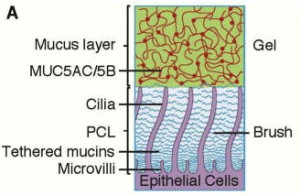
- Mucus Research: Investigating airway surface layer properties and their relationship to respiratory diseases like cystic fibrosis
- Polymer Entanglements: Studying the dynamics of entangled polymers including ring-linear blends and bottle-brush polymers
- Reversible Networks: Developing theories for interpenetrating elastomers and gels with both permanent and reversible components
- Charged Polymers: Extending scaling theory to describe complexes of oppositely charged polymers
Analysis of Dr. Rubinstein's recent publications (2023-2025) reveals a strong focus on advanced polymer systems with applications in biomedicine and materials science. His work bridges fundamental polymer physics with practical applications, particularly in understanding mucus biophysics for respiratory diseases and developing novel polymer networks with self-strengthening and adaptive properties. Key themes include chromatin organization, hydrogel mechanics, fracture behavior in polymer networks, and topological constraints in ring polymers.
Dr. Rubinstein has received several notable awards including the Nelson W. Taylor Award from Penn State University (2022), a University Distinguished Professorship from Duke University (2020), and recognition from the Royal Society of Chemistry (2019).
Dr. Rubinstein leads an active research group (the Rubinstein Lab) that extensively collaborates with experimental, computational, and theoretical groups at Duke and worldwide. His lab combines theoretical modeling, computer simulations, and experimental validation to advance understanding of soft matter systems. While specific grant information isn't detailed in the provided text, his numerous high-impact publications suggest substantial research funding supporting his work.
The Rubinstein Lab focuses on several interconnected research thrusts including mucus biophysics, self-assembly of amphiphilic systems, reversible networks and gels, polymer entanglements, and charged polymer systems. The lab employs a multi-pronged approach combining theoretical modeling, computer simulations, and experimental collaborations to develop fundamental understanding of soft matter systems with applications to biomedical challenges.
Michael Rubinstein در جاهای دیگر
جستجوهای مرتبط
شاید اینها هم به کارتان بیاید
 Michael LangLeibniz Institute of Polymer Research · پژوهشگر
- KKinjal DasbiswasUniversity of California, Merced · استادیار
 Mark IltonHarvey Mudd College · دانشیار
- SSebastian SeiffertLeibniz Institute of Polymer Research · استاد
 Rudolf WeeberUniversity of Stuttgart · مدرس ارشد
 Eugene TerentjevUniversity of Cambridge · استاد