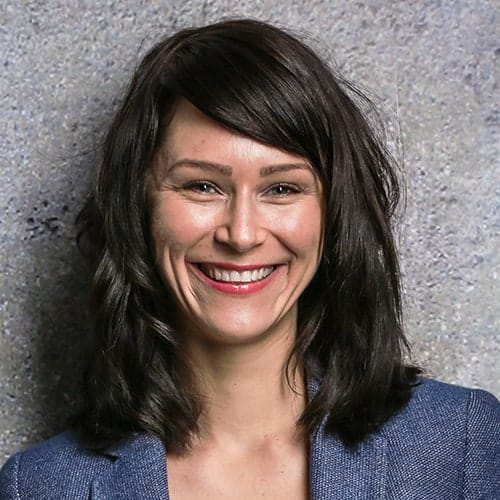
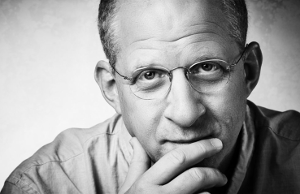
Professor Ulrik Lund Andersen heads the quantum information group at DTU Physics, Technical University of Denmark. His research develops quantum technologies including quantum computation, secure communication, and quantum-enhanced measurement systems. His group generates entangled optical states and investigates diamond-photon interactions for quantum nonlinearities. Key research areas: Quantum computing architectures Continuous-variable quantum information Quantum key distribution Quantum-enhanced sensing Solid-state quantum systems Recent work advances error correction, quantum state engineering, and quantum sensing algorithms. Publications demonstrate consistent focus on practical quantum technology implementation. Awards include multiple Sapere Aude research grants and the Eliteforsk Award from the Danish Ministry of Science.
Seth Lloyd is a Professor of Mechanical Engineering at the Massachusetts Institute of Technology (MIT), where he directs the Center for Extreme Quantum Information Theory (xQIT). His work bridges theoretical physics, quantum information science, and complex systems theory. He has made significant contributions to the foundations of quantum computing and quantum information processing. Lloyd received his education from prestigious institutions: B.A. from Harvard College (1982) M.Phil from Cambridge University (1984) as a Marshall Scholar Ph.D. in Physics from Rockefeller University (1988) Lloyd's research focuses on quantum information science, particularly quantum computation and quantum communications. He has pioneered work in quantum analog computation, quantum error correction, and quantum metrology. His research explores how quantum mechanics can be harnessed for information processing tasks, with applications ranging from quantum computing to understanding biological processes like photosynthesis. Lloyd is also known for his work on complex systems and the relationship between information and physical systems, arguing that the universe itself can be viewed as a quantum computer. His publication record shows a clear progression from foundational quantum computing work to applications in quantum machine learning and quantum biology. The most recent articles reveal a strong focus on quantum algorithms for machine learning, quantum metrology, and the intersection of quantum mechanics with biological systems. His work on the HHL algorithm for solving linear systems has been particularly influential in quantum machine learning, though its practical advantages have been debated following Ewin Tang's classical algorithms. Lloyd has received numerous scientific honors: Lindbergh Fellow (1994) Finmeccanica Professorship (1996) Edgerton Prize (2001) Fellow of the American Physical Society (2007) Quantum Communication Award (2012) International Quantum Communication Award (2012) Throughout his career, Lloyd has mentored numerous students and researchers in quantum information science. He has secured significant research funding for his work in quantum computing and complex systems. His research has been supported by various foundations and government agencies interested in advancing quantum technologies. Lloyd has also been involved in interdisciplinary collaborations, particularly with biologists studying quantum effects in photosynthesis. Lloyd directs the Center for Extreme Quantum Information Theory (xQIT) at MIT, which brings together researchers from physics, computer science, and engineering to tackle fundamental challenges in quantum information processing. His lab has been at the forefront of developing theoretical frameworks for quantum computing and exploring practical implementations of quantum information protocols.
Frede Blaabjerg is a Professor at Aalborg University (AAU Energy) , affiliated with the Faculty of Engineering and Science . Since 1998, he has pioneered power electronics research in applications such as wind turbines , photovoltaic (PV) systems , reliability engineering , and Power-2-X technologies. Education : PhD in Electrical Engineering (1995, Aalborg University) Honorary Degrees : Honoris Causa at University Politehnica Timisoara (2017) and Tallinn Technical University (2018) His research focuses on power electronics control , system optimization , and reliability for renewable energy and electric mobility . Recent work includes grid-forming converters , virtual synchronous generators , and smart EV charging systems. Key publication trends span 15+ years , with over 3,733 peer-reviewed articles and 900+ journal papers in power electronics , renewables , and energy storage . Notable book series: Control of Power Electronic Converters and Systems (4 volumes, Elsevier). Scientific Awards : 46 IEEE Prize Paper Awards 2020 IEEE Edison Medal 2019 Global Energy Prize 2014 IEEE William E. Newell Power Electronics Award Leadership Roles : Editor-in-Chief, IEEE Transactions on Power Electronics (2006–2012) Chairman, Danish Council for Research and Innovation Policy (2020–) President, IEEE Power Electronics Society (2019–2020)
Jørgen Arendt Jensen is a Professor of Biomedical Signal Processing at the Technical University of Denmark (DTU), with dual affiliations in the Department of Health Technology and the Department of Electrical Engineering (DTU Elektro). He leads the Center for Fast Ultrasound Imaging (CFU), a collaborative initiative involving DTU, BK Medical, Rigshospitalet, and DTU Nanotech. His research focuses on advanced medical ultrasound technologies, including synthetic aperture imaging, vector flow imaging, and ultrasound simulation, aiming to improve clinical image acquisition efficiency and accuracy. He teaches medical imaging courses and co-initiated the joint biomedical engineering program between DTU and the University of Copenhagen. Jensen’s work contributes to UN Sustainable Development Goals related to health and innovation. His research interests span algorithm development for fast ultrasound imaging, blood velocity characterization, and simulation of ultrasound systems. He supervises multiple PhD students and collaborates on projects involving transducer design, real-time imaging systems, and microvascular pathology analysis. Recent publications emphasize advancements in super-resolution ultrasound imaging, transducer optimization, and pressure gradient estimation. His lab, CFU, develops cutting-edge imaging solutions for clinical applications. Jensen’s contributions include patents on ultrasound imaging techniques and collaborative ventures to enhance diagnostic capabilities through interdisciplinary engineering.
Daniel Stilck França is an Associate Professor at the Department of Mathematical Sciences within the Faculty of Natural and Life Sciences at the University of Copenhagen . He is affiliated with the QMATH Centre for Quantum Mathematics and related research networks. His research focuses on quantum information and computation , particularly on noise characterization in quantum systems, its impact on computational tasks, and quantum-inspired convex optimization algorithms. Recent work explores tensor networks and quantum error mitigation limitations. Key publications (2023-2025) address topics like Pauli channel estimation, Hamiltonian parameter learning, and quantum simulator scalability. His work has been featured in Nature Communications , Nature Physics , and ACM/IEEE conferences.
Claudia Wagner is a full professor for Applied Computational Social Sciences at RWTH Aachen University and the Scientific Director of the Computational Social Science department at GESIS—Leibniz Institute for the Social Sciences. She is also an External Faculty member at the Complexity Science Hub Vienna. Her work bridges computer science and the social sciences to study algorithmic systems and their societal impacts. Her research focuses on socio-technical phenomena such as inequality, sexism, and perception bias in algorithmically infused societies. She investigates methodological challenges in using digital behavioral data to study human behavior, attitudes, and group dynamics. Her interests span computational social science, algorithmic fairness, network science, and AI ethics. The analysis of her recent publications reveals a strong emphasis on bias, fairness, and methodological rigor in digital data analysis. Her work spans AI psychometrics, gender inequality in online platforms, and validation frameworks for digital traces. She frequently publishes in top-tier venues such as Nature , Science , and AAAI conferences. DOC-fFORTE fellowship from the Austrian Academy of Sciences Four best paper awards at international conferences (ICWSM, CSCW, WWW, AAAI) Associate Editor, EPJ Data Science Steering Committee Member, International AAAI Conference on Web and Social Media Board Member, International Society for Computational Social Science Claudia Wagner has led and co-led substantial research projects funded by national and international agencies. She mentors a diverse group of PhD students working on topics like algorithmic bias, data quality, and dehumanization. She has organized training events such as the CSS Methods Summer School and delivered keynotes globally on inequality and computational social science. She leads the Computational Social Science department at GESIS and collaborates with interdisciplinary teams at RWTH Aachen and the Complexity Science Hub. Her group develops tools for measuring algorithmic impacts and visualizing disparities in socio-technical systems, such as the 'Planets of Disparity' dashboard.
Charles Marcus is a Professor at the University of Copenhagen's Niels Bohr Institute, holding the Villum Kann Rasmussen Chair in Quantum Sciences. He directs the Center for Quantum Devices and Microsoft Station Q – Copenhagen, while affiliating with the Niels Bohr International Academy. Education : Stanford University (B.S. 1984), Harvard University (Ph.D. 1990), IBM Postdoctoral Fellow (1990-92) Employment : Faculty at Stanford (1992-2000), Harvard (2000-2011), and UCPH (2012-present) His research focuses on experimental condensed matter physics, particularly quantum coherent electronics in semiconductors/superconductors. Key areas include spin qubits for quantum computing, Majorana modes in nanowires, quantum Hall systems, and superconductor-semiconductor hybrids. Recent work explores topological quantum information schemes and novel magnetic resonance imaging approaches. Scientific publications span quantum devices, Josephson junctions, and topological materials. Awards include the H.C. Ørsted Gold Medal, AAAS Newcomb-Cleveland Prize, and fellowships from AAAS and APS. He serves on advisory boards for quantum technology centers globally. Significant Awards : H.C. Ørsted Gold Medal (2020) Industry Prize, Danish Academy of Natural Sciences (2019) Member, National Academy of Sciences (2018) Award for Research Excellence in Nanotechnology (2014) Professional Roles : Director, Center for Quantum Devices (2012-2019) Lab Director, Microsoft Quantum (2016-2021) Scientific Director, Harvard Center for Nanoscale Systems (2004-2009)
Sarah Bakkær Munk Andreasen is a Researcher at the Institute for Health Services Research within the Faculty of Health Sciences at the University of Southern Denmark . Her work focuses on Reproductive Toxicology , Maternal and Child Health , and Environmental Medicine , with a particular emphasis on the effects of maternal exposure to medications and chemicals on offspring development. Research Areas : Endocrine disruption, pharmacological effects on developmental biology, mental health in pediatric populations. Key Collaborations : Odense Child Cohort, focusing on longitudinal studies of childhood development. Her publications highlight associations between maternal use of antifungal medications and paracetamol with altered steroid hormone levels and anogenital distance in offspring, as well as the impact of the Covid-19 pandemic on children's mental health. She primarily employs epidemiological and cohort-based methodologies. Labs/Teams : Active contributor to the Odense Child Cohort project, a population-based birth cohort study.
Gregory Eady is an Associate Professor at the Department of Political Science, University of Copenhagen (Denmark), affiliated with the Faculty of Social Sciences. His research bridges political behavior, public opinion dynamics, social media's role in politics, and advanced statistical methodology. He examines how digital platforms influence political attitudes and representation, with a focus on electoral processes, foreign interference, and crisis impacts on governance. Key research foci include analyzing the ideological landscape via social media interactions, assessing post-pandemic political representation gaps, and exploring gender dynamics in political toxicity. His methodological contributions address challenges like measuring voter uncertainty and detecting misreporting in sensitive surveys. Eady's work spans cross-national studies and employs experimental designs to uncover causal mechanisms in political behavior. Notable projects include examining Russian disinformation campaigns in the 2016 U.S. election and the psychological effects of violent protests on party loyalty. His interdisciplinary approach integrates computational social science with traditional political theory, contributing to debates on democratic resilience in the digital age.
Mark Bo Jensen is an Assistant Professor (tenure track) at the Department of Engineering Technology and Didactics, Technical University of Denmark (DTU), specializing in Energy Technology and Computer Science. His research is centered on Perception Engineering and Extended Reality technologies, particularly Virtual Reality (VR), with applications in human cognition, computer graphics, and scientific visualization. His research interests lie at the intersection of engineering and cognitive sciences, focusing on creating immersive and convincing extended reality experiences. Jensen applies his over 10 years of expertise in real-time computer graphics to advance VR systems for perception modeling, geometric data visualization, and material appearance simulation. His work contributes to fields such as medical diagnostics, 3D annotation, and photorealistic rendering. The recent publications highlight a strong trend in leveraging VR for scientific tasks, such as anatomical landmark annotation and visual field testing, as well as advancing core graphics techniques like meshlet optimization and diffusion-based stereo image generation. His research integrates computer vision, graphics algorithms, and human-centered design. While no scientific awards are currently listed, his active participation in research projects and consistent publication output indicate a growing academic profile. He has contributed to interdisciplinary collaborations involving medical, biological, and engineering domains. Jensen has been involved in advising and research projects, including serving as a PhD student in the 'Virtual Reality-Based Visualization of Geometric Data' project and currently as a project participant in 'AL-EYE: The Visual Aid'. These projects reflect his focus on applied VR solutions and data understanding. His work is conducted within the Energy Technology and Computer Science division at DTU, where he contributes to advancing perception-driven technologies and their practical implementation in scientific and medical contexts.
Mark Bo Jensen is an Assistant Professor (Tenure track) at the Department of Engineering Technology and Didactics, Energy Technology and Computer Science at the Technical University of Denmark (DTU). His work bridges engineering and cognitive sciences through the emerging field of Perception Engineering. His research focuses on Extended Reality (XR) and Virtual Reality (VR) technologies to model and understand human perception and cognition. With over 10 years of expertise in real-time computer graphics, he develops immersive systems for applications in data visualization, medical testing, and geometric morphometrics. His recent publications highlight a strong trend in leveraging VR for precise human interaction tasks, such as anatomical landmark annotation and visual field testing, as well as advancing rendering techniques using diffusion models and mesh optimization. This reflects a multidisciplinary approach combining computer science, perception, and real-world applications. He has contributed to multiple research projects, including AL-EYE: The Visual Aid and Virtual Reality-Based Visualization of Geometric Data, where he served both as a PhD student and a project participant. These projects emphasize VR-based tools for data understanding and visualization. Assistant Professor (Tenure track), DTU PhD in Virtual Reality-Based Visualization of Geometric Data, completed June 2023 Project participant in AL-EYE: The Visual Aid (2025) While no formal advisees are listed, his role as a faculty member suggests future student supervision. He has collaborated extensively with researchers such as Jeppe R. Frisvad, Jakob Andreas Bærentzen, and Vedrana A. Dahl.
Ernst Hansen is an Associate Professor at the Department of Mathematical Sciences, University of Copenhagen . He is based at University Park 5, Copenhagen Ø, and his work spans mathematical statistics, probability theory, and applied statistical modeling in public health and finance. Email: erhansen@math.ku.dk Research areas: Public health interventions, Markov chain applications, measure-theoretic probability, and statistical education His publications include textbooks and peer-reviewed articles on topics such as neck/shoulder pain prevention , continuous-time rating transition probabilities , and geometric drift analysis . While his work intersects with causal inference and stochastic processes, no formal awards or student advising records are documented in the provided texts.
Peter Bauer-Gottwein is a Professor at the Water Systems Department of Space Research and Technology at the Technical University of Denmark. His research focuses on hydrology, water resources management, hydrogeophysics, and remote sensing techniques. Hydrology and Water Resources Hydrogeophysics and Remote Sensing Hydroeconomic Modeling and Satellite Data He actively uses UAV technologies and satellite altimetry in hydrological studies, with recent work on river monitoring and flood forecasting systems. His publications highlight interdisciplinary approaches combining geospatial technologies with environmental management. Current projects include: GNSS reflectometry for river monitoring UAV navigation systems Machine learning for flood prediction Arctic river modeling
Professor Eigil Kaas is affiliated with the Niels Bohr Institute at the University of Copenhagen . His work spans climate dynamics , numerical weather prediction (NWP) , and atmospheric modeling . As former Section Head of Climate and Computational Geophysics , he leads research on climate-chemistry coupling and sea ice impacts. Education : MSc (1987) and PhD (1993) in Meteorology from University of Copenhagen Research Focus : Climate dynamics and physics Numerical methods in atmospheric models Machine learning for weather prediction Arctic sea ice-climate interactions Thunderstorm electricity and radiation Coupled atmosphere-ocean modeling Article Trends : Recent work combines neural networks with radiative transfer optimization Focus on storm dynamics and gamma-ray flashes Extreme precipitation modeling under climate change Pioneering tidal flow studies in Faroe Island fjords Teaching Legacy : Instructor of Atmospheric Physics and Dynamical Meteorology courses Developed zonally averaged climate model for educational use Mentored 12 PhD/MSc students with DMI/ECMWF collaborations Professional Roles : Chairman of BFI Group 28 (Geosciences & Climate) Scientific Advisory Committee member at ECMWF Project lead in EU ENSEMBLES and PEGASOS initiatives
Ingemar Johansson Cox serves as a Professor within the Machine Learning section at the Department of Computer Science, University of Copenhagen. His research bridges theoretical machine learning foundations with practical applications across medical data analysis, information retrieval, remote sensing, and sustainability initiatives. His research portfolio emphasizes machine learning applications in high-impact domains, particularly medical data analysis (e.g., early detection of gynecological malignancy using online search activity) and sustainability (e.g., reducing AI's carbon footprint). The Machine Learning section actively contributes to the university's SCIENCE AI Centre, focusing on both algorithmic innovation and real-world problem-solving in biological modeling and environmental monitoring. Recent publication trends reveal expanding work in quantum computing applications for biomolecular modeling, sustainable AI frameworks, and cross-cultural NLP systems. His 2024-2025 output demonstrates strong interdisciplinary collaboration, especially in medical informatics and climate-related AI research. Professor Cox operates within the Department of Computer Science's robust research ecosystem, which includes dedicated compute clusters and specialized initiatives like TreeSense for global tree resource monitoring through remote sensing and deep learning. The department's infrastructure supports large-scale machine learning projects requiring significant computational resources.