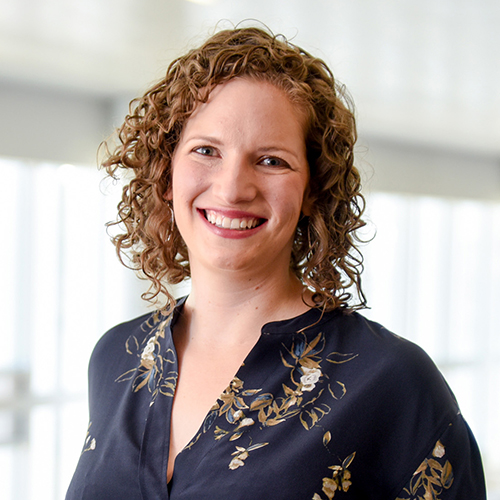
Kathryn Stolee is an Associate Professor in the Department of Computer Science at North Carolina State University. She received her Ph.D. in Computer Science from the University of Nebraska-Lincoln under Sebastian Elbaum after graduating from the Jeffrey S. Raikes School of Computer Science and Management. Her research spans multiple perspectives in software engineering: technical (program analysis), human (human aspects of software engineering, software product management), and educational (comparative comprehension of algorithms). Notable contributions include work on regular expression refactoring for improved comprehension, constraint solvers for code reuse identification, and cross-language code-to-code search to aid developers learning new languages. Dr. Stolee has secured over $2,000,000 in federal grants, including an NSF CAREER award. Her research combines analysis techniques (refactoring, semantic code search, code-to-code search) with human factors (comprehension, reuse, learning). Her scholarly contributions have been recognized with a National Science Foundation Faculty Early CAREER Award (2018) and a Best Paper Award at the International Symposium on Empirical Software Engineering and Measurement (ESEM, 2011). Actively engaged in the software engineering research community, Dr. Stolee serves as an author, reviewer, and organizer at top conferences. She is committed to mentoring the next generation of computer scientists and has developed educational interventions focused on software testing and code comprehension.
João Tovar Jalles serves as a Senior Associate Professor of Economics at the University of Lisbon's Lisbon School of Economics and Management (ISEG), with over 15 years of expertise spanning macroeconomics, public finance, and applied econometrics. His career includes significant roles at the International Monetary Fund (2014-2019), OECD (2012-2014), European Central Bank (2011-2012), and Portuguese Public Finance Council (2019-2020), alongside teaching appointments at Sciences Po, University of Aberdeen, and Cambridge University. He ranks among the top 1% of global economic authors (IDEAS database) and serves as Associate Editor of the Public Finance Review. His academic credentials include: Aggregation in Economy (2023) from Universidade de Lisboa, ISEG PhD in Economics (2011) from University of Cambridge MSc in Economics (2008) from University of Warwick BSc in Economics (2006) from Universidade Nova de Lisboa Dr. Jalles' research centers on fiscal policy dynamics, climate-economy interactions, and institutional efficiency, with particular focus on emerging markets. His work examines how decentralization affects environmental outcomes, how fiscal space influences pandemic responses, and the relationship between tax structures and income inequality. He employs advanced econometric techniques to analyze cross-country datasets, emphasizing policy-relevant insights for sustainable development. Recent publications (2024-2025) reveal a pronounced shift toward integrating climate risk into macroeconomic modeling, with 60% of his work now addressing environmental-fiscal linkages. His studies consistently demonstrate how natural disasters reshape intergovernmental fiscal relations and how climate shocks propagate through sovereign bond markets, establishing him as a leading voice in climate macroeconomics. Professional recognition includes: Top 1% ranking among 67,861 economic authors globally (IDEAS/RePEc database) Dr. Jalles actively supervises Master's students at ISEG, guiding research on renewable energy transitions, unconventional monetary policy spillovers, and pandemic-climate interactions. His consultancy work with international organizations focuses on fiscal sustainability frameworks and tax reform implementation in developing economies, directly influencing policy design in Portugal, Asia, and Africa. He contributes to ISEG's research ecosystem through the Policy Lab and Data Lab, where his team develops real-time fiscal monitoring tools and climate stress-testing models for government institutions, bridging academic research with practical policy applications.
Niklas Mattsson-Carlgren serves as an Associate Professor and Senior Lecturer at Lund University's Faculty of Medicine, Department of Clinical Sciences. He holds multiple significant roles including Deputy Research Team Manager and Principal Investigator for several major research projects. His affiliations extend to the Wallenberg Centre for Molecular Medicine (WCMM), LU Profile Area: Proactive Ageing, and MultiPark: Multidisciplinary Research Focused on Parkinson's Disease. Dr. Mattsson-Carlgren's research primarily focuses on Alzheimer's disease and other neurodegenerative conditions, with additional work on acute brain injuries such as those following cardiac arrest. His expertise spans neurochemistry, including the regulation of pain and sleep. He employs biochemical measurements, neuroimaging, and cognitive testing to study disease processes in vivo across the spectrum from preclinical disease to advanced dementia. His work aims to improve diagnostic and prognostic methods in clinical practice, enhance clinical trial design for novel therapies, and deepen understanding of disease mechanisms. His recent publications demonstrate a strong emphasis on plasma biomarkers for Alzheimer's disease detection and monitoring, with particular focus on tau and amyloid pathology. The research shows increasing integration of machine learning approaches with traditional biomarker analysis, reflecting a trend toward more sophisticated diagnostic tools that combine multiple data sources for improved accuracy in predicting disease progression. As Principal Investigator for multiple significant projects including 'Longitudinal plasma biomarkers, cognitive data and amyloid PET to improve early prevention of Alzheimer's disease' and 'Validation of an MTBR tau immunoassay for CSF and plasma,' he leads substantial research efforts funded by organizations including Familjen Rönströms stiftelse, Eli Lilly and Company, and the Knut and Alice Wallenberg Foundation. He also serves as supervisor for PhD students, notably for 'Studies of induced neuronal cells in Alzheimer's disease.' Dr. Mattsson-Carlgren is actively involved in the neuroscience community, serving on the program committee for Neuroscience Day 2025. His research contributes to UN Sustainable Development Goals related to health and wellbeing. His work has gained significant attention, with multiple papers being picked up by news outlets and referenced across social media platforms including X (Twitter) and Bluesky.
Gigi Luk is Professor and Program Director for M.Ed. Concentrations in Educational Psychology and Human Development within the Department of Educational and Counselling Psychology at McGill University's Faculty of Education. Her research program investigates the cognitive consequences of bilingualism across the lifespan, bridging scientific understanding with practical educational applications to cultivate inclusive environments for linguistically diverse learners. Her educational background includes: Ph.D. in Psychology (Developmental and Cognitive Processes) from York University M.A. in Psychology (Developmental and Cognitive Processes) from York University Specialized Honors B.A. in Psychology from York University Dr. Luk's research centers on bilingualism's cognitive and neural mechanisms, with three interconnected thrusts: (1) characterizing bilingualism beyond English proficiency in communities, (2) examining cognitive skills supporting language/literacy outcomes, and (3) establishing neural correlates of learning in diverse language learners. Her work integrates cognitive neuroscience with educational practice to address real-world challenges in multilingual classrooms, emphasizing culturally responsive pedagogy that respects linguistic diversity. This dual focus on basic science and practical implementation defines her contributions to understanding how bilingual experiences shape cognitive development and educational equity. Analysis of her 15 most recent publications (2022-2024) reveals consistent interdisciplinary investigation of bilingualism through cognitive, neural, and sociocultural lenses. Her work spans educational psychology, cognitive neuroscience, and sociolinguistics, with growing emphasis on neural correlates of language processing, methodological rigor in bilingual assessment, and equity implications of bilingual research. Key trends include examination of multilingual children's cognitive development, critical reframing of the "bilingual advantage" discourse, and innovative approaches like music-based literacy interventions. Scientific recognition includes: National Academy of Education/Spencer Postdoctoral Fellowship (2013-2014) Dr. Luk actively supervises graduate students (accepting new students for 2025-2026) and secures competitive research funding, currently supported by the Natural Sciences and Engineering Research Council of Canada (NSERC) and Fonds de recherche Société et culture (FRQSC). Her grant portfolio demonstrates sustained commitment to advancing understanding of bilingual cognition and its educational applications through rigorous empirical work. She directs the Bilingualism.Experience.Education Lab, which functions as an interdisciplinary hub for investigating how language experiences shape cognitive development and educational outcomes. The lab employs diverse methodologies including neuroimaging, behavioral experiments, and classroom-based research to address questions about bilingualism's cognitive effects and practical implications for educators.
Heidi Ottevaere is a Professor at the Faculty of Engineering of the Vrije Universiteit Brussel (VUB) since October 1, 2009. She serves as the head of the Instrumentation and Metrology platform at the Photonics Innovation Center and leads the 'biophotonics' research unit of the Brussels Photonics Team (B-PHOT), which is chaired by Prof. Hugo Thienpont. Her work focuses on the design, fabrication, and characterization of photonic components and systems for diverse applications in medical diagnostics, environmental monitoring, and industrial processes. Dr. Ottevaere earned her Electrotechnical Engineering degree with majors in Photonics from Vrije Universiteit Brussel in 1997 and completed her PhD in Applied Sciences at the same institution in 2003. Her doctoral research focused on 'Refractive microlenses and micro-optical structures for multi-parameter sensing: a touch of micro-photonics.' Professor Ottevaere's research spans multiple cutting-edge areas of photonics with particular emphasis on biophotonics, micro-optics, and optical metrology . Her work bridges fundamental science with practical applications, developing novel photonic components and systems that address real-world challenges. She has pioneered research in miniaturized optical systems for medical diagnostics, environmental monitoring, and industrial applications. Her current research focuses on advancing lab-on-a-chip technologies, microfluidic optical sensors, and novel optical fiber systems for biomedical applications. She has developed microminiaturized, integrated plastic detection units for absorbance and laser-induced fluorescence measurements in microfluidic channels, enabling portable, robust, and disposable diagnostic systems. Her recent publications demonstrate a strong trend toward integrated optical sensing systems with applications in medical diagnostics and environmental monitoring. There's a clear progression from fundamental optical component design to complete system integration, with increasing emphasis on artificial intelligence for data analysis and computational imaging techniques. Her work bridges photonics with biomedical engineering, materials science, and data science, reflecting the interdisciplinary nature of modern photonics research. Dr. Ottevaere has been recognized with several prestigious awards: Best Application award (2008) Educational award - Bronze (2019) MOC09 Contribution Award Winners (2009) As an educator and mentor, Professor Ottevaere has promoted 9 PhD students and supervised numerous master's theses. She has secured substantial research funding from diverse sources including the Fund for Scientific Research Flanders (FWO), the Institute for the Promotion of Innovation by Science and Technology in Flanders (IWT), and multiple European Framework Programs. Her current portfolio includes projects on miniaturized biosensors for drinking water screening, precision manufacturing, and photonics education initiatives in Uzbekistan. She has coordinated multiple strategic research and networking projects with regional, national, and international funding bodies. Professor Ottevaere leads the biophotonics research unit within the Brussels Photonics Team (B-PHOT), one of Europe's leading photonics research groups. Her team includes researchers working on optical metrology, micro-optics fabrication, and biophotonic applications. She collaborates extensively with industry partners including Melexis, Umicore, and Anteryon, as well as academic institutions across Europe through various EU-funded projects. She has been instrumental in developing the interuniversity engineering curriculum 'Master in Photonics' which received the EC Erasmus Mundus quality label in 2006, and continues to be the driving force behind photonics education at VUB.
Mikael Rinne serves as Associate Professor in Rock Mechanics within the Department of Civil Engineering at Aalto University, Finland. Holding a Doctor of Science in Technology (D.Sc. Tech.), he brings extensive industry experience from Finnish and Swedish consulting firms (1988-2008) where he specialized in rock engineering and project management for tunneling and geological disposal of radioactive waste. His research focuses on rock and fracture mechanics with direct applications to rock engineering, mining, and tunneling. Current investigations center on digital characterization methods including photogrammetry, videogrammetry, and virtual reality systems for both practical engineering solutions and educational advancement. His work addresses critical challenges in fracture hydro-mechanics, rock mass characterization, and sustainable mining practices. Analysis of his 15 most recent publications (2023-2025) reveals a strong emphasis on digital transformation in rock mechanics. Key trends include non-contact surveying techniques for rock mass characterization, scale effects in fracture properties, and virtual learning environments for engineering education. His research bridges theoretical modeling with field applications in tunneling, mining, and radioactive waste disposal, demonstrating consistent innovation in measurement technologies and computational methods. No scientific awards were mentioned in the source materials. While specific advising details and grant information were not provided, his leadership of the Mineral-based materials and mechanics research group indicates active supervision of graduate students and management of research projects. His industry background suggests strong connections with tunneling and mining sectors for applied research collaboration. He directs the Mineral-based materials and mechanics research group at Aalto University, which develops advanced methodologies for rock characterization and engineering applications. Current initiatives integrate digital tools like smartphone LiDAR, 360-degree cameras, and virtual reality systems to enhance both field practices and educational outcomes in rock engineering.
David Córdova is an Associate Professor at the University of Michigan School of Social Work, where he leads research on Latino health inequities with a focus on substance use and HIV prevention among adolescents. His work emphasizes community-based participatory research and digital health interventions. His research interests span Substance Abuse Prevention , HIV/STI Prevention , Health Disparities , and Latino Health , utilizing both qualitative and longitudinal methodologies. He has developed innovative family-based interventions delivered via internet platforms to address health inequities. Córdova's publication trends reveal a strong focus on adolescent health behaviors, family dynamics, and culturally tailored interventions. His recent work increasingly incorporates digital health approaches and examines intersectional factors like ethnic discrimination and familism in sexual risk behaviors among Latinx youth. Centers for Disease Control and Prevention Early Career Development Award (Grant# U01PS003316-01) National Institute on Minority Health and Health Disparities Loan Repayment Program Best Research Article on Family Research and Theory Award (2020) National Institute on Drug Abuse Diversity Scholars Network Fellowship Professor Córdova actively collaborates with students across all research phases and serves on editorial boards for Emerging Adulthood and Journal of Adolescent Health. His Prevention Research and Health Equity Lab develops interventions targeting substance abuse and HIV prevention, with recent work focusing on mobile health applications like the 'Storytelling 4 Empowerment' intervention funded by NIDA.
Zachary Tatlock is an Associate Professor at the Paul G. Allen School of Computer Science & Engineering at the University of Washington, where he leads the Programming Languages & Software Engineering Group (PLSE) and the SAMPL Group. His research spans programming languages, formal verification, compilers, and computational fabrication. He is also an Amazon Scholar with AWS's Automated Reasoning Group and previously advised OctoML. Tatlock's work bridges theoretical foundations with practical systems, focusing on making it easier to write tricky code while ensuring correctness through rigorous proofs and measurements. PhD in Computer Science & Engineering, University of California, San Diego (2014) Thesis: Reducing the Costs of Proof Assistant Based Formal Verification Advisor: Sorin Lerner BS in Computer Science (Honors) and Mathematics, Purdue University (2007) Professor Tatlock's research focuses on the intersection of programming languages, formal methods, and systems. His work in compilers and formal verification aims to make it easier to write tricky code while ensuring correctness through rigorous proofs. He explores computational fabrication techniques that bridge digital design with physical manufacturing. His recent work on equality saturation (via the egg framework) has transformed program optimization and synthesis. Tatlock also investigates floating-point numerics, distributed systems verification, and hardware/software co-design, always seeking to balance theoretical rigor with practical implementation. Tatlock's recent publications demonstrate a strong focus on equality saturation techniques (egg framework), computational fabrication, and verified systems. His work increasingly integrates machine learning with program analysis and synthesis. There's a clear trajectory toward more practical applications of formal methods in real-world systems, particularly in numerical computing and fabrication. His research group has made significant contributions to e-graph technology, floating-point accuracy, and the verification of distributed systems. Distinguished Paper Award for Rewrite Rule Inference Using Equality Saturation (OOPSLA 2021) Spotlight Paper Award for Dynamic Tensor Rematerialization (ICLR 2021) Distinguished Paper Award for egg: Fast and Extensible Equality Saturation (POPL 2021) Faculty Appreciation for Career Education & Training (FACET) Award (2020) NSF CAREER Award: Verifying Distributed System Implementations (2017) Distinguished Paper Award for Automatically Improving Accuracy for Floating Point Expressions (PLDI 2015) Distinguished Teaching Award Nomination (2015) Professor Tatlock has advised numerous doctoral, master's, and undergraduate students who have gone on to prominent positions in academia and industry, including faculty positions at the University of Utah and Brown University, and leadership roles at companies like OctoML and Certora. His research is supported by significant funding from NSF, DARPA, DOE, and industry partners, totaling millions of dollars. Current grants include projects on computer-aided reasoning, formal verification, computational fabrication, and machine learning systems. He has served on numerous program committees and organized workshops including FPTalks, EGRAPHS, and PNW PLSE. As co-leader of the Programming Languages & Software Engineering (PLSE) research group and affiliate of the SAMPL Group at the University of Washington, Tatlock has developed influential tools including egg (an equality saturation toolkit), Carpentry Compiler, and Odyssey. His group actively collaborates with industry partners including Amazon Web Services, where he serves as an Amazon Scholar. The group has made significant contributions to equality saturation, floating-point accuracy, program synthesis, and computational fabrication, with applications ranging from compiler optimization to 3D printing.
Laura E. Martin, PhD, is a Professor in the Department of Population Health at the University of Kansas Medical Center (KUMC) and serves as the Executive Associate Director at Hoglund Biomedical Imaging Center. Her academic journey began with undergraduate training in psychology and dance at the University of Kansas, followed by a Ph.D. in psychology with an emphasis in cognitive neuroscience from Rice University, and a postdoctoral fellowship at KUMC. Dr. Martin is a cognitive neuroscientist whose research focuses on applying neuroimaging methods to understand health behaviors, particularly addictive behaviors such as smoking and eating. Her work examines self-regulation, impulsivity, reward processing, and decision making through functional neuroimaging techniques. As Executive Associate Director at Hoglund Biomedical Imaging Center, she provides technical expertise to investigators and trainees interested in incorporating neuroimaging into their research programs. Her collaborations span diverse areas including aging, depression, obesity, gambling, social neuroscience, decision-making, resting state fMRI, and neuroeconomics. Her research is currently funded by the National Institutes of Health, with a recent focus on using guided episodic future thinking to increase physical activity adherence and promote healthy brain aging among mid-life adults. Dr. Martin is passionate about mentoring students at all levels and sharing her enthusiasm for research methodology, critical evaluation of research, and appropriate method selection for specific research questions. Current research emphasizes health neuroscience examining how health behaviors change the brain and how the brain can be changed to change health behaviors Leads and contributes to team science approaches addressing complex research questions Helps conceptualize research projects and brings specialized data collection and analytic tools to interdisciplinary teams Dr. Martin has published extensively in high-impact journals, with recent work focusing on dementia prevention, neuroimaging methodology, eating disorders, addiction research, and physical activity interventions. Her approach combines cognitive neuroscience with practical applications for improving health behaviors across the lifespan. As an educator and mentor, Dr. Martin works with trainees from high school to faculty level, emphasizing the integration of neuroimaging research with broader research questions and training students in research methodology and critical thinking.
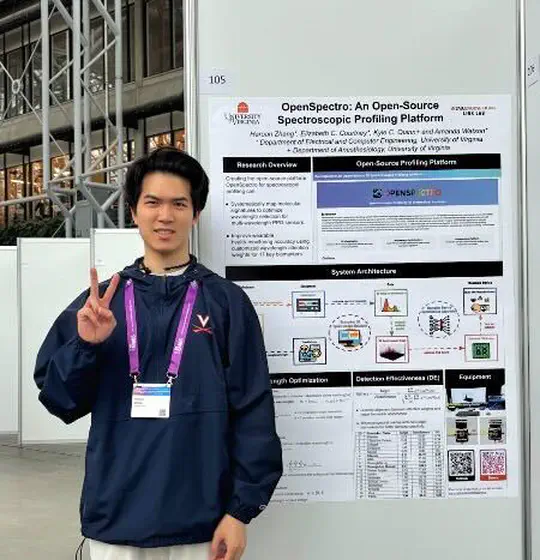
Amanda Watson is an Assistant Professor in Electrical and Computer Engineering at the University of Virginia, with joint appointments in Computer Science. She leads the Watson Research Lab within the UVA Link Lab, a multidisciplinary center for Cyber-Physical Systems (CPS) and Internet of Medical Things (IoMT) research. Her work bridges wearable technology with healthcare and athletic performance applications, focusing on noninvasive monitoring, physiological signal analysis, and safety-critical medical devices. She is also the cofounder and CEO of Luminosity Wearables, commercializing a noninvasive continuous glucose monitor. Education: PhD in Computer Science (2020) - College of William & Mary MSc in Computer Science (2016) - College of William & Mary Bachelors in Computer Science and Mathematics (2014) - Drury University Her research spans multiple domains including: Wearable spectroscopy for nutrition and skin health Machine learning for drug overdose and fall risk detection Biomechanical monitoring in sports medicine Wearable support for visual and neurological impairments IoMT device integration and analytics Recent publications (2024-2025) show strong emphasis on calibration-free physiological monitoring systems, with technical contributions in spectral analysis , multi-wavelength sensing , and rapid prototyping for healthcare wearables. Applications range from maternal health to gerontological social isolation detection. Lab and Team: The Watson Research Lab at UVA develops wearable solutions for clinical and athletic contexts, with ongoing collaborations in the PRECISE Center at University of Pennsylvania and LENS lab at William & Mary alumni network. She works with multidisciplinary teams including engineers, clinicians, and data scientists.
Al-Amin Dhirani is an Associate Professor in the Department of Chemistry at the University of Toronto, located in the Lash Miller Chemical Laboratories. His research focuses on nanoengineered materials, particularly quantum nanoengineered materials (q-NEMS), which exhibit emergent quantum phenomena. Key themes include bottom-up synthesis of nanostructured materials, development of novel fabrication techniques for 2D materials like MoS₂, and applications in green technologies and electrochemical sensing. Research interests emphasize hybrid molecule-nanostructure states (HYMNS) that enhance optical/electrical properties, as well as advanced applications such as conductivity meters and water electrolysis materials. His lab has pioneered methods for defect healing in exfoliated MoS₂ and scalable assembly of nanostructured films. Recent achievements include student milestones like Steven Gravelsins’ PhD completion and Monique’s NSERC postdoc fellowship. Located at 80 St. George Street, the Dhirani Lab collaborates on projects ranging from fundamental quantum transport studies to applied sensor technologies. The group actively publishes in top journals like ACS Nano and Communications Chemistry , with a focus on interdisciplinary material science and physics.
Dr. Steven Firth is a Reader in Building Performance Modelling at Loughborough University's School of Architecture, Building and Civil Engineering. He holds an MEng, MSc, PhD, and is a Fellow of the Higher Education Academy (FHEA) and the Institute of Engineering (MEI). His research focuses on end-use energy demand in buildings, occupant behavior, smart home technologies, and open science initiatives in building energy research. He has led or co-led eight EU and RCUK-funded projects totaling £13M, including the TEDDINET and Design4Energy initiatives. His work spans building simulation, thermal comfort, and retrofit decision support tools leveraging smart home data. Key research projects include the REFIT smart home dataset and studies on occupant-centric design. His publications emphasize energy modeling accuracy, spatial analysis of housing stock, and the integration of ICT for energy efficiency. He advocates for open science practices in data sharing and collaborative research frameworks.
Edgar J.D. Vredenbregt is an Associate Professor in the Department of Applied Physics at Eindhoven University of Technology (TU/e). His research focuses on quantum technologies, including ultracold atom trapping for quantum computing and novel charged particle sources. He leads projects on Rydberg atom-based quantum computing and ultracold ion beams for nanoscale applications. Education: MSc in Applied Physics (TU/e, 1986), PhD in Atomic and Molecular Physics (TU/e, 1990). Postdoctoral research at SUNY Stony Brook (1991-1993) and NIST (1998). He holds a KNAW fellowship (1995-2000) and has been a project member in KAT-1: Rydberg Atom Quantum Computing and Simulation since 2020. Research interests include ultracold electrons/ions for high-brightness applications, Rydberg atom arrays for quantum gates, and laser-cooled ion beams for nanotechnology. He has developed ultracold electron sources for ultrafast diffraction and focused-ion beam tools for 1 nm-scale silicon wafer modification. Publications span quantum computing, atomic physics, and nanotechnology. He teaches courses like Hybrid Quantum Computing and Physics of Plasma and Radiation. Supervised 69 student works but no names are listed in the provided texts.
Professor Mihalis Kavaratzis holds the title of Professor of Place Marketing at Manchester Metropolitan University's Business School. He joined in 2022 and previously served as an Associate Professor at the University of Leicester. His expertise lies in place marketing, place branding, and tourism destination marketing, with a focus on participatory approaches and cultural dimensions. He co-founded the International Place Branding Association and serves on editorial boards of multiple journals. Education includes a PhD on City Marketing from the University of Groningen, an MSc in Marketing from the University of Stirling, and a Business Administration degree from Greece. He has advised local governments on place branding strategies and delivered over 30 keynote speeches. Awards include Senior Fellowship of the Institute of Place Management and recognition for impactful research in place branding. Research interests emphasize resident engagement, co-creation in branding, and sustainability. He has supervised eight PhD students and examined 15 doctoral theses globally. His work bridges theory and practice, with notable contributions to journals like Tourism Management and Marketing Theory. Labs/Teams: Part of the Institute of Place Management at MMU and collaborates with the International Place Branding Association. Actively involved in the Chair for Place Attractiveness and Marketing at the University of Marseille.
Susanne Guidetti is a Professor of Occupational Therapy at Karolinska Institutet's Department of Neurobiology, Health Sciences and Society, leading the HELD research group focusing on neurological disability rehabilitation. She holds roles in academic leadership, including chairing international strategy groups and managing postgraduate programs like the Postgraduate Program in Health Sciences (PUF-V). Her research emphasizes person-centered interventions using ICT, global health collaborations (e.g., in Uganda and Denmark), and sustainable stroke prevention strategies. She has pioneered mobile health solutions for stroke rehabilitation and frailty prevention in low-resource settings. Collaborations with institutions like Makerere University and international networks drive her work in non-communicable disease management. Education: Doctoral degree in Neurobiology, Health Sciences and Society (Karolinska Institutet, 2008) Master's in Nursing Science (1997) Research Interests: Guidetti's work bridges occupational therapy, technology integration, and global health equity. She develops interventions addressing activity participation post-stroke, stroke prevention through everyday engagement, and leveraging mobile platforms in low-resource regions. Her approach prioritizes patient-centeredness and interdisciplinary collaboration, reflected in projects like F@ce 2.0 and Make My Day. Grants & Projects: Leading the Centre of Excellence for Sustainable Health (Uganda-Sweden collaboration) Funding for trials on ICT-supported rehabilitation and frailty reversal Labs/Teams: HELD research group (Health in Everyday Life for Neurological Disabilities) and collaborations within Neuroepidemiology and Health and Healthcare Research at KI.