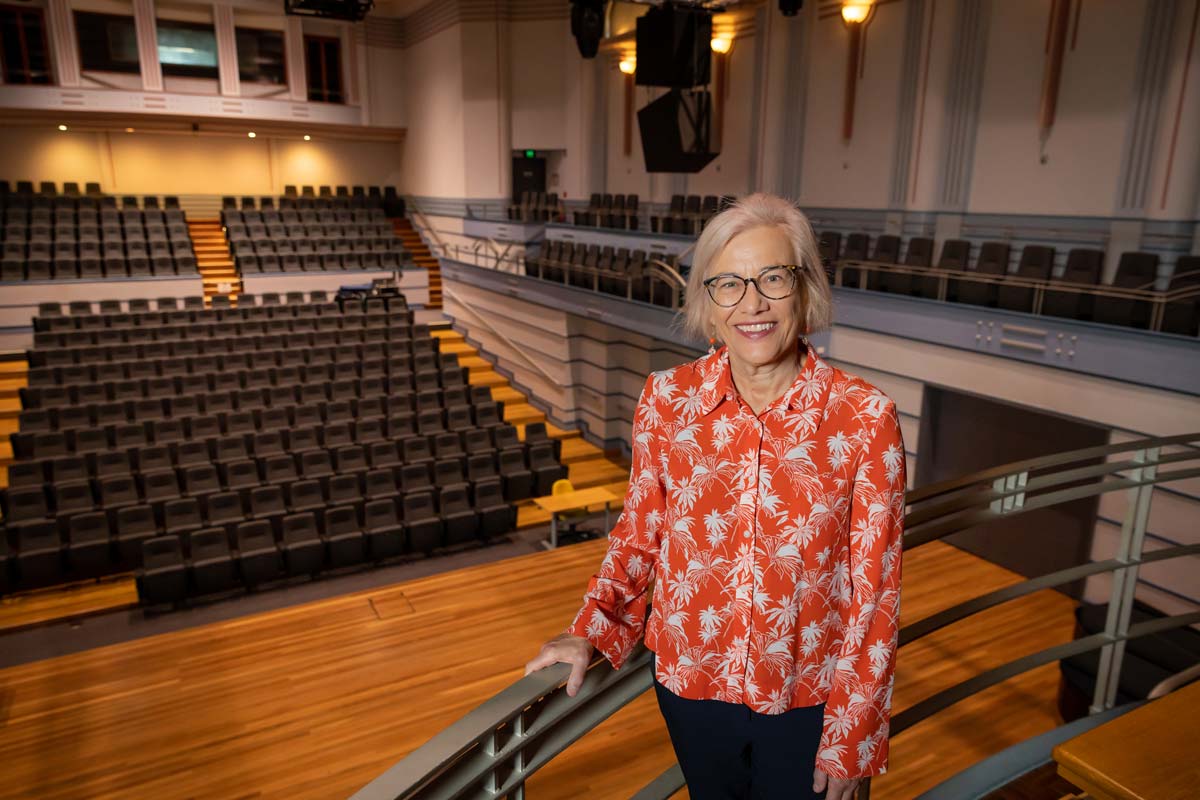
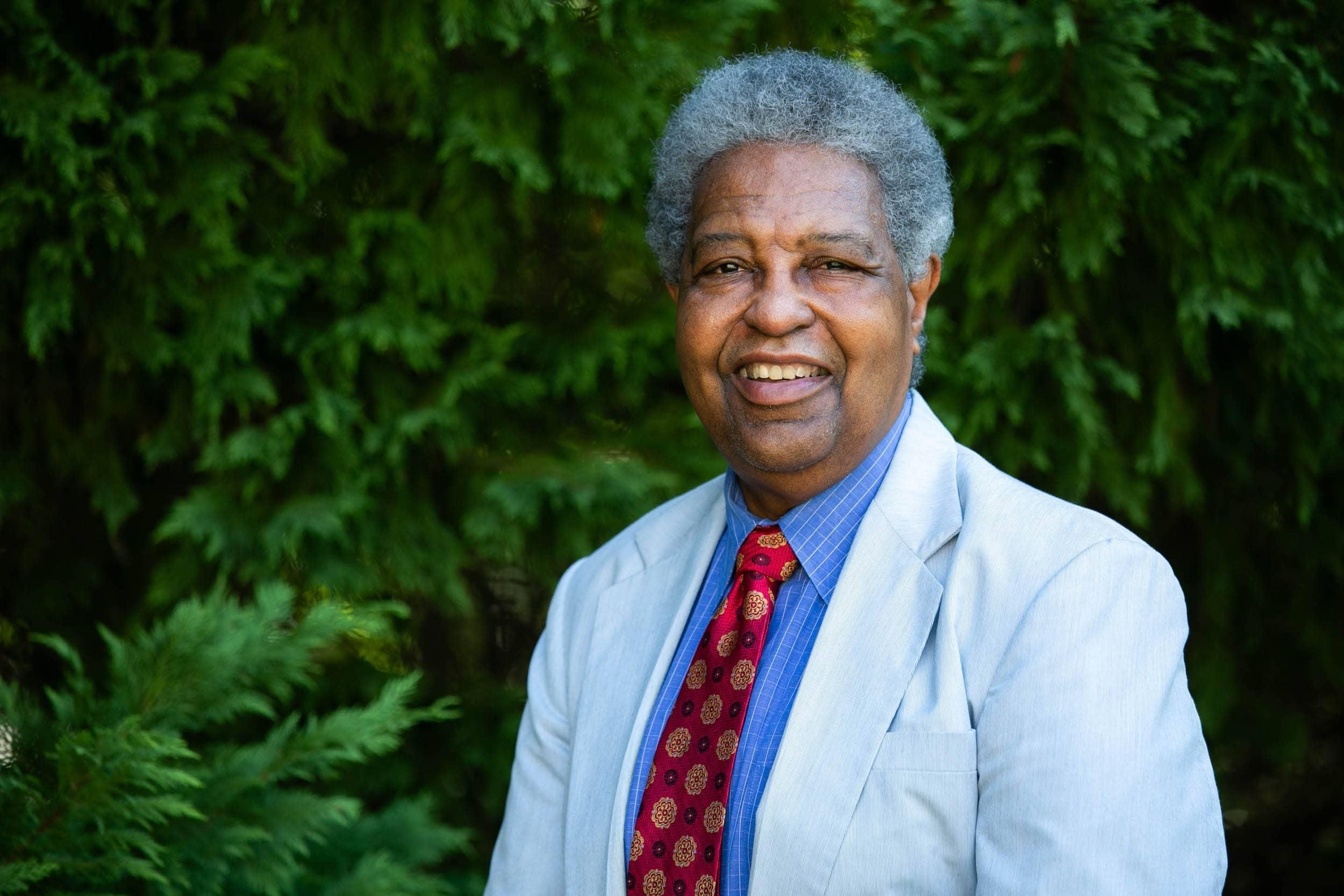
Vegard Pihl Moen is an Associate Professor at the Department of Health and Functioning at Western Norway University of Applied Sciences (HVL), holding his position since 2018. He also serves as a leader at the Centre for Habilitation and Rehabilitation at Haukeland University Hospital. His academic background includes a Master's degree in Movement Science from NTNU and a PhD from the University of Bergen (UiB) in the Department of Global Health and Primary Care.
Professor Sungheon Gene Kim holds a faculty position at the Weill Cornell Medicine Graduate School of Medical Sciences within the Department of Radiology . His research focuses on quantitative MRI methodology for oncological applications , particularly in breast cancer and head and neck cancer . Kim's lab develops advanced dynamic contrast-enhanced MRI (DCE-MRI) and diffusion MRI (dMRI) techniques to assess tumor microenvironment and treatment response . Key research areas include: Tumor vascular properties via 3D UTE-GRASP MRI Cellular microstructural analysis through POMACE framework Adipose-tissue cancer interaction via MR spectroscopic imaging His lab has received continuous funding from the National Cancer Institute (R01CA219964, UG3/UH3CA228699, R01CA160620). Recent publications demonstrate technical advancements in ultrafast MRI reconstruction , deep learning-enhanced perfusion analysis , and multi-parametric tumor characterization . Collaborations with the National Institutes of Health Quantitative Imaging Network have produced novel cellular water exchange rate measurements that correlate with patient survival outcomes .
Tegoeh Tjahjowidodo is a Senior Lecturer at the Faculty of Industrial Engineering Sciences , KU Leuven , affiliated with the Department of Mechanical Engineering and the Manufacturing Processes and Systems (MaPS) unit at Campus De Nayer. He serves as Head of Education for Electromechanics programs and leads Subdivision 17 at the campus. Research Areas: Additive Manufacturing (Wire-Arc Additive Manufacturing), Process Monitoring, Control Systems, Laser Micromanufacturing, Wear Analysis, Robotics, and Condition Monitoring. Publication Trends: Focus on in-situ monitoring of laser micromanufacturing, machine learning for abrasive belt grinding, WAAM parameter optimization , and multi-sensor fusion for process control. Scientific Contributions: Co-promotor for MultiTRIBO (tribology), Promotor for WAAM structural integrity and pedicle screw surgical simulators . Active in international collaborations (e.g., 25th International Symposium on Laser Precision Microfabrication, Spain 2024).
Dr. Magdalena Zawisza is an Associate Professor at Anglia Ruskin University's Faculty of Science and Engineering, specializing in gender, consumer, and social psychology. Her work focuses on gender stereotypes in advertising, ambivalent sexism, and embodied cognition, with cross-cultural applications. PhD in Psychology from Royal Holloway, University of London MSc in Psychology from University of Gdańsk, Poland PGCert in Learning and Teaching for Higher Education from Royal Holloway Research interests include: Gender portrayal in advertising effectiveness and societal impact Implicit and explicit stereotyping across cultures Persuasion techniques and elaboration processes Climate psychology and environmental connectedness Speciesism and animal welfare Recent publications analyze 62-nation gender attitudes, global life satisfaction metrics, and climate behavior interventions. Her work has informed UK advertising policy changes and attracted media attention from BBC, The Independent, and The Conversation. Scientific Fellowships: Senior Fellow of Higher Education Academy (SFHEA) Awards: The Conversation Contribution Award (2017) Grants include Innovate UK, British Academy/Leverhulme, European Regional Development Fund, and industry sponsorships from Unilever and Dolby. She leads the Centre for Societies and Groups and the Insights consultancy on responsible advertising.
Christof Weiß is a Professor for Computational Humanities at the CAIDAS / Institute of Computer Science, Julius-Maximilians-Universität Würzburg (JMU), Germany. He serves as Head of the DFG-funded Emmy Noether group on Computational Analysis of Music Audio Recordings: A Cross-Version Approach. His academic journey includes previous positions as Visiting Researcher at University Télécom Paris (2021), Visiting Lecturer at Karlsruhe University of Music (2020, 2021), and Research Assistant at International Audio Laboratories Erlangen (2015-2022) and Fraunhofer Institute for Digital Media Technology (2012-2015). His educational background encompasses a PhD in Media Technology from University of Technology Ilmenau (2017), Concert Diploma in Composition from Würzburg University of Music (2012), Physics Diploma from University of Würzburg (2012), and Music Diploma in Composition from Würzburg University of Music (2011). This unique combination of technical and artistic training forms the foundation of his interdisciplinary research approach. Weiß's research operates at the critical intersection of computer science and musicology, developing novel computational methods for analyzing musical structures in audio recordings. His work bridges technical audio processing with musicological insights, creating methodologies for tonal analysis, key estimation, and cross-version comparison of musical performances. His approach combines deep learning techniques with music theory to extract meaningful patterns from large music corpora, enabling new forms of musicological corpus studies that were previously impossible. His recent publications reveal a clear research trajectory toward integrating advanced machine learning with fundamental musicological questions. The consistent theme across his work involves analyzing classical music structures through computational lenses, with particular emphasis on cross-version consistency in performances, tonal complexity measurement, and developing datasets that support computational musicology. His publications span both highly technical audio processing journals and musicology-focused venues, demonstrating his commitment to bridging these disciplines. Best paper award at the 4th conference on Computational Humanities Research (CHR), 2023 KlarText award for science communication of the Klaus Tschira Foundation, 2018 2nd prize at Festival Pablo Casals composition competition, Prades (France), 2013 Youth Cultural Advancement Award (Kulturförderpreis) of the city of Amberg, Germany, 2011 As principal investigator of the DFG Emmy Noether group, Weiß leads a multidisciplinary research team investigating computational analysis of music audio recordings through a cross-version approach. His research has secured significant funding including the prestigious Emmy Noether program, supporting doctoral and postdoctoral researchers working on various aspects of music information retrieval and computational humanities. His collaborative network spans institutions across Europe, including University Télécom Paris, Queen Mary University of London, and multiple German research centers. Weiß leads the Computational Humanities research group at CAIDAS, which focuses on developing computational methodologies for music analysis with particular emphasis on classical repertoire. The lab creates specialized datasets (including the Wagner Ring Dataset and Schubert Winterreise Dataset), develops algorithms for structural music analysis, and applies these tools to address musicological questions that require computational scale and precision. Their work bridges the gap between technical audio processing capabilities and humanities research questions, creating new pathways for understanding musical structure and evolution.
Dr. Stefan Janke is an academic staff member at the University of Mannheim within the School of Social Sciences. His office is located at A 5, 6, Room B313 in Mannheim, Germany, and he can be contacted via email at stefan.janke@uni-mannheim.de. As a Privatdozent (PD), he holds a position that follows the completion of habilitation in the German academic system, granting him the right to teach independently at the university level. Dr. Janke's research program spans several interconnected domains in educational psychology. His primary focus is on motivation in educational contexts, particularly examining achievement goals and their relationship to academic dishonesty, faculty motivation, and how instructional practices influence student motivation. He has developed significant expertise in understanding how different goal orientations affect academic behaviors and outcomes. A second major research strand involves the digitalization of educational processes, where he investigates online self-assessment tools, AI applications in educational guidance systems, cheating behaviors in web-based testing environments, and how motivation and well-being are affected in online learning contexts. His work in this area has become increasingly relevant with the digital transformation of education. His recent publications (2022-2025) reveal a strong focus on achievement goal theory, academic integrity, digital educational tools, and the impact of social factors on educational outcomes. Many studies examine how social norms influence academic behavior, how motivation affects learning outcomes, and how digital tools can be optimized for educational guidance. There's also significant attention to equity issues, particularly how migration background and parental education affect students' sense of belonging and academic success. The research often employs longitudinal designs and international comparisons, with a growing emphasis on the impact of digitalization and the pandemic on educational processes. Dr. Janke serves as principal investigator for multiple externally funded projects including 'KISTE-BW' (developing an AI-supported procedure for measuring study interests), 'NEST-BW' (refining state-level initiatives for optimal student selection in higher education), and 'ZiFo' (in-depth studies on achievement goals in research, funded by the German Research Foundation). Previously, he led projects on academic dishonesty (CHEAT) and self-reflection tests for prospective students (SMArt²). He also supervises bachelor's and master's theses, contributing to student development and academic training.
Associate Professor Helen English is a music sociologist and academic at the University of Newcastle , affiliated with the School of Humanities, Creative Industries and Social Sciences . Her work bridges musicology, creative ageing, and equity in music education. PhD in Musicology (University of Newcastle, 2016) Diploma in Music (Guildhall School of Music and Drama) Master of Arts (Music) (University of Newcastle) Helen's research focuses on music's transformative potential for ageing populations and marginalized communities. She leads the creative ageing research program and investigates: Music sociology and world-building frameworks Music's impact on cognitive and social wellbeing Equity in access to music education Gender dynamics in music technology education Her 15 most recent publications explore: Community music-making for older adults (2025) Modular composition techniques (2025) Gender barriers in tertiary music programs (2024) Historical music practices in colonial Australia (2019) Scientific contributions include: National Council of Women Musicology Award (PhD) ARC DECRA Fellowship (2022-2024) for 'Creative Ageing through Transformative Engagement with Music' Dementia Australia Project Grant (2022-2024) for creative arts programs She supervises 12 postgraduate researchers and collaborates with: Prof Frini Karayanidis (University of Newcastle, Psychology) Prof Jane Davidson & Prof Felicity Baker (University of Melbourne, Music Therapy) International partners at Universities of Leeds, Queensland, and Griffith Key partnerships include: Aged-care providers: NovaCare, Uniting Care, Maroba, Whiddon Care Lake Macquarie Museum of Art and Culture Arts in Care Homes movement (UK partnership)
Eugene Kennedy is a Professor in the Department of Educational Research at Louisiana State University's College of Human Sciences & Education. Holding a PhD in Educational Research Methodology from the University of South Carolina (1990), Kennedy's career spans academic research, state education departments, and technical consulting roles. His work focuses on educational effectiveness, psychometrics, and technology integration in education. Bachelor's: Sociology, Benedict College (1977) Master's: Educational Statistics & Measurement, University of Iowa (1982) PhD: Educational Research, University of South Carolina (1990) Kennedy's research interests include educational research methodology , psychometrics , school effectiveness , STEM education , data-driven decision making , and learning analytics . His recent publications demonstrate increasing focus on AI's role in education and data-driven strategies for improving educational outcomes. His academic work shows trends in educational technology integration , quantitative research methods , and STEM equity initiatives . Key themes include using data mining for educational insights, technology tools for school leadership, and innovative teaching strategies to improve student outcomes. Kennedy has participated in grants including: Co-PI for Evaluation proposal for the EBRPS American Recovery and Reinvestment Act Program (2010-2011) PI for Longitudinal Study with University of Louisiana Lafayette (2008-2009) Contact: ekennedy@lsu.edu | 221 Peabody Hall | 225-578-2193
Paolo Prandoni is a Lecturer at École Polytechnique Fédérale de Lausanne (EPFL) in the School of Computer and Communication Sciences (IC). He serves as a Scientist in the Audiovisual Communications Laboratory (LCAV) and teaches in the SSC-ENS and SIN-ENS units, focusing on signal processing theory and practical applications in audiovisual communications. He earned his PhD from EPFL after completing all prior education there, driven by childhood fascination with long-distance telephony. His doctoral work established foundations in communication systems that continue to inform his research. Prandoni's research spans audio/image processing, machine learning for media analysis, and DSP education. Key areas include computational photography (e.g., spectral imaging, stained glass rendering), speech quality assessment via transfer learning, music information retrieval (e.g., fingering prediction), and audience analytics through his company Quividi. His work consistently bridges theoretical signal processing with real-world implementation. Recent publications reveal a strategic shift toward machine learning integration in signal processing tasks, particularly non-intrusive speech assessment and lensless imaging reconstruction. Simultaneously, he advances DSP pedagogy through MOOC development and hands-on teaching tools using off-the-shelf hardware, emphasizing accessibility and practical skill development. No scientific awards are documented in the provided materials. He has advised PhD student Thanikachalam Niranjan (thesis: Image Based Relighting of Cultural Artifacts , 2016) and teaches Communication Systems and Computer Science courses. His educational impact extends through the open-access textbook Signal Processing for Communications (2008) and tools like MultiPub for maintainable online classes. Industry engagement includes Quividi co-founding (2006) and ongoing CSO role in attention analytics. As a core LCAV laboratory member, he collaborates on interdisciplinary projects including cultural heritage digitization, embedded signal processing systems, and real-time audience measurement, leveraging EPFL's infrastructure for both academic and commercial applications.
Merve Hickok is a Lecturer at the University of Michigan's School of Information, where she teaches data ethics. She also serves as the Responsible Data and AI Advisor at the Michigan Institute for Data Science (MIDAS) and is an affiliated faculty member at the Gerald R. Ford School of Public Policy. Additionally, she is the President and Research Director at the Center for AI and Digital Policy (CAIDP), advising governments and international organizations on AI policy and regulation. Her research focuses on AI policy, ethics, and governance, with particular emphasis on fundamental rights, democratic values, and social justice. She examines the impact of AI systems on individuals, society, and organizations, exploring issues like algorithmic bias, privacy concerns, and the societal implications of emerging AI technologies. Her work bridges technical understanding with social and ethical considerations to promote responsible AI development and deployment, with special attention to employment applications, government procurement, and international policy frameworks. 100 Brilliant Women in AI Ethics™ – 2021 Runner-up for Responsible AI Leader of the Year – 2022 (Women in AI) Lifetime Achievement Award - Women in AI of the Year - 2023 Top AI Leaders in Retail (Ethics & Compliance) - 2024 Hickok provides consultancy to C-suite leaders and training services to public and private organizations on Responsible AI development, due diligence, and governance. She has provided testimony to the US Congress, State of California Civil Rights Office, New York City Department of Consumer and Worker Protection, Detroit City Council, and numerous global organizations. She founded AIethicist.org to help professionals navigate the complex landscape of AI ethics and serves on the founding editorial board of Springer Nature's AI & Ethics journal.
William A. Darity Jr. ('Sandy') is the Samuel DuBois Cook Distinguished Professor of Public Policy at Duke University's Sanford School of Public Policy, with joint appointments in African and African American Studies and Economics. He serves as director of the Samuel DuBois Cook Center on Social Equity and is an affiliate of the Duke Initiative for Science & Society. Previously, he held leadership positions including chair of the Department of African and African American Studies at Duke and director of Graduate Studies at UNC Chapel Hill. Darity's research centers on racial and economic inequality, with particular focus on stratification economics, reparations, the racial wealth gap, labor market outcomes by skin shade, the Atlantic slave trade's economic impact, and the social psychological effects of unemployment. His work bridges economics, public policy, and social justice, examining how structural inequalities persist across generations and how policy interventions might address them. He has developed the theoretical framework of stratification economics to explain intergroup inequality beyond traditional market-based discrimination models. His publications reveal a consistent focus on racial economic disparities, with recent work examining reparations policy implementation (2024-2025), Latinx stratification economics (2024), and the century-long impacts of events like the Tulsa Massacre (2024). His scholarship spans theoretical economics, empirical analysis of racial disparities, and policy proposals for addressing systemic inequality. Samuel Z. Westerfield Award (2012) American Academy of Arts and Sciences Member (2025) Distinguished Fellow, American Economic Association (2024) Politico 50 recognition (2017) Award from Global Policy Solutions (2017) President of National Economic Association President of Southern Economic Association Darity has advised numerous PhD students throughout his career and has secured significant research funding, including grants focused on reparations, wealth inequality, and structural barriers to economic inclusion. His current projects include the Samuel DuBois Cook Center's research on racial and economic inequality and the ARC of Justice podcast series exploring racial economic inequality. He has served as Editor in Chief of the International Encyclopedia of the Social Sciences and co-authored the influential book 'From Here to Equality: Reparations for Black Americans in the Twenty-First Century' with A. Kirsten Mullen.
John G. Kerns is a Professor in the Department of Psychology at the University of Missouri, leading the Cognitive and Emotional Control Lab. His research integrates clinical psychology and neuroscience to understand psychotic disorders, with a focus on striatal functioning and aberrant salience. His primary research interests include: Translational clinical neuroscience of psychotic disorders Cognitive and emotional control mechanisms Striatal functioning and feedback-related learning Aberrant salience and positive schizotypy Openness to experience in psychopathology Analysis of Dr. Kerns' recent publications shows a strong emphasis on neuroimaging and behavioral studies of psychosis risk, particularly examining corticostriatal pathways and their relationship to cognitive deficits. His work consistently bridges personality factors with neural mechanisms. No scientific awards are mentioned in the provided text. Dr. Kerns mentors a vibrant team of graduate and undergraduate students. Current graduate students include Megan Liew and Tyler Rogers, and his alumni have secured prestigious positions in academia and clinical practice. He is accepting applications for graduate students starting in Fall 2026. The Cognitive and Emotional Control Lab provides a collaborative environment for research on psychotic disorders, utilizing behavioral, clinical, and neuroimaging methods to advance understanding and treatment.
Rachel Henderson serves as an Assistant Professor in the Department of Physics & Astronomy at Michigan State University, where she conducts physics education research focused on equity and inclusion through quantitative methodologies. Her work targets improving learning outcomes for all students while increasing representation of women and historically marginalized groups in physics. Her academic credentials include: Ph.D. in Physics Education Research from West Virginia University (2018) M.S. from West Virginia University (2014) B.S. from Slippery Rock University (2012) Dr. Henderson's research integrates two primary strands: developing next-generation physics assessments and enhancing STEM student retention from diverse backgrounds. She investigates how inclusive assessments impact student success, designs evaluation tools to promote diversity, and establishes equitable practices to cultivate future scientists. Her methodologies combine rigorous quantitative analysis with mixed-methods approaches to address systemic barriers in physics education. Analysis of her recent publications reveals concentrated efforts on self-efficacy measurement among transfer students, redesign of assessment instruments using evidence-centered design, and integration of quantitative-qualitative data to capture complex student experiences. Her work consistently examines demographic factors including gender, race, and prior preparation in physics education contexts. Associated with the Learning Machines Lab for innovative educational data analysis, Dr. Henderson actively contributes to the field through peer mentor program development and physics graduate program assessment research. While specific awards aren't documented in available materials, her publications in Physical Review Physics Education Research demonstrate scholarly impact.
Ramiro Berardo is a Professor of Environmental and Natural Resources Policy at the School of Environment and Natural Resources, The Ohio State University. His research focuses on complex governance systems, policy networks, and stakeholder collaboration in environmental management. Research Interests Policy networks and social capital Polycentric governance Collaborative environmental management Transboundary water cooperation Climate change policy dynamics Courses Taught ENR 3200 - Environmental and Natural Resources Policy ENR 5451 - Water Policy and Governance Professional Affiliations He leads the Environmental Governance Lab at OSU and contributes to policy networks research through publications and collaborative projects.
Arlie Adkins serves as Associate Professor with dual appointments in the School of Landscape Architecture and Planning at the University of Arizona's College of Architecture, Planning and Landscape Architecture (CAPLA) and the Health Promotion Sciences Department within the Mel and Enid Zuckerman College of Public Health. He holds the position of Program Chair for the Master of Science in Urban Planning program and teaches transportation planning, planning theory, and capstone studios. Dr. Adkins earned his PhD in Urban Planning from Portland State University and Master's in City Planning from UC Berkeley. Prior to academia, he worked as a planner at TriMet (Portland's transit agency) and for carsharing pioneer Flexcar. His research program investigates transportation equity through three interconnected lenses: systemic health and safety disparities in urban transportation, socioeconomic applicability of walkability metrics, and affordable housing's role in enabling access to opportunity-rich neighborhoods. He emphasizes sociocultural contexts in built environment assessments, particularly focusing on Mexican American communities and refugee populations. His work integrates critical race theory to expose racial biases in transportation systems, as demonstrated by his nationally covered research on driver yielding behavior at crosswalks. Recent publications reveal a methodological shift toward qualitative assessment tools like the Qualitative Pedestrian Environments Data (QPED) Toolkit, addressing limitations of quantitative metrics in capturing social dimensions of walkability. His scholarship increasingly centers refugee mobility and Global South urbanism, reflecting expansion into transnational equity frameworks while maintaining core focus on transportation-housing-health intersections. Dr. Adkins has secured major funding from the Federal Highway Administration, National Institute for Transportation and Communities, and Centers for Disease Control and Prevention. He co-led the CDC-funded Physical Activity Policy Research Network (PAPRN+) collaborating center and directs the QPED initiative, which has trained practitioners through workshops including the 2019 Transportation and Communities Summit in Portland. His leadership extends to program development, evidenced by the MS Urban Planning program's #5 national ranking among public programs without PhDs by Planetizen (2023) and the UA Urban Planning Capstone's award for best graduate project from the Arizona APA chapter. He actively mentors students through capstone projects focused on transportation equity and housing justice.