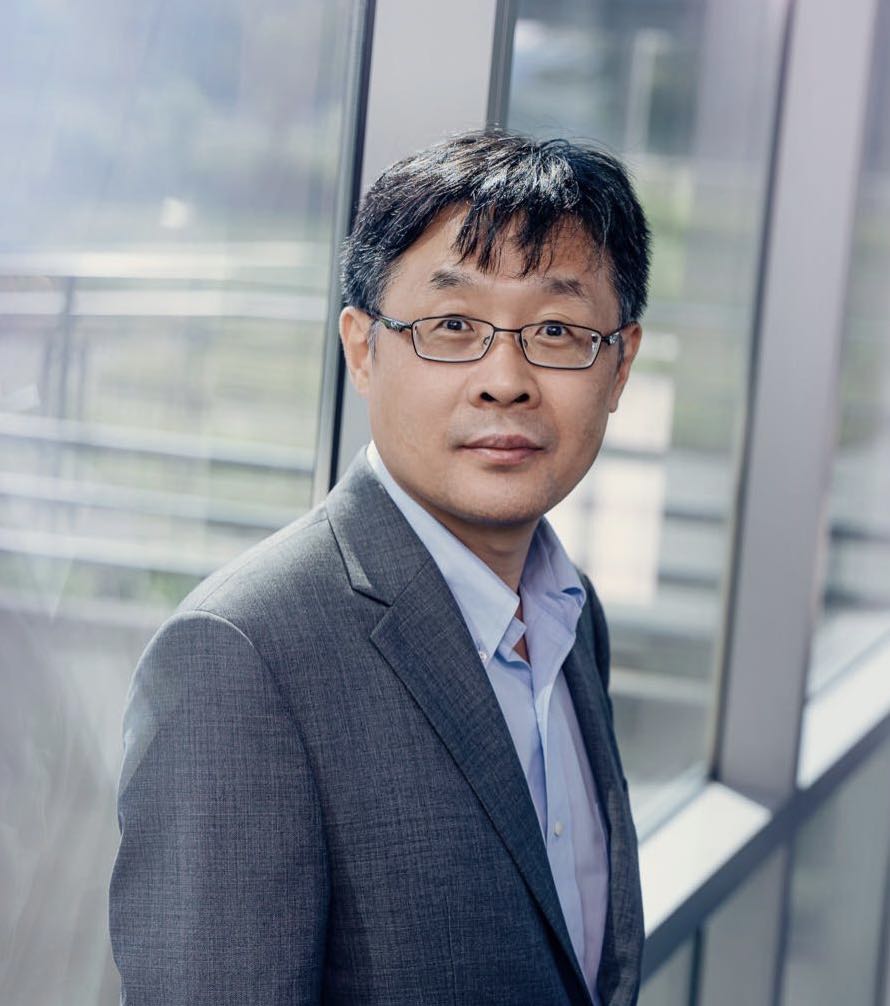
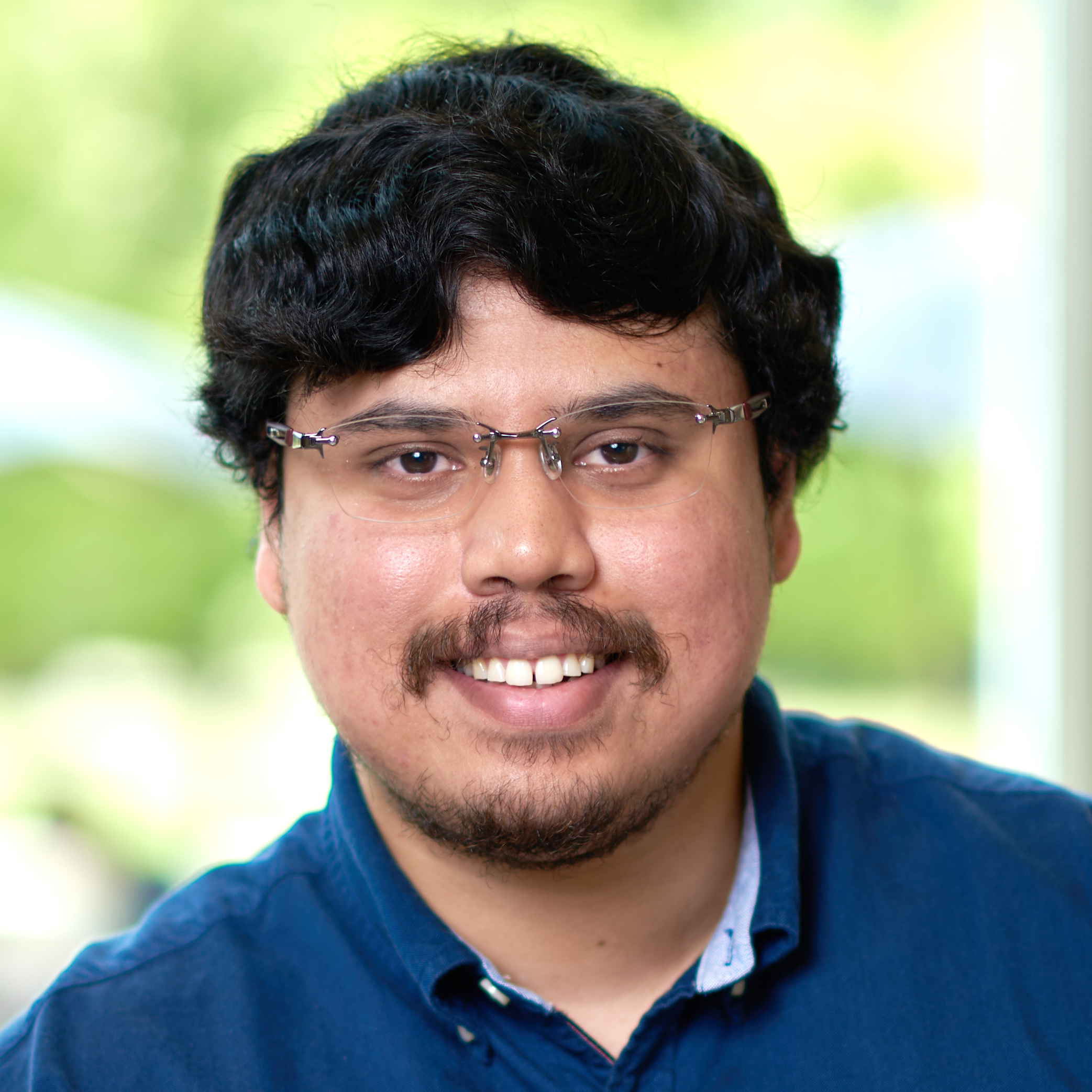
Harrison Huibin Zhou is the Henry Ford II Professor of Statistics and Data Science at Yale University. He has held leadership roles, including Department Chair of Statistics and Data Science (2018–present) and former Chair of Statistics (2012–2017). His academic career at Yale spans over two decades, with promotions from Assistant Professor (2004–2009) to Associate (2009–2010) and full Professor (2010–present). Research Interests: Dr. Zhou specializes in high-dimensional statistical theory, including nonparametric estimation, minimax theory, and applications in network analysis, machine learning, and functional data analysis. His work bridges theoretical foundations with computational methods, addressing challenges in modern statistical decision-making. Publications: His recent work focuses on spectral clustering, quantum state tomography, and optimal estimation in high-dimensional models. Notable contributions include theoretical guarantees for algorithms like the EM method in Gaussian mixtures and advancements in community detection in networks. Teaching: He teaches advanced courses such as Functional Data Analysis, Nonparametric Estimation, and Decision Theory, reflecting his expertise in statistical methodology and theory. Professional Service: Organized workshops on topics like Empirical Processes (2015) and High-Dimensional Data (2012), underscoring his role in fostering academic collaboration.
Robert Sitnik is a Professor and Dean of the Faculty of Mechatronics at Warsaw University of Technology, where he is affiliated with The Institute of Micromechanics and Photonics. He earned his Doctorate in 2002 and has established himself as a leading researcher in 3D optical measurement techniques and applications. His research focuses on 3D light measurement, optical shape analysis, structured light techniques, and 3D data processing with applications spanning cultural heritage documentation and medical imaging. As the leader of the 3D/4D Optical Surface Measurement Team, he has pioneered innovative approaches to surface measurement and documentation. His work demonstrates strong interdisciplinary connections between mechanical engineering, computer vision, and practical applications in both cultural preservation and healthcare. His research has led to significant advancements in 3D scanning technologies, particularly for human body analysis and cultural heritage conservation. His publications reveal a consistent research trajectory focused on improving accuracy, efficiency, and applicability of 3D measurement systems. His scientific impact is evidenced by 159 publications, an h-index of 18 in Scopus and 17 in Web of Science, and 103 promoted theses. His research has been supported by 22 projects, resulting in 1 patent and substantial contributions to both academic knowledge and practical applications. As an academic leader, he has supervised numerous students and researchers, contributing significantly to the development of expertise in optical measurement technologies. His work bridges theoretical research with real-world applications in medical diagnostics, cultural heritage preservation, and industrial measurement systems.
Song Liu serves as Associate Professor in Data Sciences and AI within the School of Mathematics at the University of Bristol. His academic journey spans multiple continents with a BEng from Suzhou University, MSc from Bristol, and Doctor of Engineering from Tokyo Tech. Current research focuses integrate mathematical foundations with practical AI applications across engineering domains. His educational background demonstrates international expertise: BEng: Suzhou University MSc: University of Bristol Doctor of Engineering: Tokyo Tech Research centers on exponential family manifolds and graphical models , with significant contributions to score matching techniques for missing data and generative modeling. His work bridges theoretical statistics with real-world applications in structural health monitoring and power electronics, particularly through transfer learning frameworks for magnetic core loss prediction. Recent publications reveal increasing focus on Wasserstein gradient flows and differential parameter inference in high-dimensional spaces. Liu's publication trajectory shows consistent innovation in density estimation and generative modeling, with recent work (2023-2025) emphasizing practical implementations in engineering contexts. Key themes include score-based diffusion models, manifold learning applications, and novel approaches to divergence minimization using velocity fields and optimal transport theory. Award recognition includes: Outstanding Paper at ICML2025 3rd Place in MagNet Challenge 2023 (Outstanding Performance Award) Grant leadership includes the 2023-2024 project Using Machine Learning to Correct Probe Skew in High-frequency Electrical Loss Measurements as Co-Investigator, and the 2019 Joint Workshop Between JGI and ISM as Principal Investigator. His academic service extends to hosting international researchers like Ayaka Sakata (2023) and receiving competitive fellowships for boundary example simulation (2018-2020). While no formal lab structure is specified, his collaborative network spans electrical engineering (magnetic core loss projects) and structural analysis (offshore wind foundation monitoring).
Anuran Makur is an active Assistant Professor at Purdue University with dual appointments in the Department of Computer Science (College of Science) and the Elmore Family School of Electrical and Computer Engineering (College of Engineering). He is affiliated with the Institute for Control, Optimization and Networks (ICON) and teaches foundational courses in machine learning and data science. His educational background includes a B.S. in Electrical Engineering and Computer Sciences from UC Berkeley (2013, summa cum laude), an S.M. in Electrical Engineering and Computer Science from MIT (2015), and a Sc.D. from MIT (2019). B.S., UC Berkeley, 2013 S.M., MIT, 2015 Sc.D., MIT, 2019 Makur's research bridges theoretical machine learning, information theory, and applied probability. Key interests include ranking/preference learning, optimization for ML, non-parametric inference, information measures, permutation channel limits, broadcasting on graphs, and reliable computation. His work emphasizes fundamental theoretical limits and mathematical rigor in complex systems. Recent publications reveal strong trends in statistical learning theory (40%), information-theoretic methods (35%), and networked systems (25%), with growing emphasis on privacy-aware inference and high-dimensional statistics. His scientific achievements are recognized by prestigious awards: Arthur M. Hopkin Award (UC Berkeley, 2013) Ernst A. Guillemin Master's Thesis Award (MIT, 2015) Jin Au Kong Doctoral Thesis Award (MIT, 2020) Thomas M. Cover Dissertation Award (IEEE, 2021) NSF CAREER Award (2023) While specific advising details aren't public, his research leadership is evident through ICON affiliation and collaborations with MIT's LIDS/IDSS groups. The NSF CAREER grant supports his work on information-theoretic foundations of machine learning. He maintains active roles in theoretical computer science and information theory communities through conference organization and editorial work. Makur leads research within ICON, focusing on control-theoretic approaches to networked learning systems. His work integrates probabilistic modeling with optimization theory, particularly for distributed inference and networked decision-making under uncertainty.
Wouter M. Koolen-Wijkstra is a Professor of Mathematical Machine Learning at the University of Twente (Statistics group) and a Scientific Staff Member at Centrum Wiskunde & Informatica (CWI), Amsterdam, in the Machine Learning department. His research bridges theoretical machine learning, game theory, and statistics, with active projects on multi-armed bandits, online learning, and safe inference methodologies. He co-leads INRIA-CWI associate teams (6PAC and 4TUNE) and is an ELLIS Scholar. His work emphasizes provable guarantees in learning algorithms, including: Regret minimization under risk-averse scenarios Multi-scale adaptation in online decision-making Game-theoretic equilibria computation Anytime-valid statistical inference via e-processes Recent publications demonstrate a focus on robust learning frameworks , particularly in bandit problems, hypothesis testing, and Nash equilibrium characterization, often leveraging information-theoretic and optimization principles. Awards include: Veni Grant (2015) for 'Learning at the Intrinsic Task Pace' QUT Vice-Chancellor's Fellowship (2013) for multitask learning Rubicon Grant (2010) for game-theoretic online learning ELLIS Scholar recognition He teaches graduate courses on Machine Learning Theory and Graphical Models at CWI. Current grants include collaborations with INRIA (4TUNE and 6PAC teams) and industry partnerships (e.g., PPS Booking.COM).
Sune Darkner is a Professor at the Department of Computer Science (DIKU) at the University of Copenhagen, specializing in the Image Analysis, Computational Modelling, and Geometry research section. His work focuses on medical image processing with particular emphasis on neuro-imaging data including MRI and PET scans. His primary research interests include Image Registration, Segmentation and Classification of Medical Image Data , with a specific focus on estimation of image similarity as his main research interest. Darkner strongly believes that the implementation of image processing algorithms should be thoroughly tested and reflect the theoretical properties as accurately as possible. His work primarily centers on neuro-imaging data such as MRI and PET. His recent publications (2024-2025) reveal a strong focus on medical image analysis, with particular emphasis on tumor volume delineation, deformable image registration with physics constraints, and applications of deep learning in medical imaging. His work spans both theoretical foundations of image processing and practical clinical applications. Darkner previously held a Post Doc position at the Technical University of Denmark from February 2009 to January 2010, demonstrating his longstanding engagement with image analysis research in the Danish academic community.
B. F. Spencer Jr. is the Nathan M. and Anne M. Newmark Endowed Chair in Civil Engineering at the University of Illinois at Urbana-Champaign, where he directs the Multi-Axial Full-Scale Sub-Structured Testing & Simulation Facility and the Smart Structures Technology Laboratory. He joined the university in 2002 after serving as Leo E. and Patti Ruth Linbeck Professor of Engineering at the University of Notre Dame (1985-2002). Education includes: Ph.D. in Theoretical and Applied Mechanics, University of Illinois at Urbana-Champaign (1985) M.S. in Theoretical and Applied Mechanics, University of Illinois at Urbana-Champaign (1983) B.S. in Mechanical Engineering, University of Missouri-Rolla (1981) His research focuses on pioneering innovations in structural health monitoring, stochastic mechanics, and smart sensor technologies. Key areas include development of wireless sensor networks for real-time infrastructure assessment, seismic hazard mitigation strategies, and AI-driven damage detection systems. His work bridges theoretical computational mechanics with practical civil engineering applications to enhance resilience against natural disasters. Recent publications emphasize digital twins, UAV-based structural inspection, machine learning for damage identification, and advanced sensor networks. Trends show strong integration of AI, 3D visualization, and edge computing for rapid post-disaster evaluation and predictive maintenance of critical infrastructure. Major scientific honors: ASCE Housner Medal (2015) J.M. Ko Medal (2014) Foreign Member of Polish Academy of Sciences (2005) Structural Health Monitoring Person of the Year (2011) JSPS Fellowships (1999, 2000) He leads significant infrastructure projects including NSF-funded facilities and industry collaborations. Laboratory initiatives involve full-scale testing of bridges, gates, and seismic mitigation systems. Educational outreach includes K-12 STEM programs like 'Shakes and Quakes' to inspire future engineers.
Vicky Fasen-Hartmann is a Professor at the Karlsruhe Institute of Technology (KIT) within the Department of Mathematics, specifically affiliated with the Institute of Stochastics. She has held her W3 Professor position since October 2012, with two periods of parental leave (August 2016-August 2017 and October 2018-October 2019). Prior to her current position, she held postdoctoral research positions at ETH Zurich (RiskLab), TU Munich, Université Pierre et Marie Curie, and Cornell University. Her educational background includes: Habilitation (2010) in Heavy Tails in Finance, Insurance and Telecommunication from TU Munich Ph.D. (2004) in Extremes of Lévy Driven Moving Average Processes with Applications in Finance from TU Munich Diploma in Mathematics (2002) from Karlsruhe Institute of Technology Professor Fasen-Hartmann's research spans multiple areas of theoretical and applied statistics with a focus on extreme value theory, heavy-tailed distributions, and their applications in finance and risk management. Her work bridges theoretical probability with practical financial applications, particularly in modeling rare events and systemic risks. She has made significant contributions to the understanding of Lévy processes, continuous-time ARMA models, and multivariate extremes. Her research combines rigorous mathematical theory with practical applications in financial mathematics, insurance, and telecommunications networks. The trends in her recent publications (2020-2025) show a clear evolution toward high-dimensional extreme value theory, financial network risk contagion, and advanced modeling of continuous-time processes. Her work increasingly addresses the challenges of modern financial systems, including systemic risk measurement, high-dimensional dependency structures, and the statistical properties of extreme events in complex systems. She has developed innovative methodologies for analyzing multivariate extremes, risk contagion, and continuous-time state space models. Professor Fasen-Hartmann has served in significant editorial roles including Associate Editor for the Scandinavian Journal of Statistics since 2014, Managing Editor of Lévy Matters (2008-2014), and Editor of Bernoulli News (2009-2011). She has also been active in academic service through committee work, including the Steering Committee of the Probability and Statistics Group in Germany (2014-2016) and the Examination Board of the Department of Mathematics at KIT (since 2017). She has supervised numerous doctoral and master's students, with current PhD candidates including Lucas Butsch (since 2021) and previously Lea Schenk, Celeste Mayer, Markus Scholz, and Sebastian Kimmig. Her teaching portfolio includes advanced courses in Time Series Analysis, Continuous Time Finance, Extreme Value Theory, and Asymptotic Stochastics. She regularly organizes workshops and conferences on specialized topics in probability and statistics, demonstrating her leadership in the academic community.
Giuseppe Claudio Guarnera serves as a Senior Researcher at the Norwegian University of Science and Technology (NTNU) in the Department of Computer Science, leading the Research Council of Norway-funded "Spectraskin" project on spectral skin modeling. He concurrently holds a Lecturer position in Computer Vision and Graphics at the University of York (UK) and has been a Guest Researcher at Justus-Liebig University Giessen's Department of Psychology since 2017. His academic background includes: Ph.D. in Computer Science from the University of Catania, Italy, with a dissertation in computer vision and pattern recognition Foundational research experience at the USC Institute for Creative Technologies (US) Guarnera's research centers on computer vision, computer graphics, and visual perception applications, with specialized expertise in spectral skin reflectance modeling, BRDF representation, and material acquisition for virtual environments. His work integrates perceptual validation to enhance realism in digital face rendering and fabric modeling, bridging theoretical computer graphics with practical VR applications. Analysis of his 2017-2020 publications reveals a consistent focus on material and skin reflectance measurement techniques, perceptual validation frameworks, and cross-renderer parameter remapping. Key trends include the development of spectral skin modeling for realistic digital faces (notably in the Spectraskin project), practical BRDF acquisition methods, and single-image fabric reconstruction—demonstrating strong interdisciplinary connections between computer vision, graphics, and human perception studies. Guarnera secures competitive research funding as Principal Investigator of the "Spectraskin" young research talents project awarded by the Research Council of Norway, which investigates spectral skin modeling and rendering for realistic digital faces. He directs the Spectraskin project team at NTNU, which specializes in advancing spectral skin modeling techniques through interdisciplinary collaboration between computer vision, graphics, and perceptual psychology researchers.
Sam Power is a Lecturer in the School of Mathematics at the University of Bristol . He holds a PhD in Mathematics from the University of Cambridge (awarded January 2021) and an MMath. His research focuses on computational statistics, Monte Carlo methods, and probabilistic modeling. Education PhD, University of Cambridge (30 Aug 2016 – 30 Jan 2021) MMath, University of Cambridge Research Interests Dr Power’s work lies at the intersection of probability theory , statistics , and machine learning . He investigates advanced Monte Carlo techniques including Markov Chain Monte Carlo (MCMC), particle methods, and piecewise-deterministic Markov processes. His recent projects explore convergence guarantees via functional inequalities such as Poincaré and log-Sobolev inequalities, state-space models for online learning, and uncertainty quantification. Publication Trends Across 20+ publications (2019–2025), Power has consistently advanced theoretical understanding and practical performance of sampling algorithms. Key themes include error bounds for particle and gradient-based methods, weak Poincaré inequalities, and applications in machine-learning systems such as online skill rating and Bayesian active learning. Scientific Awards No awards explicitly listed in the provided material. Students & Grants No explicit information on supervised students or funded grants is present. Labs & Teams Dr Power is affiliated with the School of Mathematics at Bristol; no specific laboratory or research group name is provided.
Bruce H. Thomas is a Professor at the University of South Australia, specializing in Augmented Reality (AR), Virtual Reality (VR), and immersive systems. His research focuses on spatial computing, human-computer interaction, and the application of mixed reality in domains like collaborative analytics, architectural design, and healthcare. Key contributions include foundational work on ARQuake (the first outdoor AR game), spatial interaction techniques, and immersive analytics frameworks. He has authored over 280 publications across venues like IEEE Transactions on Visualization and Computer Graphics (TVCG), ISMAR, and CHI. His work spans theoretical studies on cognitive load and EEG responses to AR, as well as applied systems like GeoGate for geo-temporal data visualization. Dr. Thomas collaborates extensively with industry partners (e.g., automotive, energy sectors) and academic institutions globally. His projects emphasize real-world applications, including crime scene reconstruction for legal evidence presentation, VR-based architectural reviews, and haptic interfaces for surgical training. He co-edited the seminal book Emerging Technologies of Augmented Reality (2007) and serves on editorial boards for top journals. His lab's innovations include adaptive portals in VR, proxy-based situated visualizations, and systems for collaborative decision-making in high-stakes environments. Current research explores AI integration with immersive systems and AR-driven solutions for complex data analysis tasks.
Nancy Reid is a University Professor in the Department of Statistical Sciences at the University of Toronto, Canada. Her academic leadership includes roles such as OC (Order of Canada), FRS (Fellow of the Royal Society), and FRSC (Fellow of the Royal Society of Canada). She specializes in foundational statistical theory, asymptotic methods, likelihood inference, and Bayesian-frequentist comparisons. Reid's research bridges theoretical advancements and practical applications in biostatistics, machine learning, and interdisciplinary data science. Her work emphasizes robust statistical methods for high-dimensional and complex data, including contributions to partial likelihood (Cox model), saddlepoint approximations, and accuracy in directional inference. Key recognitions include the COPSS Distinguished Achievement Award, Gold Medal from the Statistical Society of Canada, and numerous editorial and advisory roles. Reid collaborates globally, delivering invited lectures at institutions like Harvard, Stanford, and the Royal Society. Reid's academic output spans over 30 years, with influential books like Theory of the Design of Experiments (with D.R. Cox) and Applied Asymptotics . Her recent focus includes replicability in data science, foundations of statistical inference, and bridging gaps between theoretical and applied statistics. She actively promotes methodological rigor and interdisciplinary collaboration through initiatives like the Canadian Statistical Sciences Institute.
Harry Joe is a Professor in the Department of Statistics at the University of British Columbia (Vancouver Campus). His primary research focuses on dependence modeling, copula theory, multivariate analysis, and applications in biostatistics, finance, and psychometrics. He has advised students including Xiaoting Li, Xinyao Fan, and Pavel Krupskiy. Research Interests: - Advanced copula constructions (e.g., vine copulas) - Extreme value theory and tail dependence - Applications in financial risk, biomedical research, and educational measurement - Multivariate time series analysis and non-Gaussian models Publications highlight contributions to copula-based classification methods (2024), factor copula models (2015), and dynamic dependence modeling (2020). His work bridges theoretical developments with practical applications across disciplines. Teaching and advising emphasize methodological innovation. Current research explores high-dimensional dependence structures and computational methods for complex data. No lab/team affiliations explicitly noted in provided materials.
Stefan Rass is a Professor at the Institute of Networks and Security within the Faculty of Engineering & Natural Sciences at Johannes Kepler University Linz (JKU), where he leads the LIT Secure and Correct Systems Lab. As Principal Investigator for FFG-funded projects including reSilienz (digital supply chain resilience, 2023–2025) and ITPUK (AI signature verification, 2022–2024), he bridges theoretical game theory with practical cybersecurity solutions for critical infrastructures and robotics systems. His research spans game-theoretic security models (patrolling games, defense-in-depth strategies), quantum cryptography (QKD network architectures), and cyber deception frameworks like Honeyquest for measuring honeypot effectiveness. Recent work addresses robotics security benchmarking (RobotPerf), cryptographic instruction chaining for control flow protection, and risk assessment methodologies for interdependent infrastructures. His mathematical decision-making approach integrates bounded rationality and stochastic modeling to solve real-world security challenges. Professor Rass actively shapes the field through program committee roles (ARES 2023), peer reviews, and invited talks on security transparency. His current projects focus on cost-benefit-aware monitoring for cyber-physical systems and quantum key distribution standardization, reflecting Austria’s strategic priorities in digital resilience. The LIT Secure and Correct Systems Lab under his direction develops foundational theories while deploying tools for industrial applications, particularly in critical infrastructure protection and secure robotics workflows.
Markus Enzweiler serves as Professor of Computer Science and Autonomous Systems at Esslingen University of Applied Sciences within the Department of Computer Science and Engineering. He concurrently holds the leadership position of Director at the Institute for Intelligent Systems, where he oversees research initiatives focused on intelligent systems development for real-world autonomous applications. His research program centers on computer vision for autonomous systems , with specialized expertise in visual-inertial SLAM, collective perception, and neural rendering techniques. Key investigation areas include environmental robustness across agricultural and urban settings, real-time processing constraints for embedded systems, sensor fusion methodologies (particularly camera-radar integration), and the application of generative models for perception enhancement. His work consistently addresses practical implementation challenges such as computational efficiency and sensor calibration in unstructured environments. Analysis of his 2023-2025 publications reveals three dominant research trajectories: (1) Advancement of lightweight perception systems through stixel-based representations and neural rendering; (2) Development of infrastructure-supported collective perception frameworks with datasets like CoopScenes and OPNV; and (3) Rigorous benchmarking of SLAM components in domain-specific contexts including agricultural robotics and multi-season navigation. His recent systematic review on LLM-based vulnerability detection also demonstrates expanding interest in software security for autonomous systems. As Director of the Institute for Intelligent Systems, Prof. Enzweiler leads a research ecosystem focused on translating theoretical advances into practical autonomous vehicle technologies. His team develops specialized datasets (Rover, OPNV) and software stacks for smart city environments, emphasizing the integration of novel perception approaches with vehicle dynamics modeling and real-time operational constraints.