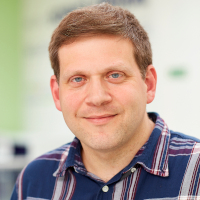
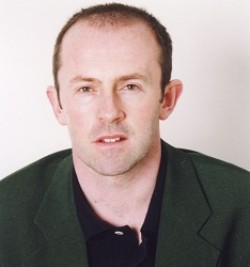
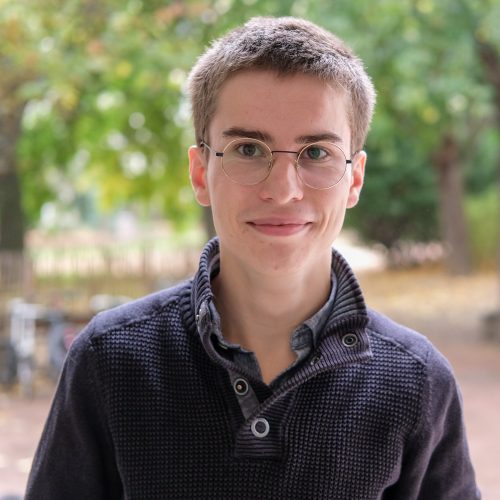
Dr. Dmitri Finkelshtein is an Associate Professor in the Department of Mathematics at Swansea University, within the Faculty of Science and Engineering's School of Mathematics and Computer Science. He holds a PhD (2004) and DSc (2014) from the Institute of Mathematics, Kyiv, Ukraine, and a BSc/MSc from the National University of Kyiv. His research focuses on mathematical analysis, probability, and their applications to complex systems, including infinite-dimensional analysis, stochastic dynamics, and non-local evolution equations. Key areas include mathematical physics, point processes, and population ecology. He has contributed to frameworks for analyzing individual-based ecological models and spatial stochastic systems. Recent work includes studies on entropy behavior in Poisson distributions, spatial cumulant models in cancer systems, and the dynamics of non-local Fisher-KPP equations. He has secured grants, such as the £265k Horizon-Infra-2021 Biodiversity Digital Twin Project. Dr. Finkelshtein advises multiple PhD students on topics like reaction-diffusion models, umbral calculus, and tumor growth dynamics. His teaching spans mathematical analysis, dynamical systems, and probability theory.
Paolo Bonicatto is an Assistant Professor in the Department of Mathematics at the University of Trento . His teaching responsibilities include courses such as Analisi matematica 2 for Industrial Engineering students, focusing on differential and integral calculus for functions of several variables and applications to physics. He also contributes to advanced programs in Mathematics at the Master's level, including Geometric Measure Theory and Optimal Transport , emphasizing problem-solving and mathematical modeling skills. His research interests span Geometric Measure Theory , Optimal Transport , and Partial Differential Equations (PDEs) , with a focus on topics like current transport, regularity theory for transport equations, and applications to material science. Recent work involves the analysis of advection-diffusion equations, homogenization of elasto-plastic evolutions, and the structure of divergence-free measures in low dimensions. His publications highlight contributions to the well-posedness of transport equations, renormalization techniques for vector fields, and the study of BMO-type norms and Poincaré inequalities. Notably, his work addresses foundational questions in calculus of variations and functional analysis, such as representations of total variation and decomposition results for vector fields. While no scientific awards or grants are explicitly listed, his academic output reflects active engagement with cutting-edge problems in mathematical analysis. He collaborates on interdisciplinary projects, bridging pure mathematics and applications in physics and engineering. No lab affiliations or student advisements are documented in the provided materials.
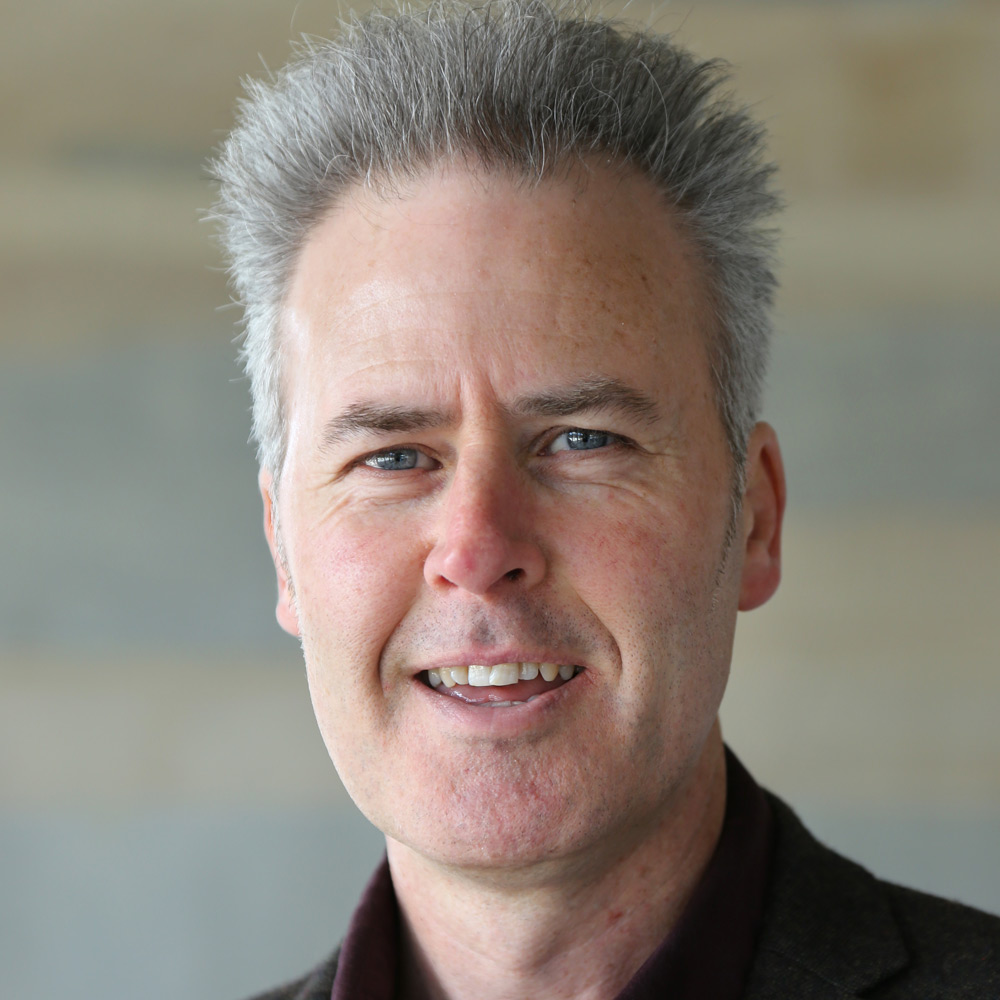
Ceren Vardar Acar is an Assistant Professor in the Department of Statistics at the Middle East Technical University (METU), Ankara, Turkey. She holds a PhD in Mathematics and Statistics from Bowling Green State University, USA (2002-2008), and prior degrees from METU, including a BSc and MSc in Statistics. Her professional experience includes roles as Assistant Professor at TOBB ETU (2011-2015) and instructorships at various institutions in Turkey and the USA. Her research focuses on Stochastic Processes , particularly their path properties, extreme value analysis, and applications in financial mathematics, risk management, and population dynamics. Key areas include fractional Brownian motion modeling, Lévy processes, and the analysis of maximum loss/drawdown phenomena. She has also contributed to methodological advancements in parameter estimation and Monte-Carlo simulation techniques. Academic leadership roles include serving as Co-Head of the Department of Mathematics at TOBB ETU (2013-2015) and coordinating service courses for non-mathematics departments (2010-2015). She secured a TÜBİTAK grant (2011-2014) exploring maximum loss distributions in fractional Brownian motion and Lévy processes. Her work bridges theoretical probability with applied domains like finance and healthcare, evidenced by publications in journals such as Extremes , Journal of Computational and Applied Mathematics , and Statistics and Probability Letters . She maintains active collaborations in interdisciplinary research, including dental education simulation and population modeling with delays.
Carla Maria Alves Da Silva Fernandes is an Adjunct Professor at the School of Technology and Management, Polytechnic Institute of Viseu, Portugal, in the Management Department. She coordinates the Master in Tourism Management and teaches undergraduate and graduate courses in Tourism, Marketing, and Tourism Management. She holds a PhD in Tourism from the University of Aveiro, a MSc in Social Sciences from ISCTE, and a Sociology degree from the Autonomous University of Lisbon. PhD in Tourism: University of Aveiro MSc in Social Sciences: ISCTE Bachelor in Sociology: Autonomous University of Lisbon Her research focuses on tourism, with interests in cultural consumption, mountain and nature-based tourism, and tourism motivations/imagery. She explores topics such as sacred destinations, rural spaces, and storytelling’s role in tourism experiences. She is affiliated with research units including GOVCOPP (Competitiveness, Governance, and Public Policy), CSETH (Education, Technologies, and Health), and CISeD (Digital Services and Automotive Industry). Her recent work highlights trends in sacred tourism motivations, generational perspectives in destination perceptions, and sustainable tourism practices in mountain regions. Collaborative studies with institutions like the DSS-Lab further emphasize her engagement with tourism’s socio-cultural dimensions. Scientific contributions include over 20 publications since 2009, addressing themes like women solo travelers, wine tourism’s economic impact, and the interplay between place-attachment and destination image. Research Groups: GOVCOPP, CSETH, CISeD Professional Roles: Master’s Coordinator, Adjunct Professor
Dr. Chris Nicholson is a Senior Lecturer and Head of the Department of Psychosocial and Psychoanalytic Studies at the University of Essex. He specializes in therapeutic communities, trauma recovery, and childhood studies, with a focus on applying psychoanalytic theory to clinical and educational settings. His academic roles include overseeing undergraduate programs and developing innovative courses like BA Therapeutic Care and BA Childhood Studies. Nicholson has extensive experience in children’s services, including therapeutic care for traumatized adolescents and co-founding the Junction Young Person’s service for Colchester MIND. Education: PhD in Higher Education from University of Northampton (2007) BA in English Literature/Philosophy from University of Kent (1994-1997) Research Interests: Psychodynamic approaches to care-leavers Therapeutic communities and competency frameworks Literary analysis of trauma (Robert Graves, Hemingway) Enabling environments in higher education Professional Activities: He chairs the Consortium of Therapeutic Communities Executive Board, advises on TC training in Greece and India, and co-founded the Essex Refugee Wellbeing Network. His training model 'Active Education Events' is used in prisons, armies, and residential childcare. Advising & Grants: Supervised doctoral theses on topics like school grief education and teenage sexting. Active in curriculum development and institutional well-being initiatives. Labs/Teams: Runs a Royal College of Psychiatrists-validated TC training program in Athens and collaborates with the Robert Graves Society’s Gravesiana journal.
Matthew Stone is a Professor in the Department of Computer Science at Rutgers University, New Brunswick. His primary affiliations are within the School of Arts and Sciences, with cross-listed involvement in Cognitive Science and Perceptual Science. He focuses on designing conversational agents that integrate natural language understanding and generation with grounded, meaningful interactions. Key roles include teaching courses such as CS 440 (Introduction to AI) and CS 504 (Computational Modeling). His research emphasizes the computational foundations of meaning, integrating philosophy, linguistics, and AI to create systems that contextualize communication through environmental grounding, intentional reasoning, and collaborative dialogue. Notable projects include the SPUD system for natural language generation and work on multimodal interaction through gesture and facial signals. He has been funded for projects like 'Community-led Language Technology for NJ: A Design Justice Approach.' Education: PhD in Computer Science (assumed based on faculty role). Awards: Influential Paper Recognition (SIGGRAPH '94), RDI^2 Fellowship for Malihe Alikhani. Grants: Community-led Language Technology Project (2021). Stone collaborates with interdisciplinary teams and mentors students like Malihe Alikhani. His labs explore topics such as embodied conversational agents, computational pragmatics, and language grounding in robotics. Recent work emphasizes ethical and societal implications of AI, advocating for inclusive technology design.
Univ.Prof. Dr. Rüdiger Frey is a Full Professor for Mathematics and Finance at WU Vienna University of Economics and Business, leading the Institute for Statistics and Mathematics. His academic career includes roles at the University of Leipzig and the University of Zurich. He specializes in quantitative risk management, financial mathematics, and stochastic processes. Roles: Head of Institute for Statistics and Mathematics, Vienna Graduate School of Finance (VGSF) member Education: PhD in Financial Economics (University of Bonn, 1996), Diploma in Mathematics (University of Bonn, 1992) Research focuses on financial risk modeling, credit risk, systemic risk, and quantitative methods. Recent work includes applications of deep learning to financial PDEs and systemic risk analysis. He has authored over 60 peer-reviewed publications and edited volumes, including the influential textbook Quantitative Risk Management . His grants include the WWTF Project and collaborations in stochastic filtering and climate risk modeling. Key awards include the WU Best Paper Award (2021) and recognition for his PhD work. He advises doctoral students and actively participates in international conferences, such as the Vienna Congress on Mathematical Finance.
Juan Manuel Hernández-Campoy is a Full Professor in Sociolinguistics at the Department of English Philology, Faculty of Arts and Humanities, University of Murcia, Spain. He teaches courses on English Sociolinguistics, Varieties of English, and the History of the English Language, as well as research methods at the postgraduate level. He has held numerous academic leadership roles, including Head of Department (2005–2008) and currently serves as Director of the International Doctoral School of the University of Murcia (EIDUM). Education: PhD in English Philology, University of Murcia, 1996 (Extraordinary Doctorate Prize, 1997) Bachelor’s in Philosophy and Literature (Modern Philology, English), University of Murcia, 1991 Erasmus Studies, University of Essex, UK His research centers on sociolinguistics, dialectology, and the historical development of the English language. He explores stylistic variation, language change, and sociolinguistic methodology, with a strong emphasis on both synchronic and diachronic analysis. His work bridges theoretical and applied perspectives, often using corpus-based and geolinguistic approaches. The 15 most recent publications reflect a consistent trajectory in historical sociolinguistics, stylistic variation, and dialectology, with major reference works such as encyclopedias, handbooks, and dictionaries published by Wiley-Blackwell, John Benjamins, and Gredos. These works synthesize broad disciplinary knowledge and are widely used in academic settings. Scientific Awards: Extraordinary Doctorate Prize in Letters, University of Murcia, 1997 He has secured significant research funding as Principal Investigator on projects like Sociolinguistic Models of Stylistic Variation (FFI2014-56084-P) and Speaker Design as a Model of Stylistic Variation (Fundación Séneca). He has advised numerous postgraduate students and coordinated multiple master's and doctoral programs. He has also served as editor for major journals including International Journal of English Studies and Cuadernos de Filología Inglesa . He leads the research group Linguistic Variation: Phonetics, Lexicon and Styles and has been instrumental in organizing international conferences such as the Sociolinguistics Symposium 21 and HiSoN-2022. He maintains active Erasmus partnerships with the University of Essex and University of Bern, promoting academic exchange and collaboration.
Professor Chris Chapleo is a leading academic at Bournemouth University , specializing in Societal Marketing with a focus on non-profit sector branding , higher education marketing , and branding for positive change . He holds a PhD in Branding (University of Portsmouth, 2011) and has been a Senior Fellow of the Higher Education Academy since 2014. Current research explores health behavior marketing , brand orientation in non-profits , and educational choice branding External funding includes a Knowledge Transfer Partnership with Actisense Research Ltd and projects with Durrell Conservation Trust and Portsmouth Climate Action Network Research trends span from university branding (2011-2020) to modern non-profit digital engagement (2023), AI in B2B marketing (2023), and employer branding frameworks (2024). His work contributes to UN SDGs Good Health and Well-Being , Quality Education , and Responsible Consumption . Scientific awards : Which? (2016), EMMA Summer School (2017) Contact : cchapleo@bournemouth.ac.uk | 01202 968950
Louis-Pierre Chaintron is a Research Fellow at the École Normale Supérieure de Paris (ENS-PSL), affiliated with the Department of Mathematics and Applications (ENS DMA). His work bridges probability theory, stochastic processes, and applied mathematics, with a focus on constrained measure-valued dynamics, stability analysis, and approximation methods. PhD supervised by Julien Reygner (CERMICS) and Philippe Moireau (Inria M3DISIM) from 2022–2024 Member of the Probability and Statistics research team at ENS DMA Teaching roles include assistant for PDE courses and organizer of applied mathematics workshops Research Interests : His research explores connections between mean-field theory , large deviations , and viscosity solutions for Hamilton-Jacobi equations. He investigates filtering theory in dynamic systems, optimal transport frameworks, and Schrödinger bridge problems for high-dimensional systems. Applications span diffusion models in machine learning, muscle contraction modeling , and non-linear estimation under constraints. Recent Publications analyze convergence rates in stochastic control, stability of Gibbs principles, and jump-diffusion formalisms for biological systems. His work often combines calculus of variations , stochastic control , and viscosity solutions to address stability and approximation challenges. Contact : Email: lchaintron@dma.ens.fr Office: Bureau C11, Espace Cartan, 45 Rue d'Ulm, Paris
Natasha Popovic is an Associate Professor at the Faculty of Philosophy, University of Novi Sad , specializing in Romance Studies . Her academic journey includes a 2005 undergraduate degree in French Language and Literature, a 2009 master's thesis on French prepositions à and de in Serbian syntax, and a 2016 doctoral dissertation on causality in French and Serbian languages. Research interests include: Modern French language Syntax and semantics Translation studies Contrastive language-culture analysis She has participated in the Ministry of Education's Languages and Culture in Time and Space (Project 178002) since 2010 and received the Coimbra Group Scholarship for research at the University of Poitiers (2017). Her work spans pedagogical innovation, including: Using comics for language learning Integrating the Moodle platform Methodology for teaching French Key publications analyze prepositional logic, cultural translation, and causal constructions across French and Serbian languages.
Dr. Elliot Carr is a Senior Lecturer in the School of Mathematical Sciences at Queensland University of Technology (QUT), Faculty of Science. He holds a PhD in Mathematics from QUT and has been a faculty member since 2015, progressing from Lecturer to his current rank. His research and teaching focus on applied and computational mathematics, with strong interdisciplinary applications. Education: PhD in Mathematics, Queensland University of Technology, 2009–2012 Bachelor of Applied Science (Honours) in Mathematics, QUT, 2008 Bachelor of Mathematics, QUT, 2005–2007 Elliot Carr's research lies at the intersection of applied mathematics and real-world physical systems. His work centers on developing and analyzing mathematical models of advection, diffusion, and reaction processes, particularly in heterogeneous media. He employs both deterministic (PDE-based) and stochastic (random walk) frameworks, contributing to analytical solutions, multiscale modeling, surrogate models, and numerical methods such as finite volume and Newton-Krylov techniques. His research has been applied to diverse fields including groundwater contamination, drug delivery, heat transfer, and tumor spheroid modeling. The latest publications reflect a consistent focus on transport phenomena in complex geometries and heterogeneous environments. Key themes include dual-grid mapping for contaminant transport, analytical modeling of drug release from spherical capsules, thermal diffusivity in shell geometries, and stochastic models of biological systems. His methodological contributions span analytical, numerical, and statistical approaches, demonstrating versatility across applied mathematics. Scientific Awards and Recognitions: JH Michell Medal, ANZIAM (2022) ARC DECRA Fellowship (2015) QUT Outstanding Doctoral Thesis Award (2012) University Medal, QUT (2008) Dean’s Award for top graduate in both Honours and Bachelor programs Keynote and plenary speaker at major conferences including ANZIAM and Forum “Math-for-Industry” Dr. Carr actively supervises PhD and Masters students, with completed and ongoing projects on diffusive transport, tumor modeling, and sports analytics. He has secured competitive research funding, including an ARC Discovery Project on multiscale modeling. His teaching includes computational mathematics, linear algebra, and differential equations, with a focus on MATLAB-based implementation. He is a member of the Australian Mathematical Society (AustMS) and ANZIAM. Research Labs and Teams: While not explicitly tied to a named lab, Carr is part of the broader Applied Modelling and Computation research environment at QUT. He collaborates extensively with researchers such as Ian Turner, Matthew Simpson, and Chris Drovandi, contributing to interdisciplinary teams in mathematical biology, environmental modeling, and statistical computation.
Daniël Lakens is an Associate Professor in the Human Technology Interaction group at Eindhoven University of Technology (TU/e), with expertise in meta-science, research methods, and applied statistics. His empirical research focuses on conceptual thought, similarity, meaning, study design, and reward structures in science. He has contributed to replication research and open science initiatives. Academic Background: PhD in Experimental Psychology (2010) from Utrecht University Grants: NWO VIDI grant (2017), pilot project for replication research grants Teaching: MOOC on 'Improving Your Statistical Inferences', TU/e Teacher of the Year (2014), over 40 workshops on open science His research spans methodologies to optimize study structures, meta-statistics, and interdisciplinary collaborations. Recent publications include datasets and interventions in esports, behavioral modeling, and methodological frameworks. Scientific Awards: Ammodo Science Award for Fundamental Research (2023) Leamer-Rosenthal Prize for Open Social Science (2017) NWO Vidi Award (2017) Datasets and projects highlight reproducibility in psychology, computational models for goal-directed behavior, and open data practices. He serves on editorial boards and has supervised 23 students, with current courses in advanced research methods and ethics.
Assoc. Prof. Drahomira Cupar is an Associate Professor at the Department of Information Sciences and Technologies, University of Zadar. She specializes in information organization, digital humanities, and reading habits research. Her work focuses on classification systems, open access publishing, and cultural heritage preservation. She actively participates in projects like TRIPLE, OPERAS-PLUS, and CRAFT-OA. Consultation hours are Wednesdays 10:00–12:00 via email. Her research spans over 60 publications covering digital transformation of historical texts, metadata strategies, and literacy promotion. Key projects include digitization of Glagolitic texts and development of multilingual taxonomies. She teaches courses on information organization, research methodology, and library science. Awards section is currently unspecified. Grants involve EU-funded initiatives focusing on open science infrastructure and digital preservation. She leads the Thesaurus.hr initiative and contributes to the OPERAS network.
Carsten Sørensen is the Head of Department at the Department of Finance, Copenhagen Business School (CBS), and holds a Cand.Scient.Oecon and Ph.D. His research focuses on dynamic asset allocation, portfolio theory, term structure of interest rates, derivatives, and commodity derivatives. He has contributed extensively to understanding strategic investment decisions under uncertainty, particularly in volatile financial markets. He has authored or co-authored over 29 publications, including seminal works on stochastic income modeling, interest rate dynamics, and commodity futures analysis. His work frequently explores the intersection of theoretical finance and practical investment strategies, emphasizing real-world applications of academic insights. Current Roles: Head of Department (Department of Finance), Director of Danish Finance Institute (2019–present) Outside Activities: Academic Committee Member for Danish FSA (2011–present), Teacher at Danish Society of Actuaries (2019) Key Contributions: Pioneered research on mean-reverting returns and inflation uncertainty in asset allocation models His research trends emphasize quantitative methods to address market complexities, with a focus on stochastic processes and dynamic optimization. He has consistently challenged conventional investment recommendations through rigorous empirical analysis. Awards: None explicitly listed Grants: No specific grants mentioned He is actively involved in academic leadership, directing interdisciplinary research initiatives at CBS and advising regulatory bodies on financial education standards.