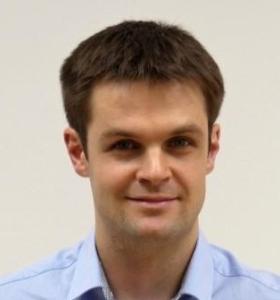
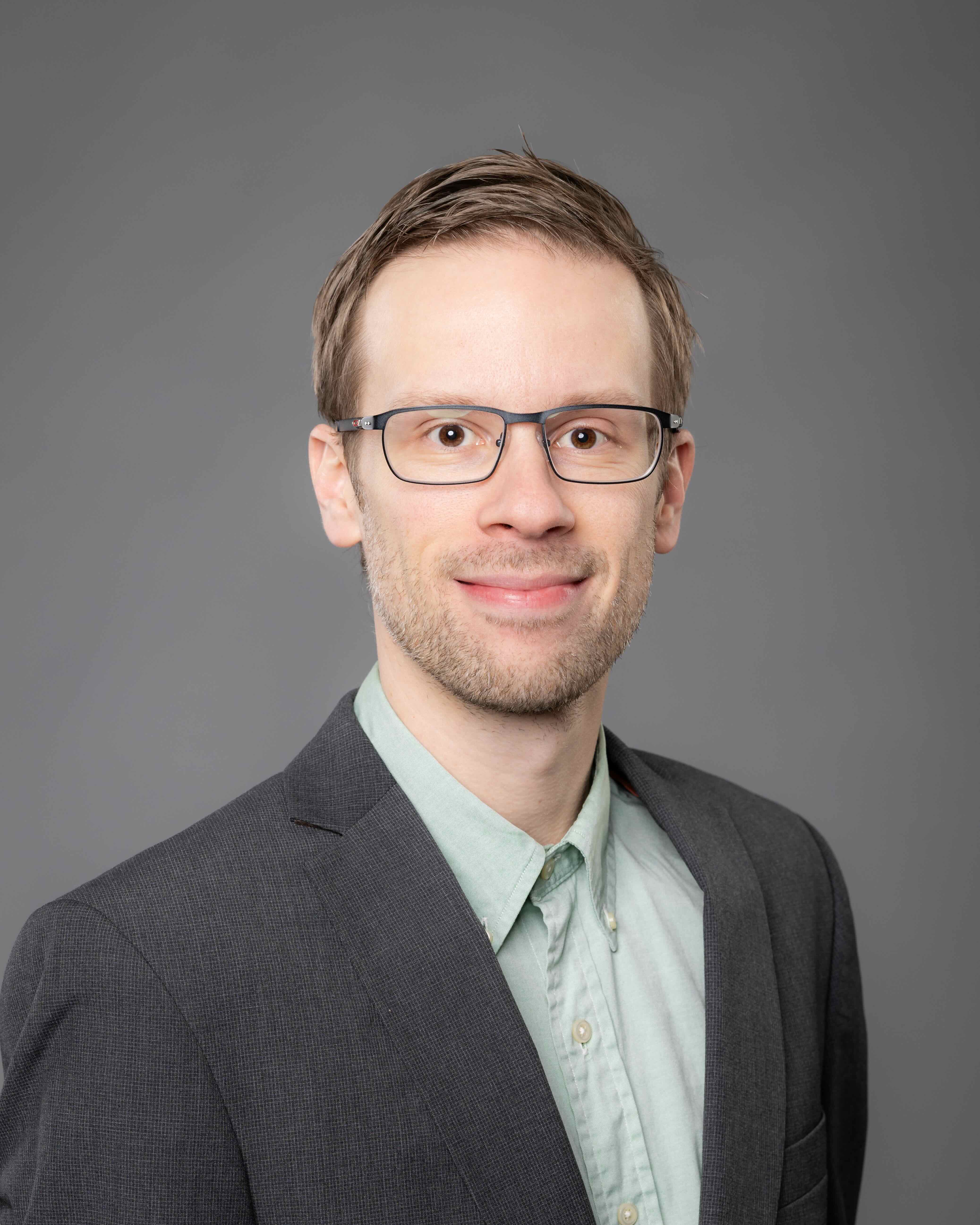
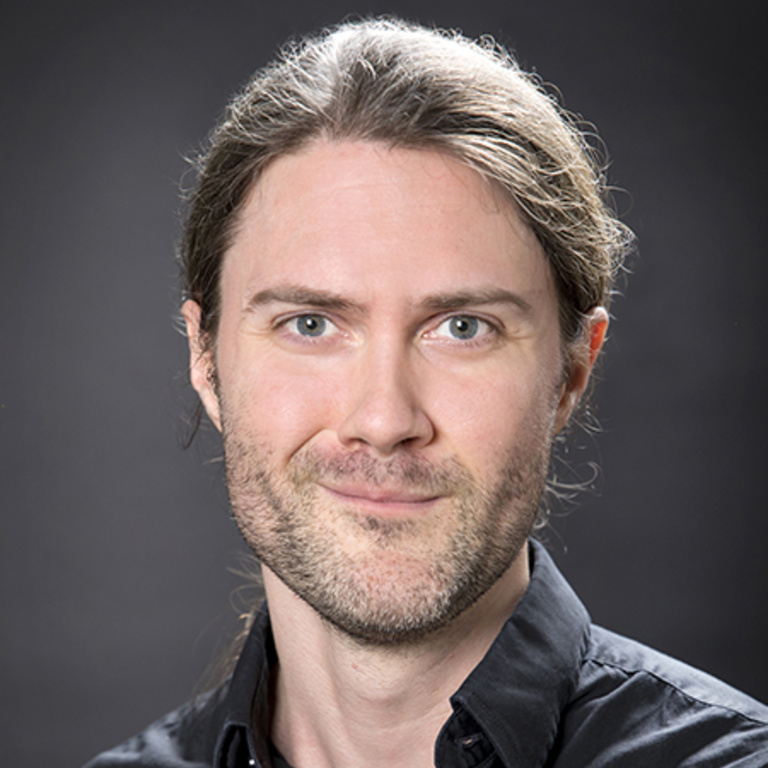
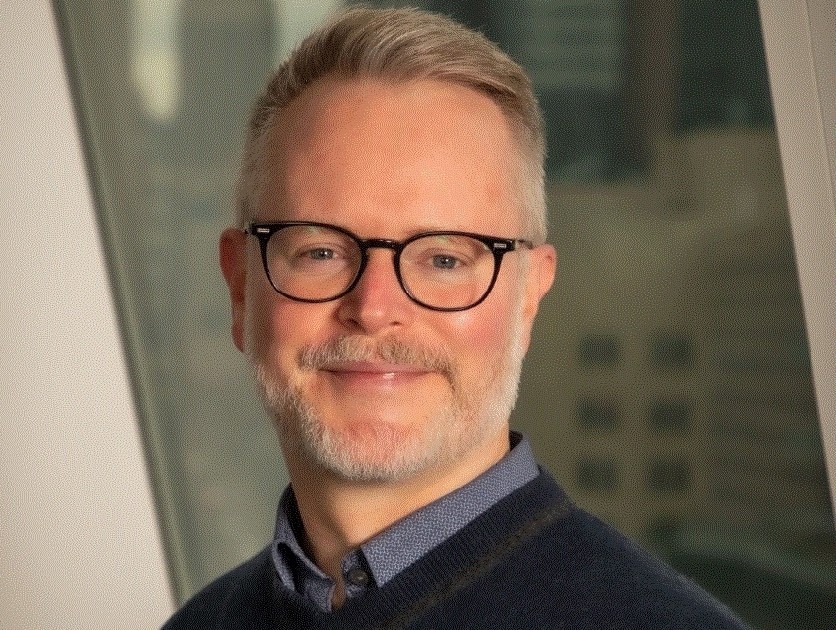
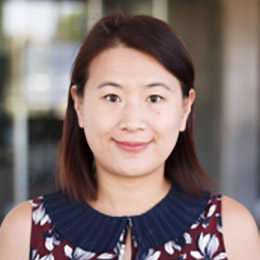
Laurent Pfeiffer is a researcher at the Signals and Systems Laboratory , focusing on Optimization and Control Theory . His work bridges theoretical advancements in mean field games, stochastic optimization, and numerical methods with practical applications in energy systems and fluid dynamics. Research Interests: Optimal Control, Mean Field Games, Stochastic Optimization, Nonlinear Programming Recent Publications: Explore mean field games, nonconvex optimization, and control theory applications in nuclear energy, gas portfolios, and fluid dynamics. Labs: Signals and Systems Laboratory, specializing in control systems and mathematical modeling.
Dr. hab. Martyna Król-Kumor serves as a Professor at the Institute of Russian Studies, Jan Kochanowski University in Kielce. She has been continuously employed at the university since 2002, progressing from assistant to assistant professor before achieving full professorship in 2018. She currently manages academic operations and serves as editor of the scientific journal Studia Rusycystyczne UJK since 2017. Graduate of Russian Philology, Holy Cross Academy in Kielce (2002) Doctor of Humanities in Linguistics (2005): Polish-Russian Lexical Quasi-Analogy. Functional-Pragmatic Analysis Habilitation in Linguistics (2015): Typology of linguistic homonymy in the onomasiological and discursive aspect Her research spans theoretical linguistics with specialized focus on lexicology, discourse structures, and Polish-Russian contrastive semantics. She examines lexical quasi-analogy, linguistic homonymy typologies, and cross-linguistic discourse patterns through both onomasiological and pragmatic lenses. Her work reveals how semantic transformations reflect cultural worldviews, particularly in Russian-Polish comparative contexts. Analysis of her 15 most recent publications shows consistent exploration of lexical semantics across multiple dimensions: homonymy patterns (40% of works), discourse structures (30%), and contrastive Polish-Russian analysis (30%). Key methodological approaches include functional-pragmatic analysis, typological classification, and cognitive-semiotic frameworks applied to specialized domains like tourism business discourse and academic writing. No scientific awards or fellowships are documented in the available materials. Professor Król-Kumor provides academic supervision and consultations as evidenced by her listed contact information for "Credits/exams/consultations." While specific grant projects aren't detailed, her extensive monograph publications and journal editorship indicate sustained research activity. She contributes significantly to the Language Clinic at the university, supporting linguistic diagnostics and interventions. The Language Clinic and Russian Studies Institute represent her primary operational environments, where she integrates research with practical language applications including discourse analysis training and contrastive semantics instruction.
Dmitry Kurakin is a Professor at the Institute of Education , HSE University, and Leading Research Fellow at the Centre for Fundamental Sociology . He has been affiliated with HSE since 2006, contributing to sociology of education, cultural sociology, and inequality studies. PhD in Theory, History and Methods of Sociology (2012, HSE University) Degree in Physics (2000, Lomonosov Moscow State University) Kurakin’s research interests span cultural sociology, social inequality, cognitive sociology, and the application of Durkheimian theories to modern societal challenges. His work explores the sacred as a catalyst for cultural dynamics, the temporal structuring of action in educational trajectories, and gender segregation in labor markets. He investigates how root metaphors and emotional markers shape societal norms and individual agency. His recent publications examine narratives in educational decision-making , vaccination behavior during the pandemic , and cosmetic surgery as ritual . These works reflect a consistent focus on cultural mechanisms and inequality reproduction within systems of education and labor. Member of the Editorial Board , American Journal of Cultural Sociology (2019) Member of the Editorial Board , Russian Sociological Review (2010) Recipient of HSE Gratitude (2020, 2022) and publication bonuses for international impact Kurakin supervises doctoral students like E. Pavlenko (2024) and M. Kotelnikov (2024), integrating cultural sociology into studies of emotional experience and reading practices . He collaborates internationally, notably with the University of Iowa and the eduLIFE project at the European University Institute.
Dr. Sikha S Bagui is a Distinguished University Professor in the Department of Computer Science at the Hal Marcus College of Science and Engineering, University of West Florida . She served as the former Chair of Computer Science and was the Founding Director of the Center for Cybersecurity . Her research spans database design, Big Data analytics, machine learning, and cybersecurity . Research Focus: Machine Learning, Data Mining, Network Traffic Analysis, Graph Databases, and Resampling Techniques for Imbalanced Data Awards: Askew Fellow (2018–2021), multiple Excellence in Teaching and Distinguished Research Awards (2001–2024) Contributions: Authored books on databases/SQL (translated internationally), developed the UWF-ZeekData datasets for cybersecurity research, and served as Associate Editor for multiple journals Tools & Frameworks: Active in Hadoop, Spark, Memgraph, and MITRE ATT&CK-based threat modeling Publication Trends: Recent work focuses on MITRE ATT&CK datasets , graph-based cybersecurity , resampling rare attacks , and educational impacts in computing . Her research bridges theoretical and applied domains, including clinical decision support systems and K-12 computer science education. Scientific Awards: Askew Fellow (Reubin O’D. Askew Institute for Multidisciplinary Studies, 2018–2021) Excellence in Teaching and Advising Award (UWF, 2012) Distinguished Research and Creative Activities Award (UWF, 2007, 2012) Excellence in Undergraduate Teaching and Advising Award (UWF, 2001–2006) Leadership & Service: Directed the Center for Cybersecurity, contributed to journals as Associate Editor, and engaged in initiatives like NCWIT Aspirations in Computing and the Association for Women in Computing.
Jim Cogswell is an Arthur F. Thurnau Professor at the Stamps School of Art & Design at the University of Michigan, where he has been faculty since 1990. His artistic practice uses painting and drawing as foundational knowledge while exploring diverse media languages through interdisciplinary collaborations. His educational background includes an M.F.A. in Painting and Drawing from the University of New Mexico (1982) and a B.A. in English Literature from Rhodes College (1971). Born and raised in Japan, Cogswell's work reflects his international perspective and literary background. Cogswell's research interests focus on sequence and pattern as cognitive triggers, exploring how humans translate perception into meaning. He develops anthropomorphic alphabets as generative systems for visual narratives, drawing from brain maps, astronomical models, and archaeological artifacts. His work investigates the mystery of human cognition and our relationship with the unexplained. An analysis of his recent artistic output reveals a consistent exploration of interdisciplinary connections, particularly between art, science, and language. His installations frequently transform architectural spaces through vinyl window works, while maintaining a strong foundation in painting and drawing techniques. The evolution from individual paintings to large-scale environmental installations demonstrates his growing interest in audience interaction and spatial experience. His significant recognition includes: Arthur F. Thurnau Professor (2008) Senior Fellow in the Michigan Society of Fellows (2014) Michigan Arts Award (2000) Charles P. Brauer Faculty Fellow at U-M Institute for the Humanities (1992-93) Cogswell has received numerous grants from the Office of the Vice-President for Research and the Horace P. Rackham School of Graduate Studies. His interdisciplinary approach has led to collaborations with cosmologists, astronomers, poets, dancers, and engineers, resulting in innovative projects like Jeweled Net of the Vast Invisible which visualized dark matter. He has lectured internationally at universities and conferences across six continents. His creative practice operates through multiple interconnected teams including collaborations with the Kelsey Museum of Archaeology, University of Michigan Museum of Art, and international partners like the Michael Cacoyannis Foundation in Athens. His studio practice integrates traditional painting techniques with digital technologies and scientific data visualization.
Eric Stachura is an Associate Professor of Mathematics at Kennesaw State University, affiliated with the College of Science and Mathematics. His research spans metamaterials, liquid crystal optics, fractals, and electromagnetic theory, with applications in acoustics and quantum mechanics. Ph.D. in Mathematics, Temple University (2016) M.A. in Mathematics, Temple University (2013) B.S. in Mathematics (minor in Physics), University of Illinois at Chicago (2011) Stachura’s work focuses on mathematical modeling of physical systems, including the development of a novel framework for metamaterial lens design, analysis of electromagnetic wave propagation in fractal media, and nonlinear problems in geometric optics. He has co-authored foundational studies on Snell’s Law generalizations and the mathematics of metasurfaces. His recent publications highlight interdisciplinary applications of mathematics, particularly in fractal geometry, liquid crystal optics, and acoustic wave dynamics. He leads the Immersive Visualization Environments Research Cluster at the Coles College of Business and is co-director of a paid summer internship program for high school and undergraduate students via the Army Educational Outreach Program. Recipient of the 2024-2025 College of Science and Mathematics Outstanding Scholarship and Creativity Award Recipient of the 2024-2025 University-level Outstanding Scholarship and Creativity Award American-Scandinavian Foundation Fellow (2019-2020)
Cecilia Åberg is a Senior Lecturer in Nursing at the School of Health Sciences, University of Skövde. She serves as program coordinator for the Nursing Program and is actively involved in teaching at both basic and advanced levels. Her research focuses on elderly health and well-being, particularly within the DHEAR research environment and the "Välbefinnande vid långvariga hälsoproblem" research group. Research Interests: Åberg specializes in person-centered care for the elderly, digital health interventions to combat existential loneliness, and reflective dialogue techniques to enhance meaning-making in long-term health problems. Her work integrates technology like the egenKRAFT app to support self-reflection and existential conversations. Recent Article Trends: Her 2024 publications emphasize digital tools for elderly engagement, reducing involuntary loneliness, and technology-assisted care delivery. Earlier works (2022–2015) explore qualitative experiences of digital interventions, existential dialogues, and clinical education methods. Projects: Åberg leads the ongoing DigiKRAFT project (2023–2028), which promotes healthy aging through structured existential conversations. Her doctoral research (2022) focused on reflective STRENGTH-giving dialogues for elderly with long-term health issues.
Chia-Wen Lee is a distinguished Professor at the Law School within the College of Social Sciences at National Cheng Kung University (NCKU). She holds a Juris Doctor degree from Indiana University Bloomington and has established herself as a leading scholar in criminal law and procedure with a focus on gender perspectives and human rights. Her academic career spans over two decades, during which she has taught numerous courses including Criminal Procedure Law, Criminology, and Special Topics in Criminal Law and Legal Sociology. Member of the Judicial Yuan Judges Review Committee (2024-2026) Member of the Editorial Board of NTU Law Review (2022-present) Director of Taiwan Alliance to Abolish the Death Penalty (2018-2021) Director of Women's New Knowledge Foundation (2017-2019) Professor Lee earned her Juris Doctor from Indiana University Bloomington, building on her earlier legal education in Taiwan. Her academic journey has been marked by a consistent focus on the intersection of law, society, and justice, particularly examining how criminal justice systems impact marginalized groups and how legal narratives shape our understanding of crime and punishment. Professor Lee's research centers on three interconnected areas: Criminal Procedure Law, Criminal Law and Sociology of Law, and American Feminist Jurisprudence. Her work critically examines how legal procedures affect substantive justice outcomes, particularly for vulnerable populations. She has made significant contributions to understanding sexual violence within legal frameworks, advocating for 'only yes means yes' affirmative consent models. Her scholarship on the death penalty in Taiwan explores both its legal frameworks and its social and cultural dimensions, situating Taiwan's experience within global abolition movements. Recent work has focused on constitutional court decisions related to criminal procedure, demonstrating her ability to bridge theoretical scholarship with practical legal reform. Professor Lee's recent scholarly output reveals a consistent focus on constitutional challenges to criminal procedure, victim rights, and death penalty jurisprudence. Her work shows increasing engagement with constitutional court decisions, particularly examining how Taiwan's Constitutional Court is reshaping criminal justice through innovative interpretations. A notable trend is her attention to vulnerable populations within the criminal justice system—victims, sexual assault survivors, and defendants facing capital punishment. Her interdisciplinary approach combines legal analysis with insights from sociology, gender studies, and narrative theory, creating a distinctive scholarly voice that bridges academic rigor with practical legal reform. Outstanding Teacher of National Cheng Kung University (2011) Multiple Annual Research Awards from NCKU College of Social Sciences (2005-2007) NCKU College of Social Sciences Outstanding Teacher Award (2007) James J. Robinson Fellowship in Graduate Legal Studies (USA, 1999) Scholarship from Austrian Ministry for Science and Transport (1996-1997) Professor Lee has supervised over twenty master's theses on diverse topics in criminal law and procedure, with a particular emphasis on judicial reform, victim rights, and gender issues in criminal justice. Her students have examined topics ranging from judicial personnel review systems to the application of restorative justice in domestic violence cases. Beyond formal supervision, she has served as a thesis committee member for numerous students across Taiwan's top law schools, including National Taiwan University, National Chengchi University, and National Sun Yat-sen University. Her commitment to judicial reform extends to multiple research grants from Taiwan's National Science Council, including major projects on 'Punishment and Moral Outrage' and 'Emotions and Criminal Law.' Professor Lee is deeply involved in several key legal reform initiatives through her leadership roles in the Taiwan Alliance to Abolish the Death Penalty and the Women's New Knowledge Foundation. She has been instrumental in shaping Taiwan's approach to sexual violence law reform, particularly through her work with the Women's New Knowledge Foundation on amending sexual assault provisions. Her influence extends to judicial training through her frequent presentations at the Judicial Academy, where she has educated judges on topics ranging from death penalty sentencing to handling sexual assault cases. She maintains active scholarly networks through her editorial role at the NTU Law Review and her participation in international academic conferences on criminal justice reform.
Sarah Gilmore is Professor of Organization Studies and Director of Research Impact at Cardiff Business School, Cardiff University. She also serves as Head of the Management, Employment and Organisation Department. With a distinguished career spanning over two decades, Professor Gilmore brings interdisciplinary expertise that bridges management studies, sport science, and psychoanalytic theory. Professor Gilmore's educational background includes a PhD in Business and Management from the University of Portsmouth (2001), an MSc in Theoretical Psychoanalytic Studies from University College London (2006), a Postgraduate Certificate in Teaching and Learning in Higher Education from the University of Portsmouth (2001), a Postgraduate Diploma in Personnel Management from the University of Portsmouth (1990), and a BA (Hons) in English and European Literature from the University of Essex (1982). Professor Gilmore's research makes significant contributions across three interconnected areas. First, her longitudinal ethnographic studies in elite sport examine the precariousness of sport science professionals, contributing to knowledge about emergent professions within management and organization studies. Second, she explores the emotional labor of sport scientists and the challenges this poses for their professional formation. Third, her work on organizational change and strategic HRM has provided models for how sports clubs can secure high performance outcomes through asset maximization, which has been adopted by several English Premier League and Championship clubs. Her secondary research stream employs psychoanalytical (object relations) theories to examine managerial work in fast-paced environments, particularly focusing on English football managers. This work has evolved to explore the materiality of leadership, collective leadership, and new understandings of socialization. These investigations build upon her earlier papers that used psychoanalytical theory to highlight the role of anxiety in professionally accredited environments. Professor Gilmore's extensive publication record demonstrates her influence across multiple disciplines. Her recent work shows a clear trajectory toward examining precarious work conditions, leadership pathologies (particularly vulnerable narcissism), gender dynamics in organizations, and the intersection of psychoanalytic theory with organizational studies. Her 2023-2025 publications reveal a growing focus on social justice issues, particularly around gender discrimination and resistance in organizational contexts. Best paper award for: Barker, J., Gilmore, S., & Gilson, C. (2013). Rhetorical profiling: Modes of meaning generation in organizational topoi. Canadian Journal of Administrative Science, 30(4), 280-291. Winner of EmeraldLiterati outstanding paper award (2008): Gilmore, S., & Williams, S. (2007). Conceptualizing the 'Personnel Professional': A Critical Analysis of the Chartered Institute of Personnel and Development's Professional Qualification Scheme. Personnel Review, 36(4), 398-414. Professor Gilmore actively supervises PhD students and serves as Series Editor for Dialogues in Critical Management Studies. She is also a valued member of editorial boards for several prestigious journals including Academy of Management Learning & Education, Canadian Journal of Administrative Science, Journal of Organizational Change Management, and Organization. Her commitment to academic service extends to her role as Representative at Large for the Academy of Management CMS Division (2012-2014 & 2015-2017). Professor Gilmore maintains strong connections with professional practice, having worked for not-for-profit organizations and one of the UK's largest public sector trade unions before entering academia. Her current research projects focus on Universal Basic Income impacts on the changing world of work and vulnerable narcissistic leadership, demonstrating her ongoing commitment to addressing contemporary organizational challenges.
Shukla Sikder is a Senior Lecturer in Early Childhood Education at Charles Sturt University's Faculty of Arts and Education. With nearly 14 years of multicultural teaching and research experience across Australia, Singapore, and Bangladesh, she specializes in early childhood science, technology, and play-based pedagogy. Her academic credentials include a BEd (Hons) and MEd from University of Dhaka, and a PhD in Early Childhood Science Education from Monash University. Dr. Sikder's research focuses on science learning through play and everyday practices across home and educational settings, digital technology as an innovative teaching method, children's learning and development (birth to eight years), and STEM/STEAM education. Her work employs cultural-historical theory to examine how children develop scientific concepts through family practices and play-based experiences. Current projects include the Children Draw Talking Project and research on culturally valued play-based practices for STEAM education. Analysis of her 49 research outputs (2015-2025) reveals a strong emphasis on cultural-historical perspectives in early childhood STEM education, with increasing output in recent years (17 publications in 2024 alone). Her work spans diverse formats including peer-reviewed articles, creative storybooks, conference presentations, and commissioned reports, demonstrating interdisciplinary approaches that bridge theory, practice, and children's voices. Monash Education Research Community Publication Award (A$500) Monash University Postgraduate Research Travel Grant (A$3,000) Monash University Faculty Research Fund (A$1,000) Australian Endeavour Postgraduate Award (A$234,500) Little Scientists Program Evaluation Grant (A$82,771) Dr. Sikder actively supervises research students and collaborates internationally through the Children's Voices Centre and STEM Education Research Group. Her current projects include evaluating how digital visual observations establish inclusive practices in early childhood research and developing frameworks for enhancing inclusive STEAM pedagogy. She serves as a key researcher in the Machine Vision and Digital Health (MaViDH) Research Group, focusing on innovative approaches to document children's learning processes.
Michelle O'Toole is a Senior Lecturer in Organisation Studies at the University of Edinburgh Business School, where she also serves as Head of the Organisation Studies Group and a member of the School Executive Committee. With prior industry experience in construction, she teaches at undergraduate, postgraduate, and executive levels across the UK, Singapore, and Sri Lanka. Her research focuses on organisational control, identity work, and meaning-making in workplaces. PhD in Organisation Studies (University of Warwick) MSc in Management and Organisation (University College Dublin) BSc in Management and Marketing (Dublin Institute of Technology) Her recent research spans platform work identity, student mental health frameworks, hybrid working models, and LGBTQIA+ workplace inclusion. Publications appear in top-tier journals like Organization Studies and Human Relations . Key projects include the Organisation Studies Group and the ScotSMART mental health network. Michelle holds prestigious recognitions: Senior Fellow of the Higher Education Academy Academic Fellow of the CIPD Best Paper Award, BAM Critical Management Studies (2020) She supervises PhD, MSc, and undergraduate theses, with external collaborations spanning Glasgow, Edinburgh, and the Royal Society. Current projects investigate hybrid working, student mental health, and identity struggles in the platform economy.
Stewart McCauley, PhD, is an Assistant Professor in the Department of Speech and Hearing Science at the University of Iowa. His research focuses on cognitive mechanisms underlying language development, particularly how variability in these mechanisms influences outcomes in typically developing individuals and those with developmental language disorders. He employs methodologies including computational modeling, behavioral measures, and electroencephalography (EEG). He teaches courses such as CSD 3116 (Neuroscience of Speech and Hearing), CSD 4145 (Developmental Language Disorders), and CSD 1015 (Introduction to Speech and Hearing Sciences and Disorders). His research interests span language development, statistical learning, computational modeling, and neurocognitive aspects of language processing. Recent work explores multiword units’ impact on syntactic errors in children, cross-linguistic models of child language, and individual differences in statistical learning. McCauley actively seeks PhD students for collaborative research projects. His articles frequently investigate language learning mechanisms, emphasizing computational approaches and cross-linguistic perspectives. He is affiliated with the University of Iowa’s Wendell Johnson Speech and Hearing Center and maintains an active Google Scholar profile.
Dr. Jamin Pelkey is a Full Professor and Program Director in the Department of Languages, Literatures, and Cultures at Toronto Metropolitan University (TMU), and a core faculty member of the TMU-York Joint Graduate Program in Communication & Culture. He holds leadership roles as President of the International Cognitive Linguistics Association and International Association for Cognitive Semiotics, and Co-Editor-in-Chief of Semiotica . His research focuses on semiotics, linguistics, and embodied cognition, exploring how bodily experience influences language evolution and cross-cultural meaning-making. He has authored/co-authored over 20 books and edited collections, including Bloomsbury Semiotics (2023) and Sociohistorical Linguistics in Southeast Asia (2017), and serves as Section Editor for the Encyclopedia of Language and Linguistics (Elsevier). Dr. Pelkey’s academic journey includes a PhD in Linguistics from La Trobe University (2009), MA from Payap University, and BA from Montana State University. His international fieldwork in China, Thailand, and Australia led to groundbreaking work defining Phula ethnolinguistic groups and identifying 18 new languages. He has received multiple accolades, including the Mouton d’Or Award (2017) and TMU Early Research Career Excellence Award (2018). His research interests span semiotic phenomenology, language evolution, and interdisciplinary applications of semiotics in arts, social sciences, and natural sciences. Recent projects emphasize embodied chiasmus, cultural symmetry, and the intersection of rhetoric and cultural theory. Dr. Pelkey is a prolific collaborator, co-editing major reference works and advancing theoretical frameworks in cognitive semiotics.
Wen Li is an Assistant Professor at the School of Computing , Utah State University. Their research focuses on software security , software engineering , and network security , with significant contributions to analyzing multilingual software systems. Recent work highlights include: Characterization of multilingual software and language selection patterns Security analysis of cross-language interactions and runtime vulnerabilities Development of fuzzing frameworks like Pyrtfuzz and POLYFUZZ Investigation of dynamic information flow and memory management in complex systems Research trends demonstrate expertise in software testing, language interoperability, and security verification across programming environments.
Wei Wu is a Professor in the Department of Psychology at Indiana University, specializing in quantitative methodology for psychological research. His work bridges clinical applications with advanced statistical techniques, particularly in longitudinal study designs. His academic credentials include: Ph.D. in Quantitative Psychology from Arizona State University (2008) M.S. in Personality Psychology from East China Normal University (2003) B.Ed. in Special Education from East China Normal University (1997) Professor Wu's research focuses on developing and refining statistical methods for psychological inquiry, with emphasis on missing data handling, growth curve modeling, and model fit evaluation. His clinical psychology background informs applications in educational and developmental contexts, particularly regarding grade retention effects. Methodological rigor defines his contributions, advancing best practices for longitudinal data analysis in social sciences. Analysis of his publication record reveals consistent innovation in missing data techniques and experimental design optimization. His work demonstrates increasing sophistication in planned missing data approaches, with growing emphasis on computational efficiency and real-world applicability across psychology subfields. Recent publications integrate SEM and multilevel frameworks to solve complex modeling challenges. Professor Wu has secured substantial research funding through competitive grants: NSF grant ($422,900, 2011-2016) as PI for planned missing data designs in longitudinal research NIH grant ($1.7M, 2010-2014) as Statistical Consultant for resilience determinants study PCORI grant ($1.5M, 2013-2016) as Statistical Consultant for burnout impact research New Faculty General Fund ($8,000, 2010-2013) for model fit evaluation methods NICHD grant (2004-2008) as Research Assistant for grade retention study He actively mentors graduate researchers, with documented advisees including A. I. Carroll, P-Y. Chen, F. Jia, R. Kinai, F. Gu, P. R. Miller, and P. Pornprasermanit across multiple publications. While no formal lab structure is specified, his extensive grant collaborations indicate active participation in interdisciplinary research networks focused on methodological advancement.