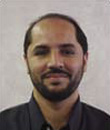
Mohamed Allali is an Associate Professor at Chapman University, affiliated with both the Fowler School of Engineering (Department of Electrical Engineering and Computer Science) and Schmid College of Science and Technology (Department of Mathematics). His research spans data engineering, machine learning, climate informatics, and mathematical education. He has contributed to constraint-based intelligent tutoring systems, data drift detection using KL divergence, and geospatial analysis for environmental monitoring. Education: University of Oklahoma (BS, MA, PhD). His recent work focuses on data distribution divergence, climate modeling for sea turtle habitats, and neural network applications in medical imaging. He has collaborated extensively on drought indices, satellite data validation, and educational technologies. His publications highlight expertise in statistical learning, computational methods, and interdisciplinary environmental applications.
Kyle D. Rudser is a Professor in the Division of Biostatistics and Health Data Science at the School of Public Health, University of Minnesota - Twin Cities. He serves as the Director of the Biostatistical Design and Analysis Center (BDAC) within the Clinical and Translational Science Institute (CTSI). His educational background includes: PhD in Biostatistics from University of Washington (2007) MS in Biostatistics from University of Washington (2005) BA in Mathematics and Chemistry from St. Olaf College (2002) Dr. Rudser's research focuses on statistical methodologies including clinical trial design and monitoring, survival analysis techniques, longitudinal data analysis, and nonparametric approaches. His work emphasizes developing innovative statistical models for complex biomedical data with applications across diverse clinical domains. His publication portfolio demonstrates extensive expertise in survival analysis methodologies and clinical trial design, with recent collaborative work expanding into interdisciplinary health research areas including obesity interventions, urinary health epidemiology, and chronic disease management. Awards and recognition: Member, Delta Omega Honorary Society in Public Health As BDAC Director, he leads biostatistical support for translational research initiatives across the university medical center.
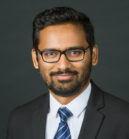
Bhaswar B. Bhattacharya is an Associate Professor of Statistics and Data Science at The Wharton School of the University of Pennsylvania, with a secondary appointment in the Department of Mathematics. His research spans several interconnected areas at the intersection of statistics, probability, and computational geometry. Dr. Bhattacharya received his Ph.D. in Statistics from Stanford University in 2016 under the supervision of Persi Diaconis. Prior to that, he earned both his Bachelor of Statistics (2009) and Master of Statistics (2011) from the Indian Statistical Institute in Kolkata. His research interests focus on three main pillars: nonparametric statistics (including distribution-free inference, nearest-neighbor methods, and inference on networks), combinatorial probability (covering counting problems in random graphs, random colorings, and graph limit theories), and discrete and computational geometry (including facility location problems, Voronoi games, and geometric Ramsey problems). His work often bridges theoretical developments with practical applications in network analysis, statistical learning, and geometric optimization. Recent publications demonstrate a strong trajectory in developing distribution-free methods for network analysis, with significant contributions to understanding fluctuations in graphon-based random graphs and developing optimal tests for inhomogeneous random graph models. His work also shows increasing focus on higher-order network structures through hypergraph models and applications to real-world problems like vaccination site optimization. NSF Career Award (2021-2026) Alfred P. Sloan Research Fellowship (2021) Probability Dissertation Award, Stanford University (2016) Sabyasachi Roy Memorial Gold Medal for best master's thesis, Indian Statistical Institute (2009-2011) Dr. Bhattacharya teaches advanced courses in mathematical statistics at both undergraduate and graduate levels at Wharton. His research program involves collaborations across multiple institutions and disciplines, with recent work applying statistical methods to public health challenges such as optimizing vaccination site locations. He maintains active research collaborations with colleagues in statistics, computer science, and applied mathematics departments.
Irene Tamborra is a Professor at the Niels Bohr Institute (University of Copenhagen) and leads the Particle Astrophysics group . She holds the Mercator Fellow visiting professorship at the Max Planck Institutes for Physics and Astrophysics in Garching, Germany. Her research bridges astrophysics and particle physics, focusing on multi-messenger astronomy through neutrinos , gravitational waves , and photons . Current research themes include: Stellar explosions (supernovae, gamma-ray bursts) Neutrino flavor evolution in extreme environments Physics beyond the Standard Model using astrophysical probes Nucleosynthesis of heavy elements Recent work (2024-2025) explores neutrino production mechanisms in compact transients, fast flavor instabilities , and multi-messenger signatures of stellar collapses. She collaborates extensively with institutions in Germany, Spain, and the US. Scientific awards: MERAC Prize (European Astronomical Society) Duggal Award (IUPAP) ERC Consolidator Award She leads the Particle Astrophysics group at the Niels Bohr Institute and contributes to supernova neutrino theory , neutrino quantum kinetics , and cosmic accelerators analysis.
Lucija Ivančić is a Teaching and Research Assistant at the Department of Informatics, Faculty of Economics & Business, University of Zagreb. She is currently a PhD candidate with a focus on digital transformation, business process management, and emerging technologies like robotic process automation (RPA) and process mining. Role: Teaching and Research Assistant Department: Informatics University: University of Zagreb Research Interests: Her work bridges business process management and digital transformation, with specific expertise in RPA, process mining, and AI applications in sectors like healthcare, education, and food wholesale. She explores how digital technologies enhance organizational efficiency, customer care, and elderly independence. Publication Trends: Recent articles focus on RPA's integration challenges, process mining in healthcare, and AI-driven customer analytics. Her research often employs case studies, systematic reviews, and data-driven methodologies like K-means clustering. Scientific Awards: Deans' award for BPMN simulation modeling Deans' award for IS auditing research Additional Contributions: She investigates digital inclusion of seniors, e-learning platform implementation during the pandemic, and business-IT alignment education frameworks. Her work emphasizes practical guidelines for enterprises and policymakers.
Alexander Ziem is a Professor of German Linguistics and Chair holder at the Institute of German Studies , Heinrich Heine University Düsseldorf, since 2016. His academic career spans institutions such as the International Computer Science Institute (ICSI) in Berkeley, Universität Basel, and Technische Universität Berlin. Research Focus: Cognitive semantics, construction grammar, FrameNet-Konstruktikon projects, discourse analysis, and socio-cognitive dimensions of language. Projects: Initiator of the long-term ' FrameNet and Constructicon of German ' project; co-editor of Diskursforschung and DiskursNetz handbooks. His recent publications emphasize constructional meanings, semantic frames, and multilingual frameworks. He leads the German Constructicon project and collaborates on digital humanities tools like SimilarCxns and FrameMap3D. Scientific Awards: Preis für Geisteswissenschaften , Akademie der Wissenschaften zu Göttingen (2011). Research Fellow, International Computer Science Institute (ICSI), Berkeley (2013–2014). Ziem’s team at HHU includes 25 members, with 10 research assistants, and he contributes to curriculum development, including the upcoming Digital Cultures degree program. His methodological approach integrates corpus linguistics, frame semantics, and machine learning.
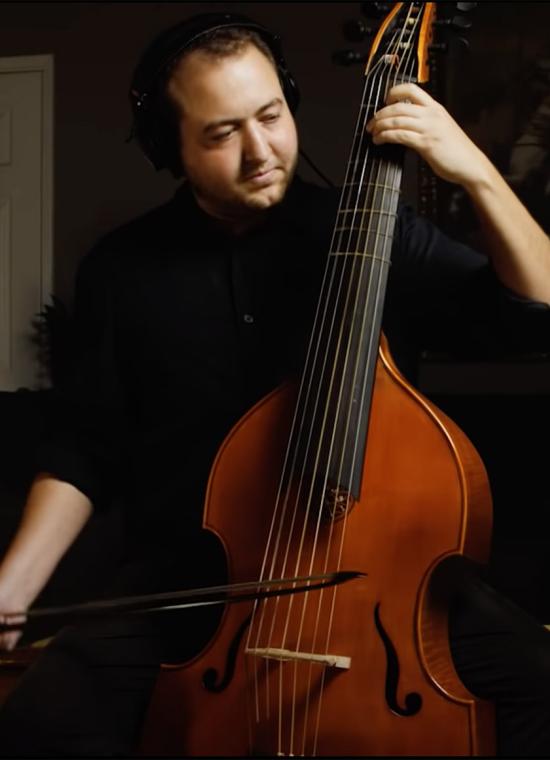
Malachai Bandy is an Assistant Professor of Music at Pomona College, specializing in Music History and Historical Performance Practice. He is on leave during the 2025-2026 academic year. His expertise spans Western Esotericism, 17th-century Occult Philosophy, and LGBTQIA+ identities in musical expression. As a performer, he plays over twenty historical instruments, including the viola da gamba and Renaissance double-reeds. Ph.D. in Historical Musicology, USC Thornton School of Music (2022) B.Mus. Double Bass Performance and Music History, cum laude, Rice University (2013) His research explores intersections of alchemy, number symbolism, and theological geometry in North-German Baroque music, with a focus on Dieterich Buxtehude. He also investigates musical iconography and its connections to early modern sexuality, particularly in Renaissance visual culture like Titian’s Venus series. Bandy has published in specialized journals and contributed to edited volumes on esotericism in music. His scholarly work has been recognized by prestigious awards, including the Irene Alm Memorial Prize and Ingolf Dahl Award in Musicology. He actively engages in educational outreach through private instruction, workshops, and organizational leadership. Outstanding Doctoral Graduate Award (USC, 2022) Irene Alm Memorial Prize (2019) Ingolf Dahl Award in Musicology (2019) Presser Foundation Graduate Award (2016) Bandy’s performance career includes collaborations with ensembles like The Orpheon Consort, Ars Lyrica Houston, and the Los Angeles Opera, as well as solo work on television scores for Outlander and The Lord of the Rings: The Rings of Power . He is a board member of SoCal Viols, Southern California’s chapter of the Viola da Gamba Society of America.
Karsten Plamann is a Professor at ENSTA Paris, affiliated with the Applied Optics Unit (LOA). His research focuses on biomedical optics, femtosecond laser surgery, and optical coherence tomography (OCT) for corneal imaging and diagnostics. Education: Physics degree from University of Göttingen, PhD at ESPCI/UPMC Paris Research: Investigates corneal transparency quantification, SD-OCT artifact correction, and laser-tissue interactions. His work integrates machine learning with clinical SD-OCT to classify healthy and pathological corneas, develops full-field OCT for histology-like corneal graft analysis, and establishes quantitative metrics for stromal scattering and transparency. Collaborations include institutions like Université Paris-Saclay and Laboratoire Biotechnologie et Œil. Recent publications highlight advancements in femtosecond laser keratoplasty wavelength optimization, OCT-based diagnostics, and hyperglycemia-induced corneal abnormalities using second harmonic generation microscopy. No scientific awards are explicitly mentioned in the provided data.
Ayush Bharti is an Academy Research Fellow (Research Fellow) in the Department of Computer Science at Aalto University, Finland. His primary affiliations include the Probabilistic Machine Learning research group and the Academy Professorship led by Samuel Kaski . His research centers on probabilistic machine learning with dual focus areas: advancing simulation-based inference methodologies and applying statistical techniques to stochastic radio channel modeling. Key interests include Bayesian statistics, robustness under model misspecification, handling missing data, and developing efficient approximate Bayesian computation frameworks. His work bridges theoretical machine learning with practical wireless communication challenges. Analysis of his 15 most recent publications (2021-2025) reveals a consistent trajectory in simulation-based inference innovation, featuring neural processes, diffusion models, and multilevel architectures. Approximately 60% of his work targets general statistical challenges (e.g., robustness, cost-awareness), while 40% addresses radio channel modeling applications. Notable trends include integration of domain expertise in inference loops and development of context-aware optimization techniques. No information is available regarding student supervision or research grants. Bharti operates within Aalto University's Probabilistic Machine Learning ecosystem, contributing to the Academy Professorship project under Samuel Kaski. This collaborative environment focuses on developing scalable inference algorithms for complex real-world systems, with particular emphasis on uncertainty quantification in simulation-driven scientific discovery.
Ahmad Taninah serves as Assistant Professor of Physics in the Department of Chemistry and Physics at Louisiana State University Shreveport (LSUS), College of Arts and Sciences, since joining the institution in Fall 2023. Education: PhD in Nuclear Physics (2022), Mississippi State University Research Interests: Dr. Taninah conducts cutting-edge research in computational nuclear physics using Covariant Density Functional Theory (CDFT) to model exotic nuclei under extreme conditions, complemented by experimental data analysis of neutron capture reactions and gamma-ray emissions from the DANCE facility at Los Alamos National Laboratory. His work bridges theoretical modeling with experimental validation to advance nuclear structure understanding and astrophysical applications. Publications: His 2019-2024 publications reveal a cohesive research trajectory focused on refining nuclear mass predictions, optimizing energy density functionals, and extending nuclear theory to hyperheavy elements. These studies leverage high-performance computing for large-scale simulations while incorporating experimental data to enhance models for r-process nucleosynthesis and exotic nuclear behavior. Advising: Dr. Taninah actively mentors students through hands-on research opportunities in computational simulations and experimental data analysis, developing critical skills in nuclear physics methodology and high-performance computing. Collaborations: His experimental work is conducted in partnership with researchers at Los Alamos National Laboratory's DANCE facility, integrating national laboratory resources with academic research.
Dr. Ronald Huisman is an Associate Professor at the Finance Section of the Department of Economics , Faculty of Law, Economics and Governance , Utrecht University . With extensive research focused on Energy Markets, Renewable Integration, and Financial Risk , he contributes to the Pathways to Sustainability initiative, particularly in Energy Transition studies. His work bridges Economic Theory with Energy Policy , addressing critical challenges in modern power markets. Key research themes: Energy Economics, Climate Risk, Market Design Active in: Benelux Association for Energy Economics Teaches: Impact Investing courses Research Trends: Recent publications examine climate change risk in municipal financing, extreme energy price dynamics under renewable intermittency, and carbon-energy market interactions in China. Earlier work established foundational models for electricity futures pricing , overconfidence measurement , and regime jumps in energy prices.
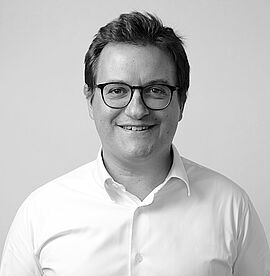
Paul Peter Hager serves as an Assistant Professor in the Department of Statistics and Operations Research at the University of Vienna, where he teaches courses including Linear Algebra and Applied Optimization. Previously, he held a junior research group leader position at Technische Universität Berlin. His research centers on: Mathematical Finance Machine Learning Stochastic Control Mean-Field Games Fractional Processes Gaussian Multiplicative Chaos Volatility Modeling Hager pioneers applications of rough path signatures in financial mathematics, developing novel frameworks for stochastic control and calibration problems. His work bridges theoretical probability with practical machine learning implementations, particularly in volatility modeling using fractional processes and log-correlated fields. Recent publications reveal a dominant trend in signature-based methods for optimal stopping and mean-field games, with significant contributions to fractional Brownian motion theory. His collaborative work with leading researchers like Peter Friz and Christian Bayer consistently targets high-impact journals in applied probability and financial mathematics. Dr. Hager maintains active research collaborations and has delivered invited talks at institutions including KAUST, focusing on computational implementations of signature methods in finance.
Dr. Aimee Slangen is a Senior Researcher at the Royal Netherlands Institute for Sea Research (NIOZ) and affiliated with the Faculty of Geosciences at Utrecht University. Her work focuses on sea-level change, coastal geomorphology, and climate modeling, particularly within the research themes Future Deltas and Pathways to Sustainability (PtS) . She actively participates in organizing international conferences, such as the 2017-2018 Impact of Sea-Level Rise (iSLR) event. Expertise: Climate Change, Sea Level Change, Coastal Geomorphology Collaborations: International researchers and institutions on coastal flood risk, IPCC scenarios Her publications highlight interdisciplinary work on sea-level projections, coastal adaptation strategies, and glacial dynamics. Recent articles explore sterodynamic sea-level modeling, economic impacts of coastal flooding, and stakeholder-driven climate services. She contributes to marine science education and policy-relevant research.
Lionel Garreau is an Associate Professor qualified to supervise research (Habilitation à Diriger des Recherches) at the DRM (Dauphine Research Management) laboratory of Université Paris-Dauphine. His academic position focuses on strategic management research with particular expertise in qualitative methodologies and sense-making processes within organizational contexts. Garreau's research interests center on the construction of meaning in relation to strategic practices within organizations, with recent work focusing specifically on the agricultural and agri-food sector. He investigates the underlying logic of meaning that shapes current and future developments in this sector, examining how organizations create and interpret strategic significance. His methodological expertise in qualitative approaches has led to significant contributions in advancing research techniques and frameworks for strategic management studies. Analysis of his recent publications reveals a strong trend toward systemic thinking in business model research, strategic sensemaking processes, and the exploration of organizational hybridity. His work increasingly examines how organizations navigate complexity through narrative construction and visual representations, with growing attention to ethical considerations in strategic decision-making. The agricultural sector remains a consistent empirical focus for testing theoretical frameworks related to strategic change and sense-making. Garreau has served as co-director of significant academic publications including the 6th edition of Le mémoire de master (Dunod, 2023) and co-edited Méthodes de Recherche Qualitatives Innovantes (Economica, 2019), demonstrating his commitment to advancing research methodology in management studies. His research is frequently published in top-tier management journals including M@n@gement , Strategic Organization , and Scandinavian Journal of Management , with regular contributions to Harvard Business Review France on practical applications of strategic management concepts. Garreau maintains an active research agenda with multiple publications appearing in 2024 across various management topics. Garreau's work demonstrates strong connections with professional practice through numerous collaborations with industry partners and applied research projects, particularly evident in his case studies of retail and agricultural organizations. His research often bridges theoretical development with practical implementation challenges faced by contemporary organizations.
Constanze Schulze-Stampa is a Professor at the Nürtingen-Geislingen University of Applied Sciences (HfWU), actively contributing to art therapy research and education. She serves on the University Council since winter semester 2021/22 and the Ethics Committee since 2018/19, while leading research initiatives focused on systemic and group art therapy models, pain management applications, and interdisciplinary healthcare collaboration. Her research centers on developing and validating therapeutic frameworks like IiGART (Interaction in Group Art Therapy), with specialized applications in chronic pain, trauma recovery, palliative care, and biographical exploration. She pioneers mixed-methods approaches integrating artistic research with clinical practice, examining art therapy's role in multimodal treatment concepts and communication phenomena across diverse clinical settings including hospitals and community mental health facilities. Recent publications reveal a clear trend toward evidence-based art therapy implementation, particularly through innovations like the bopain.t questionnaire for pain management and Collage+ intervention for trauma treatment. Her work demonstrates growing integration of artistic therapies within interdisciplinary healthcare teams, with increasing focus on outcome measurement, protocol standardization, and adaptation to specific clinical contexts like pain therapy and trauma recovery. While no specific scientific awards are documented, her significant research leadership is evidenced through doctoral supervision across multiple universities and successful acquisition of third-party funding from major sources including the Lower Saxony Ministry of Science and Culture, Volkswagen Foundation, and Aktion Mensch for projects such as "Artistic Interventions in Health Promotion and Prevention" and "Art Therapy in Multimodal Pain Therapy". Schulze-Stampa maintains active clinical partnerships with Paracelsus Clinic Bremen and St. Josefs-Hospital Cloppenburg while leading the interdisciplinary research network for "Artistic Interventions in Health Promotion and Prevention". As Chair of the Wissenschaftliche Fachgesellschaft für Künstlerische Therapien (WFKT) since 2019, she drives national and international advancement of artistic therapies through professional networking and standard development.