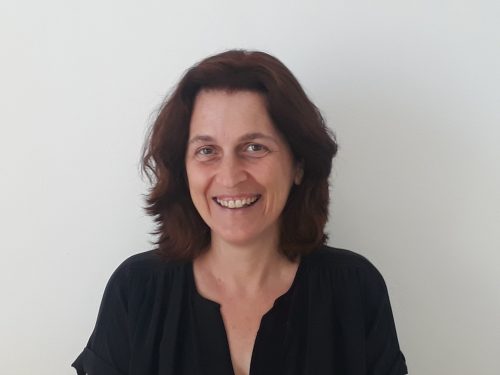
Anu Viljanmaa is a University Lecturer at the University of Tampere's Language Studies Plural department within the Faculty of Language, Translation and Literature. Her work focuses on interpreting studies, language education, and public service interpreting. She has been active in research since 2012, producing 34 publications across journals, books, and conference contributions. Key research areas include interpreter cognition, pandemic impacts on interpreting work, and audio description methodologies. Her expertise includes professional listening skills, emotional labor in interpreting roles, and educational innovations like film-based simulations. Notable contributions include studies on self-talk strategies for interpreters and the role of ad-hoc renderings in audio description. Dr. Viljanmaa has received two major awards: the Dissertation Award (2022) and the International Listening Association Research Award (2021). She has organized workshops on interpreter feedback mechanisms and participated in over 68 academic activities including international conferences, media engagements, and invited lectures. Her research consistently intersects with UN Sustainable Development Goals related to quality education and reduced inequalities.
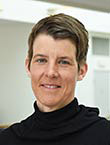
Marta Sampaio is a Researcher at the Centre for Research and Intervention in Education (CIIE), Faculty of Psychology and Educational Sciences, University of Porto, Portugal. She is actively engaged in national and international research projects related to educational evaluation, social justice, youth development, and cybersecurity education. Her work is funded by FCT, Erasmus+, and the National Cybersecurity Centre, and she leads multiple initiatives, including the CARE4SUD Erasmus+ project and the FCT CEEC project on social justice indicators in border regions. PhD in Education Sciences, University of Porto (2018) Master’s in Education Sciences, University of Porto (2010) Bachelor’s in Education Sciences, University of Porto (2008) Her research focuses on social justice in education, school self-evaluation, curriculum, and youth pathways, especially in marginalized and border regions. She investigates how evaluation systems, TEIP programs, and resilience approaches can promote equity and inclusion in education. Her teaching includes courses on social justice, school evaluation, and educational project design at FPCEUP. The recent publications highlight a strong trend in school evaluation, transformative learning, youth engagement, and cybersecurity education. Her work combines policy analysis, qualitative research, participatory methods, and interdisciplinary collaboration, often with a focus on Portuguese schools and border communities. Topics include whole-school approaches, civic activism through sport, and data-driven decision-making in self-evaluation. Member, editorial board of The Curriculum Journal Member, SIRIUS - Policy Network on Migrant Education Member, RILME - Research Network on Leadership and Improvement in Education Coordinator, ODEC - Observatory of Sport, Education and Communities Member, OBVIE - Observatory of Life in Schools Member, JEDI and CAFTe Research Communities of Practice Marta supervises research teams and coordinates national studies, including those on cybersecurity education in basic and higher education. She has contributed to policy evaluation for the Calouste Gulbenkian Foundation and A3ES. Her leadership extends to Erasmus+ and FCT-funded projects, where she fosters collaboration between academia, schools, and public institutions. She is involved in several research labs and networks, including CIIE’s LabDERE, ODEC, OBVIE, and the JEDI and CAFTe communities of practice. These platforms support interdisciplinary research on youth, education, sport, curriculum, and technology, with strong community engagement and knowledge co-creation.
Norberto Ribeiro is a Research Fellow at the Centre for Research and Intervention in Education (CIIE), Faculty of Psychology and Educational Sciences, University of Porto, Portugal. He is funded by the Portuguese Foundation for Science and Technology (FCT) and actively contributes to national and international research projects focused on citizenship education and youth civic engagement. Education: PhD in Education Sciences, Faculty of Psychology and Educational Sciences, University of Porto (2014) Licentiate in Education Sciences, Faculty of Psychology and Educational Sciences, University of Porto (2006) Research Interests: Norberto Ribeiro specializes in citizenship education, youth civic and political participation, and participatory democracy. His work explores how young people, especially marginalized groups, engage in democratic processes and how education can foster political empowerment. He investigates intersectional approaches to inclusion, gender transformative education, environmental citizenship, and the role of schools and sports contexts in civic development. His research is interdisciplinary, integrating perspectives from education, political science, sociology, and psychology. Publication Trends: His recent scholarly output reveals a strong focus on participatory methodologies, youth activism, and policy evaluation. Key themes include environmental citizenship through school-based community profiling, gender equality education, youth political participation, and the use of digital and visual tools by young athletes for civic action. His work frequently appears in journals related to education, citizenship, and youth studies, and he contributes to European policy-oriented research. Scientific Involvement: Norberto Ribeiro has been involved in significant research projects funded by the European Commission (Horizon Europe, Horizon 2020, FP7), FCT, Calouste Gulbenkian Foundation, and others. He has served as Principal Investigator and Researcher in studies on youth political participation, extracurricular activities, and inclusion in deliberative processes. His research informs policy and practice in education and democratic governance. Teaching and Mentorship: At the University of Porto, he has lectured in the Master’s Programme in Education and undergraduate courses in Educational Sciences. His teaching includes ethics, research methodologies, and topics on youth as political actors. While no formal advisees are listed, his role in research projects involves supervising and mentoring junior researchers and students. Laboratories and Teams: He is a Full Member of the Centre for Research and Intervention in Education (CIIE) and contributes to LabDERE – Laboratory of Digital Experimentation and Research in Education. He collaborates with multidisciplinary teams across European universities and civil society organizations, particularly within the SINCRONY project consortium.
Dr. Olivia Kyriakidou is the Program Coordinator for the MS in Organizational Psychology at the American College of Greece (ACG). With over 20 years of academic experience in British and Greek universities, she specializes in equality, diversity, and inclusion at work, particularly examining the impact of AI, automation, and technology on employment. She founded ImasterPA, offering consulting in People Analytics and Digital HR. Her research focuses on future-of-work challenges and has been published in journals like Organization Studies and Work, Employment and Society . Education: BA: Aristotle University of Thessaloniki MS: University of Surrey MS: London School of Economics PhD: University of Surrey (Organizational Psychology) Research Interests: Dr. Kyriakidou analyzes datasets to address HR challenges and improve employee wellbeing. Her recent work explores AI's impact on women in the workplace and advises businesses/policy leaders on preparing for workforce automation. She advocates for inclusive strategies in the digital workspace. Awards: EHMA Baxter Award for her book on health service innovation diffusion. Grants/Advising: Active in consulting and educational services via ImasterPA, focusing on People Analytics and leadership training. No explicit grant details listed. Labs/Teams: Collaborates with international organizations on future-of-work initiatives but no formal lab/team name provided.
Charlotte Vaughn, PhD, is an Assistant Research Professor at the University of Maryland, serving as Founder and Director of the NSF-funded Language Science Station at Planet Word Museum. Her work bridges sociolinguistics and cognitive science, focusing on how listeners perceive speech variability and its social implications. She employs interdisciplinary methods from phonetics, psycholinguistics, and social psychology to address issues of linguistic discrimination and public engagement in science. Key Research Interests: Speech perception and social meaning Raciolinguistic ideologies in criminal justice contexts Development of language attitudes in children Ethnic and regional accent perception Public-facing science communication Her recent projects include studying jury perceptions of dialectal codeswitching ( Race & Justice , 2024), perceptual learning effects ( Phonetica , 2019), and museum-based language science engagement. Collaborations involve institutions like Howard University, Gallaudet University, and Planet Word Museum. She has NSF funding for participatory research initiatives targeting underrepresented students. Awards & Grants: NSF grant for Language Science Station public engagement project Professional Activities: Advisory Board member for Planet Word Museum Former Science Communication Fellow at OMSI Lead on multiple sociolinguistic documentary films and museum exhibits Her work emphasizes applied research to combat linguistic bias, with a focus on improving outcomes for marginalized language communities.
Dr. Holli-Anne Passmore is an Associate Professor and Department Chair in the Department of Psychology at Concordia University of Edmonton. She leads the Nature—Meaning in Life Lab (Nature—MILL), focusing on well-being through nature connectedness and meaning in life. Her research explores interventions like the Noticing Nature Intervention (NNI) to enhance psychological health and address eco-anxiety. Dr. Passmore collaborates globally, serves as Editor of the International Journal of Wellbeing, and contributes to initiatives like the Global Wellbeing Initiative. She teaches courses including Positive Psychology, Emotions and Behavior, and Nature and Well-being. Her work bridges environmental and psychological sciences, emphasizing practical applications for individual and societal well-being. Research Interests: Her dual focus on nature engagement (e.g., everyday nature experiences, eco-anxiety) and meaning in life (e.g., forecasting pathways to meaning) integrates existential psychology with positive psychology frameworks. She examines how nature fosters resilience, mitigates social pain, and supports youth well-being through structured interventions. Collaborations include studies on children’s nature connectedness, cross-cultural validation of interventions, and media outreach to communicate findings widely. Recognition and Outreach: Dr. Passmore has delivered invited talks at institutions like Zhejiang University and the International Positive Psychology Association, and her work features in media such as CBC News, Gallup’s Global Wellbeing Initiative, and Conservation Magazine. She advocates for nature-based solutions to mental health and sustainability challenges through academic and public platforms.
Régis Missire is a Lecturer in the Department of Language Sciences at the University of Toulouse - Jean Jaurès, where he is affiliated with the NeuroPsychoLinguistics Laboratory (LNPL). His academic work bridges linguistic theory, semiotics, and interpretative semantics. His research focuses on the perception of meaning in language, drawing on Gestalt psychology and phenomenological traditions. He investigates how meaning is constructed through the interplay of semantic and semiotic layers in texts, particularly in relation to genres, discourses, and interpretative paths. His interests extend to the epistemology and historiography of linguistic structuralism, especially the works of Saussure, Coseriu, and Benveniste. The most recent publications show a consistent engagement with textual semantics, discontinuous linguistic units, semiosis, and the theoretical foundations of linguistic signification. His work often explores the transition from morpheme to text, the role of attentional stratification, and the semiotic moments (iconic, indexical, symbolic) in interpretation. Régis Missire is actively involved in the academic community: he co-edits the online journal Texto! (section 'Dialogues and Debates') and serves as a reviewer for Intellectica , Mots , Pratiques , and Revue de sémantique et de pragmatique . He has organized several international colloquia on topics such as linguistic typology, oral semantics, and contemporary receptions of Coseriu. He has taught courses in textual semantics (L2, L3), textual linguistics, argumentation practices, and thematic analysis. He previously co-led the CPST research team (2015–2017) and organized the internal 'Semantics' seminar from 2011 to 2017. No scientific awards or student advisees are listed in the provided text.
Prof. Dr. Maren Diane Schmeck is an Associate Professor at the Institute for Mathematical Economics within the Faculty of Economics at Bielefeld University. Her research focuses on Actuarial Science and Financial Mathematics with Applications in Commodity Markets . She is affiliated with the SFB 1283 (Taming uncertainty) project, Bielefeld Graduate School in Theoretical Sciences , and the Center for Uncertainty Studies . PhD in Mathematical Economics from Oslo University (2009-2012) Diploma in Mathematical Economics from University of Cologne (2009) Her work addresses actuarial risk decomposition and commodity market modeling , particularly in electricity and energy derivatives. She develops frameworks incorporating mean-reversion , stochastic volatility , and seasonal effects in pricing swaps and options. Her 2025 publications introduce jump risk decomposition and empirical delivery period risk analysis . Recent collaborative papers with A. Kemper (2025) and Ladokhin/Borovkova (2024) explore business time modeling to improve commodity forward curve accuracy. She has contributed to reinsurance optimization and electric vehicle transition economics (2021).
Jolanta Andrzejewska is a Professor at the Faculty of Pedagogy and Psychology , Maria Curie-Skłodowska University , leading the Department of Early Education . Her research focuses on early childhood education , educational space organization , and psychosocial development of children in educational contexts. 2020-2024: Member of the Elementary Education Section of the KNP at PAN 2014-2020: Principal Investigator for the "ZA PROGIEM" project (Operational Programme Knowledge Education Development 2014-2020) Her research spans educational space design (book corners, outdoor environments), teacher professional development , and sustainable development education . Recent work examines pandemic impacts on preschool education and Ukrainian child integration in Polish preschools. Key publications analyze peer learning dynamics , flexible learning environments , and social competence development . She emphasizes educational partnerships and local community engagement in her pedagogical frameworks.
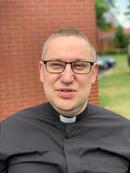
Rev. Dr. hab. Paweł Brudek, Professor at the Department of Clinical Psychology within the Faculty of Social Sciences at John Paul II Catholic University of Lublin , is a dual-qualified priest and psychologist specializing in geropsychology. His research focuses on wisdom development , aging dynamics , and spiritual coping in late adulthood, with particular emphasis on marital satisfaction , death attitudes , and psychosocial resilience . His groundbreaking work includes the Polish adaptations of key psychological scales like the Death Attitude Profile-Revised and Self-Assessed Wisdom Scale , advancing cross-cultural gerontological research. Collaborating with Dr. Tomasz Korulczyk on the Bank Negotiator AI project, he explores human-machine interaction in professional settings. Brudek's 15 most recent publications (2018-2023) demonstrate a consistent focus on aging research , with methodologies spanning psychometric validation , mediation analysis , and cross-sectional studies . His work bridges clinical psychology and existential theology , reflecting his unique dual vocation. Scientific Awards : 2016: Uwarunkowania mądrości w biegu życia scholarship As Director of the Institute (2024-2028), he oversees academic operations while maintaining active supervision of master's theses on aging-related topics. His interdisciplinary approach combines psychological science with pastoral care, creating innovative frameworks for understanding late-life existential development .
Mary Liston is an Associate Professor at the Peter A. Allard School of Law, University of British Columbia. She specializes in public law, including administrative law, constitutional law, legal theory, and law and literature. Her research focuses on the rule of law, legal pluralism, Indigenous legal orders, and the role of apologies in public law. She has contributed to leading casebooks such as Public Law: Cases, Commentary and Analysis and has been cited by the Supreme Court of Canada. Education: BA Hons (English Language and Literature, Western University) MA (Social and Political Thought, York University) LLB (University of Toronto) PhD (Political Science and Law, University of Toronto) Research Interests: Mary’s work bridges theoretical and institutional challenges in public law, emphasizing accountability, public participation, and legal frameworks. Key areas include Aboriginal administrative law, comparative public law, and the intersection of law and Indigenous sovereignty. She advocates for legal means to strengthen democratic governance and address systemic weaknesses in responsible government. Grants & Supervision: Mary supervises graduate students in administrative law, comparative public law, and Aboriginal law. Notable supervisees include Andrew Pilliar (PhD) and Alan Freckelton (LLM). She has directed research projects on topics like Constitutional Conventions in Canada and Apologies in Public Law . Affiliations: She is affiliated with the Centre for Feminist Legal Studies and Indigenous Legal Studies at Allard Law.
Karin Rudsberg is a Senior Lecturer at Örebro University within the School of Humanities, Education and Social Sciences, Department of Humanities, Education and Social Sciences. She holds an ORCID identifier (0000-0002-0118-832X) and is affiliated with the ESERGO research group (Environmental and Sustainability Education Research Group) and the Transformative Learning for Sustainable Development research group. Her research focuses on classroom discussions, students' meaning-making processes, and pedagogical strategies in sustainability education. Key areas include transformative learning, teacher professional development through collaborative practices, and the integration of ethical/political dimensions in environmental education. Her work emphasizes participatory and pluralistic approaches to education for sustainable development. Rudsberg has contributed to numerous peer-reviewed articles, books, and conference presentations. Notable works include studies on teachers' collective learning habits (2024), student interaction dynamics in classroom discussions (2017), and the role of knowledge in environmental education (2015). She has also conducted national evaluations of school subjects like physical education and health (2003). Her research projects include the KLÖS initiative (Collegial Learning in Örebro Schools), which investigates sustainable structures for educational development. While no explicit scientific awards are listed, her extensive publication record reflects significant scholarly contributions. Dr. Rudsberg advises research projects and collaborates on grants focused on improving educational practices. She is actively involved in institutional research teams and has produced impactful reports on curriculum design and implementation challenges in Swedish schools.
FH-Prof. Dr. Thomas Felberbauer is a Professor and Head of the Department of Media and Digital Technologies at the University of Applied Sciences St. Pölten. He serves as Academic Director of the Smart Engineering (BA) program and is a member of the University's Board (2023-2026). His roles include overseeing the Institute of Creative Media/Technologies and coordinating interdisciplinary programs in Data Science & AI and Digital Innovation & Research. Prof. Felberbauer’s career spans academia and industry: since 2016, he has held academic positions at FH St. Pölten, focusing on Industry 4.0 and Smart Engineering. Earlier roles include Assistant Professor (2015–2016) and Research Associate (2011–2015) at FH-OÖ. He is also a self-employed IT consultant (FeTh eU since 2011) and previously worked in electrical systems and production at BMW Motoren GmbH (2000–2006). His research emphasizes simulation-based optimization for production planning, supply chain dynamics, and Industry 4.0 applications. Notable projects include aquaponics data-sharing frameworks and energy-cost balancing in manufacturing. He employs advanced simulation techniques to address stochastic demand, forecast accuracy, and inventory management challenges. Prof. Felberbauer contributes to applied industry partnerships, including projects on circular economy systems and production planning gamification. His work bridges theoretical models with real-world implementations, particularly in automotive and small-batch production sectors. He advocates for decentralized production control and data-driven decision-making in smart manufacturing systems.
Ning Wang is a Lecturer in Actuarial Studies at the Research School of Finance, Actuarial Studies & Statistics at Australian National University (ANU), joining in January 2024. He holds a PhD in Statistics from East China Normal University (2020) and a PhD in Actuarial Studies from Macquarie University (2021), along with a Master of Research from Macquarie University (2019). Prior to ANU, he served as a Research Fellow at University of Wollongong and Macquarie University. His research focuses on stochastic optimal control applications in finance and insurance, including optimal reinsurance design, portfolio optimization, life-cycle planning models, and stochastic differential games. His work has been published in journals such as Insurance: Mathematics and Economics , Scandinavian Actuarial Journal , and Quantitative Finance . He currently supervises research students and leads the ANU Futures Scheme project (2024–2026), exploring advanced financial modeling frameworks. His research also addresses model uncertainty, dynamic programming, and robust optimization strategies under varying economic conditions. Education: PhD in Statistics, East China Normal University, 2020 PhD in Actuarial Studies, Macquarie University, 2021 Master of Research, Macquarie University, 2019 Grants & Projects: ANU Futures Scheme (2024–2026): Focuses on stochastic models for financial decision-making Key Research Themes: Optimal reinsurance and investment strategies Life-cycle planning with stochastic volatility Robust asset-liability management His publications demonstrate expertise in solving complex financial and actuarial problems through advanced mathematical and computational methods, including partial differential equations, dynamic programming, and numerical simulations.
Sarah Ward serves as an Assistant Professor in the College of Business at the University of Illinois, specializing in psychological aspects of work and meaning. Her research bridges business administration with psychological science, focusing on how individuals derive meaning from work and life experiences. Dr. Ward's research interests center on meaning in life, happiness psychology, religiosity psychology, and individual differences. Her work examines how socioeconomic status, financial self-efficacy, and job preferences influence psychological well-being and meaning construction. She investigates the complex relationship between material success and psychological fulfillment, with particular attention to how people navigate the trade-offs between monetary compensation and meaningful work. Her research employs both experimental and survey methodologies to uncover patterns in how individuals process meaning across different life domains. Analysis of Dr. Ward's recent publications reveals a strong focus on the intersection of economics and psychology, particularly examining how financial considerations interact with psychological meaning. Her work spans multiple subfields including organizational behavior, social psychology, and positive psychology, with consistent attention to individual differences in how people experience meaning. The research demonstrates methodological rigor with several preregistered studies and employs diverse metrics to capture complex psychological constructs. Dr. Ward's research has received significant attention in academic and public spheres, with her 2023 paper on money versus meaningful work being widely covered in media outlets. Her scholarly contributions demonstrate growing influence in understanding the psychological dimensions of work and economic decision-making.