Prof. Dr. Dennis Säring is a faculty member at the University of Applied Sciences Wedel , specifically affiliated with the School of Engineering. His academic and research activities focus on Deep Learning , Medical Image Analysis , and applications of Artificial Intelligence in healthcare and biomedical imaging. He has led seminars on Deep Learning topics and supervised student projects in Autonomous Driving at Audi's AADC 2018 competition. Research Highlights : Cardiovascular imaging, forensic age estimation via MRI, neural network-based bone segmentation, and cerebrovascular aneurysm analysis. Technical Expertise : Cardiac MRI, 3D/4D image processing, parametric mapping, and spatiotemporal data fusion. His recent publications (2018-2023) emphasize 3D MR segmentation for age assessment, CMR strain analysis in athletes, and T1/T2 mapping for myocarditis. Key collaborations include institutions like the University Medical Center Hamburg-Eppendorf and Wedler Hochschulbund, with funding for autonomous vehicle research. While no explicit scientific awards are listed, his work spans clinical cardiology, forensic radiology, and AI-driven medical diagnostics.
Prof. Richard L. Peters is a Professor and Head of the Chair of Tree Growth and Wood Physiology at the Technische Universität München (TUM) since 2024. His research focuses on tree physiology, wood formation, and climate-forest interactions. He holds a doctorate summa cum laude from the University of Basel (2018) and has conducted postdoctoral research at the Swiss Federal Institute for Forest Science (WSL) and Ghent University. His work integrates forest ecology, dendrochronology, and ecophysiology to address climate change impacts on forests. Education: B.Sc./M.Sc. in Biology at Utrecht University, Ph.D. from University of Basel (2018). Key career steps include a Swiss National Science Foundation (SNSF) fellowship at Ghent University and coordination of the Swiss Canopy Crane II project (2021). Research Interests: Tree water-use strategies, drought tolerance mechanisms, carbon allocation dynamics, and the physiological basis of tree growth. He leads interdisciplinary projects to monitor forest responses to environmental stress using tools like the TreeNet network. Awards: Early Postdoc Mobility Fellowship (SNSF, 2019), Doctorate summa cum laude (2018). Contributions: Authored >180 publications, co-developed the datacleanr R package for ecological data processing, and pioneered methods linking tree-ring data with climate models. His work emphasizes the need for better observational data to improve vegetation models.
Prof. Waldemar Kolanus leads the Molecular Immunology and Cell Biology department at the University of Bonn's Life & Medical Sciences Institute (LIMES) . His research bridges immunoregulation , stem cell dynamics , and metabolic stress responses in immune cells. Unit 2 member at LIMES Principal investigator in SFB 704 and ImmunoSensation Cluster Leads a multidisciplinary lab with postdocs, PhD students, and technical staff His work focuses on intracellular signaling pathways connecting immune activation to tissue homeostasis, particularly through: Cytohesin proteins in integrin-mediated adhesion and migration TRIM71 in stem cell regulation and congenital hydrocephalus High-salt environments affecting macrophage function Publication trends show expertise in immune cell migration , genetic models , and chemical inhibition , with frequent use of mice and zebrafish for in vivo studies. Key articles explore: TRIM71's dual role in auditory development and germ cell maintenance Cytohesin family's Golgi regulation and insulin signaling Ruxolitinib's off-target migration inhibition of dendritic cells Contact details: Address: LIMES Institute, Carl-Troll-Straße 31, Bonn Email: kolanus.sekretariat@uni-bonn.de Phone: +49 228 73-62788
Prof. Dr. Simon Schäfer leads the Schäfer Lab at the Technische Universität München , focusing on engineering advanced organoid systems to study human brain development, disease modeling, and repair mechanisms. His work bridges stem cell biology, gene editing, and bioengineering to develop personalized therapies for brain disorders. Stem Cell & Organoid Technology Neurodevelopmental Mechanisms Neurodegenerative Disease Models Gene Editing & Neuroimmune Interactions Translational Neuroscience Recent research emphasizes brain organoid development, microglia phenotypes, and neurodevelopmental timing anomalies in autism. His team’s work also explores zika virus interactions with glioblastoma stem cells and neuronal plasticity in psychiatric disorders. Scientific awards and funding include support from the Deutsche Forschungsgemeinschaft (DFG), Brain & Behavior Research Foundation (BBRF), and Munich Cluster for Systems Neurology (SyNergy). Collaborations span institutions like the TUM Center for Organoid Systems. Advises 6 students (2 PhD, 1 MSc, 3 associated) Labs include Schäfer Lab, COS@TranslaTUM Contact: simon.schafer@tum.de
Prof. Veronika Somoza is a leading academic in Nutritional Systems Biology, currently affiliated with the University of Vienna and Technical University of Munich (TUM). She holds a professorship in Molecular Food Science and has led key research groups such as the Institute of Physiological Chemistry and the Christian Doppler Laboratory for Bioactive Aromatics. Her career includes roles at institutions like the German Research Institute for Food Chemistry (Garching) and the University of Wisconsin-Madison. Education: Diplom (Justus Liebig University Giessen, 1991), PhD (University of Vienna, 1995), Habilitation (Kiel University, 2002) Research Focus: Bioactive food compounds, flavor chemistry, taste receptor signaling, and gastrointestinal physiology Her work bridges food science and human health, particularly in understanding how food ingredients influence digestion, inflammation, and disease. Notable contributions include discoveries on bitter peptide effects on gastric acid secretion and flavor perception modulation. Awards: FEMA Excellence in Flavor Science (2016), ACS AGFD Fellow (2020), Hans Adolf Krebs Prize (2004) Prof. Somoza has pioneered methodologies in atomic force microscopy for foodborne virus detection and developed bitterness-masking compounds for pharmaceuticals. Her interdisciplinary approach integrates nanobiophysics with nutrition to advance functional food design and clinical applications.
Prof. Dr. Birgit Eickelmann is a Professor of School Pedagogy at the Institute of Educational Science within the Faculty of Arts and Humanities at Paderborn University. She has held this position since October 2012, initially as a W2 professor until January 2014, and then as a W3 professor (full professor) from February 2014 onward. Her research focuses on school and lesson development in the digital age, school pedagogy under digital transformation conditions, empirical school research, teacher education, and school leadership with emphasis on digital learning leadership. Her educational background includes a habilitation in Educational Science in May 2012, a PhD in Educational Science with summa cum laude in July 2009, and state examinations for teaching Mathematics and Physics in December 1996 and January 1999. Prof. Eickelmann's research centers on the digital transformation of educational systems, particularly examining how schools develop digital competencies among students and teachers. Her work emphasizes equitable access to digital learning opportunities, the role of school leadership in digital transformation, and the development of computational thinking skills. She investigates how schools can become resilient in the face of digital challenges, with special attention to organizational factors that support successful digital integration. Her publication record reveals a strong focus on international comparative studies, particularly the IEA's ICILS (International Computer and Information Literacy Study) across multiple cycles (2013, 2018, 2023). Her research spans digital literacy assessment, school-level factors influencing digital competence development, and policy implications for educational systems undergoing digital transformation. Prof. Eickelmann leads several major research initiatives including the National Research Center for the IEA Study ICILS 2023 (2021-2026), the German coordination of the Horizon-2020 project 'DigiGen' (2019-2022), and previous leadership of ICILS 2018 (2015-2021) and ICILS 2013 (2012-2015). She is actively involved in policy advising regarding digital education in Germany. She is a member of numerous scholarly organizations including the World Educational Research Association (since 2021), the Society for Empirical Educational Research (since 2016), and the German Society for Educational Science (since 2014), among others. Her work bridges academic research with practical implementation in schools through projects like 'Navigator Bildung Digitalisierung' and 'schultransformNEXT'.
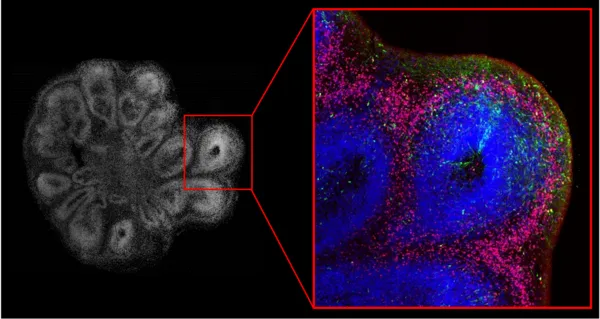
Prof. Andreas Bausch holds the Heinz Nixdorf Endowed Chair of Cell Biophysics at the Technical University of Munich (TUM) within the TUM School of Natural Sciences . His research focuses on cellular biophysics , particularly the mechanical properties of cytoskeletal networks and self-organization mechanisms in biological systems, with applications in biomimetic materials and organoid modeling. Research Areas : Cytoskeletal mechanics, active matter systems, organoid morphogenesis, integrin signaling, synthetic cell models Techniques : Microrheology, in vitro reconstitution, microfluidics, advanced imaging His work has produced over 100 publications in Nature, Science, PNAS , and Physical Review Letters , with recent emphasis on pancreatic cancer organoids and artificial cell membranes . Key findings include: Discovery of topological excitations governing endothelial cell ordering Elucidation of PIP2/PIP3 regulation in integrin phase separation Development of 3D patterned organoid systems for drug screening Major awards include: ERC Synergy Grant (2018) ERC Advanced Grant (2012) ERC Starting Grant (2011) Berlin-Brandenburg Academy of Sciences Prize (2014) He serves as founding director of the Center for Functional Protein Assemblies (CPA) since 2015 and teaches biomechanics , biophysics , and protein assemblies at TUM. His lab investigates both fundamental biophysical principles and their medical applications in cancer and cardiovascular systems.
Prof. Dr. habil. Katrin Giller leads the Department of Molecular Nutrition Science (140a) at the University of Hohenheim, Garbenstraße 30, Bio Building I, Room 151, Stuttgart. Her research focuses on livestock nutrition, with specific interests in methane mitigation, antioxidant mechanisms, and metabolic syndrome in agricultural animals. Department: Molecular Nutrition Science (140a) Contact: katrin.giller@uni-hohenheim.de Office Hours: By appointment Her work spans nutritional biochemistry , ruminal fermentation , and sustainable livestock systems , often examining interactions between dietary compounds (e.g., spirulina, polyphenols, n-3 fatty acids) and animal physiology. Recent studies investigate antioxidant gene expression , transgenerational metabolic impacts , and feed efficiency . Current advisees include B.Sc. Viola Gauly, Fernando Giugno, Jana Kornherr, Mira Kühn, Daniel Obermüller, and Helen Pötzsch. The department's website details research projects, teaching events, and publications.
Anna Maria Oberländer is Assistant Professor for Information Systems and Digital Transformation at the University of Bayreuth's Faculty of Law and Economics. She also serves as Deputy Academic Director of the Research Center Finance & Information Management and holds a leading position at Fraunhofer FIT's Branch Business & Information Systems Engineering, where she co-heads a research group and manages the Digital Innovation Lab as one of its co-founders. Dr. Oberländer earned her Master of Science with honors from the Elite Graduate Program Finance & Information Management at the University of Technology Munich and the University of Augsburg in 2015, including a research visit at Queensland University of Technology. She was accepted into the 16th class of the Bavarian EliteAcademy, receiving leadership training across Germany, Belgium, China, and Vietnam. Prior to academia, she worked as a strategy consultant at McKinsey & Company from 2015 to 2018, supporting clients in Advanced Industries and Financial Services with digital transformations. She completed her dissertation at the University of Bayreuth's Law and Economics Faculty in 2020. Her research focuses on understanding and designing digital transformation and innovation from established companies' perspectives. She examines digital transformation processes and patterns, the relationship between organizational digital transformation and digital ecosystems, organizational ambidexterity, resource-based digital opportunities for incumbents, and the socio-technical and economic impacts of IoT and AI technologies. Her work spans theoretical frameworks like the OCO (Orientation, Cooperation, Orchestration) Theory for understanding digital ecosystems' influence on transformation. Dr. Oberländer's recent publications reveal a strong trend toward integrated digital-sustainability research (twin transformation), AI strategy and implementation, digital ecosystem dynamics, and industry-specific digital innovation. Her work bridges theoretical frameworks with practical applications across diverse sectors including public administration, manufacturing, and smart cities. She has developed capability maturity models for twin transformation and explored semantic search adoption in SMEs. Science Award 2020 from Universitätsverein Bayreuth e.V. With extensive industry experience at Siemens, Siemens Financial Services, Allianz, and McKinsey & Company, Dr. Oberländer brings practical insights to her academic work. Her Fraunhofer FIT role connects her research to real-world applications through the Digital Innovation Lab. She has led collaborative research projects across multiple industries, including the print industry's sustainability potential with AI, dairy industry digital innovation, and public administration digitalization. Dr. Oberländer co-heads a research group at Fraunhofer FIT and manages the Digital Innovation Lab, which serves as a hub for collaborative research between academia and industry. Her work with the Research Center Finance & Information Management facilitates interdisciplinary collaboration across finance and information systems domains.
Prof. Stephan J. Sigrist is a Full Professor of Genetics at the Institute of Biology, Free University of Berlin. His lab focuses on synaptic active zone architecture, neuroplasticity, and aging-related neurodegeneration. He leads the Collaborative Research Center 958 on Membrane Scaffolding and co-directs NeuroCure, a DFG Cluster of Excellence at Charité. Education: PhD in Molecular Genetics (1997) and Habilitation (2005) from the University of Göttingen. Positions: Einstein Professor (2014–present), Spokesperson CRC 958 (2012–present), and Co-Director NeuroCure (2009–present). Research explores presynaptic mechanisms using Drosophila and mouse models, combined with STED microscopy. Key contributions include discoveries of Bruchpilot's role in active zones and spermidine's protective effects against age-related synapse decline. Grants: Over €6 million in funding, including DFG CRCs, Einstein Foundation, and ERC Advanced Grant (2025). Awards: Einstein Professorship, Best Habilitation Award, EMBO/HFSP Fellowships. Collaborations span structural biology (e.g., Stefan Hell), neurophysiology (David DiGregorio), and aging research (Frank Madeo).
Dr. Andrew Bassett serves as Head of the Cellular and Gene Editing Research group at the Wellcome Sanger Institute, where he develops cutting-edge genome engineering techniques using human pluripotent stem cells to investigate neurodegenerative diseases including Alzheimer's and Parkinson's. His work focuses on scaling genetic screening approaches and improving CRISPR specificity for modeling complex disease mechanisms. His academic training includes: PhD at the MRC Laboratory of Molecular Biology (MRC-LMB) with Andrew Travers on chromatin remodelling in heterochromatin formation Postdoctoral research with David Baulcombe at the University of Cambridge studying small RNA roles in chromatin modification Additional postdoctoral work with Chris Ponting at the MRC Functional Genomics Unit (MRC-FGU) in Oxford, where he pioneered CRISPR applications in Drosophila Bassett's research program centers on developing advanced genome engineering methodologies for precise modulation of gene expression networks during development and neurodegeneration. His group specializes in creating complex editing events (SNPs, paired knockouts, enhancer perturbations) within iPSC-derived models, with particular emphasis on epigenetic regulation and transcriptional control. Current projects integrate single-cell 'omics and phenotypic assays to decode genetic causes of neurodegenerative disorders through the OpenTargets consortium. Analysis of his 15 most recent publications reveals dominant trends in CRISPR technology development (35%), neurodegenerative disease modeling (30%), and single-cell functional genomics (25%). His work consistently bridges methodological innovation with disease mechanism studies, increasingly incorporating multi-omics approaches and expanding into cancer immunology and infectious disease applications since 2022. As group leader, Bassett mentors postdoctoral researchers and PhD students while securing major funding for genome engineering initiatives. His team operates within the Sanger Institute's Cellular Operations division and maintains critical partnerships with the OpenTargets consortium for therapeutic target validation. The laboratory specializes in high-throughput screening platforms using iPSC-derived neural and microglial models, with recent methodological advances including scSNV-seq and ONE-STEP tagging systems that significantly enhance precision genome editing capabilities.
Dr. Conny Kopp-Scheinpflug is an Associate Professor (PD) at the Faculty of Biology, Ludwig Maximilian University of Munich, where she leads a research group focused on auditory neuroscience. Her laboratory investigates the function and mechanisms of activity-dependent neuromodulation in the mammalian auditory system, with particular interest in how ambient sensory stimulation activates neuromodulators and how these influence neural processing of relevant information. Dr. Kopp-Scheinpflug's research spans auditory neuroscience, neuromodulation, neuronal excitability, and synaptic transmission. She employs electrophysiological (single cell in vivo and patch clamp in brain slices), anatomical, and optogenetic techniques to study how hyper- or hypo stimulation lead to acquisition or loss of function in the auditory system. Her work has significant implications for understanding and potentially treating functional disorders of neuronal excitability. Current research examines potassium channels, nitric oxide signaling, and neuromodulators like urocortin 3 in auditory processing. Analysis of Dr. Kopp-Scheinpflug's recent publications (2016-2022) reveals consistent focus on auditory processing mechanisms, particularly potassium channels (Kv3.1, Kv3.3, Kv1.1), nitric oxide signaling, and activity-dependent changes in myelination. Her research spans molecular mechanisms to systems-level auditory processing, with emphasis on sound localization, temporal processing, and recovery from hearing impairment. Key findings include how sound-evoked activity influences myelination, how nitric oxide regulates postsynaptic excitability, and how urocortin 3 aids hearing recovery. Dr. Kopp-Scheinpflug has secured funding from multiple research agencies. She maintains active collaborations with researchers at Lehigh University (Michael Burger Lab), University of Edinburgh (Matthias Hennig Lab), Ben-Gurion University of the Negev (Michal Hershfinkel Lab), and UCL (Dr. Jennifer Linden). Her laboratory currently includes Ezhilarasan Rajaram, Dr. Mihai Stancu, Oskar Kalle Juhani Markkula, Sara Pagella, and Katharine Krueger. Past lab members who have completed their training include Dr. James Sinclair, Dr. Matthew Fischl, Max Bayer, Alkmini Damkou, Alyahyay Mansour, Leander Mrowka, Joseph Kroeger, and Myriam Schmidt-Pauly.
Dieter Uckelmann serves as Professor of Information Logistics and Scientific Director of the Institute for Applied Research at Stuttgart University of Applied Sciences (HFT Stuttgart). He holds multiple leadership positions including Spokesperson for the research focus 'Smart Technologies, Processes and Methods' at HFT Stuttgart since March 2023 and Scientific Director of the Institute for Applied Research since September 2023. His academic journey began with mechanical engineering studies in Braunschweig, followed by doctoral research at the University of Bremen focusing on 'Quantifying the Value of RFID and the EPCglobal Architecture Framework in Logistics.' Uckelmann's research spans Internet of Things applications across Industry 4.0, logistics, smart buildings, and smart cities, with significant contributions to educational technology including learning analytics and AI in teaching. His work bridges technical innovation with practical implementation, particularly in digital transformation of laboratories and smart city infrastructure. He has led numerous research projects including KNIGHT (AI for teaching), InDeckLe (earth composite ceiling systems), iCity initiatives, and DigiLab4U (online laboratories). His publication record shows a clear progression from foundational RFID and IoT research toward emerging technologies like the Industrial Metaverse, 5G applications, and AI-driven educational systems. Recent work demonstrates strong integration of physical and digital systems, particularly in urban environments and educational contexts, with increasing emphasis on sustainability and energy efficiency applications. Co-editor of International Journal of RF-Technologies: Research and Applications Member of PhD Association BW, Research Unit III Computer Science and Electrical Engineering Mentor in the HAWCareer mentoring program Program Committee Member for IEEE RFID, IEEE/ITMC, AIET, and other major conferences Associate Editor for Journal of Online and Biomedical Engineering Professor Uckelmann actively mentors students and researchers, with his team contributing to projects across smart city infrastructure, digital learning platforms, and industrial IoT applications. He leads the Industrie 4.0 Laboratory which focuses on industrial IoT applications, digital twins, and the industrial metaverse, with research spanning RFID, RTLS, wireless sensor networks, AR/VR, and IoT architectures. His work extends to international collaborations including visiting professorships at Auburn University and the University of Parma.
Prof. Dr. Axel Mecklinger is a leading cognitive neuroscientist at Saarland University , specializing in the neurocognition of memory and language through spatiotemporal brain imaging (EEG/MEG/fMRI). His career spans over three decades, with significant contributions to understanding visual working memory , associative recognition , and memory development . Key research areas: Memory binding, ERP subsequent memory effects, novelty detection, and cognitive aging Major grants: DFG Research Groups, Collaborative Research Centers, and international collaborations with the Chinese Academy of Sciences Scientific leadership: Organized conferences, edited journals, and served as speaker for research training groups His recent work explores unitization in memory formation , cross-cultural differences in memory processing , and theta neurofeedback interventions . Awards include the Early Career Award of the German Psychophysiology Society (1992) and the European Federation of Psychophysiology Societies' Federation Prize (1994). Current projects investigate the neural mechanisms of semantic surprisal and memory plasticity in aging populations.
Dani S. Bassett is the J. Peter Skirkanich Professor at the University of Pennsylvania with primary appointment in the Department of Bioengineering (School of Engineering and Applied Science) and secondary appointments in Physics & Astronomy, Electrical & Systems Engineering, Neurology, and Psychiatry. They serve as an external professor at the Santa Fe Institute and lead a research group focused on complex systems and network science. B.S. in Physics, Penn State University (2004) Ph.D. in Physics, University of Cambridge as Churchill Scholar and NIH Health Sciences Scholar (2009) Postdoctoral position at UC Santa Barbara and Junior Research Fellow at Sage Center for the Study of the Mind Their research integrates complex systems science, statistical mechanics, and applied mathematics to study network dynamics in physical and biological systems. Key areas include brain connectivity mechanisms, cognitive processes, neurological disease modeling, granular matter physics, and collective human curiosity. Bassett employs advanced methodologies including algebraic topology, network control theory, and multilayer network analysis to investigate how network architecture influences system function across diverse domains. Recent publications reveal a strong trend toward interdisciplinary network science applications, particularly in modeling human curiosity through Wikipedia navigation patterns and analyzing brain network reconfiguration during cognitive development. Their work bridges physics, neuroscience, and behavioral science with emphasis on topological network properties and dynamical processes. American Psychological Association's Rising Star (2012) MacArthur Fellow Genius Grant (2014) Lagrange Prize in Complex Systems Science (2017) Erdos-Renyi Prize in Network Science (2018) American Physical Society Fellow (2021) Web of Science Highly Cited Researcher (3 consecutive years) Bassett's research is supported by major agencies including NSF, NIH, DoD, ONR, and private foundations (MacArthur, Sloan, Paul Allen). Their lab actively recruits students from physics, engineering, neuroscience, and computer science backgrounds, emphasizing diversity in academic perspectives. Current projects include the 'Curious Minds' initiative exploring collective knowledge building and network-based models of neurological disorders. Bassett co-authored the MIT Press book 'Curious Minds: The Power of Connection' with philosopher Perry Zurn.