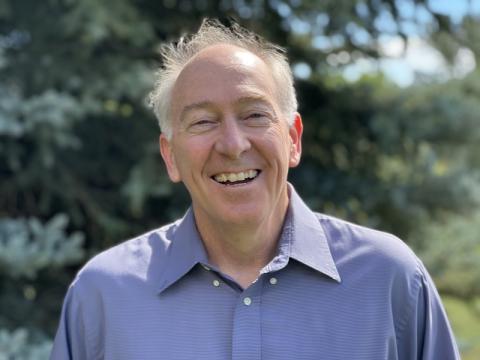
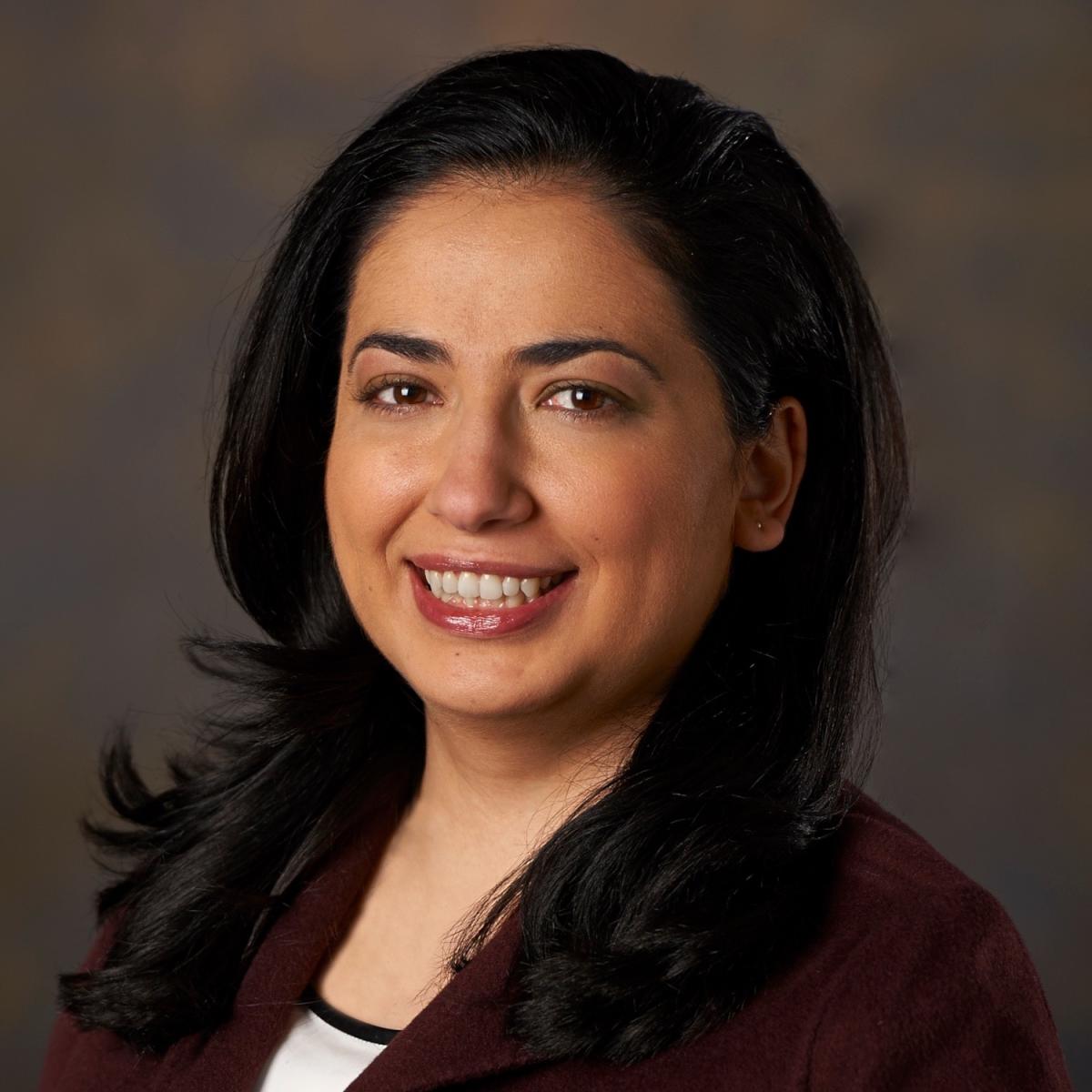
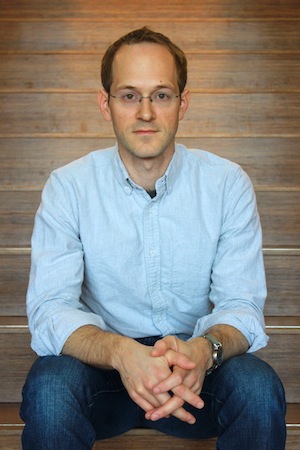
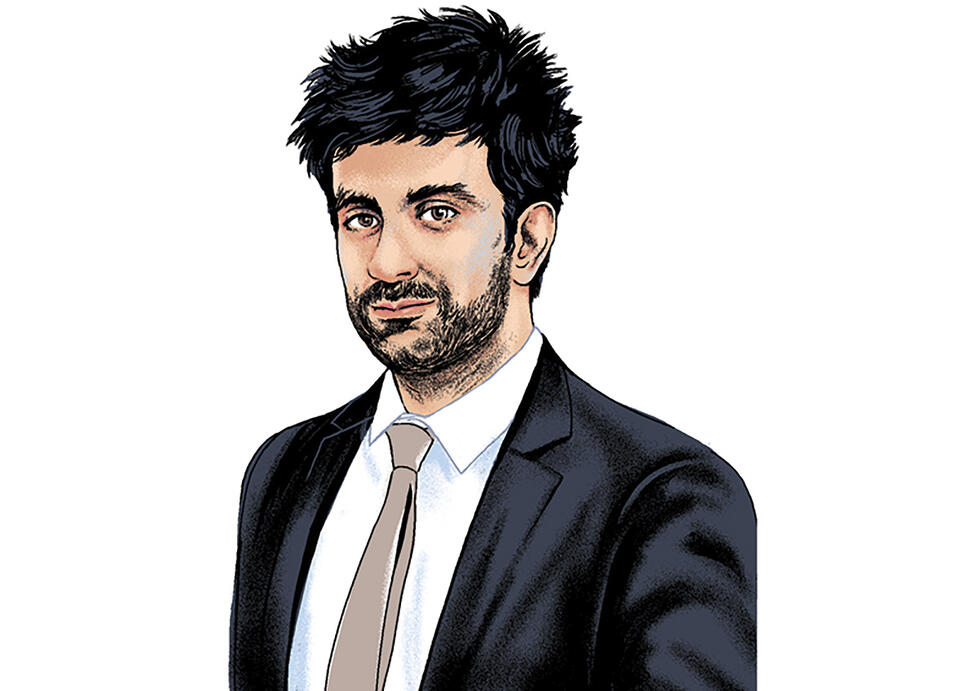
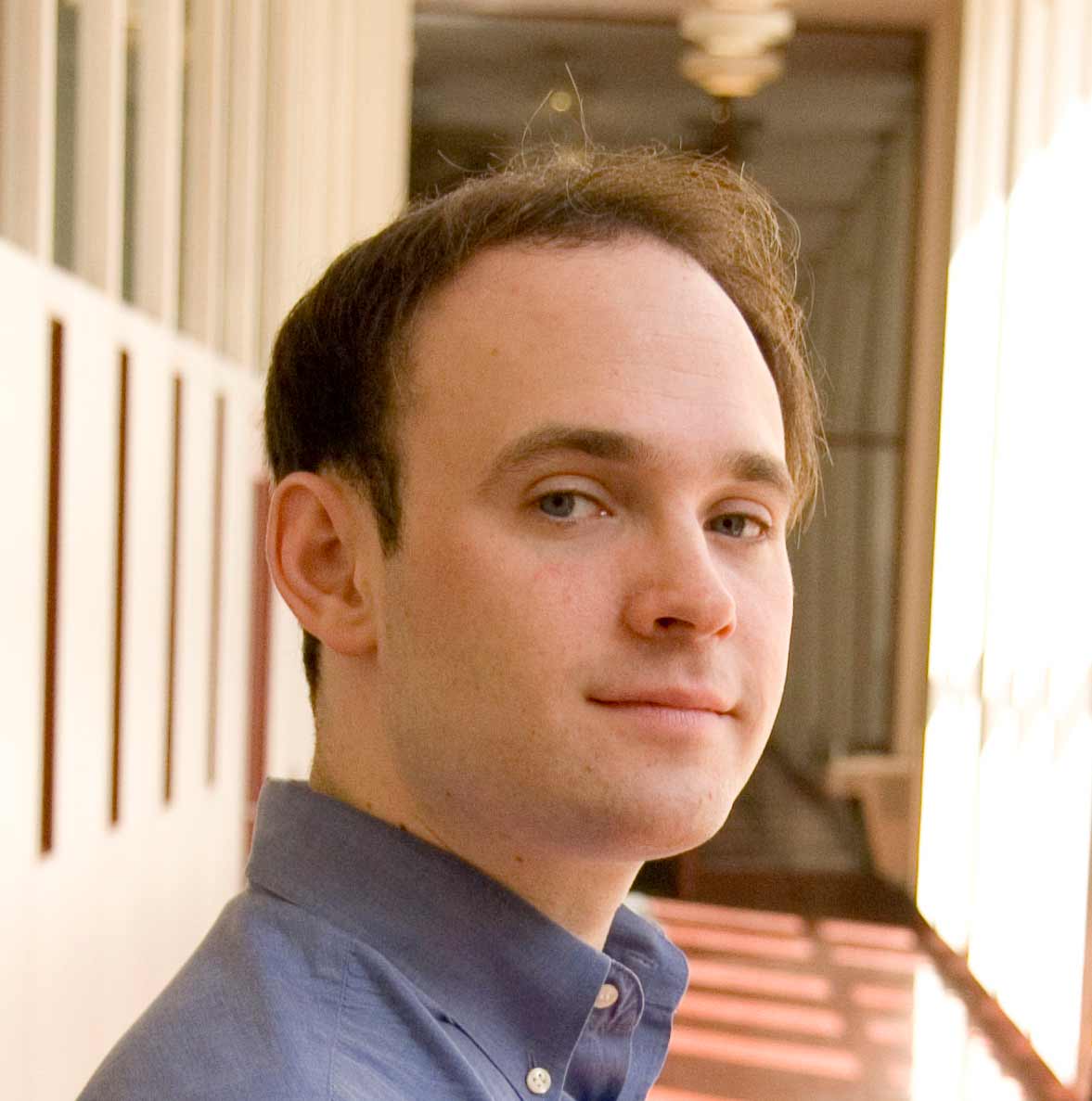
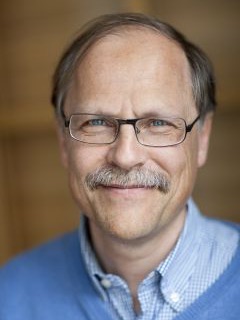
Renjie Feng is a Research Fellow in Mathematics and AI at the School of Mathematics and Statistics and the Sydney Mathematical Research Institute , University of Sydney. His work bridges probability theory, statistics, and applications in machine learning, deep learning, and artificial intelligence. His research interests focus on probability theory and its applications to machine learning , random matrix theory , and statistical physics . He investigates extreme value problems, spectral properties of random matrices, and topological features of random fields over Riemannian manifolds. Recent publications highlight trends in random matrix theory (GUE, GOE, GSE), extreme gap problems , determinantal point processes , and Wiener chaos . Collaborative works with F. Götze, D. Yao, and R. Adler emphasize U-statistics , multivariate linear statistics , and random topology inspired by Poisson point process studies.
Jinhyung Park is an Associate Professor in the Department of Mathematical Sciences at KAIST, Daejeon, Korea. He obtained his Ph.D. from KAIST in 2014 under Prof. Sijong Kwak and was mentored as a CMC Fellow at KIAS (2014–2019). His research focuses on Algebraic Geometry , particularly syzygies of algebraic varieties , secant varieties , and positivity of line bundles . Education: Ph.D., KAIST (2014); MS/BS, KAIST and University of Chicago (2002/2001). Research Interests: His work explores geometric properties of projective manifolds, singularities in algebraic geometry, and applications of Okounkov bodies to divisors and syzygies. Recent trends include Castelnuovo-Mumford regularity bounds (e.g., for threefolds with rational singularities) and subadditivity of Okounkov bodies in fiber spaces. Teaching: Courses include Matrix Groups, Algebraic Geometry, and Calculus. He previously taught at Sogang University and Purdue University. Professional Affiliations: Member of the Korean Mathematical Society, American Mathematical Society, and other international societies. Organized the 8th East Asia Number Theory Conference at KAIST (2019).
Kenneth McLaughlin is the Evelyn and John G. Phillips Distinguished Chair in Mathematics at Tulane University's School of Science & Engineering. He holds a Ph.D. and B.A. in Mathematics from New York University (1994 and 1989). Prior to Tulane, he served as faculty at the University of North Carolina, Chapel Hill, the University of Arizona, Universidade Federal de Brasília, and Colorado State University, where he also held leadership roles as Department Head and Chair. His research focuses on integrability, applying techniques across mathematics to study complex systems and phenomena. He has held visiting positions at institutions worldwide, including France, Italy, Brazil, Belgium, and the UK. McLaughlin’s research spans integrable systems, nonlinear dynamics, and asymptotic analysis. His work often involves the Riemann-Hilbert problem approach, orthogonal polynomials, and random matrix theory. Notable contributions include studies on soliton gases, the KdV equation, and universality in quantum operator dynamics. His recent articles explore topics such as asymptotic behavior of polynomials, soliton gas condensation, and hydrodynamic limits in integrable systems. McLaughlin’s academic career is marked by interdisciplinary collaboration and international research engagement.
Fatma Kılınç-Karzan is an Associate Professor of Operations Research at Carnegie Mellon University's Tepper School of Business, with a courtesy appointment as Associate Professor of Computer Science. She is also affiliated with the Algorithms Combinatorics and Optimization (ACO) PhD Program and was a Visiting Scientist at Berkeley's Simons Institute for the Theory of Computing during Fall 2017. Her educational background includes a PhD from Georgia Institute of Technology's H. Milton Stewart School of Industrial & Systems Engineering with a minor in Mathematics, supervised by Prof. Arkadi Nemirovski. She earned her B.S. and M.S. degrees from the Industrial Engineering Department of Middle East Technical University with a minor in Information Systems. Dr. Kılınç-Karzan's research spans mathematical optimization with emphasis on convex and non-convex optimization theory, algorithms, and applications. Her work bridges theoretical foundations with practical implementations in optimization under uncertainty (robust optimization, chance constraints, distributionally robust optimization), machine learning (preference learning from limited data), and business analytics. She develops foundational theory for large-scale optimization problems with applications in decision making under uncertainty and high-dimensional statistical inference. Analysis of her recent publications reveals a strong focus on convex hull characterizations, semidefinite programming relaxations, distributionally robust optimization, and online convex optimization frameworks. Her work demonstrates increasing integration of optimization theory with machine learning applications, particularly in developing data-driven approaches for decision making under uncertainty. NSF CAREER Award (2015) INFORMS Optimization Society Young Researcher Prize (2015) INFORMS Junior Faculty Interest Group (JFIG) Best Paper Award (2014) BP Junior Faculty Chair (2014-2015) Faculty Giving Chair (2012-2013) Wimmer Fellowship (2012-2013) Dr. Kılınç-Karzan has successfully mentored numerous PhD students who have received prestigious awards, including the 2021 INFORMS Optimization Society Best Student Paper (1st prize) and multiple honorable mentions. Her research has been supported by significant grants including an NSF CAREER Award, an ONR grant (with S. Küçükyavuz), and an AFOSR grant. She serves on editorial boards for Mathematical Programming, Operations Research, Mathematics of Operations Research, and other leading journals, and has held leadership positions in professional societies including the Mathematical Optimization Society and INFORMS Computing Society. Through her affiliations with CMU's Tepper School, Computer Science Department, and ACO Program, she collaborates across disciplines to advance optimization theory and its applications. Her professional service includes committee chair roles for major INFORMS competitions and program committee leadership for international optimization conferences.
Andrew Childs is a Professor at the University of Maryland, affiliated with the Department of Computer Science and the Institute for Advanced Computer Studies (UMIACS). He serves as Director of the NSF Quantum Leap Challenge Institute for Robust Quantum Simulation (RQS) and is a Fellow at the Joint Center for Quantum Information and Computer Science (QuICS). His research focuses on quantum algorithms for simulating physical systems, algebraic problems, and quantum walk protocols, with applications in quantum computing and computational complexity. University of Maryland Institute for Advanced Computer Studies (UMIACS) Joint Center for Quantum Information and Computer Science (QuICS) NSF Quantum Leap Challenge Institute for Robust Quantum Simulation Childs' research spans quantum simulation, quantum Fourier transform, phase estimation, and Hamiltonian dynamics. He has developed techniques to reduce quantum computational resources for simulating quantum systems and explored limitations of quantum computers through hidden subgroup problems and non-unitary dynamics. His publications cover diverse areas including quantum walk optimization, Hamiltonian simulation methods, and applications to cryptography and condensed matter physics. Recent works address spatial search algorithms, product formulas for commutators, and quantum routing protocols. As an educator, Childs has taught courses on quantum algorithms and information processing at both the University of Maryland and University of Waterloo, with lecture notes and materials spanning multiple years. Contact: amchilds@umd.edu | Office: ATL 3359 | Affiliated with University of Maryland's quantum research institutes.
Amir Ali Ahmadi is a Professor at Princeton University's Department of Operations Research and Financial Engineering (ORFE), with affiliations across multiple disciplines including PACM, Computer Science, Mechanical & Aerospace Engineering, Electrical Engineering, and the Center for Statistics and Machine Learning. He serves as Director of Princeton's Optimization and Quantitative Decision Science Certificate Program and has taken temporary roles at Citadel GQS (2021-2022) and Google Brain (2020-2021). His research bridges optimization theory , dynamical systems , and control theory , focusing on scalable algorithms for complex problems in robotics, autonomous systems, and machine learning. He has pioneered DSOS/SDSOS relaxations as alternatives to traditional sum-of-squares methods, enabling faster solutions through linear/second-order cone programming. Recent publications explore: Higher-order Newton methods for socially responsible investment Data-efficient learning of dynamical systems Computational complexity of local minima Robust-to-dynamics optimization frameworks Award highlights include: 2024 Egon Balas Prize in Optimization 2024 Princeton Engineering Council Teaching Award 2023 Distinguished Teaching Award (Princeton SEAS) 2019 NSF CAREER Award 2017 DARPA Young Faculty Award 2017 Sloan Fellowship in Computer Science He advises prominent researchers like Georgina Hall (Tucker Prize finalist) and Bachir El Khadir (Goldstine Fellow), and leads the Princeton Optimization Seminar and MURI project on Control-Oriented Learning on the Fly.
Aram Harrow is a Professor of Physics at the Massachusetts Institute of Technology (MIT) , affiliated with the MIT Center for Theoretical Physics and MIT Center for Quantum Engineering . He focuses on quantum information science and quantum algorithms , with additional interests in representation theory and optimization . His recent work explores quantum computing applications in chemical physics and statistical mechanics . Undergraduate and graduate degrees in Physics at MIT Faculty positions: MIT (2013-present), University of Washington (2010-12), University of Bristol (2005-10) Research Interests: His work bridges quantum information theory and many-body physics , including: Quantum algorithm design for chemistry and optimization Quantum circuit complexity and t-designs Entanglement dynamics in quantum systems Quantum-classical hybrid computing models Key Publications: Recent articles demonstrate quantum speedups for biomolecular free energy calculations , Hamiltonian simulation , and jet clustering algorithms . His research combines quantum complexity theory with practical implementations on near-term quantum devices. Scientific Awards: 2023 Simons Investigator 2018 APS Bennett Award 2017 IEEE Best Paper Award 2016 Kavli Frontiers Fellow Mentorship: He advises current PhD students Shankar Balasubramanian , Angus Lowe , and Norah Tan , with 12 former advisees including Anand Natarajan and Saeed Mehraban . His 2026 recruitment seeks one new graduate student.
Asaf Ferber is Associate Professor in Mathematics at University of California, Irvine, School of Physical Sciences. His research spans discrete mathematics including combinatorial games, random graphs, extremal hypergraph theory, and quantum computation. Research explores Hamiltonian cycles in random graphs, structural properties of pseudorandom graphs, and quantum algorithms for combinatorial problems. Recent work develops quantum approaches to graph learning and sparse recovery in random matrices. Awards: NSF CAREER Award Sloan Fellowship Distinguished Early Career Faculty Award for Research Air Force Research Grant NSF-BSF Grant Organizes conferences including SoCalDM Symposium and Desert Discrete Math Workshop, mentoring graduate students through UCI's Probability and Combinatorics Seminar.
Daniel A. Spielman is a Sterling Professor of Computer Science, Statistics & Data Science, and Mathematics at Yale University. He serves as the inaugural James A. Attwood Director of the Institute for Foundations of Data Science (FDS) and was previously co-Director of the Yale Institute for Network Science (YINS). He is also a member of TILOS, the NSF Institute for Learning-Enabled Optimization at Scale. His research interests span Spectral Graph Theory, Algebraic Graph Theory, Laplacian Matrices, Expander Graphs, and Random Walks on Graphs. Spielman has made fundamental contributions to understanding the mathematical foundations of data science, including work on smoothed analysis of algorithms, spectral sparsification, and solutions to the Kadison-Singer problem. Spielman's publications demonstrate a consistent focus on developing efficient algorithms with strong theoretical foundations. His work bridges pure mathematics, theoretical computer science, and practical applications in network analysis and machine learning. His research has evolved from foundational work on smoothed analysis to recent contributions in experimental design using discrepancy theory. His scientific honors include: Nevanlinna Prize for contributions to mathematical aspects of computer science Two Gödel Prizes (2008 and 2015) for outstanding papers in theoretical computer science MacArthur Fellowship ('Genius Grant') Simons Investigator award Membership in the National Academy of Sciences and American Academy of Arts and Sciences Spielman has advised numerous PhD students who have gone on to prominent positions in academia and industry. His teaching includes advanced courses in Spectral Graph Theory and Computation and Optimization. He has developed important software packages like Laplacians.jl for solving Laplacian linear equations and related problems.
Jonathan A. Kelner is a Professor of Applied Mathematics in the Department of Mathematics at the Massachusetts Institute of Technology (MIT) and a member of the MIT Computer Science and Artificial Intelligence Laboratory (CSAIL). His research focuses on applying techniques from pure mathematics to solve fundamental problems in algorithms and complexity theory, with the goal of developing practical algorithms for real-world questions. Dr. Kelner received his undergraduate degree from Harvard University and his Ph.D. in Computer Science from MIT in 2006. Before joining the MIT faculty, he spent a year as a member of the Institute for Advanced Study. His educational background has provided a strong foundation for his interdisciplinary research spanning mathematics and computer science. His research interests include combinatorial optimization, mathematical programming, spectral graph theory, distributed computing, machine learning, computational geometry and topology, computational biology, signal processing, and random matrix theory. Kelner's work demonstrates how deep theoretical insights can lead to practical algorithmic improvements, particularly in graph algorithms and optimization problems. His approach often involves connecting seemingly disparate areas of mathematics to create novel algorithmic techniques. Analysis of his recent publications reveals a strong focus on spectral graph theory, optimization algorithms, and the Sum-of-Squares method. His work frequently addresses fundamental questions in theoretical computer science with practical implications for algorithm design. A notable trend in his research is the development of nearly-linear-time algorithms for various graph problems, which represents significant improvements over previous approaches. NSF CAREER Award Alfred P. Sloan Research Fellowship NEC Award for Research in Computers and Communication Sprowls Doctoral Dissertation Award Best Student Paper Award at STOC 2004 Best Paper Award at STOC 2011 Kokusai Denshin Denwa Junior Faculty Chair 2008 Harold E. Edgerton Faculty Achievement Award 2011 School of Science Award for Excellence in Undergraduate Education 2012 Professor Kelner has been actively involved in mentoring students and has received recognition for his teaching excellence, including the School of Science Award for Excellence in Undergraduate Education in 2012. His research has been supported by prestigious grants including the NSF CAREER Award. He has collaborated extensively with researchers across multiple institutions, often working with other leading figures in theoretical computer science to produce groundbreaking results in algorithm design. At MIT, Kelner is part of both the Mathematics Department and CSAIL, positioning him at the intersection of theoretical mathematics and practical computer science. This dual affiliation reflects the interdisciplinary nature of his work, which bridges pure mathematical theory with concrete algorithmic applications.
Kurt Johansson is a Full Professor of Mathematics at KTH Royal Institute of Technology, Sweden. His academic journey includes roles as Associate Professor at KTH (1993-2001) and Uppsala University (1988-1993), alongside research funded by the Swedish Natural Science Research Council (1998-2003). His primary affiliations are within the Department of Probability, Mathematical Physics & Statistics at KTH, where he also coordinates courses on Differential Equations and Fourier Analysis. Education: BSc in Physics (1982) and PhD in Mathematics (1988), both from Uppsala University. Research interests focus on Probability Theory , Mathematical Physics , and Random Matrix Theory , with contributions to stochastic models, determinantal processes, and universality in statistical mechanics. Key Awards: Wallenberg Prize (1995), Rollo Davidson Prize (2000), Göran Gustafsson Prize (2002), Fellow of the American Mathematical Society (2012), and multiple Wallenberg Scholar grants (2011-2023). Grants: Major funding from the Swedish Research Council (VR), K&A Wallenberg Foundation, and others. His research group explores Random Matrices, Stochastic Models, and Analysis , with notable work on the Arctic Circle Theorem and KPZ universality class. Recent publications analyze Brownian directed percolation and domino tilings of the Aztec diamond, reflecting his focus on interdisciplinary applications of probability and mathematical physics.
Jon Keating is a Professor at the University of Oxford affiliated with the Mathematical Institute . His research spans Mathematical Physics , Number Theory , and Stochastic Analysis , with a focus on Random Matrix Theory and its applications to quantum systems and number theory. Research Trends: His recent work explores connections between random matrices and number-theoretic functions, with contributions to understanding moments of L-functions, characteristic polynomials, and quantum chaos. Key themes include asymptotic analysis, recursive structures, and interdisciplinary applications in nonlinear systems. Publications: Highlights include studies on CUE characteristic polynomials, the Ratios Conjecture, and collaborations in Nonlinearity , International Mathematics Research Notices , and Transactions of the American Mathematical Society .
Andrea Montanari is a Professor of Mathematics and Statistics at Stanford University, affiliated with the Department of Mathematics and Statistics. His research focuses on high-dimensional statistics, machine learning theory, optimization algorithms, and statistical physics, with applications to neural networks and complex systems. He has contributed extensively to understanding generalization in overparametrized models, spin glass theory, and algorithmic methods like approximate message passing. His work bridges theoretical computer science and mathematical physics, addressing challenges in data analysis and learning from high-dimensional datasets. Notable themes include analyzing neural network dynamics, optimizing high-dimensional landscapes, and developing efficient algorithms for sparse and low-rank matrix estimation. Montanari’s publications explore topics such as the interplay between statistical and computational limits, the behavior of gradient-based methods, and the theoretical foundations of modern machine learning. His recent research demonstrates a focus on fundamental questions in learning theory, including the study of phase transitions in statistical estimation, the role of overparametrization in generalization, and the mathematical underpinnings of contemporary algorithms. While no specific awards are listed here, his contributions reflect significant impact in interdisciplinary fields.
Ashley M R Montanaro is a Professor of Quantum Computation at the School of Mathematics, University of Bristol . Active in quantum computing research since at least 2014, they lead projects at the intersection of quantum algorithms , computational complexity , and quantum information theory , affiliated with the Bristol Quantum Information Institute. Research interests focus on quantum algorithm design , computational complexity analysis , and quantum simulation . Key work includes developing variational quantum algorithms for phase transition detection, Hamiltonian simulation techniques, and quantum-classical hybrid methods for solving complex problems in physics and optimization. Recent publications demonstrate expertise in: Quantum phase diagram simulation with low-depth circuits Quantum speedups for constraint satisfaction problems Quantum communication complexity of machine learning tasks Quantum-enhanced optimization heuristics Hamiltonian simulation with time-dependent product formulas Quantum algorithm complexity analysis Scientific awards include: EPSRC Fellowship (2014-2019) - "New insights in quantum algorithms and complexity" Active in quantum software development through projects like: "Quantum Algorithms from Foundations to Applications" (ERC-2018-COG) "Quantum Computing and Simulation Hub" (2019-2024) "Prosperity Partnership in Quantum Software" (2019-2023)
Ghaith Hiary is a Professor and Vice Chair for Graduate Recruitment in the Department of Mathematics at The Ohio State University. He holds a PhD from the University of Minnesota (2008). His research focuses on computational and analytic number theory, with emphasis on the Riemann zeta function, L-functions, random matrix theory, and asymptotic analysis. Hiary's work bridges theoretical mathematics and high-performance computation. He develops efficient algorithms (e.g., amortized-complexity methods) to evaluate zeta functions at extreme heights (e.g., near t=10 28 ), implemented in C++/Mathematica. His research uses random matrix models to study zeta-function moments and employs techniques like van der Corput estimates and hybrid methods for explicit bounds. His publications demonstrate consistent focus on zeta-function computations, factorization algorithms, and arithmetic biases. Recent work (2022-2025) explores invariant measures, Lehman's method generalizations, and sign changes in random multiplicative functions, maintaining strong ties to analytic and probabilistic number theory. Hiary shares code and datasets via GitHub, including implementations of T 1/3 algorithms for zeta computations. He collaborates with institutions like the University of Waterloo and maintains numerical databases of zeta zeros.