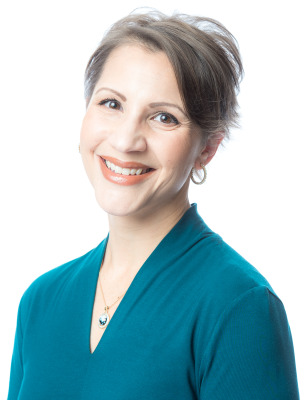
Laura Garofoli is a Professor and Department Chair of Psychological Science at Fitchburg State University , affiliated with the School of Health and Natural Sciences . She teaches courses such as Lifespan Development , Adolescent Development , and History and Systems of Psychology . Education: Ph.D., University of Massachusetts Amherst M.S., University of Massachusetts Amherst B.A., Fairfield University Research Interests Investigating gender differences in mathematics performance and educational outcomes Improving teacher preparation and pedagogical practices Understanding problem-solving and transfer mechanisms in young children Analyzing the impact of mental health on academic achievement Statistical analysis of MCAS data to identify sex-based disparities
Professor Talal Rahman is a faculty member at the Western Norway University of Applied Sciences, where he works in the Department of Computer Science, Electrical Engineering and Mathematical Sciences. His office is located at Bergen KRONSTAD D305, and he can be reached at phone number +47 55 58 72 46. Professor Rahman's research spans several key areas in computational mathematics and scientific computing. His primary research interests include: Scientific Computing Numerical Analysis Numerical Methods for Partial Differential Equations Preconditioning Finite Element with Domain Decomposition Methods Variational Image Processing Artificial Intelligence and Machine Learning applications Professor Rahman's extensive publication record demonstrates a strong focus on domain decomposition methods, particularly Schwarz methods and their applications to multiscale problems. His recent work shows an increasing integration of machine learning techniques with traditional numerical methods, as evidenced by publications on neural network applications for environmental modeling and capelin migration patterns. His research also extends to biomedical applications, including computational analysis of biodegradable materials and bone tissue engineering scaffolds. He has made significant contributions to the development of adaptive preconditioners and parallel algorithms for solving complex numerical problems, with his work on the TV-Stokes model for image processing representing an important contribution to the field of variational image processing. Professor Rahman has supervised numerous research projects and students, though specific student names are not provided in the available information. His research appears to be supported by grants related to computational science and engineering, though specific grant details are not mentioned in the provided text. Based on his research areas, Professor Rahman likely collaborates with various research groups focused on computational science, with potential connections to biomedical engineering labs and environmental research teams studying the Barents Sea ecosystem.
Nicholas Bambos is the R. Weiland Professor in the School of Engineering at Stanford University, holding a joint appointment in the Department of Electrical Engineering and the Department of Management Science & Engineering. He served as the Fortinet Founders Department Chair of the Management Science & Engineering Department from 2016 to 2020. His academic career spans over three decades, with previous positions as an assistant professor (1989-1995) and tenured associate professor (1995-1996) at UCLA before joining Stanford in 1996. Prof. Bambos's primary research interests focus on the architecture and high-performance engineering of computer systems and networks, along with data analytics emphasizing medical and health-care applications. His work spans multiple domains including networking and the Internet, cloud computing, multimedia streaming, computer security, and digital health. Methodologically, his contributions extend to network control, online task scheduling, routing and distributed processing, and machine learning and artificial intelligence. His research has resulted in over 300 peer-reviewed publications that demonstrate a strong interdisciplinary approach, bridging theoretical computer science with practical healthcare applications. The trajectory of Prof. Bambos's recent publications reveals a strategic expansion from traditional networking and systems research into healthcare analytics, particularly opioid use prediction and digital health monitoring. His work increasingly integrates machine learning techniques with domain-specific medical knowledge, showing a clear evolution toward solving complex societal challenges through technological innovation. Many publications demonstrate collaborative work across engineering, medical, and data science disciplines, reflecting the growing importance of interdisciplinary research in addressing modern healthcare challenges. His significant scientific achievements have been recognized through numerous prestigious awards: R. Weiland Professorship in Engineering (2016-present) Eugene L. Grant Teaching Award (2014) IBM Faculty Award (2002) Cisco Systems Faculty Scholar (1999-2003) National Young Investigator Award from NSF (1992-1997) Prof. Bambos has graduated over 40 doctoral students who have gone on to leadership positions in academia, Silicon Valley industries, technology startups, finance, and venture capital. His research has been supported by significant funding, including a $30 million Stanford Networking Research Center which he directed from 1999 to 2005. Beyond traditional academic roles, he has served on various editorial boards, scientific committees, and as a consultant and co-founder of technology startups, demonstrating his commitment to translating academic research into real-world impact. He leads the Computer Systems Performance Engineering Lab (Perf-Lab) at Stanford, which comprises doctoral students and industry visitors engaged in various research projects. His lab serves as an interdisciplinary hub connecting theoretical computer science with practical applications in healthcare, energy, and networking domains. The lab's collaborative environment fosters innovation across traditional academic boundaries, reflecting Prof. Bambos's broader research philosophy of addressing complex problems through integrated, multi-disciplinary approaches.
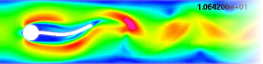
Weiwei Hu is a Professor in the Department of Mathematics at the University of Georgia, specializing in applied mathematics with a focus on control theory and fluid dynamics. Her research bridges theoretical analysis and computational methods to address complex problems in partial differential equations and optimal control systems. She received her Ph.D. in Mathematics from Virginia Tech, establishing the foundation for her expertise in mathematical modeling and analysis. Her educational background directly informs her innovative approaches to fluid dynamics and control problems. Professor Hu's research spans approximation and mathematical control theory of partial differential equations, optimal control of transport and mixing via fluid flows, well-posedness and long-time behavior of mathematical fluid dynamics, data-driven optimal control for network dynamics, computational methods for model reduction, and reliability analysis of renewable systems. She develops advanced theoretical frameworks and numerical algorithms to solve boundary control problems in Stokes and Navier-Stokes flows, with applications in engineering and environmental systems. Her publication record from 2018-2023 reveals consistent advancement in fluid flow control, particularly in optimal mixing and transport phenomena. She has pioneered numerical methods for boundary control of fluid systems while expanding into data-driven approaches for network dynamics and renewable energy applications. Her collaborative work with institutions including Kansas State University, Missouri S&T, and Carnegie Mellon University demonstrates the interdisciplinary impact of her research. Her scientific contributions have been recognized with the prestigious Humboldt Research Fellowship for Experienced Researchers in 2024. Professor Hu has secured over $1.5 million in research funding as principal investigator from NSF, AFOSR, and DARPA, including a 2023-2026 AFOSR grant on hybrid control of semi-dissipative systems and multiple NSF collaborative projects addressing deep-learning-enabled optimization for power systems and computational methods for optimal transport. Her grant portfolio reflects leadership in securing competitive funding for high-impact mathematical research. She actively collaborates with researchers across the United States and Europe on interdisciplinary projects integrating PDE modeling, machine learning, and topology analysis for applications in MRI analysis and renewable energy systems, demonstrating strong leadership in collaborative mathematical research.
Mirco Raffetto is a Full Professor in the Department of Naval, Electrical, Electronic, and Telecommunications Engineering (DITEN) at the University of Genoa under the Polytechnic School. He actively participates in academic governance as a member of the Department Board, Scientific Council of the Interuniversity Center for Electromagnetic Fields and Biosystems (ICEMB), and School Council. Research Focus: His work spans Electromagnetic field analysis for moving media Computational electromagnetics with finite element methods Metamaterial modeling and inverse scattering Photobiomodulation effects on mitochondrial function Microwave imaging for biomedical applications Waveguide and cavity analysis for industrial systems His research combines theoretical rigor with numerical simulations to solve complex problems in electromagnetics and interdisciplinary biosystems. Teaching: He teaches graduate courses on Electromagnetic Fields in multiple degree programs including Computer Engineering, Electronics Engineering, and Biomedical Engineering. His teaching emphasizes both fundamental theory and practical applications.
Frank Puppe is a Full Professor of Computer Science at the University of Würzburg, Germany, where he holds the Chair of Computer Science VI (Artificial Intelligence and Applied Computer Science) within the Faculty of Mathematics and Computer Science. He is also affiliated with the Center for Artificial Intelligence and Data Science (CAIDAS) and leads research in artificial intelligence, knowledge systems, and applied computer science. His educational background includes a Diploma in Computer Science from Bonn University (1983), a dissertation on Diagnostic Problem Solving from Kaiserslautern University (1986), and a habilitation on Problem Solving with Expert Systems from Karlsruhe University (1991). Professor Puppe's research spans multiple domains of artificial intelligence and its applications. His primary focus areas include Medical Image Analysis , where he develops AI systems for endoscopic disease detection and medical information extraction; Document Analysis and OCR , with significant contributions to processing historical documents and musical manuscripts; and Information Extraction from diverse domains including medical, legal, and literary texts. His work in E-Learning and E-Assessment has led to innovative systems for automatically evaluating programming assignments and argumentation structures. His recent publications demonstrate a strong interdisciplinary approach, bridging computer science with medicine, digital humanities, and law. A notable trend is the application of deep learning techniques to historical document analysis and medical imaging, while maintaining a strong foundation in knowledge-based systems. His research consistently focuses on practical applications of AI that solve real-world problems across multiple domains. 2015-2017: Senator at University of Würzburg 2011-2013: Dean at University of Würzburg 2008-2011: Dean of Students at University of Würzburg Professor Puppe leads multiple significant research projects including KINERGY (optimization of heating systems), DZ-PTM (order entry optimization in radiology), Corpus Monodicum (edition of medieval Latin music), and projects related to adenoma detection in colonoscopy. His laboratory develops tools such as OCR4all for historical document processing and it4all for programming assessment.
Prof. Dr. Savaş Dayanık is a faculty member at Bilkent University, where he contributes to the fields of Industrial Engineering and Operations Research as a Professor. He holds a Ph.D. and M.Phil. from Columbia University and has been affiliated with Bilkent University for his M.S. and B.S. degrees, indicating a long-standing academic relationship with the institution. Education: Ph.D., 2002, Industrial Engineering and Operations Research, Columbia University M.Phil., 2000, Industrial Engineering and Operations Research, Columbia University M.S., 1996, Industrial Engineering, Bilkent University B.S., 1994, Industrial Engineering, Bilkent University His research focuses on advanced stochastic methodologies, including Stochastic Processes, Stochastic Dynamic Programming, and Stochastic Optimal Control. These theoretical frameworks are applied to practical challenges in Financial Engineering, Statistics, and Operations Management, bridging mathematical rigor with real-world problem-solving in industrial and financial systems.
Malte Helmert is a Professor at the University of Basel in the Department of Mathematics and Computer Science. He previously worked at the University of Freiburg's Research Group on the Foundations of Artificial Intelligence from 2001 to 2011. His research focuses on intelligent problem-solving , particularly in automated planning , combinatorial search , constraint satisfaction , and NP-hard graph problems . Helmert has made significant contributions to classical planning, including the development of the Fast Downward planning system and its derivatives. Education : Diploma in Computer Science (M.Sc.) from the University of Freiburg (2001) Ph.D. in Computer Science from the University of Freiburg (2006) Research interests encompass the theoretical and practical aspects of automated planning, including heuristic search , optimal planning , abstraction techniques , and domain-independent planning . His work explores merge-and-shrink abstractions , landmark progression , and cost partitioning algorithms for classical planning systems. Recent publications analyze advancements in pseudo-Boolean proof logging , higher-dimensional potential heuristics , and correlation complexity in planning domains. These works often integrate mathematical modeling, algorithm design, and empirical benchmarking. Scientific awards include the AAAI Fellow (2021), EurAI Fellow (2020), multiple Best Paper Awards at ICAPS and SoCS conferences, and the Computers and Thought Award (2011). He also received the VDI-Förderpreis for his Master’s thesis. Software contributions include the Fast Downward planning system, MIPS (now maintained by Stefan Edelkamp), and COVER (a vertex cover solver). Helmert has organized tutorials at ICAPS and AAAI conferences on topics like landmark progression , abstraction heuristics , and LP-based heuristics .
Dr. Priscila Corrêa is an Associate Professor at the Faculty of Education, University of Windsor, Canada. She brings a unique interdisciplinary background with a Ph.D. in Mathematics Education from the University of Alberta and a Master of Science in Electrical Engineering from the Pontifical Catholic University of Rio de Janeiro. Her work bridges engineering and education, with a strong focus on improving mathematics education in both Canadian and Brazilian contexts. Education: Ph.D. in Mathematics Education, University of Alberta M.Eng., Pontifical Catholic University of Rio de Janeiro B.Ed., Federal University of Rio de Janeiro B.Eng., Federal Centre of Technological Education of Rio de Janeiro Research Interests: Dr. Corrêa’s research agenda centers on transforming mathematics education through innovative teaching approaches, assessment strategies, and curriculum analysis. Her work delves deeply into assessment in mathematics , seeking to develop authentic and proficiency-based evaluation methods. She is particularly concerned with teaching for mathematical proficiency , aiming to foster deep conceptual understanding among students. Her exploration of mathematical modelling as a pedagogical tool highlights its potential to enhance student engagement and mathematical competency. Additionally, she critically examines anti-Black racism and mathematics , investigating the racialized experiences of Black students in STEM disciplines to promote equity and inclusion. Her research also encompasses computational thinking in mathematics education, exploring how algorithmic concepts can be integrated into teacher preparation programs. Dr. Corrêa’s comparative studies between Brazilian and Canadian mathematics curricula provide valuable insights into cross-national educational practices. Her work on curriculum analysis employs innovative methodologies like “combined reading” to uncover nuanced differences in how mathematical concepts, such as fractions and numbers, are approached in different educational systems. Recent Research Trends: Her 2024 publications reflect a continued emphasis on comparative curriculum analysis and the intersection of race and mathematics education. The collaborative work on curricular trajectories in Brazil and Canada demonstrates her commitment to international perspectives in mathematics education. Her narrative inquiries into the experiences of Black women and undergraduate students in STEM reveal a deepening focus on social justice and equity within mathematics education. Scientific Awards: While no specific awards are listed in the provided text, Dr. Corrêa’s extensive publication record and her role as an Associate Professor at a major Canadian university indicate recognition within her field. Teaching and Advising: Dr. Corrêa teaches a wide range of mathematics education courses at both the undergraduate teacher education and graduate levels. Her courses span from foundational mathematics for primary/junior divisions to specialized methods in secondary school mathematics teaching, curriculum development in mathematics education, and comparative education. Her involvement in integrating theory and classroom practice suggests she mentors teacher candidates and graduate students, though specific student names are not provided. Labs and Teams: While no specific lab or research group is mentioned, her collaborative publications with researchers like L. Rangel, J.A. Oloo, and others indicate active participation in research teams focusing on mathematics education and equity.
Dr. Jaroslav Hron is an Associate Professor at the Department of Numerical Mathematics within the Faculty of Mathematics and Physics at Charles University in Prague, Czech Republic. His primary research focuses on fluid mechanics, biomechanics, and numerical analysis, with particular expertise in fluid-structure interaction problems and their applications to cardiovascular mechanics. Dr. Hron's research interests span fluid mechanics, biomechanics, numerical analysis, and computational mathematics. His work primarily investigates fluid-structure interaction problems, particularly as they apply to cardiovascular mechanics and hemodynamics. He has made significant contributions to the understanding of non-Newtonian fluids, pressure-dependent viscosities, and the development of advanced numerical methods for solving complex fluid flow problems. His research often bridges the gap between theoretical mathematics and practical applications in biomedical engineering. Analysis of his recent publications reveals a strong focus on cardiovascular applications, particularly in determining pressure data from velocity measurements and modeling blood flow in complex geometries. His work demonstrates a consistent progression from theoretical considerations to practical applications in biomechanics, with increasing emphasis on computational methods for fluid-structure interaction problems. The research shows interdisciplinary collaboration across mathematics, engineering, and medical fields. Dr. Hron has been actively involved in academic advising and research supervision, contributing to the development of computational methods in fluid mechanics. His work has established important benchmarks in fluid-structure interaction simulation, particularly in hemodynamic applications. His laboratory work primarily focuses on computational fluid dynamics and fluid-structure interaction, with applications to cardiovascular mechanics. He has developed and refined numerical methods for simulating complex fluid behaviors, particularly those relevant to biological systems.
Mihwa Park is an Assistant Professor in the Department of Curriculum and Instruction at Texas Tech University, specializing in STEM education. With a decade of middle school science teaching experience in South Korea and dual master's degrees in physics and science education, she earned her doctorate in Science Education from the University at Buffalo. Her research focuses on integrating assessments with educational technologies to enhance conceptual understanding in science, particularly through interactive computer simulations. Education: Dual Master’s in Physics & Science Education (South Korea), Doctorate in Science Education (University at Buffalo) Current Role: Assistant Professor, Department of Curriculum and Instruction, Texas Tech University Her research explores formative assessment strategies in STEM classrooms, emphasizing data-based decision making and the application of computer models. Recent projects analyze achievement emotions in physics education, cross-disciplinary energy concepts, and the use of simulation-based assessments. Her publications demonstrate a consistent focus on leveraging technology for deeper conceptual understanding and improving teacher practices through data analytics. Key Research Areas: STEM Education, Physics Learning, Educational Technology, Formative Assessment, Cross-Disciplinary Science
Zachary Kincaid is an Associate Professor in the Department of Computer Science at Princeton University. His research focuses on program analysis , logic , and programming languages , with emphasis on making analysis compositional and robust . PhD, University of Toronto (2016) BSc, Western University Research Interests Dr. Kincaid develops algebraic program analysis frameworks combining symbolic methods with abstract interpretation. His work addresses challenges in: Compositional analysis of concurrent and recursive programs Termination analysis for loops with complex control flow Non-linear numerical invariant generation Strategy synthesis for logical games Parameterized program verification Publication Trends His research output spans program analysis (2024-2010), formal verification (2018-2010), concurrency (2016-2010), and automated synthesis (2013-2012). Recent work (2024) explores polynomial ideals and nonlinear ranking functions , while foundational contributions include vector addition systems and recurrence-based invariants . Scientific Engagement Dr. Kincaid contributes to the academic community through: Program Committee service (PLDI, POPL, CAV, IJCAI, LICS, FMCAD, ESOP, etc.) Co-developing the Duet analyzer for unbounded concurrency Collaborative work with leading researchers (Tom Reps, Azadeh Farzan, Jason Breck) Advising & Grants He advises PhD students and leads research funded by the ONR grant N00014-19-1-2318 . Current advisees include Jake Silverman and Shaowei Zhu, while former student Charlie Murphy (PhD 2023) now holds a postdoctoral position at University of Wisconsin-Madison. Labs & Teams Dr. Kincaid co-developed the Duet program analyzer and contributes to tools like Srk and SimSat . His work integrates SMT solvers (MathSAT, Z3) and mathematical frameworks (rational vector addition systems, recurrence relations) for robust program analysis.
Enrico Bertuzzo is an Associate Professor in the Department of Physical, Computer and Mathematical Sciences at the University of Modena and Reggio Emilia. He teaches Physics 1 for Vehicle Engineering students in the Department of Engineering "Enzo Ferrari," and advanced courses including Quantum Field Theory and Theoretical Astroparticle Physics for Physics Master's students. His research focuses on theoretical physics with specialization in: Quantum Field Theory and its mathematical foundations Particle physics and fundamental interactions Dark matter models and early universe cosmology Gravitational particle production Thermal and non-thermal relic abundances Mathematical methods in theoretical physics Professor Bertuzzo's work bridges theoretical physics with cosmological applications, particularly in understanding dark matter candidates and physics of the early universe. His scientific disciplinary sector is PHYS-02/A: Theoretical physics of fundamental interactions, models, mathematical methods and applications. His teaching methodology combines theoretical lectures with practical problem-solving exercises, emphasizing both foundational concepts and advanced applications. He teaches primarily in English for graduate courses while some undergraduate instruction may be in Italian.
Nikolina Ilieva Nikolova is an Associate Professor at the Faculty of Mathematics and Informatics , Sofia University "St. Kliment Ohridski" , Bulgaria. Her work focuses on Teaching Methodology in Informatics , ICT in Education , and Competence-Based Learning . She contributes to international projects like Erasmus+ and MOTIVATE , exploring digital competence development and inclusive education strategies. PhD, Sofia University (2017), Pedagogy of Education (Informatics) Master Degree, Sofia University (1996), Mathematics and Informatics Her research emphasizes innovative teaching methods and digital transformation in education, particularly in secondary schools. Recent publications address peer-assessment , distance education impacts during the pandemic, and inclusive learning design . She co-developed educational tools like the PLEIADE Intellectual Output series and Share.TEC portal for teacher training. Key projects: 21st Century Skills (Erasmus+), Multicultural Classrooms (Erasmus+), SUMMIT (NextGenerationEU) Collaborates with institutions across Europe, including Italy, Spain, and Albania
Dr. Jarise Kaskens serves as a Lecturer in Didactics of High Expectations at the Knowledge Center for Talent Development at Rotterdam University of Applied Sciences. She also holds positions as a researcher and senior lecturer at Windesheim University of Applied Sciences, where she has worked for twelve years. Kaskens received her PhD from Radboud University in 2022 and specializes in mathematics education, teacher professional development, and inclusive teaching practices. Her work focuses on the practical application of research findings to improve educational outcomes, particularly through the concept of 'high expectations' in teaching. Kaskens' research interests center around didactics of high expectations, mathematics education, arithmetic conversations, inclusive education, and teacher professional development. Her work examines how teacher expectations influence student performance and how specific teaching behaviors can promote higher achievement, particularly for students from disadvantaged backgrounds. She investigates the relationship between teacher professional development and effective mathematics teaching, with a focus on practical implementation in diverse educational settings from primary through higher education. Analysis of her recent publications reveals a consistent focus on translating educational research into classroom practice, particularly regarding mathematics education and teacher-student interactions. Her work shows a progression from theoretical foundations of high-expectation teaching to practical implementation strategies across various educational contexts. A significant portion of her research examines dynamic mathematics interviews as tools for understanding student thinking and tailoring instruction to individual needs, while also exploring how teacher beliefs and behaviors impact student outcomes. Kaskens has developed and led the Windesheim-wide learning lab 'Teacher Roles, Didactics, and Pedagogical Relationships,' which focuses on equipping teachers for challenging and flexible educational environments. Her approach emphasizes the importance of activating interactions between teachers and students, with particular attention to how small changes in teacher behavior can significantly impact student motivation and achievement. As a researcher and educator, Kaskens works extensively with teacher training programs, focusing on strengthening the didactic professionalism of teacher educators. She collaborates with various research groups within Rotterdam University of Applied Sciences, particularly those focused on educational quality and inclusive learning environments. Her work has practical applications across multiple educational sectors, from early childhood education through higher professional education.