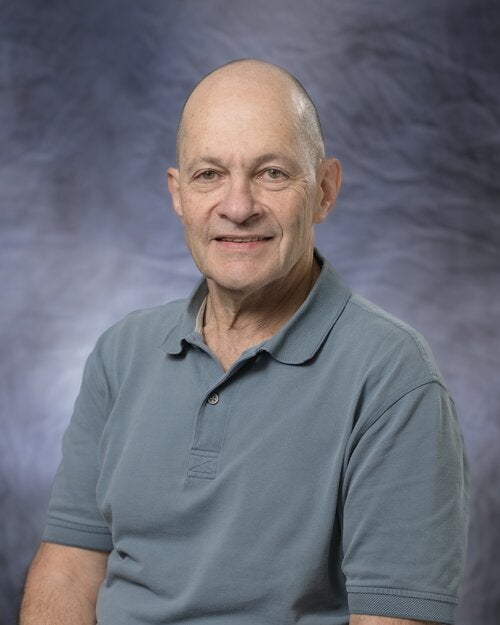
Che-Wei Chang is an Assistant Professor in the Department of Ocean Engineering at the University of Rhode Island (URI) , where he joined in August 2023. Prior to URI, he was an Assistant Professor at the Disaster Prevention Research Institute of Kyoto University in Japan. He earned his Ph.D. in Civil and Environmental Engineering from Cornell University in 2017, along with an M.S. in Civil Engineering from National Taiwan University (2008) and a B.S. in Soil and Water Conservation from National Chung Hsing University (2006). Ph.D., Civil and Environmental Engineering, Cornell University, 2017 M.S., Civil Engineering, National Taiwan University, 2008 B.S., Soil and Water Conservation, National Chung Hsing University, 2006 Dr. Chang specializes in coastal engineering , coastal resilience , and nature-based solutions for mitigating coastal hazards. His research focuses on water waves and nearshore hydrodynamics , particularly how mangroves and other natural features reduce wave impacts from tsunamis, storm surges, and rising sea levels. He integrates numerical modeling , laboratory flume experiments , and field observations to advance understanding of coastal morphodynamics under climate change. His recent work, including 2025 publications on SPH simulations and field studies , emphasizes mangrove resilience against breaking wave forces and critical wave conditions leading to mangrove failure. Earlier studies (2015–2022) explore Boussinesq modeling , wave-vegetation interactions , and coastal forest functional evaluation . These articles highlight his commitment to sustainable shoreline management and science-based coastal design. Dr. Chang received the Coastal Engineering Journal (CEJ) Citation Award 2024 for his impactful review paper and was appointed a Senior Fellow of the Coastal Institute (URI) in 2025 . He actively mentors graduate students like Felipe Espinoza and Ramin Safari , who investigate wave-mangrove dynamics and vegetation impacts on coastal systems . His lab at URI, the Chang Coastal Lab , collaborates on conferences (e.g., ICCE 2024) and NSF-funded projects like NHERI RAPID Facility workshops.
Mahmoud Hussein is a Professor in the Department of Aerospace Engineering Sciences at the University of Colorado Boulder, affiliated with the College of Engineering and Applied Science. He holds the Alvah and Harriet Hovlid Professorship and leads the Aerospace Mechanics Research Center (AMReC). His research focuses on phononics, nanophononic metamaterials, thermal transport, and fluid-structure interaction. He has pioneered advancements in controlling heat and flow using phononic crystals and metamaterials, with applications in energy efficiency and aerospace systems. Education: PhD, Mechanical Engineering, University of Michigan-Ann Arbor, 2004 MS, Mathematics, University of Michigan-Ann Arbor, 2002 MS, Applied Mechanics, University of Michigan-Ann Arbor, 1999 MS, Mechanical Engineering, Imperial College London, 1995 BS, Mechanical Engineering, The American University in Cairo, 1994 Research Interests: His work includes theoretical and experimental studies of dispersive waves, periodic materials, and phononic subsurfaces for thermal and flow control. Key areas include nanoscale thermal transport, metamaterials for thermoelectricity, and turbulence reduction in aerodynamics. He co-founded the International Phononics Society and organizes the Phononics conference series. Scientific Awards: Fellow of the American Society of Mechanical Engineers (2018) NSF CAREER Award (2013) ARPA-E Grant ($2.5M, 2018) Multiple university and national awards for research and teaching Grants & Collaborations: Recipient of multidisciplinary Defense Department grants and a $2.5M ARPA-E award for nanophononic thermoelectric devices. Collaborates with NIST, JILA, and CU’s Physics and Mechanical Engineering departments on experimental validations. Labs & Teams: Leads the Phononics research group within AMReC, focusing on metamaterials and their applications in aerospace and energy systems. Active in interdisciplinary projects with industry and national labs.
David M. Higdon is a Professor and Department Head of the Department of Statistics at Virginia Tech within the College of Science. He specializes in Bayesian statistical modeling of environmental and physical systems, focusing on integrating physical observations with computer simulations for prediction and inference. Previously, he spent 14 years at Los Alamos National Laboratory as a scientist and group leader in the Statistical Sciences Group. Education: Ph.D. in Statistics, University of Washington, 1994 M.A. in Mathematics, University of California San Diego, 1989 B.A. in Mathematics, University of California San Diego, 1987 Research Interests: Higdon’s work spans space-time modeling , inverse problems in hydrology and imaging , statistical modeling in ecology and environmental science , and multiscale models . He develops methods for parallel processing in posterior exploration , statistical computing , and Monte Carlo simulations . His research addresses critical challenges in uncertainty quantification (UQ), including climate modeling, nuclear density functional theory, and geophysical imaging. Publications Trends: His recent articles emphasize Bayesian methodologies applied to complex systems, such as climate forecasting, materials science, and cosmology. A recurring theme is the development of emulators and surrogate models to handle computationally intensive simulations. Awards: Fellow of the American Statistical Association Advising & Grants: While no specific advisees are listed, Higdon has contributed to interdisciplinary collaborations in UQ and statistical modeling. His work has been supported by grants from agencies such as the National Science Foundation and Department of Energy. Labs/Teams: He leads the Statistics Department’s efforts in UQ and computational statistics, fostering collaborations across engineering, environmental science, and physics.
Dr. Masoumeh Dashti is an Associate Professor in Mathematics at the University of Sussex, UK, affiliated with the School of Mathematical and Physical Sciences. She holds a PhD in Mathematics from the University of Warwick (2008) and prior degrees in Mechanical Engineering from Sharif University of Technology and Tehran Polytechnic. Her research focuses on Partial Differential Equations, Inverse Problems, Bayesian Inference, and their applications in fluid dynamics and epidemiology. Key research interests include: Bayesian approaches to inverse problems, sparsity-promoting estimators, uncertainty quantification, and mathematical modeling of epidemics on networks. She has contributed to foundational work on Besov priors and MAP estimator consistency in nonparametric Bayesian frameworks. Her publications span topics like network inference from epidemic data, contraction rates of posterior distributions, and fluid-structure interaction problems. She has secured grants including 'Two-dimensional stochastically perturbed shallow water equations' (2019-2023) and 'Confronting High Dimensional Network Models With Data' (2018-2022). Currently, she serves as an Associate Editor for SIAM-ASA Journal on Uncertainty Quantification and AIMS Foundations of Data Science . Teaching expertise includes Functional Analysis, Partial Differential Equations, and Calculus of Several Variables at both undergraduate and postgraduate levels.
Jim Geelen is a Professor in the Department of Combinatorics and Optimization at the University of Waterloo, Faculty of Mathematics. His research focuses on matroid theory, particularly the Matroid Minors Project, which extends the Graph Minors Theory of Robertson and Seymour to matroids. Notably, he, Bert Gerards, and Geoff Whittle proved Rota's Conjecture, characterizing matroids representable over finite fields. His work also addresses extremal matroid theory, growth rates of minor-closed classes, and algorithmic applications. He has advised doctoral students including Kerri Webb, Tony Huynh, Peter Nelson, Rohan Kapadia, and Benson Joeris. Geelen teaches advanced courses like CO749 on Graph Minors, offering video lectures. His research collaborations span matroid minors, excluded minors, and representation theory, with contributions to fields like combinatorics, Ramsey theory, and geometric density theorems. His recent work explores the Erdős-Posa property in matroids, density Hales-Jewett theorems, and the structure of exponentially dense matroid classes. Geelen's publications include foundational papers on matroid connectivity, branch-width, and inequivalent representations, reflecting his deep engagement with foundational and applied aspects of combinatorial mathematics.
Sebastian Pokutta is a Professor at Technische Universität Berlin, Vice President at the Zuse Institute Berlin (ZIB), and Chair of the Cluster of Excellence MATH+ and MODAL. His research lies at the intersection of Artificial Intelligence, Optimization, and Machine Learning, with applications in sustainability, quantum computing, and mathematical discovery. Research Interests: Development of novel optimization algorithms, particularly Frank-Wolfe and Conditional Gradient methods. Integration of machine learning with decision-making and combinatorial optimization. AI for Science (AI4Science), including applications in quantum mechanics and ecology. AI and creativity, human-AI co-creativity, and social science modeling using multi-agent LLMs. His recent publications (2025) demonstrate a strong focus on scalable optimization, interpretability, and algorithmic foundations. The work spans theoretical advances in convergence analysis, practical implementations in Julia (FrankWolfe.jl), and real-world deployments in biomass estimation and quantum certification. Scientific Awards: Gödel Prize (2023) STOC Test of Time Award (2022) Science Prize of the Association for Pediatric Orthopedics (2025) Google Research Awards (2021, 2020) NSF CAREER Award (2015) He advises a vibrant research group, with former students and postdocs securing faculty positions at institutions like Inria, Carlos III University, and James Madison University. His group has received funding from Google, DFG, and Math+, and he leads major collaborative efforts such as the Thematic Einstein Semester on Mathematical Optimization for Machine Learning. Labs and Teams: Interactive Optimization and Learning Lab at TU Berlin and ZIB. Leadership in MODAL and MATH+ research clusters, fostering interdisciplinary collaboration in mathematical optimization and AI.
Marco Raiola is an Associate Professor at the Department of Aerospace Engineering , Universidad Carlos III de Madrid (UC3M). His research focuses on fluid dynamics, turbulence, and aerodynamics, with applications in flow diagnostics, heat transfer, and control systems. Research Interests: Turbulent flows, data-driven modeling, particle image velocimetry (PIV), convective heat transfer, and bio-inspired aerodynamics. Projects: Principal researcher in INFLUENTIA-CM-UC3M (2024-2026) and Diagnóstico del ruido de chorro (2022-2025). Collaborator in EU-funded initiatives like HumanIC and ODE4HERA . Contact: Email mraiola@ing.uc3m.es | ORCID: 0000-0003-2744-6347
Filippo Maria Bianchi is an Associate Professor in the Department of Mathematics and Statistics at UiT The Arctic University of Norway, where he conducts research at the intersection of machine learning, dynamical systems, and complex networks. He is also a Senior Researcher at NORCE Norwegian Research Centre and actively contributes to the IEEE Task Force on Learning for Structured Data and the ELLIS Society. Department: Department of Mathematics and Statistics School: Faculty of Science and Technology University: UiT The Arctic University of Norway Adjunct Position: Senior Researcher, NORCE Education: Bachelor’s in Computer Engineering, Sapienza University of Rome Master’s in Artificial Intelligence & Robotics, Sapienza University of Rome (cum laude, 2012) PhD in Machine Learning, Sapienza University of Rome His research focuses on graph machine learning, time series analysis, reservoir computing, and probabilistic forecasting , with applications in energy analytics and remote sensing. He has led and contributed to numerous projects involving Arctic power grids, satellite-based environmental monitoring, and deep learning for sustainability. The recent publications reflect a strong trend in graph neural networks —particularly pooling mechanisms, spatiotemporal modeling, and explainability—alongside applications in energy forecasting, avalanche detection, and remote sensing . His work combines theoretical innovation with real-world impact, especially in Arctic and remote environments. Scientific Affiliations and Leadership: Vice-Chair, IEEE Task Force on Learning for Structured Data Member, ELLIS Society Co-founder, Northernmost Graph Machine Learning group Member, IEEE Task Force on Reservoir Computing Visiting Professor, Politecnico di Milano (2024–2025) He actively mentors students and collaborates on interdisciplinary research. He has led projects in power grid reliability, solar fault detection, and unsupervised change detection in satellite imagery . His work is supported by open-source implementations and reproducible research practices. Laboratories and Research Groups: Northernmost Graph Machine Learning group (co-founder) ARC Research Group, UiT Graph Machine Learning Group, Lugano
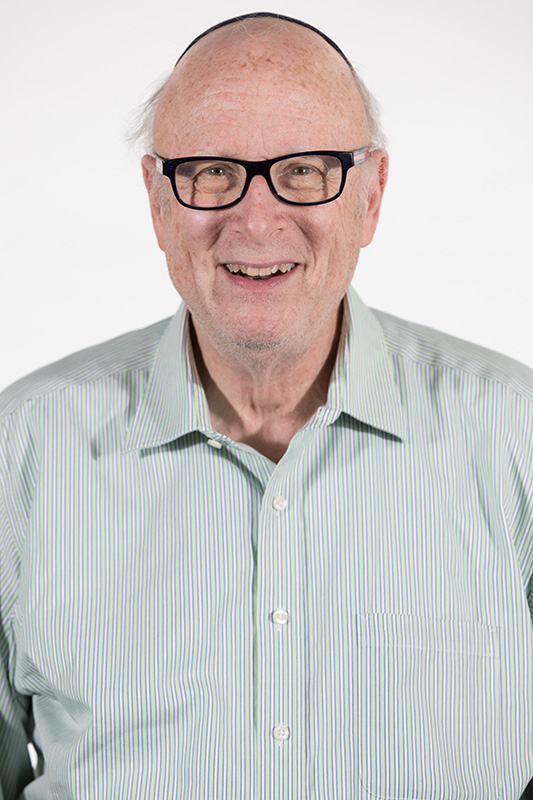
Dr. Kenneth Chelst is a Professor in the Department of Industrial and Systems Engineering at Wayne State University , where he directs the Engineering Management Program. His work bridges operations research with engineering management and K-12 mathematics education . A Rabbinic Ordination holder from Yeshiva University, he combines analytical rigor with pedagogical innovation. Educational Background: Ph.D., M.S. in Operations Research from MIT B.A. in Mathematics and Physics from Yeshiva College His research focuses on structured decision-making , OR applications in emergency services , and math curriculum development . The NSF-funded Project MINDSET ($3.3 million) and Project MEDeATe highlight his efforts to integrate OR into high school education. His From Percentage to Algebra middle school book and Ford-funded workshops have impacted hundreds of teachers. Scientific Awards: INFORMS President's Award (2011) for K-12 OR outreach Edelman Prize Laureate (2000) for Ford's OR application Multiple teaching awards from Ford Motor Company Dr. Chelst consults with Urban Science Applications Inc. and previously led the INFORMS Roundtable. His courses include Decision and Risk Analysis and Leadership Projects in Engineering Management , emphasizing corporate partnerships and immediate ROI.
Gerd Stumme is a Full Professor of Computer Science at University of Kassel , leading the Chair on Knowledge and Data Engineering . He serves as Executive Director of the Research Center for Information Systems Design (ITeG) , director of the International Centre for Higher Education Research (INCHER) , and founding member of the Hessian Institute for Artificial Intelligence (hessian.AI) . His research spans the intersection of Data Science, AI, and Mathematics , focusing on semantic/structural analysis of social networks, concept hierarchies, and mathematical structures (graphs, ordered sets) for knowledge acquisition. He pioneered work on Semantic Web, Web Mining, Social Bookmarking , and Recommender Systems , and has recently revisited mathematical foundations for knowledge representation. Recent publications analyze ordinal motifs in lattices , controversy mapping , and social network structures , with applications to business models, journalism, and AI. His work often integrates graph theory and formal concept analysis . He is a core developer of BibSonomy , a social bookmarking and publication-sharing system, and has contributed to FolkRank and TriAS algorithms for collaborative knowledge management.
Leif Ristroph is an Assistant Professor of Mathematics at the Courant Institute of Mathematical Sciences , New York University . His research bridges experimental physics and applied mathematics , focusing on fluid-structure interactions in both biological and geophysical contexts. Key research areas include: Biophysical Flows : Aerodynamics of insect flight ( Applied Mathematics Laboratory ), hydrodynamics of fish schooling, and flow-sensing mechanisms via the fish lateral line system Geophysical Flows : Shape evolution during erosion, dissolution patterns in fluid flows, and bubble formation dynamics Recent publications (2019-2015) explore: Flow interactions in flapping swimmers and hovering systems Evolutionary optimization of wing shapes and self-sculpting processes Stability mechanisms in tandem flapping and insect flight His work has been featured in major media outlets like Nature , New York Times , and ScienceDaily . Ristroph's lab at NYU's Applied Mathematics Laboratory combines physical experiments, computational models, and theoretical analysis to study complex fluid-structure interactions.
Danel Ahman is an Associate Professor at the Institute of Computer Science , University of Tartu , Estonia, specializing in programming language theory . His research focuses on dependent/refinement types , computational effects , and verified software . Education PhD in Theoretical Computer Science (University of Edinburgh, 2017) MPhil in Advanced Computer Science (University of Cambridge, 2012) BSc in Informatics (Tallinn University of Technology, 2010) Research Interests : Danel investigates programming languages with algebraic effects and effect handlers for verified software, exploring denotational/operational semantics and fibrational approaches to effects. His work bridges theoretical computer science with practical formal verification. Scientific Awards : Estonian Research Council grant (2025) Marie Skłodowska-Curie Fellowship (2019) PhD dissertation prize (2018) Google/Citrix dissertation awards (2012) Teaching & Supervision : He teaches courses like Logic in Computer Science and Functional Programming at the University of Tartu, and supervised BSc/MSc theses on topics including asynchronous effects and formal verification. Danel also organizes research seminars and guest lectures on F*.
Professor David Taubman is a distinguished academic serving as Professor and Deputy Head of School (Research) at the School of Electrical Engineering and Telecommunications (EE&T) at the University of New South Wales (UNSW) in Sydney, Australia. He is also co-director of Kakadu Software Pty. Ltd. and its affiliates Kakadu R&D and Kakadu GPU. With a career spanning over three decades, Professor Taubman has made significant contributions to the field of image and video compression, most notably as the author of the EBCOT coding algorithm adopted in the JPEG2000 international standard. Professor Taubman earned his B.Sc. in Mathematics and Computer Science (1986) and B.E. (Medal) in Electrical Engineering (1988) from the University of Sydney, followed by an M.Sc. (1992) and Ph.D. (1994) in Electrical Engineering from the University of California at Berkeley. His professional journey includes engineering work at the Electricity Commission of N.S.W. (1988-1990), research positions at Hewlett-Packard Laboratories in Palo Alto (1994-1998), and an academic career at UNSW where he progressed from Senior Lecturer (1998-2003) to Associate Professor (2004-2009) and finally to Professor (2009-present). He has held various leadership roles including Head of the EE&T Telecommunications Research Group (2003-2014), Head of the EE&T Signal Processing Research Group (2014-present), Director of Research for the School of EE&T (2011-2016), and Deputy Head of School (Research) since 2017. Professor Taubman's research interests center on image and video compression, with particular expertise in JPEG2000 standards and implementations. His work spans signal processing, wavelet transforms, scalable video coding, motion modeling, and multimedia systems. He has pioneered numerous compression algorithms and frameworks, including the EBCOT coding algorithm that became central to the JPEG2000 standard. His recent research focuses on efficient motion modeling with cuboidal partitioning, learned lifting-based transform structures, and high-throughput implementations of JPEG2000 for video applications. His work bridges theoretical foundations with practical implementations, as evidenced by the commercially successful Kakadu Software tools that have garnered around 500 commercial licensees. Analysis of Professor Taubman's recent publications reveals a consistent focus on advancing compression technologies with particular emphasis on scalability, efficiency, and adaptability. His work spans traditional image compression (JPEG2000 extensions), video coding (cuboid-based partitioning for UHD/360-degree video), and emerging applications (nanopore sequencing data compression). A notable trend is the integration of machine learning techniques with traditional compression frameworks, as seen in his work on learned lifting-based transform structures. His research maintains strong connections to real-world applications across diverse domains including medical imaging, astronomical data processing, and genomic sequencing. IEEE Fellow Engineers Australia Fellow (by invitation) Professor Taubman has served as Associate Editor for the IEEE Transactions on Image Processing for two four-year appointments (2003-2005 and 2010-2013). He has been actively involved in numerous research grants focused on image and video compression technologies, particularly those related to the JPEG2000 standard and its extensions. His work has received significant industry support, reflected in his consultancy with various U.S., Japanese, and Australian corporations. He has also contributed to international standards development as a member of Standards Australia Technical Committee MS-065 (mirroring ISO TC42 on Digital Photography) and as a constitutional member of Standards Australia Technical Committee IT-029 (Coded Representation of Picture, Audio and Multimedia/Hypermedia Information). Professor Taubman co-directs Kakadu Software Pty. Ltd. and its research affiliates Kakadu R&D and Kakadu GPU, which have developed the commercially successful Kakadu Software tools for JPEG2000. His research group at UNSW focuses on advanced image and video compression techniques, with particular expertise in wavelet-based methods, scalable coding, and motion modeling. The group maintains strong industry connections and has contributed significantly to the development and standardization of image compression technologies worldwide.
Miklos Z. Racz is an Assistant Professor at Northwestern University with a joint appointment in the Department of Computer Science and the Department of Statistics and Data Science. He is affiliated with the IDEAL Institute. Previously, he was an Assistant Professor at Princeton University (ORFE Department) and a postdoc at Microsoft Research. His research focuses on probability, statistics, computer science, and information theory, with emphasis on combinatorial statistics, discrete probability, and applied probability. Key interests include statistical inference on random discrete structures like random graphs, community detection, latent geometry inference, and DNA data storage. He has advised numerous PhD and undergraduate students. Education: PhD in Statistics (UC Berkeley, 2015), MS in Computer Science (UC Berkeley), MS in Mathematics (Budapest University of Technology and Economics). Research interests span random graph theory, network analysis, information cascades, and computational biology. He teaches courses like Mathematical Foundations of Computer Science and Probability for Statistical Inference. His work has been published in top venues like Annals of Applied Probability, NeurIPS, and IEEE journals. Notable contributions include breakthroughs in graph matching algorithms for stochastic block models, community recovery, and DNA synthesis optimization. His research has practical applications in data storage and network science.
Steven Bradlow is a Professor in the Department of Mathematics at the University of Illinois at Urbana-Champaign (UIUC), affiliated with the College of Liberal Arts & Sciences. His research focuses on differential geometry, gauge theory, algebraic geometry, and topology, with particular emphasis on Higgs bundles, moduli spaces, and geometric structures. He holds a PhD from the University of Chicago (1988) and has held additional campus roles as a Professor of Mathematics. Research Interests: Bradlow’s work explores advanced topics such as holomorphic vector bundles, stability conditions, and geometric invariant theory. His studies of Higgs bundles integrate techniques from algebraic geometry, differential geometry, and mathematical physics, addressing questions related to moduli spaces, spectral curves, and representation varieties. He investigates exotic components of surface group representations and their connections to Teichmüller theory, contributing to the broader understanding of geometric structures and their topological properties. Recent Work Trends: Recent publications highlight his focus on Cayley correspondences, higher rank Teichmüller spaces, and uniformization techniques for branched surfaces. His collaborative projects often bridge algebraic and differential geometry, with applications to gauge theories and geometric analysis. He has also contributed to editorial work honoring peers like Karen Uhlenbeck and Oscar García-Prada. Grants & Advising: While specific grant details are not listed, Bradlow has been involved in NSF-funded initiatives (e.g., EMSW21-MCTP, RNMS: Geometric Structures). His advising contributions are reflected in co-authored works with students/postdocs such as Brian Collier and Oscar García-Prada. He is associated with research networks exploring geometric representation theory and mathematical collaborations. Labs/Teams: Active within UIUC’s Department of Mathematics, Bradlow collaborates with researchers in geometry and topology. His work often intersects with interdisciplinary groups studying geometric structures, though specific lab affiliations are not detailed here.