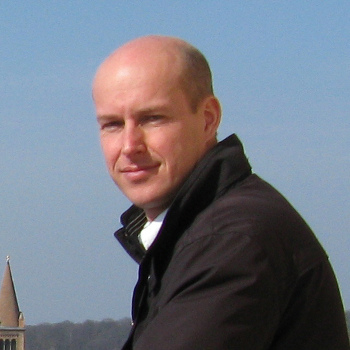
Sebastian Maneth is a Heisenberg Professor at the Universität Bremen , affiliated with the Faculty of Mathematics and Computer Science and the Department of Computer Science . His research focuses on Databases , Automata Theory and Applications , and Data Compression , with significant contributions to tree transducers and XML processing. Editor of Theory of Computing Systems (TOCS) Associate Editor for Frontiers in Computer Science Editor of Algorithms His recent work explores the boundaries of tree transducers , regular expressions , and grammar-based compression , with decidable properties in formal language theory. He organizes major conferences like the Dagstuhl Seminar on Regular Expressions and serves on numerous program committees (CIAA, ICALP, FoIKS, etc.). Current projects include FO-Query Enumeration over compressed data, shape-preserving tree transducers , and user identification via eye-tracking data . His editorial and organizational roles highlight leadership in theoretical computer science communities.
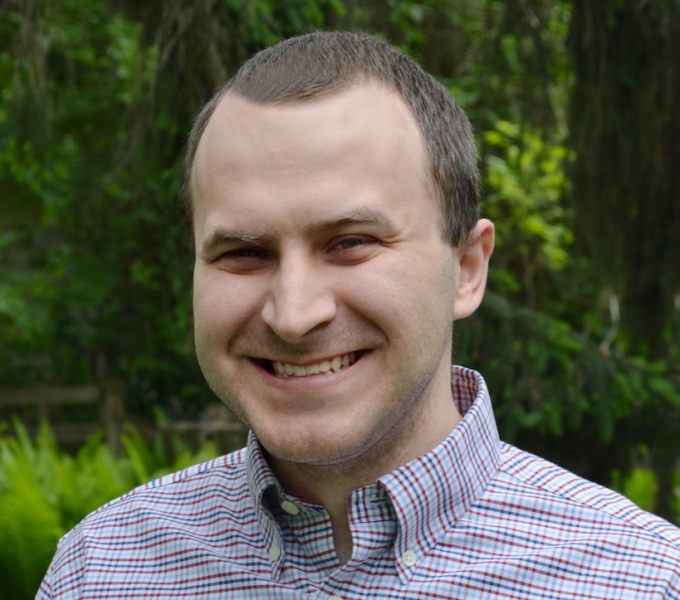
Dr. Holger Heitsch is a Researcher at the Weierstrass Institute for Applied Analysis and Stochastics in Berlin, Germany. He works in the research group Nonlinear Optimization and Inverse Problems under Prof. Dietmar Hömberg's leadership. Currently, he is a research associate in the collaborative project SFB Transregio 154 focused on mathematical modeling and optimization of gas networks. Research Interests : His work centers around stochastic optimization , particularly in energy systems and gas network modeling . Key areas include probabilistic constraints , scenario tree generation , and uncertainty quantification . He has developed computational methods like the Matlab-based spherical cap discrepancy code for academic use. Publications : Spanning 2003–2025, his research addresses Stochastic modeling in energy portfolios Scenario reduction algorithms Probabilistic capacity planning for gas networks Computational methods for quasi-Monte Carlo integration Labs & Teams : Collaborates with Prof. Römisch, Prof. Henrion, and international researchers on gas network optimization and stochastic programming. His work is applied in power management , energy economics , and network flow problems.
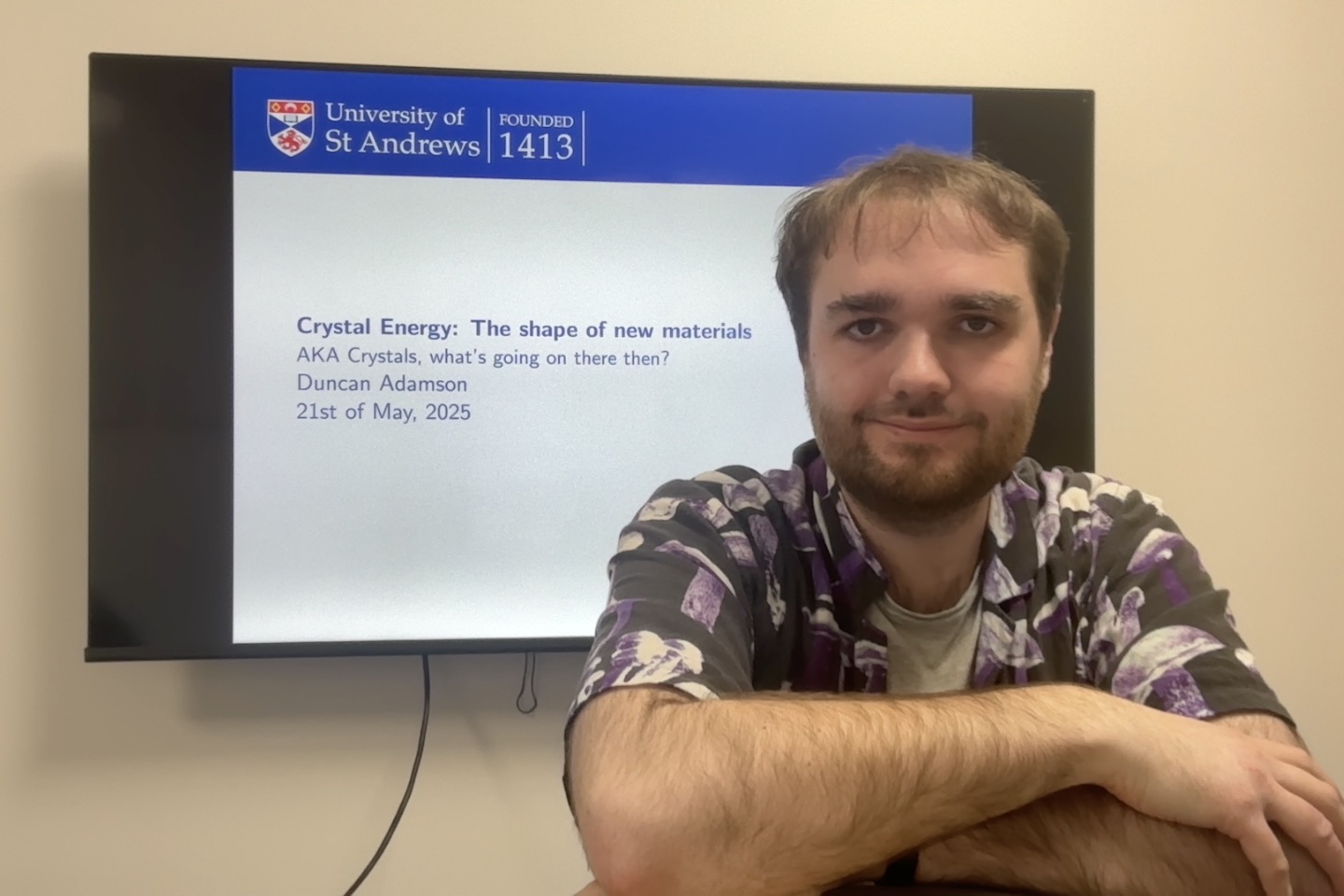
Duncan Adamson is a Lecturer in the School of Computer Science at the University of St Andrews, United Kingdom. He has held prior research positions at the Leverhulme Research Centre for Functional Materials Design, the University of Göttingen, Reykjavik University, and the University of Liverpool. His academic foundation includes a PhD from the University of Liverpool supervised by Prof. Igor Potapov and undergraduate studies at the University of Glasgow. His research lies at the intersection of theoretical computer science and discrete mathematics, with a focus on combinatorics on words , algorithm design , crystal structure prediction , and temporal graphs . He explores symmetry in multidimensional words, develops algorithms for combinatorial enumeration, and investigates computational hardness in materials science. His work often bridges abstract theory with real-world applications in chemistry and robotics. The recent publications show a strong trend in combinatorial algorithms , particularly in enumeration, ranking, and optimization over structured words, graphs, and sequences. A significant portion of his work involves the k-centre problem for implicitly defined combinatorial classes and temporal graph colouring , with increasing emphasis on algorithmic complexity and practical implementation. His 2024 paper on harmonious colourings in temporal matchings was awarded best paper at SAND 2024, highlighting the impact of his research. Scientific Awards: Best Paper Award, SAND 2024 – 'Harmonious Colourings of Temporal Matchings' Duncan Adamson has been supported by the Leverhulme Research Centre for Functional Materials Design during his PhD and postdoctoral work. While no formal advisees are listed, his supervision by leading researchers and collaborative projects suggest active mentorship and team integration. He teaches core computer science modules at St Andrews, including CS2001 and CS3302, and maintains a busy research schedule with weekly meetings and supervisory responsibilities. His research is conducted within the Algorithms and Complexity group at St Andrews, continuing collaborations with international teams in Iceland, Germany, and beyond. Projects often involve interdisciplinary efforts, especially in applying computational techniques to materials science and chemistry.
Inge Li Gørtz is a Professor in the Department of Applied Mathematics and Computer Science at the Technical University of Denmark (DTU), where she leads research in algorithms and data structures. She is affiliated with the Algorithms, Logic and Graphs section and has been a principal investigator on externally funded research projects. She also serves as chairman of the Danish Society for Computer Science since 2009. Research Interests: Her work centers on the design and analysis of algorithms, with a focus on approximation algorithms, pattern matching, graph algorithms, and compressed data representations. She investigates efficient query processing, string indexing, and algorithmic challenges in highly repetitive data, including applications in bioinformatics and data streams. The recent publications highlight a strong trend in theoretical and practical algorithm design, particularly in string indexing, compressed automata, and dynamic data structures. These works span venues like SOFSEM and STACS, emphasizing innovations in sublinear query time, sliding window models, and memory-efficient representations. Postdoc stipend from Carlsberg Foundation (2006–2008) for 'Approximation of Transportation on Demand Problems', kr 865,183 Advising and Grants: She actively supervises multiple PhD students on projects such as biomedical image segmentation using graph cuts, hierarchical compression of DNA data, and dynamic graph algorithms. She has served as main or co-supervisor in several funded PhD projects. She has been principal investigator on a Carlsberg Foundation grant and has participated in multiple Danish Council for Independent Research projects. Labs and Teams: She is a core member of the Algorithms, Logic and Graphs (ALG) section at DTU, contributing to a vibrant research environment focused on theoretical computer science and algorithmic problem solving.
Dr. Axel Kleinschmidt serves as a Group Leader within the Department of Quantum Gravity and Unified Theories at the Max Planck Institute for Gravitational Physics (Albert Einstein Institute) in Potsdam, Germany. He leads the Exceptional Quantum Gravity research group and contributes to the Symmetries in Gravity and Amplitudes initiative, operating at the forefront of theoretical physics research. His research centers on quantum gravity and unified field theories, with specialized focus on exceptional Lie groups/algebras, scattering amplitudes in gravitational contexts, and mathematical structures underlying string theory and M-theory. He investigates how exceptional symmetries manifest in quantum gravitational systems and their implications for fundamental unification principles, employing advanced algebraic and geometric frameworks to address deep questions in theoretical physics. Scientific Awards: No awards explicitly listed in source materials Advising and Grants: No student advisees or grant funding details provided in source text Labs and Teams: Exceptional Quantum Gravity Research Group (lead) Symmetries in Gravity and Amplitudes Collaboration
Fernando Chamizo Lorente is a Full Professor in the Department of Mathematics at the Faculty of Sciences, Universidad Autónoma de Madrid (UAM). With a career spanning several decades, he has established himself as a prominent researcher in number theory and related fields. His work bridges pure mathematics with applications in mathematical physics and harmonic analysis. His educational background includes a Ph.D. in Mathematics from Universidad Autónoma de Madrid (1994), an Expert in University teaching from UAM (2014), and a Master in Theoretical Physics from UAM (2016). Chamizo's research primarily focuses on Analytic Number Theory, with special emphasis on spectral theory of automorphic forms, exponential and character sums, and lattice point problems. His work extends to Algebraic Number Theory and Mathematical Physics, demonstrating the interconnectedness of these fields. He has made significant contributions to understanding the connections between number theory and harmonic analysis, particularly through his work on Fourier series with number-theoretic implications. Analysis of his recent publications reveals a continued focus on number-theoretic problems with connections to quantum physics, as seen in works on the quantum Talbot effect, Dirac equation solutions, and expanded quantum infinite wells. His mathematical work spans both pure number theory (sums of squares, Diophantine series) and applied mathematical physics, showing remarkable versatility across disciplines. Chamizo has supervised numerous doctoral students including Adrián Ubis, Elena Cristóbal, Dulcinea Raboso, Serafín Ruiz-Cabello, Carlos Pastor, and José Granados. His research has been supported by grants including MTM2014-56350-P, MTM2017-83496-P, and PID2020-113350GB-I00. He is an active member of the mathematical community, serving on editorial boards including Revista Matemática Iberoamericana and Pensamiento Matemático. He has participated in organizing significant mathematical events such as the Polish-Spanish joint meeting and the Quintas Jornadas de Teoría de Números.
Angelica Piccirillo is affiliated with the Technical University of Munich (TUM), where she is part of the TUM School of Computation, Information and Technology (CIT) and the Department of Mathematics (M11). She is based in Garching bei München, Germany, with an office at WED 02.08.034A. Her research focuses on Quantum Geometry , a field at the intersection of mathematics and theoretical physics, often involving deep structures in topology, representation theory, and algebraic geometry. She is associated with the research group of Prof. Dr. Murad Alim, suggesting collaborative work in mathematical aspects of quantum field theory or string theory. While no publications or specific projects are listed in the provided text, her placement within a leading mathematics department at TUM indicates active engagement in high-level theoretical research. She has no listed scientific awards or students in the available data. Laboratory or team affiliations are not explicitly detailed, but her location within the Department of Mathematics at TUM suggests she is part of a vibrant research environment specializing in pure and applied mathematical sciences, likely contributing to ongoing projects in quantum geometry and related domains.
Dr. Walker Stern is a researcher at the Technical University of Munich (TUM), affiliated with the TUM School of Computation, Information and Technology (CIT) and the Department of Mathematics (M11). His work is situated within a vibrant research environment focusing on algebra, geometry, and topology. His primary research interests lie in quantum geometry , a field intersecting mathematical physics and pure mathematics, with connections to algebraic geometry, representation theory, and topology. His research contributes to the theoretical foundations of modern geometry with potential implications in quantum field theory and string theory. The available data does not include recent publications, preventing an analysis of article trends. Awards: No scientific awards listed. There is no available information regarding student advising, grants, or funding activities. Dr. Stern is part of a research group that includes Prof. Dr. Murad Alim and other experts in algebraic and geometric fields, suggesting collaborative work in advanced mathematical theories.
Samuel Homiller is an Assistant Professor at the University of Pittsburgh's Dietrich School of Arts and Sciences, Department of Physics & Astronomy, starting Fall 2025. He is a Hans Bethe Postdoctoral Fellow at Cornell University's Laboratory for Elementary-Particle Physics and a member of the Pittsburgh Particle Physics and Cosmology (Pitt-PACC) group. Education: Ph.D. in Physics (2020) from Stony Brook University with a thesis on "Higgs Couplings as a Gateway to New Fundamental Physics" under Patrick Meade B.S. in Physics and Mathematics (2015) from the University of Illinois, Urbana-Champaign, graduating Magna cum Laude with Highest Distinction Research focuses on high-energy particle theory, particularly Higgs boson physics, flavor and strong CP puzzles, and formal aspects of quantum field theory. He explores how these topics inform models for colliders and precision experiments, with work on axion string zero modes, Froggatt-Nielsen mechanism wrinkles, and collider phenomenology. Recent publications examine muon collider applications, dimension-eight SMEFT operators in 2HDM, lepton flavor violation signatures, and axion string delocalization. His 15 most recent articles span 2019–2025, covering Higgs physics, collider experiments, and theoretical frameworks like Nelson-Barr models. Scientific Awards: J.J. and Noriko Sakurai Dissertation Award in Theoretical Physics (2021) Ernest M. Lyman Prize and Robert E. Hetrick Award (University of Illinois, 2015) Professional service includes roles in the LHC Higgs Working Group, Snowmass 2021 leadership, and APS Division of Particles and Fields Executive Committee. His work addresses collider design, precision experiments, and theoretical challenges in particle physics.
Dr. Kai Ming Lee is a Lecturer at the Department of Physics within the Faculty of Science at The University of Hong Kong. His research focuses on Quantum Field Theories and Leaky Systems, with significant contributions to computational physics and theoretical optics. Education: B.Sc. from The University of Hong Kong, Ph.D. from Caltech Contact: Room 415A, Chong Yuet Ming Physics Building, kmlee1@hku.hk Dr. Lee's research addresses fundamental problems in theoretical physics, including cellular automaton applications to computational challenges and morphology-dependent resonances in dielectric systems. His publications span journals like International Journal of Modern Physics C and Physical Review E , reflecting interdisciplinary work at the intersection of physics and mathematics. He has served on the Faculty of Science Board at HKU since 2000, with ongoing appointments through 2024. Dr. Lee contributes to academic governance and has participated in knowledge exchange activities, including a 2018 public lecture series on gravitational physics. Teaching: Courses include PHYS1650 'Nature of the Universe' and CCST9056 'The Force is with You: How Things Work'
Vivek Shende is an Associate Professor at the University of California, Berkeley (Department of Mathematics) and a Professor at the Centre for Quantum Mathematics at Syddansk Universitet, currently on leave from UC Berkeley. His research spans geometry, topology, and their intersections with quantum field theory, string theory, and knot theory. His research focuses on symplectic geometry, particularly holomorphic curves with boundary on Lagrangians, and he applies geometric methods to problems in quantum theory, combinatorial topology, and microlocal sheaf theory. He also explores connections between singular varieties and Hodge theory. Shende has advised several PhD students, including Christopher Kuo (2022), Ryan Thorngren (2018), Daniel Lowengrub (2018), and Tao Su (2018), who have contributed to areas like symplectic methods in sheaf theory and topology’s role in quantum field theory. Contact: vivek@math.berkeley.edu , vivek.vijay.shende@gmail.com
Paul Valiant is an Associate Professor of Computer Science at Purdue University, joining in Fall 2021. His research focuses on sublinear algorithms for big data analysis, statistical inference, and the 'unseen' portions of probability distributions. He explores machine learning methodologies, fluid dynamics structures, and cognitive neuroscience, investigating parallels between human brain functions and artificial intelligence. Education: Paul Valiant earned his PhD in Computer Science from MIT in 2008, focusing on testing symmetric properties of distributions. His academic background includes studies leading to his undergraduate degree, though specific details are not provided here. Research Interests: His work spans algorithms and computational complexity, sublinear algorithms for statistical inference, machine learning optimization, fluid dynamics analysis of vorticity and energy flow, and cognitive neuroscience exploring the cerebellum's role. He emphasizes algorithmic efficiency, instance optimality, and theoretical bounds in these domains. Key Contributions: Paul Valiant has developed instance-optimal algorithms, improved entropy estimation methods, and contributed to understanding neural network architectures. His fluid dynamics research employs computational simulations and mathematical analysis to uncover vorticity patterns. Awards: 2008 Best Student Paper Award (Theory of Cryptography Conference) 2019 Test of Time Award (for 'Incrementally Verifiable Computation') 2005 Best Student Paper Award (co-winner, FOCS) NeurIPS 2020 Oral Presentation ACM Best of Computing Notable Article (2014) Advising and Grants: While specific student names are not listed, his research has been supported by institutional grants and collaborations. His work bridges theoretical computer science with applied domains like neuroscience and fluid dynamics, reflecting interdisciplinary impact.
Sergei Kuzenko is a Professor in the Department of Physics at the University of Western Australia (UWA), leading the Quantum Field Theory and Quantum Gravity research group. He holds a prestigious Australian Professorial Fellowship (2010–2014) and has contributed significantly to supersymmetric field theories, supergravity, and higher-spin gauge theories. His research has established foundational work in Australia on supergravity, superconformal field theory, and higher-spin theories. Education: MSc in Physics from Tomsk State University (1984), PhD in Theoretical and Mathematical Physics (1985), becoming the youngest Doctor of Philosophy at Tomsk State University. Former academic roles include Associate Professor (1992–1998) and Assistant Professor (1986–1992) at Tomsk State University, followed by postdoctoral positions at the University of Munich (1998–2000) and Humboldt Research Fellowships in Germany (1994/95, 1997). Research focuses on unifying gravity with quantum field theory, with key contributions to supersymmetry, supergravity, and string theory. His monograph Ideas and Methods of Supersymmetry and Supergravity is a standard graduate text. He has supervised six notable PhD students, including recipients of Dean’s List Honorable Mentions. Grants include ARC-funded projects on conformal field theory, higher-spin gauge theories, and duality invariance. Collaborations span institutions globally. Active in professional service, he served as Deputy Chair of ANZAMP (2011–2015). He advocates for academic integrity, signing an open letter condemning the Russian invasion of Ukraine (2022). Labs/Teams: Leader of the Quantum Field Theory and Quantum Gravity group at UWA. Engaged in interdisciplinary research at the interface of high-energy physics and mathematical physics.
Christoph Haase is an Associate Professor at the University of Oxford's Department of Computer Science and a Tutorial Fellow at St Catherine's College. His research focuses on algorithmic verification, automated reasoning, and logic in computer science, with a particular emphasis on decision procedures for arithmetic theories. He leads the ARiAT ERC-funded project investigating arithmetic theories' decision procedures and serves as an Associate Editor for the Journal of Computer and System Sciences. Education: DPhil (PhD) in Computer Science, University of Oxford (2012) Diplom-Informatiker (BSc/MSc), Technische Universität Dresden (2007) Visiting Student, University of Bristol (2005–2006) Research Interests: Algorithmic Verification of Software/Hardware Systems Automated Reasoning Techniques Automata Theory and its Applications Formal Methods for Decision Procedures in Arithmetic Publications: His recent work spans Presburger arithmetic, vector addition systems, and automated deduction tools. Key trends include advancements in decision procedures, complexity analysis, and applications in formal verification. Awards: Recipient of the ERC Starting Grant (2019) and EPSRC Doctoral Prize. His student Ruiwen Dong earned the EATCS Distinguished Dissertation Award. Advising & Grants: Supervises DPhil students and postdocs in arithmetic theories and verification. Active in organizing workshops (e.g., Trends in Arithmetic Theories) and serves on program committees for major conferences like ICALP, FOSSACS, and STACS. Labs/Teams: Leads the Automated Verification Group at Oxford and collaborates with researchers globally on projects like ARiAT and tool development (e.g., SeLoger).
Anindya De is an Associate Professor and Graduate Chair in the Department of Computer and Information Science at the University of Pennsylvania's School of Engineering and Applied Science. Previously, he served as an Assistant Professor at Northwestern University (2015–2018) and held postdoctoral roles at the Institute for Advanced Study (IAS), DIMACS, and the Simons Institute at UC Berkeley. He earned his Ph.D. in Computer Science from UC Berkeley (2013) and a B.Tech. from the Indian Institute of Technology Kanpur (2008). His research focuses on complexity theory, analysis of Boolean functions, learning theory, and applied probability. Notable contributions include work on property testing, trace reconstruction, and algorithmic foundations. He has organized TCS+, an online seminar series in theoretical computer science, and served on program committees for conferences like FOCS, COLT, and STOC. Key achievements include the IBM Pat Goldberg Memorial Math/CS/EE Best Paper Award (2014) and a Best Student Paper award at TCC 2012. His work bridges theoretical computer science with practical applications in stochastic optimization and pseudorandomness.