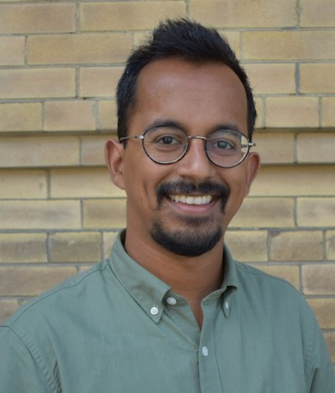
Juan Alvarez is a Teaching Assistant Professor at the Department of Electrical and Computer Engineering, University of Illinois at Urbana-Champaign (UIUC), where he has held roles since 2013. He also served as a Visiting Lecturer at institutions like Zhejiang University and Ho Chi Minh City University of Technology. His academic journey includes postdoctoral fellowships at York University (Canada), University of Toronto, and University of Saskatchewan, alongside sessional lecturing roles in Canada. **Education**: Ph.D., M.S., and B.Sc. in Electrical Engineering from UIUC and ITESM-CCM, respectively. **Research Interests**: Focus on applied probability, polymer physics (e.g., self-avoiding walks, copolymer localization), biophysical systems, and engineering education. He explores student success strategies, metacognition, and pedagogical approaches to improve learning outcomes. **Recent Publications**: Over 15 articles in journals like Journal of Statistical Mechanics and conferences like ASEE, covering topics from polymer models to student learning profiles. Recent work emphasizes undergraduate education innovations. **Teaching**: Courses include ECE 210 (Analog Signal Processing), ECE 313 (Probability), and ECE 398MA (Modern Communications with Python).
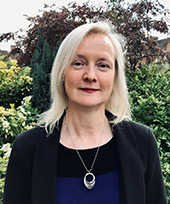
Vernita Gordon is an Associate Professor in the Department of Physics at the University of Texas at Austin (since 2018), previously serving as an Assistant Professor there from 2010 to 2018. She holds a Ph.D. in Physics from Harvard University (2003) and a B.Sc. in Physics and Mathematics from Vanderbilt University (1997). Her research focuses on understanding how physical characteristics like mechanics and spatial structure influence bacterial biofilms, particularly their interactions with the immune system and resistance to antibiotics. She has pioneered techniques such as laser trapping to manipulate biofilm structures and studies radiation effects on bacteria like Deinococcus radiodurans . Education: Ph.D. in Physics, Harvard University (2003) B.Sc. in Physics and Mathematics, Vanderbilt University (1997) Research Interests: Dr. Gordon’s work integrates biophysics, microbiology, and materials science to explore biofilm mechanics, bacterial mechanosensing, and radiation biology. Key areas include: How biofilm mechanics resist immune clearance and antibiotic treatment Role of surface stiffness and shear stress in biofilm initiation Radiation resistance mechanisms in Deinococcus radiodurans Development of tools like laser trapping to study biofilm structure Key Achievements: Recipient of the Elizabeth B. Gleeson Professorship (2023) and Texas Mindset Initiative Fellowship (2023) Provost’s Teaching Fellow (2020–2024) and multiple teaching awards Funded by NSF, NIH, and Cystic Fibrosis Foundation Published over 60 peer-reviewed articles, including in Nature , PNAS , and Biophysical Journal Advising & Outreach: She mentors graduate students in Physics, Microbiology, and Biomedical Engineering, emphasizing interdisciplinary training. Her group actively recruits undergraduates and collaborates with industry partners like Solvay and the College of Pharmacy. Outreach includes lesson plans for high school STEM education and community science initiatives. Labs & Collaborations: Her lab uses advanced microscopy, microrheology, and computational modeling. Key collaborations include work with the Contreras Lab (UT Austin Chemical Engineering) on radiation-resistant bacteria and the Raizen Lab (UT Austin Physics) on self-sterilizing surfaces.
Dr. Kenneth Chelst is a Professor in the Department of Industrial and Systems Engineering at Wayne State University , where he directs the Engineering Management Program. His work bridges operations research with engineering management and K-12 mathematics education . A Rabbinic Ordination holder from Yeshiva University, he combines analytical rigor with pedagogical innovation. Educational Background: Ph.D., M.S. in Operations Research from MIT B.A. in Mathematics and Physics from Yeshiva College His research focuses on structured decision-making , OR applications in emergency services , and math curriculum development . The NSF-funded Project MINDSET ($3.3 million) and Project MEDeATe highlight his efforts to integrate OR into high school education. His From Percentage to Algebra middle school book and Ford-funded workshops have impacted hundreds of teachers. Scientific Awards: INFORMS President's Award (2011) for K-12 OR outreach Edelman Prize Laureate (2000) for Ford's OR application Multiple teaching awards from Ford Motor Company Dr. Chelst consults with Urban Science Applications Inc. and previously led the INFORMS Roundtable. His courses include Decision and Risk Analysis and Leadership Projects in Engineering Management , emphasizing corporate partnerships and immediate ROI.
Eric Bettinger is the Conley DeAngelis Family Professor in the Stanford University School of Education and a Senior Fellow at the Hoover Institution. He also holds appointments as a Senior Fellow at the Stanford Institute for Economic Policy Research (SIEPR) and Professor (by courtesy) of Economics. Bettinger directs the Center for Educational Policy Analysis and the Lemann Center for Brazilian Education at Stanford, and serves as a research associate with the National Bureau of Economic Research. His educational background includes a Ph.D. in Economics from the Massachusetts Institute of Technology (2000) and a B.A. in Economics, Magna cum Laude with Honors, from Brigham Young University (1996). Bettinger's research focuses on the economics of education, with particular emphasis on student success and completion in college, the impacts of online education, financial aid effects, teacher characteristics, and voucher programs. His work employs rigorous statistical methods to identify cause-and-effect relationships in higher education. Notably, his research on simplifying financial aid applications has directly influenced White House efforts to streamline financial aid processes, demonstrating the real-world policy impact of his scholarship. His recent publications reveal consistent focus on educational interventions, technology in education, and policy evaluation. Bettinger's work spans multiple methodologies including randomized controlled trials, natural experiments, and large-scale data analysis. His research often addresses practical educational challenges while maintaining strong theoretical foundations in economics. Bettinger has served as a consultant to the White House and various state governments on financial aid policies, translating academic research into actionable policy recommendations. His work bridges the gap between academic scholarship and practical educational policy implementation. As an academic leader, Bettinger directs multiple research centers and has advised numerous doctoral students. His current advisees include Joseph Moore, Sergio Arango, Michelle Blair, Dallas Gilmore, Gabriel Koraicho, and postdoctoral researcher Saloni Gupta.
Asif Zaman is an Associate Professor in the Faculty of Arts and Science at the University of Toronto. His research focuses on Analytic Number Theory , Probabilistic Number Theory , and Arithmetic Statistics , with applications to Algebraic Structures , L-functions , and Modular Surfaces . He has contributed to problems involving the distribution of prime numbers, zeros of L-functions, and mass equidistribution. Research highlights include work on the Chebotarev Density Theorem , Random Multiplicative Functions , and Binary Quadratic Forms . His recent publications address advanced topics such as Artin L-functions , GL(n) Sieve Methods , and Multiplicative Chaos in number theory. Zaman has co-authored articles with prominent researchers like James Thorner and Robert J. Lemke Oliver, focusing on non-vanishing properties, explicit density estimates, and Siegel zeros. Zaman teaches mathematics courses at the University of Toronto, including MAT237 Multivariable Calculus with Proofs and MAT198 Cryptology . His teaching philosophy emphasizes active learning, collaboration, and analytical skill development, inspired by resources like Mathematical Mindsets and the American Mathematical Society blog series.
Ros McLellan is an Associate Professor in Teacher Education and Development at the University of Cambridge's Faculty of Education , concurrently serving as Director of Learning & Teaching . She holds a PhD in Science Education (King's College London), MPhil in Psychology of Education (Cambridge), and PGCE in Secondary Mathematics. Her research focuses on student wellbeing, motivation, mathematics anxiety, and teacher learning, with a psychological lens. Research Interests: Student motivation, wellbeing, mathematics anxiety, teacher professional development, gender and achievement disparities, creativity in education. Collaborations: Leads school-university partnerships in Kazakhstan and the UK, including projects on student well-being and education transitions. Professional Roles: British Educational Research Association (BERA) Council member and Chair of its Publications Committee; co-convenes the European Educational Research Association's Health and Wellbeing Education network. Her recent work explores mindfulness-based interventions, bullying victimization across nations, and the impact of SEL programs on adolescent behavior. Over 50 peer-reviewed publications span journals like Frontiers in Education , Child Indicators Research , and Journal of Adolescence . Current projects include analyzing UKSA program impacts and Kazakhstan school well-being initiatives. She advises doctoral students focusing on psychological perspectives of education-related research topics.
Emily Bonner is a Professor in the Department of Interdisciplinary Learning and Teaching at the University of Texas at San Antonio (UTSA) and serves as the Associate Dean for Research and Faculty Affairs in the College of Education and Human Development (COEHD). Her work focuses on equity in mathematics education, professional development in high-need schools, and parent education. Ph.D. in Curriculum and Instruction (Mathematics Education), University of Florida, 2009 M.A.T. in Secondary Education/Special Education, Trinity University, 2002 B.A. in Mathematics, Trinity University, 2001 Bonner’s research emphasizes culturally responsive teaching, community-based interventions, and the role of parents in mathematics education. She has led projects like the Community Mathematics Project and the San Antonio Mathematics Collaborative (SAMC), addressing systemic inequities and teacher preparation gaps. Her recent publications highlight frameworks for teacher development, equity strategies in Hispanic-serving institutions, and adaptations to virtual learning environments. These works span mathematics education, pedagogy, and policy studies. Key grants include the Community Math Project ($3.7M, DOE), ReLaTe SA ($444,474, NSF), and Texas Higher Education Coordinating Board funding for SAMC. These support initiatives to strengthen teacher education and math proficiency in underserved communities.
Elizabeth Canning is an Associate Professor in the Psychology Department at Washington State University (WSU), where she leads the BOLD Lab (Build. Opportunity. Learn. Develop.). Her research focuses on creating equitable and inclusive educational environments through social-psychological interventions, with specific emphasis on achievement motivation, social inequality, and organizational behavior. Ph.D. in Social Psychology from the University of Wisconsin-Madison (2016) Postdoctoral research at Indiana University’s Mind and Identity in Context Lab (2016-2019) Dr. Canning’s work investigates how institutional messages about belonging, value, and ability shape student motivation and achievement. She employs controlled experiments, randomized interventions, and longitudinal studies to mitigate disparities in STEM education, particularly for first-generation, minoritized, and stigmatized groups. Her recent publications highlight the impact of instructor mindset communication on student outcomes, strategies for reducing imposter syndrome, and the role of growth mindset cultures in organizational success. Notably, her 2024 research in CBE-Life Sciences Education demonstrated how growth mindset messaging improves first-generation student performance. Editor’s Choice, Science (2014) Dr. Canning mentors undergraduate RAs (9+ hours/week commitment) and Ph.D. students in the Experimental Psychology program. She will be on sabbatical at the Wissenschaftskolleg in Berlin during 2025-2026.
Susan C. Levine is the Rebecca Anne Boylan Distinguished Service Professor of Education and Society in the Department of Psychology at the University of Chicago. Her research explores the interplay between early spatial and numerical thinking, focusing on how adult-child interactions shape mathematical development in home and school settings. Her work examines children's understanding of natural numbers and fractions, evaluates interventions to improve math skills, and investigates how parental and teacher math attitudes influence child outcomes. Key areas include math anxiety, gesture-based learning, and socioeconomic impacts on numeracy. Recent publications highlight gesture interventions for spatial misconceptions, math anxiety in college calculus, and the role of parental interactions in shaping children's mathematical beliefs. The Distinguished Service Professor award recognizes her contributions to educational psychology.
Michelle Perry is a Professor in Educational Psychology at the University of Illinois, Urbana-Champaign, with appointments at the Beckman Institute for Advanced Science and Technology. Her research focuses on children's acquisition of mathematical concepts in elementary classrooms, teacher professional development through online platforms, and equity in STEM education. She has received NSF funding for projects examining gesture-based learning and statistical concept development. Education: Ph.D., The University of Chicago Research Interests: Mathematics education and cognitive development Online learning environments and teacher professional development Equity in STEM for underrepresented students Gesture-speech integration in education Statistical reasoning and virtual manipulatives Scientific Awards: Richard C. Anderson Professor of Cognitive Science of Teaching & Learning Recent Publications: 2025: Gesturing to understand abstract mathematical concepts 2025: Online video instruction and student engagement 2024: Teacher mindset theories and classroom observation skills 2023: Digital help-seeking and social presence Advising & Grants: Mentored NSF-funded projects on teacher development Collaborated with University of Chicago and NYU researchers
Prof. Dr. Silke Hertel is a Professor of Personal Competencies in the School Context at Heidelberg University’s Institute of Educational Science, and currently holds the position of Vice-Rector for Student Affairs and Teaching until 2026. In her role as Vice-Rector, she oversees strategic advancements in research-oriented teaching, innovative teaching formats, and the integration of accessibility, diversity, and digitalization in university education. Her research focuses on self-regulated learning, teacher competencies, and educational psychology, with a particular emphasis on fostering adaptive learning environments and parental-child interactions in early education. Notable contributions include the development of the SAVE suicide prevention program for schools and studies on parental scaffolding in cognitive development. Education: No explicit details provided in the text, though her academic role implies advanced qualifications in educational science. Labs/Teams: Active in the Institute of Educational Science, collaborating on projects related to educational policy and teacher training. Prof. Hertel’s work bridges theoretical research and practical implementation, addressing challenges in modern educational systems through evidence-based interventions and policy guidance.
Elizabeth Richey serves as a Teaching Assistant Professor in the Department of Psychology at the University of Pittsburgh's Dietrich School, where she teaches undergraduate courses including Introduction to Psychology, Cognitive Psychology, Research Methods Lab, and specialized topics in Learning and Motivation. Holding a PhD in Cognitive Psychology from the same institution, she bridges theoretical knowledge with practical educational applications through her dual roles as educator and learning sciences researcher. Education PhD in Cognitive Psychology, University of Pittsburgh Research Focus Dr. Richey's research program investigates how cognitive, metacognitive, and motivational factors influence mathematics and science learning across educational stages from middle school to college. Her work emphasizes educational technology applications, particularly digital learning games and intelligent tutoring systems, with concentrated examination of gender dynamics, self-explanation mechanisms, and belonging interventions. Through controlled laboratory experiments and classroom-based studies, she explores how technological implementations can enhance learning equity and engagement while mitigating factors like math anxiety. Publication Trends Analysis of her 2022-2025 publications reveals a cohesive research trajectory centered on game-based mathematics education, with 80% of recent work addressing gender effects in digital learning environments. Key methodological approaches include randomized controlled trials examining mindfulness interventions, latent variable modeling of student behavior, and multi-dimensional gender frameworks that move beyond binary classifications. Her findings consistently demonstrate how contextual factors—such as narrative design in learning games and AI-human collaboration models—significantly impact learning outcomes, particularly for female students in mathematics contexts.
Matt Giani is a Research Associate Professor in the Department of Sociology at The University of Texas at Austin , with additional affiliation at the Texas Behavioral Science Policy Institute (TxBSPI) . His work bridges sociology and educational policy, focusing on equity in postsecondary access, with particular emphasis on low-income students. Education: Ph.D. in Educational Policy and Planning, The University of Texas at Austin Expertise: Quantitative methods, causal inference, longitudinal data analysis Research Themes: Matt’s research explores how educational policies and interventions affect social mobility, particularly in dual enrollment, career and technical education (CTE), and community college transfer pathways. His recent articles highlight credit transfer barriers, CTE policy implementation, and financial certainty interventions for admissions. Methodological Strengths: He leverages national and statewide longitudinal datasets (e.g., Education Research Center at UT Austin) to evaluate the long-term impacts of educational reforms. His funding sources include competitive grants from the National Science Foundation , Spencer Foundation , and Bill & Melinda Gates Foundation .
Chantal Levesque-Bristol serves as the Executive Director of the Center for Instructional Excellence and Professor in the Department of Educational Psychology & Research Methodology at Purdue University. Her work focuses on student-centered pedagogy, course transformation, and self-determination theory in higher education. Role: Executive Director, Center for Instructional Excellence Affiliation: Purdue University, College of Education Research Interests: Levesque-Bristol's research examines motivational dynamics through Self-Determination Theory (SDT) , particularly in: Autonomy-supportive learning environments Faculty development for educational reform International student academic adjustment STEM education outcomes Publication Trends: Her recent work emphasizes: Application of SDT across disciplines (STEM, nursing, teacher education) Structural factors influencing student achievement Scalable course transformation models Intersection of motivation with cultural responsiveness Leadership: As director of Purdue's IMPACT Program , she drives institutional change through faculty-driven course redesign initiatives.
Patricia "Patsy" D. Brackin is Professor of Mechanical Engineering at Rose-Hulman Institute of Technology, where she also serves as Director of the Engineering Design Program. She is the architect of the Home for Environmentally Responsible Engineering (HERE) living-learning community and previously directed the Operation Catapult outreach program for eleven years. Education PhD, Mechanical Engineering, Georgia Institute of Technology, 1997 MS, Mathematical Sciences, University of Memphis, 1988 MS, Nuclear Engineering, University of Tennessee, 1975 BS, Nuclear Engineering, University of Tennessee, 1974 Research Interests Dr. Brackin’s scholarship centers on engineering design methodology and creativity , with particular emphasis on embedding design experiences across all four undergraduate years. She investigates how sustainability and humanitarian engineering mindsets can be cultivated through curricular interventions such as first-year sustainability modules and capstone design courses. Additional work applies Six Sigma principles to manufacturing and medical-device design processes, informed by her industry sabbaticals with Cummins, Inc. and Eli Lilly. Her recent publications reveal a consistent focus on capstone design pedagogy , formative assessment of student teams , and professional identity formation . Collectively, these works advance evidence-based strategies for mentoring multidisciplinary engineering teams and assessing complex design outcomes. Honors & Awards ABET Fellow (2020) ASME Fellow (2016) ASME Dedicated Service Award (2015) ASEE Best Paper Awards (2012, 2010) Kern Family Foundation Fellow (2006–2007) Rose-Hulman Rosie Award (1997, 2001) Advising, Grants & Programs While specific grant amounts are not disclosed, Dr. Brackin has spearheaded several high-impact initiatives. She directs the campus-wide Engineering Design Program, integrating design experiences across multiple disciplines. She founded and continues to lead the HERE program, a living-learning community focused on sustainability and humanitarian engineering. Over an 11-year span, she directed Operation Catapult, a summer outreach program that introduces high-school seniors to engineering. These efforts collectively engage hundreds of students annually and are sustained through institutional and external partnerships. Labs, Teams & Professional Service Dr. Brackin maintains active collaboration with industry partners (Cummins, Eli Lilly) and professional societies, especially ASME and ASEE. Her leadership roles extend to ABET accreditation activities, where her expertise in design assessment informs national standards for engineering education quality.