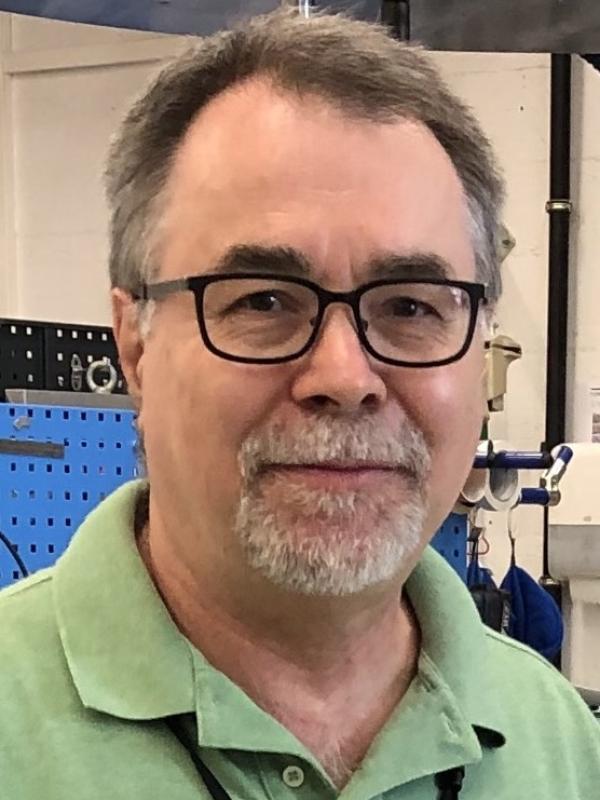
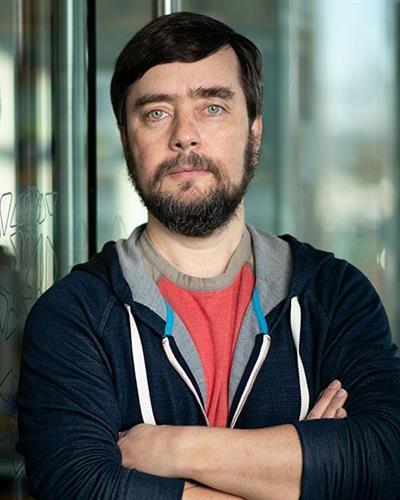
Michel Versluis is a Full Professor at the University of Twente, Netherlands, specializing in Physical and Medical Acoustics within the Physics of Fluids group. His work focuses on microbubbles and microdroplets for medical imaging and therapy, as well as microfluidic applications in medicine and nanotechnology. University of Twente, Physics of Fluids group His research bridges physics and biomedical engineering, with publications in high-impact journals like PNAS and IEEE Transactions. Recent work emphasizes ultrasound-driven microbubble dynamics, additive manufacturing of flow phantoms, and deep learning for super-resolution imaging. 2025 publications: vascular phantoms, PROTEUS simulator, acoustic microbubble control 2024 innovations: 3D-printed medical devices, immunogenic cell death optimization Contact: m.versluis@utwente.nl
David L. Henann serves as the James R. Rice Associate Professor of Solid Mechanics in the Department of Engineering at Brown University's School of Engineering. His research focuses on continuum-level constitutive modeling of engineering materials, with particular expertise in granular materials, viscoelastic foams, and bubble dynamics in soft solids. Henann leads an active research group developing computational frameworks for material behavior prediction through numerical simulation. PhD, Massachusetts Institute of Technology (2011) SM, Massachusetts Institute of Technology (2008) BS, State University of New York at Binghamton (2006) Henann's research spans constitutive theory development and computational implementation for complex material systems. His group pioneers nonlocal continuum models for granular flows, large-deformation viscoelastic theories for elastomeric foams, and high-strain-rate characterization of microcavitation phenomena. Current projects include modeling size segregation in granular media, bubble dynamics in viscoelastic hydrogels, and electromechanical instabilities in dielectric elastomers. His publication record reveals consistent focus on material instability phenomena , constitutive model validation , and experimental-computational synergy . Henann frequently collaborates with experimental groups to validate theoretical frameworks, particularly in soft matter mechanics and cavitation dynamics. Eshelby Mechanics Award for Young Faculty (2020) NSF CAREER Award (2016) Pi Tau Sigma Gold Medal (ASME, 2016) Brown University Teaching Awards (2015-2016) Henann maintains an active teaching portfolio covering continuum mechanics, solid mechanics, and plasticity at both undergraduate and graduate levels. His research group operates a computational mechanics laboratory with extensive Fortran-based simulation capabilities, evidenced by multiple open-source repositories on GitHub for granular rheology, foam modeling, and dielectric elastomer analysis. Current work focuses on extending nonlocal granular models to industrial applications and developing predictive frameworks for soft material failure under extreme loading conditions.
Associate Professor Gilda Carvalho is a leading researcher at the Australian Centre for Water and Environmental Biotechnology (ACWEB) and the School of Chemical Engineering at the University of Queensland. She leads the Drinking and Recycled Water research group and specializes in Environmental Bioengineering , focusing on microbial processes for water/wastewater treatment and resource recovery. Research areas: Chemicals of Emerging Concern (CEC), Biological Nutrient Removal (BNR), biofilm systems, membrane processes, and polyhydroxyalkanoate (PHA) production Key methodologies: Molecular tools linking microbial ecology to process performance Academic output: Over 90 peer-reviewed papers and >40 multinational research projects with industrial partners Educational impact: Coordinator of Postgraduate Programs in Urban Water Engineering and supervisor of >20 PhD students Her recent research explores phage-based biofilm disruption , micropollutant removal via advanced oxidation, and resource recovery from waste streams. Current funding includes projects on biofilm solutions for drinking water and sustainable wastewater reuse. She integrates multidisciplinary approaches across biotechnology, chemical engineering, and environmental science to address global water challenges.
Dr. King Man Siu is an Assistant Professor in the Department of Electrical Engineering at the University of North Texas, College of Engineering. He established the Power Electronics and Renewable Energy (PERE) Lab in February 2022, focusing on power electronics technologies for renewable energy, smart grids, and electric vehicle applications. University: University of North Texas School: College of Engineering Department: Electrical Engineering Research Interests: Dr. Siu specializes in power electronics, renewable energy systems, and smart grid technologies. His work addresses challenges in: Efficient energy conversion for solar and battery systems Grid integration of electric vehicles and renewable sources Advanced inverter design for residential and industrial applications Reduction of magnetic components in power converters Reactive power management and circuit breaker development Modular solutions for DC distribution and rural electrification Publication Trends: His research emphasizes optimizing power electronics through innovative topologies (e.g., Manitoba inverters, interleaved totem-pole converters) and materials (e.g., SiC MOSFETs). Key areas include energy efficiency in photovoltaic systems, smart grid stability, and DC microgrid interconnection strategies. Contact: Email: Kingman.Siu@unt.edu Office: Discovery Park B233
Daniele Ielmini is a Professor at the Department of Electronics, Information and Bioengineering at Politecnico di Milano, Italy, where he leads research in non-volatile memory technologies and neuromorphic computing. He received his Laurea (with merit) and Ph.D. in Nuclear Engineering from Politecnico di Milano in 1995 and 2000, respectively, and has held visiting positions at Intel Corporation (2006), Stanford University (2006), and the University of Illinois at Urbana-Champaign (2010). His research focuses on the modeling and characterization of non-volatile memories, including nanocrystal memory, charge trap memory, phase change memory (PCM), resistive switching memory (RRAM), and spin-transfer torque magnetic memory (STT-MRAM). He has co-edited the book 'Resistive switching – from fundamental redox-processes to device applications' and published over 300 papers with more than 10,000 citations and an H-index of 69 (Scopus, September 2023). Prof. Ielmini's recent publications demonstrate a strong trend toward in-memory computing and neuromorphic applications, with particular emphasis on closed-loop analog computing architectures, reservoir computing with 2D materials, and hardware security implementations using emerging memory technologies. His work bridges fundamental device physics with practical computing applications, especially for energy-efficient AI acceleration. Intel Outstanding Researcher Award (2013) ERC Consolidator Grant (2014) IEEE-EDS Paul Rappaport Award (2015) Fellow of the IEEE Prof. Ielmini leads multiple ERC-funded projects including SHANNON (Secure Hardware with Advanced Nonvolatile memories), NEURO2D (neuromorphic systems based on reservoir computing in MoS2), and ANIMATE (closed-loop in-memory computing). His research group includes post-doctoral researchers, PhD students, and M.Sc. students working on various aspects of emerging memory technologies and their applications. He serves as Associate Editor for IEEE Trans. Nanotechnology and Semiconductor Science and Technology (IOP), and has served in several Technical Subcommittees of international conferences including IEEE-IEDM, IEEE-IRPS, and IEEE-ISCAS. His laboratory at Politecnico di Milano is equipped with advanced semiconductor device testing equipment including probe-stations, semiconductor parameter analyzers, high-speed waveform generators, and other specialized instruments for nano-electronic research. The lab collaborates with major semiconductor companies including Micron Technology Inc. and STMicroelectronics, as well as participating in national and international research projects.
Wenzel Jakob is an Associate Professor and leader of the Realistic Graphics Lab at EPFL's School of Computer and Communication Sciences , currently on sabbatical at the University of Tokyo until Fall 2025. His work bridges inverse graphics , physically based rendering , and compiler/systems research , with a focus on developing robust differentiable rendering frameworks. Key research themes include: Backpropagation through rendering algorithms for inverse problems Material appearance modeling and optical measurement systems Compiler design for differentiable rendering pipelines Manifold sampling techniques and light transport derivatives His group created Mitsuba renderer , Dr.Jit , and Instant Meshes (recipient of the SGP Software Award). Recent publications (2021–2024) explore volumetric rendering, SDF-based differentiable systems, and efficient Monte Carlo estimators. Awards include the ACM SIGGRAPH Significant Researcher Award , Eurographics Young Researcher Award , and ERC Starting Grant . Teaching roles (2016–2024) span Advanced Computer Graphics and Numerical Methods for Visual Computing courses at EPFL.
Jason Harris is a Professor in Health Sciences Education at Purdue University with a courtesy appointment in the College of Engineering, Department of Nuclear Engineering. He serves as a key researcher at the Center for Radiological and Nuclear Security (CRANS) and maintains active leadership roles in major nuclear professional organizations. His academic credentials include: Ph.D. in Health Physics from Purdue University (2007) M.S. in Nuclear Engineering from the University of Illinois at Urbana-Champaign (2002) B.S. in Biology and Chemistry from the University of Tampa (1995) Dr. Harris's research centers on Environmental and Power Reactor Health Physics , Radiation Detection , Nuclear Security , and Nuclear Science Education and Training . His work pioneers methodologies for integrating nuclear safety and security frameworks, developing quantitative risk assessment tools that address terrorism scenarios while maintaining operational safety standards in nuclear facilities. Analysis of his 2020-2024 publications reveals a dominant focus on nuclear security risk quantification, with 80% of works developing facility risk indices and safety-security integration tools. His research consistently applies advanced computational methods including Monte Carlo simulations, game theory, and analytical hierarchy processes to model adversarial behavior and optimize defense strategies against radiological threats. Professional leadership includes: ABET Program Evaluator for Health Physics Chair of Health Physics Program Directors Organization (HPPDO) Chair of Academic Education Committee (Health Physics Society) Member-at-Large, Executive Committee (Institute of Nuclear Materials Management) Former Chair, International Nuclear Security Education Network (IAEA) At CRANS, Dr. Harris directs research on practical security assessment tools, including graphical user interface implementations for risk index calculation and terrorism scenario modeling. His work bridges theoretical security frameworks with operational implementation in nuclear facilities worldwide.
Dr. Vadim Backman is the Sachs Family Professor of Biomedical Engineering and Medicine at Northwestern University's McCormick School of Engineering and Applied Sciences and Feinberg School of Medicine. He holds additional roles as Professor of Medicine (Hematology/Oncology) and Biochemistry and Molecular Genetics, Associate Director of Research Technology and Infrastructure at the Robert H. Lurie Comprehensive Cancer Center, and Director of the Center for Physical Genomics and Engineering. He earned his Ph.D. in Medical Engineering from Harvard-MIT and M.S./B.S. in Physics from St. Petersburg Polytechnic Institute. His research focuses on physical and biological science intersections, developing nanoscale imaging and computational technologies to study chromatin dynamics and their role in disease. Key areas include cancer diagnostics/therapeutics, chromatin engineering, and genome nanoimaging. Dr. Backman has published over 230 papers, holds 20+ patents, and leads large-scale projects like NCI Bioengineering Research Partnerships. Education: Ph.D. (Harvard-MIT), M.S. (MIT), M.S./B.S. (St. Petersburg Polytechnic Institute) Affiliations: PhD Programs in Applied Physics and Interdisciplinary Biological Sciences Research emphasizes chromatin's role in disease, with clinical translation for diagnostics and therapy. His lab develops technologies like nano-CHIA and ChromSTEM, advancing understanding of genomic organization and epigenetic regulation. Awards include the Cozzarelli Prize and MIT Technology Review's Top 100 Innovators. Awards: Cozzarelli Prize (2017), AIMBE Fellowship (2009), NSF CAREER Award (2003) Grants and collaborations include managing multi-investigator projects and co-founding biotech companies. Courses taught: BME 302 (Quantitative Systems Physiology), BME 429 (Advanced Physical and Applied Optics).
Dr. He Wang is an Associate Professor in the Department of Computer Science at University College London (UCL), affiliated with the Virtual Environment and Computer Graphics (VECG) group and the UCL Centre for Artificial Intelligence. He holds a Visiting Professorship at the University of Leeds and previously served as an Associate Professor and Lecturer there, as well as a Senior Research Associate at Disney Research Los Angeles. His research focuses on computer graphics, vision, and machine learning, with notable contributions to crowd simulation, generative models, and physics-informed neural networks. Dr. Wang earned his BEng from Zhejiang University and his PhD from the University of Edinburgh, followed by postdoctoral work at the University of Edinburgh's School of Informatics. He has been recognized as a Turing Fellow and serves as an Academic Advisor to the Commonwealth Scholarship Council and an Associate Editor of Computer Graphics Forum . His research spans cutting-edge topics including 3D reconstruction, adversarial attacks on motion recognition, and AI-driven groundwater modeling. He has supervised six PhD students to completion and actively engages in collaborative projects, consultancy, and grant evaluations. His lab welcomes students through dedicated recruitment channels.
Shili Lin is a Professor of Statistics at The Ohio State University's Department of Statistics, within the College of Arts and Sciences. She joined the faculty in 1995 after serving as the Neyman Visiting Assistant Professor at the University of California, Berkeley. Her expertise spans statistical genomics, bioinformatics, high-dimensional data analysis, Bayesian statistics, and Monte Carlo methods. Lin collaborates extensively with medical researchers to address challenges in genomic data such as ultra-high dimensionality, complex dependencies, and sparsity, focusing on diseases like cancer, multiple sclerosis, tuberculosis, and diabetes. She has contributed to developing computational tools for analyzing chromatin interactions, methylation patterns, and metagenomic samples. Lin holds a PhD from the University of Washington (1993). Her professional roles include serving as an Associate Editor for Biometrics , Statistical Applications in Genetics and Molecular Biology , and Statistics in Biosciences , as well as an Editorial Board member for Genetic Epidemiology . She is a standing member of NIH's Biostatistical Methods and Research Design Study Section and has served on multiple NSF and NIH grant review panels. Additionally, she is President Elect of the Caucus for Women in Statistics and has been a member of the ASA Committee on AAAS representation for six years. Her research interests emphasize statistical methodologies tailored to genomic data, including model selection, epigenetic analysis, and integrative approaches for multi-omics data. Lin's work often combines theoretical advancements with practical applications, such as predicting relapse in immune-mediated disorders and improving imputation techniques for single-cell Hi-C analysis. She has pioneered software tools like TopKLists and GrammR to facilitate ranked list aggregation and metagenomic data analysis. Lin's scientific accolades include ASA Fellowship (2004), AAAS Fellowship (2009), and membership in the International Statistical Institute (2014). Her contributions to statistical genetics and epigenomics have been recognized through grants and editorial leadership roles. While her research group focuses on cutting-edge methods, no formal advisees or students are explicitly listed in the provided materials.
Rafael Brüschweiler is a Professor and Ohio Research Scholar at The Ohio State University, holding joint appointments in the Department of Chemistry and Biochemistry and the Department of Biological Chemistry and Pharmacology. He serves as the NMR Executive Director for the Ohio State Campus Chemical Instrument Center and the NSF-funded National Gateway Ultrahigh Field NMR Center. His research focuses on biophysical chemistry, analytical chemistry, and computational modeling, emphasizing protein dynamics, metabolomics, and NMR method development. He received his Ph.D. from ETH Zurich and completed a postdoc at the Scripps Research Institute. His research integrates experimental NMR, molecular dynamics simulations, and machine learning to study protein structure-function relationships, metabolic pathways, and biomolecular interactions. Key areas include the dynamics of oncogenic K-Ras, glucokinase glucose sensing, and nanoparticle-assisted NMR techniques. His work is funded by the NIH and NSF, with applications in biomedical diagnostics and drug discovery. Dr. Brüschweiler leads a multidisciplinary lab training students and postdocs in NMR spectroscopy, computational methods, and metabolomics. His lab developed tools like DEEP picker and COLMAR for automated NMR data analysis, contributing to the SECIM metabolomics center. He actively recruits students interested in protein dynamics, computational modeling, or metabolomics.
Ann Rivet is an Associate Professor of Science Education at Teachers College, Columbia University, and serves as the Associate Director of the Center for Sustainable Futures. She previously held the role of Program Officer in the Directorate for STEM Education at the National Science Foundation from 2016 to 2019. Her expertise lies in science education, particularly in Earth and environmental science, curriculum design, and urban school reform. Education: Ph.D. in Science Education, University of Michigan M.S. in Science Education (Earth Science), University of Michigan Sc.B. in Physics, Brown University Research Interests: Dr. Rivet's research focuses on how students develop deep understandings of Earth and environmental science concepts. She examines the intersections of scientific reasoning, instructional design, and assessment, primarily at the middle and secondary school levels. Her current work investigates how crosscutting scientific concepts influence students’ understanding of core disciplinary ideas, and how phenomena-based instructional approaches can support learning about large-scale Earth systems. She is actively involved in supporting the adoption and implementation of the Next Generation Science Standards (NGSS) through policy and practitioner-level initiatives, including the development of free, open-source curriculum materials for middle and high school science. Publications & Trends: Her work has been published in leading journals such as Science , the Journal of Research in Science Teaching , and the American Educational Research Journal . Her publications span topics from learning progressions in science to contextualizing instruction for urban students, reflecting a deep commitment to both theoretical and applied aspects of science education. Grants & Funding: Principal Investigator, NSF: "Collaborative Research: Bridging the Gap Between Tabletop Models and the Earth System" ($982,080) Science Team Member, GE Foundation: "Harlem Schools Partnership for Science and Math Education" ($5,000,000) Co-Principal Investigator, Carnegie Foundation: "Enhancing Teacher Preparation for Adolescent Literacy" ($100,000) Co-Principal Investigator, NSF: "GSE/RES Girls’ Science Practices in Urban High Poverty Communities" ($499,334) Principal Investigator, NSF (subaward): "Developing the Next Generation of Middle School Science Materials" ($137,198) Leadership & Outreach: Dr. Rivet has led multiple federally funded projects aimed at improving science education in urban schools. She has also contributed to national policy discussions through her role at the NSF and continues to shape science education standards and practices through her research and curriculum development efforts.
Buyung Kosasih is a Professor in the School of Mechanical, Materials, Mechatronic and Biomedical Engineering at the University of Wollongong. He has held this position since 2000 and focuses on teaching and research in mechanical engineering, including Machine Dynamics, Finite Element Methods, and Renewable Energy Technology. His research spans fluid dynamics in industrial processes, renewable energy systems, and aqueous lubrication. Key projects include 3D-printed surfboard fin optimization and steel coating dynamics. Research interests emphasize experimental and computational fluid dynamics, particularly in renewable energy turbines and tribological systems. Notable awards include the 2013 Outstanding Contribution to Teaching and Learning Award. He has supervised numerous students and led over 20 funded projects, including ARC grants for steel innovation and renewable energy. Collaborative work includes the Steel Research Hub and HVAC/cool roof efficiency studies.
Dr. Vikas Srivastava is an Associate Professor of Engineering and Director of the Graduate Program in Biomedical Engineering at Brown University's School of Engineering. His research focuses on solid mechanics, continuum biomechanics, and cell mechanics, with applications in materials under extreme environments and biomedical science. He leads the Srivastava Lab for Solid Mechanics and Biomechanics, which integrates computational models with experimental techniques to address interdisciplinary challenges. Dr. Srivastava holds a Ph.D. in Mechanical Engineering from MIT (2010) and previously held senior roles at ExxonMobil, including leadership in materials mechanics and deepwater drilling engineering. His academic career at Brown began in 2018, during which he has directed over 15 graduate students and secured notable funding. His research interests span mechanobiology, hydrogel-based drug delivery systems, AI-driven predictive modeling, and biomaterial innovations for cancer therapies. He has pioneered physics-informed neural networks for material characterization and developed novel hydrogels to enhance chemotherapy efficacy. Recent articles highlight advancements in polymer fracture modeling, machine learning for non-destructive evaluation, and predictive epidemiological modeling for pandemics. Dr. Srivastava has received the Dean’s Award in Bioengineering and was promoted to tenured Associate Professor in 2023. He actively mentors students through grants like the NSF Graduate Research Fellowship and leads initiatives in biomedical technology translation. The Srivastava Lab collaborates extensively across engineering, biology, and medicine to advance translational research in materials science and clinical applications.
Michael Levin is a Vannevar Bush Professor and Distinguished Professor at Tufts University, affiliated with the School of Arts and Sciences (Department of Biology) and School of Engineering (Biomedical Engineering). His research focuses on bioelectricity, developmental biology, and collective intelligence. He leads the Allen Discovery Center and the Tufts Center for Developmental and Regenerative Biology. Education: PhD in Genetics from Harvard Medical School (1996); BS in Computer Science and Biology from Tufts University (1992). Research Interests: Integrates developmental biology, computer science, and cognitive science to study morphogenesis, regeneration, and cancer. Explores bioelectric signaling, synthetic organisms, and AI-driven discovery. Key areas include regenerative medicine, cancer reprogramming, and collective intelligence in biological systems. Publications: Over 600 articles, with recent work on xenobots, neuroevolution, and bioelectric therapies. Themes include bioelectric control of form, AI in biology, and collective intelligence. Awards: INNS Donald O. Hebb Award, AAAS Fellow, and Vox Future Perfect 50 List recognition. Frequently invited to speak at conferences on biology, AI, and consciousness. Advising & Labs: Mentored numerous postdocs and students, including pioneers in bioelectricity and synthetic biology. Lab focuses on interdisciplinary approaches to biological pattern formation and regeneration.