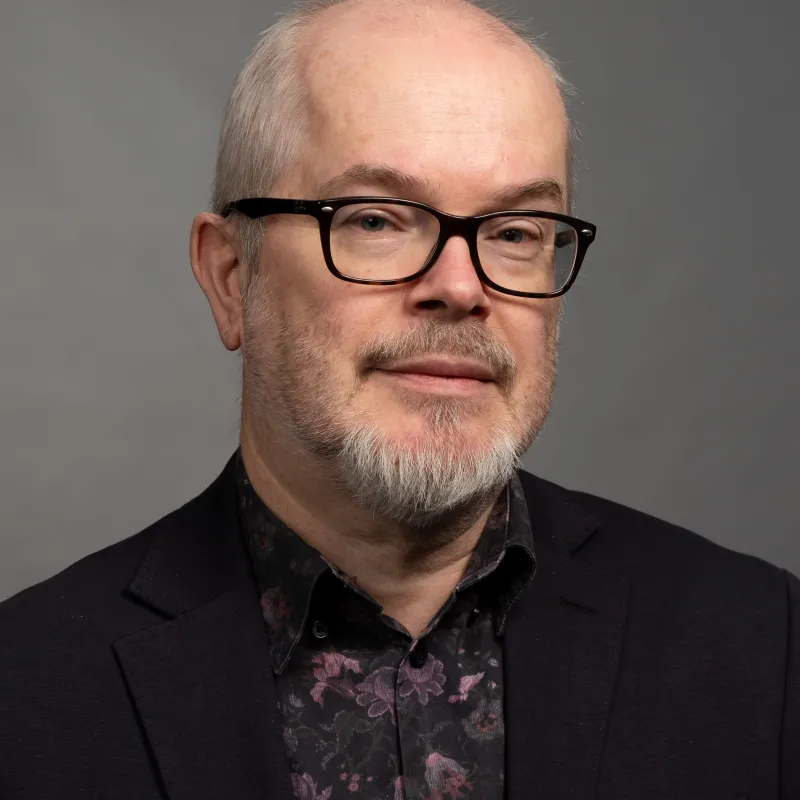
Dr. Xi Yu is a Lecturer in Chemical Engineering at the University of Southampton, affiliated with the Faculty of Engineering and the Environment. He holds a Bachelor's from Tianjin University and a Ph.D. from the University of Sheffield. His research focuses on low carbon fuels, granulation techniques, and computational fluid dynamics. He has supervised PhD students such as Jerin Jacob and is currently accepting new PhD applicants in these areas. Dr. Yu's educational background includes degrees in Chemical Engineering and prior academic roles at Aston University and the Energy and Bioproducts Research Institute (EBRI). His work spans bioenergy systems, particle technology, and multi-physics modeling. Key research projects include advancements in biomass gasification, biofuel production, and sustainable energy systems. His publications emphasize computational modeling, fluid dynamics, and biomass utilization. Recent articles explore topics like absorption chiller systems, fluidization validation, and bio-oil aging strategies. He contributes to teaching modules such as CHEG3000 and CHEG3004, reflecting his commitment to both research and education.
Dr. Michael Stevens is a Senior Lecturer at University of New South Wales (UNSW) Canberra , where he focuses on advanced manufacturing and biomedical device control systems . His work bridges digital manufacturing for SMEs with smart artificial heart technologies , emphasizing industry collaboration and translational research. Specializes in physiological control systems for rotary blood pumps Develops unobtrusive fall detection systems for dementia patients Leads international projects on total artificial heart development Education : B.Eng (Medical - First Class Honours), Queensland University of Technology (2010) PhD in Physiological Control for Biventricular Assist Devices, University of Queensland (2014) Research Trends show consistent focus on: Machine learning for biomedical diagnostics (2018–2025) mmWave radar and thermal sensors in patient monitoring (2021–2024) Computational fluid dynamics in artificial heart modeling (2016–2024) Physiological control algorithms for rotary blood pumps (2011–2025) Scientific Awards : UNSW Scientia Education Award (2021) for contextual teaching Heart Foundation Runner-up for "Smart Artificial Hearts" pitch (2021) ARC PGC Supervisor Award (2017) for mentoring Grants & Supervision : Holds over $6 million in competitive funding including MRFF and ARC grants. Currently supervises 4 PhD students while maintaining industry partnerships with VitalCare and BiVACOR. Labs & Facilities : Works across UNSW Engineering labs and Graduate School of Biomedical Engineering platforms, including mock circulation loops and high-performance computing clusters for CFD simulations.
Matthew Petering is an Associate Professor in the Department of Industrial and Manufacturing Engineering at the University of Wisconsin-Milwaukee. His work bridges operations research with real-world applications in logistics, transportation, and political redistricting. He holds a PhD in Industrial and Operations Engineering from the University of Michigan (2007), an MS from the same program (2003), and a BA in Mathematics from Washington University in St. Louis (1999). His research focuses on optimizing complex systems: from seaport container terminals to university course scheduling, and recently developing the FastMap algorithm for unbiased political redistricting. His algorithm was central to Wisconsin Supreme Court litigation in 2023-2024, submitting proposals for legislative maps that balanced fairness and operational efficiency. Dr. Petering has pioneered board game designs like Distrix (2020), which won international awards, and authored The Distrix Puzzle Book . His peer-reviewed work spans over 30 publications in journals like Transportation Science , European Journal of Operational Research , and International Journal of Production Economics . Key contributions include: Algorithmic solutions for container shipping and rail logistics Cyclic production planning models Real-time location management systems for distribution facilities Emergency evacuation modeling His FastMap redistricting system was recognized with the 2024 INFORMS Practitioner Poster Competition award. Dr. Petering frequently advises governmental bodies and judicial proceedings on redistricting methodology and logistics optimization.
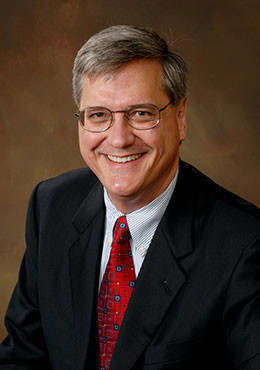
Markus König is a Professor of Informatics in Civil Engineering at Ruhr University Bochum, where he has been researching and teaching since October 2009. His work focuses on Building Information Modeling (BIM), digital construction technologies, and civil engineering informatics, with significant contributions to the development and implementation of digital methods in German construction industry. Dr. König earned his degree in civil engineering with a focus on applied computer science at Leibniz University Hannover, where he also completed his doctorate on cooperative building planning at the Institute for Building Informatics. He subsequently held a junior professorship for Theoretical Methods of Project Management at Bauhaus University Weimar before joining Ruhr University Bochum. His research spans multiple cutting-edge areas including Building Information Modeling (BIM), construction process simulation, tunneling informatics, infrastructure asset management, and the application of artificial intelligence and computer vision in civil engineering. As chair of the Building Informatics Working Group from 2012-2016, he played a key role in developing the first national BIM curriculum for German universities and serves as editor of the book 'Building Information Modeling: Technological Foundations and Industrial Practice.' Analysis of his recent publications reveals a strong trend toward semantic technologies, digital twins, automated compliance checking, and the integration of AI in construction processes. His work increasingly focuses on information containers, ontology development, and the application of large language models to infrastructure data, reflecting the evolving landscape of digital construction. Dr. König's significant contributions to digital construction have been recognized with prestigious awards: Lower Saxony-Bremen Construction Industry Award (2017) for 'services in the development and introduction of digital construction in Germany' Konrad Zuse Medal (2020) While specific details about his advising and grant activities aren't explicitly mentioned in the provided text, his extensive publication record with numerous co-authors suggests active supervision of doctoral students and research staff. His involvement in multiple collaborative research projects is evident from his publication history. At Ruhr University Bochum, Professor König leads a research group focused on civil engineering informatics, with particular emphasis on BIM, digital construction technologies, and their application across the building lifecycle. His team appears to work at the intersection of computer science and civil engineering, developing innovative solutions for construction process optimization, infrastructure management, and digital transformation of the AEC industry.
Dr Christos Mias is a Reader in Electrical and Electronic Engineering at the School of Engineering, University of Warwick, UK. He serves as Director of Studies for the Electrical and Electronic Engineering stream and has held roles such as UK URSI Commission B (Fields and Waves) representative from 2009-2014. His research focuses on electromagnetic shielding, computational electromagnetics, microwave engineering, antennas, periodic structures, and radiowave propagation. Dr Mias' work bridges theoretical advancements with practical applications in antenna design, frequency selective surfaces, and electromagnetic modeling. His research interests emphasize innovative solutions in antenna array analysis, periodic structure optimization, and advanced simulation techniques such as finite element time-domain (FETD) modeling. He has contributed to understanding scattering phenomena, non-reflecting boundary conditions, and molecular vs electromagnetic wave propagation comparisons. Recent studies include railway infrastructure monitoring and critiques of superlensing concepts in plasmonics. Publications highlight advancements in MoM formulations, FSS analysis, and sparse matrix methodologies for boundary condition simulations. His work often integrates computational methods with real-world engineering challenges, such as optimizing antenna performance and improving electromagnetic compatibility in complex environments. Dr Mias advises through his role as Director of Studies, fostering academic excellence in electrical engineering education. His office is located in A325, with advice hours on Fridays 10 AM-12 PM during term time.
Heikki Handroos is a Full Professor of Mechanical Engineering at LUT University, leading the Laboratory of Intelligent Machines since 1993. He holds a DSc (Technology) from Tampere University of Technology and has served as Vice-Dean of the Faculty of Technology (2007-2009) and currently chairs the Collegiate Body of LUT University. His research focuses on mechatronics, robotics, control systems, and fluid power, with over 300 publications and 2,400+ citations. He has supervised 34 doctoral theses and 150+ MSc projects, managed R&D projects exceeding €20M, and co-founded four tech startups. His work spans industrial collaborations, digital twin applications, and innovative robotics for nuclear energy (e.g., DEMO reactor maintenance systems). He has held visiting professorships in the U.S., Japan, and Russia, and actively contributes to academic editorial roles and professional societies like ASME and IEEE.
Christopher J. Stein is an Associate Professor of Theoretical Chemistry at the Technical University of Munich (TUM), part of the TUM School of Natural Sciences. His research focuses on theoretical (electro-)catalysis, developing electronic-structure models and solvation/embedding methods to understand and optimize catalytic processes. He leads the Stein Group, which integrates computational chemistry with high-throughput simulations to advance energy materials and battery technologies. His work emphasizes realistic modeling of catalyst behavior under operational conditions and has contributed to advancements in quantum embedding and automated reaction mechanism exploration. Education and Career: Earned his PhD in Theoretical Chemistry, with postdoctoral research at Caltech (2017-2020). Became an Associate Professor at TU Munich in 2023. He previously held roles at Karlsruhe Institute of Technology and contributed to projects like the BIG-MAP Materials Acceleration Platform. Research Interests: Theoretical chemistry, electrochemical interfaces, battery materials, high-throughput computational methods, and machine learning integration. His group explores topics like solid electrolyte interphases, charge transfer mechanisms, and automated workflows for materials discovery. Awards: While no explicit awards are listed, his contributions to materials acceleration platforms and theoretical catalysis have been widely recognized in the field. His work has been featured in journals like Journal of Chemical Physics , Chemical Science , and Angewandte Chemie . Labs/Teams: Leads the Stein Group at TUM, collaborating with institutions like the Munich Data Science Institute and MIRMI. His lab focuses on computational tools for accelerating energy material development, including quantum embedding and cloud-based simulations.
Aneta Podkalicka is a Senior Lecturer in Communications and Media Studies at the School of Media, Film and Journalism (MFJ), Monash University, Melbourne. She is actively engaged in research, teaching, and supervision, with a strong focus on media's role in social innovation, environmental sustainability, and everyday life. Her work bridges academic research with real-world applications across non-profit, government, and commercial sectors. Her research interests include: Media and everyday life Environmental communication Media for social innovation Digital and automated technologies and work futures Thrift, secondhand, and circular economies Media analytics and research training Aneta’s recent publications reflect a consistent trajectory in examining how media shapes sustainable practices, digital economies, and social inclusion. Her work spans cultural studies, sociology of consumption, and media policy, often employing qualitative and interdisciplinary methods. She has contributed to journals such as International Journal of Cultural Studies , Media International Australia , and Convergence , as well as book publications with Intellect and Palgrave. She is currently a Chief Investigator on the international project 'Workers in transition through automation, digitalisation and robotisation of work' (2020–2025), and previously led a project on virtual housing policy modeling. She has served as guest editor for Media International Australia and Linkoping University Electronic Press, demonstrating her active role in academic publishing. Aneta supervises postgraduate students in media, communication, sociology of consumption, and design. She is part of the 'Media and Environment' research group at MFJ and contributes to advancing the UN Sustainable Development Goals, particularly those related to sustainable consumption and environmental sustainability.
Grethe Winther is a Professor and Head of Section in the Department of Civil and Mechanical Engineering at the Technical University of Denmark (DTU), specializing in Materials and Surface Engineering. Her research is centered on the analysis and modeling of microstructure and mechanical properties of metals, with a strong emphasis on dislocation structures, deformation textures, and recrystallization processes. Her research interests include: Dislocation structures and boundary analysis in deformed metals Crystal plasticity modeling using synchrotron data (3DXRD) Orientation relationships in recrystallization Prediction of mechanical properties in industrial metal forming Multiscale modeling of plastic deformation and surface roughening The recent articles (2025) highlight a consistent focus on advanced characterization techniques like dark-field X-ray microscopy and discrete dislocation dynamics simulations. These works explore the formation of geometrically necessary boundaries, dislocation cell evolution, and multiscale surface deformation, reflecting a strong integration of experimental and computational methods in materials science. Key themes include plastic deformation mechanisms, microstructure evolution, and predictive modeling in metallic systems. Grethe Winther actively supervises multiple PhD projects, including those on dislocation dynamics, X-ray microscopy, and ductile failure simulations. She collaborates extensively with researchers such as H.F. Poulsen and C.V. Nielsen. Her work is supported by ongoing research projects at DTU, focusing on fundamental and applied aspects of metal deformation and microstructure. She is affiliated with the Materials and Surface Engineering section at DTU, where she leads research efforts combining advanced experimental techniques with theoretical modeling to understand and predict metal behavior under deformation.
Ricardo Valerdi is a Professor and Department Head in the Department of Systems and Industrial Engineering at the University of Arizona's College of Engineering. He is a Distinguished Outreach Professor, Faculty Athletics Representative for the Big 12 Conference and NCAA, and a member of the Graduate Faculty. His academic journey includes positions at MIT (2005–2011) and continuous service at the University of Arizona since 2011, with current roles beginning in 2018 and ongoing leadership since 2020. His educational background includes a PhD in Industrial and Systems Engineering from the University of Southern California, an MS in System Architecture and Engineering from the same institution, and a BS in Electrical Engineering from the University of San Diego. Valerdi's research spans systems engineering, cost estimation, model-based systems engineering (MBSE), digital engineering, sports analytics, and test and evaluation of complex systems. He is renowned for his work on the Constructive Systems Engineering Cost Model (COSYSMO) and has pioneered the integration of virtual reality with MBSE. His recent publications reflect a strong focus on executable modeling, systems thinking education, cost modeling convergence, and applications in space and defense systems. His body of work from 2020 to 2025 shows a consistent trajectory in advancing digital engineering tools, integrating immersive technologies into systems design, refining parametric cost models, and assessing systems thinking competencies in education. The publications emphasize interdisciplinary applications, including space missions, ERP systems, and cyber resiliency, demonstrating a blend of theoretical and applied systems engineering. Best paper award, Journal of Systems Engineering International Council of Systems Engineering, Summer I 2016 Foreign Member, Mexican Academy of Engineering, Summer I 2016 Frank Freiman Award for Lifetime Achievement in Cost Estimation and Parametric Modeling, International Cost Estimating & Analysis Association, Fall 2015 Dr. Valerdi has advised numerous graduate students and led educational initiatives integrating industry-focused projects. He founded and co-edited the Journal of Enterprise Transformation and served as editor-in-chief of the Journal of Cost Analysis and Parametrics. He has received significant recognition and grants supporting research in systems engineering cost modeling, human systems integration, and digital transformation. His leadership extends to service as a Fulbright Scholar, visiting professor at West Point, and visiting fellow of the UK Royal Academy of Engineering. He leads research teams focused on cost estimation, digital engineering, and systems integration, often collaborating with defense and aerospace stakeholders. His labs and initiatives emphasize virtual reality integration, executable modeling, and systems thinking assessment. Future work is expected to further explore AI-driven cost models, digital twins for complex systems, and scalable frameworks for MBSE adoption across domains.
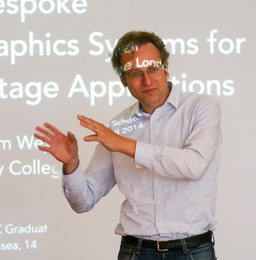
Tim Weyrich is Professor of Visual Computing (part-time) at University College London and Professor of Digital Reality at Friedrich-Alexander University Erlangen-Nürnberg. He leads the Digital Reality Lab and has affiliations with the Virtual Environments and Computer Graphics group at UCL, Eurographics, and the EPSRC Doctoral Training Centre (SEAHA). Previously, he held a Postdoctoral Teaching Fellowship at Princeton University. Research Interests: Content creation and computational photography Appearance modeling and fabrication Point-based graphics and cultural heritage analysis Digital humanities and 3D printing Article Trends: Recent work focuses on neural radiance fields (FruitNeRF++), 3D Gaussian splatting, mmWave radar inverse rendering, and texture anomaly detection. Applications span autonomous systems, cultural heritage, and medical imaging. Scientific Awards: Best Paper Honourable Mention (BMVC 2022) Best Student Paper Award (EG Workshop on GCH 2014) Honorable Mention (Eurographics 2011) Best Student Paper Honourable Mention (BMVC 2018) ACM SIGCHI Best Paper Honourable Mention (CHI 2013)
Robert Dodds Jr. is a Research Professor in the Department of Civil and Environmental Engineering at the University of Tennessee, Knoxville, within the Tickle College of Engineering. His work is centered on fracture mechanics, computational modeling of crack growth, and material failure in advanced alloys and functionally graded materials. His research interests include: Fracture and failure analysis in ductile and brittle materials Cohesive zone modeling and delamination in aluminum-lithium alloys 3D finite element modeling of crack propagation under small-scale yielding Thermomechanical and cyclic plasticity modeling Fracture in functionally graded materials with mixed-mode loading The analysis of his publications from 2002 to 2018 reveals a strong focus on computational fracture mechanics, particularly on cohesive models, T-stress effects, and delamination in aerospace-grade materials. His work bridges experimental validation with high-fidelity simulations, emphasizing engineering applications in structural integrity. His scientific awards include: National Academy of Engineering George R. Irwin Medal (ASTM) Fracture Mechanics Medal (ASTM) Nathan M. Newmark Medal (ASCE) Walter L. Huber Award (ASCE) Fellow, Engineering Mechanics Institute (ASCE) Dr. Dodds has collaborated extensively with researchers such as C. Ruggieri, M. Messner, A. Beaudoin, J. Sobotka, and G. Paulino. While no formal list of advisees is provided, his mentorship is evident through co-authored student-level research. He has not mentioned specific grants or funding sources in the provided text. His research likely involves a computational mechanics lab or research group focusing on fracture simulation and material modeling, though no lab name is specified.
Dr. Anna Baldycheva is a Senior Lecturer in Electronic Engineering at the University of Exeter, within the College of Engineering, Mathematics and Physical Sciences. She leads the interdisciplinary STEMM Laboratory, focusing on applied R&D in smart materials, photonics, AI, and IoT. With prior research experience at MIT, Trinity College Dublin, and Tyndall National Institute, she has established herself as an internationally recognized innovator and entrepreneur in emerging technologies. PhD in Electronic and Electrical Engineering, Trinity College Dublin (2008–2012) BSc (Hons) in Physics, St. Petersburg State University (2003–2008) Postgraduate Certificate in Academic Practice, University of Exeter (2016–2017) Postgraduate Certificate in Technology Management, Smurfit Business School (2009–2010) Her research spans Nano-Engineering, Opto-Electronics, Photonics, AI, and IoT , with a strong emphasis on real-world applications. She pioneers work in fluid opto-electronics , graphene nanocoatings , and AI-driven emotion recognition and early cancer detection . Her lab develops smart composite materials for flexible electronics, e-textiles, and structural applications, integrating machine learning into healthcare, education, and communications systems. The recent publications highlight a strong trend toward applied interdisciplinary innovation , combining materials science with AI and photonics for healthcare diagnostics, energy-efficient computing, and educational technology. Her work frequently bridges fundamental physics with commercialization potential, as seen in spin-out technologies like GSurf and the Electronic-Nose for lung cancer detection. Fellow, Royal Microscopical Society (RMS) Fellow, Higher Education Academy (FHEA) Expert, Future and Emerging Technologies, European Commission Featured in Forbes and Forbes Tech Council Editor-in-Chief, InSTEMM Journal Associate Editor, Nature Scientific Reports and Discover Nano Trustee, Royal Microscopical Society Founder, STEMM Global Scientific Society Founder, It’s Her! Women in STEMM Initiative Dr. Baldycheva actively supervises PhD students and has secured industrial collaborations with organizations such as Qinetiq and Lumentum. She leads multiple outreach initiatives, including STEMM Junior for underprivileged children, and serves on the committee for the Jocelyn Bell Brunel PhD Scholarship. She has raised significant research funding through national and international grants, though specific grant names are not listed. She leads the STEMM Laboratory , a multidisciplinary research group with divisions in Smart Composite Materials, Machine Learning & AI, and Opto-Electronics & Photonics. The lab emphasizes industry collaboration and technology transfer, having produced a university spin-out (GSurf) and multiple media-highlighted innovations.
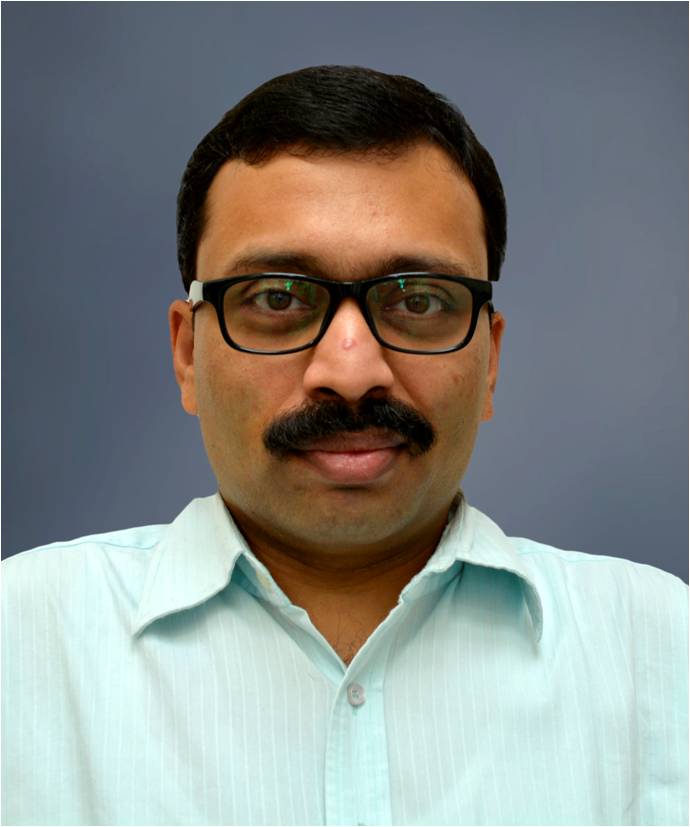
Somnath Basu is a Professor in the Department of Metallurgical Engineering and Materials Science at the Indian Institute of Technology Bombay. He has been serving in academic roles since 2011, progressing from Assistant Professor to Associate Professor and then to Professor in 2022. His work is deeply rooted in process metallurgy and materials engineering, with a focus on industrial steelmaking technologies. His research interests include metal refining , thermodynamics of slag-metal reactions , phosphorus and sulfur removal , and continuous casting processes . He also explores nanofluids and their transport properties, indicating interdisciplinary engagement. His work bridges fundamental thermodynamic studies with practical industrial applications in iron and steel production. The selected publications reflect a strong trend in steelmaking process optimization , particularly in reaction kinetics , inclusion behavior , and process monitoring . His research spans both experimental investigations and thermodynamic modeling, targeting improvements in steel purity and casting efficiency. Scientific Contributions: Published in leading journals such as ISIJ International , Steel Research International , and Metallurgical and Materials Transactions B . Contributions to understanding phosphorus partitioning, nozzle clogging, and nanofluid conductivity. While no specific students or grants are listed, his long-standing academic position and publication record suggest active supervision of graduate research and involvement in funded projects related to metallurgical process innovation. His work likely supports both academic and industrial advancements in steel technology. He is affiliated with a leading research department equipped with advanced facilities for metallurgical experimentation and process simulation, though specific lab names or team structures are not mentioned in the text.
Axel Hoffmann is a Professor of Materials Science and Engineering at the University of Illinois at Urbana-Champaign , where he has been since 2019. His research focuses on magnetism , spin transport , magnetic heterostructures , and quantum materials . He has published extensively on topics including skyrmions , spin-orbit torques , and magnonics . Education: PhD in Physics (University of California-San Diego, 1999); Diplom in Physics (RWTH Aachen, 1994) Professional History: Postdoctoral Fellow (Los Alamos National Laboratory, 1999-2001); Staff Scientist to Senior Group Leader (Argonne National Laboratory, 2001-2019) His scientific awards include being a Highly Cited Researcher (2019-2023), Fellow of the American Physical Society, IEEE, and American Vacuum Society, and the David Adler Lectureship Award (2022). Notable research trends from his publications include advancements in antiferromagnetic spintronics , skyrmion dynamics , and hybrid magnonic systems . Editorial Roles: Associate Editor, Journal of Applied Physics (2009-present).