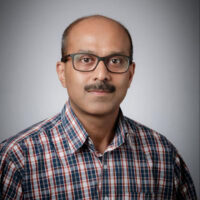
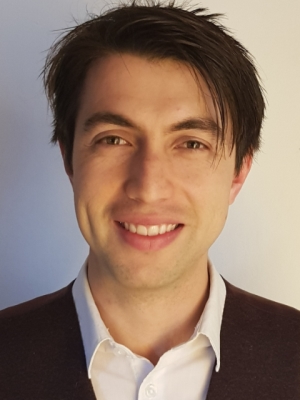
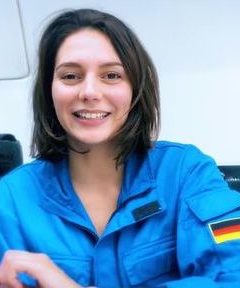
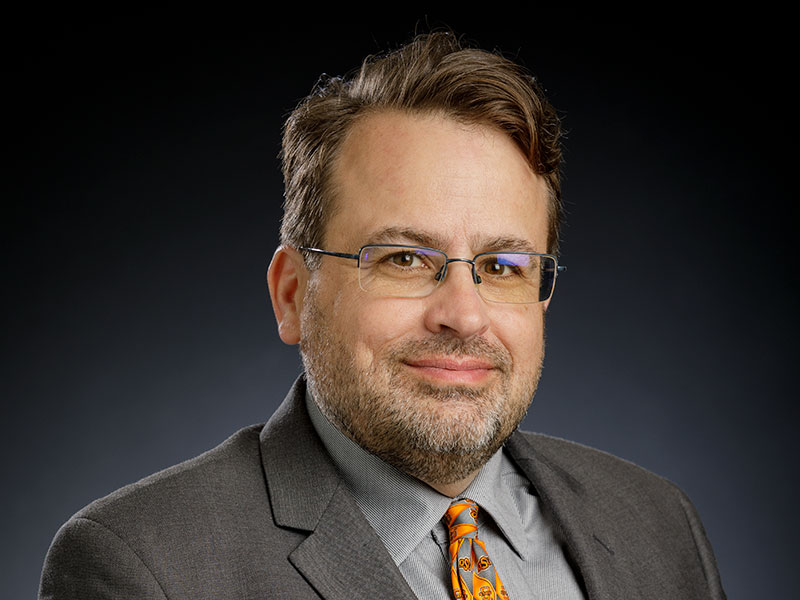
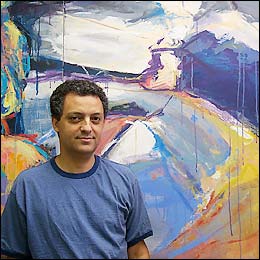
Raja Ghosh is a Professor in the Department of Chemical Engineering at McMaster University's Faculty of Engineering. His research focuses on bioengineering and polymer materials, with specialization in membrane technology for biopharmaceutical applications. He is actively involved in the Health & Bio-innovation research cluster and teaches courses such as CHEM ENG 3BM3: Bioseparations Engineering and CHEM ENG 782: Biopharmaceuticals . Research Interests include membrane chromatography device design, bioseparations process development, membrane bioreactors for enzymatic and protein applications, and therapeutic protein stabilization. His work addresses scalable purification methods for monoclonal antibodies, PEGylated proteins, and viral vectors. Recent Publications highlight innovations in cuboid chromatography design, pH-modulated ion-exchange systems, and SARS-CoV-2 spike protein purification. He employs computational fluid dynamics (CFD) simulations to optimize device performance and reduce pressure drops in bioseparation processes. Contact Information : Email: rghosh@mcmaster.ca Office: JHE A408 Phone: 905-525-9140 ext. 27415
Dr. Alan M. Allgeier is a Professor in the Chemical and Petroleum Engineering Department at the University of Kansas School of Engineering, where he also serves as Associate Director of the Center for Environmentally Beneficial Catalysis (CEBC). He joined KU in Fall 2017 after 20 years of industry experience at DuPont and Amgen. Dr. Allgeier holds a B.S. in Chemistry from Case Western Reserve University (1992) and M.S./Ph.D. degrees in Inorganic Chemistry from Northwestern University (1997). His research focuses on sustainable catalysis and manufacturing with four primary themes: characterization of porous materials using multi-technique approaches including NMR relaxometry; continuous flow processing for pharmaceuticals; synthesis of heterogeneous catalysts; and design of redox enzyme catalytic processes. His work bridges fundamental understanding of catalytic species with practical applications in renewable resource utilization and pharmaceutical manufacturing. Analysis of Dr. Allgeier's recent publications reveals a strong trend toward sustainable chemical processes, particularly in biomass conversion to valuable chemicals and materials. His work integrates advanced characterization techniques (especially NMR-based methods) with catalytic process development, focusing on hydrodeoxygenation reactions, biocatalysis using ethanol as a terminal reductant, and novel reactor design for pharmaceutical manufacturing. The research demonstrates a consistent commitment to Green Chemistry principles across multiple application areas. Bellows Faculty Scholar, University of Kansas School of Engineering (2021) Catalysis Club of Philadelphia Award (2021) Russell Malz Award for Service to Catalysis, Organic Reactions Catalysis Society (2014) Amgen Green Chemistry Award for "A Novel, Green Process for AMG 423" (2011) Sigma Xi Award for excellence in graduate research, Northwestern University (1994) Dr. Allgeier has successfully mentored numerous graduate and undergraduate students, with several completing Ph.D. dissertations under his supervision. His research is supported by significant funding including an NSF RII Track-2 FEC grant ($4 million), multiple Kansas Corn Commission awards, and industry partnerships with Honeywell, IFF Inc., and DuPont. His current projects focus on renewable polymers, ethanol derivatives, and advanced characterization of porous materials. The Allgeier Research Group maintains active collaborations with industry partners and national laboratories, operating specialized facilities for catalysis research, NMR characterization, and continuous flow pharmaceutical manufacturing. The group's work on sustainable catalysis directly supports the UN definition of sustainable development by developing processes that meet present needs without compromising future generations' ability to meet theirs.
Casper Boks is Professor in Design for Sustainability at the Department of Design, NTNU Norwegian University of Science and Technology within the Faculty of Architecture and Design. He has held significant leadership roles including Vice Dean for Research and Innovation (2017-2021) and Head of Department (2013-2017). His research focuses on sustainable product and service design with specific expertise in design for sustainable behavior, circular economy implementation, societal sustainability narratives, and citizen engagement. With over 200 publications and an h-index of 42 on Google Scholar, his work bridges theoretical frameworks with practical industry applications to advance sustainability through design innovation. His recent publications demonstrate a strong focus on contemporary sustainability challenges, particularly lithium-ion battery repurposing, second-hand consumption barriers, plastic consumption patterns, and the emotional dimensions of sustainable behavior. His interdisciplinary approach connects design methodology with behavioral psychology, business model innovation, and systems thinking to address complex sustainability challenges. Professor Boks has supervised numerous PhD candidates as both main and co-supervisor, along with over 60 Master's theses at NTNU. His extensive project portfolio includes leadership in international initiatives such as NOTRAP (2025-2029), HolE-LiB (2022-2026), and TRANS-URBAN-EU-CHINA (2018-2021). He serves on numerous national and international committees including as Leader of the national committee for publication in Architecture, Design and Art (2024-present), and as a member of the Norwegian Academy of Technological Sciences. His international recognition extends to serving as an external assessor for academic positions worldwide and as a jury member for international design awards.
Dr. John R. Farver is a Professor in the Department of Earth, Environment and Society at Bowling Green State University (BGSU). He holds a Ph.D. in Geological Sciences from Brown University (1988), an M.S. from the same institution (1984), and a B.S. in Chemistry, Geology, and Geochemistry from SUNY (1982). His research focuses on mineralogy, petrology, and materials science, particularly synthesis/characterization of mineral and ceramic aggregates. Recent grants include NOAA-funded studies on fish stock discrimination via otolith microchemistry and Lake Erie metal transfer analysis. He teaches courses in Earth Materials, Materials Science, and Geology seminars. His work bridges geological processes with advanced analytical techniques like TEM and cellular automata modeling. Research highlights include investigations into silicon diffusion in quartz, forsterite deformation mechanisms, and fluid dynamics in fault zones. Collaborations with colleagues like Dr. Miner and Dr. Yund have produced interdisciplinary studies in metamorphic geology and structural geophysics. His educational contributions include developing volcanic hazard teaching modules using mineral reaction kinetics. Lab facilities at BGSU support his advanced materials characterization work. Key research themes span mineral physics, tectonic processes, and environmental geochemistry, with recent emphasis on applying geological methods to ecological questions like lake pollution and fisheries management. His publications span structural geology, geochemical analysis, and educational pedagogy, demonstrating a commitment to both fundamental science and practical applications.
Jaime Ortega Arroyo is a Lecturer at the Department of Mechanical and Process Engineering at ETH Zürich, affiliated with the Professur für Nanophotonik. His research focuses on developing interdisciplinary methods combining optics, chemistry, microfluidics, and computer vision to address challenges in biological systems and nanoparticle characterization. Key projects include studying cellular secretion dynamics, real-time biological observations, chiral detection technologies, and optofluidic platforms for label-free sensing. His work emphasizes innovative optical microscopy techniques such as interferometric scattering and holographic imaging for high-throughput nanoparticle analysis. Recent contributions include advancements in 3D optofluidic control, molecular fingerprinting of nanoparticles, and thermal regulation of microfluidic systems. These efforts aim to bridge gaps in understanding complex biological processes and enable precise engineering solutions in nanotechnology. Active in publishing, his research spans optofluidic platforms, nanoparticle detection, and biomedical applications. He leads the Professur für Nanophotonik laboratory, fostering collaborations in optical instrumentation and biological systems analysis. His expertise bridges mechanical engineering, photonics, and life sciences, positioning him at the forefront of interdisciplinary nanotechnology research.
Ayusman Sen is the Verne M. Willaman Professor of Chemistry and Distinguished Professor of Chemistry at Pennsylvania State University. He holds a joint appointment in the Department of Chemical Engineering. His research focuses on self-powered nano/micromotors, dynamic materials, and enzyme-driven systems, with applications in smart materials and active matter. Sen’s work integrates chemical synthesis, catalytic energy harvesting, and emergent phenomena to create adaptive systems capable of performing complex tasks. Education: B.Sc. (Honours), University of Calcutta, India (1970) M.Sc., Indian Institute of Technology, Kanpur, India (1973) Ph.D., University of Chicago, USA (1978) Research Interests: Design of self-powered nanomotors and micropumps Chemically controlled assembly and motion of colloidal systems Enzyme cascade systems for programmable behavior Active matter and collective dynamics Key Contributions: Pioneered enzyme-powered micromotors for biomedical and environmental applications Developed theoretical frameworks for chemotactic assembly and non-equilibrium systems Engineered autonomous fluid-pumping systems using multi-enzyme networks Awards and Honors: Langmuir Lecture Award (American Chemical Society) Humboldt Prize (Alexander von Humboldt Foundation) Fellow of the Royal Society of Chemistry Paul J. Flory Award (IBM) Labs and Teams: His research group, the Sen Research Group, focuses on interdisciplinary projects at the interface of chemistry, materials science, and engineering. Current efforts explore light-driven systems, programmable fluidics, and bioinspired materials.
Dr. Olfa Lopez-D’Angelo is a researcher at the Department of Multiscale Simulation of Particulate Systems at Friedrich-Alexander-Universität Erlangen-Nürnberg. Her research focuses on granular rheology, additive manufacturing for space applications, and the behavior of materials under microgravity conditions. She leads the Rheologie granularer Materialien unter Weltraumbedingungen project (2023–2026), funded by the German Ministry for Economic Affairs and Climate Action (BMWK). Her work bridges theoretical physics, experimental engineering, and space technology. Key research interests include granular fluid dynamics, powder-based manufacturing processes in low-gravity environments, and the structural analysis of metamaterials. She has contributed to pioneering studies on acoustically propelled macroparticles and granular piston-probing in microgravity. Her interdisciplinary approach is evident in collaborations with institutions like ESA and DLR, as well as her involvement in projects such as the VIP-DROP2 module for droplet dynamics experiments. Awards: Granular Matter Gordon Research Conference Poster Prize (2022) ELGRA Research Prize (2021) Fly Your Thesis! 2019 (2018) ESA Networking/Partnering Initiative Fellowship (2017) Dr. Lopez-D’Angelo actively disseminates her work through international conferences (e.g., DPG, IAC) and public engagement initiatives, including the podcast Talk That Science . Her research emphasizes practical applications in space exploration, such as in-situ resource utilization and advanced manufacturing systems for extraterrestrial environments.
Jamey Jacob, Ph.D., P.E., is a Professor and John Hendrix Chair in Mechanical and Aerospace Engineering at Oklahoma State University, leading the Oklahoma Applied Research Institute (OAIRE). He holds a Ph.D. from UC Berkeley (1995), with earlier degrees from the same institution and the University of Oklahoma. His research focuses on aerodynamics, UAV design, vortex dynamics, geophysical flows, and autonomous systems. Notable projects include solar balloon flight dynamics, eclipse observations, and advanced air mobility (AAM) weather systems. Jacob has pioneered UAV-based weather sensing and developed innovative aerostructures, including inflatable systems. He has received over 15 prestigious awards, including the Regents Distinguished Teacher (2011) and Oklahoma Innovator of the Year (2010). His recent work emphasizes urban wind field mapping and stratospheric balloon applications for planetary science. Jacob’s lab, OAIRE, integrates aerospace engineering with environmental and operational challenges, advancing both academic and applied frontiers.
Shlomo Ta'asan is a Professor Emeritus in the Department of Mathematical Sciences at Carnegie Mellon University, affiliated with the Mellon College of Science. He holds a Ph.D. from The Weizmann Institute of Science. His research spans computational materials science and systems biology, with a focus on grain growth dynamics and immune response modeling. Collaborations include work with David Kinderlehrer, R. Suter Lab, and materials science faculty at CMU. Key research areas include bridging microscopic dynamics to macroscopic equations, grain boundary evolution, and immune system modeling. His work on inverse problems using HEDM data and entropy-based theories of grain boundary character distribution has advanced materials science. In biology, he develops models for circulatory system instabilities and shock mechanisms. Notable contributions include mesoscale simulations of grain growth and multigrid optimization methods for aerodynamics. His interdisciplinary approach integrates computational mathematics with experimental data from materials and biological systems.
Douglas W. Carter is an Assistant Professor in the Department of Mechanical, Materials, and Aerospace Engineering at the Armour College of Engineering, Illinois Institute of Technology. He leads the Experimental Turbulent Flows Lab, focusing on advanced experimental techniques for fluid dynamics research. Education: Ph.D., University of Minnesota, 2019 M.S., University of Minnesota, 2017 B.S., University of New Hampshire, 2014 Research Interests: Dr. Carter investigates experimental turbulent flows, particle-turbulence interactions, and noise generation in separated flows. His expertise spans particle tracking velocimetry, hypersonics, compressible flows, and data-driven methods for fluid systems. Research emphasizes experimental validation of turbulence models and development of novel diagnostic tools like FLEET velocimetry. Publications: Recent work explores hypersonic flow diagnostics, pressure reconstruction in stalled airfoils, and turbulence cascade dynamics. Publications demonstrate consistent focus on experimental fluid mechanics, high-speed flow measurements, and low-order modeling for aerodynamic prediction. Laboratory: The Experimental Turbulent Flows Lab (Rettaliata Engineering Center) develops cutting-edge techniques for turbulent flow analysis, including multi-scale imaging and optical diagnostics for high-speed applications.
Lu Xing is an Associate Professor in the Mechanical and Construction Engineering Department at Northumbria University. His research focuses on energy system modeling, sustainable energy storage, and AI-driven green energy solutions. He holds a PhD in Mechanical and Aerospace Engineering from Oklahoma State University, alongside master's and bachelor's degrees in related disciplines. Key roles include Principal Investigator for over £14 million in research projects funded by UK EPSRC, Innovate UK, and energy companies. He co-founded Continuous Power as Chief Scientist and advised the ICURe Programme. His work addresses UN Sustainable Development Goals, particularly energy transition and environmental sustainability. Research interests span PEM fuel cells, hydrogen integration, battery systems, and AI applications in energy optimization. He has published 70+ papers in top journals/conferences and delivered keynote speeches at events like the 29th CSCST-SCI Conference. He chairs sessions at international conferences such as EcoMat 2024. Current projects include optimizing building multi-energy systems with green hydrogen, improving fuel cell performance through novel cooling designs, and developing fault diagnosis models for HVAC systems using machine learning. Advising: Accepting PhD students for projects in energy system modeling, AI for green energy, and sustainable materials. Over 20 research projects demonstrate expertise in cross-sector collaboration (academia, industry, government). Labs/Teams: Leads Northumbria's Energy Systems Research Group, collaborating internationally on projects funded by the US Department of Energy and Oak Ridge National Laboratory.
David Salac, PhD, is an Associate Professor in the Department of Mechanical and Aerospace Engineering at the University at Buffalo, part of the School of Engineering and Applied Sciences. His research focuses on computational fluid dynamics, material systems with moving interfaces, numerical methods, directed self-assembly, and high performance computing. He holds a PhD and MS from the University of Michigan (2007) and a BS from Michigan Technological University (2002). Education: PhD in Mechanical Engineering, University of Michigan, 2007 MS in Mathematics, University of Michigan, 2007 BS in Mechanical Engineering, Michigan Technological University, 2002 His research interests span computational modeling of fluid-structure interactions, vesicle dynamics, and advanced material systems. He has developed numerical methods for partial differential equations and explored applications in biophysics and materials science. Recent work includes studies on microplastic transport, ceramic matrix composites, and membrane physics. Salac has received the NSF CAREER Award (2013) for his work on electrohydrodynamics of vesicles. His publications emphasize interdisciplinary approaches to fluid dynamics and materials science challenges. His advising and grants include contributions to NSF-funded research and collaborative projects in computational engineering. He maintains active research in labs focusing on computational mechanics and soft matter systems.
Professor Ian Johnston is the Director of the Biodetection Technologies Hub and the Wolfson Centre for Biodetection & Instrumentation Research at the University of Hertfordshire. He leads multidisciplinary research in microfluidics, bioaerosol detection, and antimicrobial nanomaterials. His work spans applications in biosecurity, food safety, and environmental monitoring, with collaborations involving UK defense agencies and institutions like the Pirbright Institute and Universities of Cambridge and Bristol. Affiliations: Wolfson Centre for Biodetection, Microfluidics & Microengineering Research Group Education: BSc (Hons) Physics (University of Leeds, 1994), PhD in Microfluidics (University of Hertfordshire) Research interests include digital microfluidics (EWOD), microfluidic lab-on-a-chip devices, and biodetection systems for in-field applications. His projects address biowarfare threats, aquaculture monitoring, and crop protection. Notable collaborations include developing antimicrobial PDMS polymers and electrowetting-enhanced bioaerosol collectors. Over 30 years of expertise in microfluidics and bioaerosol technologies, with notable contributions to droplet actuation systems and rapid pathogen detection platforms. Projects often involve defense and environmental agencies, emphasizing practical, field-ready solutions. Grants & Projects: Leads or co-leads 40+ projects, including CIBD (Compact Biological Detection), Micro-FloTec (flow technology), and bioaerosol sampling innovations. Recent funding spans 2023–2028 with focuses on hydrogel-based sensing and portable biodetection systems.
Satya Prakash Saraswat is a Postdoctoral Researcher at KTH Royal Institute of Technology's Nuclear Science and Engineering Unit in Stockholm, Sweden. He holds a Ph.D. from the Indian Institute of Technology Kanpur, with expertise in thermal-hydraulics, nuclear reactor safety, computational fluid dynamics (CFD), and system code development. His work spans fission and fusion reactor analysis, including contributions to the VALIDATIO project (University of Pisa) for fusion safety tools and the ATLAS project (Khalifa University) for advanced reactor safety enhancements. Research interests focus on computational modeling, AI integration in nuclear safety, and experimental validation of safety systems. He has developed skills in both experimental and numerical techniques, addressing challenges in multiphase flow, reactor core dynamics, and material compatibility. Key projects include validation of ASYST and SIMMER codes for condensation phenomena and lead-lithium interaction studies. Publications highlight advancements in burn-up wave characterization, code stability analysis (RELAP5/SIMMER), and thermal-hydraulic safety assessments for reactors like ESBWR and ITER systems. His work emphasizes enhancing safety tools through rigorous validation and innovative methodologies.
Panagiotis (Panos) Dimitrakopoulos is an Associate Professor in the Department of Chemical & Biomolecular Engineering at the University of Maryland, College Park. His research focuses on computational fluid dynamics, multiphase flows, and biophysical systems. He specializes in modeling elastic capsules, microfluidic devices, and polymer dynamics using advanced numerical algorithms. His work intersects fluid mechanics, biomedical engineering, and materials science. He has developed spectral boundary element methods for interfacial dynamics and contributed to understanding capsule deformation in microfluidic environments. His studies address drug delivery systems, microfluidic sorting mechanisms, and hemodynamic forces in biological systems. Key applications include designing next-generation drug carriers and analyzing blood cell mechanics in microcirculation. Notable contributions include analyzing elastic capsule migration in converging micro-capillaries, multi-compartment micro-capsule fabrication, and non-Newtonian fluid dynamics in confined geometries. His research spans from theoretical fluid mechanics to biomedical applications, emphasizing computational modeling and experimental validation.