Prof. Marcy Zenobi-Wong is a Full Professor at ETH Zurich's Department of Health Sciences and Technology, specializing in biofabrication and tissue engineering. Her research focuses on cartilage regeneration using advanced biomaterials, including nanofilm coatings and 3D printing techniques. She holds patents in tissue engineering and has pioneered methods like filamented light (FLight) biofabrication for creating anisotropic tissues. Her academic journey includes a B.Sc. from MIT (1985), M.Sc. and Ph.D. from Stanford (1987, 1990), followed by postdoctoral work at the University of Michigan. She leads the Biofabrication Group at ETH, developing therapies for joint repair and regenerative medicine. Courses taught include Biomedical Engineering and Materials and Mechanics in Medicine . Research highlights include engineered hydrogels for cartilage protection, CRISPR-driven gene editing in chondrocytes, and biohybrid neural interfaces. Her work bridges material science, cell biology, and clinical applications, with a focus on translational medicine. Collaborative projects involve creating elastic cartilage grafts for microtia reconstruction and volumetric printing of complex tissue constructs.
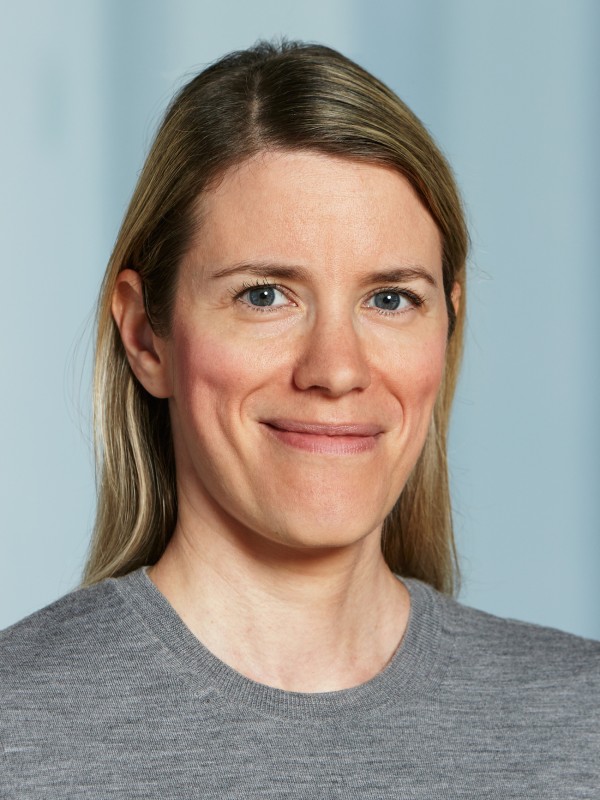
Sarah Billington is the UPS Foundation Professor of Civil and Environmental Engineering at Stanford University and a Senior Fellow at the Woods Institute for the Environment. Her research program focuses on sustainable building design, human wellbeing, and ethical supply chain practices. Education: PhD, University of Texas at Austin, Structural Engineering (1997) MSE, University of Texas at Austin, Structural Engineering (1994) BSE, Princeton University, Civil Engineering & Operations Research (1990) Her lab employs interdisciplinary methods to study how built environments impact human physical, psychological, and social wellbeing. Current projects include developing tools to quantify nature exposure in buildings, exploring affordable housing's role in wellbeing, and using AI to assess forced labor risks in material supply chains. While no longer active in this area, her group previously pioneered research on sustainable construction materials like bio-based composites and ductile cement-based composites. Her recent publications address topics such as nature integration in architecture, workplace design optimization, and health impacts of building materials. The Billington Lab at Stanford fosters collaborative team science, welcoming partnerships to advance occupant-centric engineering solutions.
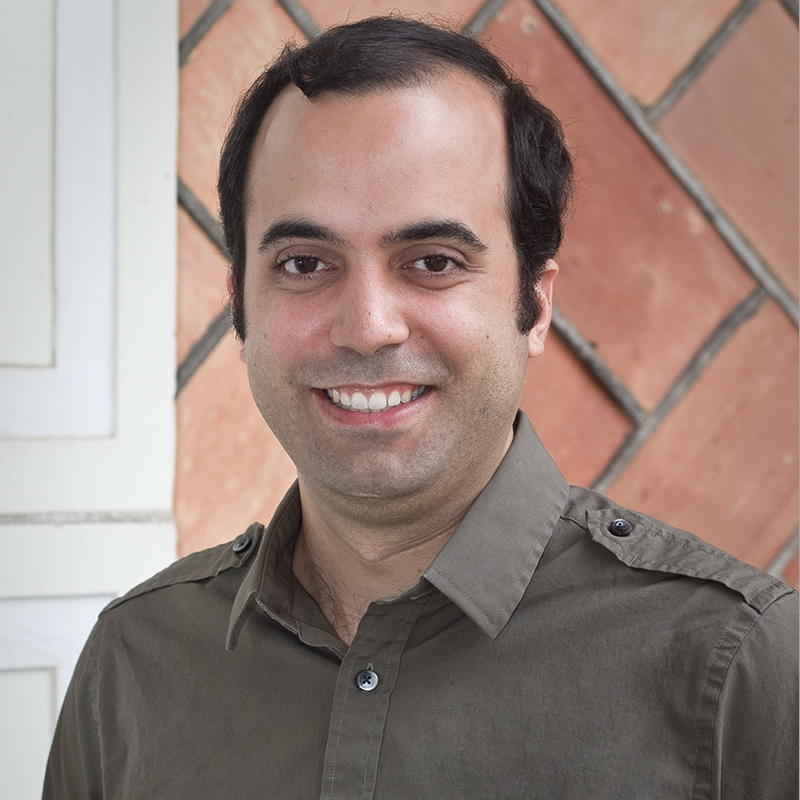
Hadi Meidani is a Clinical Associate Professor at the Carle Illinois College of Medicine , specifically within the Department of Biomedical and Translational Sciences at the University of Illinois at Urbana-Champaign . He teaches courses in Civil and Environmental Engineering, including topics like Systems Engineering & Economics , Machine Learning in CEE , and Uncertainty Quantification . Ph.D., Civil Engineering, University of Southern California (2012) M.S., Electrical Engineering, University of Southern California (2012) M.S., Structural Engineering, Sharif University of Technology (2005) B.S., Civil Engineering, K.N. Toosi University of Technology (2002) Dr. Meidani's research focuses on uncertainty quantification , scientific machine learning , and optimization under uncertainty for engineering systems. His work spans stochastic multiscale analysis , physics-informed machine learning , and model reduction techniques. His recent publications emphasize machine learning for infrastructure systems , graph neural networks , physics-informed models , and traffic assignment . Key trends include deep learning , multi-fidelity modeling , and neural operator transformers applied to metamaterial design , seismic reliability , and autonomous freight delivery .
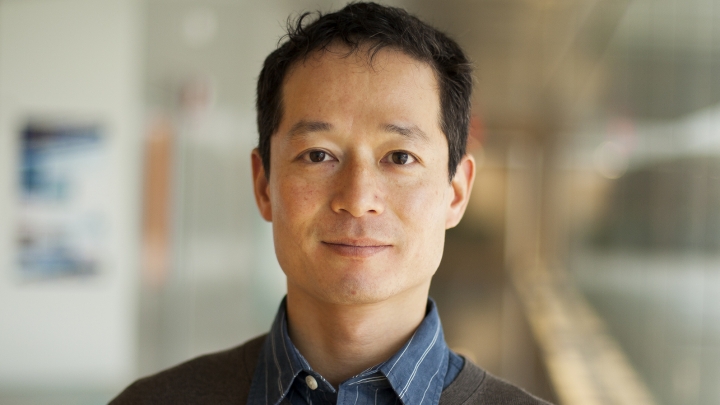
Kazuhiro Saitou is a Professor of Mechanical Engineering at the University of Michigan, affiliated with the College of Engineering. His research focuses on computational design synthesis, topology optimization, and manufacturing process integration. He leads the Algorithmic Synthesis Laboratory (ASL), advancing algorithms for automated design and optimization of mechanical systems. Education: Ph.D. (1996), MIT; M.S. (1992), MIT; B.Eng. (1990), University of Tokyo. He has held tenured positions since 1997, including roles as Founding CEO of Comnext, Inc. (2007–2012) and visiting professorships at École Centrale Paris and Donghua University. Research interests include multi-material topology optimization (M^3 TO), AI-driven design, and sustainable manufacturing. Key projects address additive manufacturing, composite structures, and energy-efficient production systems. He has pioneered methods for manufacturability-driven design and assembly optimization. Notable awards include IEEE Fellow (2018), ASME Kos-Ishii Award (2015), and NSF CAREER Award (1999). He serves as Editor-in-Chief for IEEE Transactions on Automation Science and Engineering and holds leadership roles in ASME and IEEE societies. Teaching includes courses on design optimization, CAD, and global product development. His lab has advised over 30 students, with alumni in academia and industry. Current research explores biomechanical modeling, traffic flow optimization, and medical image registration algorithms.
Wojciech Matusik is a Professor of Electrical Engineering and Computer Science at MIT's Computer Science and Artificial Intelligence Laboratory (CSAIL). He leads the Computational Design and Fabrication Group and is a member of the Computer Graphics Group. His research spans computer graphics, robotics, and AI-driven manufacturing, with a focus on computational design, tactile sensing, and material science. Matusik holds a PhD in Computer Science from MIT (2003), an MS from MIT (2001), and a BS from UC Berkeley (1997). His work includes groundbreaking projects like differentiable cloth simulation (DiffCloth), AI-enhanced molecular design, and tactile sensing gloves. He has received prestigious awards such as the MIT TR35 (2004), DARPA Young Faculty Award (2012), and Ruth and Joel Spira Teaching Award (2014). Matusik teaches courses on computer graphics, machine learning, and computational fabrication at MIT. Key research themes include: Robotics: Robotic assembly, tactile interaction, and soft robotics Graphics: 3D holography, procedural material generation Manufacturing: Additive fabrication, topology optimization His recent articles explore AI-driven molecular synthesis, holographic displays, and tactile-enabled VR systems. Matusik collaborates on open-source tools like the WiReSens tactile platform and Simit language for sparse systems.
Renate Sachse is a Researcher at the Chair of Structural Analysis, Technical University of Munich (TUM), where she has worked since May 2024. Previously, she held postdoctoral positions at Harvard University's Bertoldi Lab (2024) and TUM's Chair of Computational Mechanics (2021-2024), following academic staff roles at the University of Stuttgart (2015-2020). Her interdisciplinary work bridges civil engineering, biomechanics, and computational modeling. Her educational foundation includes a Master's in Civil Engineering from the University of Stuttgart (2014; thesis: 'Isogeometric contact analysis of thin-walled structures') and a Bachelor's from the same institution (2011; thesis: 'A Primary School Pavilion for Magagula in South Africa - Structural Analysis'). She also completed ERASMUS studies at ESTP Paris and internships at Foster + Partners and Werner Sobek AG. Dr. Sachse's research centers on biomechanics and biomimetics, with pioneering work on plant-inspired structures. She investigates snapping mechanisms in carnivorous plants (Venus flytrap, waterwheel plant) to develop bio-inspired adaptive systems, soft robotics, and metamaterials. Her expertise spans motion design for large-deformation structures, isogeometric analysis, and hygroscopic actuation in 4D-printed materials, emphasizing computational modeling of contact mechanics and structural stability. Analysis of her 15 most recent publications reveals a dominant focus on biomechanics (60% of articles), particularly plant movement mechanics translated into engineering solutions. Her work consistently integrates computational structural analysis with biological principles, showing increasing emphasis on motion design (25% of recent output) and additive manufacturing applications (15%). Key trends include translating snap-buckling phenomena into robotics and developing material design spaces for responsive structures. Her distinguished awards include the Bertha Benz Prize (2022), Klaus Tschira Boost Fund Fellowship (2022-2024), and University of Stuttgart Publication Award (2022). Additional recognition comprises GAMM Juniors Fellowship (2020-2022), AVK Innovation Award (2017), and Emil Mörsch Study Prize (2014). She has secured independent funding through the Klaus Tschira Boost Fund for high-risk interdisciplinary projects and participates in collaborative initiatives including CoDA, MistralWind, WINSENT, and FlexWing. While teaching advanced courses at TUM (Advanced Finite Element Methods, Theory of Plates), her mentorship focuses on computational mechanics and biomimetic design principles. Currently based at TUM's Chair of Structural Analysis under Prof. Bletzinger, she maintains active collaboration with Harvard University's Bertoldi Lab in developing next-generation adaptive structures.
Prof. Olga Sorkine Hornung is a Full Professor of Computer Science at ETH Zürich, leading the Interactive Geometry Lab. She holds a BSc and PhD from Tel Aviv University (2000 and 2006) and conducted postdoctoral research at Technical University Berlin. Her research focuses on computer graphics, geometric modeling, and geometry processing, with applications in shape editing, digital fabrication, and animation. She has received numerous accolades, including the ACM Fellowship (2020), ERC Consolidator Grant (2020), and the Golden Owl Teaching Award (2021). Her work bridges theoretical foundations and practical algorithms, addressing challenges in parameterization, surface compression, and interactive design tools. Her research interests span: Computer Graphics & Visualization Geometric Modeling & Processing 3D Content Creation & Digital Fabrication Garment Design & Simulation Human Motion Analysis & Animation Awards and grants include: 2024: Best Paper Honorable Mention (EUROGRAPHICS) 2023: Member of Swiss Academy of Engineering Sciences (SATW) 2020: ERC Consolidator Grant 2017: Rössler Prize (ETH Zurich) Her lab focuses on developing novel methods for interactive geometry processing, with recent advancements in garment modeling (e.g., AIpparel, Rags2Riches) and motion retargeting systems like WalkTheDog. She actively collaborates on interdisciplinary projects, including biomedical applications and sustainable fashion technology.
Majid Ghayoomi is a Professor and Civil Engineering Undergraduate Coordinator in the Department of Civil and Environmental Engineering at the University of New Hampshire's College of Engineering and Physical Sciences. His research focuses on geotechnical engineering and geomechanics, particularly unsaturated soil mechanics and geotechnical earthquake engineering. He teaches courses such as Soil Mechanics, Engineering Behavior of Soils, and Geotechnical Modeling. Dr. Ghayoomi holds a Ph.D. from the University of Colorado at Boulder, an M.S. from Sharif University, and a B.S. from the University of Tehran. His research interests include bioremediation, hazards mitigation, soil-structure interaction, and materials testing. He leads the Geotechnical Modeling and Innovation lab, advancing bio-inspired solutions and remote sensing applications in geotechnical systems. His recent work emphasizes climate change impacts on seismic resilience, microbial stabilization of soils, and satellite-based soil moisture monitoring. Key contributions include studies on liquefaction mitigation, seismic site response, and infrastructure vulnerability in dynamic environments. His research spans theoretical, experimental (centrifuge modeling), and computational approaches to address complex geotechnical challenges.
Giovanni De Micheli is a Full Professor at École Polytechnique Fédérale de Lausanne (EPFL), holding appointments in both the School of Computer and Communication Sciences (IC) and the School of Engineering (STI). He is affiliated with the Integrated Systems Laboratory (LSI) and serves as Scientific Director of EcoCloud. His primary office is located in INF 341 building at EPFL's Lausanne campus where he conducts research and teaching activities. Professor De Micheli's research spans multiple domains in electronic design automation and integrated circuit design. His primary interests include: Integrated Circuit Design and Hardware Synthesis Logic Optimization and Boolean Methods Nanoelectronics and 2D Electronics Quantum Computing and Emerging Technologies Low-Power Electronics and Energy-Efficient Systems Electronic Design Automation for Novel Computing Paradigms His recent publications demonstrate a strong focus on advancing logic synthesis techniques for both conventional and emerging technologies. Professor De Micheli's work bridges theoretical foundations with practical applications, particularly in adapting traditional EDA methods to novel computing paradigms like quantum computing and superconducting electronics. His research group has made significant contributions to the development of efficient algorithms for circuit optimization across multiple technology domains, with particular emphasis on area, power, and delay optimization while maintaining functional correctness. Professor De Micheli has supervised numerous doctoral students throughout his career at EPFL, mentoring over 40 PhD candidates whose research spans various aspects of electronic design automation, circuit design, and emerging technologies. His students have gone on to make significant contributions in both academia and industry. As Scientific Director of EcoCloud, Professor De Micheli leads research initiatives focused on energy-efficient computing systems and sustainable cloud infrastructure. His laboratory, the Integrated Systems Laboratory, serves as a hub for interdisciplinary research connecting computer science, electrical engineering, and materials science, with particular focus on next-generation computing technologies.
Professor Carlo Harvey is a creative technologist at the School of Digital Arts (SODA), Manchester Metropolitan University. His interdisciplinary research merges games , machine learning , virtual production , and cultural heritage reinterpretation . He leads industry collaborations with entities like Jaguar Land Rover and Epic Games, focusing on AI-driven interactive audio, real-time visualization, and accessibility solutions. Award-winning projects : TIGA, Innovate UK, and Epic Games MegaGrant for Accession Industry partnerships : Automotive sector, cultural institutions His research spans human-computer interaction , multisensory virtual environments , and acoustic-visual cross-modal perception . Recent publications address robotic simulations, motion alignment, and haptic feedback systems. Scientific recognition : TIGA Award, Innovate UK Funding, Epic Games MegaGrant Advocacy : Digital inclusion, creative collaboration, social impact of technology
Mario Berges is an Associate Professor in the Department of Civil and Environmental Engineering at Carnegie Mellon University (CMU), with a courtesy appointment in Electrical and Computer Engineering. He holds leadership roles as Co-Director of the IBM Smart Infrastructure Analytics Lab and Director of the Intelligent Infrastructure Research Lab (INFERLab). His work focuses on applying information/communication technologies to enhance the operational efficiency and resilience of built environments amid evolving resource constraints and climate changes. Education: PhD in Civil & Environmental Engineering from CMU (2010). Research Interests: Berges' research integrates smart infrastructure systems, energy efficiency, and machine learning. Key areas include non-intrusive load monitoring (NILM), structural health monitoring of pipelines, building automation systems, and urban heat risk modeling. He develops data-driven frameworks for energy disaggregation, sensor placement optimization, and real-time infrastructure diagnostics. Awards: Recognized with the 2010 FIATECH Outstanding Early Career Researcher Award and 2015 Dean’s Early Career Fellowship from CMU. Grants & Labs: Leads INFERLab, collaborating with IBM on smart infrastructure projects. His work spans academic-industry partnerships focused on building analytics, smart grid technologies, and sensor networks. Future Directions: Expanding research into AI-driven energy systems, resilient urban infrastructure, and cross-disciplinary solutions for climate adaptation.
Hai-Quan Mao is a Professor of Materials Science and Engineering at Johns Hopkins University, with a joint appointment in the Biomedical Engineering Department (School of Medicine). He directs the Institute for NanoBioTechnology (INBT) and leads the Translational Tissue Engineering Center. His research focuses on biomaterials, regenerative engineering, and immunoengineering, particularly developing nanomaterials for therapeutic delivery and tissue regeneration. Mao holds 35 U.S. patents, co-founded two biotech companies, and received prestigious awards including National Academy of Inventors Fellow and NSF CAREER Award. Education: BS in Chemistry (1988) and PhD in Polymer Chemistry (1993) from Wuhan University. Postdoctoral training at Johns Hopkins (1995–1998), followed by roles at Johns Hopkins Singapore (1999–2003) before joining the Whiting School faculty. Research emphasizes nanofiber scaffolds for liver/nerve regeneration, DNA/lipid nanoparticle engineering for gene therapy, and artificial lymph node matrices for immunotherapy. His lab translates biomaterials innovations into clinical applications, with NIH-funded projects addressing cancer, malaria, and tissue damage. Awards include over 60 provisional patents, multiple Johns Hopkins translational awards, and Thalheimer Awards for research. He serves as associate editor of Biomaterials and editorial board member of major journals. Lab activities include scalable nanoparticle manufacturing, machine learning for material design, and collaborations with industry/clinical partners. Recent work includes lipid nanoparticle optimization for mRNA vaccines and exosome-based therapies for Crohn’s disease.
Gary Pielak is a Kenan Distinguished Professor of Chemistry, Biochemistry, and Biophysics at the University of North Carolina at Chapel Hill, with a joint appointment in the School of Medicine. His research focuses on high-resolution protein NMR studies in living cells and the biophysics of tardigrade desiccation-tolerance proteins, bridging structural biology and molecular biophysics. Education: BS in Chemistry from Bradley University (1977), PhD in Biochemistry from Washington State University (1983), Postdoc at the University of British Columbia (1983-1986), Postdoc at Oxford University (1986-1988). Research Interests center on understanding protein structure, stability, and function in physiologically relevant environments. Key areas include: In-Cell NMR: Quantifying protein behavior in living cells using advanced NMR techniques. Macromolecular Crowding: Studying synthetic polymers and proteins as crowding agents to mimic cellular environments. Tardigrade Biology: Exploring desiccation-tolerance mechanisms in intrinsically disordered proteins from water bears. Recent Publications highlight interdisciplinary trends, combining AI-driven stability prediction, solid-state NMR for dry protein analysis, and molecular glass/gel applications for preservation. His Scientific Awards include: NIH Pioneer Award DuPont and Morrow Young Faculty Awards Multiple UNC Mentorship Awards Mentorship is a cornerstone, with a focus on training graduate students and advancing NMR methodologies. His group employs Research Methods : 19F, 1H, 15N, and 13C NMR Circular Dichroism and Calorimetry Protein Expression in E. coli
Bradley D. Olsen is a full professor in the Department of Chemical Engineering at the Massachusetts Institute of Technology (MIT), where he leads research at the intersection of polymer science, soft matter physics, and bioengineering. His work focuses on designing materials for critical applications in biotechnology, hemostasis, and sustainable polymer development while advancing fundamental understanding of polymer network mechanics and self-assembly. Education: Ph.D. in Chemical Engineering, University of California Berkeley (2007) S.B. in Chemical Engineering, Massachusetts Institute of Technology (2003) Olsen's research spans protein-based materials, block copolymer phase behavior, and mechanochemical hydrogels. He has pioneered methods for quantifying polymer network topology, developing hemostatic nanoparticles, and creating bio-inspired materials for selective biomolecular transport and medical applications. His recent publications emphasize data-driven approaches to polymer characterization and educational outreach in materials science. Scientific Awards: American Physical Society (APS) Fellow (2023) Fulbright Amazonia Scholar (2023) Alexander and I. Michael Kasser Chair in Chemical Engineering (2021) ACS Macro Letters Young Investigator Award (2021) MIT Committed to Caring Honor (2019) AIChE Owens Corning Early Career Award (2019) APS Dillon Medal (2018) Kavli Emerging Leader in Chemistry (2017) ACS Polymer Division Fellow (2016) Camille Dreyfus-Teacher Scholar (2015) Alfred P. Sloan Research Fellow (2014) NSF Career Grant (2013) NIH Postdoctoral Fellowship (2008-2009) Hertz Fellow (2003-2007) Barry M. Goldwater Scholarship (2002) Olsen has received significant grant support including NSF Career (2013) and AFOSR (2012) awards. His teaching activities include innovative international outreach like the 2025 soccer-themed science camp in Brazil. The Olsen Group at MIT explores advanced materials with applications ranging from trauma care to sustainable polymers.
Prof. Dr. Gonzalo Guillén Gosálbez is a Full Professor at the Department of Chemistry and Applied Biosciences , ETH Zürich. He holds a PhD in Process Systems Engineering (UPC, 2005) and has held academic positions at Imperial College London (Reader), University of Manchester (Senior Lecturer), and Universitat Rovira i Virgili (Assistant/Associate Professor). His research focuses on Sustainable Chemical Processes , integrating life cycle assessment, optimization techniques, and planetary boundary analysis to evaluate and design low-carbon technologies. Current position: Full Professor, ETH Zürich (2019–present) Prior roles: Imperial College London (2016–2019), University of Manchester (2014–2016), URV Spain (2008–2014) Education: PhD (UPC, 2005), MEng/BEng (University of Murcia) His research explores CO2 valorization , green methanol synthesis , circular marine fuels , and planetary boundary compliance in energy and chemical systems. Recent work emphasizes machine learning for process modeling, single-atom catalysis , and decentralized ammonia production . Scientific contributions include 15+ peer-reviewed articles (2023–2025) in journals like Nature Chemical Engineering , ACS Sustainable Chemistry & Engineering , and Energy & Environmental Science . Key themes: Optimization of hybrid fossil/renewable carbon systems Environmental impacts of energy transitions Catalyst design for sustainable chemistry Life cycle assessment of emerging technologies Awarded UPC Top Doctoral Student Award and Top National Student Award , he combines process systems engineering with sustainability metrics to address global challenges in chemical and energy systems.