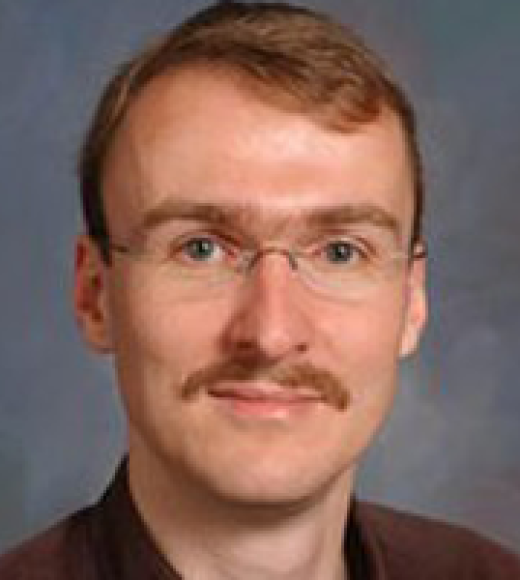
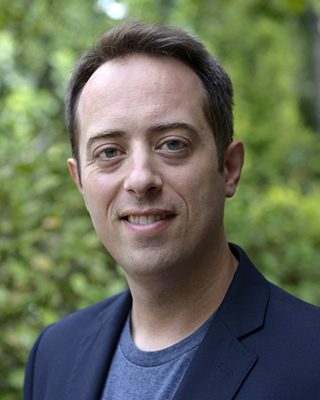
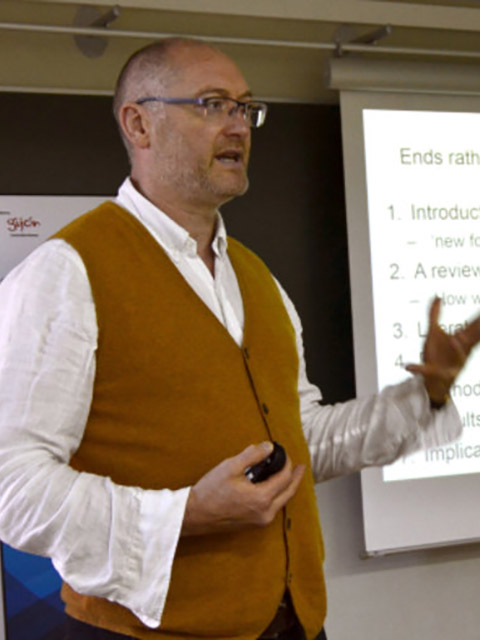
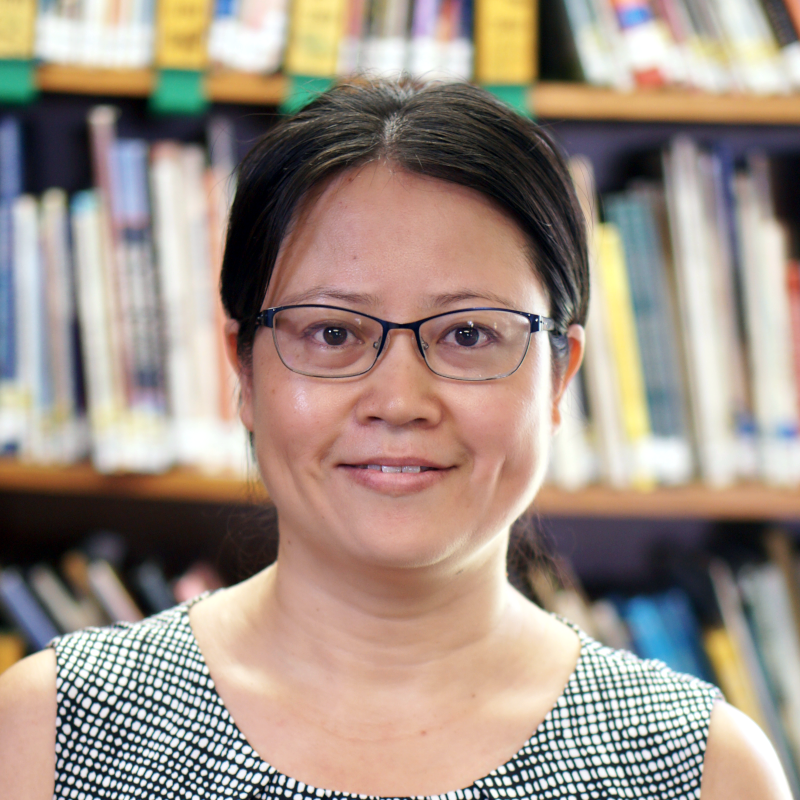
Dr. Jan Salmen is a researcher at Ruhr University Bochum's Faculty of Computer Science, affiliated with the Institute of Neuroinformatics (INI). His work focuses on real-time systems, computer vision, and machine learning. Doctoral thesis: Efficient video-based driver assistance systems Salmen's research spans autonomous driving, traffic sign recognition, stereo vision, and sports analytics. He has contributed to benchmarks in traffic sign detection and soccer analysis. Publications highlight his expertise in image processing, pattern recognition, and sensor fusion for autonomous systems. Key trends include optimization of machine learning algorithms for real-time applications. He collaborates with interdisciplinary teams at INI, which integrates experimental psychology, neurophysiology, and robotics into artificial cognitive systems research.
Prof. Dr. Haris Gačanin is a faculty member at RWTH Aachen University, affiliated with the Institute for Distributed Signal Processing under the College of Electrical Engineering. His research focuses on integrating machine learning with wireless communication systems, particularly in industrial IoT, edge computing, and network optimization. Current academic rank: Professor Contact: harisg@dsp.rwth-aachen.de Research Interests: Wireless systems, machine learning, signal processing, and network optimization. Key contributions include: Adaptive resource allocation in IIoT and vehicular networks AI-driven channel estimation and feedback mechanisms Security-oriented emitter identification via metric learning Federated/transfer learning for edge environments Hardware-efficient deep learning models for mmWave and THz communications Methodological Focus: Combines reinforcement learning, attention mechanisms, and robust neural architectures with practical implementations on FPGA and vehicular systems.
Burkhard Schipper serves as Professor of Economics at the University of California, Davis, with affiliated status in the Graduate Group of Applied Mathematics. His academic trajectory spans over two decades, establishing him as a leading theorist in strategic decision-making frameworks with applications across economics, finance, and political science. His educational foundation includes: Diplom-Volkswirt, University of Bonn (2000) Dr. rer. pol., Economics, University of Bonn, European Doctoral Program (2003) Schiper's research program centers on game theory, microeconomic theory, and experimental economics, with pioneering contributions to modeling unawareness in strategic interactions. His theoretical work develops formal frameworks for agents operating with incomplete awareness of game structures, while his experimental research investigates biological determinants of economic behavior, particularly steroid hormones' influence on risk attitudes and competitive bidding. This dual approach bridges abstract theory with empirical validation, yielding insights applicable to financial markets, policy design, and organizational behavior. Recent publications (2022-2025) demonstrate consistent focus on unawareness extensions across diverse contexts—from macroeconomic policy to auction design—while maintaining empirical rigor through experimental methods. His work shows increasing integration of biological variables with strategic models, reflecting interdisciplinary innovation in economic theory. His scientific recognition includes: UC Davis Hellman Fellowship (2009-10) Young Economist Award, European Economic Association (2003) Schiper secures major research funding from the Army Research Office and National Science Foundation, supporting his unawareness modeling and experimental programs. As Editor-in-Chief of the B.E. Journal in Theoretical Economics and Associate Editor of Mathematical Social Sciences, he actively shapes scholarly discourse. His teaching encompasses undergraduate and doctoral courses in microeconomics and game theory, transmitting advanced theoretical frameworks to new generations of economists. Though not explicitly detailed in source materials, his research likely operates through UC Davis' experimental economics laboratories with interdisciplinary collaboration across the Graduate Group of Applied Mathematics.
Jonathan Voersaa Wenshøj is an academic researcher at the Department of Computer Science, University of Copenhagen. He contributes to the Machine Learning section's activities spanning theoretical foundations and applications in diverse domains like information retrieval, medical data analysis, remote sensing, sustainability, and biological modeling. The section participates in the SCIENCE AI Centre and collaborates with initiatives like TreeSense for global tree resource analysis. His research intersects machine learning with quantum computing, medical informatics, and sustainability. Recent publications highlight applications in environmental monitoring, healthcare diagnostics, and energy-efficient AI systems. The department provides advanced compute resources including a powerful cluster for intensive machine learning tasks. This researcher's work appears in diverse machine learning domains, with recent publications addressing quantum-inspired architectures, explainable AI in medical imaging, and sustainable computing practices. The section actively hosts events including seminars, conferences, and PhD defences related to machine learning advancements.
Chris Thachuk is an Assistant Professor in the Paul G. Allen School of Computer Science & Engineering at the University of Washington . His research bridges computer science with molecular programming and synthetic biology, focusing on programmable matter at the nanoscale using bio-molecules like DNA. Current Position: Assistant Professor, University of Washington (2020–Present) Previous Positions: Senior Postdoctoral Researcher at Caltech (2014–2020), Postdoctoral Research Assistant & James Martin Fellow at Oxford (2012–2014) Education: PhD in Computer Science (2013), University of British Columbia MSc in Computer Science & Bioinformatics (2007), Simon Fraser University & CIHR/MSFHR Bioinformatics Training Program BCS in Computer Science (2005), University of Windsor Thachuk’s research spans computing + biology , with expertise in molecular programming , synthetic biology , and bioinformatics . His work includes algorithm design for DNA-based systems, thermodynamic modeling, and leakless strand displacement systems. Recent publications focus on DNA origami alignment , leakless strand displacement , compiler-aided DNA circuit design , and thermodynamic binding networks , reflecting interdisciplinary research in computer science, synthetic biology, and nanotechnology. Scientific Awards: James Martin Fellow at the Institute for the Future of Computing, Oxford Thachuk contributes to the Molecular Information Systems Lab (MISL) , collaborating with researchers like Erik Winfree and David Soloveichik. His work emphasizes integrating molecular biosensors with electronics for applications such as protein concentration measurement and DNA sequencing.
Suhad Al-Khafaji is a Research Fellow in Hyperspectral Spectroscopy at Griffith University's School of Environment and Science (Chemistry and Forensic Science). Their research focuses on hyperspectral imaging, machine learning, and computer vision applications in agriculture, environmental monitoring, and material analysis. Al-Khafaji is affiliated with the Australian Rivers Institute and previously the Institute for Integrated and Intelligent Systems (2015-2020). They hold an ORCID identifier (0000-0002-7986-4308) and are located at N44 1.26, Nathan Campus. Research Interests: Hyperspectral imaging for agricultural quality assessment (e.g., macadamia moisture analysis) Spectral-spatial boundary detection algorithms in multispectral datasets Machine learning integration with computer vision techniques Nanotechnology applications in imaging systems Cognitive psychology aspects of pattern recognition Recent Work Trends: Recent articles emphasize hyperspectral image processing innovations, particularly boundary detection and feature extraction for agricultural and environmental applications. Their 2024 work applies machine vision to macadamia quality prediction, while earlier contributions (e.g., 2022) refine spectral-spatial analysis methodologies. Labs/Teams: Active member of Griffith's Australian Rivers Institute and former affiliate of the Institute for Integrated and Intelligent Systems.
Professor Paul Downward holds the position of Professor of Economics at Loughborough University, where he is affiliated with the Sir John Beckwith Centre for Sport. Previously, he worked at Aston Business School and Staffordshire University. He earned his BA (Hons) in Economics from Staffordshire University (1988), MA from the University of Manchester (1990), and PhD from the University of Leeds (1996). His research interests span sport management, public health, and social policy, with a focus on the interplay between sport participation and societal outcomes like health, well-being, and social capital. In 2023, he was honored with the Chelladurai Award for lifetime achievement in sport management. His academic work critically examines topics such as gender disparities in sport participation, the impact of government policies on physical activity, and the ethical challenges in sport governance. Notable areas of inquiry include the role of leisure activities in aging populations, the economic valuation of subjective well-being, and the socio-cultural effects of sport corruption. His interdisciplinary approach bridges economics, sociology, and public policy, with a strong emphasis on real-world applications through policy recommendations and evidence-based analysis. Recent research highlights include analyzing regional disparities in sport participation's levelling-up initiatives, exploring the well-being benefits of soccer for both genders, and investigating the relationship between referee abuse and mental health in sport. Professor Downward’s publications also address global issues such as China’s community recreation policies and the environmental trade-offs of leisure travel. Education: BA (Hons) Economics (Staffordshire, 1988), MA Economics (Manchester, 1990), PhD Economics (Leeds, 1996) Key Research Groups: Sport, Business & Society; Lifestyle for Health & Wellbeing; Sport Performance Labs/Teams: Sir John Beckwith Centre for Sport
Baoyan Cheng is Professor and Graduate Chair in the Department of Educational Foundations at the University of Hawaiʻi at Mānoa’s College of Education. She specializes in comparative and international education, with particular attention to Chinese education systems, global student mobility, and equity in higher education. Education Ed.D. International Education, Harvard University (2007) Ed.M. International Education, Harvard University (2002) M.A. International Education Policy, University of Maryland, College Park (2001) M.A. English Language and Literature, Wuhan University (1999) B.A. Wuhan University of Technology (1996) Research Interests Her research interrogates how globalization reshapes education, focusing on Chinese students’ international mobility, equity in higher-education financing, and the interplay between Confucian and liberal-arts educational traditions. She examines cultural capital transmission through exchange programs and the sociocultural adaptation of “parachute kids” studying abroad. Publication Trajectory Across nearly two decades, Cheng’s scholarship spans policy analyses of student-loan schemes, empirical studies on Beijing middle-school students’ overseas aspirations, and philosophical explorations of Confucian cosmopolitanism in liberal-arts curricula. Recent work couples large-scale surveys with qualitative accounts to illuminate how transnational education shapes identity, citizenship, and social stratification. Books & Major Works The New Journey to the West: Patterns of Chinese Students’ International Mobility (2020, with Lin & Fan) Student Loans in China: Efficiency, Equity and Social Justice (2011) Presentations & Leadership As Graduate Chair, she mentors doctoral students, directs thesis committees, and organizes research-methods workshops. She has delivered keynote addresses at CIES, PESA, and AERA conferences, and maintains active collaborations with scholars in China, Japan, and Slovenia.
Sheldon Howard Jacobson is a Founder Professor at the Siebel School of Computing and Data Science, University of Illinois at Urbana-Champaign. He holds cross-appointments in Electrical and Computer Engineering, Industrial and Enterprise Systems Engineering, Biomedical and Translational Sciences, Mathematics, and Statistics. His research focuses on operations research, optimization, and security systems, with notable contributions to aviation security, pediatric vaccines, and homeland security. Jacobson has been recognized with prestigious awards including the AAAS Fellowship (2019), George E. Kimball Medal (2020), and Guggenheim Fellowship (2003). His work bridges theoretical and applied domains, addressing real-world challenges in public health, policy, and technology. He has contributed to media discussions on topics like pandemic impacts and coronavirus safety measures. In research, Jacobson emphasizes interdisciplinary approaches, combining mathematical modeling with policy analysis. His recent work includes optimizing political redistricting and analyzing viral transmission risks in aviation. Collaborations span multiple disciplines, reflecting his role as a bridge between academia and practical problem-solving.
Professor Minh N. Do is the Thomas and Margaret Huang Endowed Professor in Signal Processing & Data Science at the University of Illinois at Urbana-Champaign (UIUC), with primary appointment in the Department of Electrical and Computer Engineering. He holds multiple affiliate appointments across campus including with the Coordinated Science Laboratory, Beckman Institute for Advanced Science and Technology, Department of Bioengineering, Department of Computer Science, Institute for Genomic Biology, College of Medicine, and School of Computing and Data Science. Additionally, he serves as Director of the joint VinUni-Illinois Smart Health Center and holds an Honorary Vice-Provost position at VinUniversity. Professor Do received his B.Eng. in Computer Engineering (First Class Honors) from the University of Canberra, Australia in 1997, followed by his Dr.Sci. in Communication Systems from the Swiss Federal Institute of Technology Lausanne (EPFL) in 2001. His educational journey was marked by exceptional achievement, earning the University Medal from the University of Canberra and a Silver Medal from the 32nd International Mathematical Olympiad. Professor Do's research focuses on developing new multidimensional signal processing tools with applications across several domains. His primary research interests include smart health, data science, computational imaging, and signal processing. His work spans biomedical imaging, machine learning, computer vision, and robotics, with particular emphasis on geometric image representations, integrating image formation and processing, and image processing from multiple sensors. His research bridges theoretical investigations with practical applications, creating impactful solutions in healthcare, diagnostics, and AI systems. His recent publications demonstrate a consistent trajectory toward multimodal AI systems, robust learning frameworks, and healthcare applications. Professor Do's work increasingly integrates signal processing with deep learning approaches to address challenges in medical imaging, cross-modal transfer, and real-world deployment of AI systems. His research shows strong emphasis on practical applications with societal impact, particularly in healthcare diagnostics and smart health technologies. Professor Do's scientific achievements have been recognized with numerous prestigious awards: Member of the National Academy of Artificial Intelligence (2025) Fellow of Asia-Pacific Artificial Intelligence Association (2023) Thomas and Margaret Huang Endowed Professor, UIUC (2020-present) Fellow of IEEE (2014) Young Author Best Paper Award, IEEE Signal Processing Society (2008) CAREER award from the National Science Foundation (2003) Best Doctoral Thesis Award from EPFL (2001) As an educator, Professor Do has taught numerous courses spanning digital signal processing, probability, data science, and image processing. His teaching excellence has been recognized with multiple "Teachers Ranked as Excellent" awards at UIUC. He also maintains active industry connections through tech-transfer efforts, having co-founded Personify and served as Chief Scientist of Misfit. His leadership extends to administrative roles, having served as Vice-Provost for VinUniversity during 2020-2021. Professor Do leads research initiatives at the intersection of signal processing and healthcare applications, with particular focus on the Smart Health Center collaboration between UIUC and VinUniversity. His lab develops innovative solutions for medical diagnostics, point-of-care testing, and neurological assessment using advanced signal processing and AI techniques.
R. Manmatha is an Adjunct Professor in the College of Information and Computer Sciences at the University of Massachusetts Amherst and a Principal Scientist at Amazon A9 since 2013. His academic journey includes a Ph.D. in Computer Science from University of Massachusetts Amherst (1997), an M.S. in Electrical Engineering from University of Hawaii (1986), and a B.Tech in Electrical Engineering from Indian Institute of Technology Kanpur (1983). Research Interests Manmatha's work spans Computer Vision , Information Retrieval , and Document Analysis . Key projects include: Developing Vision-Language Models for GUI grounding and OCR-free document understanding Creating Word Spotting techniques for historical manuscripts like George Washington's papers Advancing Image Retrieval through statistical and relevance models Building Meta Search systems using score distribution analysis Optimizing Diffusion Transformers for text-to-image generation Scientific Contributions His research has led to numerous publications in conferences like SIGIR , CVPR , and ICDAR , focusing on: Automatic Image Annotation using cross-media relevance models Scale Space Techniques for handwritten manuscript segmentation Alignment Methods for document-groundtruth generation Indian Language Document Search via locality-sensitive hashing Transformer-based architectures for multimodal and document tasks Advising & Collaborations Manmatha has mentored students including Jiwoon Jeon , Shaolei Feng , Toni Rath , Jamie Rothfeder , and Nitin Srimal . He co-founded Snaptell (acquired by Amazon) and contributed to Amazon's mobile search technology. Labs & Teams He leads the Multi-media Indexing and Retrieval (MIR) group at the Center for Intelligent Information Retrieval (CIIR) , focusing on non-textual information indexing through ASCII conversion and direct content analysis.
PD Dr. Kaspar Riesen is the Head of the Pattern Recognition Group at the Institute of Computer Science, University of Bern. His research focuses on graph-based methods for pattern recognition, with applications in document analysis, environmental modeling, and healthcare. Key interests include graph matching, neural networks, and spatio-temporal modeling. His work spans structural pattern recognition, graph embeddings, and keyword spotting in historical documents. Recent projects involve river network analysis using graph regression and hypoglycemia prediction via LSTM-GNN hybrid models. Publications emphasize graph theory advancements, such as normalized graph compression and geometric similarity learning. Collaborations include developing specialized algorithms for automated error detection and improving decision-making in simulated sports. Labs/Teams: Pattern Recognition Group (PRG) at the University of Bern.
Jessica Fong is an Assistant Professor of Marketing at the University of Michigan Ross School of Business. Her research focuses on quantitative marketing and empirical industrial organization, particularly in digital platform design and consumer responses to information. She holds a Ph.D. in Marketing (implied via academic rank) and has published in top journals like Management Science and Marketing Science. Her work examines topics including two-sided markets, platform mergers, misinformation effects, consumer finance behavior, and social media dynamics. Notable contributions include analyzing eBay bargaining delays and online dating market competition, with media attention from VoxEU, ProMarket, and Michigan News. Dr. Fong has been recognized with the Paul E. Green/Vithala R. Rao Award Finalist (2024). Her research integrates empirical methods with behavioral insights, bridging marketing theory and real-world platform strategies. Current projects explore neuro-psychological habit models in consumer choice and the impact of suggested pricing on e-commerce platforms.
Bettina Kemme is a Professor in the School of Computer Science at McGill University, Montreal, Canada. She leads the Distributed Information Systems Lab (DISL) and specializes in large-scale data management, distributed systems, and cloud computing. Her academic roles include teaching COMP 512 (Distributed Systems) and COMP 421 (Database Systems). Education: Diplom (M.Sc. equivalent) in Computer Science, Friedrich-Alexander University, Erlangen, Germany (1996) PhD in Computer Science, Swiss Federal Institute of Technology (ETH), Zurich, Switzerland (2000) Research Interests: Distributed systems, cloud-native data management, in-database analytics (AIDA project), monitoring-as-a-service frameworks, and scalable pub/sub systems for online games. Current projects focus on integrating machine learning with databases, cloud performance monitoring using SDN, and sustainable data systems for data science. Lab & Collaborations: Leads the Distributed Information Systems Lab (DISL) with active projects in distributed databases, cloud computing, and game systems. Collaborates on EU-Canada initiatives like the SustainSys program for sustainable data infrastructure. Advising: Supervises PhD and M.Sc. students in topics like monitoring frameworks (Mona ElSaadawy), in-database ML (Winnie He), and distributed systems (Maximilian Schiedermeier). Alumni include over 50 researchers from PhD candidates to undergraduate researchers.
Alan Edelman is a Professor at the Massachusetts Institute of Technology (MIT), renowned for his work in high-performance computing, linear algebra, and random matrix theory. He is a co-creator of the Julia programming language, which emphasizes efficiency and versatility for scientific computing. His research integrates mathematics and computer science, focusing on numerical methods, parallel computing, and applications in fields like quantum control and climate modeling. Edelman leads projects such as Oceananigans.jl for geophysical fluid dynamics and Circuitscape for connectivity analysis in conservation biology. His academic contributions span theoretical advancements in matrix theory and practical implementations of computational tools. Edelman collaborates across disciplines, bridging scientific computing with machine learning and quantum physics. His work on differentiable programming frameworks and GPU acceleration has impacted both academic research and industry applications. Key Projects: Julia programming language, Oceananigans.jl, Circuitscape Research Themes: High-performance computing, numerical linear algebra, random matrices, scientific machine learning Affiliations: MIT’s Theory of Computation Community of Research, PI of multiple NSF-funded projects Edelman’s recent work emphasizes interdisciplinary applications, including climate policy modeling and automated materials discovery. His publications reflect a blend of foundational mathematics and cutting-edge computational techniques.