Wimal Suaris serves as an Associate Professor in the Department of Civil, Architectural and Environmental Engineering at the University of Miami's College of Engineering. His research spans critical domains of infrastructure engineering, with emphasis on: Structural Engineering systems including concrete and masonry construction Environmental Engineering applications in civil infrastructure Sustainable materials and structural design methodologies Professor Suaris maintains active research in structural resilience and material science, contributing to advancements in building technologies through practical engineering solutions. He is accessible via email and telephone for academic collaboration and departmental inquiries.
Prof. Ramazan Özçelik is a faculty member at Akdeniz University, Faculty of Engineering, Department of Civil Engineering. He holds a PhD from Middle East Technical University (2011) and an undergraduate degree from Akdeniz University (2002). His research focuses on Earthquake Engineering Steel Structures Concrete Structures Seismic Retrofitting Buckling-Restrained Braces (BRBs) Structural Optimization His publications emphasize seismic upgrading techniques, composite beam design, and structural performance analysis. Key trends include BRB development, corrugated web systems, and nonlinear structural behavior under seismic loads. Scientific awards include TUBITAK 2211 Domestic Doctoral Scholarship TUBITAK 2214 International Research Scholarship Project grants from TUBITAK and Higher Education Institutions He has supervised 9 theses and led 17 funded projects, including TUBITAK grants for BRB applications and structural analysis methods. He serves as Director of Akdeniz University's Earthquake Research Application and Research Center.
Eric Vincens is a University Professor in Civil Engineering at École Centrale de Lyon , where he has worked since 2004. He serves as Director of the Solid Mechanics - Mechanical Engineering - Civil Engineering department and co-heads the Ecological Transition & Territories option in engineering training. His academic background includes graduation from ENS Paris-Saclay , an agrégé in civil engineering, and a PhD from École Centrale de Lyon (1999) . Research Interests focus on: Soil and geotechnical structure behavior Sustainability of large strategic structures (dams, bridges) Vernacular construction with low environmental impact (raw earth, dry stone) Adaptive modeling approaches for filtration processes Publications Analysis : His work spans granular material filtration mechanisms , concrete modification with industrial byproducts , and seismic behavior of dry stone structures . Recent studies (2024-2025) emphasize: Comparative analysis of dry/wet filtration models Micro-mechanical characterization of void spaces Seismic stability of traditional masonry constructions Digital image correlation for material property determination
João Saraiva Esteves Pacheco De Almeida is an Assistant Professor at the Université catholique de Louvain (UCLouvain) in Belgium, affiliated with the Louvain School of Engineering (EPL), the Institute of Mechanics, Materials and Civil Engineering (IMMC), and specifically the Civil and Environmental Engineering department (GCE). He is based at the Vinci campus in Louvain-la-Neuve, with offices at L5.05.01 and A.075 in the SC02 building. His primary academic focus is structural engineering, with particular expertise in earthquake engineering and reinforced concrete structures. Dr. Saraiva Esteves Pacheco De Almeida's research centers on developing and refining numerical and mechanical models for nonlinear and dynamic structural responses to extreme loadings, with a strong emphasis on the intelligent design and execution of experimental tests. His work spans structural dynamics, seismic behavior of reinforced concrete walls, numerical modeling techniques including hybrid discrete-finite element methods, and innovative approaches to structural analysis. He has published extensively on topics including reinforced concrete structures, seismic performance, and advanced computational methods in structural engineering. His recent publications demonstrate a consistent focus on reinforced concrete structures under seismic loading, with particular attention to non-rectangular wall configurations, bond-slip behavior of reinforcement, and advanced modeling techniques. His research shows a clear progression toward increasingly sophisticated numerical methods combined with rigorous experimental validation, often involving international collaborations with researchers from institutions across Europe. As an educator, Dr. Saraiva Esteves Pacheco De Almeida teaches six courses in structural engineering at UCLouvain, contributing to the development of future civil engineers with expertise in structural analysis and design. His academic journey reflects a strong foundation in both theoretical and experimental aspects of structural engineering, with continuous contributions to advancing the field through innovative research methodologies.
Bora Akşar is an Assistant Professor at Işık Üniversitesi, Faculty of Engineering and Natural Sciences, Civil Engineering Department. He has a PhD in Earthquake and Structural Engineering from Gebze Technical University (2010-2017) and a Master's in Structural Engineering from İstanbul Technical University (2007-2010). His research focuses on the interaction between steel and masonry structures, seismic energy demands in steel frames, and structural restoration techniques. PhD: Deprem ve Yapı Mühendisliği, Gebze Teknik Üniversitesi (2010-2017) Master's: Yapı Mühendisliği, İstanbul Teknik Üniversitesi (2007-2010) Bachelor's: İnşaat Mühendisliği, Yıldız Teknik Üniversitesi (2001-2006) His work areas include Steel Structures , Earthquake Engineering , and Reinforced Concrete Structures . Recent publications analyze seismic vulnerability of historical bridges, energy demands in steel frames, and hybrid composite reinforcement for structural beams. He teaches courses like Structural Analysis, Steel Structures, and Earthquake Resistant Design. Key research trends involve compatibility of steel truss systems with masonry in historical bridges, amplified seismic loads in steel moment frames, and neural network modeling for stiffness modification factors in shear walls. His projects include finite element analysis of masonry walls and seismic performance evaluation of concrete buildings in Şile. He supervises Master's theses, including Abdelrahman Hassan's 2025 study on construction delays in Somalia. His work employs advanced techniques such as digital image correlation (DIC) and parametric energy demand modeling to assess structural integrity under seismic stress.
Assoc. Prof. Dr. Halet Almila Büyüktaşkın is an Associate Professor in the Department of Architecture at Istanbul Technical University's Faculty of Architecture, where she has been serving since 2001. Her academic career spans over two decades at ITU, with progressive roles from Research Assistant (1995-2001) to Assistant Professor (2001-present) and current Associate Professor status, along with administrative positions including membership in the Education Commission and NAAB Accreditation Commission. Educational Background: PhD in Structural Engineering, Istanbul Technical University (1996-2000) Master's in Structural Engineering (with thesis), Istanbul Technical University (1994-1996) Bachelor's in Civil Engineering, Bogazici University (1991-1994) Dr. Büyüktaşkın's research bridges architectural design with structural integrity, focusing on Steel Structures, Structures and Materials, Engineering Design, Earthquake Engineering, Masonry and Wooden Structures, and High-Rise Buildings. Her scholarly trajectory demonstrates evolution from traditional structural analysis toward innovative sustainable building materials, particularly timber-glass composites, with significant emphasis on addressing Turkey's seismic challenges through nature-inspired buttress forms and earthquake-resistant construction methods. Her publication record shows consistent output since 1998, with notable concentration in 2017 (three articles) and recent work in 2022. The research demonstrates interdisciplinary integration of structural engineering principles with architectural applications, particularly in sustainable materials and seismic design, reflecting Turkey's specific construction context and environmental challenges. Scientific Recognition: Young Researcher Award Under 35 (1999) Dr. Büyüktaşkın has supervised at least 11 graduate students across diverse structural topics and served as Principal Investigator for the "Hydrophobic Nanotechnology Coating Performance for External Concrete Applications" project (2021-2022). She maintains active professional engagement as Board Member of COST Action FP1101 since 2014, Building Physics Association Member since 2012, Turkish Structural Steel Association Member since 1995, and TMMOB Member since 1994. Her current teaching portfolio includes Structural Analysis & Design I, Structural Mechanics, Steel Structures, and Tall Building Structures, reflecting her comprehensive expertise in structural systems for architectural applications.
Ömer Dabanlı is an Associate Professor at Istanbul Technical University , Faculty of Architecture, Department of Architecture. He holds a PhD in Restoration from the same institution. Specializes in historic preservation , seismic vulnerability , and cultural heritage conservation Active in projects related to earthquake performance assessment of historical structures Recipient of the Istanbul Metropolitan Municipality Pedestrian Overpasses Competition Prize (2018) His research focuses on disaster management , structural restoration , and finite element modeling for historic masonry. Recent publications address seismic protection strategies for museum artifacts and masonry minaret analysis using operational modal techniques. Notable projects include climate change impact studies on UNESCO sites , Kahramanmaraş earthquake response , and integrated structural monitoring for Konya heritage . Collaborations span TÜBİTAK , BAP , and Blue Shield Türkiye as its President (2021-).
Tarık Serhat Bozkurt is an Associate Professor at Istanbul Technical University's Faculty of Architecture, Department of Architecture, specializing in Physical Environmental Control and Acoustics and Noise Control. He serves as the Director of the Building Physics and Environmental Control Laboratory and has made significant contributions to the fields of architectural acoustics, historical building restoration, and environmental sustainability in construction. Education: Doctorate (PhD) in Building Sciences, Istanbul Technical University (2010-2019) Master's in Environmental Control and Building Technology (with thesis), Istanbul Technical University (2007-2010) Licence (Bachelor's) in Architecture, Istanbul Technical University (2002-2007) Bozkurt's research primarily focuses on sound absorption properties of traditional and innovative building materials, particularly in historical structures. His work bridges the gap between architectural heritage conservation and modern acoustic engineering requirements. He investigates how traditional materials like lime-based plasters with various aggregates (pumice, perlite, river sand) can be optimized for sound absorption while maintaining historical authenticity. His research also extends to industrial noise mapping, environmental quality improvement, and sustainable building practices that address both acoustic and water management challenges. His publication record shows a consistent trajectory from fundamental material studies toward more comprehensive environmental solutions. Early work focused on laboratory analysis of traditional building materials, while recent publications demonstrate a shift toward holistic approaches integrating multiple environmental factors (acoustic comfort, daylighting, water sustainability) in architectural design. Scientific Awards: 2023 YOUNG ACADEMICIAN AWARD from Istanbul Technical University 2019 MOST SUCCESSFUL DOCTORAL THESIS AWARD from ITU Institute of Sciences, Department of Architecture Tarik Serhat Bozkurt Prize Bozkurt leads significant research projects including 'Investigation and Improvement of Sound Absorption Performance in Plaster Layers Prepared with Brick Aggregate in Historical Buildings' (2024-2025) and 'Modern Mosque Design Proposal and Investigation of Acoustic Comfort Conditions' (2024-2025). He serves on the Board of the Building Physics Association (since 2022) and is a member of the Turkish Acoustics Association (TAKDER) (since 2020), demonstrating active engagement in his professional community. His laboratory work combines experimental testing with numerical simulation techniques to develop practical solutions for acoustic challenges in both contemporary and historical buildings, with particular emphasis on sustainable approaches that address multiple environmental concerns simultaneously.
Zeris Christos is a Professor in the Department of Structural Engineering at the National Technical University of Athens (NTUA), where he also directs the Reinforced Concrete Laboratory. His work focuses on seismic performance evaluation, fire-resistant concrete, and composite material applications. Academic Rank: Professor Department: Structural Engineering Institution: NTUA Research interests include: Seismic behavior of reinforced concrete (RC) structures Advanced cementitious composites with carbon nanotubes Corrosion resistance in concrete materials Second-order effects in structural analysis Rocking oscillators and soft story dynamics Blast mitigation strategies for structural systems His recent publications emphasize numerical modeling of seismic performance, chloride penetration in CNT-reinforced concrete, and cyclic load testing of RC interfaces. Key trends include fire-resistant concrete innovation and seismic retrofitting methodologies.
Zoltán Orbán is a Full Professor and Director of the Institute of Engineering and Smart Technology at the University of Pécs, Faculty of Engineering and Information Technology, where he has worked since 2018. Previously, he held academic positions at the same university, including Associate Professor and Head of the Department of Civil Engineering (2015–2018), Adjunct Professor and acting Head of the Department of Structural Engineering (2005–2015), and Assistant Professor (1999–2005). Qualifications: Chartered Civil Engineer (1994, Budapest University of Technology, Faculty of Civil Engineering) Technical Inspector for Railway Bridge Construction and Maintenance (2002) Specialist Engineer in Historical Building Diagnostics and Rehabilitation (2022, University of Pécs) Academic Degrees: Habilitated Doctor (Dr. habil, 2015, Breuer Marcell Doctoral School, University of Pécs) Doctor of Philosophy (Ph.D., 2010, University of Pécs, nationalized from Izhevsk Technical University, Russia) Candidate of Technical Science (C.Sc., 2009, Izhevsk Technical University) His research focuses on structural diagnostics, rehabilitation of historical buildings, InSAR monitoring of engineering structures, recycled concrete, and 3D printed concrete. He established the Structural Diagnostics and Analysis Research Group in 2011, addressing reliability, non-destructive testing, and safety of nuclear facilities. Orbán has led major international research projects, including initiatives with the UIC International Railway Association and the EU FP7 MAINLINE consortium. His expertise spans masonry arch bridges, satellite radar monitoring, and nuclear infrastructure safety, supported by certifications from the Hungarian Chamber of Engineers and the National Nuclear Energy Agency. Key Professional Roles: Bridge expert at MÁV Hungarian State Railways (1999–2013) Member of the Technical Committee for the Hungarian Academy of Sciences Regional Committee (2020–) Head of the Civil Engineering and Infrastructure Working Group (2021–) Member of international organizations like The Masonry Society (USA) and IABMAS His technical entitlements include structural engineering certifications for nuclear energy, bridge design, and construction inspection, reflecting his applied and academic contributions to civil engineering.
Giuseppe Ruscica is an Associate Professor in the scientific disciplinary sector ICAR/11 (Building Production) at the Department of Engineering and Applied Sciences of the University of Bergamo. He has been with the university since 2012, initially serving as a Researcher until 2023 before being promoted to his current position. Dr. Ruscica earned his PhD in "Architectural, Urban, and Environmental Design and Restoration" from the University of Catania in 2009 and a Degree in Building Engineering with highest honors (110/110 cum laude) from the same institution in 2004. His research focuses on innovative approaches to architectural design and construction, with particular emphasis on responsive and shape-shifting architectures, tensegrity systems, reciprocal structures, and origami-like operations. He also investigates automation for self-supporting masonry shells and develops building components with electromagnetic radiation shielding capabilities using sustainable materials like biochar. His work extends to low-cost IoT sensor systems for environmental monitoring in construction contexts. Dr. Ruscica's publications reveal a strong trend toward integrating sustainable materials with advanced construction technologies, particularly focusing on electromagnetic shielding applications using biochar composites. His research bridges traditional construction methods with cutting-edge digital technologies including Building Information Modeling (BIM), augmented reality, and virtual reality applications for construction sites. He serves as Lecturer for courses including "Technology of Construction Elements and Building Information Modeling" and "Building Ergonomics" for the Building Technologies Engineering program, and co-teaches "Building Information Modeling (BIM)" for the Master's Degree in Construction Engineering.
Prof. Dr.-Ing. Marc Gutermann is a full-time Professor at the Faculty of Civil Engineering and Environmental Sciences, Department of Structural Engineering and Building Materials, University of Bremen. His expertise lies in structural engineering, experimental statics, and safety assessment of historical and modern infrastructure. Specializes in experimental structural safety evaluation Focuses on masonry arch bridges and historical building diagnostics Develops innovative load testing methodologies using mobile cranes Works on fatigue analysis of concrete structures and resource-efficient preservation techniques His research emphasizes practical applications through the Mobile Load Test Vehicle BELFA and experimental verification of structural integrity. Current projects include "System for Using Mobile Cranes for Load Tests on Short Span Road Bridges" (funded €113,000) and Weser Bridge assessments. He contributes to building codes and preservation standards through extensive publications and collaborations. As a leader in the Laboratory for Experimental Statics , he combines teaching with hands-on structural testing, particularly in masonry arch bridges and historic reinforced concrete slabs. His work bridges theoretical models with real-world applications through guided experiments in civil engineering education.
Professor Katarína Gajdošová, PhD., serves as Vice-Dean at the Faculty of Civil Engineering, Slovak University of Technology. She leads the Department of Concrete Structures and Bridges (SvF) and supervises numerous research projects focused on sustainable construction materials and structural resilience. Current projects include: Interactive Manufacturing @ Schools (2020–2020) Structural Behavior of Recycled Aggregate Concrete (2023–2023) Mate4Concrete (2024–2027) Qubu: Generative Building Design Software (2024–2026) WE-R-METABUILDING (2024–2027) Her research emphasizes alternative materials for concrete structures, seismic performance of reinforced concrete, and digital tools for the AEC industry. She teaches courses including Concrete Members , Masonry Buildings , and Reliability of Concrete Structures . Contact: Workplace: KBKM SvF, Radlinského 11, Bratislava (block A, 4th floor, office A403) Phone: +421 2 32888 382 Email: katarina.gajdosova@stuba.sk
Eugen LOZINCĂ is a Senior Lecturer at the Technical University of Civil Engineering Bucharest (UTCB), certified as a Project Verifier (since 2011) and Technical Expert (since 2012) in the A1 domain for civil, industrial, and agro-zootechnical constructions. His expertise spans structural design, verification, seismic assessment, and technical regulation development for buildings ranging from residential complexes to stadiums. His academic background includes: Graduation from UTCB's Faculty of Civil, Industrial and Agricultural Constructions (CCIA specialization) in 2000 Advanced studies in Structural Engineering of Constructions in 2001 PhD in Civil Engineering from UTCB in 2010 with thesis on structural connectors for seismic strengthening Dr. LOZINCĂ's research investigates experimental and analytical behavior of reinforced concrete and masonry structures under seismic actions, specializing in modern retrofitting techniques like energy dissipation systems and base isolation. He actively develops high-strength concrete applications and innovative connection solutions through UTCB's Seismic Risk Reduction Research Center (CCERS) and Concrete Structures Research Center (CCSB), contributing to regulations including the "Methodology for rapid visual assessment of buildings" (RTC 10-2022). He provides comprehensive structural services including project verification, technical expertise, structural testing, and damage monitoring, with documented experience in verifying hundreds of structural projects and assessing seismic vulnerability in dozens of existing buildings.
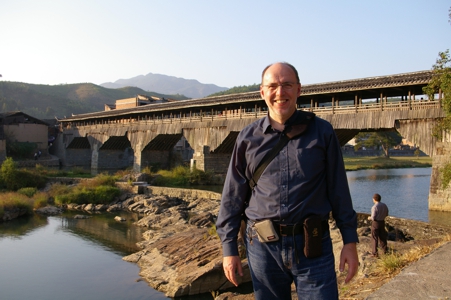
Prof. Dr. phil. Philip Caston serves as Professor in the Department of Landscape Sciences and Geomatics at Neubrandenburg University of Applied Sciences. His academic responsibilities include teaching Surveying, Architectural and Construction History, and Construction Documentation modules with significant practical components. His research specializes in historical building documentation and surveying of heritage structures , with current projects examining Wooden Covered Bridges (including mathematical bridge geometry), the baroque ramparts of Rosenberg Fortress in Kronach , and Historic Surveyor's Towers . He actively directs the Model Workshop where students construct historic wooden structures. Caston's scholarly work demonstrates consistent focus on Central European timber construction traditions, particularly bridge and roof systems. His publications reveal progressive specialization from medieval church towers (1997) to 21st-century wooden bridge preservation, integrating traditional craftsmanship with modern surveying methodologies for architectural heritage conservation. He supervises extensive practical projects including the 30-credit Practical Project module and oversees the Model Workshop (Room 039, Building 2), providing hands-on training in historical construction techniques through physical model building. This workshop serves as the primary venue for students to engage with documented historic structures through scaled replication.