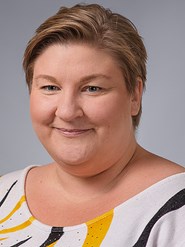
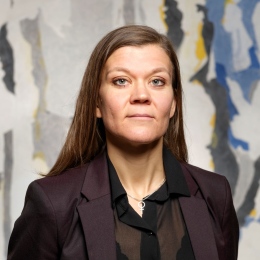
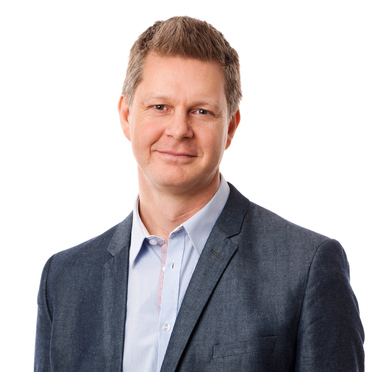
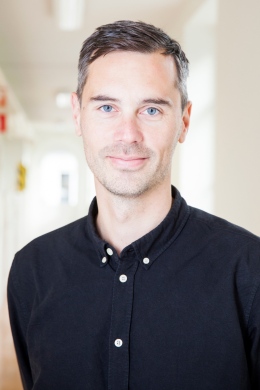
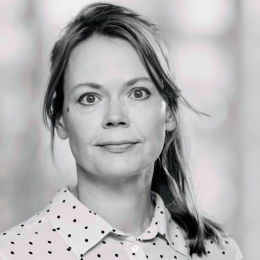
Therese Nordin is an Assistant Professor at Umeå University's Department of Community Medicine and Rehabilitation, specializing in occupational therapy. Her research focuses on social participation and togetherness among older adults within home care contexts, particularly through the STAY-IN-TOUCH project. Research Themes Gerontological perspectives on loneliness Co-creative methods in home care interventions Relational and transactional models of human activity Power dynamics in health services research Qualitative approaches to social participation Recent Publications Her work explores the interplay between structural care provision and subjective experiences of social connectedness in aging populations, with specific attention to: Gender norms and loneliness in men Home care professionals' conceptualization of social needs Design of participatory care models Quantitative-qualitative integration in aging research Methodological Expertise Therese employs a range of qualitative approaches, including: Scoping reviews Creative co-design methodologies Narrative analysis Transactional perspective frameworks
Don Kulick is a Professor and Research Director at the Department of Cultural Anthropology and Ethnology, Uppsala University, Sweden. His academic career spans decades of anthropological fieldwork in Papua New Guinea, Brazil, and Scandinavia, with a focus on linguistic anthropology, sexuality studies, and disability studies. Dr. Kulick's research interests encompass linguistic anthropology, sexuality studies, disability studies, language death, vulnerability studies, and human-animal communication. His work challenges conventional views on vulnerability, arguing that it can be a resource rather than a lack. His fieldwork with adults with significant disabilities in Denmark and Sweden informed his influential book "Loneliness and its Opposite: sex, disability, and the ethics of engagement". Kulick has also made significant contributions to the understanding of transgender communities, particularly through his early ethnographic work with Brazilian travesti prostitutes documented in "Travesti: Sex, Gender and Culture among Brazilian Transgendered Prostitutes". His recent scholarly output demonstrates a trajectory from linguistic anthropology and sexuality studies toward broader questions of vulnerability, ethics, and human-animal relations. Kulick's work consistently engages with marginalized communities and challenges disciplinary boundaries, connecting linguistic anthropology with disability studies, queer theory, and ethical frameworks for engagement with vulnerable others. ERC Advanced Grant for a 5-year research project on people who are treated as though they aren't really there Dr. Kulick has received significant research funding, most notably an ERC Advanced Grant for a 5-year project examining people who are treated as though they aren't really there, including courtroom interpreters and peer reviewers. His mentorship extends through his extensive publications and edited volumes that have shaped multiple generations of anthropological scholarship, particularly in the areas of linguistic anthropology and sexuality studies. While specific lab structures aren't mentioned in the provided text, Kulick's research program on vulnerability appears to be an organized research initiative (referred to as the "EV program" in the text), suggesting a research team or collaborative network focused on vulnerability as a productive resource.
Tanja Joelsson is an Associate Professor in Child and Youth Studies at Stockholm University's Department of Child and Adolescent Studies. She holds a PhD in Gender Studies (Critical Studies of Men and Masculinities) from Linköping University. Her work bridges multiple disciplines including cultural geography, mobility studies, feminist theory, and gender studies. Current research focuses on mobility justice, urban infrastructure equity, and children/youth's everyday mobility practices. She leads/co-leads projects funded by Formas and Vinnova, examining topics like family mobility in deprived areas and autonomous vehicles' societal impacts. Her teaching includes courses on childhood studies methodologies, spatial analysis, and policy applications. She actively supervises doctoral candidates and advises master’s students. Notable collaborations include work with GEXCEL's Violent Mobilities strand and the BUB network (Children in Built Environments). Recent publications explore smart cities through a child-centric lens, parental affective practices shaping child mobility, and intersections of gender with transport systems. Her research portfolio spans 15 years, including ethnographic studies of young men’s risk behaviors with vehicles, mobile preschools’ educational impacts, and transport poverty. Projects emphasize qualitative methods focusing on lived experiences across ages/social groups. Current initiatives test public transport solutions tailored for children’s needs in Ånge Municipality and analyze mobility hubs in urban contexts.
Professor Håkan Larsson holds the position of Professor and Head of the Department of Movement, Culture, and Society at the Swedish School of Sport and Health Sciences (GIH). He specializes in Educational Science with a focus on gender, sexuality, and sport didactics. His academic leadership includes directing research initiatives such as the PIF group (Pedagogical Sport Research) and the FIHD Graduate School, which trains teachers in physical education and health. Larsson supervises eight doctoral students and teaches in GIH’s master’s and doctoral programs, notably leading mandatory courses in sports science. Research Interests: Pedagogical processes in club and school sports Gender, sexuality, and embodiment in physical education Heteronormativity and LGBTQ+ inclusion in sports Collaborations: Norwegian School of Sport Sciences (part-time leave) Swedish National Agency for Education (Skolverket) Riksidrottsförbundet (Swedish Sports Confederation) His research spans projects like 'Heteronormativitet inom idrotten' (2012–2013) and the KUL project (2011–2013), funded by the Swedish Research Council. Larsson also chairs evaluation committees for academic programs and collaborates with interdisciplinary groups like Research in Education & Movement Culture. Publications emphasize critical pedagogy, transgender embodiment in education, and innovative teaching methods. His work bridges theory and practice, addressing contemporary challenges in physical education and sport equity.
Lucas Gottzén is a Professor at the Department of Child and Youth Studies, Stockholm University. His research focuses on masculinity, youth studies, affect theory, and extremism, with a particular interest in how these intersect with violence and gender dynamics. He has contributed to understanding radicalization pathways in online spaces, the role of masculinity in intimate partner violence, and the cultural politics of fatherhood in Swedish society. Research interests include ecofascist visual communication, vulnerability and identity politics in digital subcultures, and the sociological analysis of pornography debates. His work often bridges theory and practice, addressing issues of gender equality and violence prevention through innovative methodological approaches. Key publications examine themes such as the 'red pill' phenomenon, affective dimensions of masculinity, and the paradoxes of Sweden's gender-equality reputation alongside high rates of sexual violence. He has collaborated on evaluations of violence prevention programs and authored critical analyses of media representations of fatherhood and youth.
Anupriya Tuli is a Postdoctoral Research Fellow at the KTH Royal Institute of Technology , affiliated with the Division of Media Technology and Interaction Design . She collaborates with Madeline Balaam and Airi Lampinen to examine ethics in data collection for intimate topics and designs interactions fostering trust and collective care in reproductive/menstrual journeys. Research Focus : Intersection of Human-Computer Interaction (HCI), global health, taboo, marginality, and activism Expertise : Qualitative research, feminist design, health equity Education : PhD in Human-Centered Design from IIIT-Delhi, India Their work emphasizes technology as a tool for equity and empowerment , particularly for marginalized communities. Recent publications explore themes like intimate technologies, post-growth HCI, and menstrual mobilities. Awards include fellowships from the Indian Government, Google, and the MARFATIA AWARD (2018). Scientific Awards Fellowship from the Indian Government (for doctoral research) Google Fellowship (for doctoral research) MARFATIA AWARD (2018)
Catarina Kinnvall is a Professor at the Department of Political Science, Lund University , Sweden, and serves as Director of SASNET . She is a leading scholar in political psychology, with a focus on globalization, security, religion, nationalism, and gender, particularly in South Asia and Europe. Former Vice-President of the International Society of Political Psychology (ISPP) Former Editor-in-Chief of the journal Political Psychology Her research explores political psychology , migration , multiculturalism , religion and nationalism , radicalization , and gender , with a critical lens on postcolonialism and far-right populism. Key themes include ontological insecurity , far-right fantasies , and gendered violence in global contexts. Recent articles analyze deglobalization , white supremacy , emotional governance , and neocolonial subjecthood , reflecting her engagement with contemporary crises. She has edited volumes on climate hazards and gender ramifications , and her work intersects with UN Sustainable Development Goals related to gender equality and reduced inequalities . Scientific Awards: Precariousness at Work (2017): Addressing gendered violence in outsourced labor. Climate Disasters and Gendered Violence in Asia (2015): Studying vulnerabilities post-catastrophe.
Helle Rydström is a Professor at Lund University's Department of Gender Studies, specializing in the anthropology of gender in Asia with a focus on Vietnam. She holds a MA in International Development Studies from Roskilde University and a Ph.D. from Linköping University. Her research explores crisis, precariousness, and resilience through a gendered lens, particularly in contexts of climate disasters, colonialism, and conflict. Affiliations: Lund University: Department of Gender Studies LU Profile Area: Human Rights Visiting Research Fellow at Social Anthropology departments globally Research Interests: Rydström’s work examines gender hierarchies, power dynamics, and violence in Asia. Her studies include: Gendered impacts of climate disasters in Vietnam, Pakistan, and the Philippines Colonial violence legacies in Vietnam LGBTQ+ activism and resistance in urban Vietnam Resilience strategies in crisis-affected communities Awards: Riksbankens Jubileumsfond Research Award Nominated for the Harry J. Benda Prize (AAS) Research Prize in Memoriam of Tamara K. Hareven Grants & Projects: Swedish Research Council-funded studies on precarious labor in Asia Pufendorf Institute CRISIS Theme (2019) Sida-funded rural family studies in Vietnam (8-year project) Teaching: Courses include Gender & Global Development, Feminist Theory, and Crisis Studies.
Maria Clara Lilia Medina is a Lecturer at the University of Gothenburg 's School of Global Studies , specializing in Gender Studies , Political Power , and Latin American Social Movements . Her work often intersects historical analysis with contemporary gender politics , particularly in Argentina and Chile. She has published extensively on topics like the #NiUnaMenos movement, hegemonic masculinity , and indigenous land rights . Research Interests : Gender in Latin American politics, social resistance, historical narratives, cultural resource management. Email : maria.medina@globalstudies.gu.se Recent work trends include a focus on collective resistance (via #NiUnaMenos ), media representation of female leaders , and indigenous rights . Her publications span from feminist theory to archaeological studies in Argentina.
Ericka Johnson is a Professor and Deputy Prefect at Linköping University, working within Gender Studies in the Department of Thematic Studies. She is affiliated with the Center for Medical Humanities and Bioethics (CMBS), Bodies Hub, and the P6: Body, Knowledge, Subjectivity research collective. Her work bridges Science & Technology Studies, medical humanities, and gender studies, with a focus on how data representation intersects with AI systems and how technologies 'refract' invisible discourses to make them visible. Johnson's research program investigates how the world becomes data, exploring connections between ontologies, epistemologies, and AI. She employs feminist science studies frameworks to examine medical technologies and material-discursive practices around the body. Her metaphor of refraction—comparing how technologies reveal hidden discourses to how prisms refract light into visible spectra—has become influential in feminist technoscience research. She is particularly known for identifying 'intersectional hallucinations' in synthetic medical data, where AI systems generate data that misrepresents complex, overlapping identities. Her major projects include 'Social complexity and fairness in synthetic medical data' (funded by WASP-HS and Vinnova), which examines how machine learning-generated data can overrepresent 'standard' patients while underrepresenting minorities, and 'The Constant Torment' project exploring prostate anxiety and its relationship to masculinity, resulting in her book 'A Cultural Biography of the Prostate.' Her recent publications span critical data studies, human-robot interaction, and the sociotechnical dimensions of AI, consistently examining how technologies shape and are shaped by social, cultural, and gendered contexts. As a supervisor, Johnson mentors doctoral students Isabel García Velázquez, Alexandra Gribble, and Dominika Lisy, as well as postdoctoral researcher Maria Arnelid. Her research is supported by major grants from WASP-HS (NetX) and Vinnova, focusing on fair and representative synthetic data, and she participates in the Wallenberg Autonomous Systems Program (WASP) Humanities and Society initiative. Johnson is actively involved in interdisciplinary research communities including the Center for Medical Humanities and Bioethics, Bodies Hub (researching bodies, identity, and gender), and the P6 research collective. These frameworks support her collaborative work at technology's intersection with gender, society, and healthcare, with practical implications for developing more equitable AI systems in medical contexts.
Carl Rommel is a Researcher at Uppsala University’s Department of Cultural Anthropology and Ethnology. His research focuses on contemporary Egypt, exploring themes such as the politics of emotions, masculinity, temporality, sports, and authoritarian statecraft. His current project, Egypt as a Project: Dreamwork and Masculinity in a Projectified Society , funded by Riksbankens Jubileumsfond, examines how projects shape visions of personal and national futures in Egypt. Education: Bachelor/Master in Sociotechnical Engineering and History of Science/Ideas (Uppsala University, 2001–2007) MA in Migration and Diaspora Studies (SOAS, University of London, 2009) PhD in Social Anthropology (SOAS, University of London, 2015) Research Interests: Carl’s work combines ethnographic fieldwork with theoretical inquiry. He analyzes the interplay between projectification, masculinity, and statecraft in Egypt, as well as football’s role in shaping national identity and revolutionary movements. His approach emphasizes ‘project dreamwork’—the interplay of imagination, labor, and material conditions in socio-political contexts. Teaching and Fellowships: Postdoctoral researcher in the ERC-funded Crosslocations project (University of Helsinki, 2017–2021) Research fellowships at Zentrum Moderner Orient (Berlin) and University of Bern Teaching appointments at Free University Berlin, University of Helsinki, and Stockholm University Labs/Teams: Collaborator in the Crosslocations project and affiliated with Uppsala’s Department of Cultural Anthropology and Ethnology research groups.
Tobias Axelsson is a Senior Lecturer at Örebro University's School of Humanities, Education and Social Sciences, Department of Humanities, Education and Social Sciences. He holds a PhD in Gender Studies, which he defended in 2019 with his thesis "När män möts som pappor" (When men meet as fathers). Axelsson works both as a senior lecturer in Civics/Social Science and as a postdoctoral researcher in Gender Studies. His research interests focus on: Feminist perspectives on fatherhood, fathers, and fathering Gender and parenting support Gender and early childhood education and care Violence studies, particularly regarding men's attitudes toward female genital mutilation Axelsson is currently working as a postdoctoral researcher in the EU Horizon 2020 funded project RESISTIRÉ (2021-2024), which focuses on "Responding to Outbreaks through Co-creative Inclusive Equality Strategies." His research examines how fathering is constructed in gender-equal Sweden, particularly through his analysis of "fathering spaces" - social services directed to fathers on parental leave. He has contributed to international projects on men's parental leave, including reports for the EU Mutual Learning Programme in Gender Equality and an Austrian project on paternity leave. His scientific contributions include numerous publications on gender equality in preschool, feminist perspectives on fatherhood, and men's engagement in issues related to gender-based violence. Axelsson's research demonstrates a consistent focus on how gender norms shape parenting practices and institutional approaches to gender equality. Axelsson actively collaborates with various stakeholders: Participation in a national reference group on parenting support under the Swedish Agency for Family Law and Parenting Support since 2019 Lecturing at conferences on masculinity and gender equality Collaboration with municipalities like Askersund on gender equality work in preschool and school Providing expertise to County Administrative Boards on gender equality and parenting support He is affiliated with several research environments: Centre for Feminist Social Studies (CFS) CVS - The Centre for Violence Studies ReCEL - Research on Children's Education and Learning Critical Studies on Men and Masculinities Feminist violence studies
Marianne Carlsson is a Professor in the Department of Nursing at the University of Gävle, Sweden. Her research focuses on health sciences, particularly in geriatrics, aphasia rehabilitation, nursing education, and equity in healthcare. She has made significant contributions to developing assessment tools like the Nurse Professional Competence (NPC) Scale and PHASE-Proxy scale. Professor at University of Gävle Research areas: Health sciences, Nursing, Geriatrics Her recent publications span 2012-2022, addressing topics in chronic disease management , communication disorders , educational reforms , and health equity . She has extensively studied gender dynamics in nursing education and telephone triage practices. Notable works include: Validation of nursing competence scales Quality of life assessments in aging populations Family impact in aphasia care
Ulf Mellström is a Professor in Gender Studies at Karlstad University, Sweden. He holds a PhD from Linköping University (1995) and has held academic positions at Linköping University (1995-2009), Luleå University of Technology (2005-2011), and Karlstad University since 2011. His research focuses on gender and technology studies, masculinity studies, globalization, and higher education. Key areas include the political economy of global knowledge production, gendered professions in STEM, and the intersection of technology, risk, and security. Education: PhD in Technology and Social Change (1995), Linköping University. Major research projects include investigations into globalized eduscapes, corporate universities in Dubai/India/Brazil, and gender mainstreaming in Swedish rescue services. He collaborates internationally, serving on boards such as MSB's Scientific Board and the Norwegian Research Council's gender studies program. Research interests span ethnographically grounded studies of gendered knowledge production, global comparative perspectives on STEM fields (e.g., Malaysia's female-dominated computer science), and the cultural embeddedness of technology use. He has supervised multiple PhD students and teaches courses in gender studies, ethnographic methodology, and STS. Publications include influential works like Masculinity, Power and Technology: A Malaysian Ethnography (2003), and articles in journals such as Science, Technology & Human Values and International Journal of Gender, Science, and Technology . His recent work explores posthumanist masculinity, autonomous vehicles, and transnational bachelorhood.
Anita Heber is a full Professor and Director of Studies for the Advanced Level in Criminology at Stockholm University's Department of Criminology. She leads the Victimological Research Group, established in 2021. Her work focuses on victimology, organized crime, trafficking, and crime policy, with over two decades of teaching and research experience. Research Interests : Victimology, policing and desistance, masculinities and victimhood, migration-crime linkages, media representation of crime, and policy analysis. Current projects include Policing Gang Desistance (qualitative study of police-led programs) and Men as Victims (courtroom masculinity and victim credibility). Recent Contributions : 2024 articles in British Journal of Criminology and International Review of Victimology analyze victim credibility and sex trafficking narratives. Earlier work includes studies on drug networks and Swedish crime policy bills. Teaching : Supervises two PhD students and teaches victimology, criminological theory, and media-crime intersections. Courses include Victimology (7.5 ECTS) and Media and Crime (advanced level). Visiting Positions : Held fellowships at Monash University (2015), Oxford University (2009), and Keele University (2003).