

Carmen Domene is a Professor in the Department of Chemistry at the University of Bath, where she leads computational research on biological systems using advanced simulation techniques. Her work bridges theoretical chemistry and experimental biophysics, focusing on microscopic mechanisms of biochemical processes. She actively collaborates with experimental groups worldwide and currently accepts doctoral students. Education PhD in Chemistry, Doctor of Science, University of Exeter (1998-2000, awarded 2001) Postgraduate Certificate in Academic Practice, King's College London (2013-2014) Licenciatura en Quimica, Master of Chemistry, Universidad de Sevilla (1990-1995) Postgraduate courses in Physical Chemistry, Universidad de Sevilla (1996-1997) Domene's research centers on computational biophysics of membrane proteins and biological systems. She develops novel simulation methodologies including free energy calculations, enhanced sampling, and QM/MM techniques to study ion channels, enzymes, and transporters. Her approach integrates quantum chemistry, statistical mechanics, and spectroscopy to interpret experimental data and design new experiments. Current work emphasizes potassium channels, HIV antibody mechanisms, and drug-target interactions. Recent publications (2024-2025) reveal a strong focus on molecular dynamics applications to membrane protein function, spanning ion channel gating, glucose transport mechanisms, HIV neutralization, and cancer therapeutics. Her work consistently combines computational innovation with biological relevance, utilizing high-performance computing to address complex biochemical questions across biophysics, pharmacology, and structural biology. Scientific Awards Newton Advanced Fellowship from The Royal Society (2017-2018) Domene has secured significant research funding including The Royal Society's Newton Advanced Fellowship and the 'Insights on TRP gating' project (2020-2023). She maintains an active doctoral supervision program and collaborates internationally, evidenced by her Visiting Research Academic position at the University of Oxford (2012-2023). Her research group develops specialized simulation tools while engaging with experimental teams to validate computational predictions. Her computational chemistry group at Bath focuses on membrane protein dynamics, utilizing high-performance computing resources to investigate ion channel permeation, drug binding mechanisms, and conformational changes in biological macromolecules. Current projects address TRP channel modulation, HIV antibody neutralization, and cancer drug design through integrated computational-experimental approaches.
جستوجوی استاد و پژوهشگر
استاد راهنما، استاد دانشگاه یا پژوهشگر مناسب برای مسیر پژوهشیتان را پیدا کنید و با او ارتباط بگیرید.
نمایش ۱۵۱-۱۶۱ از ۱۶۱ استاد راهنما
اطلاعات این پروفایلها از صفحات عمومی دانشگاهها جمعآوری شده و ممکن است بهروز نباشد.
Thomas Taimreمشاهده پروفایل
مدرس ارشد
Thomas Taimre is a Senior Lecturer in Statistics at the School of Mathematics and Physics, University of Queensland. He teaches undergraduate courses in statistics and financial mathematics and leads research in applied mathematics, stochastic modeling, and optical engineering. His work bridges theoretical frameworks with practical applications in terahertz laser technology and optimization algorithms. Research Focus: Dr. Taimre's interdisciplinary research spans: Mathematical Statistics: Rare-event simulation, stochastic processes, and Monte Carlo methods. Optical Engineering: Terahertz quantum cascade lasers, laser feedback interferometry, and biomedical imaging. Operations Research: Resource optimization, queueing theory, and decision support systems for environmental and industrial challenges. Publication Trends: His recent articles (2022-2025) emphasize terahertz imaging advancements, laser dynamics, and optimization techniques. Dominant themes include quantum cascade laser applications, laser feedback interferometry for medical diagnostics, and stochastic methods for complex system modeling. Funding & Supervision: He contributes to major grants like the ARC Training Centre for Information Resilience (2021-2026) and supervises graduate research. No awards are listed.
Harun Avciمشاهده پروفایل
استادیار
Harun Avci is an Assistant Professor of Quantitative Analysis in the Coles College of Business at Kennesaw State University. He holds a Ph.D. in Industrial Engineering & Management Sciences from Northwestern University, where he worked under the supervision of Professors Barry L. Nelson, Andreas Wächter, and Eunhye Song. Ph.D. in Industrial Engineering & Management Sciences (2024), Northwestern University M.S. in Industrial Engineering & Management Sciences (2020), Northwestern University M.S. in Industrial Engineering (2018), Bilkent University B.S. in Industrial Engineering with Minor in Economics (2016), Bilkent University His research focuses on simulation optimization methodologies and their applications in energy systems, inventory management, and power distribution networks. Key projects include optimizing energy storage for wind power producers, developing parallel computing strategies for ranking and selection algorithms, and modeling decentralized electric power distribution under voltage constraints. Publications reveal trends in applying stochastic simulation to renewable energy commitment strategies, high-dimensional discrete optimization problems, and inventory systems with partial information. His work spans both theoretical advancements in simulation optimization and practical implementations in energy and agricultural supply chains. Harun teaches courses in applied statistical modeling (ECON 3300), decision analysis (ECON 4850), and business intelligence (ECON 7750) at Kennesaw State University. He previously taught Discrete-Event Systems Simulation (IEMS 317) at Northwestern University.
Professor Zaifu Yang is a Professor of Economics at the University of York, Department of Economics. He serves as Director of the Centre for Mechanism and Institution Design and Editor of the Journal of Mechanism and Institution Design. His academic roles include membership in the Departmental Research Committee, PG Module Review Committee, and advisory roles for joint degree programs. Education: Bachelor of Engineering (BE) from Xidian University Master of Science (MS) from Xidian University Doctor of Philosophy (PhD) from Tilburg University Research Interests: Economic Theory Game Theory Auction/Mechanism Design Consumer Theory Financial Economics Economic Growth Tax Reform His work focuses on mechanism design, market processes, and equilibrium analysis, with notable contributions to job matching markets and dynamic auctions. Recent Research Trends: Recent articles explore stochastic models in consumer behavior, barter market mechanisms, and efficiency in senior-level job matching. These reflect his expertise in applying game-theoretic frameworks to real-world economic systems. Teaching & Leadership: Teaches Advanced Microeconomics and mechanism design courses. Leads research initiatives and collaborates internationally on projects like the English housing market mechanism and marriage theory. No awards explicitly listed. Labs/Teams: Oversees the Centre for Mechanism and Institution Design, fostering interdisciplinary research on institutional design and market mechanisms.

Prof. Yonatan Loewenstein is a Professor in the Department of Neurobiology at the Hebrew University of Jerusalem. His research focuses on computational neuroscience and cognition, particularly the neural mechanisms underlying decision-making, reinforcement learning, and sensory processing. He leads an interdisciplinary laboratory exploring how learning principles govern behaviors in both biological and artificial systems. Key contributions include studies on somatosensory cortex organization, neuronal homeostasis, and human-machine synergy in decision-making. He co-authored the book Computational Models in Cognition , blending theoretical frameworks with empirical findings. Education details are not explicitly provided in the text, but his affiliations suggest advanced training in neurobiology and computational sciences. Research interests span decision-making biases, reinforcement learning dynamics, and the interplay between brain structure and function. His recent work addresses topics like idiosyncratic choice stability, value modulation in impulsivity, and abstract reasoning in neural networks. Publications highlight collaborations in fields ranging from cognitive dissonance to schizophrenia diagnostics. While no specific awards are listed, his involvement in high-impact journals and interdisciplinary projects underscores his academic contributions. The lab’s work is housed in the Goodman Faculty building, with active group members and experimental facilities.
- Probability
- Statistics
- Stochastic models
- +۳ مورد دیگر
Subramanian Ramakrishnan is an Associate Professor in the Department of Mathematics at the University of Miami's College of Arts and Sciences. His research focuses on probability, statistics, and stochastic modeling with applications to computer networks and video traffic analysis. Role: Associate Professor, Director of Undergraduate Studies Contact: s.ramakrishnan@miami.edu | (305)284-2156 His work includes developing Markov-modulated Gamma-based frameworks for modeling variable bit rate (VBR) video traffic, analyzing throughput limits in cyclic queueing networks, and studying convergence properties of handoff arrival rate calculations in wireless networks. Key publication trends show expertise in: Mathematical modeling of network performance Statistical video traffic analysis Queueing theory applications Gamma distribution in multimedia engineering
江彌修مشاهده پروفایل
استاد
Professor Mi-Hsiu Chiang is a faculty member at the Department of Money and Banking, National Chengchi University (NCCU), College of Commerce , with a career spanning over two decades in quantitative finance, credit risk modeling, and financial engineering. He holds a PhD in Quantitative Finance from Imperial College London and has published extensively in top-tier journals like Pacific-Basin Finance Journal , Financial Management , and Review of Quantitative Finance and Accounting . Education: PhD (Quantitative Finance), MSc (Mathematics), BSc (Mathematics) from Imperial College London. Research Focus: Credit risk modeling, options pricing, machine learning applications in finance, ESG investments, and climate risk hedging. Awards: Recipient of MOST Research Awards, Senior Outstanding Teacher (20 years) at NCCU, and several academic prizes including UMC Management Paper Award and Fubon Paper Award. Projects: Led numerous research initiatives funded by the National Science and Technology Council, including studies on climate change risk replication using GPT and machine learning, ESG sentiment in credit default prediction, and behavioral biases in derivatives markets. His recent publications emphasize stochastic dominance in stock markets, liquidity-driven strategies, and empirical analyses of credit and information risks. He has also contributed to behavioral finance by examining the disposition effect in options and convertible bonds. His work bridges quantitative methods with practical financial applications, including synthetic CDO valuation and TIPS pricing under inflation jumps. Scientific Awards 科技部研究獎勵 資深優良教師 (20年), 國立政治大學 第十屆聯電經營管理論文獎優等獎, 中華民國管理科學學會 台灣財務金融學會富邦論文獎 台大管理論叢宋作楠基金會論文獎 資深優良教師 (10年), 國立政治大學 學術研究成果國際化優等研究獎, 政治大學 教學特優教師, 政治大學商學院
Sinem Kozpınarمشاهده پروفایل
استادیار
Dr. Öğr. Üyesi Sinem Kozpınar is an Assistant Professor at Başkent University's Faculty of Commercial Sciences, specializing in Insurance Program. With a PhD in Financial Mathematics from METU and postdoctoral experience in Actuarial Sciences at Université Libre de Bruxelles, her work bridges mathematical modeling with insurance and energy market applications. Education: PhD (2018) and MSc (2013) in Financial Mathematics from METU; BSc (2011) in Mathematics from Hacettepe University Her research focuses on stochastic processes and applied mathematics , particularly in derivatives pricing and risk modeling. Publications span topics like regime-switching models, Heston stochastic volatility, and multi-asset options under Lévy frameworks. Recent work includes reduced-order modeling for volatility processes and energy quanto options pricing. She teaches courses in mathematical statistics, risk management, and insurance mathematics, while contributing to projects like the TÜRİB AI-Enhanced Market Surveillance Project.
Maia Fraserمشاهده پروفایل
دانشیار
Maia Fraser is an Associate Professor at the University of Ottawa , cross-appointed to the School of Electrical Engineering and Computer Science and affiliated with the Brain and Mind Research Institute . Her research bridges Machine Learning , Symplectic Geometry , and Computational Geometry , with interdisciplinary collaborations in Neuroscience and Mathematical Biology . PhD in Computer Science (University of Chicago, 2013) PhD in Mathematics (Stanford University, 1994) Postdoctoral work: University of Toronto Industry experience: Supercomputing Systems AG (Zurich) Her recent work explores AI safety through the lens of living systems, combining mathematical principles with societal implications. She examines temporal abstraction in continual learning, reinforcement learning limits, and geometric constraints in AI. Publications span topology , biological navigation , and neural time scales . Scientific contributions include: Co-organizing Fields Medal Symposium (2022) Co-moderating New Paradigms session at Fields Institute (2024) Leading INTER-MATH-AI (IMA) NSERC-CREATE program (2022) She investigates AI's impact on mathematical research and is writing a book on mathematical frameworks for AI safety .

- Sensorimotor integration
- Neuromechanics
- Locomotion
- +۵ مورد دیگر
Vikas Bhandawat is an Associate Professor at Drexel University's School of Biomedical Engineering, Science and Health Systems, where he leads the Bhandawat Laboratory. His research focuses on understanding how animal behavior emerges from the complex interaction between the nervous system, the body, and the environment, using Drosophila (fruit flies) as a model organism due to their relatively simple brain and available genetic tools. His educational background includes: MS in Chemistry (Integrated BS and MS) from Indian Institute of Technology, Kanpur, India (1993-1998) PhD in Neuroscience from Johns Hopkins School of Medicine (1999-2005), with thesis on "Elementary Events Underlying Olfactory Transduction" Postdoctoral training at Harvard Medical School (2005-2009) under Prof. Rachel Wilson Dr. Bhandawat's research spans multiple timescales of behavior, from milliseconds to minutes, with a focus on sensorimotor integration during locomotion. His lab employs a highly interdisciplinary approach combining in vivo whole-cell patch clamp recordings, imaging, quantitative behavioral measurement, biomechanics, and computational modeling. His work has revealed that fly locomotion can be decomposed into discrete "locomotor features" that are modularly affected by odors, providing insight into how sensory information transforms into action. An analysis of his recent publications shows a consistent focus on understanding the neural and biomechanical basis of locomotion across multiple timescales. His work bridges neuroscience, biomechanics, and computational approaches, with particular emphasis on odor-modulated locomotion, descending motor control, and the biomechanics of legged locomotion in Drosophila. His research demonstrates how complex behaviors emerge from relatively simple neural systems. Dr. Bhandawat has built a productive research program with numerous publications in high-impact journals including Nature Neuroscience, Neuron, eLife, and PNAS. His work has contributed significantly to our understanding of how sensory information is transformed into motor output in a relatively simple model system. His laboratory actively mentors students and researchers, employing a multi-pronged approach to study behavior. The lab seeks to create the next generation of professionals with multidisciplinary skills necessary to tackle complex real-world problems. They are particularly interested in building a diverse team of biologists, neuroscientists, and engineers to address questions spanning from sensation to action. The Bhandawat Laboratory focuses on three main research areas: 1) From Sensation to Action (algorithms and circuits underlying transformation of sensation to action), 2) Descending Motor Control (studying descending pathways in Drosophila), and 3) Biomechanics of Locomotion (understanding the mechanics of legged movement). The lab has developed innovative techniques for recording neural activity while measuring behavior and has made significant contributions to understanding how odors modulate locomotion through discrete behavioral states.
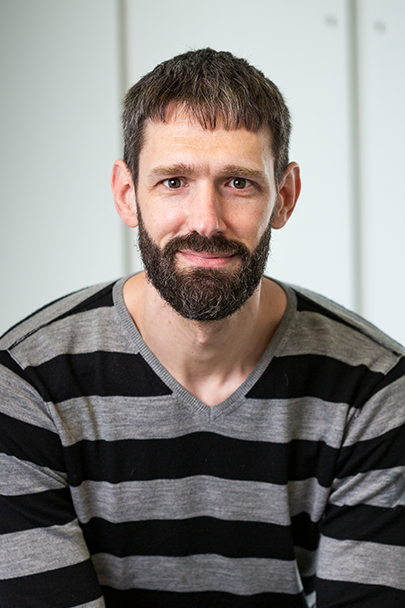
Olivier Serre is a CNRS Research Director working at the Institute for Research in Fundamental Computer Science (IRIF), a joint research unit of CNRS and University of Paris. Since September 2021, he serves as Deputy Scientific Director at the Institute for Information Sciences and Technologies (INS2I) at CNRS. His research focuses on theoretical computer science with particular emphasis on automata theory and formal verification frameworks. Dr. Serre completed his education at ENS Cachan (1999-2003) and earned his PhD in Computer Science from Paris-Diderot University (now University of Paris) in 2004. Following a postdoctoral position at RWTH Aachen, he joined LIAFA (now IRIF) as a research fellow in 2005 and became a CNRS Research Director in 2016. His academic journey reflects deep engagement with foundational theoretical problems and their practical verification applications. His research centers on automata theory and formal languages, with particular expertise in games and logic, infinite structures, and verification of higher-order functional programs. Dr. Serre has made significant contributions to collapsible pushdown systems, recursion schemes, and parity games, bridging theoretical foundations with practical applications in program verification. His work demonstrates exceptional depth in developing decision procedures for complex verification problems previously considered intractable. Dr. Serre's extensive publication record in premier theoretical venues shows consistent contribution to advancing the state of the art. His research trajectory reveals a clear evolution from foundational automata theory toward increasingly sophisticated systems involving higher-order computation and imperfect information, with notable breakthroughs in establishing decidability results for complex verification problems.