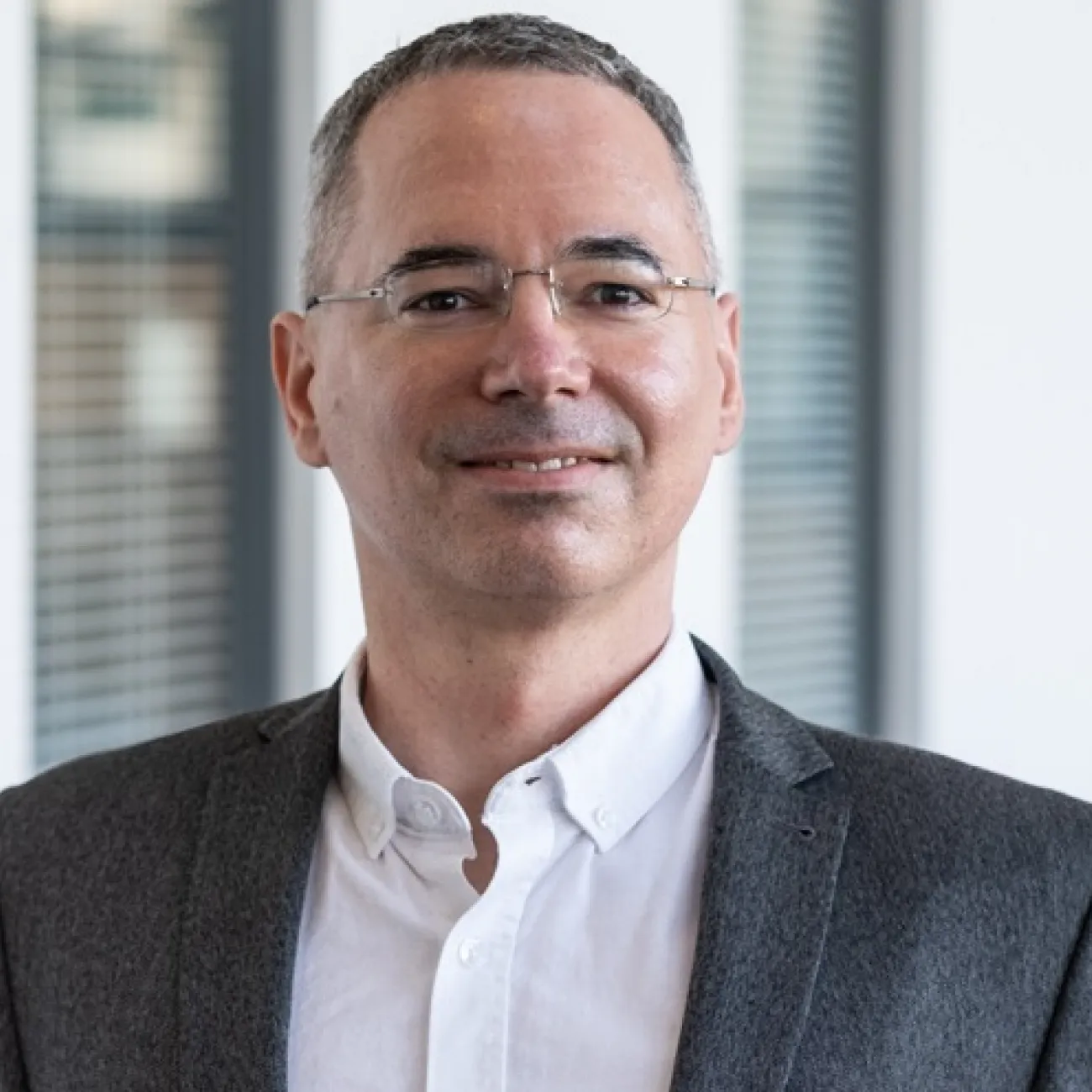
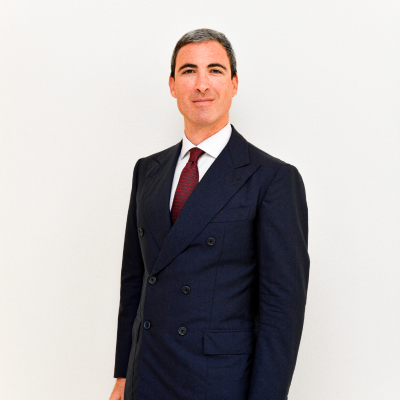
Dr Alex Zarifis is a Lecturer in Information Systems at the Southampton Business School , University of Southampton. His work focuses on the intersection of technology and business, with particular emphasis on financial technology applications. BSc from University of Leeds MSc and PhD from University of Manchester Research areas include: Trust in digital systems Blockchain and cryptocurrency Artificial Intelligence applications Financial technology (Fintech) Business model innovation Electronic business His recent publications explore: Trust mechanisms in Central Bank Digital Currencies (CBDC) AI governance in Fintech boards Decentralized exchange adoption factors Agile responses in e-governance Mental health implications of research collaboration Professional affiliations: Member of CORMSIS (Centre for Operational Research, Management Science and Information Systems) Research affiliate at Cambridge Center for Alternative Finance (CCAF)
Runhuan Feng is a Professor of Statistics and holds a secondary appointment in the Department of Mathematics at the University of Illinois at Urbana-Champaign. He is affiliated with the College of Liberal Arts & Sciences. His research focuses on risk analytics, actuarial science, quantitative finance, pension planning, healthcare data analytics, and innovations in FinTech/InsurTech. Recent work addresses risk aggregation methodologies, peer-to-peer insurance models for flood risks, multi-risk insurance frameworks, mortality shock management, and editorial leadership in actuarial science. His research bridges theoretical models with practical applications in finance and insurance sectors. No scientific awards are explicitly mentioned in the profile. Advising and grants sections remain unspecified. His research outputs reflect interdisciplinary collaboration, as seen in his editorial role and co-authored studies.
Lars Hornuf is a Professor of Finance and Financial Technology at Dresden University of Technology. His research focuses on FinTech, artificial intelligence in finance, space economics, entrepreneurial finance, and blockchain technologies. He has contributed extensively to understanding the dynamics of crowdfunding, regulatory frameworks for financial innovation, and the ethical implications of AI-driven financial systems. Key areas of expertise include the economic impact of emerging technologies like generative AI and humanoid robots in banking, cybersecurity in blockchain ecosystems, and geopolitical aspects of space exploration funding. His work bridges academic research with practical applications, often collaborating with institutions like the Max Planck Institute and CESifo. He has received recognition for his paper 'How Do Banks Interact with Fintech Startups?' which won the Best Paper Award at the International FinTech, InsurTech & Blockchain Forum. His research frequently highlights the dual challenges and opportunities of integrating AI and data-driven tools into financial decision-making while addressing regulatory and ethical concerns. Lars Hornuf’s interdisciplinary approach spans corporate finance, entrepreneurial finance, and policy analysis, with a particular emphasis on fostering innovation while ensuring consumer protection and sustainable development.
Stefan Janßen is a Professor at Jade University of Applied Sciences since March 2014, affiliated with the School of Business and Department of Business . He holds additional roles as a part-time lecturer at Carl von Ossietzky University Oldenburg and Virtuelle Hochschule OnCampus, and serves on academic committees including the Studienkommission and Fachbereichsrat . Doctorate in Economics (2011) from Carl von Ossietzky University Oldenburg Degree in Economics and Business Administration (1997), University of Oldenburg Summer courses at UCLA (1993) and Middlesex University (1998) His research focuses on risk management , banking supervision , cooperative banking , and financial regulation . Recent projects include analyzing AI in credit processes, green bond frameworks, and risk culture under MaRisk 8.0. His work bridges regulatory compliance with practical banking challenges. Publications since 2016 cover topics like shadow banking , digital transformation , Basel II/III , and social media in finance , with a strong emphasis on empirical studies in the Weser-Ems region. He co-edited the Praktikerhandbuch Risikoinventur (2015, 2019) and Risikokultur in Kreditinstituten (2018). He participates in international conferences including the Financial Stability Conference and Hamburg Banking Supervision Days , and consults on regulatory compliance and risk management. He leads the dual study program Insurance, Banking, and Finance and chairs sessions on risk culture at conferences.
Piotr Manikowski is a Professor at the Department of Insurance within the Institute of Finance at the University of Economics in Poznan, Poland. He specializes in insurance risk management, underwriting cycles, and digitalization trends in the insurance sector. His research focuses on motor insurance, satellite insurance, solvency analysis, and the application of quantitative methods in risk assessment. With 35 publications and 29 professional activities, he has contributed extensively to insurance literature, including studies on Solvency II compliance, underwriting cycles in Asia-Pacific markets, and innovations in motor insurance. His work bridges theoretical frameworks and practical applications, addressing challenges in emerging technologies like cryptocurrency and telematics. Prof. Manikowski has supervised 3 academic theses and actively participates in professional organizations. His research interests include the Polish pension system, cybersecurity-related insurance, and the impact of reinsurance on financial stability. He is a member of academic conferences and a recognized expert in insurance economics, contributing to both national and international forums.
Mark Farrell is a Senior Lecturer (Education) in the Department of Finance at Queen's Business School, Queen's University Belfast. He specializes in actuarial science, insurtech, and enterprise risk management. He teaches courses including actuarial statistics, research methods, modeling, and risk analytics. He holds a PhD from Queen's University Belfast and serves as Programme Director for the MSc Actuarial Science program. His research focuses on applying wearable technology data and artificial intelligence to actuarial modeling, with publications in areas like mortality prediction and insurtech innovation. He is actively involved in professional development for actuaries and has contributed to industry discussions on insurance premium trends and the future of the actuarial profession. Responsibilities & Education - Programme Director (MSc Actuarial Science) - PhD (Queen's University Belfast) - Research Interests: Actuarial Science, Insurtech, Risk Analytics Contact Room: Academic Hub 02.030 Email: mark.farrell@qub.ac.uk Recent Research Trends Recent articles highlight Farrell's focus on AI-driven risk modeling, wearable technology applications in insurance, and the evolving role of actuaries in tech-driven environments. His work bridges academic research with practical industry challenges such as post-pandemic solvency modeling and ethical considerations in pricing.
Luca Tomesani Melotti serves as an Adjunct Professor of Advanced Corporate Finance at the European University of Rome, where he equips students with skills for effective capital allocation. Concurrently, he acts as Vice President of Groupe Reside Etudes Italia (managing 33,000+ rooms across Europe) and Chairman of Lumen Ventures' Investment Committee, focusing on Seed-stage technology investments. His educational background includes: Degree in Business Administration, Kellogg School of Management, Northwestern University Executive Education in Private Equity & Venture Capital, Harvard Business School Executive Education in Mergers & Acquisitions, Harvard Business School Professor Tomesani Melotti's research integrates corporate finance with emerging investment frontiers, emphasizing practical applications in real estate strategy, venture capital, and disruptive technologies (Fintech, Insurtech, Healthtech). His industry experience at Brack Capital Group—managing $10B+ in global real estate assets—directly informs his academic perspective on capital markets and risk assessment. No scientific awards were documented in the source material. As an Adjunct Professor, he teaches Advanced Corporate Finance and previously lectured on Real Estate Investment Strategy at Luiss Business School. The text provides no details regarding research grants, student advising, or sponsored projects. His professional engagement centers on industry practice rather than academic labs, with active leadership roles at Groupe Reside Etudes Italia and Lumen Ventures driving his contributions to investment strategy and market innovation.
Michael Casey serves as Professor of Finance at the University of Central Arkansas' College of Business, maintaining an active research and teaching presence with office COB 211L and contact details mcasey@uca.edu/(501) 450-5334. His September 2023 vita reflects ongoing scholarly engagement across finance and business education domains. Research interests demonstrate exceptional breadth through three interconnected pillars: Corporate Finance (dividend policy across insurance/oil/gas sectors, corporate governance, ESG integration), Financial Innovation (fintech/neobank risks, digital misinformation challenges, international ADR performance), and Educational Transformation (online pedagogy, student video creation, pandemic-responsive teaching). His work consistently bridges theoretical finance with practical business applications, particularly examining how social factors (medical marijuana policies, pandemic disruptions) reshape financial decision-making. Publication trends since 2018 reveal strategic evolution from traditional finance topics toward emerging digital frontiers. While maintaining core expertise in dividend policy (22% of recent articles), he increasingly addresses fintech disruptions (15% of output) and educational technology (20% of work). Notably, his 2023 Salmonella outbreak study indicates interdisciplinary reach beyond finance, suggesting collaborative work in public health. The consistent focus on measurement frameworks—whether for investor sentiment indices or academic integrity tools—highlights methodological rigor across diverse subjects. No scientific awards are documented in the available materials, though his sustained publication record across finance and business education journals demonstrates significant scholarly contribution. Advising activities and grant funding remain unspecified in current documentation. Similarly, while his research implies engagement with financial databases and educational technology platforms, no dedicated labs or research teams are explicitly referenced in the provided materials.
Dr. Piotr Stolarski is an Assistant Professor at the University of Economics in Poznan , affiliated with the Department of Economic Informatics . His work focuses on modern technology applications in finance and information integrity. Email: piotr.stolarski@ue.poznan.pl Phone: +48 (61) 639-27-95 Research Interests : Distributed ledger systems and cryptocurrencies Smart contract development Regulatory technology (RegTech) Insurtech and Fintech innovation Data-driven business transformation Information system security Recent Publications (2019–2025) analyze: Quantum computing impacts on cryptocurrency security Blockchain architecture for public registers AI in fake news detection Crypto exchange analysis via open data RSI indicator effectiveness in crypto markets Generative AI risks and mitigation Awards : 1st place - Information Credibility Competition 2024 1st place - CLEF-2023 CheckThat! Lab OpenFact Project Excellence 2023 GSK Economic Five Recognition 2025 Academic Contributions : Organizer of SKN Data Science seminars Chair of BSCT International Workshops (2018–2021) Active in European Researchers' Night events Collaborator with FU Berlin researchers
Thomas Puschmann is a Researcher at the University of Zurich's Department of Finance and concurrently holds a Professorship at the University of the Fraser Valley in Vancouver, Canada. He serves as Director of the Swiss FinTech Innovation Lab, focusing on advancing digital finance solutions. His teaching includes courses like 'FinTech & InsurTech – Digitization of the Financial Services Industry' (starting October 2025). His research spans FinTech, sustainable finance, blockchain technologies, and climate change mitigation in financial systems. Education & Affiliations: PhD (Dr. title) Affiliated with the University of Zurich and University of the Fraser Valley Research Interests: FinTech Innovation & Regulatory Frameworks Blockchain Applications in Finance Sustainable Digital Finance Taxonomies Climate Change Mitigation via Financial Mechanisms BigTech's Impact on Financial Services Publications Trends: Recent work emphasizes green fintech research agendas, decentralized finance taxonomies, and the transformative role of technology in reshaping global financial systems by 2030. His 2024 Springer publication 'Financial System 2030' explores digitalization and regulatory dynamics. Advising & Grants: No formal advisees listed; however, his lab fosters collaborative research projects with industry partners. Funding sources include academic and private sector collaborations. Labs & Teams: Leads the Swiss FinTech Innovation Lab, a hub for applied research in digital finance innovation, bridging academia and industry.
Professor Narayan Naik is a distinguished faculty member at London Business School (LBS), where he has served since 1991. He holds key academic leadership roles, including Director of the PhD Programme in Finance, Director of the Investment Management Programme, and Academic Director of the AQR Asset Management Institute. His expertise spans hedge fund investing, financial technology (FinTech), and market microstructure, with significant contributions to research and practitioner literature. His research focuses on FinTech innovation , particularly Blockchain and Cryptocurrency applications, alongside traditional areas like Islamic Finance and hedge fund performance evaluation . Recent articles highlight trends in InsurTech, robo-advice, and automation in financial services. He has consulted for the World Bank, sovereign wealth funds, and global corporations, cementing his role as a bridge between academia and industry. Professor Naik’s teaching portfolio includes Strategic Investment Management, Equity Investment Management, and the innovative FinTech elective course. His work has been featured in top finance journals and global media outlets such as CNN, CNBC, and Bloomberg, underscoring his influence in financial thought leadership.
Professor Jacek Lisowski is a faculty member at the Department of Insurance, Institute of Finance, University of Economics in Poznań. He holds a Doctorate (1998) and became a Professor in 2021. His research focuses on insurance economics, risk management, InsurTech, fintech, and trade credit insurance. He has supervised 7 academic theses and contributed to 43 publications. Key areas of interest include digitalization in insurance markets, environmental financial instruments, and regulatory frameworks. He has participated in 1 research project and has 63 professional activities recorded. Education: Doctorate in Economics (1998) Academic career progression: Assistant Professor (2011) → Professor (2021) Research Interests: Trade credit insurance markets, InsurTech innovation cycles, environmental surety bonds in CEE, and the impact of fintech on risk management. His work bridges theoretical economic models with practical applications in financial security and regulatory compliance. Professional Contributions: Advised 7 students, authored/co-authored 43 papers, and engaged in 63 professional activities including conference participation and editorial work. His research emphasizes cross-border trade risks, digital transformation in insurance, and CEE regional market dynamics. Future Work: Focus on expanding InsurTech adoption in CEE, analyzing environmental financial instruments, and exploring AI-driven risk assessment models.
Philip Treleaven is a Professor at the Department of Computer Science , University College London (UCL). His work bridges Artificial Intelligence , Blockchain Technology , and Financial Computing , with a focus on DeFi , Tokenization , and Algorithm Auditing . He leads research on AI governance , privacy-preserving data , and financial market automation . Key Research Areas AI Ethics & Governance Decentralized Finance (DeFi) Tokenization & Web3 Cybersecurity & Emerging Threats Notable Collaborations Adriano Koshiyama Jeremy Barnett Rem Sadykhov Lukasz Szpruch Nick Firoozye Giles Pavey Recent Publications "Data Assets: Tokenization and Valuation" (2023) "DeTEcT: Dynamic and Probabilistic Parameters Extension" (2024) "Optimising Large Language Models" (2025) His research drives cross-disciplinary innovation , impacting finance , law , and data governance through applied machine learning and blockchain solutions . Current projects include DeTEcT (Decentralized Token Economy Theory) and Federated Computing Infrastructure .
Dario Salerno is an Adjunct Professor of Finance at the Leonard N. Stern School of Business, New York University, and an Associate Professor of Banking and Finance at the University of Naples “Parthenope.” He is also a Research Fellow at the Centre for Business, Climate Change, and Sustainability at the University of Edinburgh. His academic work bridges finance, sustainability, and innovation, with a focus on climate-related financial risks and sustainable investment strategies. His research interests include: Sustainable Finance and ESG Integration Climate Risk in Financial Systems Financial Innovation, Fintech, and InsurTech Banking Resilience and Macro-Financial Stability Corporate Governance and Venture Capital His recent publications reflect a strong trend toward interdisciplinary research that connects financial theory with real-world policy challenges, particularly in climate risk modeling, green finance, and ethical investment. The articles span top journals in finance and sustainability, emphasizing systemic risk, regulatory innovation, and digital transformation in financial markets. Scientific contributions and leadership roles include: Principal Investigator, EU-funded project on climate-related financial risks Co-founder and Board Member, FinClimate Lab Global Advisory Member, Oxford Impact Group (UK) Associate Editor, International Journal of Finance & Economics Guest Editor for multiple journals including Research in International Business and Finance Prof. Salerno is actively involved in postgraduate education through programs at NYU, MIT Sloan, University of Bologna, and Prince Sultan University. He has consulted for Fideuram Intesa Sanpaolo and the Italian Banking Association (ABI) on sustainable finance and risk profiling. His work integrates academic rigor with institutional innovation and societal impact. He leads the FinClimate Lab, a research laboratory dedicated to advancing climate and social finance, fostering collaboration between academia, policymakers, and financial institutions to develop actionable frameworks for sustainable economic transformation.
Dr. Ewa Cichowicz serves as an Assistant Professor within the Department of Financial System at Warsaw School of Economics, where her academic work centers on the intersection of financial systems, labor market dynamics, and digital financial innovation. Her institutional affiliation places her within Poland's premier economic research institution, contributing to national and European policy discussions through rigorous empirical analysis. Her research spans labor economics during crises, gender disparities in pension systems, and the transformative impact of financial technologies on consumer behavior. Key themes include labor market slack measurement, gender pension gap analysis using clustering methods, InsurTech regulatory frameworks, and LendTech's role in combating financial exclusion. Her methodological approach frequently employs quantitative techniques such as Data Envelopment Analysis and clustering algorithms, with a consistent focus on Polish and European contexts. Analysis of her 15 most recent publications reveals three dominant research trajectories: post-pandemic labor market adaptations (2021-2024), digital financial service innovation (FinTech/InsurTech/LendTech), and household financial behavior in evolving economic landscapes. These works demonstrate increasing methodological sophistication while maintaining practical policy relevance, particularly regarding financial inclusion, pension sustainability, and digital transformation challenges in Central and Eastern Europe.