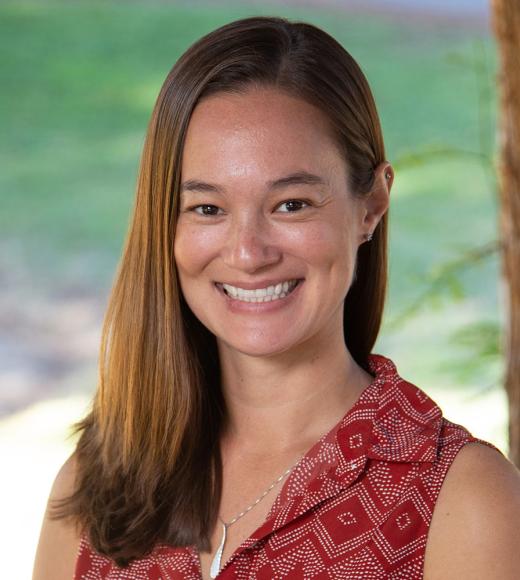
Matthew D. Potts is the S.J. Hall Chair in Forest Economics and Professor at UC Berkeley's Department of Environmental Science, Policy, & Management. He also serves as Associate Director for Sustainable Development at the Blum Center for Developing Economies. With interdisciplinary training in mathematics, ecology, and economics, his research focuses on nature-based climate solutions and ecosystem service co-production. Research addresses carbon sequestration through forest management, biodiversity conservation, land use planning, and sustainable development in tropical ecosystems. Recent work examines cost-effectiveness of reforestation, climate-driven migration patterns, and plantation carbon modeling. Publications demonstrate strong focus on quantitative analysis of land-use impacts, with methodological innovations in remote sensing applications and spatial modeling for carbon accounting. Awards include recognition for young faculty research and leadership in international environmental assessments. Leads the Potts Research Group, mentoring graduate students working on tropical ecology, restoration, and climate adaptation projects.
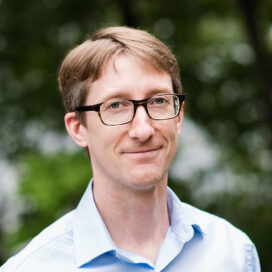
Prof. Dr. Oliver Krüger is a behavioral ecologist and evolutionary biologist at Bielefeld University 's Faculty of Biology , where he leads the Department of Animal Behaviour since 2013. His research spans avian and marine mammal systems, focusing on life history strategies, parasite-host interactions, and environmental adaptation. Education: Biology studies at Bielefeld University (1994-1996) MSc in Oxford (1996-1997) PhD at Bielefeld University with Fritz Trillmich and Jan Lindström (1998-2000) Research Themes: Behavioral ecology, evolutionary biology, and population dynamics across tropical and temperate ecosystems. Key projects include NC³ (Niche Choice/Construction) and studies on Galápagos sea lions, common buzzards, and pinniped species. Scientific Leadership: Spokesperson, SFB TRR 212 "NC³" (2018-2025) Advisory Board member: German Ornithologists Union, IUCN SSC pinniped group, German Primate Centre Peer review roles: Humboldt Foundation, DFG, HFSP, NSF Awards: Leopoldina Prize (2001) Niko Tinbergen Award (2008) DFG Heisenberg Professorship (2010-2015)
Professor Saskia Goes is a Professor of Geophysics at Imperial College London's Department of Earth Science & Engineering within the Faculty of Engineering. She specializes in geodynamics, subduction dynamics, and seismic hazard analysis using numerical modeling and geophysical data interpretation. Her affiliations include the Dynamic Earth and Hazards groups at the Imperial Centre for Geohazards Dynamics. Education: PhD in Geophysics from UC Santa Cruz (1995), Drs (BSc/MSc equivalent) from Utrecht University (1990). Prior roles include SNF Professor of Tectonophysics at ETH Zurich (2003-2005), Visiting Assistant Professor at the University of Michigan (1995-1996), and postdoctoral research at Utrecht University (1996-1999). Research focuses on mantle dynamics, lithosphere structure, and subduction zone processes. Her work integrates seismic imaging, machine learning, and numerical simulations to study phenomena like slab dynamics, mantle plumes, and fluid migration. Key themes include the interplay between tectonic forces and geochemical processes in continental and oceanic settings. Publications emphasize subduction zone processes, seismic tomography, and induced seismicity. She has led projects like the VoiLA initiative studying volatile recycling in the Lesser Antilles. Awards and recognition include invited lectures at leading conferences (AGU, EGU) and universities worldwide. Teaching includes undergraduate geodynamics, geohazards courses, and advanced MSc modeling modules. Active in promoting geohazard research through interdisciplinary collaboration and public engagement.
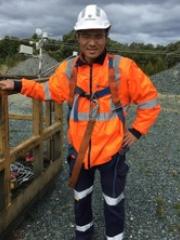
Dr. Chenming Zhang is an Advanced Queensland Industry Research Fellow at the School of Civil Engineering, The University of Queensland. His research focuses on hydrological processes in coastal and terrestrial groundwater systems, with particular emphasis on evaporation-driven mass and heat transport in soils and tailings, and hydrogeochemical dynamics in aquifers and mine waste systems. Specializes in IoT-based environmental monitoring Develops numerical models for coastal aquifer dynamics Conducts field and laboratory experiments on tailings behavior Research interests span coastal hydrology, groundwater modeling, mine waste management, and environmental monitoring. He works on contamination transport, aquifer protection, and climate impacts on water systems. Recent publications analyze: Iron curtain formation in subterranean estuaries Sea water intrusion mechanisms Salinity dynamics in tidal wetlands Smart sewer monitoring systems Scientific awards include the prestigious Advanced Queensland Industry Research Fellowship. He supervises multiple PhD projects on mine waste hydrology and coastal aquifer management, with notable collaboration on: Evolution Mining's gold tailings projects ARC Discovery Projects on coastal processes Grange Resources' PAF cell instrumentation His work combines field measurements, laboratory testing, and computational modeling to address critical environmental challenges in mining and coastal zones.
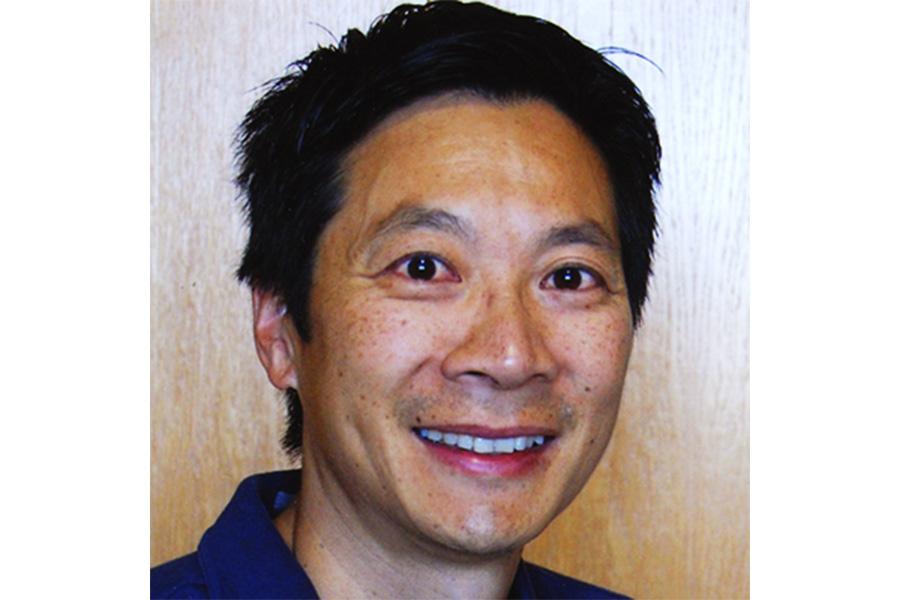
Xiaozhuo Wei is a Postdoctoral Scholar Research Associate in Geophysics at the California Institute of Technology (Caltech), affiliated with the Division of Geological and Planetary Sciences and the Department of Geophysics. His research focuses on geophysical monitoring of volcanic and tectonic processes, employing advanced techniques like fiber-optic geodesy, seismic tomography, and machine learning. He specializes in studying seismicity associated with volcanic eruptions, magma dynamics, and slow slip events in subduction zones, with significant contributions to understanding the 2018 Kīlauea eruption and Iceland's Reykjanes Peninsula eruptions. Key affiliations: Caltech’s Geophysics Department, Division of Geological and Planetary Sciences Research tools: Distributed Acoustic Sensing (DAS), ambient noise tomography, and offshore seismic arrays Field areas: Kīlauea Volcano (Hawaii), Iceland’s Reykjanes Peninsula, and Alaska’s subduction zones Wei’s work integrates multidisciplinary approaches to investigate crustal deformation, magma storage, and seismic hazard assessment. He has contributed to improving earthquake catalogs using offshore data and analyzing post-eruption seismicity patterns. His recent studies explore the spatial-temporal evolution of volcanic systems and the mechanics of dike intrusions using high-resolution geophysical methods. His research emphasizes real-time monitoring of volcanic processes and has advanced understanding of how seismic velocity changes reflect magma movement. Collaborations involve deploying ocean-bottom seismometers and machine learning algorithms to detect slow slip events in subduction zones, enhancing earthquake prediction capabilities. Notable projects include the 2023–2024 Reykjanes eruptions study and the analysis of the 2018 Kīlauea eruption’s seismic aftermath. His work bridges observational seismology with theoretical models of volcanic and tectonic systems, contributing to both fundamental science and practical hazard mitigation strategies.
Rachael Bay is an Associate Professor in the Department of Evolution and Ecology at the University of California, Davis. She investigates how human-induced environmental changes intersect with evolutionary processes, focusing on climate change impacts across diverse species. Education: B.S. in Marine Science/Biology, University of Miami (2008) M.Sc. in Biology, Dalhousie University (2010) Ph.D. in Biology, Stanford University (2015) Her research combines ecological experiments, physiological studies, and large-scale genomic analysis to explore evolutionary responses to anthropogenic stressors. Key areas include climate adaptation in migratory birds, coral resilience, and conservation genomics. Recent publications highlight genomic shifts linked to climate change, thermal tolerance mechanisms in corals, and migratory behavior dynamics. Her work emphasizes using evolutionary insights for proactive conservation strategies. Scientific Awards: Packard Fellowship (2021) Sloan Fellowship (2019) UC Davis Top Safety Award (2022) Bay is affiliated with the Center for Population Biology and graduate groups in Integrative Genetics & Genomics and Population Biology. She leads the Bay Lab, which focuses on eco-evolutionary dynamics in marine and avian systems.
Taylor Perron is the Cecil and Ida Green Professor of Earth, Atmospheric and Planetary Sciences at Massachusetts Institute of Technology (MIT), where he also serves as the EAPS Undergraduate Officer. His research program at MIT spans multiple interdisciplinary areas within Earth and planetary sciences, with strong connections to the MIT-WHOI Joint Program in Oceanography/Applied Ocean Science and Engineering. Dr. Perron's academic background includes an AB in Earth and Planetary Sciences and Archaeology from Harvard University (1999) and a PhD from the University of California, Berkeley (2006), followed by postdoctoral work at Harvard. His leadership roles at MIT have included serving as chair of the Program in Geology, Geochemistry, and Geobiology, and as Associate Department Head for Education. His research focuses on three interconnected areas: Landscape Evolution, Planetary Surfaces, and the Human Landscape. Within Landscape Evolution, he investigates dynamic river networks, climate-landscape interactions, grain-scale sediment transport mechanics, and the connections between landscape evolution and biological diversification. His Planetary Surfaces research examines river systems on Mars and Titan, using spacecraft data to understand extraterrestrial hydrological processes. The Human Landscape component explores archaeological applications of geomorphology, particularly in the Amazon basin. Analysis of his recent publications reveals a strong emphasis on comparative planetary hydrology, with significant work on Earth, Mars, and Titan. His research increasingly integrates field observations, mathematical modeling, and remote sensing to address questions about landscape evolution across different planetary environments and timescales, with growing attention to anthropogenic impacts on Earth's surface processes. Scientific Awards & Honors: MacArthur Fellowship (2021) James B. Macelwane Medal, American Geophysical Union (2014) Fellow, American Geophysical Union (2014) Editorial Committee Member, Annual Review of Earth & Planetary Sciences (2017-present) Dr. Perron has established a productive research group that collaborates across disciplines and institutions, including significant partnerships with WHOI, NASA missions, and archaeological teams. His work bridges fundamental questions about planetary evolution with practical implications for understanding climate change impacts on Earth's surface systems.
João F. Mano is a Full Professor at the Department of Chemistry, University of Aveiro, and Director of the Doctoral Program on Biotechnology. He leads the COMPASS Research Group and serves as Vice-Director at CICECO - Aveiro Institute of Materials. His academic appointments include Invited Professor at University of Lorraine (France), Visiting Professor at KAIST (South Korea), and Adjunct Professor at Ajou University (South Korea). Education: PhD in Chemistry (1996, Technical University of Lisbon); D.Sc. in Tissue Engineering, Regenerative Medicine and Stem Cells (2012, University of Minho) Research Interests focus on Biomaterials for Regenerative Medicine , integrating Nanotechnology , Microtechnology , and Biofabrication . His group develops Bioinspired Materials using polymer chemistry, Decellularized Extracellular Matrix , and 3D Bioprinting to engineer Cell Microenvironments for therapeutic applications. Recent Publications highlight advancements in Human-Derived Hydrogels , Photopolymerizable Scaffolds , Magneto-Responsive Biomaterials , and Programmable Bioinks . Trends show emphasis on Organ-on-a-Chip integration, Smart Living Materials , and Green Bioprinting methodologies. Scientific Awards include: European Research Council Advanced Grants (2015, 2020) Fellow at IUPAC, European Academy of Sciences, and American Institute of Medical and Biological Engineering ERC Proof of Concept Grants Doctor Honoris Causa from University of Lorraine and Utrecht UNESCO Chair on Biomaterials George Winter Award (European Society for Biomaterials) Supervisions & Collaborations encompass 74+ MSc, 26+ PhD students, and 40+ postdocs. He co-founded METATISSUE and CELLULARIS Biomodels , and serves as Editor-in-Chief of Materials Today Bio .
Professor Riikka Rinnan (University of Copenhagen) is a leading expert in ecosystem-atmosphere interactions, focusing on volatile organic compounds (VOCs) in Arctic environments. Her groundbreaking discovery of VOCs in permafrost has advanced climate prediction models, revealing complex interactions between climate warming, insect herbivory, microbial activity, and vegetation shifts. Current position: Professor, Department of Biology, University of Copenhagen Major research themes: Permafrost VOCs, Arctic climate feedbacks, plant-insect-microbial interactions International collaborations: China, Germany, Russia Her work combines field expeditions in extreme Arctic conditions with laboratory experiments and advanced VOC analysis. Climate warming experiments show VOC emissions could increase 40-fold with combined warming and insect attacks, while Arctic soils may act as unexpected VOC sinks. Key publications appear in Nature Communications , Nature Geoscience , and Global Change Biology . Riikka Rinnan has received prestigious awards including the EliteForsk Award, European Research Council Consolidator Grant, and Sapere Aude Research Leader. She leads international research teams, advises five PhD candidates, and supervises four postdocs (including two Marie Curie fellows). Her Siberian expedition plans demonstrate commitment to real-world scientific challenges.
Timo Koivurova is a Research Professor at the Arctic Centre, University of Lapland. He holds visiting and adjunct professor roles at Kobe University (Japan), Riga Graduate School of Law, University of Eastern Finland, and University of Turku. His research focuses on Arctic law, international environmental law, and geopolitical dynamics in the Arctic region. He has authored over 465 publications and led 43 research projects, including major initiatives like the ICEBERG project on Arctic Ocean governance and the Co-CREATE project on solar radiation management. Key research interests include legal frameworks for indigenous peoples, climate change regulations, Arctic geopolitics, and China’s Arctic engagement. He has received awards such as the 2015 Honorable Mention for environmental policy analysis and the 2008 Nordenskiöld Stipend for Arctic legal research. Over 100 media contributions discussing Arctic policy and geopolitics. Active in 552 professional activities, including editorial roles and conference presentations. Principal Investigator for EU-funded projects like Arctic PASSION and MARCS. His work bridges legal scholarship with policy practice, addressing contemporary challenges like Arctic Council functionality post-2022 Ukraine invasion and sustainable development goals in the region.
Professor Andrew Singleton is a leading sociologist at Deakin University's School of Humanities and Social Sciences , with expertise in religion, spirituality, and social research methodologies. His career spans over two decades at Deakin, where he has held progressively senior roles since 2000. Education: PhD in Sociology from Monash University (2000) Research Interests include: Spirituality in contemporary society New Religious Movements (particularly Spiritualism) Global Christianity and secularisation Quantitative and qualitative methods Research Trends show extensive work on Australian teen spirituality, Holocaust education impacts, marine conservation policy, and historical religious studies. His 2024 article on marine protected areas revealed majority Australian support for expanding ocean protections. Scientific Awards include multiple teaching accolades, though specific prizes aren't listed in the source material. Supervision covers diverse topics like neurodivergent birthing experiences, church hurt recovery, and honor-based violence support. He has taught sociology of religion and methods courses. Grants include Australian Research Council funding for Holocaust education studies ($305k+) and spiritual wellness research ($420k+), plus DFAT Korea Foundation support ($39k).
Ben Li is an Associate Professor in the Department of Computer Science at the University of Manitoba, Faculty of Science. His research focuses on combinatorics and theoretical computer science, including combinatorial design theory (e.g., Steiner triple systems, BIBDs, difference sets), graph theory, and algorithm design for combinatorial optimization problems. He also explores approximation algorithms for NP-Hard problems and subclasses of such problems with polynomial solutions. Dr. Li teaches a wide range of courses, including COMP 1010 (Introduction to Computer Science), COMP 2080 (Analysis of Algorithms), and advanced graduate courses like COMP 7720 on approximation algorithms and combinatorial optimization. His academic contributions span both theoretical computer science and interdisciplinary archaeological studies, as reflected in his publications. His recent work includes studies on ostrich eggshell beads' role in prehistoric social networks, archaeological site analysis in southern Africa, and medical education reforms in Canada. While his primary research aligns with computer science theory, his published articles also highlight interdisciplinary interests in anthropology, archaeology, and healthcare policy.
Peter U. Clark is a University Distinguished Professor in the College of Earth, Ocean, and Atmospheric Sciences at Oregon State University, with an Adjunct Professor role in Quaternary Studies at the University of Ulster. His research focuses on glaciers and ice sheets , sea level change , paleoclimatology , and abrupt climate change . He holds a Ph.D. in Geology from the University of Colorado (1984), following an M.S. (1980) and B.S. (1978) from the University of Waterloo and St. Lawrence University, respectively. Clark's recent work analyzes deglacial ocean heat content , Antarctic ice sheet stability , and paleoclimate reconstructions using geochemical proxies. His studies emphasize ice-ocean-atmosphere interactions , cosmogenic dating , and sea level fingerprinting . He has contributed extensively to IPCC assessments and pioneered models linking ice sheet collapse to thermohaline circulation shifts. Scientific honors include the Milutin Milankovic Medal (2024), Cesare Emiliani Lecturer (2023), and Guggenheim Fellowship (declined in 2016). His 2025 National Academy of Sciences election 2016 AAAS Fellowship multiple teaching awards highlight his academic leadership. Clark's editorial roles span Science Advances , Journal of Climate , and Quaternary Science Reviews . He has mentored 21 graduate students and postdocs, including current faculty at Boston College, University of Wisconsin-Madison, and California State University. His 15 most recent articles (2015-2025) focus on sea level projections , deglacial carbon cycle , and ice sheet-ocean feedbacks , with methodologies involving cosmogenic nuclide dating , isotope geochemistry , and transient climate modeling .
Dr. Catherine Rychert is an Associate Professor in the Department of Geology and Geophysics at the University of Southampton, where she conducts cutting-edge research in seismology and marine geophysics. She is a member of both the Geology and Geophysics research group and the Southampton Marine and Maritime Institute, contributing significantly to our understanding of Earth's interior structure and dynamics through advanced seismic imaging techniques. Her research focuses on several key areas: Seismic imaging of lithosphere-asthenosphere boundary Subduction zone dynamics and slab structure Continental rifting processes Seafloor spreading mechanisms Mantle flow patterns and upwellings Development of novel seismic sensing technologies Dr. Rychert's recent publications (2023-2025) demonstrate a strong focus on applying advanced seismic techniques across diverse tectonic settings including subduction zones (Lesser Antilles, Cascadia, Hikurangi), mid-ocean ridges (Mid-Atlantic Ridge), and continental rift systems (East African Rift). A notable trend is her increasing use of distributed acoustic sensing technology for both terrestrial and planetary applications, showing interdisciplinary reach beyond traditional Earth science. Dr. Rychert actively supervises PhD students, including William Arnold Buffett working on the INSPIRE project. She has secured significant research funding from diverse sources including the European Union (EURO-LAB project), National Geographic Society, and Natural Environment Research Council (NERC). Her collaborative network includes Dr. Nicholas Harmon and Professor Derek Keir, with whom she frequently publishes. Her research team conducts fieldwork and data analysis focused on understanding fundamental Earth structure and processes through innovative seismic methodologies, contributing to both theoretical understanding and practical applications in hazard assessment and resource exploration.
Dr. Colin Garroway is an Associate Professor in the Department of Biological Sciences at the University of Manitoba, Faculty of Science. His research focuses on understanding how population-level processes influence biodiversity at genetic, population, and species levels. He employs interdisciplinary approaches, including genomics, ecological modeling, and data synthesis, to address challenges in conservation and climate change impacts. His work often targets systems undergoing significant environmental changes, such as urbanized areas and Arctic ecosystems. Dr. Garroway teaches advanced courses in Evolutionary Genetics and Evolutionary Biology. His research emphasizes the interplay between human-driven environmental changes—such as urbanization and climate warming—and their effects on genetic diversity, species distribution, and adaptation. He leads the Garroway Lab, which collaborates on global projects like biodiversity assessments in protected areas and epigenetic studies in wildlife. Key research themes include: biodiversity conservation, climate adaptation genetics, urban evolution, and the genetic consequences of human activities. His work integrates field studies, genomic analyses, and computational models to provide actionable insights for conservation strategies.