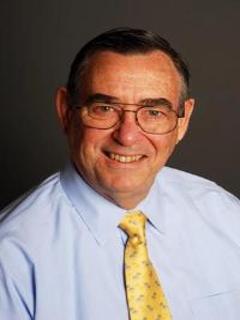
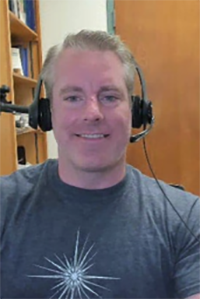
Charles H. Mallery is an Associate Professor in the Department of Biological Sciences at the University of Miami's College of Arts and Sciences. He also serves as the Associate Dean for Graduate and Administrative Services, contributing to academic leadership and administrative oversight within the college. His research focuses on comparative biochemistry and physiology, particularly in ion transport mechanisms in teleost fish gills and enzymatic activities during plant germination. Key areas include ATPase function, osmoregulation, and biochemical adaptations to environmental stressors. Selected publications highlight his work on Opsanus beta gill physiology, salinity adaptation in Dormitator maculatus , and plant protein metabolism during early germination stages. These studies span marine biology, enzymology, and plant developmental processes.
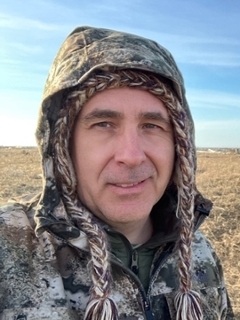
Kevin McCracken is an Associate Professor at the University of Miami, holding the prestigious Kushan Chair in Waterbird Biology & Conservation. He maintains appointments across three University of Miami campuses: the Department of Biology in the College of Arts and Sciences (Coral Gables), the Rosenstiel School of Marine, Atmospheric, and Earth Science (Virginia Key), and Human Genetics & Genomics at the Miller School of Medicine. Additionally, he holds affiliate faculty positions at the University of Alaska Museum of the North and Centro de Ornitología and Biodiversidad (CORBIDI) in Lima, Peru. Dr. McCracken's research focuses on the evolutionary biology of waterbirds, particularly examining how high-altitude waterfowl in the Andes have adapted to hypoxic environments. His lab employs an integrative approach combining population genomics, physiology, biochemistry, and wildlife biology to investigate adaptation and natural selection. A significant portion of his work examines the hypoxia-inducible factor (HIF) pathway and hemoglobin function in waterfowl species that have independently colonized high-altitude environments in the Andes. His research has revealed remarkable examples of convergent evolution, particularly in the EGLN1 and EPAS1 genes, which mirror adaptations seen in high-altitude human populations. Analysis of Dr. McCracken's recent publications reveals a consistent research trajectory focused on high-altitude adaptation in waterfowl, with particular emphasis on oxygen transport mechanisms, hemoglobin function, and convergent evolutionary patterns. His work spans multiple disciplines including evolutionary biology, physiology, genomics, and conservation biology, with a strong emphasis on comparative approaches across different waterbird species. The research demonstrates how natural selection targets specific molecular pathways to solve the physiological challenges of living in hypoxic environments. Kushan Chair in Waterbird Biology & Conservation Dr. McCracken advises PhD students across multiple departments at the University of Miami, including Biology, Marine Biology & Ecology, and Human Genetics & Genomics. His research has been supported by numerous grants focused on evolutionary adaptation, high-altitude physiology, and waterbird conservation. He collaborates extensively with researchers across South America, particularly in Peru, where his work has important implications for understanding how species adapt to changing environmental conditions. His laboratory, the Alpine Waterfowl Biology & Integrative Studies lab, conducts field research in the Andes, particularly around Lake Titicaca, studying species like the Yellow-billed Pintail and Torrent Duck. The lab employs cutting-edge genomic techniques alongside traditional physiological measurements to understand the mechanisms of adaptation to hypoxia at both high altitudes and during diving. Recent work has incorporated movement ecology through the use of OrniTrack-10 transmitters to study joint location and acceleration data from wild waterfowl populations.
Dr. Willm Martens-Habbena serves as an Associate Professor at the Fort Lauderdale Research and Education Center (FLREC), part of the University of Florida's Institute of Food and Agricultural Sciences (UF/IFAS). His research program focuses on microbial ecology within subtropical and tropical ecosystems, specifically examining how microorganisms drive biogeochemical cycles and respond to global change pressures including sea level rise and land-use alterations in South Florida environments. Dr. Martens-Habbena's research spans microbiology, molecular biology, and biogeochemistry with emphasis on nitrogen and carbon cycling processes. His work investigates microbial responses to environmental perturbations such as altered precipitation patterns, agricultural intensification, cattle grazing, and saltwater intrusion across diverse habitats including wetlands, seagrass meadows, and subtropical preserves. Key themes include nitrification-denitrification linkages, methane flux dynamics, soil health indicators under varying vegetation covers, and the discovery of novel ammonia-oxidizing archaeal lineages. Analysis of his recent publications (2023-2025) reveals concentrated research on microbial mechanisms in organic matter decomposition, nutrient cycling, and greenhouse gas production under climate change scenarios. His studies consistently integrate field observations with laboratory manipulations to elucidate how microbial communities mediate ecosystem responses to environmental stressors, with particular attention to ammonia-oxidizing microorganisms in marine and terrestrial systems. No scientific awards were explicitly mentioned in the source materials. While specific advisee names are not provided, Dr. Martens-Habbena maintains an active mentorship program as evidenced by his extensive publication record featuring student co-authors. His research likely involves collaborative grant-funded projects addressing South Florida's environmental challenges, though detailed funding information was not included in the source text. Dr. Martens-Habbena conducts research within FLREC's Microbiology/Pathogens program area, utilizing the center's facilities for field studies across South Florida ecosystems. His work involves interdisciplinary teams focused on translating microbial ecology research into practical applications for ecosystem management, agricultural sustainability, and climate change mitigation strategies in vulnerable coastal regions.
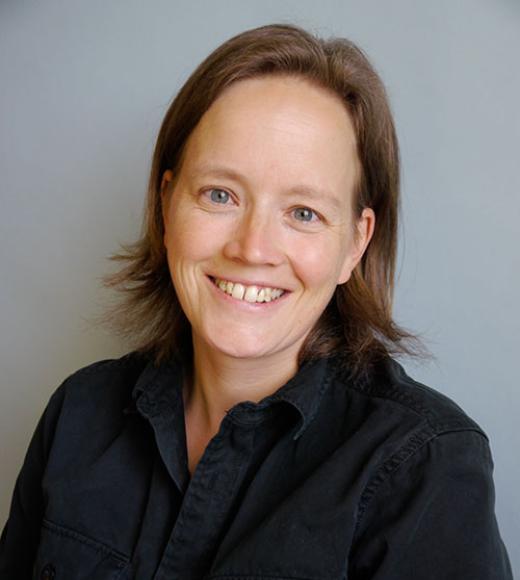
Anne Todgham is an Associate Professor at University of California Davis , affiliated with the College of Agricultural and Environmental Sciences and Department of Animal Science . Her research focuses on environmental physiology and physiological ecology , particularly how aquatic organisms adapt to climate change stressors like ocean acidification , hypoxia , and temperature shifts . Research Themes: Global climate change impacts on Antarctic fishes, California aquaculture species, and salmonids Lab Highlights: Todgham Lab investigates rocky intertidal physiology , conservation physiology , and multi-stressor responses Her team has published extensively on sturgeon physiology , mussel thermal tolerance , and amphibious stress responses , with recent work examining thiamine deficiency in California salmon and co-produced conservation strategies . She mentors students through the UC Davis Graduate Groups in Ecology and Animal Biology. Scientific Recognition: 2019-2020 UC Davis Chancellor’s Fellow NSF NRT Sustainable Oceans Fellows mentored Key Collaborations: Hog Island Oyster Co. Kootenai Tribe of Idaho Twin Rivers Hatchery National Shellfish Growers Association
Aaron N. Rice is a Research Professor at the Cornell Lab of Ornithology , specializing in bioacoustics and marine ecology. His work bridges coastal ecology with conservation policy, focusing on sound production and perception in fishes and whales to understand social behaviors and population dynamics. Develops passive acoustic monitoring frameworks for marine species Provides bioacoustic data for U.S. federal/state agencies (BOEM, NOAA, National Park Service) Contributes to marine spatial planning, including offshore wind energy development Research Highlights : Proves fish sounds dominate coastal soundscapes seasonally Links acoustic patterns to environmental changes and migratory behavior Directly influenced North Atlantic right whale critical habitat expansion and Gulf of Mexico Bryde’s whales endangered listing Scientific Awards : U.S. Department of Interior Partners in Conservation Award (2014) Recent Collaborations : Integrates passive acoustics with Everglades freshwater flow management, fosters interdisciplinary ties with U.S. Navy, National Park Service, and NGOs.
David E. Guggenheim is a Lecturer and Program Coordinator at Johns Hopkins University, where he leads the MS in Energy Policy and Climate and MS in Environmental Sciences and Policy programs. A marine scientist and conservation policy specialist, he founded the nonprofit Ocean Doctor and created the Cuba Conservancy initiative, fostering U.S.-Cuba collaboration on coral reef conservation for 19 years. His work has influenced diplomatic relations and marine ecosystem restoration. Founder and President, Ocean Doctor President of Friends of Channel Islands National Park Co-chair of the Everglades Coalition Research Interests: Guggenheim focuses on marine conservation, sustainable aquaculture, and international environmental policy. His projects address coral reef protection in Cuba, post-disaster recovery in the Gulf of Mexico, and community-driven conservation models. His interdisciplinary approach integrates marine biology, policy advocacy, and public education. Publications Trends: His recent works emphasize coral reef conservation in politically sensitive regions, sustainable aquaculture innovations, and the intersection of environmental policy and diplomacy. Media mentions highlight his expertise in marine ecosystems and conservation storytelling. Scientific Awards: Inducted into The Explorers Club as a National Fellow (2008) Public Outreach: Hosted The Ocean Doctor Radio Show and ExpeditionCasts podcast, with appearances on 60 Minutes , Good Morning America , and NPR. Leads Ocean Doctor’s 50 Years–50 States–50 Speeches Expedition, reaching 21,000+ students.
Kelly J. Smith serves as an Associate Professor in the Biology department at the University of North Florida, specializing in ecological restoration and estuarine system dynamics with emphasis on juvenile fish ecology and habitat interactions. Her academic credentials include: PhD in Ecology and Evolution, Rutgers University (1995) BS in Biology (1987) Dr. Smith's research centers on human impacts on ecological systems, particularly investigating how living habitats—including oyster reefs, salt marshes, and mangrove ecosystems—influence fish and benthic macro-faunal communities in estuarine environments. She examines shoreline restoration methodologies and their effects on habitat utilization, abundance patterns, and conservation outcomes, with direct applications for coastal resource management. Analysis of her publication record (2014-2024) reveals a concentrated research trajectory focused on Pervious Oyster Shell Habitat (POSH) systems, integrating computational modeling, materials science, and field observations to advance coastal protection and ecological restoration techniques. Her work demonstrates interdisciplinary convergence between marine biology, environmental engineering, and ecological restoration.
Ángel Garcia is a Professor at James Madison University (JMU) in the Department of Geology and Environmental Science. His work focuses on ethnogeology, cave and karst science, and place-based education, with an emphasis on increasing diversity within geosciences. He has conducted extensive research in Puerto Rico, the Dominican Republic, and Virginia's Shenandoah Valley. Undergraduate: Universidad Ana G. Mendez (Environmental Sciences, minor in Marine Biology) Master’s: University of Vermont (Geology, geochemistry focus) Doctoral: Arizona State University (Geological Sciences, ethnogeology focus) Garcia’s research integrates geological processes with cultural narratives, particularly among Indigenous and Latinx communities. His recent publications highlight paleoclimatic studies using stalagmites, geodetic strain rate analysis, and the application of geoheritage frameworks for cave conservation. He employs community-based methodologies and geospatial technologies in his projects. His work spans interdisciplinary domains, including: Geoheritage and Conservation: Assessing Grand Caverns' historical and ecological value. Paleoclimatology: Using cave formations to reconstruct ancient climate patterns. Geoscience Education: Developing virtual field trips for accessible STEM learning. Seismology: Analyzing strain rates in tectonically active regions like the Apennines.
Sonke Johnsen is the Ida Stephens Owens Distinguished Professor in the Department of Biology at Duke University's Trinity College of Arts & Sciences, with additional appointments as Professor in the Division of Marine Science and Conservation at the Nicholas School of the Environment. He is also affiliated with the Duke Institute for Brain Sciences and the Duke Initiative for Science & Society. His research program focuses on visual ecology, examining how animals interact with light in natural environments. The Johnsen Lab investigates bioluminescent signals underwater, visibility of aquatic animals, tissue ultrastructure and transparency, polarization vision, ultraviolet vision effects on predation, and optical sampling techniques for zooplankton. They also collaborate with Dr. Ken Lohmann at UNC on magnetoreception research. Dr. Johnsen's recent publications reveal a strong focus on visual acuity across marine species, dynamic visual appearance, color signaling, and the interplay between light environments and animal behavior. His work spans from molecular mechanisms to ecological implications, showing particular interest in how visual systems have evolved to meet environmental challenges in aquatic habitats. His research has been supported by significant grants from the International Human Frontier Science Program Organization, Air Force Research Laboratory, and University of North Carolina - Chapel Hill for projects on transparency in fish, visual acuity, and magnetoreception in marine animals. Dr. Johnsen earned his Ph.D. from the University of North Carolina, Chapel Hill (1996) and his B.A. from Swarthmore College (1988). His interdisciplinary approach combines protein biochemistry, microscopy, behavioral studies, field techniques, and mathematical modeling to address fundamental questions in sensory biology.
Jonathan Payne is the Dorrell William Kirby Professor at Stanford University, holding appointments as Professor of Earth & Planetary Sciences and Professor (by courtesy) of Biology . He serves as Senior Associate Dean for Faculty Affairs and Senior Fellow at the Woods Institute for the Environment. His research focuses on the interplay between environmental change and biological evolution in the fossil record, particularly mass extinctions and marine ecosystem dynamics. Ph.D., Harvard University (2005) A.M., Harvard University (2002) B.A., Williams College (1997) Payne's work examines mass extinction causation through geochemical-paleontological records in China, Italy, Turkey, and Japan, and employs global fossil occurrence datasets to study extinction selectivity and body size evolution. His 2022 PNAS article on temperature-size scaling in aquatic organisms and 2020 Science study on marine clade dominance via extinction resistance highlight his interdisciplinary approach combining climate modeling , energetic theory , and macroevolutionary analysis . Scientific accolades include: Fellow, Geological Society of America (2018) Allan V. Cox Medal (2015) Charles Schuchert Award (2015) NSF CAREER Award (2012) National Defense Science and Engineering Fellowship (1999-2002) He advises doctoral students across Earth Sciences and Biology programs, and has mentored over 100 high school and undergraduate researchers . Payne teaches historical geology, invertebrate paleobiology, and graduate-level courses in geobiology and carbonate sedimentology, including his popular course The Sixth Extinction (and the Other Five) .
Joshua S. Rest is an Associate Professor and Chair of the Department of Ecology and Evolution at Stony Brook University. His research focuses on evolutionary genomics, molecular evolution, and horizontal gene transfer (HGT) in diverse organisms, including plants, protists, and viruses. Research Interests Evolutionary Genomics Protist Genomics Horizontal Gene Transfer Phylogenetics Stress Response Mechanisms Key Articles 2025: Proteome remodeling in Aurantiochytrium limacinum 2023: Horizontal gene transfer in heterotrophic protists 2021: Drought adaptation and disease susceptibility in Brassica rapa 2019: Kinase promiscuity in inhibitor binding 2016: Rapid genome evolution in Brassica rapa under drought Awards 2021 Zuckerkandl Prize Collaborations Collaborated with experts in plant sciences (Charles C. Davis, Yin-Long Qiu), virology (David P. Mindell), and protist biology (Deborah Faktorová).
Jennifer L. Rahn is an Associate Professor in the Department of Geography and Sociology at Samford University's Howard College of Arts and Sciences. Her research focuses on coastal geomorphology, particularly in the Caribbean, and she specializes in GIS and cartography. Education: BA from Villanova University, MA from Temple University, and PhD from the University of Florida, Gainesville. She teaches courses spanning geospatial technologies (GEOG 216, 316, 509), physical geography (GEOG 150, 350, 351), and special topics like coral reef ecology (MARS 406) and Andean-Amazonian landscapes (GEOG 397). Her 2013 publication in the *Journal of Coastal Research* introduced a low-cost underwater surveying method, reflecting her work on coastal erosion and sea-level rise. Earlier presentations at AAG and SEDAAG conferences explored beach-coral reef interactions and GIS applications. Scientific Awards: Bernards High School Athletic Hall of Fame (2003) Rahn has chaired the Coastal and Marine (COMA) specialty group (2009–2011), the SEDAAG Education Committee (2011–present), and Samford’s Athletics Committee (2013–present). She has co-authored over 20 student presentations at academic conferences.
Wendy Thompson Taiwo serves as Associate Professor in the Department of African American Studies within San Jose State University's College of Social Sciences. Her academic profile is defined by interdisciplinary research at the crossroads of cultural criticism, material culture studies, critical ethnic studies, and performance studies, with a geographic focus on Black California and the African American West Coast. Her scholarship critically examines how Black communities in the Bay Area navigate belonging through performative acts in public and private spaces, challenging narratives of multicultural progressivism. Central themes include the Second Great Migration's legacy, racial displacement due to gentrification, multiracial identity formation (drawing from her own Black-Chinese heritage), and emerging work on Black environmental relationships. She integrates creative practice with academic inquiry, utilizing oral histories, archival materials, and poetic expression to explore family memory and collective resistance. Analyzing her 15 most recent publications (2021-2025), Taiwo consistently centers Black Californian experiences through interdisciplinary frameworks. Recurring motifs include spatial displacement (Oakland, Marin City), transnational connections (Guangzhou-Lagos), and the interplay of race with digital culture and environmental justice. Her work uniquely bridges scholarly analysis with creative nonfiction, addressing contemporary crises like the George Floyd protests while excavating historical erasures. This output demonstrates her commitment to documenting Black resilience against structural anti-Blackness in purportedly progressive spaces.
Marc Chevrette serves as an Assistant Professor and Discovery Fellow in the Department of Plant Pathology at the University of Wisconsin–Madison's College of Agricultural and Life Sciences, with laboratory operations based in the Discovery Building. His interdisciplinary research bridges genomics, bioinformatics, and microbiology to investigate microbial secondary metabolism and interspecies interactions within complex communities. Education: PhD in Genetics, University of Wisconsin–Madison Dr. Chevrette's research program centers on evolutionary-guided natural product discovery, specializing in genome mining for novel antibiotics and biosynthetic pathway characterization. His lab develops computational tools like GATOR-GC to map biosynthetic diversity across bacterial lineages, with particular emphasis on lasso peptides, nonribosomal synthetases, and microbial community dynamics. This work integrates phylogenetics with experimental validation to uncover chemical ecology principles driving secondary metabolism. Analysis of his 2023-2025 publications reveals consistent innovation in bioinformatics infrastructure (antiSMASH, MIBiG) and machine learning applications for substrate specificity prediction. His research demonstrates strong translational potential for antimicrobial discovery, with recurring themes of evolutionary adaptation in biosynthetic gene clusters and community-mediated metabolite regulation. Scientific Awards: Discovery Fellow (Wisconsin Institute for Discovery) Dr. Chevrette directs an active research group supported by federal grants focused on antibiotic discovery and microbial ecology. His mentorship includes training graduate students in interdisciplinary methodologies spanning computational biology, microbial genetics, and natural product chemistry, with emphasis on translating genomic insights into experimental validation. The Chevrette Lab operates within the Wisconsin Institute for Discovery, leveraging its collaborative environment to integrate genomic data with ecological modeling. Current projects investigate how nutrient availability and interspecies competition shape biosynthetic potential in soil and marine microbial communities, with implications for drug discovery pipelines.
Indiana University–Purdue University IndianapolisUnited States
Dr. Ash Enrici serves as Assistant Professor at Indiana University's Lilly Family School of Philanthropy and holds the McKinney Family Fellowship in Environmental Resilience and Philanthropy. She pioneers the field of environmental philanthropy as a mosaic of intentional practices rooted in diverse traditions, examining how these advance well-being for all beings through ecological interconnectedness. Education: PhD in Geographical Sciences, University of Maryland, College Park (2016) Master of Applied Arts in Anthropology, University of Maryland, College Park (2010) B.A. in Anthropology, Purdue University (2003) Her research investigates effective donor strategies for climate mitigation and conservation, with specialized focus on leveraging dive tourism for coral reef restoration. Employing collaborative knowledge co-production, ethnography, and Qualitative Comparative Analysis, she explores storytelling's role in environmental change across Indonesia, Fiji, Palau, and the U.S. mid-Atlantic region. Analysis of her 15 most recent publications reveals dominant themes in marine conservation philanthropy governance, responsible exit strategies, and REDD+ implementation challenges, alongside consistent examination of environmental justice in coastal adaptation across urban U.S. communities. Scientific Awards: McKinney Family Fellow of Environmental Resilience and Philanthropy Dr. Enrici mentors graduate students in environmental philanthropy while leading globally collaborative research projects on coral restoration and climate adaptation. Her grant-funded work integrates social science perspectives into conservation planning through partnerships with international institutions and interdisciplinary teams. As a certified freediving instructor since 2015, she bridges academic research with ocean conservation practice, contributing to the Lilly School's mission of fostering human-environment connections for ecological thriving.