- Population modeling
- Aquatic ecology
- Ecotoxicology
- +۷ مورد دیگر
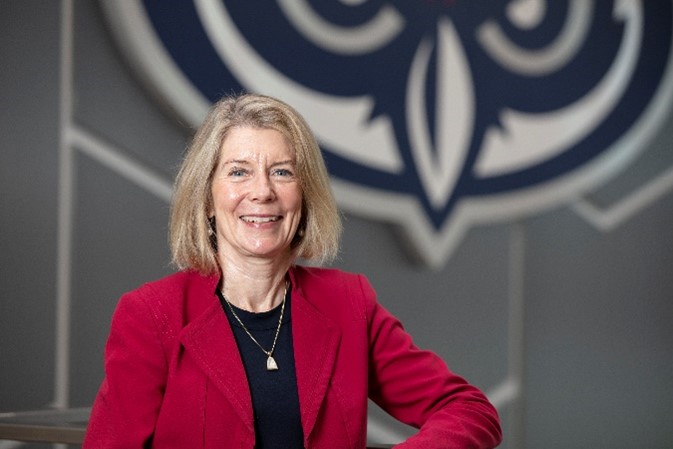
Valery E. Forbes serves as Professor and Dean of the Department of Biological Sciences within Florida Atlantic University's Charles E. Schmidt College of Science. Her research bridges ecological modeling, ecotoxicology, and conservation biology with significant contributions to regulatory risk assessment frameworks. She maintains active collaborations with industry partners (Syngenta Crop Protection), government agencies (EPA), and academic institutions across North America and Europe. Ph.D. in Coastal Oceanography, State University of New York at Stony Brook M.S. in Marine Environmental Science, State University of New York at Stony Brook B.A. in Biology and Geology, State University of New York at Binghamton Forbes' research centers on developing mechanistic models that link molecular/cellular toxicant effects to population-level consequences. She pioneers traits-based approaches for endangered species risk assessment, particularly focusing on freshwater mussels' complex life cycles and ecosystem services. Her current NSF-funded project investigates epigenetic pathways to homeostatic resilience across mammalian species using comparative computational frameworks. She leads the development of standardized tools like the Pop-CMD web application for ecological risk assessment modeling. Her publication record (2020-2024) demonstrates consistent leadership in advancing population modeling for ecological risk assessment, with emphasis on conceptual model standardization, endangered species protection, and climate change interactions. Key thematic areas include freshwater mussel conservation, pesticide risk frameworks, and epigenetic mechanisms of environmental stress response. Forbes advises multiple postdoctoral researchers including Ines Haberle (freshwater mussel modeling), Jorge Gonzalez (epigenetic computational modeling), and Kristin Crouse (agent-based modeling of homeostasis). Her lab secures significant external funding including NSF grants and industry partnerships with Syngenta, focusing on regulatory science applications and endangered species recovery planning. Current research initiatives include developing traits-based surrogates for listed mussel species, creating standardized population modeling workflows via Pop-CMD, and leading a multi-institutional NSF project on epigenetic regulation of homeostatic resilience across diverse mammals. Her work directly informs EPA and FIFRA/ESA regulatory processes through mechanistic modeling approaches.