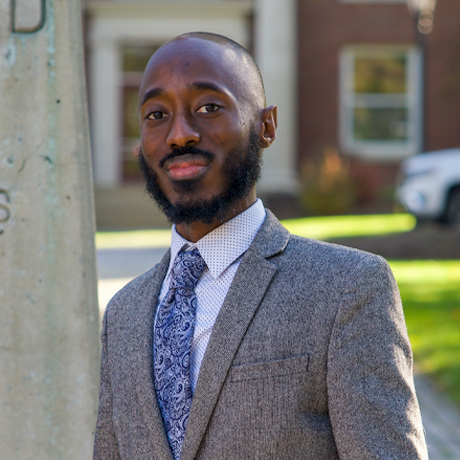
Katherine Binhammer is a Professor in the Department of English and Film Studies within the Faculty of Arts at the University of Alberta, where she has taught since 1995. Her academic work centers on the intersection of literary history, gender studies, and economic theory. Her research focuses on eighteenth-century British literature , particularly exploring narrative structures of capital and women's literary contributions before Jane Austen. She examines how feminist and queer perspectives reshape our understanding of literary history, with special attention to seduction narratives, financial systems in sentimental fiction, and digital recovery of marginalized voices. As Literary Director of The Orlando Project —a landmark digital humanities initiative publishing encoded profiles of 1,400+ women writers with Cambridge University Press—she advances feminist scholarship through collaborative digital methodologies. Her current book project extends this work with 'A Feminist Literary History of Women's Writing in the British Isles.' Professor Binhammer teaches courses including Topics in Eighteenth-Century Literature (ENGL 343) and Studies in Gender and Sexualities (ENGL 465) , framing the classroom as 'a generative space of intellectual engagement' for critical analysis of literary texts.
Chongpongmeren Jamir is a Postdoctoral Researcher in Theology and Religious Studies at Åbo Akademi University’s Faculty of Humanities, Psychology and Theology, affiliated with the Polin Institute. He earned his Ph.D. from Middlesex University and conducts research on tribal Christianity in Northeast India, particularly among the Naga people, focusing on themes of identity, inter-religious relations, political theology, and peacebuilding. Ph.D., Middlesex University His research interests lie at the intersection of theology, culture, and society, with a strong emphasis on indigenous Christian expressions in India. He explores how tribal communities negotiate identity, respond to violence, and contribute to reconciliation through ecclesial and theological practices. His work engages deeply with the concepts of forgiveness, justice, and restorative dialogue in conflict-affected regions. His recent publications (2022–2025) span book chapters, peer-reviewed journal articles, and academic editorials, appearing in outlets such as Transformation: An International Journal of Holistic Mission Studies , Teologia.fi , and edited volumes on global Christianity. The body of his work reveals a consistent focus on breaking cycles of violence, interfaith engagement, and the symbolic dimensions of tribal theology. He frequently addresses the role of the church as a transformative agent in society. Reviewer, Priscilla Papers (2025) Contributor to Compact Atlas of Global Christianity (2025) Participant in international conferences on Pentecostalism, political theology, and religion and politics Dr. Jamir is actively engaged in academic discourse through conference presentations and media commentary, including a notable piece titled “Majoritarian normalisation and violence to history” (2024). He is involved in collaborative research networks, particularly those examining religion in South Asia, and contributes to public theology through accessible writing and peer review. While no formal advising or grant information is listed, his scholarly output and activities indicate a robust and ongoing research trajectory.
Heather Finch is an Assistant Professor of English in the College of Liberal Arts & Social Sciences at Belmont University. She holds a Ph.D. from Auburn University and specializes in Early American and African American literature, with a focused interest in the fragmented narratives of pre-nineteenth-century enslaved women. Her work integrates literary scholarship with diversity and inclusion initiatives in higher education. Her educational background includes a B.A. from Tuskegee University, M.A. and Ph.D. from Auburn University, and professional experience linked to the University of Illinois at Urbana-Champaign. These institutions have shaped her interdisciplinary approach to teaching and mentorship. Dr. Finch's research centers on marginalized voices in early American literature, particularly the literary expressions and lived experiences of enslaved women before the nineteenth century. She explores how trauma, memory, and identity are constructed through fragmented narratives. Her teaching philosophy emphasizes critical thinking, reading, and writing as tools for personal and academic empowerment. She also contributes to diversity, equity, and inclusion efforts in higher education, blending her scholarly work with institutional service. While no recent publications are listed in the provided text, her research trajectory suggests ongoing contributions to the fields of American literary studies, African American women's writing, and narrative theory. Her interdisciplinary lens likely connects literature with history, gender studies, and cultural studies. Belmont University – Assistant Professor of English Tuskegee University – B.A. Auburn University – M.A., Ph.D. University of Illinois at Urbana-Champaign – Professional experience Dr. Finch is actively involved in mentoring students and professionals from diverse backgrounds. She has over sixteen years of experience as an instructor, consultant, program coordinator, and mentor. Her professional roles extend beyond the classroom, including consultancy in writing and communication, program administration, and publicity work. There is no mention of research grants in the provided text. She maintains a professional presence through her website and continues to contribute to academic and institutional communities through teaching, mentorship, and diversity initiatives. No specific labs or research teams are mentioned.
Beret Norman is a faculty member in the Department of World Languages at Boise State University, where she teaches German language, literature, and culture at all levels. She also contributes to general education through UF 200 and Honors Colloquium courses. Active in student mentorship, she serves as co-advisor of the German Club and regularly collaborates with undergraduate researchers. Her research focuses on contemporary German and Austrian literature and film, with particular attention to gender, identity, post-Wende society, and cultural memory. She has published extensively on authors such as Julia Franck, Julia Schoch, and Antje Rávik Strubel, as well as filmmaker Barbara Albert. Her scholarly work often explores themes of social alienation, identity disruption, and critical cultural commentary. The recent trends in her publications reflect a sustained engagement with literary and cinematic responses to historical and social change in German-speaking Europe. From analyses of GDR cultural residue to critiques of consumerism in Austrian film, her work spans interdisciplinary approaches in literature, film, art, and music. Her scholarship combines close textual analysis with broader socio-political contexts, particularly focusing on marginalized voices and feminist perspectives. Beret Norman has mentored numerous undergraduate researchers, as evidenced by her co-authored presentations at the Undergraduate Research Showcase. She has collaborated with students on topics ranging from film analysis to interdisciplinary cultural studies, demonstrating a strong commitment to academic mentorship and collaborative scholarship. Her research has been published in the World Languages Faculty Publications and Presentations series and featured in undergraduate research showcases. While no formal awards are listed in the provided text, her sustained publication record and active student engagement reflect a significant scholarly contribution to the field of Germanic studies. Beret Norman received her PhD in Germanic Literatures from the University of Massachusetts-Amherst. This foundational training underpins her interdisciplinary research and pedagogical approach. She is based at Albertsons Library, L-140B, on the Boise State University campus, where she continues her academic work in literature, film, and cultural studies.
Marl'ene Edwin is the Centre Manager at the Centre for Academic Language and Literacies at Goldsmiths, University of London. She is also Deputy Director of the Centre for Caribbean and Diaspora Studies, where she researches creolistics, oral literature, and postcolonial memory. PhD in English (Goldsmiths, University of London) MA in Caribbean Literature and Creole Poetics (Goldsmiths, University of London) Postgraduate Certificate in Professional Practice (Higher Education Administration and Management) Her research focuses on Creole language preservation, archival practices in postcolonial Caribbean literature, and decolonial approaches to diasporic identity. She has presented at international conferences on topics like transnational memory, oral history, and virtual creolisation. Her scholarly work spans from 2005 to 2019, primarily engaging with Caribbean diaspora studies, postcolonial theory, and oral tradition analysis. Key themes include archival reclamation, trauma narratives, and intercultural communication. AHRC Student-led Initiative (2009) Edwin co-edits the Equity Awards as an academic lead and has convened postgraduate modules such as 'Literature of the Caribbean and its Diasporas.' She is a Senior Fellow of the Higher Education Academy.
Dr. Tatiana Pumaccahua is an Assistant Professor of Psychology at California State Polytechnic University, Pomona (Cal Poly Pomona), within the College of Letters, Arts, and Social Sciences. A proud first-generation Indigenous Latina, she holds a B.A. in Psychology and M.A. in Child Development from California State University, San Bernardino (CSUSB), followed by a Ph.D. in School Psychology from the University of Rhode Island (2018). She completed a 2-year APA-accredited Child Clinical Psychology Postdoctoral Fellowship at Children’s Hospital Los Angeles (2018–2020) and became a licensed psychologist in California in 2023. Her research focuses on socioemotional learning interventions, school-based mental health, trauma-aware educational approaches, and increasing access to quality mental health and higher education for underserved populations. She emphasizes culturally adaptive strategies using creative methods like games and pedagogical innovations. Key areas include supporting DREAMers in higher education, underrepresented STEM doctoral students, and parental education programs. Educations: B.A. Psychology, CSUSB M.A. Child Development, CSUSB Ph.D. School Psychology, University of Rhode Island Postdoc: Child Clinical Psychology, Children’s Hospital LA Her recent articles (2023–2024) highlight challenges faced by marginalized groups in education, including pandemic impacts on teachers, mental health resilience among DREAMers, and community cultural wealth strategies for Latinx/Black STEM students. Earlier work (2013–2017) explored cognitive training interventions and personality-creativity dynamics across academic majors. Advising & Grants: Recipient of mentorship programs like the Ronald E. McNair Scholars Program Postdoctoral Fellowship at Children’s Hospital LA Labs/Teams: Actively involved in university initiatives promoting equity in mental health and education access, though no named lab is explicitly mentioned in the texts.
Quortne R. Hutchings is an Assistant Professor in the Department of Counseling and Higher Education within the College of Education at Northern Illinois University. They teach courses on college student development, qualitative methodology, teaching and learning pedagogies, and dissertation proposal writing, with a critical equity praxis lens. Their research and teaching focus on transformative educational practices to support marginalized communities in higher education. Ph.D., Higher Education, Loyola University Chicago M.Ed., Education, Organization, and Leadership (Higher Education), University of Illinois at Urbana-Champaign B.A., African and African-American Studies, Pennsylvania State University Quortne's research centers on the academic and social experiences of Black gay, bisexual, queer, and non-binary students in higher education, the experiences of student affairs professionals, and issues of substance use and recovery among students, faculty, and staff. They employ critical qualitative methodologies and are committed to equity, social justice, and community engagement in academia. Their work interrogates institutional practices through an intersectional lens, emphasizing the lived realities of minoritized populations. Their recent publications reveal a consistent focus on Black queer identity, resistance, mentorship, and civic engagement in higher education. Articles explore topics such as Black queer men transgressing masculinity, leadership as resistance in mentorship programs, and the digital representation of civic engagement on institutional websites. These works are grounded in critical race theory, queer of color critique, and participatory methodologies, contributing to a growing body of scholarship that challenges normative structures in higher education. Professional Affiliations and Memberships Association for the Study of Higher Education (ASHE), Mentor Protégé Program American College Personnel Association (ACPA) American Educational Research Association (AERA) Quortne is an active member of several professional organizations, contributing to mentorship and scholarly dialogue in higher education. While no specific grants or advising relationships are listed, their collaborative publications suggest strong research partnerships, particularly with scholars like Demetri L. Morgan and Robert A. Blockett. Their work is published in top-tier journals such as the Journal of Higher Education , Journal of College Student Development , and Innovative Higher Education . They are also a practitioner-scholar with professional experience in academic advising, orientation, multicultural affairs, TRiO programs, and leadership development, bridging theory and practice in student affairs. Their research has been published in journals including the Journal of College Student Development , International Journal of STEM Education , Departures in Critical Qualitative Research , and Journal of Higher Education .
Michael C. Tinkler is an Associate Professor of Art and Architecture and Chair of European Studies at Hobart and William Smith Colleges, where he has been a faculty member since 1999. He holds a Ph.D. from Emory University and a B.A. from Rice University. His academic home is in the Department of Art and Architecture within the College of Arts and Sciences, where he teaches a wide range of courses spanning from ancient to modern art, with a special focus on the medieval period. Education: Ph.D., Emory University B.A., Rice University His research centers on eighth- to tenth-century Europe, particularly the art and architecture of the Carolingian court, with sustained attention to inscriptions, the interplay between words and images, and sites such as the mosaics of Santa Prassede in Rome. He also investigates medieval badges, pilgrimage culture, Gothic Revival architecture in American colleges, and humor in the Middle Ages. His pedagogical interests include interdisciplinary teaching and the use of digital tools in art history education. The trends in his scholarly articles reflect a deep engagement with material culture, epigraphy, and visual rhetoric of the early medieval period. His work often bridges art history, literature, and religious studies, focusing on how symbols function in both sacred and secular contexts. Recurring themes include authority, literacy, devotion, and the body in medieval art. Michael Tinkler has presented widely at international conferences such as the International Congress on Medieval Studies in Kalamazoo and has organized sessions on medieval humor and pedagogy. He has directed the Rome study-abroad program and collaborates with colleagues on interdisciplinary courses, particularly with Professor Laurence Erussard in English. He maintains digital resources for students, including image databases and virtual bookshelves, and is active in developing teaching tools for medieval studies. Current Research and Projects Include: Early medieval inscriptions and word-image-space interactions Analysis of the mosaics of Santa Prassede, Rome Study of medieval badges, including pilgrimage and carnival badges Investigation of Gothic Revival architecture at Hobart and William Smith Colleges Pedagogical innovations in teaching medieval humor and interdisciplinary humanities Collaborative digital scholarship and online teaching resources
David Getsy is the inaugural Eleanor Shea Professor of Art History at the University of Virginia, where he teaches in the Department of Art History within the College of Arts and Sciences. He previously held the Goldabelle McComb Finn Distinguished Professor position at the School of the Art Institute of Chicago from 2011 to 2021. His work bridges art history, queer studies, and transgender studies, with a focus on performance and sculpture from the 19th century to the present. Ph.D., Northwestern University, 2002 M.A., Northwestern University, 1996 B.A. with Highest Honors, Oberlin College, 1995 Getsy's research centers on queer and transgender art histories, particularly in 1970s and 1980s New York City. He explores how non-normative genders and sexualities have shaped art history, with major projects on figures like Scott Burton and Stephen Varble. His work emphasizes recovery of marginalized narratives and the development of transgender methodologies in art historical analysis. His recent publications reflect a strong focus on queer abstraction, transgender visibility, and performance art. Themes include the intersection of embodiment and sculpture, pedagogical approaches to canonical works through a transgender lens, and the political dimensions of queer performance. His articles appear in leading journals such as Art Bulletin , Art History , GLQ , and TSQ . Robert Motherwell Book Award (2023) College Art Association Award for Distinction (2021) University of Virginia Award for Excellence in the Arts and Humanities (2023) Guggenheim Fellowship (2025) Fellowships from the Getty, Terra, Graham, Clark, and Dedalus Foundations Getsy has advised numerous students through graduate seminars on queer art history and transgender studies. He has received major research grants and fellowships supporting his work. He serves on the editorial board of American Art , the Publications Committee of the Paul Mellon Centre, and advisory boards for the Fire Island Artist Residency, the Scott Burton Estate, and the Faulkner-Morgan Archive. He leads major curatorial projects, including the retrospective Rubbish and Dreams: The Genderqueer Performance Art of Stephen Varble and the accompanying exhibition The Gutter Art of Stephen Varble , which toured internationally. His current book project, Street Addresses: Performing the Queer Life of the Street in 1970s New York , is supported by his Guggenheim Fellowship.
Andrew Wiese is Professor of U.S. Urban and Environmental History in the Department of History at San Diego State University, part of the College of Arts and Letters. His work bridges historical scholarship with civic engagement, focusing on suburbanization, race, housing, environmental planning, and social justice. Education: Ph.D. in History, Columbia University, 1993 M.Phil. in U.S. History and Urban Planning, Columbia University, 1990 B.A. in Literature, Science and the Arts, University of Iowa, 1987 Wiese's research centers on the intersections of race, space, and power in American urban and suburban development. He is renowned for his work on African American suburbanization and environmental politics in California. His scholarship has redefined urban-suburban studies by highlighting the diversity of suburban experiences and the role of marginalized communities in shaping urban landscapes. He emphasizes the application of historical insight to contemporary planning and policy. His recent publications focus on environmental activism, local politics, and sustainability in San Diego, using oral history and archival research. Themes across his work include community planning, environmental justice, housing equity, and the historical roots of urban crises. His research demonstrates a consistent commitment to interdisciplinary and public-facing scholarship. Scientific Awards and Honors: Best Book in North American Urban History, Urban History Association John G. Cawelti Prize for Best Book in American Culture Studies, American Culture Association Best Scholarly Article in 1999, Urban History Association Best Scholarly Article of 1998-99, Oral History Association Lead Article in Special Issue 'Bringing the City Back In?', Journal of Urban Affairs Wiese is actively involved in community planning and environmental stewardship, contributing policy reports and advocacy writings. He mentors students through his teaching and research, though specific advisees are not listed. His work has been supported by sustained scholarly engagement and institutional collaboration. He has also contributed to public discourse on civic education and the role of history in public life. He is associated with community-based research initiatives in San Diego, particularly through projects like the University Community Planning Group and environmental advocacy efforts such as Friends of Rose Canyon. His work integrates academic rigor with real-world impact, reflecting a deep commitment to engaged scholarship.
Dr. Lauren B Quetsch is an Assistant Professor in the Department of Psychological Science at the University of Arkansas, Fayetteville, within the College of Arts & Sciences. She is a licensed clinical psychologist specializing in children with disruptive behavior and autism spectrum disorder. Dr. Quetsch leads the Family and Community Intervention Lab (FCI), dedicated to advancing child and autism research through neurodiverse inclusion, cultural awareness, and family-centered systems. Institution: University of Arkansas, Fayetteville School: College of Arts & Sciences Department: Department of Psychological Science Role: Assistant Professor Email: quetsch@uark.edu Phone: 479-575-5817 Dr. Quetsch earned her BA in Psychology from Georgetown University, followed by MS and PhD in Clinical Psychology with a specialization in Child Clinical Psychology from West Virginia University. She completed her internship at the University of Arkansas for Medical Sciences and became a licensed Clinical Psychologist in 2020. BA, Psychology – Georgetown University, Washington, DC MS, Clinical Psychology – West Virginia University, Morgantown PhD, Clinical Psychology (Child Specialty) – West Virginia University, Morgantown Internship – University of Arkansas for Medical Sciences, Little Rock Licensure – 2020, Clinical Psychologist Her research and clinical work focus on adapting evidence-based treatments such as Parent-Child Interaction Therapy (PCIT) and Multisystemic Therapy for autistic children and underserved families. She is committed to reducing disparities in autism diagnosis and treatment among historically marginalized communities, exploring the impact of racism, stigma, and cultural factors on care access and quality. Dr. Quetsch has co-edited the book Handbook of Parent-Child Interaction Therapy for Children on the Autism Spectrum , co-authored the parenting guide Good Enough Parenting: A Six-Point Plan for a Stronger Relationship with Your Child , and the practitioner manual Working with Parents of Aggressive Children: A Practitioner's Guide . She actively collaborates with autism experts and community mental health agencies to expand access to timely, affordable, and effective interventions. Although no specific articles are listed in the provided text, Dr. Quetsch’s scholarly output centers on autism-specific interventions, parent-child dynamics, cultural adaptation of therapies, and equity in mental health. Her work spans clinical psychology, developmental science, and public health, with subfields including behavioral intervention, family systems, neurodiversity-affirming care, cultural competence, implementation science, and health equity. She is involved in publishing peer-reviewed manuscripts, book chapters, and securing grants to evaluate adapted treatment models. Dr. Quetsch is dedicated to training the next generation of clinical psychologists, having established specialized training opportunities for graduate students in autism. She mentors students through the Family and Community Intervention Lab and is recruiting a new graduate student to begin in Fall 2025. She also contributes to clinical education through supervision and teaching. Her efforts in grant writing aim to test the efficacy and scalability of culturally adapted interventions for autistic youth and their families. She leads the Family and Community Intervention Lab (FCI) , which brings together graduate students, undergraduates, and post-baccalaureate volunteers to advance research and care for neurodiverse children. The lab operates with a mission to integrate neurodiverse voices, cultural humility, and community-based systems into all aspects of its work, ensuring that research translates into real-world impact for families.
Sergio Waisman is a Professor of Spanish and International Affairs at George Washington University, affiliated with Judaic Studies. He holds a PhD from UC Berkeley (2000) and an MA in Creative Writing from the University of Colorado, Boulder (1995). His research focuses on Latin American literature, translation studies, comparative literature, and Jewish-Latin American identity. He has translated numerous works, including The Absent City by Ricardo Piglia, for which he received an NEA Translation Fellowship Award. His publications include Borges and Translation , Leaving , and El encargo . Teaching interests include modernismo poetry, Argentine literature, and interdisciplinary approaches to translation. Recent works explore narrative structures, cultural hybridity, and memory in migration contexts. Awards include recognition for his contributions to literary translation and scholarship.
Geremy Grant is an Assistant Professor of School Psychology at Alfred University's School of Graduate & Continuing Studies , where he has served since 2022. He directs the School Psychology MA/CAS and Psy.D. programs and consults for Riverside Insights , a major publisher of psychological assessments. Education: PhD in School Psychology (Columbia University, 2020), MA in Educational Psychology (Teachers College, 2018), BA in General Psychology (Adelphi University, 2014) His research focuses on cultural diversity , racial trauma , and culturally responsive psychoeducational assessments . He advocates for inclusive graduate training programs and has developed frameworks for addressing racial battle fatigue and microaggressions in educational settings. His recent publications analyze the application of cognitive-behavioral techniques in racial trauma therapy and ecological assessment models for students of color. Dr. Grant actively contributes to professional organizations as an associate editor for the NASP Communique and serves on leadership committees for the National Association of School Psychologists , New York Association of School Psychologists , and the Society for the Study of School Psychology . He has received recognition including the Faculty Scholar Award and Excellence in Teaching Award at Alfred University.
Edith Kuiper serves as Associate Professor in the Department of Economics at the State University of New York at New Paltz, where she maintains an active research program bridging historical and contemporary economic analysis. Her academic journey began with doctoral studies at the University of Amsterdam, establishing foundations for her distinctive interdisciplinary approach. Education: Ph.D. in Economics, University of Amsterdam, The Netherlands (2001) Professor Kuiper's scholarly work centers on feminist reinterpretations of economic history and theory, with particular emphasis on recovering women's contributions to economic thought from 1700-1914. Her research examines how gender perspectives transform understanding of canonical figures like Adam Smith while analyzing globalization through intersectional lenses of gender, class, and geography. This approach challenges traditional economic narratives by integrating philosophical inquiry with historical analysis. Her publication trajectory reveals consistent engagement with feminist economic theory since 2006, evolving from biographical studies of Adam Smith to comprehensive analyses of women's economic writing. The recurring focus on pre-20th century economic thought demonstrates her commitment to historical foundations while addressing contemporary issues of gender equity in economic systems. Scientific Recognition: Jean Shackleford Award from International Association for Feminist Economics (2018) SUNY New Paltz Research and Creative Projects Award (2011-2012) Dutch Organization for Scientific Research VENI Fellowship (2004-2007) Marie-Jahoda International Guest Professorship at Ruhr University (2003) Professor Kuiper has secured significant research funding including competitive Dutch national grants and institutional awards supporting her investigations into gender dimensions of economic history. Her leadership extends through editorial direction of major reference works and service as President of the International Association for Feminist Economics (2006), complemented by visiting appointments at European institutions including the European University Institute and University of Sassari. Her editorial stewardship of multi-volume reference works for Routledge demonstrates scholarly community building, though specific laboratory or research team structures aren't documented in available materials.
Antu Sorainen is an Associate Professor in Gender Studies at the University of Helsinki's Faculty of Arts, with a focus on the Department of Cultures. They are a Principal Investigator for the Academy of Finland Research Project CoreKin (2016-2020) and the Finnish Cultural Foundation-funded project on Protolesbian Life History (2019-2024). A Docent in Gender Studies since 2014, Sorainen is an Academy Research Fellow (2014-2019) and has held visiting roles at Keele University, University of Södertörn, and Birkbeck Law School. Their expertise spans queer kinship, inheritance law, gender studies, and criminology. Education: PhD in Women's Studies with minor in Criminal Law (University of Helsinki, 2005), MA in Cultural Anthropology (University of Helsinki, 1995), and Erasmus exchange at the University of Amsterdam. Research: Queer wills and inheritance, kinship margins, protoqueer history, non-normative families, and the politics of pedophilia. They lead international collaborations in the Nordic-Baltic region and the UK. Teaching: Supervises PhD/MA students in Gender Studies, Queer Theory, and Cultural Anthropology. Develops dialogical pedagogies integrating art and critical theory. Networks: Board member of The Finnish Society for Queer Studies, member of Law, Culture and the Humanities (US), and contributor to Allegra Lab. Recent publications analyze queer grief, Baltic kinship, and age gaps in lesbian relationships. They serve on editorial boards and organize international workshops on queer ethics and kinship.