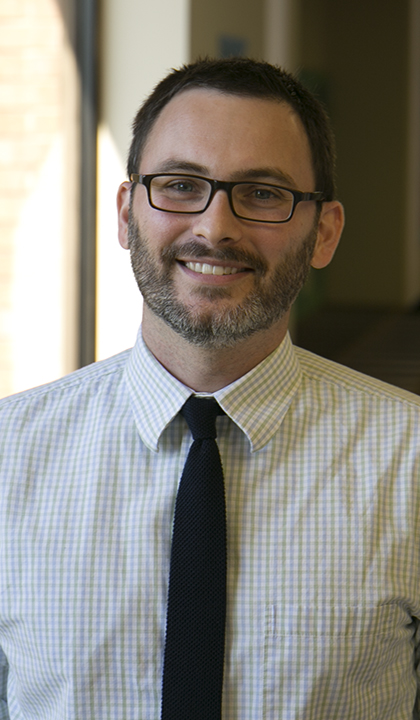
Jesse J. Helton, Ph.D., is an Associate Professor in the School of Social Work at Saint Louis University, where he has been since 2014. His research focuses on child maltreatment, adverse childhood experiences (ACEs), food insecurity, and disability, with notable work published in JAMA Pediatrics , Child Maltreatment , and Preventative Medicine . He holds editorial roles at the Child Maltreatment journal and serves on the Prevention Committee of the American Professional Society on the Abuse of Children. Dr. Helton’s community partnerships address child abuse prevention, food security, and family violence mitigation in collaboration with statewide and local organizations. Education: Ph.D. in Social Work, University of Illinois; M.A. in Social Work, University of New Hampshire. Research Interests: Dr. Helton’s work explores intersections between childhood trauma, socioeconomic factors, and health outcomes. Key themes include the impact of food insecurity on caregiver-child dynamics, disparities in ACEs among marginalized groups, and policy interventions to reduce maltreatment. His studies often employ mixed-methods approaches, combining quantitative data analysis with qualitative insights from affected communities. Awards: Recipient of the 2020 Association of Jesuit Colleges Leadership Institute award, 2018 Outstanding Young Alumni from Eureka College, and a 2014 Innovative Teaching Fellowship from SLU’s Reinert Center. Teaching: Courses include Principles of Statistics and Data Analysis , Research Methods for Diverse Societies , and Science of Helping . He emphasizes evidence-based practices and culturally responsive pedagogy. Labs/Teams: Collaborates with multidisciplinary teams across universities and NGOs, focusing on translational research to inform child welfare policies and community programs.
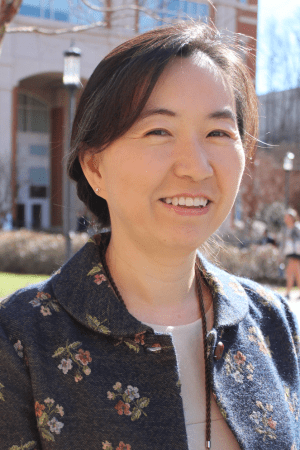
Jae Hoon Lim is a Professor in the Department of Educational Leadership/Educational Research, Measurement, and Evaluation at the Cato College of Education, The University of North Carolina at Charlotte. She serves as Program Director for the Post-Master's Certificate in Qualitative Research and teaches qualitative research methods at both introductory and advanced levels. Ph.D., University of Georgia (2002), Elementary Education with Certificate in Interdisciplinary Qualitative Studies M.A., Korea University (1995), Education with focus on Educational Philosophy B.Ed., Seoul National University of Education (1990), Elementary Education Dr. Lim’s research focuses on intersectionality and equity in STEM education , particularly examining identity construction and systemic barriers faced by underrepresented groups including student veterans, Asian international female students, and African American girls. Her work addresses cultural barriers in educational transitions and critiques social/ethical dimensions of engineering education. Recent publications analyze racial disparities in veteran transitions to STEM careers , gender tightropes in transnational STEM education , and pedagogical strategies for marginalized student groups . Themes across her work include qualitative methodologies, educational equity, and intersectional analyses of race, gender, and class. Principal Investigator for $1.6M NSF grant on veteran education Co-PI for Department of Defense grants supporting student veterans Recipient of UNC Charlotte Faculty Research Grant for women veterans study Dr. Lim actively contributes to academic communities as an Associate Editor for the Journal of Women and Minorities in Science and Engineering and as former President/Chair of the Korean American Educational Researchers Association (KAERA). Her work bridges educational theory with practice through collaborations with institutions like Oxford University Press and Teachers College Press.
Gregory W. Saxton serves as a Senior Lecturer and Director of Undergraduate Studies in the Department of Political Science at Texas Tech University. He teaches undergraduate courses in comparative politics, Latin American politics, and research methods, contributing significantly to the department's academic programs. Dr. Saxton earned his Ph.D. in Political Science from the University of Kentucky in 2019. His doctoral training equipped him with advanced quantitative research skills applied to the study of political behavior in developing regions. His research agenda centers on comparative politics with a regional focus on Latin America and developing countries. Key interests include: The impact of economic and political inequality on political support Representation of the working class in political institutions Corruption perceptions and their effect on democratic evaluations Gender egalitarian attitudes and political behavior Dr. Saxton employs rigorous quantitative methodologies to analyze survey data and understand citizen attitudes toward democratic institutions, particularly in contexts of high inequality. Over the period 2018-2024, Dr. Saxton has published consistently in high-impact journals such as Governance , Political Research Quarterly , and Latin American Politics and Society . His 2023 book with Cambridge University Press, Working Class Inclusion , represents a significant contribution to the field. His work demonstrates a clear trajectory examining how inclusion (or lack thereof) of marginalized groups affects democratic legitimacy. Dr. Saxton has not received any publicly listed scientific awards in the provided materials. In his role as Director of Undergraduate Studies, Dr. Saxton provides academic guidance to Political Science majors and oversees curriculum development. He has supervised undergraduate research and mentored students in the honors program. Although specific grant awards are not detailed, his research productivity indicates successful funding for fieldwork, including extensive data collection in Argentina. Fieldwork in Argentina constitutes a major component of Dr. Saxton's research methodology, allowing him to gather primary data on political attitudes in Latin America. This hands-on approach complements his quantitative analyses of large cross-national datasets.
Ghassan Moussawi is an Associate Professor at the University of Illinois at Urbana-Champaign holding joint appointments across multiple departments. He serves as Director of Graduate Studies in Sociology while maintaining active roles in Gender and Women's Studies, Anthropology, Unit for Criticism and Interpretive Theory, and the Center for South Asian and Middle Eastern Studies. His interdisciplinary scholarship bridges critical social theory with empirical research on marginalized communities. Education: Ph.D., Rutgers University Moussawi's research program centers on transnational gender and sexualities, empire and coloniality, race and racism, queer of color critique, affect theory, and urban studies. His work critically examines how power structures intersect to shape lived experiences, with particular attention to marginalized communities and liberation movements. His theoretical contributions connect postcolonial studies with contemporary social justice frameworks, developing innovative approaches to understanding complex social phenomena through multi-scalar lenses. His recent publications demonstrate a consistent trajectory examining the intersections of race, gender, sexuality, and empire across multiple geographic contexts. Moussawi's scholarship often employs decolonial frameworks that challenge dominant narratives while centering marginalized perspectives. His work spans book-length projects, journal articles, and handbook chapters that collectively advance understanding of power dynamics in contemporary society. Scientific Awards: Social Problems Theory Division's Outstanding Article Award, Society for the Study of Social Problems, 2025 Conrad Humanities Scholar, University of Illinois (2024-29) Sociologists for Women in Society (SWS) Distinguished Feminist Lecturer Award, 2024 Helen Corley Petit Scholar, College of Liberal Arts and Sciences, University of Illinois, 2022-23 Sociology of Sexualities' Early Career Award, American Sociological Association, 2022 National Women's Studies Association's Gloria E. Anzaldúa Book Prize, 2021 Moussawi has received significant recognition for both his research and teaching excellence. His Multiracial Democracy Grant from the University of Illinois (2018) supported important work at the intersection of race and democracy. He has been repeatedly honored as an outstanding teacher, receiving multiple Teachers Ranked as Excellent and Outstanding awards across various semesters. His students benefit from his expertise in courses such as GWS 201: Race, Gender, Power; SOC 396: Sexuality and Society; and SOC 596/GWS 590: Power, Coloniality, Empire, where he integrates cutting-edge research with critical pedagogy. Moussawi maintains an active scholarly presence through his involvement with the Illinois Global Institute's Center for Global Studies and various research clusters within the university. His work connects with broader intellectual communities through his publications in leading journals, participation in interdisciplinary research initiatives, and engagement with multiple academic associations focused on social justice, gender studies, and critical race scholarship.
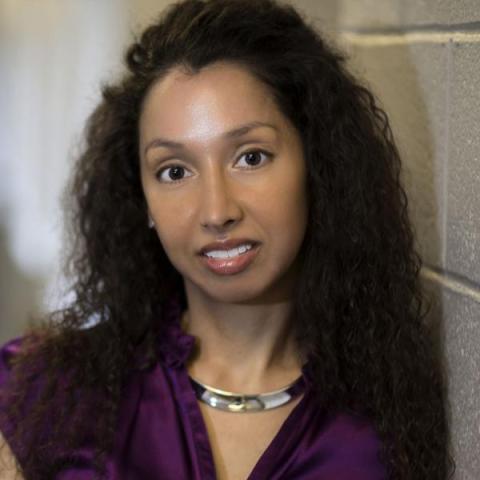
Noelle Hurd is a Professor of Psychology at the University of Virginia and co-Director of Diversity, Equity, and Inclusion Initiatives (co-DDEI). She leads the Promoting Healthy Adolescent Development (PHAD) Lab, focusing on marginalized youth development through intergenerational relationships and systemic oppression disruption. Her research integrates clinical and community psychology to address adolescent development, racial discrimination, and mental health disparities. Key interests include natural mentoring as protective factor, anti-racist frameworks, and leveraging community strengths to counteract systemic barriers for Black and Latinx youth. Her work emphasizes youth agency in social justice movements and resilience through familial and community support networks. Recent publications (2023-2025) reveal concentrated exploration of natural mentoring dynamics across marginalized populations, with methodological diversity spanning qualitative analyses of immigrant youth experiences and longitudinal studies of college adjustment. Recurring themes include anti-immigration policy impacts, youth-led anti-racism initiatives, and the intersection of discrimination with mental health outcomes. Dr. Hurd's scientific contributions have earned significant recognition: William T. Grant Scholar and Spencer/National Academy of Education Postdoctoral Fellow Rising Star Award (Association for Psychological Science, 2015) Outstanding Professor Award (UVA Psychology, 2017) Faculty Excellence in Diversity, Inclusion, and Equity Award (2021) Fellowships in American Psychological Association and Society for Community Research and Action As PHAD Lab director, she mentors emerging researchers in community-engaged scholarship funded by NIH, NSF, William T. Grant Foundation, and Institute of Education Sciences. Her team examines mentoring relationships, discrimination mechanisms, and intervention development for youth thriving in oppressive contexts. The PHAD Lab operates as an interdisciplinary research collective developing evidence-based approaches to dismantle systemic barriers through youth-adult partnerships and natural mentoring frameworks.
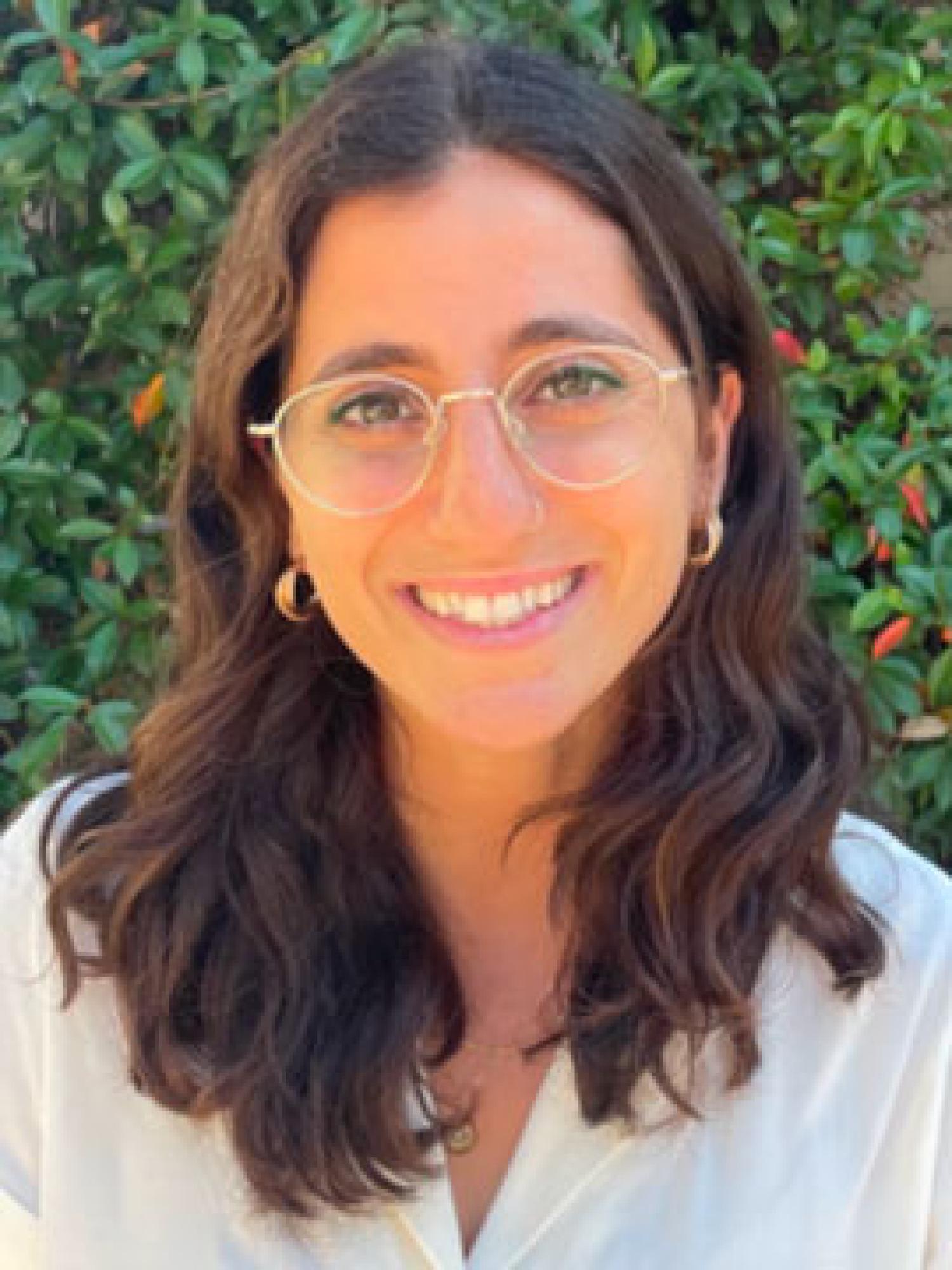
Tamar Kodish is an Assistant Professor in Clinical Psychology and Neuroscience at the University of Colorado. Her research focuses on improving access to mental health services for marginalized youth, particularly youth of color, addressing disparities in depression, anxiety, and suicide prevention. She holds a PhD from the University of California Los Angeles (2022). Her work employs implementation science frameworks to study mental health service delivery in healthcare, educational, and digital contexts. Current projects include a text-messaging intervention pilot for college students of color, in collaboration with UCLA’s ALACRITY Center. Future directions emphasize school-based suicide prevention, peer support models, and engagement strategies for underserved youth. Research themes include racial/ethnic disparities in mental health care, digital mental health innovation, and culturally responsive interventions. Methodological strengths lie in mixed methods and community partnerships. No scientific awards are explicitly listed, though her work aligns with equity-focused initiatives. Advising and grants are not detailed in the provided text.
Karan Singh serves as an Assistant Professor of Operations Research at Carnegie Mellon University's Tepper School of Business, where he develops theoretically rigorous algorithms for machine learning systems with emphasis on reinforcement learning and control theory. His work synthesizes techniques from online learning, optimization, and statistics to address complex interactive learning challenges. His academic journey includes: PhD in Computer Science from Princeton University under Elad Hazan Postdoctoral research at Microsoft Research (Redmond) Bachelor's degree in Computer Science from Indian Institute of Technology (IIT) Kanpur Singh's research program centers on three interconnected pillars: Algorithmic Reductions : Creating efficient methods to solve complex learning problems (e.g., reinforcement learning) using solvers for simpler tasks, yielding breakthroughs in online boosting and RL with concave rewards Nonstochastic Control : Establishing an algorithmic foundation for control theory through provably efficient instance-optimal algorithms that extend online learning to stateful systems Privacy-Preserving Online Learning : Investigating fundamental limits of regret minimization under differential privacy constraints while maintaining performance His approach consistently bridges theoretical computer science and practical control applications. Analysis of his 15 most recent publications reveals a clear evolution toward integrating algorithmic reductions with nonstochastic control frameworks. Recent work (2023-2025) demonstrates increasing focus on sample efficiency in agnostic boosting, privacy-aware optimization without smoothness assumptions, and competitive ratio analysis in online control. A unifying thread is the development of regret-optimal algorithms for linear dynamical systems under adversarial disturbances. His contributions have earned significant recognition: Best Paper Award at OptRL workshop (NeurIPS 2019) Spotlight Prize from New York Academy of Sciences' ML Symposium (2018) Multiple oral presentations at NeurIPS/ICML (acceptance rate Though specific student advisees aren't listed, Singh's extensive publication record with junior co-authors indicates active mentorship. His research has secured substantial support including a US patent (11,138,513 B2) for dynamic learning systems and collaborations through CMU's Machine Learning and Optimization group. Current projects involve interdisciplinary work on differentiable control libraries (Deluca) and medical applications like mechanical ventilation control. Singh leads research within CMU's Machine Learning and Optimization ecosystem, collaborating across computer science and engineering departments. His team develops foundational tools like the Deluca differentiable control library while pursuing real-world applications in healthcare systems, demonstrating strong cross-disciplinary integration.
Ashley D. Farmer is an Associate Professor of History and African and African Diaspora Studies at the University of Texas at Austin, where she teaches courses on African American women's history, the Black Freedom Movement, and Black archival practices. Her scholarly work centers on Black women's intellectual production and activism, particularly during the Black Power era. Her research interests include African American History, African American Women's History, Black Political Thought, Intellectual History, and Radical Politics. Farmer's work challenges traditional narratives that marginalize Black women's contributions to social movements, demonstrating how Black women shaped and transformed political ideologies through intellectual work, community organizing, and cultural production. Farmer's scholarship reveals trends across Black women's intellectual history, showing how they developed intersectional frameworks for understanding oppression and liberation long before the term 'intersectionality' was coined. Her work connects historical activism with contemporary movements, highlighting the continuity of Black women's political thought across generations. Stone Book Award finalist Darlene Clark Hine Award honorable mention Letitia Woods Brown Memorial Book Award honorable mention Radcliffe Institute for Advanced Study fellowship National Endowment for the Humanities fellowship Whiting Foundation fellowship Organization of American Historians Distinguished Lecturer Farmer has advised numerous graduate students and served as a founding leader of the African American Intellectual History Society (AAIHS). She is a regular blogger for Black Perspectives and co-editor of both the Black Power Series (NYU Press) and the Black Women History Series (UNC Press). Her research has been supported by significant grants from the Radcliffe Institute, NEH, and Whiting Foundation. Farmer directs research initiatives through the African American Intellectual History Society and contributes to the Black Perspectives online platform, which serves as a hub for scholars of African American history. Her work connects academic research with public engagement through media appearances on NPR, Al-Jazeera, and in publications like The New York Times and Washington Post.
Ana Paulina Lee is an Assistant Professor of Writing and Digital Humanities in the Comparative Literature, English, and Creative Writing Department at the American University of Paris. She joined AUP in 2025 after teaching Latin American literature and culture at Columbia University for eight years and serving as a Mellon Postdoctoral Fellow at Tulane University. Her interdisciplinary scholarship bridges literature, history, law, and urban studies with particular focus on marginalized narratives in the Americas. Ph.D. from University of Southern California M.A. from New York University B.A. from Binghamton University Professor Lee's research examines how stories—archival, fictional, oral—shape legal imagination, social life, and urban experience in the Americas. She specializes in the intersections of magic, law, and literature in Latin America, with particular focus on Asian and African diasporas in Brazil. Her work traces how narrative functions as both historical record and catalyst for social transformation, exploring themes of slavery, emancipation, colonial legacies, and urban memory. She approaches these topics through interdisciplinary lenses combining literary analysis with histories of labor, migration, and performance. Lee's recent publications reveal a consistent focus on marginalized narratives and their impact on social structures. Her scholarship connects legal history with cultural production, showing how magical thinking and narrative practices shape urban spaces and social relations. Works like 'Urban Sorcery, Segregation, and Spectacle in Twentieth-Century Rio de Janeiro' and 'Black Magic City' demonstrate her innovative approach to understanding the relationship between occult logics and legal frameworks in Brazilian contexts. Her research on diasporic communities, particularly Chinese and Japanese experiences in Latin America, contributes significantly to transnational and comparative race studies. David B. Larson Fellowship in Health and Spirituality, Kluge Center, United States Library of Congress (2025-2026) National Endowment for the Humanities Fellowship (2025) Social Sciences Research Council, Inaugural Recipient of Interdisciplinary Projects in the Social Sciences (2020-2023) Institute for Ideas and Imagination Fellowship, Columbia University in Paris, France (2021-2022) Provost's Tsunoda Senior Fellowship, Visiting Scholar, Waseda University, Tokyo, Japan (2019) Heyman Center Fellow, The Heyman Center for the Humanities, Columbia University (2017-2018) Fulbright, Lisbon, Portugal (2013-2014) Professor Lee's scholarly activities have been generously supported by major research grants from the National Endowment for the Humanities, the Social Sciences Research Council, and the Library of Congress. Her work demonstrates a commitment to interdisciplinary approaches that bridge humanities and social sciences, particularly through projects examining intersections of race, migration, and cultural production in the Americas. Her publication 'Socially Engaged Oral History Pedagogy Amid the COVID-19 Pandemic' indicates a strong commitment to innovative teaching methods and community-based research. While specific details about current advisees aren't provided, her research program suggests engagement with graduate students interested in diaspora studies, urban history, and literary-cultural analysis. Though not explicitly mentioned in the available information, Professor Lee's research on urban spaces, magic, and law in Brazil likely involves collaborative work with scholars across disciplines. Her participation in centers like the Institute for Ideas and Imagination at Columbia University suggests engagement with interdisciplinary research communities focused on global cultural production and social transformation. Her work contributes to ongoing conversations about how narrative practices shape legal frameworks and social structures in the Americas, particularly regarding racial formation and diasporic experiences.
Geoffrey Cohen is the James G. March Professor of Organizational Studies in Education and Business, and Professor of Psychology at Stanford University's Graduate School of Education. He holds a courtesy appointment in Organizational Behavior at the Graduate School of Business. His research focuses on identity, belonging, and interventions to address social inequities in education, healthcare, and workplace settings. Cohen earned his Ph.D. in Psychology from Stanford University (1998) and a B.A. in Psychology from Cornell University. Education: Ph.D., Stanford University, Psychology (1998) Bachelor of Arts, Cornell University, Psychology Research Interests: Cohen investigates how identity threats and belonging shape behavior, particularly for marginalized groups. His work emphasizes scalable interventions to improve academic outcomes, reduce disciplinary disparities, and foster inclusive environments. He is author of Belonging: The Science of Creating Connection and Bridging Divides (2022), which explores belonging's role in education, healthcare, and societal contexts. Key Contributions: Cohen's interventions, such as social-belonging exercises and self-affirmation techniques, have demonstrated long-term impacts on academic success, mental health, and social cohesion. His studies span disciplines including education, medicine, and public health, with findings published in top journals like Science Advances and Journal of Personality and Social Psychology . Grants & Teaching: Cohen teaches courses on social psychology, intervention design, and belonging. He mentors doctoral students and postdocs investigating identity processes and scalable solutions to social problems. His lab collaborates with schools and healthcare systems to implement evidence-based strategies. Labs/Teams: Cohen leads a research group at Stanford's Graduate School of Education, affiliated with the Institute for Human-Centered Artificial Intelligence (HAI) and the Wu Tsai Human Performance Alliance. His work bridges theory and practice, aiming to create real-world impact through psychologically informed interventions.
Dr. Amy Damashek serves as Professor in the Department of Psychology at Western Michigan University, teaching undergraduate and graduate courses while mentoring Clinical Psychology doctoral students. She chairs the department's Diversity, Equity, and Inclusion Committee and maintains an active research program focused on vulnerable populations. Education: Ph.D. in Psychology, University of Missouri-Columbia (2007) Postdoctoral Fellowship, University of Oklahoma Health Sciences Center (2009) Research Focus: Her work centers on preventing child maltreatment and unintentional injuries among at-risk youth, with specialized expertise in infant sleep-related deaths and health disparities . She develops culturally responsive parenting interventions for low-income and Spanish-speaking families, emphasizing community-based solutions through home visiting programs. Publication Trends: Recent work (2020-2023) demonstrates consistent focus on pandemic adaptation of family services, safe sleep practices in marginalized communities, and digital intervention strategies. Her mixed-methods approach bridges clinical psychology with public health, prioritizing implementation in real-world settings. Scientific Recognition: Fellow of the American Psychological Association Former President of APA Division 37 (Society for Child and Family Policy and Practice) Grants & Mentoring: Secured federal funding for child injury prevention in underserved communities. Mentors Clinical Psychology doctoral students with emphasis on culturally competent practice, accepting new graduate students for Fall 2025. Her federally funded work directly informs evidence-based home visiting protocols. Research Ecosystem: Collaborates extensively with community health workers, home visiting agencies, and pediatric care providers to implement and evaluate interventions addressing structural barriers in family support systems.
Professor Daniel McCarthy is a Professor in Criminology at the University of Surrey's Department of Sociology, serving as Co-Director of the Centre for Criminology and Director of Impact. He holds a BSc, MSc, and PhD. His research focuses on policing, inter-agency collaboration, and the impact of incarceration on families, particularly mothers of incarcerated youth. He explores cross-national public attitudes toward policing and punishment, including death penalty perspectives. Research interests include penal legitimacy, prisoner-family relationships, and the societal effects of imprisonment. His work emphasizes marginalized populations, such as women in prisons and families of incarcerated individuals. He has supervised PhD students on topics like prison-family dynamics and youth justice systems. McCarthy’s publications span academic books, articles, and policy-oriented research, with recent work addressing food policies in women’s prisons and post-release desistance. Teaching includes courses on youth crime, criminal investigation, and law-society relations at both undergraduate and master’s levels. He collaborates with initiatives like the Doing Porridge project, which amplifies women’s voices in criminal justice contexts. His research bridges theoretical criminology with practical policy implications, emphasizing equity and systemic reform.
Professor Wendy Sigle is a Professor of Gender and Family Studies at the Department of Gender Studies, London School of Economics and Political Science. She is currently on sabbatical leave for 2024-25. Her expertise includes feminist quantitative research, stratification, family policy analysis, and critical approaches to demographic data interpretation. Her research focuses on interrogating methodological assumptions in quantitative studies, particularly how demographic indicators like ethnicity or relationship status can marginalize minority groups. She also examines the validity of development indicators such as gender equality metrics in global policy frameworks. As a PhD supervisor, she supports students in Zuzana Dancikova, Ross Barker (Methodology), and Sophie Legros (International Development). Her work bridges feminist economics, population studies, and policy analysis.
Richard Eberhardt serves as Program Manager for the MIT Game Lab and instructor for MIT Game Lab classes at the Massachusetts Institute of Technology, where he aligns research projects with staff, equipment, and funding while mentoring student game development initiatives. His operational leadership supports the lab's mission to advance game literacy through interdisciplinary collaboration. His academic credentials include: Bachelor of Arts from the College of William & Mary Serious Games MA Certificate from Michigan State University Professional certifications: Certified Scrum Master PMI Agile Certified Practitioner Eberhardt's research investigates historical representation in games, analyzing how mechanics model historical systems and which narratives are amplified or marginalized in gaming communities. His scholarship spans serious games for mental health awareness, educational applications of VR/AR technologies, and inclusive game jam methodologies, consistently addressing public literacies through civic systems and emotional intelligence frameworks. Analysis of his 2013-2023 publications reveals sustained focus on game-based educational tools across STEM and humanities domains. His work pioneers VR simulations for photonics education, examines historical accuracy in commercial games, and develops inclusive frameworks for collaborative design events. This output demonstrates strategic integration of game mechanics with learning objectives while addressing representation gaps in historical gaming. Notable recognition includes an award for elude , the depression awareness game developed in 2010 for patients' support networks. As a mentor, Eberhardt directs student projects like elude and hosts game jams fostering community collaboration. His Agile-certified project management approach facilitates resource allocation across educational initiatives, though specific grant details remain undisclosed in available materials. The MIT Game Lab operates as his primary research ecosystem, connecting students, faculty, and community partners to explore games' transformative potential in education and social contexts through its Civic Systems, Media & Emotional Intelligence pillar.
Nathaly Carolina Pinto Torres is a Doctoral Researcher at Aalto University's Department of Design, working on critical design interventions for marginalized communities. Since 2020, she has led the "Emergencia de Educación en la Amazonía Ecuatoriana" project, collaborating with indigenous students and Confeniae to develop pictographic communication systems challenging social exclusion. Her research spans: Participatory design with indigenous communities Gender justice in education during crises Epistemic justice in plurinational contexts Visual resistance strategies in Amazonian regions Postcolonial educational frameworks Design for socio-environmental transformation Publication trends show focus on: Visual communication systems for marginalized groups Crisis-driven educational design Decolonial methodologies Intersectional analysis of exclusion Epistemic justice in academia Collective resilience building Scientific recognition includes: Best Demo Award (2021) SENESCYT International Graduate Scholarship (2019) Netherlands Fellowship Programmes (NFP) (2010)