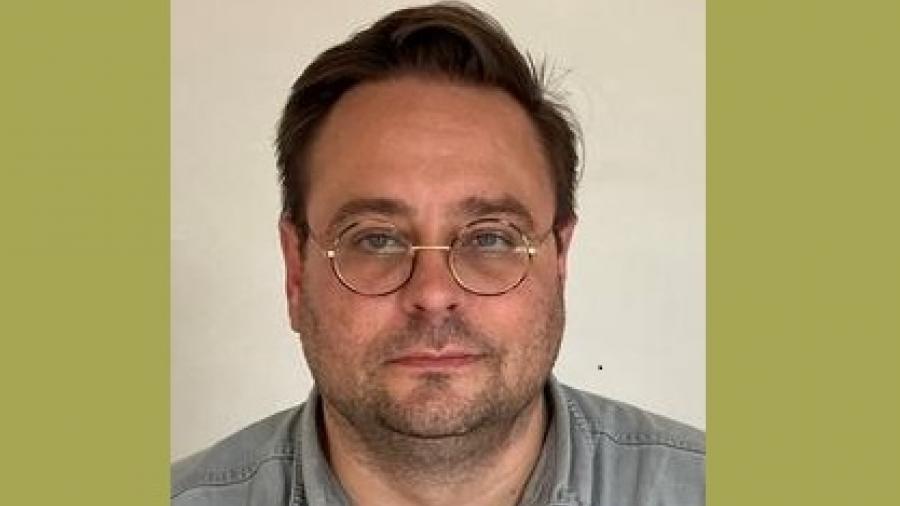
Jacob Eyferth is an Associate Professor at the University of Chicago, jointly appointed in the Department of East Asian Languages and Civilizations, the Department of History, and the College. His research focuses on the social and cultural history of twentieth-century China, particularly rural communities, gender dynamics, and the intersection of technology and everyday life. Key research themes include the impact of industrialization, collectivization, and revolution on non-elite populations, with an emphasis on rural women's labor and cultural resistance. His current project explores cotton production, clothing, and gender during China's socialist era. Eating Rice from Bamboo Roots (2009) How China Works (2006) Rural Development in Transitional China (2004) He received the 2011 Joseph Levenson Prize for his first book. Eyferth has taught courses on topics such as class inequality, everyday life under socialism, and revolutionary China, and has held postdoctoral fellowships at Oxford, Harvard, and Rutgers.
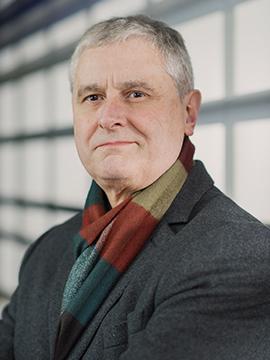
Sigrid Schmalzer is a Professor of History at the University of Massachusetts Amherst, specializing in the history of science and modern China. She holds a Ph.D. in History and Science Studies from the University of California, San Diego (2004). Her research bridges the social, cultural, and political dimensions of science in China, with a focus on the intersections of agriculture, activism, and revolutionary movements. Schmalzer is the author of *Red Revolution, Green Revolution: Scientific Farming in Socialist China* (2016), winner of the Joseph Levenson Book Prize, and *The People's Peking Man: Popular Science and Human Identity in Twentieth-Century China* (2008), recipient of the Allan Sharlin Award. Her current projects include a book on agricultural heritage in the People’s Republic of China and leadership roles in organizations like the Critical China Scholars and Science for the People. She co-edits the *Activist Studies of Science and Technology* series for UMass Press, emphasizing socially engaged scholarship. Schmalzer also serves as Co-President of the MSP faculty union at UMass Amherst. Research interests span the history of science activism, transnational movements, and the legacy of Maoist science. Notable awards include the Freeman Book Award (2018) for her children’s book *Moth and Wasp, Soil and Ocean*, which integrates science education with historical narratives. Her work often critiques capitalist and authoritarian structures while advocating for science as a tool for justice and sustainability. Recent publications explore themes like agroecology, science policy, and the global dimensions of China’s scientific history. She teaches courses on modern China, science in society, and radical science movements, blending interdisciplinary approaches to engage students in critical analysis of historical and contemporary issues.
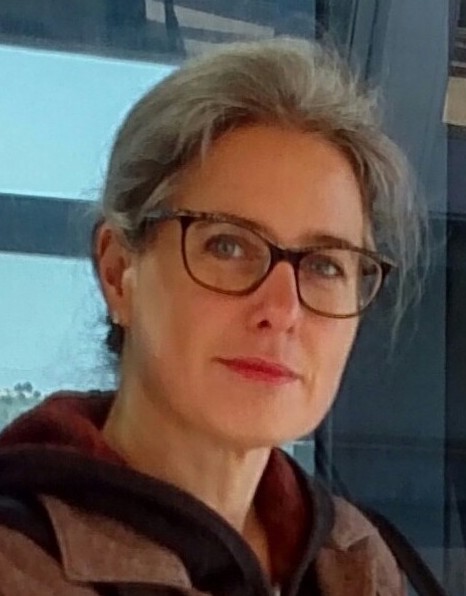
Prof. Dr. Barbara Mittler is Professor of Sinology at Heidelberg University and founding co-director of the Heidelberg Centre for Transcultural Studies (CATS) and the Cluster of Excellence 'Asia and Europe in a Global Context.' Her research explores Chinese cultural policy, print media, musicology, visual culture, and transcultural studies. Mittler's scholarly contributions include groundbreaking work on Cultural Revolution culture, early Chinese print media (particularly women's magazines), and the transcultural flows of cultural production. Her current projects examine Mao as a global icon and comparative studies of Asian 'fathers of the nation.' Her publication record demonstrates consistent focus on cultural transmission mechanisms, with recent research developing transcultural frameworks for understanding cultural exchange and historical analysis. Publications reflect an interdisciplinary approach combining visual analysis, media studies, and historical methodology. Mittler has received numerous honors including the Fairbank Prize, Heinz-Maier-Leibnitz Prize, and memberships in the Leopoldina and Heidelberg Academy of Sciences. She leads major initiatives like the China-Schul-Akademie developing educational materials about China for German schools.
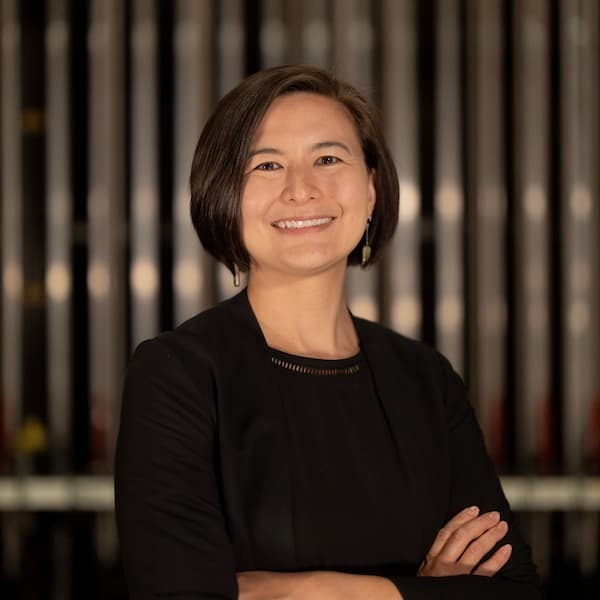
Patricia M. Thornton is an Associate Professor in the Department of Politics and International Relations (DPIR) at the University of Oxford and a Fellow and Tutor in Politics at Merton College. She specializes in Chinese politics, focusing on state-society interactions, authoritarian governance, and the legacies of the Cultural Revolution. Her research explores institutions, practices, and networks shaping governance in China, including works like *Disciplining the State* (2007) and *Red Shadows* (2017). She has held leadership roles at Oxford, including Chair of the Sub-Faculty of Politics and International Relations, and served on editorial boards such as *The China Quarterly*. Her work addresses contemporary challenges like authoritarian resilience, social control mechanisms, and political dissent. Research Interests: - State formation and governance in China - Authoritarian political systems - Memory and legacies of the Cultural Revolution - Party-state dynamics and social movements - Comparative political institutions Publications highlight themes like economic governance, social movements, and policy implementation. She has supervised numerous PhD students, many now leading academics in Asia-Pacific studies. Her contributions to understanding China’s political evolution are complemented by media commentary on current events, including analysis of Xi Jinping’s governance strategies and societal trends. Awards: Merton College Fellowship Key Projects: Edited *To Govern China* (2017) and *Red Shadows* (2017)
William Hurst is the Chong Hua Professor of Chinese Development in the Department of Politics and International Studies (POLIS) at the University of Cambridge . He is a Governing Body Fellow at Wolfson College and is affiliated with the Centre for Development Studies and the Centre for Geopolitics . Hurst has been a faculty member at the University of Cambridge since 2013. Prior to this, he held positions as a postdoctoral fellow at the University of Oxford and as an assistant professor at the Universities of Texas and Toronto. His research spans four major themes: labor politics , contentious politics , political economy , and the politics of law and legal institutions , with a regional focus on China and Indonesia . He is currently completing a book manuscript on the comparative politics of law and legal institutions in China and Indonesia since 1949, based on over a year of fieldwork in each country since 2006. Hurst’s publications reflect a deep engagement with the evolution of Chinese and Indonesian governance, labor rights, urban development, and legal reform. His work critically examines how authoritarian regimes manage legal institutions, labor unrest, and urban transformation, offering comparative insights into state-society relations in East and Southeast Asia. While no specific students or awards are listed in the provided text, Hurst’s academic trajectory and publication record indicate a strong commitment to both research and pedagogy in development studies and comparative politics.
Timothy Cheek is a Professor at the University of British Columbia with dual appointments in the School of Public Policy and Global Affairs and the Department of History. He holds the prestigious Louis Cha Chair in Chinese Research and serves as Co-Director of the Centre for Chinese Research at the Institute of Asian Research (IAR). Having joined UBC in 2002, Professor Cheek is a leading scholar of modern Chinese history with expertise in Chinese intellectual history and the Chinese Communist Party. Professor Cheek's educational background includes: Ph.D. in History and East Asian Languages from Harvard University (1986) M.A. in History from The University of Virginia (1980) B.A. in Asian Studies (Honours) from Australian National University (1978) His research focuses on three interconnected areas of modern Chinese history: the history of the Chinese Communist Party within China's twentieth-century revolutionary context; contemporary Chinese thought and society, particularly the role of intellectuals in public life; and Mao Zedong studies. Professor Cheek leads the "Revisiting the Revolution" collaborative translation project, bringing Chinese scholarship on revolutionary history to English-speaking audiences. He is also working on a major project mapping Chinese statecraft from the Ming Dynasty to the present. Professor Cheek's scholarly output reveals consistent engagement with Chinese intellectual history and political development. His recent work shows increasing focus on contemporary China under Xi Jinping, examining ideological governance and the reassertion of party control. He maintains strong interest in the historical roots of current political developments, particularly through the lens of Mao-era political practices and their legacy. Among his notable recognitions: Fellow of the Royal Society of Canada (RSC) in the Academy of Arts and Humanities (2023) Professor Cheek actively supervises graduate students, co-mentoring MA and PhD candidates in modern Chinese history with Dr. Jeremy Brown of Simon Fraser University. His research has been supported by multiple SSHRC grants, including a major 2014-2019 project on "Reading and Writing the Chinese Dream" examining public intellectuals in contemporary China. As Co-Director of the Centre for Chinese Research at UBC's Institute of Asian Research, Professor Cheek leads one of Canada's premier institutions for China studies, facilitating research collaborations between Canadian and Chinese scholars and supporting the "Revisiting the Revolution" translation project that brings Chinese historical scholarship to international audiences.
University of North Carolina at Chapel HillUnited States
Lauren Leve is an Associate Professor of Religious Studies and Director of Graduate Studies at the University of North Carolina at Chapel Hill. Her academic career centers on the intersection of religion, culture, and changing forms of life in contemporary Nepal and South Asia. Trained as an anthropologist, she examines how religious practices and subjectivities interact with broader political, economic, and social trends, particularly those associated with neoliberal globalization. Ph.D., Princeton University B.A., University of Chicago A.A., Simon's Rock of Bard College Professor Leve's research interests span ethnographic methods, the ethnography of religion, personhood, subjectivity, the anthropology of ethics, democracy, law, violence, international development, globalism, postcoloniality, and the religious landscapes of Nepal, South Asia, and Buddhist Southeast Asia. Her work explores how religious practices mediate and are mediated by political and economic transformations, with particular attention to how human agents use religion to reflect on their world and aspirations. Her scholarly output reveals a consistent focus on Theravada Buddhism's revival in Nepal, particularly among Newar communities, and how this religious movement intersects with democratic reforms, economic liberalization, and changing forms of personhood. Her publications demonstrate expertise in both ethnographic methodology and theoretical contributions to understanding modern religious subjectivity, with a special emphasis on how global processes are reflected and reflected upon by Nepali Buddhists. James Fisher Prize for First Books on the Himalayan Region (2018) UNC FIRE grant (2016) Carolina Women's Center, Faculty Fellow (2013-14) Institute for Arts and Humanities, Faculty Fellow (2007) Harry Frank Guggenheim Foundation, Research Award (2004) Program in Agrarian Studies, Yale University, Program Fellow (2004-2005) As Director of Graduate Studies in Religious Studies, Professor Leve mentors graduate students and teaches courses on ethnographic methodologies, Theravada Buddhism, Himalayan Buddhism, and topical theories reflecting her research interests. She has consulted on research studies in international development, focusing on women's literacy and empowerment, and provides expert witness services in US courts. Her current research projects explore the globalization of Buddhist meditation through the Goenka tradition and follow rural women's experiences through development projects, Maoist insurrection, and conversion to Christianity.
Christopher A. Reed is an Associate Professor at The Ohio State University’s Department of History, specializing in modern Chinese history (18th-20th centuries) with a focus on print culture, media, and state power. He holds a PhD from UC Berkeley and has taught at institutions including Reed College, University of Oklahoma, and University of San Francisco. Education: PhD, UC Berkeley C Phil, UC Berkeley M Phil, University of Glasgow BA (Jt Hons), McGill University Research Interests: Modern Chinese media and print culture Historical intersections of technology, business, and politics Comparative empires and state power dynamics Maoist propaganda art and textual influence Historical publishing practices in East Asia His work notably includes Gutenberg in Shanghai (2004), awarded the ICAS Humanities Book Prize, and co-edited volumes like From Woodblocks to the Internet (2010). Recent publications analyze Maoist-era art, Chiang Kai-shek’s China’s Destiny , and KMT propaganda. Awards: ICAS Humanities Book Prize (2003–05) Three Fulbright Awards Hulsewe-Wasniewski Lecturer (Leiden University, 2006) Editorial Roles: Chief Editor, Twentieth-Century China (2004–2009) Editorial Board Member, Book History (Asia section) Editorial Board Member, Studies on Asia He has held visiting roles at Victoria University (New Zealand) and delivered lectures at institutions including the National Library of New Zealand. His research spans over 5 years lived in China/Taiwan, with fieldwork across Asia, Europe, and the South Pacific.
Tarryn Chun is an Associate Professor in the Department of Film, Television, and Theatre at the University of Notre Dame, with a concurrent appointment in the Department of East Asian Languages and Cultures. She is also a Faculty Fellow at the Liu Institute for Asia and Asian Studies. Her research focuses on modern and contemporary Chinese theatre, with an emphasis on intersections between performance, technology, and media. She holds a Ph.D. from Harvard University and completed a postdoctoral fellowship at the University of Michigan’s Lieberthal-Rogel Center for Chinese Studies. Her work explores topics such as technological modernization in Chinese theatre, intercultural performance, and the role of digital media in contemporary performance. Key publications include Revolutionary Stagecraft: Theatre, Technology, and Politics in Modern China (2024) and articles on topics like digitally enhanced Chinese performance and Mao-era theatrical practices. She serves on the boards of the Association for Asian Performance and the Association for Chinese and Comparative Literature, and is the Online Editor for Theatre Journal . Her research has been supported by awards such as the 2021 National Endowment for the Humanities Fellowship. She teaches courses on global theatre history, Asian theatre, and intercultural performance.
Xiaomei Chen is a Professor of Chinese Literature at the University of California, Davis, affiliated with the Comparative Literature, Performance Studies, Cultural Studies, and CATS (Cinematic and Technological Studies) programs. Her research focuses on modern Chinese literature, theater, cultural studies, and performance studies, with a particular emphasis on revolutionary propaganda, postsocialist cultural reconfigurations, and diasporic narratives. Education: She holds a Ph.D. in Comparative Literature from Indiana University, an M.A. in English Literature from Brigham Young University, and a B.A. in English (equivalent) from Beijing Institute of Foreign Languages. Research Interests : Modern Chinese literature and drama Revolutionary theater and propaganda Women’s literature and feminist critique Cross-cultural performance and comparative literature Postsocialist cultural studies Publications include seminal works such as Staging Chinese Revolution: Theater, Film and the Afterlives of Propaganda (2016), Occidentalism: A Theory of Counter-discourse in Post-Mao China (1995), and edited volumes on modern Chinese drama and cultural studies. Her articles critically examine themes like revolutionary narratives, diasporic identities, and the intersection of theater with political discourse. She has taught courses on modern Chinese literature, film, and drama in English translation, emphasizing cultural analysis and transnational perspectives. Her work bridges historical and contemporary studies, offering insights into China’s evolving cultural landscape.
Jeremy Brown is a Professor in the Department of History at Simon Fraser University. He specializes in the social and political history of the People’s Republic of China, with a focus on urban-rural dynamics, Maoist-era policies, and the Tiananmen protests. His research integrates oral histories and grassroots sources to challenge state-centric narratives. Brown earned his PhD from the University of California, San Diego (2008), and has held editorial roles for Cambridge Studies in the History of the People’s Republic of China (2014–2021). He is a recipient of the SFU Excellence in Teaching Award (2017) and multiple SSHRC grants. His books include June Fourth: The Tiananmen Protests and Beijing Massacre of 1989 (2021) and Maoism at the Grassroots (2015). He currently supervises graduate students in Asian history and oral history. Education: PhD in History, UC San Diego (2008); Language training at Harbin Institute of Technology (1997) and Tsinghua University (2000–2001). Key Research Themes: Maoist ideology, urban-rural divides, Cultural Revolution, memory studies, and political repression. Grants: SSHRC Standard Research Grant (2010–2013), Henry Luce Foundation Fellowship (2014–2015). His work often examines everyday life under Maoism, including resistance to state policies, grassroots agency, and the legacies of trauma in modern China. Brown is also active in teaching innovation, such as using Wikipedia to engage students with contested historical events.
Andrew G. Walder is the Denise O'Leary and Kent Thiry Professor of the Humanities and Sciences at Stanford University, with a courtesy appointment in Political Science. He is a Senior Fellow at the Freeman Spogli Institute for International Studies (FSI) and former Director of the Walter H. Shorenstein Asia-Pacific Research Center. His research focuses on political stability, conflict, and transformation in communist regimes, particularly China. Walder holds a Ph.D. in Sociology from the University of Michigan (1981) and an A.B. in Political Science from Johns Hopkins University (1975). He has held leadership roles, including Chair of Stanford's Sociology Department and Director of Hong Kong University of Science and Technology's Division of Social Sciences (1995–1997). His work explores China’s Cultural Revolution, post-Mao economic reforms, and corporate development. Awards include Guggenheim and National Science Foundation fellowships, and he is a member of the American Academy of Arts and Sciences. Education: Ph.D., Sociology, University of Michigan (1981) A.B., Political Science, Johns Hopkins University (1975) Walder’s research investigates China’s political economy, focusing on social stratification, corporate evolution, and the Maoist legacy. His books include Fractured Rebellion (2009), China Under Mao (2015), and Agents of Disorder (2019). He has advised on policy in Hong Kong and contributed to global studies on transitional economies. Currently, his research examines China’s large corporations and post-Mao political trajectories. His awards include ASA, AAS, and SSH Association prizes for scholarly contributions. He has held visiting roles at the Stanford Center at Peking University and chairs academic panels in Hong Kong. Walder’s interdisciplinary work bridges sociology, political science, and history, emphasizing China’s complex transitions from state socialism to modern capitalism.
Yvon Wang is an Associate Professor at the Department of History , University of Toronto (St. George Campus), specializing in East Asian history with a focus on gender, sexuality, and everyday life. He coordinates the Chinese History Grad Group and directs the Faculty & Postdoc Writing Workshop . His research spans imperial to modern China, including material culture, suicide studies, and Cold War socio-political dynamics. PhD and MA from Stanford University AB from Princeton University Current projects include SSHRC-funded studies on suicide in Chinese history and global responses to the Sinosphere during the Great Leap Forward . His publications examine topics like pornography in modern China, masculinities in early People's Republic media, and legal constructions of sexuality in Beijing. Recent articles include: Gray Markets in the Great Leap (2022) exploring economic deviance in 1950s Shandong Everyday Lives in China's Cold War Military-Industrial Complex (2022) analyzing worker experiences in Shanghai Reinventing Licentiousness (2021) tracing pornography's historical trajectory Scientific honors include SSHRC-funded research projects . He maintains affiliations with the Department of East Asian Studies and teaches courses covering Chinese history from prehistory to the 21st century.
University of California , Santa Barbara (UCSB)United States
Xiaowei Zheng is an Associate Professor in the Department of History at the University of California, Santa Barbara. Specializing in Modern China, their research focuses on Qing Dynasty local history, early republican political culture, popular nationalism, and comparative revolutions. They hold a Ph.D. from UC San Diego (2009) and have been recognized with numerous awards including the Regents Humanities Faculty Fellowship (2021) and Hellman Family Faculty Fund (2011). Research interests include constitutionalism, democratization processes, and the historiography of revolutions. Current projects explore 20th-century Chinese political discourse on sovereignty and rights. Recent publications include The Politics of Rights and the 1911 Revolution in China (2018) and articles on Liang Qichao’s political theory and Sichuan’s constitutional debates. Teaches courses like History of China , Modern Chinese Thought , and Comparative Revolutions . Advisor to three graduate students: Gaoziyan Cui, Yu Liu, and Alexandra Noi. Hosted a podcast episode discussing Nakae Chōmin’s influence on Chinese reformers. Active in interdisciplinary initiatives, Zheng emphasizes comparative frameworks and digital humanities in training students for holistic historical analysis.
Lingchei Letty Chen is the Chair of East Asian Languages and Cultures and a Professor of Modern Chinese Language and Literature at Washington University. She also holds an Affiliate Professorship in Comparative Literature. Her research focuses on identity politics, memory studies, and postcolonial theory, with a specialization in modern Chinese literature and cultures across Mainland China, Taiwan, Hong Kong, and the diaspora. She earned her PhD from Columbia University. Her work interrogates the dynamics of cultural identity, globalization, and trauma through analyses of literary narratives. Notable publications include Writing Chinese: Reshaping Chinese Cultural Identity (2006) and The Great Leap Backward: Forgetting and Representing the Mao Years (2020), which explore memory and historical trauma in Chinese contexts. Her current research project examines Nationalist cultural policies and literary production in 1950s–60s Taiwan during the Cold War, extending her focus on authoritarian regimes and memory politics. She teaches courses on modern Chinese literature, diaspora studies, and comparative literature. Her academic approach emphasizes the political dimensions of literature, particularly how marginalized groups negotiate identity under state and imperial pressures. She advocates for an ethical, humanistic scholarship that confronts historical silences and trauma.