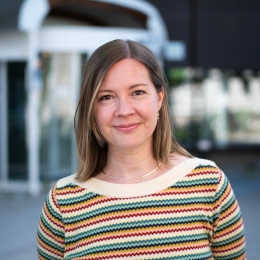
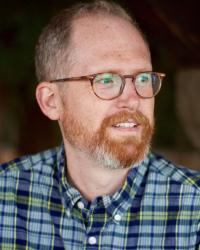
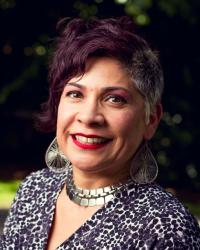
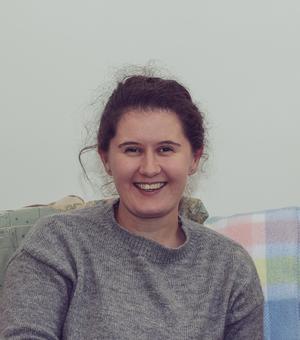
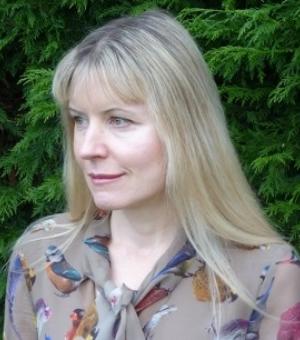
Dr. Barbara Zipser is a Senior Lecturer in the Department of History at Royal Holloway, University of London. She specializes in the history of ancient and medieval medicine, focusing on textual criticism, manuscript transmission, and vernacular Greek. Her research includes a collaborative Wellcome Trust-funded project with institutions across Europe and Israel to develop methodologies for identifying medicinal plants and minerals in historical texts. Her expertise spans Latin, Greek, and Arabic medical lexicography, with a particular emphasis on the intersection of digital humanities and medical history. She curates Simon Online , a multilingual medical dictionary, and has contributed to public engagement through media appearances on cases like the Ursula Herrmann ransom note analysis. Education: PhD in Classics (University of Heidelberg), Latin and Greek training with focus on ancient philosophy Awards: Wellcome Trust University Award Her teaching includes modules on ancient medicine, science history, and classical innovation studies. Collaborations with Kew Gardens, Zurich University of Applied Sciences, and Haifa University highlight her interdisciplinary approach.
Dr. Jamie Bryant is a behavioral scientist and Research Fellow at the University of Newcastle within the School of Medicine and Public Health . Her work focuses on Indigenous health , cancer prevention (particularly smoking and alcohol use), and dementia research . She has received over $9 million in competitive research funding and published more than 151 peer-reviewed manuscripts. PhD in Behavioral Science (University of Newcastle) Bachelor of Psychology (Honours) (University of Newcastle) Her research spans multiple disciplines including public health ethics , advance care planning , and health systems improvement . Recent studies examine Indigenous health research governance , cultural safety in healthcare , and smoking cessation interventions . She collaborates extensively with Aboriginal community organizations and healthcare providers. Key scientific awards include the NHMRC-ARC Dementia Research Development Fellowship (2017-2021) and an Australian Postdoctoral (Industry) Fellowship . Her work addresses critical gaps in Indigenous health outcomes , health service quality improvement , and behavioral interventions for vulnerable populations.
Dr Christina Clarke is an Honorary Lecturer in the Centre for Art History & Art Theory within the Australian National University's College of Arts & Social Sciences. With over two decades of experience as both an art historian and practicing metalsmith, she maintains active research and teaching roles at ANU, evidenced by recent publications through 2023 and teaching awards in 2020-2021. Her academic journey began with dual undergraduate degrees in Classical Studies and Visual Arts (specializing in gold-and silversmithing) at ANU, followed by advanced degrees including a PhD in Art History. Clarke's research centers on historical and archaeological metal material culture, spanning from the dawn of metallurgy to the early twentieth century. Her interdisciplinary methodology combines artisanal practice, archaeological analysis, archival research, and digital humanities approaches. Key research areas include Bronze Age Greek metal vessels, Greco-Roman and Pre-Columbian metalworking, Louis XIV's silver furniture production, Enlightenment French metal industries, nineteenth-century Australian silverware, and Arts and Crafts movement metalwork. Her work demonstrates particular strength in reconstructing historical fabrication processes through both theoretical and practical investigation. Her publication record shows consistent scholarly output with 13 research items documented between 2013-2021, including books, articles, digital editions, and conference papers. The research trajectory reveals deepening specialization in Louis XIV-era metalwork and continued engagement with Minoan metallurgy. Recent work increasingly incorporates digital humanities methodologies, exemplified by the collaborative digital critical edition of Jean-Benjamin de Laborde's songbook. 2021 ANU Vice-Chancellor's Award for Teaching Excellence 2020 ANU College of Arts and Social Sciences Dean's Commendation for Excellence in Teaching Endeavour Research Fellow at Voltaire Foundation, University of Oxford (2018) Clarke maintains significant engagement with the GLAM sector (galleries, libraries, archives, museums), having worked at the National Gallery of Australia in archival, curatorial, and conservation roles. She currently serves as Project Administrator for the Australian Research Council Discovery Project 'Performing Transdisciplinarity' and contributes to community education through silver jewelry courses. Her research network demonstrates strong international collaboration, particularly with European institutions focused on early modern material culture.
Dorothea Reule is a doctoral student and researcher at the Philipps University of Marburg’s Center for Near and Middle Eastern Studies (CNMS), Department of Semitic Studies. Since 2017, she has pursued her PhD in Semitic Studies, while serving as a scientific collaborator in the Beta maṣāḥəft project at the University of Hamburg since 2016. Her work bridges Ethiopic manuscript studies, digital humanities, and cross-cultural textual preservation. Current affiliations: Philipps University Marburg (CNMS, Semitic Studies), University of Hamburg (Beta maṣāḥəft project) Education: M.A. (2015) and B.A. (2012) in Semitic Studies from Philipps University Marburg and Freie Universität Berlin Her research focuses on cataloging and encoding Ethiopic scrolls, analyzing manuscript cultures between Egypt and Ethiopia, and advancing digital archiving standards for historical texts. She has led workshops on accessible presentations and contributed to international collaborations in manuscript studies. Notable publications include work on Ethiopic miracle texts, Dayr as-Suryān manuscripts, and comparative manuscript analysis. She has presented at institutions including the Société d’archéologie copte, University of Heidelberg, and Addis Ababa University.
Alessandro Franzoi is a Senior Researcher at the Department of Humanities , Ca' Foscari University of Venice. He holds the scientific sector LATIN LANGUAGE AND LITERATURE [L-FIL-LET/04] and maintains an active presence in classical Latin scholarship. Research Interests encompass Latin literature, particularly Elegiac poetry of Late Antiquity Textual criticism and manuscript studies Intertextuality in Roman and post-Roman works Epigraphy and cultural aspects of Latin texts His publication trends focus on Maximian and Sidonius Apollinaris studies Digital philology applications Philological commentaries on classical texts Historical and literary analysis of late Latin poetry
Inka Timosaari is a Senior Lecturer at the Department of History, Stockholm University. Her expertise lies in medieval history, focusing on social and religious structures, manuscript culture, and digital methodologies in historical research. She teaches courses such as HI1011 World History , HI2001 Advanced Historical Research , and specialized seminars on Medieval Research and Palaeography . Key research areas: medieval social stratification, religious-political discourse, digital humanities, and manuscript digitization Supervises MA and C-level theses on medieval themes, particularly social/religious history and manuscript studies Her 2019 workshop at Malmö University on Digital History fostered inter-Scandinavian collaboration, exploring ontologies of digital media and their role in bridging disciplinary divides. She advocates for critical engagement with digital tools to redefine research communication and methodology in medieval studies.
Louise Gestermann is an Associate Professor at the University of Bonn , Egyptological Department. Her research focuses on Ancient Egyptian funerary texts , transmission of funerary traditions , and Cultural history of the Middle Kingdom . She has held visiting professorships at the University of Heidelberg, Tübingen, and Munich. Education: Studied Egyptology, Sociology, Classical Archaeology, and Near Eastern Archaeology (Mainz, Göttingen, Tübingen) MA in Göttingen (1981) PhD in Tübingen (1985): "Politics and Administration of the Middle Kingdom" Habilitation in Bonn (1997): "Late period transmission of the coffin texts" Her research includes a Fritz Thyssen Foundation -funded project (2012-2015) on tomb decoration programs in Thebes-West. She has collaborated on the Adolf Erman estate project (2002-2006) and German-Spanish-Egyptian tomb excavations (2006-2012). Recent publications analyze: Coffin Texts diachronic transmission Decorative programs in Osireion at Abydos Divine wrath/mercy in Egyptian theology Textual evolution from Pyramid Texts to Book of the Dead Narrative structures in Egyptian letters Scientific affiliations include the International Association of Egyptologists . She has co-edited critical series including Manuscripts of Ancient Egyptian Funerary Texts and Studies on Ancient Egyptian Funeral Texts .
Jeffrey Todd Knight is an Associate Professor of Comparative Literature at the University of Washington. His research focuses on early modern English literature, Shakespeare, and the history of books/reading. He co-directs the Textual Studies Program and has edited Modern Language Quarterly: A Journal of Literary History since 2021. His work examines how past literatures interact with contemporary interpretations, particularly through material forms like manuscripts, print, and digital media. Key projects include Bound to Read: Compilations, Collections, and the Making of Renaissance Literature (2013) and a forthcoming public-facing book on Shakespeare's textual history. Current initiatives explore the institution of libraries and the history of literary scholarship in academia. He teaches courses on Renaissance literature, textual criticism, and digital humanities. His affiliations include the Textual Studies Program and participation in the Material Texts Colloquium.
Lauren Emily Bridges is a Faculty Associate at the Berkman Klein Center for Internet & Society at Harvard University, where she researches the social and environmental impacts of digital infrastructures. Her work addresses surveillance, digital labor, and the e-waste crisis. Starting Fall 2024, she will assume the role of Assistant Professor of Media Studies at the University of Virginia. Bridges is currently finalizing a book manuscript exploring the limitations of global digital growth and its localized environmental and social consequences. Recent publications include analyses of energy consumption in AI data centers and regulatory challenges around corporate data infrastructure projects. She has contributed to high-profile cases such as the Chilean environmental court’s suspension of Google’s data center project due to water rights concerns. Bridges’ research interests span technology governance, environmental policy, and the intersection of digital systems with global equity issues. Her work bridges academic inquiry with practical policy recommendations for sustainable digital development.
Dario Rodighiero is an Assistant Professor of Science and Technology Studies at the University of Groningen's Campus Fryslân, specializing in knowledge design, critical data, and digital humanities. He coordinates the Data Wise minor and teaches in the Data Science and Society program. He holds affiliations as a principal at metaLAB (at) Harvard and a faculty associate at the Berkman Klein Center for Internet & Society. His research bridges design, data, and humanities to map cultural/scientific dynamics through projects like Super-Vision (EPFL history via 8,000 theses) and the Weather Map (controversy analysis). He authored Mapping Affinities: Democratizing Data Visualization (2021) and holds a PhD from EPFL. He has lectured globally (CERN, Ars Electronica) and exhibited at MAXXI and Harvard Art Museums. Education: PhD in Sciences (EPFL), Doctoral Program in Architecture and Sciences of the City. Research Interests : Focuses on visualizing complex systems, interdisciplinary collaboration, digital archives, and controversy mapping. Develops tools for IIIF interfaces, cultural heritage analysis, and pandemic visualization (COVIC project). Grants & Labs : Works with metaLAB on projects like Surprise Machines (Harvard Art Museums) and Curatorial A(i)gents. Affiliated with Edgelands Institute (Fellow) and Freie Universität Berlin (Senior Fellow). Key Projects : Orchestrating Peirce’s PAP Manuscript, 3D Cartography of COVID-19, and the Analogous City digital mapping.
Michelle Habell-Pallán is a Professor in the Department of Gender, Women & Sexuality Studies and Adjunct Professor in the School of Music and Department of Communication at the University of Washington. She holds a PhD in Literature and Cultural Studies from UC Santa Cruz (1997) and an MA in American Literature from UC San Diego (1993). Her research focuses on Chicana/o Digital Humanities, Latino/a Studies, and technofeminism, with a focus on popular music and cultural migration. She co-curated the award-winning 'American Sabor' exhibit and directs the 'Women Who Rock' oral history archive, blending digital humanities with community engagement. Her work emphasizes public scholarship and social justice, including the Seattle Fandango Project and contributions to EquityArchive.com. Key awards include the Rockefeller and Woodrow Wilson Foundation Research Awards, alongside an MLA Book Prize Honorable Mention for her 2005 publication Loca Motion . She has advised numerous collaborative projects and serves as a co-editor for Women’s Studies Quarterly . Her current projects include a co-authored book with Marisol Berrios-Miranda and Shannon Dudley based on the 'American Sabor' exhibit, and a digital humanities manuscript exploring transmedia cultural preservation.
Dr. Hannah Ryley is a Lecturer in English at Balliol College, University of Oxford, affiliated with the Faculty of English Language & Literature. Her research focuses on manuscript studies, material culture, ecocriticism, postcolonial literature, and early print culture. She authored the 2022 monograph *Re-Using Manuscripts in Late Medieval England*, examining sustainability in medieval manuscript culture. She co-edits a volume on recipes and book culture (Liverpool UP, 2023) and a Routledge handbook on medieval book history with Dr. J.D. Sargan. Dr. Ryley co-organizes academic networks like 'Cultures of Use and Reuse' and conferences such as the 2023 Oxford workshop. She co-founded the AHRC-funded 'Medieval Storytelling: Engaging the Next Generation' project and the 'Literature and Material Culture' seminar series. Her recent work bridges digital humanities and medieval studies, including a special issue of *Digital Philology* on big data in manuscript studies.
Dr Elizabeth Solopova is a Research Fellow at the Faculty of English Language & Literature and New College, University of Oxford, and a Lecturer in English Literature at Christ Church. Her research focuses on Old and Middle English literature, book history, manuscript studies, historical linguistics, and poetics, with a particular emphasis on the Wycliffite Bible and its textual tradition. She leads major projects such as the AHRC-funded 'Towards a New Edition of the Wycliffite Bible' and co-edits critical works on medieval translation debates. Her work explores translation theory, vernacularisation processes, and the socio-cultural context of biblical transmission. She has pioneered digital methodologies for editing complex medieval texts, resulting in an online edition accessible at wycliffite-bible.english.ox.ac.uk . Her research also examines liturgical manuscripts like the Old Testament Lectionary and engages with debates about vernacular Bible translation in late medieval England. Key Projects AHRC-funded Wycliffite Bible Edition Project (2016-2019) Old Testament Lectionary Editing (2017-2018) Medieval Translation Debates (2018-2019) Publications Her outputs include edited volumes on Wycliffite studies, foundational chapters in The Wycliffite Bible: Origin, History and Interpretation , and articles analyzing dialectal variations and manuscript traditions. She also organized scholarly events like the 2019 'Translation Theory and Practice in the Later Middle Ages' workshop. Teaching At Christ Church, she teaches English Literature, integrating primary sources and digital tools to enhance student engagement with medieval texts.
Philip Gleissner is an Assistant Professor in the Department of Slavic and Eastern European Languages and Cultures at Ohio State University. His academic background includes a PhD in Slavic Languages and Literatures from Princeton University (2018), an MA from Princeton (2015), and a Magister Artium from Christian-Albrechts-Universität zu Kiel, Germany (2011). His research specializes in Soviet and Eastern European cultural history, with focuses on literary periodicals, migration dynamics, socialist literature, queer cultural expressions, and digital humanities methodologies. Key projects include a book manuscript analyzing journal networks under late socialism and the digital initiative 'Soviet Journals Reconnected'. Publication analysis reveals consistent themes in transnational cultural flows, diaspora studies, and digital reinterpretations of historical texts. His work employs interdisciplinary approaches bridging literary theory, data science, and socio-political analysis to examine media ecosystems.
María M. Carrión is a Professor of Comparative Literature and Religion at Emory University, serving as Department Chair of Religion and Core Faculty in Islamic Civilization Studies. She holds a B.A. in Art History from the University of Puerto Rico, an M.S. in Art Education and M.A. in Spanish from the University of Tennessee, Knoxville, and a Ph.D. in Spanish from Yale University. Her research focuses on early modern Spain’s cultural and literary production, with emphases on dramatic theory, legal practices, architectural history, and Andalusi studies. She has also contributed to studies of the Hispanic Caribbean and early modern ethnobotany. Prof. Carrión has held roles as Visiting Professor at the University of Puerto Rico’s Graduate Program in Translation and Dean of Graduate Studies at the School of Humanities. Her publications span monographs, translations, and articles in journals like Renaissance Drama , Journal of Early Modern Studies , and Medieval Encounters , reflecting her interdisciplinary approach to early modern studies. Her recent work explores Andalusi architecture and colonial Puerto Rican cartography. She actively participates in international academic networks, presenting at conferences across the Americas and Europe. Her advising and grants history, while not explicitly detailed, align with her leadership in graduate education and interdisciplinary scholarship. She is affiliated with Emory’s Islamic Civilization Studies program and contributes to the broader humanities landscape through collaborative projects.