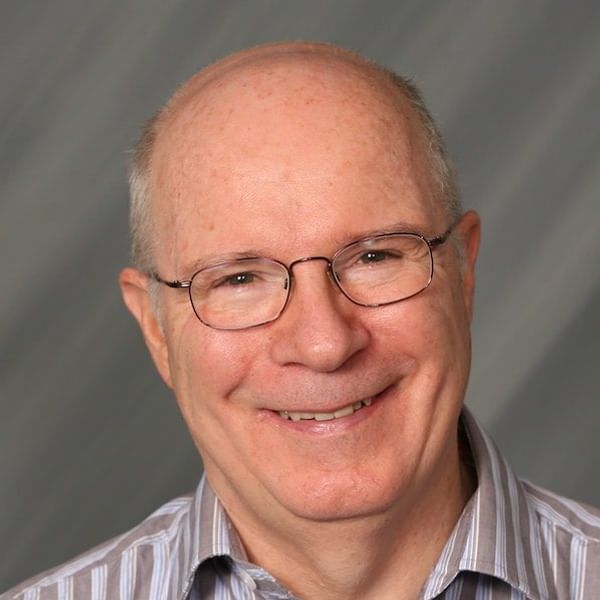
Ronald C. Lasky is a Professor of Engineering at Dartmouth College's Thayer School of Engineering and a Senior Technologist at the Indium Corporation. His academic roles include teaching courses such as ENGM 187: Technology Innovation and Entrepreneurship and ENGS 155: Intermediate Thermodynamics . Dr. Lasky holds a BS in Engineering Physics from Cornell University (1970), an MS in Applied Mathematics from Binghamton University (1974), and a PhD in Materials Science from Cornell University (1986). His research focuses on process optimization, electronic assembly, materials science, and environmental compliance. Notable contributions include work on lead-free solder assembly and Lean Six Sigma methodologies. He received the Member of Technical Distinction Award from the SMTA in 2021. Dr. Lasky actively engages with industry, exemplified by his collaboration with Galanz in China, exploring modern manufacturing practices and infrastructure. His insights on global supply chains and technological advancements highlight his dual academic and professional expertise.
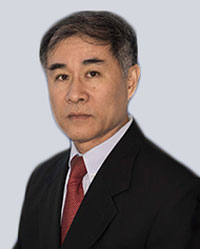
Prof. Li LU is a Professor at the Department of Mechanical Engineering, National University of Singapore (NUS). His research focuses on energy storage materials, ferroelectric systems, and advanced battery technologies. He holds editorial roles at Functional Materials Letters and Materials Technology – Advanced Functional Materials . Education: PhD from KU Leuven (Belgium), M.Eng and B.Eng from Tsinghua University (China). Research interests include thin film deposition, nanostructured materials, and solid-state electrolytes. His work addresses challenges in lithium/ sodium-ion batteries, solid-state interfaces, and high-performance energy storage systems. Recent studies emphasize aerosol deposition techniques, composite electrolytes, and interfacial stability. Publications highlight advancements in battery materials and electrolyte design. Notable contributions include ultra-stable sodium-ion batteries, ferroelectric-engineered electrolytes, and optimizing lithium metal anodes. His research bridges fundamental material science with practical energy solutions.
Dr. Gloria Milena Monsalve Bravo is an Advanced Queensland Industry Research Fellow and lecturer at The University of Queensland's School of Chemical Engineering, where she develops novel multiscale simulation techniques combining molecular simulations with macroscopic physics-based modeling to solve complex energy and environmental problems. Her interdisciplinary work bridges applied mathematics and engineering to improve understanding of phenomena in complex systems across chemical, biomedical, and ecological applications. Her research focuses on: Multiscale simulation techniques for complex systems Molecular simulations coupled with macroscopic modeling Gas permeation and separation in mixed-matrix membranes Uncertainty and sensitivity analysis in mathematical models Applied mathematics for engineering problems Dr. Monsalve Bravo's publication record demonstrates a strong trajectory in membrane technology and computational modeling. Her recent work has advanced understanding of gas transport in novel membrane materials, particularly mixed-matrix membranes, with applications in carbon capture and hydrogen storage. She has made significant contributions to theoretical frameworks for modeling permeation in finite-sized composite systems and developed Bayesian approaches for analyzing parameter uncertainty in sorption predictions. Her research bridges fundamental science with practical applications in energy and environmental engineering. Her scientific contributions have been recognized through research funding including: ARC Research Hub for Value-Added Processing of Underutilised Carbon Wastes (2024-2029) Tailor-made composite membranes for greenhouse gas capture (2023-2026) through Advance Queensland Industry Research Fellowships Dr. Monsalve Bravo actively mentors PhD students on cutting-edge projects related to membrane technology, catalyst development, and waste conversion. She collaborates extensively across disciplines, as evidenced by her diverse publication record spanning chemical engineering, materials science, and environmental applications.
Stefanos Zenios is Professor at Stanford Graduate School of Business with dual appointments in Entrepreneurship and Operations, Information & Technology . He directs Stanford GSB’s Center for Entrepreneurial Studies and co-directs the Doerr School of Sustainability ’s Program in Ecopreneurship. His Startup Garage course has launched companies like DoorDash while alumni have raised over $3B in venture capital. He co-authored the foundational Biodesign textbook and previously served as Editor-in-Chief of Operations Research . PhD, MIT Operations Research (1996) MA, University of Cambridge (1996) BA, University of Cambridge (1992) Research Focus Dr. Zenios’ work bridges operations research and innovation management , with significant contributions to: Healthcare operations : Administrative cost reduction, organ allocation optimization, and clinical workflow improvements Entrepreneurship : Venture creation frameworks and experiential education Ecopreneurship : Sustainable business model innovation His Precedents Thinking framework (HBR 2025) has gained global recognition for solving systemic inefficiencies. Current research includes the biennial Search Fund Study with Peter Kelly. Scientific Recognition INFORMS Fellow Multiple Best Paper Awards, INFORMS CAREER Award, National Science Foundation (2000) Dhirubhai Ambani Faculty Fellow (2017–2020) George E. Nicholson Award (1997) He has received extensive media coverage in Fast Company , Time Magazine , and Stanford Business . His research has been featured in over 150 press mentions including JAMA , Harvard Business Review , and Health Affairs .
Pieter Abbeel is a Professor in the Department of Electrical Engineering and Computer Sciences (EECS) at the University of California, Berkeley. He leads the Berkeley Robot Learning Lab and co-directs the Berkeley Artificial Intelligence Research (BAIR) Lab. His work focuses on advancing AI and robotics through deep reinforcement learning, imitation learning, and unsupervised learning, with applications in automation, healthcare, and education. Abbeel's research also explores the societal implications of AI and its potential to revolutionize other scientific and engineering fields. Education: Ph.D. in Computer Science, Stanford University (2008) M.S. in Electrical Engineering, KU Leuven, Belgium (2000) Research Interests: Robotics, AI, Machine Learning, Reinforcement Learning, Autonomous Systems, and Applications in Surgery, Manufacturing, and Education. Recent Article Trends: Focus on multimodal learning, robot manipulation, protein structure prediction, and scalable AI systems. Key areas include sim-to-real transfer, embodied AI, and foundation models for decision-making. Awards & Honors: IEEE Kiyo Tomiyasu Award (2022) ACM Prize in Computing (2021) IEEE Fellow (2018) MIT Tech Review TR35 (2011) Advising & Grants: Advises startups and has received grants from NSF, DARPA, and industry partnerships. Notable students include those advancing robotics, reinforcement learning, and bioAI. Labs & Initiatives: Berkeley Robot Learning Lab, BAIR Lab, and collaborations with the Center for Human-Compatible AI (CHAI). Founded companies include Gradescope, Covariant, and Berkeley Open Arms.
Adriana Schulz is an Assistant Professor in the Department of Computer Science & Engineering at the University of Washington's College of Engineering. She leads a research group focused on computational design, computer-aided design (CAD), and digital fabrication. Her work bridges computer science with practical applications in manufacturing, robotics, and sustainable design. Dr. Schulz received her Ph.D. in Computer Science from MIT in 2018 under the supervision of Professor Wojciech Matusik. Prior to her doctoral studies, she earned a Master's degree in Mathematics from IMPA (Instituto Nacional de Matemática Pura e Aplicada) in Rio de Janeiro, where she worked with Professor Luiz Velho, and a Bachelor's degree in Electronics Engineering from UFRJ (Federal University of Rio de Janeiro). Her research interests center around computational tools that enhance design and manufacturing processes. She develops novel algorithms for CAD systems, computational fabrication techniques, and sustainable design approaches. Her work spans multiple domains including robotics, textiles, electronics, and architecture, with a strong emphasis on creating practical tools that designers and engineers can use in real-world applications. She explores how machine learning, particularly neurosymbolic approaches, can improve design workflows and enable new capabilities in computational design systems. Analysis of her recent publications reveals a strong trend toward more intelligent and user-centered design tools. Her research increasingly integrates machine learning with traditional CAD systems to create more intuitive interfaces, supports sustainable design practices with computational tools, and develops novel fabrication techniques that push the boundaries of what's possible with digital manufacturing. She has made significant contributions to zero-waste fashion design, immersion cooling for high-performance computing, and CAD program understanding through novel representation learning techniques. Innovators Under 35 - MIT Technology Review Bolsa Aluno Nota 10 from FAPERJ Engineer 20000 award Dr. Schulz actively mentors several PhD students and postdoctoral researchers, including Haisen Zhao, Ben Jones, Yuxuan Mei, and others, often in collaboration with colleagues across different departments. Her research has attracted significant media attention, with coverage in major outlets including MIT News, BBC, IEEE Spectrum, Wired, and TechCrunch. Her work on Interactive Robogami was noted as the most read article in the International Journal of Robotics Research in its publication year. She leads a vibrant research group at the University of Washington that focuses on computational design systems, with particular emphasis on creating tools that bridge the gap between digital design and physical fabrication. Her team develops novel algorithms for CAD systems, computational fabrication techniques, and sustainable design approaches that have practical applications across multiple industries.
Dr. Xinan Zhang is an Associate Professor in the School of Engineering at The University of Western Australia (UWA), specializing in Electrical, Electronic, and Computer Engineering. He holds a BEng from Fudan University (2008) and a PhD from Nanyang Technological University (2014). Before joining UWA in 2019, he held roles as a Lecturer and Research Fellow in Singapore and Australia. His research focuses on power electronics, electrical machine drives, and renewable energy, with over 60 top-tier publications. He is the Portfolio Lead for Industry Engagement in UWA's School of Engineering and co-leads the Power and Clean Energy (PACE) research group. Education: BEng in Electrical Engineering, Fudan University (2004–2008) PhD in Electrical Engineering, Nanyang Technological University (2010–2014) Research Interests: Dr. Zhang’s work spans power electronics, renewable energy systems, energy storage, and smart grid technologies. He emphasizes practical applications, such as battery management systems for vanadium redox flow batteries and adaptive control strategies for microgrids. His contributions address challenges in energy efficiency, grid stability, and sustainable power solutions. Articles & Trends: Recent publications focus on advanced control algorithms for inverters, battery modeling, and renewable energy integration. His work combines data-driven methods with traditional control theory to enhance system efficiency and reliability. Notable areas include DC microgrid control, vanadium redox flow battery optimization, and model predictive control for power electronics. Awards: Listed in Stanford University’s Top 2% Scientists (2020–2022) Grants & Collaborations: He leads or co-leads projects funded by the Australian government and industry partners, including the GenX Betavoltaic Battery Pilot Manufacturing Process and Mine Electrification . These projects aim to advance clean energy technologies and industrial applications. Labs & Teams: As co-lead of the PACE group, he fosters interdisciplinary collaboration to tackle global energy challenges, aligning with UN Sustainable Development Goals for affordable and clean energy (SDG 7).
Dr. Harwin de Vries is an Associate Professor at the Department of Technology and Operations Management, Rotterdam School of Management (RSM), Erasmus University Rotterdam. His research focuses on health and humanitarian logistics, particularly disaster relief logistics and improving access to essential medicines in low- and middle-income countries (LMICs). He explores the role of data analytics and new operational models in healthcare systems, such as mobile health service delivery. Before joining RSM, he worked at INSEAD as a postdoctoral researcher and manager of the INSEAD Humanitarian Research Group. He holds a PhD in Operations Research from Erasmus University. Education: PhD in Operations Research, Erasmus University Rotterdam His research interests include optimizing supply chain decisions in humanitarian contexts, with over 20 collaborations with health organizations. He teaches courses on Health & Humanitarian Logistics, Business Analytics, and Spreadsheet Modelling across BSc, MSc, and EMBA programs. Dr. de Vries has received notable awards including the 2021 ERIM Award for Young Researcher and a 2022 NWO VENI Grant. His work has been published in leading journals like Production and Operations Management and Manufacturing & Service Operations Management, and has been transformed into teaching cases. Grants: NWO VENI Grant (2022) He serves on the board of the POMS College of Humanitarian Operations & Crisis Management, actively contributing to academic and practical solutions in humanitarian logistics.
Daniel Adelman is the Charles I. Clough, Jr. Professor of Operations Management at the University of Chicago Booth School of Business. He joined the faculty in 1997 after completing his PhD in industrial engineering and operations research at Georgia Tech. Adelman is a leading expert in Business Analytics and Management Analytics, helping companies deploy data and decision analysis to build world-class strategic and tactical management capabilities. Adelman received his PhD in industrial engineering and operations research in 1997, along with a bachelor's degree in industrial engineering and a master's degree in operations research, all from the School of Industrial and Systems Engineering at the Georgia Institute of Technology. Daniel Adelman's research focuses on applying analytical models to solve complex business problems across multiple industries. He has worked with firms from diverse sectors including internet services, chemical distribution, airlines, third party logistics, fiber-optics manufacturing, semiconductor manufacturing, oil, and healthcare. His research integrates real-world data with analytical models to bring structure and discipline to decision and control processes, enabling firms to achieve higher profits with lower risk. Adelman's recent work has concentrated heavily on healthcare analytics, where he leads the Healthcare Analytics Laboratory at Chicago Booth. This lab works with teams of doctoral and MBA students on projects with major healthcare institutions to optimize clinical, operational, and financial outcomes. His research spans foundational operations research including approximate dynamic programming, inventory theory/supply chain management, and revenue management/pricing optimization, as well as examining the linkage between operational performance metrics and financial performance of firms. Adelman's publications show a clear trend toward increasing focus on healthcare applications while maintaining strong theoretical foundations in operations research. His earlier work focused more on general operations management problems like inventory control and supply chain optimization, while his recent publications demonstrate a strategic shift toward healthcare analytics, particularly examining surgical team dynamics, hospital performance metrics, and resource allocation during public health emergencies like the COVID-19 pandemic. George B. Dantzig Prize (1998) for the best dissertation in operations research and management sciences that is innovative and relevant to practice Adelman regularly advises doctoral and MBA students through the Healthcare Analytics Laboratory at Chicago Booth. He has served as Associate Editor for Management Science, currently serves as Associate Editor for Manufacturing and Service Operations Management, and is the Area Editor for Operations and Supply Chain at Operations Research. His industry collaborations include significant projects with Akamai on internet pricing, with GE Global Research Labs on the electricity smart grid, with BP on gasoline supply contract portfolio optimization, and with Symantec on software release planning. Adelman leads the Healthcare Analytics Laboratory at Chicago Booth, which brings together interdisciplinary teams of doctoral and MBA students to work on a portfolio of projects with major healthcare institutions. The lab focuses on optimizing clinical, operational, and financial outcomes through advanced analytics and decision modeling.
Andreas Eklund is an Assistant Professor in the Marketing Department at the University of Wisconsin-La Crosse (UWL). He holds a Ph.D. in Marketing from Linnaeus University (Sweden), specializing in consumer psychology, and a Master’s degree from Lund University (Sweden). His research focuses on sensory marketing, branding, and service-dominant logic, exploring how sensory cues influence consumer behavior and brand experiences. He has taught courses on branding, consumer behavior, and marketing strategy at universities in Sweden, Norway, and the U.S. Education: Ph.D. in Marketing (Consumer Psychology), Linnaeus University, Sweden M.Sc. in Marketing, Lund University, Sweden Research Interests: Sensory marketing and its intersection with branding Multi-sensory consumer experiences in automotive and retail environments Experiential marketing and value proposition design Congruency theories in brand-consumer relationships Teaching: Recent courses include MKT351 (Principles of Marketing), MKT362 (Consumer Behavior), and MBA755 (Advanced Marketing) Focuses on experiential learning and real-world marketing applications Professional Background: Prior career as a chef informs his sensory marketing research Experience in Scandinavian universities before joining UWL Personal Interests: Outdoor activities (disc golf, ice skating) Swedish salt licorice enthusiast Manchester United football fan
Prof. Dr.-Ing. Rüdiger Daub serves as Professor and Chair of Production Engineering and Energy Storage Systems at the Technical University of Munich (TUM), operating within the Department of Mechanical Engineering. His leadership encompasses research direction, academic supervision, and strategic development of battery production technologies at TUM's Garching campus (Boltzmannstr. 15), with active industry collaborations driving innovation in sustainable manufacturing. Daub's research program pioneers advanced production methodologies for lithium-ion and solid-state batteries, focusing on electrode manufacturing, electrolyte filling, and cell assembly processes. His work investigates critical parameter interdependencies affecting battery safety and performance, developing inline monitoring systems and digital twin technologies for real-time process optimization. Key contributions include moisture control in electrode production, electrochemo-mechanical characterization of solid-state systems, and robotics solutions for deformable object assembly, all integrated with machine learning for quality assurance in industrial settings. Analysis of his 2023-2025 publications reveals a dominant research trajectory toward solving production bottlenecks in next-generation energy storage. The work demonstrates increasing integration of computational modeling with empirical validation, particularly in solid-state battery manufacturing and high-voltage electrolyte systems. A notable trend is the cross-pollination of robotics, computer vision, and uncertainty quantification techniques to address complex assembly challenges and distribution shifts in quality monitoring, reflecting industry's urgent need for adaptable, data-driven production systems. Leading TUM's specialized laboratories for battery cell production, Daub's team maintains comprehensive facilities for electrode calendering, electrolyte filling, and cell assembly with integrated tracking and tracing capabilities. The research infrastructure supports collaborative projects with automotive OEMs and battery manufacturers to develop scalable production processes, emphasizing environmental sustainability through water-based electrode production and footprint optimization. Current initiatives focus on digital factory modeling and prelithiation technologies for next-generation battery systems.
Mark Lee is an Adjunct Professor in the People Analytics department at NYU’s Tandon School of Engineering, specializing in Technology Management and Innovation. He holds a Ph.D. in Engineering Psychology from Georgia Institute of Technology (1996). Currently, he serves as Head of Research, Analytics, and Business Development at UL ComplianceWire, focusing on pharmaceutical and medical device manufacturing training. His research leverages large datasets to improve healthcare safety through regulatory compliance and best practices. Courses taught include Human Factors Engineering, Workplace Design, and Predictive Analytics. Education: Ph.D. in Engineering Psychology, Georgia Tech (1996) Key Roles: Adjunct Professor, Head of Research at UL ComplianceWire Research Focus: Human Factors, Training Systems Design, Healthcare Compliance His work spans auditory display systems for aviation (e.g., 3D audio cockpit interfaces) and ergonomic design for industrial products. Recent projects emphasize data-driven solutions for regulatory challenges in life sciences. Publications highlight studies on visual search strategies, age-related cognitive performance, and application of signal detection theory in decision-making. He actively collaborates with industry and government entities, exemplified by the FDA-UL Cooperative Research Agreement.
Arash Arami is an Associate Professor in the Department of Mechanical and Mechatronics Engineering at the University of Waterloo, cross-appointed in Systems Design Engineering. He directs the Neuromechanics and Assistive Robotics Laboratory and maintains affiliations with Waterloo Robohub, the Centre for Bioengineering and Biotechnology, Waterloo AI institute, and KITE institute at Toronto Rehab Institute. He earned his Doctorate in Electrical Engineering from EPFL (2014), Master of Science from University of Tehran (2009), and Bachelor of Science from University of Tabriz (2006), all in Control Engineering. His research in Assistive Robotics and Rehabilitation Engineering integrates Machine Learning with Neuromechanics to develop intelligent systems for human movement analysis. Key focus areas include exoskeleton control algorithms, wearable sensor systems, and neural control modeling for rehabilitation applications. Recent publications demonstrate interdisciplinary work spanning robotics, biomedical engineering, and materials science, with emphasis on real-time human locomotion prediction, exoskeleton-human interaction, and data-driven health monitoring solutions. Dr. Arami serves as Chair of the NSERC Scholarship Committee (2021-2023) and mentors graduate students through the Mechatronics Exchange Study program. His teaching includes core courses in control systems, robot manipulators, and biomechanical engineering. The Neuromechanics and Assistive Robotics Laboratory fosters collaborations with clinical partners at Toronto Rehab Institute, focusing on translating robotic innovations into practical rehabilitation tools through interdisciplinary teamwork.
Professor Thomas Blumensath is a Professor of Signal and Image Processing at the University of Southampton and a Fellow at the Alan Turing Institute. He is the Academic Lead in Image Processing and Reconstruction at the University's μ-VIS X-ray Imaging Centre and Director of Research at the Institute of Sound and Vibration Research (ISVR). His research focuses on advanced algorithms for solving inverse problems in tomographic imaging, combining machine learning, optimization, and statistical methods. Key areas include X-ray tomography strategies, GPU-accelerated reconstruction, and multimodal imaging applications. Education: B.Sc. (Hons) Music Technology and Audio System Design, University of Derby (2002) PhD in Electronic Engineering (Bayesian Signal Processing), University of London (2006) Research Interests: Professor Blumensath's work spans theoretical and applied signal/image processing, with emphasis on tomographic imaging techniques. His current projects address efficient reconstruction methods, spectral X-ray CT, and applications in manufacturing and plant science. He collaborates with advanced imaging facilities like Diamond Light Source and ISIS neutron imaging beamline. Key Contributions: His research bridges computational methods (e.g., compressed sensing) with practical imaging challenges, including limited-angle tomography and stereo imaging strategies. He leads the National Research Facility for Lab X-ray CT and has developed the TIGRE reconstruction toolbox. Grants & Projects: Active funding includes EPSRC projects on tomographic sensitivity monitoring and CT-based manufacturing inspections. Completed projects cover constrained reconstruction, AM process verification, and industrial CT metrology. Awards: Alan Turing Institute Fellowship Teaching & Leadership: He teaches modules on machine learning, biomedical image processing, and robotics. Leads the BEng Control Engineering program at the Joint Education Institute with Harbin Engineering University. Labs/Teams: Active in the Signal Processing, Audio and Hearing research group (SPAH) and the Institute for Life Sciences. Oversees the μ-VIS X-ray Imaging Centre's research initiatives.
Levent Burak Kara is a Professor in the Department of Mechanical Engineering at Carnegie Mellon University (CMU), with a courtesy appointment in the Robotics Institute. He is a leading researcher in AI-driven computational design, additive manufacturing, and intelligent engineering systems, leading the Visual Design and Engineering Lab (VDEL) at CMU. Education: B.S., Mechanical Engineering, Middle East Technical University (1998) M.S., Mechanical Engineering, Carnegie Mellon University (2000) Ph.D., Mechanical Engineering, Carnegie Mellon University (2005) His research focuses on integrating machine learning, optimization, and geometric modeling to revolutionize engineering design and manufacturing. Key areas include topology optimization, CAD intelligence, digital twins, generative design, bioengineering, and electronic design automation. His work enables automation of traditionally labor-intensive design processes using deep learning and reinforcement learning. His recent publications reveal a strong trend toward physics-informed surrogate modeling, real-time simulation, manufacturability prediction, and AI-driven automation in mechanical, biomedical, and electronic systems. These works frequently appear in top journals such as Journal of Mechanical Design and Journal of Applied Mechanics , and at premier conferences like NeurIPS and DAC. Scientific Awards: National Science Foundation CAREER Award ASME Design Automation Society Young Investigator Award Google AI for Social Good Impact Scholar Kara advises several Ph.D. students and has secured significant funding from federal agencies such as the NSF and the U.S. Army Research Laboratory, as well as collaborations with industrial leaders including Cadence Design Systems and NVIDIA. His research is also supported by CMU’s NextManufacturing Center and the Critical Technology Initiative. He is actively involved in developing intelligent design systems that leverage AI to automate product design, optimize manufacturing processes, and improve medical diagnostics, particularly in oral cancer screening and organ preservation. His lab, VDEL, is a hub for innovation in AI-enabled engineering.