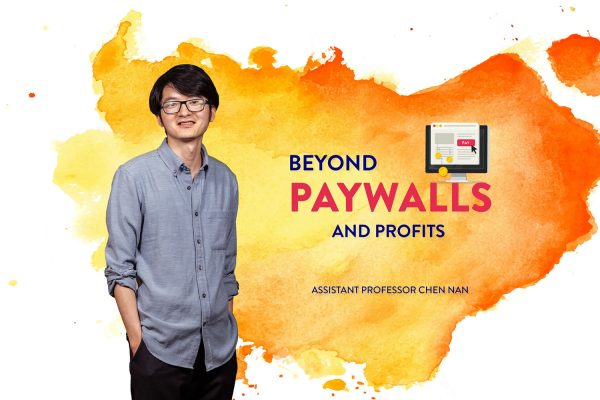
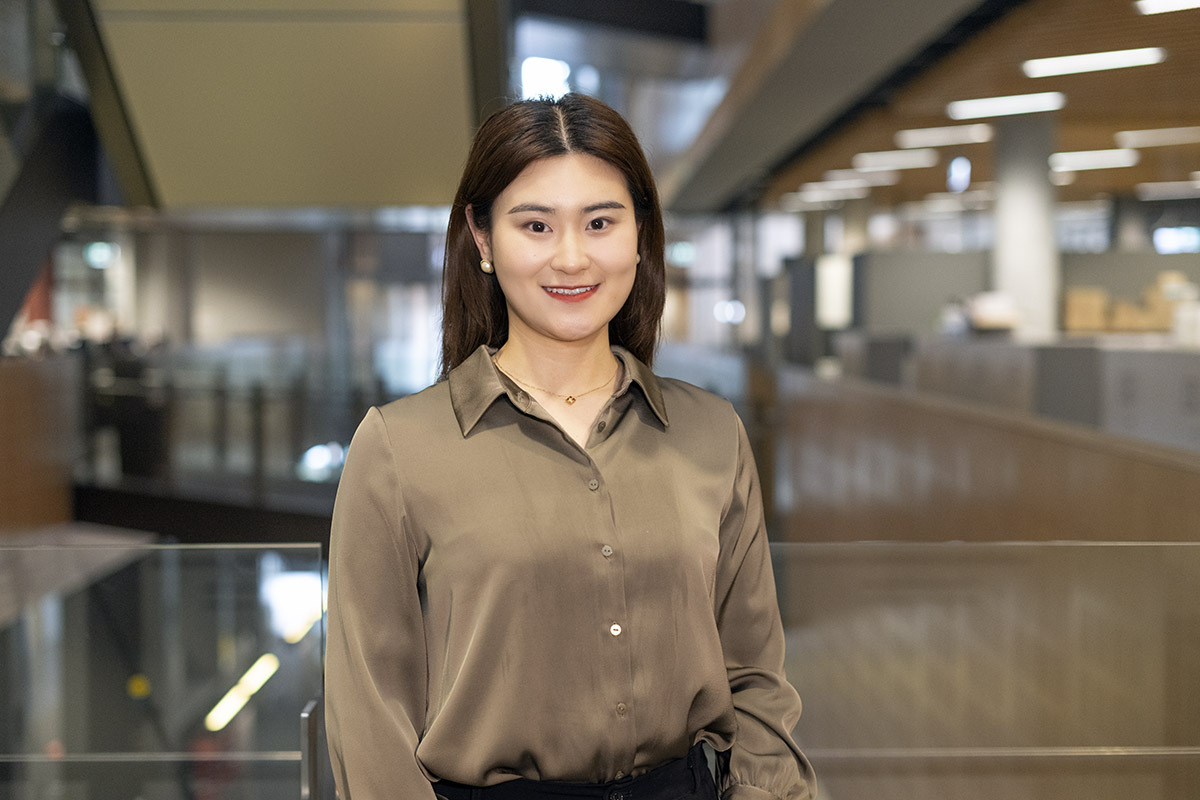
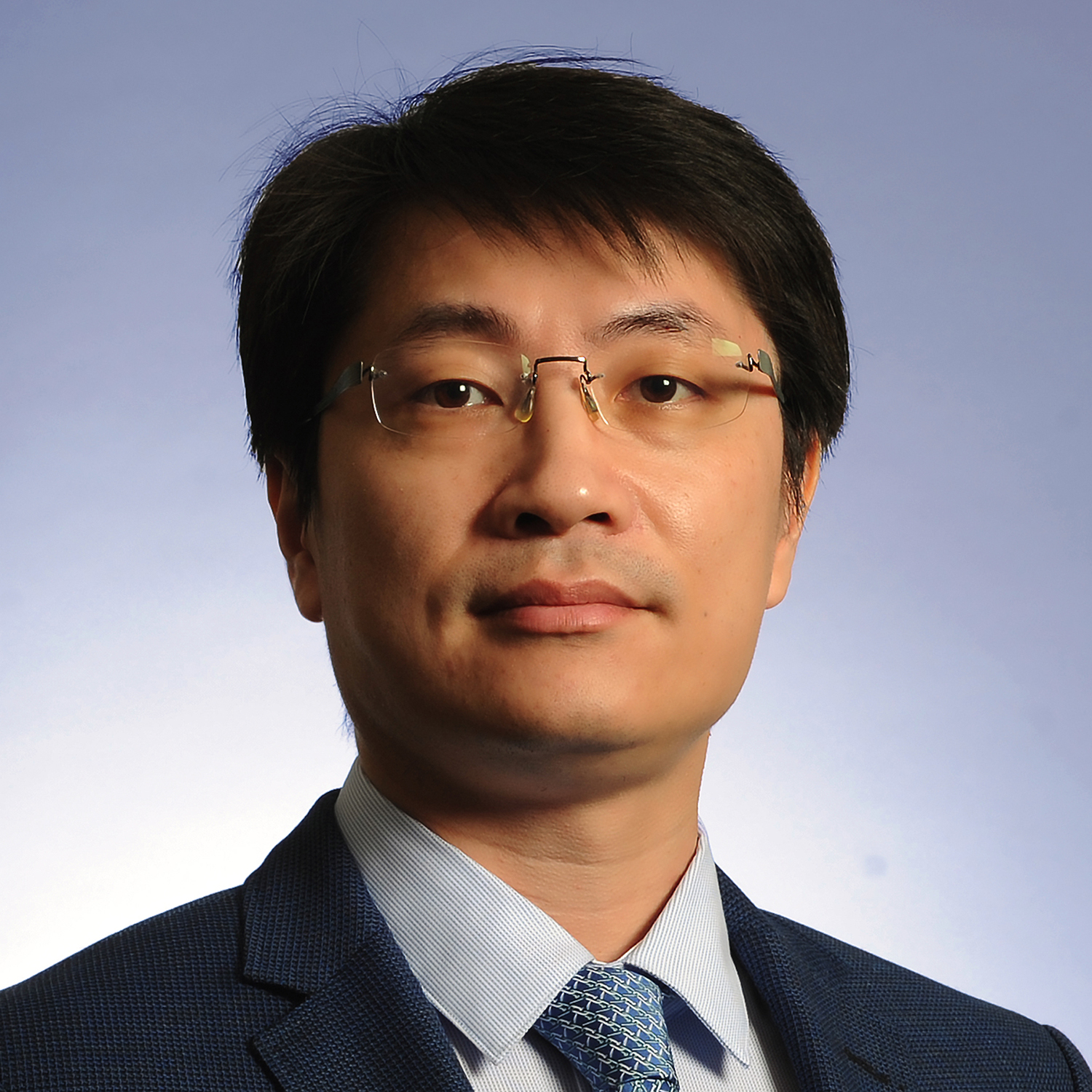
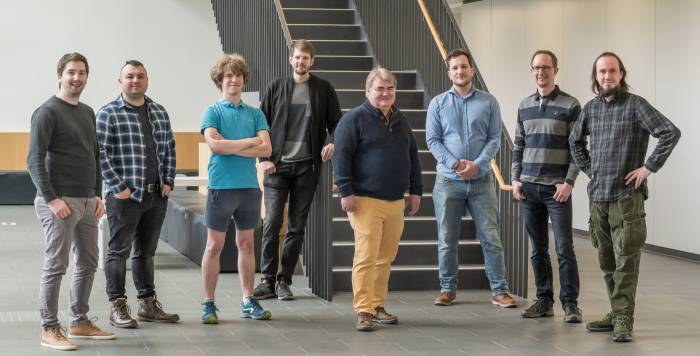
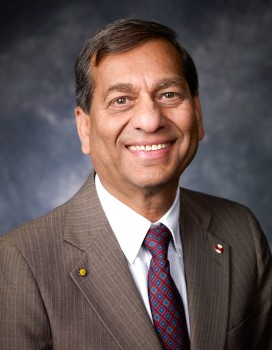
Chen Nan is an Assistant Professor at the Department of Information Systems & Analytics, National University of Singapore (NUS). He specializes in computational social science, focusing on digital markets, consumer behavior, and information economics. His research explores strategies for firms in competitive information environments, including optimal pricing of free vs. paid content and the implications of right-to-repair policies. Key projects include analyzing paywall effectiveness using data from online platforms like iMaibo, and investigating how limited consumer attention shapes market dynamics. His work bridges theory and practice, addressing real-world challenges such as subscription model design and policy implications of digital economies. He collaborates with researchers like Khim Yong Goh and Ding Li, leveraging empirical data to build demand-supply models. Chen teaches courses such as BT4241 (Causal Impact Analytics) and IS2238 (Economics of IT and AI).
Dr. Du Hongjian is a Lecturer in the Department of Civil and Environmental Engineering at the National University of Singapore (NUS), affiliated with the College of Design and Engineering. He holds a BEng from Shanghai Jiao Tong University (2007) and a PhD from NUS (2012). His career includes roles as a Research Fellow and Senior Research Fellow at NUS and a Lecturer at Swinburne University of Technology. His research focuses on sustainable construction materials, 3D concrete printing, and low-carbon technologies. Notable awards include the Excellence Award in Structural Engineering Education (2024) and the ExCEEd Teaching Fellow recognition (2023). He co-founded CIRCRETE, a startup promoting decarbonization in construction. Du’s teaching innovations emphasize active learning and design competitions, enhancing student engagement. His research has led to patents on green cement and waste-upcycling technologies. Education: BEng, Shanghai Jiao Tong University, 2007 PhD, National University of Singapore, 2012 Research Interests: Digital fabrication of reinforced concrete Low-carbon building materials Waste valorization in construction 3D concrete printing Grants & Awards: Excellence Award in Structural Engineering Education (2024) ExCEEd Teaching Fellow (2023) Provost Young Educator Award (2020) Over 20 other teaching and research awards listed Labs & Initiatives: CIRCRETE startup (co-founder) Editorial roles in journals like Journal of Sustainable Cement-based Materials Member of technical committees on construction additive manufacturing
Florian Butollo is a Researcher at the Wissenschaftszentrum Berlin für Sozialforschung (WZB), working in the Research Group 'Globalization, Work, and Production'. He also serves as a post-doc researcher at the Weizenbaum Institute for the Networked Society, coordinated by WZB, focusing on 'working in highly-automated digital-hybrid processes'. Previously, he held a position at the University of Jena's Department of Labour, Industrial and Economic Sociology. He is a senior advisor to the German parliament's Enquete Commission on Artificial Intelligence, addressing its social and economic implications. His research interests revolve around digitalization's impact on labor, global production networks, and transformations in Chinese work environments. Key themes include Industry 4.0's societal effects, state policies in industrial upgrading, and labor dynamics in global supply chains. His work bridges economic geography, sociology, and political economy to analyze contemporary industrial challenges. Notably, his publications explore digital geographies in manufacturing, the persistence of the Foxconn model in China's IT sector, and the role of proactive state policies in LED industry growth. He has also investigated competitiveness strategies in Pearl River Delta garment industries and the evolving nature of labor under automation. While no scientific awards are explicitly listed, his contributions to understanding global production networks and digital transformation reflect significant scholarly engagement. His advisory role highlights real-world policy relevance. Collaborations involve interdisciplinary teams at WZB and the Weizenbaum Institute, focusing on networked society challenges and digitalization's socio-economic dimensions.
Dr. Yu Ma is an Associate Professor of Marketing and Bensadoun Faculty Scholar at McGill University's Desautels Faculty of Management. He previously served as Associate Professor at the University of Alberta. He holds a PhD from Washington University in St. Louis and BA from Nankai University. His research focuses on food marketing, retailing, and big data analytics, examining consumer responses to marketing incentives and the impact of macro-environmental factors on retail sectors and public health. Education: PhD, Management, Olin School of Business, Washington University in St. Louis MSc, Olin School of Business, Washington University in St. Louis BA, Business and Management, Nankai University Research Interests: Dr. Ma’s work bridges marketing and public health, analyzing how food marketing strategies and retail environments influence consumer behavior. Key areas include the effects of hunger on taste perception, the role of air pollution in food preferences, and the socioeconomic inequity in vegetable expenditure. His studies leverage advanced econometric models and loyalty card data to generate actionable insights for policy and industry. Grants & Awards: Multiple Social Sciences and Humanities Research Council Insight Grants (PI/Co-PI) 2017–2026 Bensadoun Faculty Scholar 2012 Retail Research Award CIHR grants (Co-PI) Advising & Labs: Leads the McGill Institute of Marketing (MIM), collaborating on projects like analyzing soda demand via grocery transactions and exploring obesity-related price responsiveness. His work integrates multidisciplinary approaches, including neuroscience and environmental studies.
Stuart Xiang Zhu is an Associate Professor at the Faculty of Economics and Business, University of Groningen, specializing in Operations Management & Operations Research. His work intersects sustainable supply chains, digital business, and renewable energy applications. Ph.D. from Hong Kong University of Science and Technology Cooperation with Chinese and Hong Kong scholars Fellow of research institute SOM Research focuses on stochastic dynamic programming, queueing theory, and game theory in sustainable operations. Key areas include sustainable supply chain management, production planning, and renewable energy integration. His 2025 publications address aspirational newsvendor models, CCUS opportunities, and sustainable aviation fuel supply chains. Recent articles analyze retail parallel importation, manufacturer resale strategies, and nonfungible token ecosystems. Teaching covers logistics, game theory, and queueing systems. Collaborations span National Natural Science Foundation of China and Hong Kong RGC grants.
Dr. Georg Reischauer is a Researcher and Head of the Energy & Strategy Think Tank at Vienna University of Economics and Business (WU Vienna). He holds a PhD in Industrial Management from the Technical University of Vienna and has been a visiting scholar at prestigious institutions including Columbia University, Harvard University, and Stanford University. His research focuses on dynamics within established organizations and industries, particularly in mobility, industrial goods, healthcare, and energy sectors. Key interests include strategic management, digital innovation, sustainability, and policy-driven institutional change. Reischauer’s work examines how organizations adapt to disruptive technologies and market shifts, with a focus on innovation ecosystems, transparency in digital societies, and platform strategies. His recent studies explore the Slipstream Strategy in high-status OEMs and the politicized framing of innovation in mature industries. He has co-authored influential papers on topics ranging from Industry 4.0 policy frameworks to governance of online communities in the sharing economy. His articles consistently address the interplay between technology, institutions, and organizational adaptation. Notable contributions include analyses of transparency risks in digital systems, green innovation strategies in traditional industries, and the design of intermediary organizations to align with ecosystem needs. Reischauer’s academic engagements span global collaborations and policy-oriented research, reflecting his commitment to bridging strategic theory with practical industry challenges. He maintains close ties with leading universities through his visiting scholar roles and contributes to shaping academic discourse in innovation studies and organizational dynamics.
Sarantis Kalyvitis is a Professor of Macroeconomics and International Finance at the Department of International & European Economic Studies at Athens University of Economics and Business (AUEB). He holds the Jean Monnet Chair in European Macroeconomics . His research focuses on Macroeconomics , Economic Growth , International Finance , and Applied Econometrics , with recent emphasis on microeconomic aspects of exporting firms and Greek economic policy. He has published extensively in journals such as the Journal of Public Economics , Journal of Economic Dynamics and Control , and authored books on structural funds, economic growth, and open economy macroeconomics (in Greek). His work addresses topics like fiscal policy, public capital maintenance, and the impact of EU structural funds. Key research themes include: Export pricing strategies and firm-level dynamics Effects of fiscal multipliers and investment incentives Linkages between economic growth, stock markets, and monetary policy Impact of EU policies on Greece's economy Notable policy contributions include reports on Greek savings behavior, export competitiveness, and wage-productivity dynamics (in Greek). His work bridges theoretical models with empirical analysis, often employing advanced econometric techniques.
Dr. Rong Deng is a Lecturer at the School of Photovoltaic and Renewable Energy Engineering , University of New South Wales (UNSW) , Australia. She completed her PhD in 2021 on 'End-of-life Recycling of Silicon Photovoltaic Modules: Towards A Circular Economy' and a Bachelor of Engineering (Honours Class I) in 2018, both from UNSW. Her research focuses on sustainable end-of-life management of silicon photovoltaic modules, integrating technological innovation with economic analysis. Research Interests: End-of-life management of photovoltaic panels End-markets for recycled module materials PV sustainability and circular economy Techno-economic assessment of recycling processes Large-scale PV modules and their lifecycle impacts Her work has been recognized as a 'PV Recycling textbook' by industry experts, particularly her 2019 paper 'A techno-economic review of silicon photovoltaic module recycling'. Scientific Awards: 2022 : Forbes 30 Under 30 Asia List – Healthcare & Science 2023 : UNSW Women in Engineering Excellence Awards 2020 : Australia Global Talent, Department of Home Affairs 2021 : 1st Runner-up, SPREE Three Minute Thesis Competition 2019 : Best Oral Presentation Award, GPVC 2019, Gwangju, Korea 2019 : Best Poster Presentation Award, 36th EUPVSEC, Marseille, France 2019 : Best Poster Award, UNSW Engineering PG Symposium Grants & Funding: ACAP-Neoen Collaboration : Scoping study on solar panel end-of-life management in Australia – AUD 160,000 ACAP-Solarcycle Collaboration : Techno-economic assessment of CdTe panel recycling – AUD 40,000 NSW EPA : Scipher Advanced Solar Panel Recycling – AUD 1,790,000 EUCD Climate Dialogue : PV Circularity in Australia – €145,000 Teaching & Academic Service: Dr. Deng is the course convenor for SOLA5051 Life Cycle Assessment , contributing to the education of future renewable energy engineers.
Kenle Chen is an Associate Professor in the Department of Electrical and Computer Engineering at the University of Central Florida (UCF), part of the College of Engineering and Computer Science (CECS). He holds a Ph.D. in Electrical Engineering from Purdue University (2013). His research focuses on radio-frequency (RF) and millimeter-wave integrated circuits, emphasizing energy-efficient, high-speed, wideband, and high-efficiency radio solutions for 5G-and-beyond wireless systems. Key projects include reconfigurable high-frequency circuits and interdisciplinary applications of radio technology. Dr. Chen leads the INSPIRE Lab, exploring innovative RF/mm-Wave circuits for wireless communications, IoT, and emerging technologies. He actively contributes to professional activities, including serving as an Associate Editor for IEEE Transactions on Microwave Theory and Techniques and Chair of the IEEE MTT-S/AP-S Orlando Chapter. His work has earned recognition, including 1st Place in IEEE IMS Student Design Competitions (2018, 2019) as an advisor and the IEEE MTT-S Doctoral Fellowship (2012). His research spans cutting-edge topics like load-modulated balanced amplifiers, Doherty architectures, and antenna design, addressing challenges in next-generation wireless systems. UCF’s strong engineering programs and Orlando’s tech corridor provide a robust environment for his interdisciplinary work.
Shuchi Deb is an Associate Professor of Industrial, Manufacturing, and Systems Engineering at the University of Texas at Arlington, where she has served since 2019 and was promoted to Associate Professor in September 2024. She directs an active, grant-funded research program that blends human-factors engineering, virtual & augmented reality, and transportation safety to improve human-system interaction across manufacturing, education, and public-safety domains. Education: Ph.D. in Industrial & Systems Engineering, Mississippi State University, 2017 M.S. in Industrial and Management Engineering, Montana State University, 2014 B.Sc. in Industrial and Production Engineering, Shahjalal University of Science & Technology (Bangladesh), 2006 Research & Innovation: Deb’s scholarship focuses on human-centred design of complex socio-technical systems. She exploits immersive technologies—virtual, augmented and mixed reality—to study and enhance safety, training transfer, and user experience in contexts ranging from automated-vehicle interactions and cyclist–infrastructure compatibility to additive-manufacturing education and police reality-based training. Her work repeatedly integrates psychophysiological sensing (EEG, eye-tracking, facial-expression analysis) with usability engineering to create adaptive, trustworthy human-machine interfaces. Recent federally supported projects include an NSF grant to build a bilingual VR platform for additive-manufacturing education ($837 k), a USDOT project developing a driver-readiness monitor for prolonged automated driving, and a Department of Justice award with the Fort Worth Police Department to create VR-based reality training scenarios ($269 k). These grants exemplify her translational approach: coupling rigorous human-factors experimentation with deployable technological solutions. Scientific Recognition: Outstanding Contribution & Mentorship Award, UT Arlington (2024) Best Graduate Student Paper, Mississippi State University (2017) IIE/FlexSim Simulation Competition Winner (2016) SEMS Best Student Paper, IISE (2016) Annual Ergonomics Design Competition, Auburn University (2015) Advising & Grant Leadership: Deb has chaired or served on more than a dozen Ph.D. and M.S. thesis committees and mentored over twenty undergraduate researchers. Since 2019 she has attracted > US $2.3 million in external funding as PI or Co-PI, supporting a broad cohort of graduate researchers who disseminate their work annually at ASEE, IISE, HFES, TRB, and AHFE conferences. Labs & Teams: She founded and advises the Human Factors Lab at UT Arlington, a shared facility equipped with VR headsets, motion-capture systems, driving and cycling simulators, and psychophysiological recording suites. The lab collaborates with industry (Fort Worth Police, local manufacturers) and across campus (Computer Science, Mechanical & Aerospace Engineering) to provide interdisciplinary training to students.
Professor Vikas Kumar is affiliated with the University of Derby. His research focuses on sustainable supply chain management, Industry 4.0 technologies, circular economy frameworks, and environmental management in manufacturing systems. He has contributed to over a dozen peer-reviewed publications since 2017, analyzing topics such as supply chain resilience post-pandemic, Industry 4.0 adoption challenges, and lean manufacturing readiness in pharmaceutical industries. Research interests include applying bibliometric analysis to assess collaboration in sustainable practices, redesigning linear supply chains into circular models, and investigating managerial factors in process improvement methodologies like Kaizen and Value Stream Mapping. His work emphasizes bridging theoretical frameworks with real-world industrial applications to enhance operational efficiency and sustainability. Notable research trends include interdisciplinary approaches to sustainability, leveraging Industry 4.0 technologies for supply chain resilience, and benchmarking cleaner production practices in manufacturing sectors. Collaborations with institutions globally highlight his international research network. No scientific awards or grants are explicitly mentioned in the provided text. Advising records and lab affiliations are not detailed.
Gunnar Klaus Prause is a Professor at the Department of Business Administration, School of Business and Governance at Tallinn University of Technology (since 2023). He holds a 0.25 FTE position, reflecting his active engagement in research and academic leadership. Previously, he served as a Professor at Wismar Business School (since 1994) and held administrative roles including Vice-Rector of Research at Wismar University (2007–2010) and Vice-Dean of Research and International Relations at Wismar Business School (2005–2007). His academic career spans over three decades in business administration and economics. His research focuses on logistics, sustainability, digital transformation, and maritime supply chains. Specific interests include green energy applications (e.g., ammonia as marine fuel), smart city/port integration, blockchain for supply chain resilience, and circular economy models. He leads/coordinates projects such as the Centre of Excellence in Circular Economy for Strategic Mineral and Carbon Resources (2024–2030) and generative AI-driven ESG education curricula (2025–2027). Dr. Prause has secured over €7 million in EU and international grants, including projects on Baltic Sea region competitiveness, clean shipping platforms, and SME internationalization. His work bridges academic research with practical applications in logistics, energy, and policy. He has authored/co-authored 263 publications, emphasizing peer-reviewed articles and conference papers on topics like sustainable port operations, digital transformation challenges, and ammonia safety in maritime contexts. His research outputs frequently address interdisciplinary challenges at the intersection of technology, environment, and business strategy.
Matthias Uflacker is a Professor at the Hasso Plattner Institute (HPI), University of Potsdam, Germany, where he conducts research in database systems, in-memory computing, and data-driven enterprise applications. His work bridges systems research and practical applications in Industry 4.0, education, and bioinformatics. University: University of Potsdam School: Hasso Plattner Institute Department: Department of Digital Engineering Research Focus: In-Memory Databases, Stream Processing, Causal AI, and Database Education His research interests span in-memory database systems , real-time data stream processing , GPU-accelerated analytics , and causal structure learning . He also contributes to computer science education , particularly in agile software engineering and interactive learning tools for K-12. The recent publications reflect a strong trend in enterprise data management , with a focus on benchmarking (e.g., ESPBench), performance optimization (e.g., Kafka, Hyrise), and intelligent decision support using causal models in industrial contexts. His work increasingly integrates AI for monitoring and automation in manufacturing and e-commerce. He has co-authored numerous publications in top-tier venues such as VLDB, ICDE, EDBT, and KDD, often in collaboration with Hasso Plattner and other HPI researchers. Matthias Uflacker leads and contributes to research projects on autonomous database systems , dynamic pricing simulations , and educational technology platforms for programming exercises. His team develops tools for real-time data integration, causal analysis, and classroom software engineering assessment.
Prof. Günter Rudolph is a Professor of Algorithmic Foundations and Education in Computer Science at the Technical University of Dortmund's Department of Computer Science. He leads Chair 11: Algorithm Engineering, focusing on Computational Intelligence (CI), Evolutionary Algorithms, and their applications in optimization and gaming. His research emphasizes theoretical analysis of CI methods, practical guidelines for operationalization, and applications in engineering, energy systems, and entertainment. Key research areas include multi-objective optimization, evolutionary robotics, and computational intelligence in games such as StarCraft and car racing simulations. He has advised numerous students on topics ranging from autonomous driving systems to procedurally generated game content. Rudolph collaborates internationally, including with CINVESTAV-IPN (Mexico) on multiobjective control methods and BMWi-funded projects on energy systems and forming process predictions. His work spans academic publications in journals like Genetic Programming and Evolvable Machines and conferences such as IEEE CIG. Notable projects include developing adaptive car racing controllers, optimizing energy supply systems in industrial parks, and advancing AI strategies in real-time strategy games. Rudolph's group actively contributes to game AI research through competitions like the StarCraft AI Competition and the Simulated Car Racing Championship, emphasizing the intersection of computational intelligence and entertainment.
Suresh P. Sethi is the Eugene McDermott Chair Professor of Operations Management and Director of the Center for Intelligent Supply Networks at The University of Texas at Dallas. He holds a Ph.D. in Industrial Administration from Carnegie Mellon University (1972) and has an extensive academic background including roles at the University of Toronto and numerous visiting professorships worldwide. His research focuses on supply chain management, inventory control, dynamic optimization, and mathematical finance. He has authored over 400 papers and 7 books, with notable contributions to operations research and management science. Dr. Sethi's honors include Fellowships from IEEE, INFORMS, AAAS, POMS, and SIAM, as well as the prestigious Royal Society of Canada Fellowship (1994). He has pioneered doctoral programs in operations management and serves on editorial boards of journals like Production and Operations Management and SIAM Journal on Control and Optimization. His research interests span supply chain dynamics, stochastic systems, and optimal control theory applications. Current projects include partially observed inventory models, hierarchical decision-making in manufacturing, and mathematical finance. Teaching focuses on optimal control and operations research. Education: Ph.D. in Industrial Administration, Carnegie Mellon University (1972) M.S.I.A., Carnegie Mellon University (1971) M.B.A., Washington State University (1969) B. Tech. in Mechanical Engineering, Indian Institute of Technology (1967) Professional activities include over 50 invited talks annually at global institutions, leadership roles in POMS, and advisory work for organizations like the IC² Institute. His interdisciplinary contributions bridge academia and industry, addressing real-world challenges in supply chain resilience and financial decision-making.