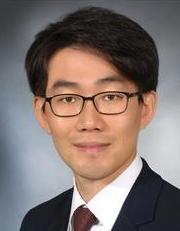
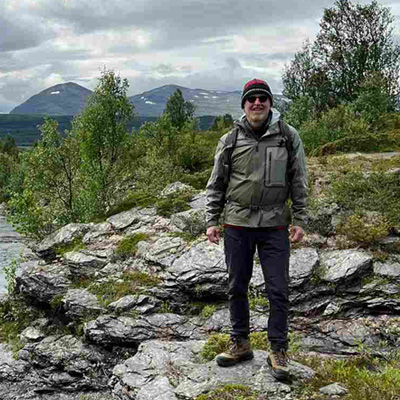
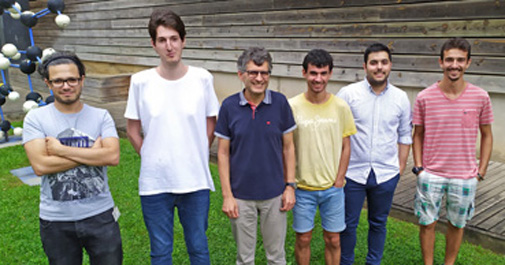
Dr. John Lloyd is a Visiting Research Fellow at the University of Bristol's School of Engineering Mathematics and Technology. His research focuses on tactile robotics, sim-to-real learning, and robotic manipulation. Publication analysis reveals consistent themes in tactile perception (2020-2024), including deep reinforcement learning for robotic control, tactile sensor development, and applications in manufacturing and human-robot collaboration. Recent work emphasizes sim-to-real transfer and bimanual manipulation (2022-2023), while earlier publications established foundational methods for pose-based tactile servoing and defect detection (2020-2021). His collaborations include Prof. Nathan Lepora and Dr. Ben Ward-Cherrier at Bristol.
Dmitri V. Talapin is the Ernest DeWitt Burton Distinguished Service Professor at the University of Chicago, holding joint appointments in the Department of Chemistry, Pritzker School of Molecular Engineering, and the College. His research focuses on inorganic nanomaterials, including quantum dots, MXenes, and semiconductor devices, with emphasis on synthesis, self-organization, and optoelectronic applications. Talapin leads the Talapin Group, situated in the Gordon Center for Integrative Sciences, and has pioneered methods for colloidal nanocrystal synthesis in molten salts. Education: Ph.D. in Chemistry from the University of Hamburg (2002), postdoctoral positions at IBM T.J. Watson Research Center and Lawrence Berkeley National Laboratory. Research interests encompass nanomaterials functionalization, ligand engineering, and scalable production of nanocrystals for applications in electronics, photonics, and energy storage. Recent advances include direct optical lithography of nanocrystals and MXene surface chemistry innovations. Awards: Packard Fellowship, MRS Outstanding Young Investigator Award, Royal Society of Chemistry Fellowship, and recognition as one of Thompson Reuters' Top 100 Chemists of the Decade. Advising: Supervises a dynamic team including graduate students (e.g., Tanya Chen, Marley Downes) and postdocs (e.g., Yuan Liu). Recent lab news highlights student achievements such as Di Wang's MXene PhD defense and Tanya Chen's Danute Nitecki Fellowship. Labs/Teams: The Talapin Lab collaborates across disciplines to advance nanomaterials science, emphasizing safety and sustainability through initiatives like the Joint Research Safety Initiative. Key projects include DOLFIN (Direct Optical Lithography of Nanomaterials) and MXene functionalization.
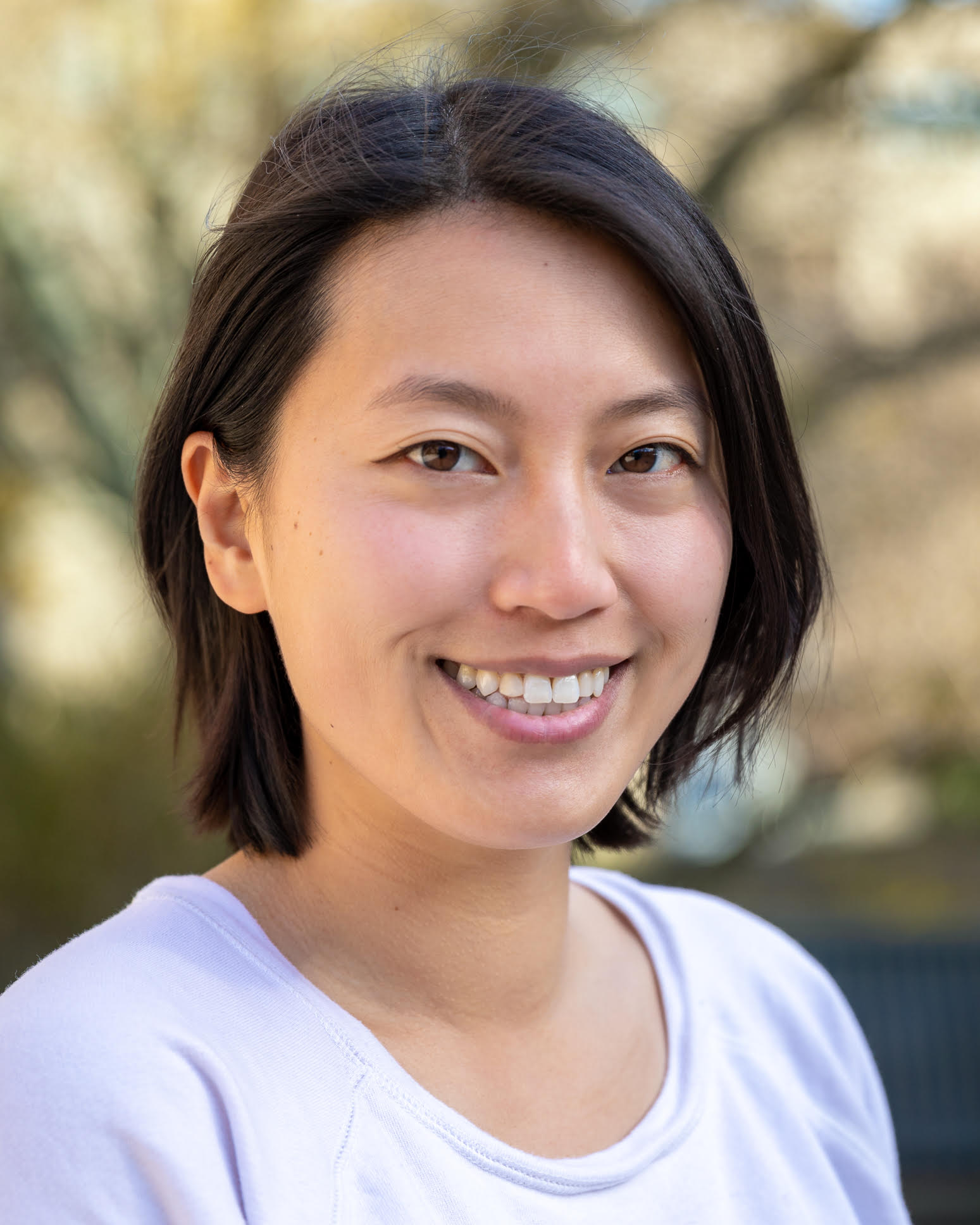
Zoe Yan is an Assistant Professor at the University of Chicago's Department of Physics and James Franck Institute, specializing in experimental quantum many-body physics. Her research uses ultracold atoms and molecules to study custom quantum Hamiltonians, combining advanced trapping and imaging technologies. Prior to joining UChicago in 2023, she was a Dicke Postdoctoral Fellow at Princeton University. Research focuses on quantum simulation, quantum correlations, and novel states of matter in ultracold systems. Recent publications explore spin polarons, quantum correlations in molecular systems, and quantum simulation techniques. Her work employs cutting-edge experimental approaches to quantum system manipulation. Awards: Packard Fellow (2024) Blavatnik Regional Award (2023)
Dr. Tatsiana Kulakevich is an Associate Professor of Instruction in Research Methods and Quantitative Analysis at the School of Interdisciplinary Global Studies at the University of South Florida. She is also a Research Fellow and affiliated faculty at the USF Institute for Russian, European, and Eurasian Studies. Holding a Ph.D. in Political Science from Rutgers University and an M.A. in International Relations from NYU, her expertise spans democratization, international security, migration, and ethnic politics. Research & Publications: Dr. Kulakevich has published in leading journals like International Migration , Nationalities Papers , and Canadian Slavonic Papers , with a focus on Belarusian politics, post-Soviet conflicts, and diaspora engagement. Her work has been recognized with awards, including the International Congress for Belarusian Studies’ best publication award (2020, 2021) and a Washington Post Monkey Cage contribution on Belarus-Ukraine dynamics. Teaching: She teaches graduate and undergraduate courses in quantitative methods and political analysis, including Quantitative Analysis I and Empirical Political Analysis . Her teaching excellence was acknowledged with the 2021-2022 Outstanding Undergraduate Teaching Award. Awards & Grants: Dr. Kulakevich has secured multiple grants, including Research One awards (2023, 2021, 2019) and a USF World grant (2019). Her work has been featured in media outlets like The Conversation , U.S. News and World Report , and The Globe Post . Professional Engagement: She serves on the editorial board of SN Social Sciences and reviews for journals such as East European Politics and Societies . Her research focuses on Eastern Europe, with a particular emphasis on Belarus and Ukraine’s geopolitical challenges.
Marjatta Lyyra is a Professor of Physics at Temple University's College of Science and Technology. Her research focuses on Atomic, Molecular, and Optical Physics, particularly Molecular Quantum Control using laser techniques such as the Autler-Townes effect. She has pioneered methods like continuous wave triple resonance spectroscopy and demonstrated all-optical control of molecular angular momentum orientation. Her work includes studies on molecular dipole moments, spin-orbit interactions, and collision dynamics. Education: Ph.D., Stockholm University, 1979 M.S., University of Helsinki, 1973 B.Sc., University of Helsinki, 1971 Research Interests: Her research explores quantum control mechanisms in molecules, including electromagnetically induced transparency, laser-driven population flow, and precision measurements of molecular properties. Key topics include Autler-Townes splitting, spin-orbit interaction manipulation, and the development of optical spin switches. She has extensively studied diatomic systems like Rb₂, Cs₂, and Li₂, focusing on electronic states and their spectroscopic signatures. Publications: Her recent work highlights advancements in molecular angular momentum control, predissociation resonance modeling, and collision dynamics. Earlier contributions include foundational studies on transition dipole moments in lithium and cesium dimers, as well as pioneering work in cw all-optical triple resonance spectroscopy. Awards and Honors: Fellow, Optical Society of America (2018) Fellow, American Physical Society (2005–) Multiple visiting professorships in France, Sweden, and China NSF Career Advancement Award (1992) Grants and Labs: Lyyra's work is supported by grants from Temple University and international collaborations. Her lab focuses on experimental setups for high-resolution molecular spectroscopy and laser manipulation of quantum states.
Cong Shi is an Assistant Professor in the Department of Computer Science at New Jersey Institute of Technology (NJIT). His research focuses on applied machine learning, security and privacy for mobile systems, and robust/trustworthy AI. Specific interests include adversarial machine learning, WiFi sensing, and AR/VR security. Education: Ph.D. in Electrical and Computer Engineering from Rutgers University (2022), M.S. in Electrical Engineering from Stevens Institute of Technology (2015), B.S. in Electrical Engineering and Automation from Guangdong University of Technology (2013). Research highlights include developing methods for vital sign monitoring using motion sensors, backdoor defense mechanisms in AI models, and privacy leakage prevention in AR/VR ecosystems. Recent work explores attacks on RF signal classification and vibration-based speech reconstruction. His publications appear at venues like IEEE S&P, ACM CCS, and AAAI. Teaching responsibilities include courses like CS 645 (Security and Privacy in Computer Systems) and CS 785 (Seminar in Computer Science).
Rickey Dubay is Professor and Director of Graduate Studies in Mechanical Engineering at University of New Brunswick. His research spans control systems, robotics, and advanced manufacturing, with particular focus on unmanned marine vehicles. Research areas include: complex control systems, robotic learning control, intelligent systems, and unmanned vehicle control. He leads projects on 3D trajectory tracking for marine vehicles and cognitive robotic strategies for autonomous systems. He has supervised 7 PhD and 23 Master's graduates, with 3 PhD and 4 Master's students currently. His research includes patented innovations in nonlinear control methodologies and complex profile tracking, and he co-founded Eigen Innovations Inc. Course instruction includes advanced topics: Model-based Control Methods, System Identification, and Optimal Control Methods.
Dr. Donghoon Kim is an Assistant Professor at the University of Cincinnati's Department of Aerospace Engineering and Engineering Mechanics, part of the College of Engineering and Applied Science. He leads the Intelligent Autonomous Systems Research Laboratory (IASSRL), focusing on autonomous systems, fault-tolerant control, and celestial mechanics. Prior to academia, he worked at LG Electronics as a Senior Research Engineer, developing service robotic platforms. His professional affiliations include senior membership in AIAA and IEEE, and roles in technical committees for Astrodynamics and Robotics. Education: PhD in Aerospace Engineering (Texas A&M University, 2013) MS and BS in Aerospace & Mechanical Engineering (Korea Aerospace University, 2010 and 2008) Research Interests: Dr. Kim's work centers on intelligent autonomous systems , including robotic control, spacecraft dynamics, and machine learning integration. He emphasizes fault-tolerant control systems and health monitoring for autonomous platforms. His projects span celestial mechanics applications and deep learning-driven solutions for aerospace challenges. Grants & Awards: Recipient of the Neil Wandmacher Teaching Award (2022) $2.3M Air Force Research Lab grant for space robotics technologies (2024) $569K DoD grant for multi-agent trajectory planning (2024) Labs & Teams: Directs the IASSRL , collaborating on projects like the LEOPARDSAT-1 orbital platform and IntroSat educational spacecraft. Engages in industry partnerships with companies like Gimbal Innovations and CincyTech .
Raul Fernandez Rojas is an Associate Professor in the Department of AI and Robotics at the University of Canberra. His research focuses on multimodal neurophysiological sensing, machine learning applications in healthcare, and pain assessment using technologies like fNIRS, EEG, and facial expression analysis. He leads projects integrating brain-body interactions in neurological disorders such as Parkinson's disease and dementia, and develops intelligent systems for driver distraction detection. Education: PhD (details unspecified) Research interests include cognitive workload analysis, sensor fusion for biomedical applications, and AI-driven diagnostics for mental and neurological conditions. His work spans clinical pain assessment, human-swarm interaction, and real-time monitoring systems. He has contributed to over 55 peer-reviewed publications and actively supervises PhD candidates in machine learning for neurophysiological applications. Current projects include a dementia detection initiative using machine learning and exercise interventions, funded from 2024–2026. He collaborates internationally on topics like head motion patterns for depression biomarkers and fNIRS-based pain assessment for non-verbal patients. Advising focuses on PhD projects involving neurophysiological sensors (EEG, fNIRS, etc.) and facial expression analysis for pain recognition. Grants include funding for multimodal signal fusion research and wearable sensor systems.
Richard Ashby Wilson is a Board of Trustees Distinguished Professor of Anthropology and Law at the University of Connecticut, where he also holds the Gladstein Chair of Human Rights. He serves as founding director of the Human Rights Institute and maintains a joint appointment at the UConn School of Law with faculty affiliation in the Department of Philosophy. Wilson's research focuses on human rights, legal anthropology, and international criminal law, with particular expertise in truth and reconciliation commissions, international criminal tribunals, and hate speech regulation. His work bridges anthropological theory with practical human rights applications, examining how historical narratives are constructed in international criminal trials and how speech contributes to genocide and crimes against humanity. His recent scholarship demonstrates a consistent focus on the intersection of human rights law and anthropological practice, with publications addressing dangerous speech, transitional justice mechanisms, and the cultural dimensions of legal processes. Wilson's work on incitement and hate speech has particular contemporary relevance in an era of rising populism and online radicalization. Choice Outstanding Academic Title (2012) for Writing History in International Criminal Trials Fellowship from Institute for Advanced Study-Princeton Fellowship from National Endowment for the Humanities Fellowship from Russell Sage Foundation Wilson actively engages with contemporary policy debates, having served as Chair of the Connecticut State Advisory Committee of the U.S. Commission on Civil Rights (2009-2013) and currently chairing the Hate Crimes Reporting and Data Analysis Subcommittee on Connecticut's Hate Crimes Advisory Council. He also serves on the international advisory boards of Human Rights Quarterly and The Senator George J. Mitchell Institute for Global Peace, Security and Justice.
René Peters is Professor and Head of the Examination Committee for Chemistry programs at the University of Stuttgart's Institute of Organic Chemistry. His research focuses on developing innovative cooperative asymmetric catalysis methods inspired by enzymatic processes, aiming to solve long-standing synthetic challenges with high efficiency and stereocontrol. Peters' group specializes in designing bifunctional and polyfunctional catalysts that activate both nucleophiles and electrophiles simultaneously through Lewis acid/base cooperativity. This biomimetic approach enables enantioselective transformations under mild conditions, including 1,4-additions, allylations, cycloadditions, and fluorinations. Recent work explores zwitterionic catalysts, palladacycle architectures, and gold nanoparticle systems for challenging bond formations. His publications demonstrate progressive refinement of cooperative catalyst systems, with recent advances in stereoretentive allylations, enantiodivergent syntheses, and computational-experimental integration for reaction optimization. The group maintains strong emphasis on practical methodologies with potential industrial scalability. Laboratory facilities support advanced synthesis, catalyst characterization (X-ray crystallography, NMR), and computational modeling. Peters leads collaborative projects on catalytic C-C bond formation and stereoselective fluorination. As Head of Examination Committee, he oversees chemistry curriculum development and assessment. Key innovations include planar chiral palladacycles for efficient enantioselective arylations and novel gold nanocatalysts for Stille couplings. Future work expands cooperative catalysis to underrepresented transformations and develops machine learning approaches for catalyst optimization.
Ricardo Melo Czekster is a Lecturer in Software Engineering & Cybersecurity at Aston University's School of Computer Science and Digital Technologies. His research develops methods for securing critical infrastructure through formal modeling and threat intelligence. Education: PhD in Performance Evaluation, Pontifical Catholic University of Rio Grande do Sul (2010) MSc in Analytical and Environmental Chemistry, University of Benin (2009) BSc in Industrial Chemistry, Ambrose Alli University (2004) Research Focus: Czekster specializes in cybersecurity for cyber-physical systems, particularly smart grids and active buildings. His work develops STIX-based threat intelligence frameworks, attack path modeling with BDMPathfinder, and dynamic risk assessment methods. Recent projects address security in medical IoT and transportation systems. Teaching: Leads modules on Secure Programming, Security Governance, and Secure Software Delivery.
Dr. Josep Maria Luis is an Associate Professor at the University of Girona (UdG), affiliated with the Department of Chemistry and the Institute of Computational Chemistry and Catalysis (IQCC). He leads a research team focused on developing computational methods for nonlinear optical properties and transition metal catalysts. His academic journey includes earning a PhD in Chemistry from UdG in 1999, followed by a postdoctoral fellowship at the University of California, Santa Barbara. His research spans theoretical chemistry, computational chemistry, and catalysis. Key interests include designing novel DFT functionals for nonlinear optical properties, understanding reaction mechanisms in catalysis, and exploring electrides. He has collaborated with institutions worldwide, including UC Santa Barbara, Jilin University, and the National Hellenic Research Foundation. Recent work emphasizes sustainable catalysis, C-H bond activation, and the role of external electric fields in molecular systems. Notable achievements include the UdG Doctoral Extraordinary Award for his PhD. He advises multiple PhD students and has secured funding for projects like real-space analysis of optoelectronic materials.
Lucy Gao is an Assistant Professor in the Department of Statistics at the University of British Columbia (UBC). Her research focuses on statistical inference, machine learning, and bioinformatics, with particular emphasis on clustering methods, high-dimensional data analysis, and optimal design theory. She holds a faculty position within UBC’s Faculty of Science and is affiliated with the Vancouver Campus. Her work spans theoretical developments in statistical methodologies and applications to biological data, such as single-cell RNA sequencing analysis. She has contributed to areas like selective inference for hierarchical clustering and algorithmic optimization for complex systems. Her email is lucy.gao@stat.ubc.ca, and she maintains a website at https://www.lucylgao.com/ . Recent publications highlight her expertise in data thinning techniques, latent variable modeling, and multiview network analysis. She has explored topics ranging from negative binomial count splitting in genomics to bilevel optimization algorithms. Her research bridges statistical theory and practical computational challenges in modern data science. No scientific awards or advising records are explicitly listed in the provided materials. Her academic contributions are primarily through peer-reviewed articles and methodological innovations.
Ruggero Carli is an Associate Professor at the Department of Information Engineering, University of Padova. His research focuses on control systems, robotics, and optimization, with emphasis on model-based reinforcement learning, distributed optimization algorithms, and energy systems. His work bridges theoretical advancements with real-world applications, including autonomous robotics, smart grids, and nonlinear control. Key contributions include physics-informed machine learning frameworks, ADMM-based distributed optimization methods, and MPC-driven control solutions for underactuated systems. Research interests include: Model-Based Reinforcement Learning for Robotics Nonlinear Model Predictive Control (NMPC) Distributed Optimization and ADMM Variants Energy Networks and Smart Grids Robot Dynamics and System Identification Recent publications emphasize: Continual learning for driver behavior analysis Physics-informed control for underactuated systems Robust optimization in unreliable networks Autonomous robotic manipulation with large language models His research integrates control theory with modern machine learning techniques, addressing challenges in edge computing, distributed systems, and real-time implementation.