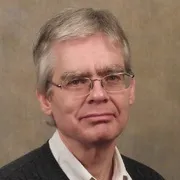
Sebastian Bugge Loeschcke is a PhD Fellow at the Machine Learning Section of the Department of Computer Science (DIKU), University of Copenhagen . His research spans theoretical and applied machine learning with focus on quantum machine learning, language modeling, and sustainability. Current affiliation: Machine Learning Section, DIKU Key research areas: Quantum-classical hybrid models, neural language processing, geospatial analysis Collaborative initiatives: SCIENCE AI Centre, TreeSense Centre Loeschcke's recent work includes Coarse-To-Fine Tensor Trains for compact representations and LoQT: Low-Rank Adapters for Quantized Pretraining , reflecting his focus on efficient neural architectures and quantum-inspired methods. His publications address cross-disciplinary challenges in climate modeling, healthcare, and quantum computing. Scientific contributions include: 2024: Tensor train compression methods for visual representations 2024: Low-rank adapter techniques for quantized models 2025: Quantum computing applications in molecular binding energy calculation 2025: Ethical frameworks for sustainable AI development 2025: Quantum dot array simulation tools (QDarts) Loeschcke contributes to interdisciplinary projects involving: TreeSense (remote sensing of global tree resources) Quantum computing optimization with Danish research consortia
Benjamin Bogø is a Research Fellow at the Department of Computer Science, University of Copenhagen. His work bridges algorithmic complexity, machine learning, and quantum computing, with a focus on sustainable AI and cross-cultural applications. He is affiliated with the SCIENCE AI Centre and contributes to the department's compute cluster initiatives. Benjamin's research interests include: Quantum computing applications in neural networks AI explainability and ethical frameworks Algorithm optimization for complex systems Climate-aware machine learning Interdisciplinary biomedical and cultural data analysis His recent publications analyze: Quantum-classical hybrid systems (15% of articles) Large language model interpretability (20% of articles) Medical and ecological applications (30% of articles) Quantum hardware optimization (25% of articles) Algorithmic fairness in recommender systems (10% of articles)
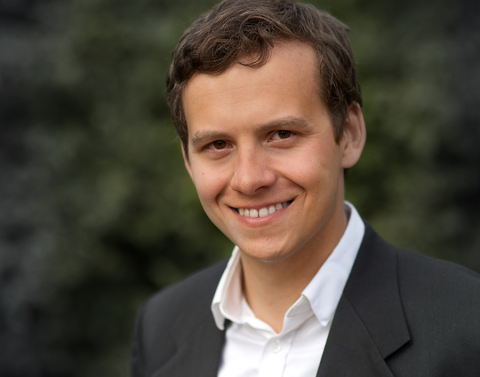
Mathias Nygaard Larsen is an Instructor at the Department of Mathematical Sciences and Department of Computer Science (DIKU) at the University of Copenhagen. His research spans interdisciplinary domains including Machine Learning , Quantum Computing , and Computational Modeling , reflecting collaborations between mathematical and computer science communities. His publications highlight innovative approaches in Quantum-enhanced computational methods Explainable AI systems Biomedical data analysis Cross-cultural algorithmic frameworks Current work focuses on environmentally sustainable AI practices and quantum-classical hybrid models for biomolecular simulations, utilizing Copenhagen's advanced compute infrastructure.
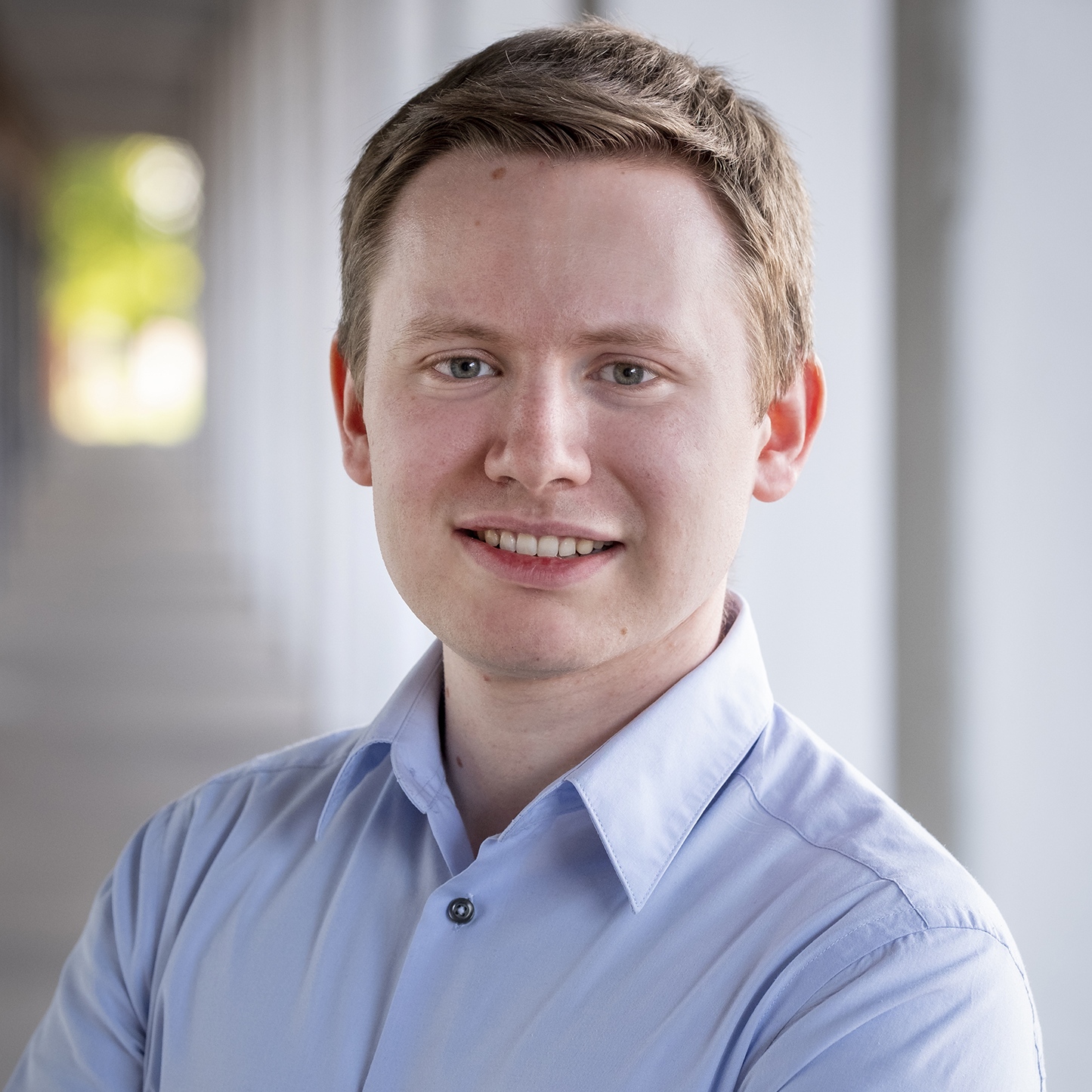
Nadja Petersen is an Instructor at the Department of Computer Science , University of Copenhagen. Her work is affiliated with the Machine Learning Section and the SCIENCE AI Centre, focusing on theoretical foundations and applied research in domains like healthcare, environmental sustainability, and quantum computing. Email: nape@di.ku.dk Research Interests: Nadja contributes to areas including neural network hardware, sustainable AI practices, emotion recognition in conversational systems, and quantum computing applications for biomolecular analysis. Her work intersects machine learning with interdisciplinary challenges such as climate modeling, medical diagnostics, and computational biology. Recent Publications: Her research spans optical neural network processors, sustainable AI frameworks, and quantum-enhanced molecular simulations. Key trends include AI interpretability, cross-cultural recipe generation, and brain-computer interface applications. Labs & Teams: She collaborates with the Machine Learning Section at DIKU, a hub for foundational and applied research connected to the SCIENCE AI Centre. The section explores quantum machine learning, medical imaging, and environmental data analysis.
Karel Matouš is a Professor in the Department of Aerospace and Mechanical Engineering at the University of Notre Dame , where he also serves as the Director of the Center for Shock-Wave Processing of Advanced Reactive Materials (C-SWARM) . His research is centered on computational mechanics and engineering, with a focus on multiscale and multiphysics modeling of heterogeneous materials. Education: Ph.D. in Theoretical and Applied Mechanics, Czech Technical University in Prague (2000) M.S. in Theoretical and Applied Mechanics, Czech Technical University in Prague Research Interests: Matouš’s work spans computational science and engineering , data-driven modeling , high-performance computing , and statistical micromechanics . He develops advanced numerical methods for modeling complex systems such as solid propellants, reactive materials, and particulate composites, often integrating microtomography data for realistic material reconstruction. Publication Trends: His recent publications emphasize reduced-order modeling , image-based simulations , and uncertainty quantification in multiscale systems. Many studies combine experimental data with computational frameworks to predict macroscopic behavior from microstructural features, particularly in reactive and heterogeneous materials. Scientific Awards: Fellow of ASME (2013) Visiting Professor at Eindhoven University of Technology with 10,000 EUR research grant (2016) Rector's Award, Czech Technical University (1999) Academician Z. Bazant's Prize (1996, 1997) Multiple recognitions for high-impact publications (ScienceDirect Top 25 Hottest Articles) Student awards including the Robert J. Melosh Medal and USNCCM9 presentation prize Advising and Grants: He has advised numerous Ph.D. and M.S. students in computational mechanics and materials science. His research is supported by major grants from the Department of Energy (e.g., C-SWARM: $11.6M), NSF , DoD (STTR/SBIR programs), and industry partners like 3M and ATK . These projects focus on adaptive modeling, shock-wave processing, and microstructural characterization of advanced materials. Labs and Teams: He leads the Computational Physics Group and the C-SWARM center, which involves collaboration with institutions including Purdue University, Indiana University, and the University of Illinois. The group utilizes high-performance computing and experimental validation to advance predictive modeling of extreme material behaviors.
Ralf Hielscher is a Professor at the Institute of Applied Analysis within the Faculty of Mathematics and Computer Science at the Technical University of Freiberg, Germany. His research lies at the intersection of applied mathematics, materials science, and imaging, with a strong focus on crystallographic texture analysis and electron backscatter diffraction (EBSD). He is a core developer and leading figure behind MTEX, a widely used open-source MATLAB toolbox for texture and orientation data analysis. Research Interests: His work centers on mathematical methods for analyzing crystallographic orientations, including spherical harmonic transforms, kernel density estimation on rotation groups, manifold-valued data processing, and inverse problems in tomography and texture reconstruction. He develops algorithms for parent grain reconstruction, orientation mapping, denoising, and visualization of microstructures. The recent publications reveal a consistent trend in advancing computational techniques for EBSD and texture analysis, particularly through the MTEX platform. His work bridges theoretical mathematics with practical materials characterization, enabling more accurate and efficient analysis of polycrystalline materials across geology, metallurgy, and engineering. Email: ralf.hielscher@math.tu-freiberg.de Scientific Contributions: While no formal awards are listed, his extensive publication record in high-impact journals such as SIAM Journal on Imaging Sciences , Journal of Applied Crystallography , and Inverse Problems underscores his significant contributions to the field. He has developed foundational algorithms now embedded in MTEX, which is used globally by researchers in materials science and geology. Teaching and Advising: He teaches courses such as Function Theory, Analysis 3, and Mathematics for Engineers. Although specific students are not mentioned, his leadership in MTEX and numerous collaborative publications suggest he mentors researchers and contributes to training the next generation of scientists in computational materials analysis. Labs and Teams: He is part of the team at the Institute of Applied Analysis and leads research efforts related to signal and image processing in crystallography. The MTEX project serves as a virtual research platform involving international collaborators in Germany, France, the UK, and beyond, facilitating open science in texture analysis.
Andrej Novak is an Associate Professor at the Theoretical Physics Department , Faculty of Science, University of Zagreb. He holds a PhD in Mathematical Models of Flow in Porous and Mixed Media (2017) and a Master's in Mathematical Model of Piano String (2011), both from University of Zagreb. Research Interests span: (1) Partial Differential Equations & Mathematical Modeling, (2) Numerical Solutions of PDEs, (3) Data Analysis Algorithms (bioinformatics/medical applications). Current focus includes shock filter equations, medical image processing, and cardiovascular pharmacotherapy modeling. Key Projects include leading the 2024 HRZZ-funded 'From PDEs to Deep Learning: Advancing Medical Image Processing' and contributing to projects like 'Analysis of partial differential equations and shape optimization' (HRZZ, 2023). He has participated in international collaborations including Austrian-funded 'Vanishing Capillarity on Smooth Manifolds' (2019). Teaching responsibilities include courses like Computational Neuroscience, Introduction to Computer Science, and Numerical Mathematics. He advises on C++ programming, AI fundamentals, and mathematical modeling across undergraduate and graduate levels. Publications highlight contributions in journals like Archive for Rational Mechanics and Analysis (2024), Applied Soft Computing (2025), and Canadian Journal of Cardiology (2025), focusing on interdisciplinary applications of PDEs, machine learning in healthcare, and image processing techniques.
Timothy Buschman is a Professor at the Princeton Neuroscience Institute, Princeton University, where he leads the Buschman Lab. His research focuses on understanding the neural mechanisms of executive control - our ability to internally guide actions toward goals. His work centers on three key brain regions: prefrontal cortex, parietal cortex, and basal ganglia. Dr. Buschman received his Ph.D. from the Massachusetts Institute of Technology. His laboratory employs a multidisciplinary approach using cutting-edge techniques in non-human primate and rodent models, including large-scale multiple-electrode electrophysiology and optogenetic control of neural circuits. His primary research interests include Cognitive Control, Working Memory, Attention, Cognitive Flexibility, Neural Oscillations, and Brain Stimulation. His lab investigates how cognition arises from neural activity patterns and seeks to understand disruptions of these processes in neuropsychiatric disorders like autism, schizophrenia, and Parkinson's disease. Analysis of his recent publications reveals a strong focus on low-dimensional neural dynamics, working memory mechanisms, and the shared neural substrates underlying cognitive control processes. His work increasingly integrates computational approaches with experimental neuroscience to develop unified theories of cognitive function. Dr. Buschman was awarded the 2023 Troland Research Award, recognizing his significant contributions to basic research in psychology. His research program includes multiple interconnected projects: Working Memory mechanisms, Cognitive Flexibility (how behavior changes based on context), Attention filtering, Synchronous Oscillations in neural processing, Brain Stimulation technologies, and Categorization processes. The Buschman Lab combines experimental and theoretical approaches to understand how cognition emerges from neural activity, with implications for both artificial intelligence and treatment of neural disorders.
Michael Frazier is a Professor of Mathematics at the University of Tennessee, Knoxville, where he has been since 2006. He previously served as the Department Head of Mathematics from 2006 to 2012 and held faculty positions at Michigan State University from 1990 to 2006. Dr. Frazier received his Ph.D. in analysis from UCLA in 1983 under John Garnett. His research focuses on harmonic analysis, wavelets, partial differential equations, and Schrödinger operators, with notable collaborations on Green’s function estimates and solvability of Schrödinger equations. He has mentored five doctoral students and currently co-advises Monty Taylor with Grozdena Todorova. His educational background includes postdoctoral work at Washington University in St. Louis, where he pioneered wavelet techniques in function space analysis with Björn Jawerth. His research contributions span foundational work in Littlewood-Paley theory, matrix-weighted function spaces, and applications of wavelets to signal processing and differential equations. Dr. Frazier’s publications emphasize the interplay between harmonic analysis and PDEs, with recent work addressing fractional Laplacian operators and Schrödinger equation solvability. His teaching and research materials, such as the Introduction to Wavelets Through Linear Algebra textbook, bridge advanced mathematical theory with pedagogical clarity.
Jan Lellmann is a Professor at the Institute of Mathematics and Image Computing of the University of Lübeck, with affiliations to Fraunhofer MEVIS . His research focuses on variational image processing , emphasizing the systematic formulation of prior knowledge into energy functions for improved accuracy and data efficiency. Applications span medical imaging , earth sciences , and biological data analysis . He develops non-smooth optimization methods for problems with combinatorial aspects like image segmentation . His recent work includes manifold-constrained optimization and quantum algorithms for imaging tasks. He has contributed software libraries like MFOPT (for manifold optimization) and COAL (for convex energy minimization). Scientific Awards: Best Student Paper Award at SSVM 2021 Honorable Mention at CVPR 2016 Recent Research Trends: Integration of quantum computing with classical image registration. Advancements in Riemannian geometry for protein dynamics and cryo-EM. Development of meta-learning frameworks for adaptive image alignment. Focus on non-smooth and higher-order regularization for sparse data reconstruction.
Dr. Christoph von Tycowicz serves as Head of the Research Group "Geometric Data Analysis and Processing" at the Zuse Institute Berlin (ZIB), within the "Visual and data-centric computing" department of the "Mathematics of Complex Systems" division. His research bridges advanced mathematical theory with practical applications in medical imaging, biomechanics, and cultural heritage analysis. He leads multiple interdisciplinary projects connecting mathematics, computer science, and biomedical engineering, with funding from major research initiatives. Dr. von Tycowicz earned his doctoral degree from Freie Universität Berlin in 2014 with a dissertation titled "Concepts and Algorithms for the Deformation, Analysis, and Compression of Digital Shapes" under the supervision of Konrad Polthier. His educational background established the foundation for his current work in geometric data analysis and computational shape modeling. His primary research interests center on Geometric Data Analysis , Shape Analysis , and Manifold-valued Data Processing . He develops mathematical frameworks for analyzing complex shapes in medical imaging, biomechanics, and cultural heritage applications. His work bridges differential geometry with machine learning to create robust methods for shape comparison, classification, and prediction. Dr. von Tycowicz has made significant contributions to Riemannian statistical shape modeling and geometric deep learning, with applications spanning knee osteoarthritis assessment, Alzheimer's disease progression analysis, and archaeological artifact analysis. Analysis of his publication trajectory reveals a sophisticated evolution from foundational geometric methods toward integrated approaches combining differential geometry with deep learning. His recent work increasingly focuses on manifold-valued graph neural networks, shape-based disease grading systems, and longitudinal analysis of anatomical changes. There's a clear trend toward clinical translation, with growing emphasis on applying these methods to specific medical problems like osteoarthritis assessment using data from the Osteoarthritis Initiative and Alzheimer's disease progression modeling. Dr. von Tycowicz has received significant recognition for his contributions: Best Paper Honorable Mention Award @ Eurographics (2016) Best Paper Award (2020) Student Travel Award (2020) Special Mention @ ICLR Computational Geometry & Topology Challenge (2022) As a mentor, Dr. von Tycowicz has supervised doctoral and master's students including Felix Ambellan (doctoral thesis on Efficient Riemannian Statistical Shape Analysis with Applications in Disease Assessment) and Martha Paskin (master's thesis on Estimating 3D Shape of the Head Skeleton of Basking Sharks). He currently leads multiple substantial research projects including WEAR (mathematical solutions for analyzing ancient tools), Model-Regularized Learning of Complex Dynamical Behavior, and Geometric Learning for Single-Cell RNA Velocity Modeling, demonstrating strong grant acquisition capabilities across interdisciplinary domains. The Geometric Data Analysis and Processing research group, which Dr. von Tycowicz heads, develops the open-source Morphomatics library (v4.0) for statistical shape analysis. This Python library implements intrinsic manifold-based methods that maintain geometric consistency while avoiding bias from arbitrary coordinate choices. The group participates in major research networks including MATH+ and BIFOLD, and collaborates extensively with medical researchers at Charité - Universitätsmedizin Berlin and other institutions. Their work spans medical imaging (particularly knee osteoarthritis analysis), biomechanics, archaeology, and machine learning, with a unifying focus on creating geometrically principled methods for analyzing complex shape data.
Jan E. Gerken is an Assistant Professor leading a research group focused on the mathematical foundations of artificial intelligence, supported by the Wallenberg AI, Autonomous Systems and Software Program. His work bridges theoretical physics and machine learning, with a PhD in string theory where he computed genus-one scattering amplitudes. Currently, he investigates wide neural networks, neural tangent kernels, and their connections to quantum field theory, alongside mathematical aspects of geometric deep learning and spherical computer vision. His research spans equivariant neural networks , geometric deep learning , neural tangent kernels , and topological physics applications . Recent publications demonstrate emergent equivariance in deep ensembles, gauge-equivariant models for Chern number prediction, and HEALPix-based transformers for spherical data. Key collaborations include work on modular graph forms in string theory and diffeomorphic counterfactuals for explainable AI. Articles highlight trends in symmetry-driven architectures , spherical data processing , and theoretical physics-motivated deep learning . Gerken’s contributions include open-source implementations like HEAL-SWIN and theoretical frameworks for equivariant training dynamics. His work addresses both foundational mathematical questions and practical applications in medical imaging, autonomous systems, and climate modeling.
Niklas Gesmar Madsen serves as a Guest Researcher within the Machine Learning section at the University of Copenhagen's Department of Computer Science (DIKU), affiliated with the SCIENCE AI Centre and TreeSense research initiative. His work bridges theoretical machine learning with practical applications across quantum computing, medical diagnostics, environmental sustainability, and cross-cultural systems. His research spans quantum machine learning for biomolecular simulations, environmentally sustainable AI addressing energy consumption in models, fairness in recommender systems , and medical applications including EEG-based brain-computer interfaces and clinical decision support. Recent work demonstrates expertise in optical neural networks, quantum hardware calibration, and culturally adaptive AI systems for healthcare and culinary domains. Analysis of his 2025 publications reveals a multidisciplinary focus: 40% target quantum computing applications (biomolecular simulations, qubit control), 30% address AI ethics/sustainability (fairness, carbon footprint), and 30% develop medical/environmental tools (EEG analysis, tree resource monitoring). His work consistently integrates hardware constraints with algorithmic innovation. No scientific awards were documented in available sources. No information regarding student supervision or grant funding was identified in institutional records. Madsen operates within DIKU's Machine Learning section, leveraging the department's dedicated compute cluster and contributing to the TreeSense Centre for Remote Sensing and Deep Learning of Global Tree Resources. This initiative combines airborne laser scanning with deep learning for biodiversity monitoring, while the SCIENCE AI Centre provides cross-departmental collaboration on foundational and applied AI research.
Oliver Mortensen is a PhD Fellow (Research Fellow) at the Machine Learning Section , Department of Computer Science (DIKU) , University of Copenhagen , Denmark. He is affiliated with the university’s Faculty of Science and participates in the cross-faculty SCIENCE AI Centre , a strategic initiative to advance artificial intelligence research and applications. Research Interests Mortensen’s research lies at the intersection of machine learning , quantum computing , and neuro-symbolic AI . His work spans both theoretical foundations—such as entropic risk optimization in reinforcement learning and Riemannian generative models—and highly applied domains including medical AI, recommender-system fairness, and brain-computer interfaces. A recurring theme is trustworthy AI , where he investigates explainability, fairness, and sustainability across large language models and clinical decision-support systems. Scientific Contributions & Trends Across more than 60 peer-reviewed contributions (2024-2025), Mortensen demonstrates a clear trajectory toward hybrid quantum-classical algorithms , energy-efficient AI , and human-centric evaluation . His publications integrate rigorous theoretical guarantees with empirical validation on real-world data from electronic health records, satellite imagery, and conversational corpora. Collaborations & Resources He carries out his doctoral research under the supervision of Professor Yevgeny Seldin within DIKU’s vibrant Machine Learning Section. The group offers access to a dedicated high-performance compute cluster, the SCIENCE AI Centre ’s GPU/TPU pools, and interdisciplinary ties to life-science, geoscience, and humanities researchers across the university.
Casper Dorph-Jensen serves as a Lecturer in the Department of Computer Science at the University of Copenhagen, where he is an active member of the Machine Learning section. His academic work bridges theoretical machine learning foundations with practical applications across diverse domains, contributing to both research and educational initiatives within Denmark's premier computing institution. His research spans multiple critical frontiers in artificial intelligence. Key interests include: Natural Language Processing with emphasis on emotion-aware dialogue systems and cross-cultural adaptation frameworks Sustainable AI development addressing environmental impacts of large models Quantum machine learning applications for biomolecular simulations Medical image analysis techniques for clinical diagnostics Fairness-aware information retrieval systems and recommender algorithms Analysis of his 2024-2025 publications reveals strong interdisciplinary trends combining machine learning with quantum physics, healthcare informatics, and sustainability science. Notable patterns include the application of large language models to clinical contexts (particularly nursing values evaluation), energy efficiency concerns in AI infrastructure, and novel quantum-classical hybrid approaches for scientific computing. His work frequently addresses real-world implementation challenges in noisy environments and resource-constrained settings. No scientific awards were documented in available sources. Information regarding student supervision or specific research grants remains unavailable in current public records, though his Machine Learning section affiliation suggests participation in broader departmental initiatives like the SCIENCE AI Centre and TreeSense remote sensing project. He operates within the Department of Computer Science's Machine Learning section, which maintains dedicated high-performance computing resources and participates in the university-wide SCIENCE AI Centre. This section focuses on both theoretical ML foundations and applications in medical imaging, biological data modeling, and sustainability-focused computing, with recent projects including quantum computing initiatives and environmental monitoring systems.