معرفی
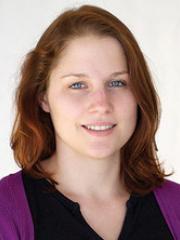
Timothy Buschman is a Professor at the Princeton Neuroscience Institute, Princeton University, where he leads the Buschman Lab. His research focuses on understanding the neural mechanisms of executive control - our ability to internally guide actions toward goals. His work centers on three key brain regions: prefrontal cortex, parietal cortex, and basal ganglia.
Dr. Buschman received his Ph.D. from the Massachusetts Institute of Technology. His laboratory employs a multidisciplinary approach using cutting-edge techniques in non-human primate and rodent models, including large-scale multiple-electrode electrophysiology and optogenetic control of neural circuits.
His primary research interests include Cognitive Control, Working Memory, Attention, Cognitive Flexibility, Neural Oscillations, and Brain Stimulation. His lab investigates how cognition arises from neural activity patterns and seeks to understand disruptions of these processes in neuropsychiatric disorders like autism, schizophrenia, and Parkinson's disease.
Analysis of his recent publications reveals a strong focus on low-dimensional neural dynamics, working memory mechanisms, and the shared neural substrates underlying cognitive control processes. His work increasingly integrates computational approaches with experimental neuroscience to develop unified theories of cognitive function.
Dr. Buschman was awarded the 2023 Troland Research Award, recognizing his significant contributions to basic research in psychology.
His research program includes multiple interconnected projects: Working Memory mechanisms, Cognitive Flexibility (how behavior changes based on context), Attention filtering, Synchronous Oscillations in neural processing, Brain Stimulation technologies, and Categorization processes. The Buschman Lab combines experimental and theoretical approaches to understand how cognition emerges from neural activity, with implications for both artificial intelligence and treatment of neural disorders.